A Pickled Fiddlehead Inspiration

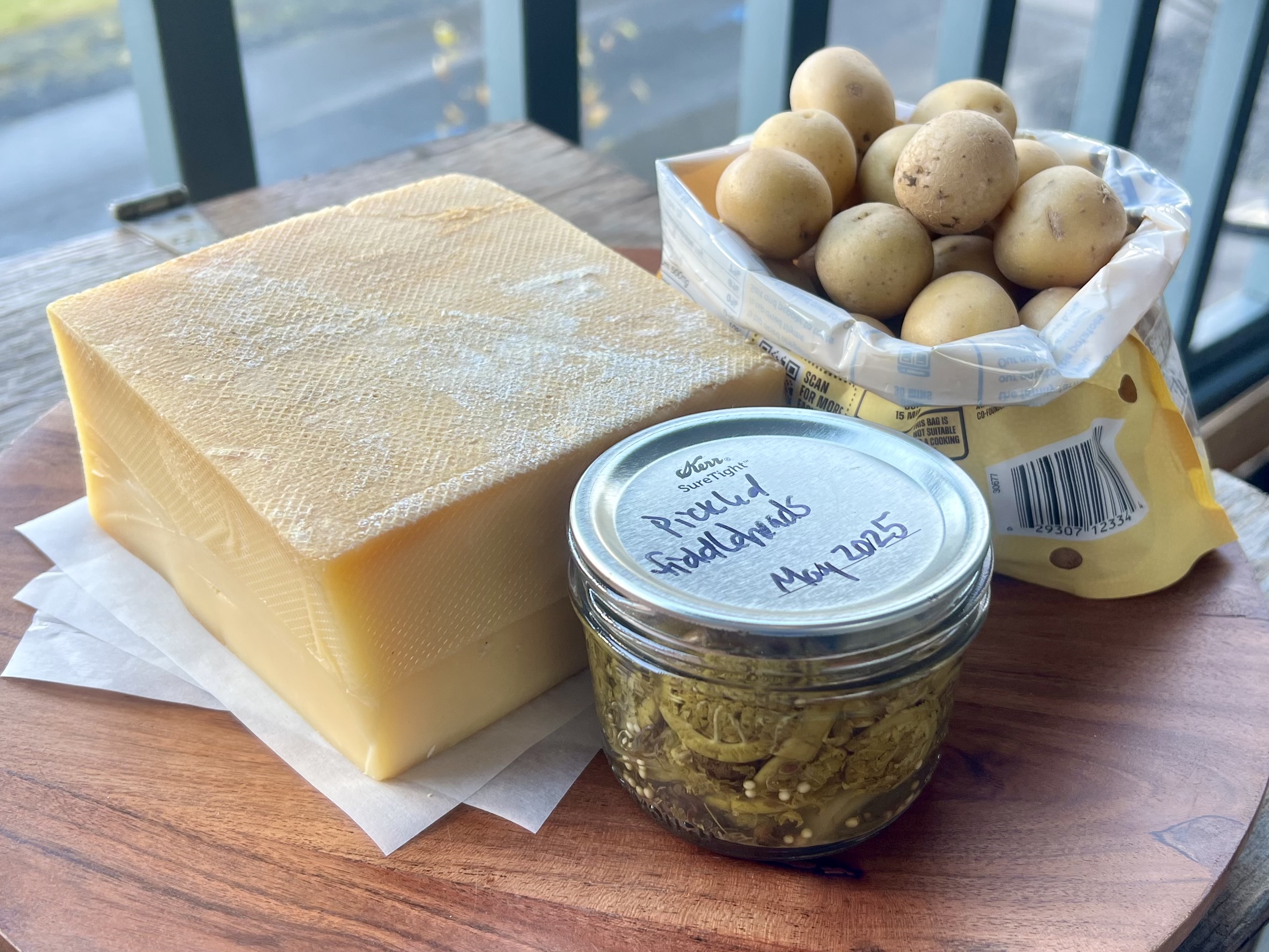
One of the first foraged finds of our “summer” is fiddleheads. You can see by the canning date, these were harvested in May. They are tender and delicious and best served just-picked and lightly sautéed. Up here in the Upper 1 (as opposed to the lower 48), we love to figure out ways to preserve our summer finds so we can enjoy them all throughout the year. Freezing, drying, and pickling are all very popular methods.

During this past summer, we cracked into our winter pantry and sampled one of these jars. The first savory sour bite flashed me straight back to an all-time favorite meal – Raclette. This flavorful and delightfully fatty cheese originated in Switzerland. It is traditionally served by heating the cheese over a flame and scraping the melted cheese atop boiled potatoes and pickles. There is no better meal to warm you up at the end of a chilly day!

Wanting to put an Alaskan twist on this Swiss favorite, we’ve been trying to figure out how to acquire this specialty cheese in our fairly remote part of the world. After failed attempts of getting an Anchorage cheese shop to mail us some or having visiting friends hand carry us a couple of pounds, we gave up.

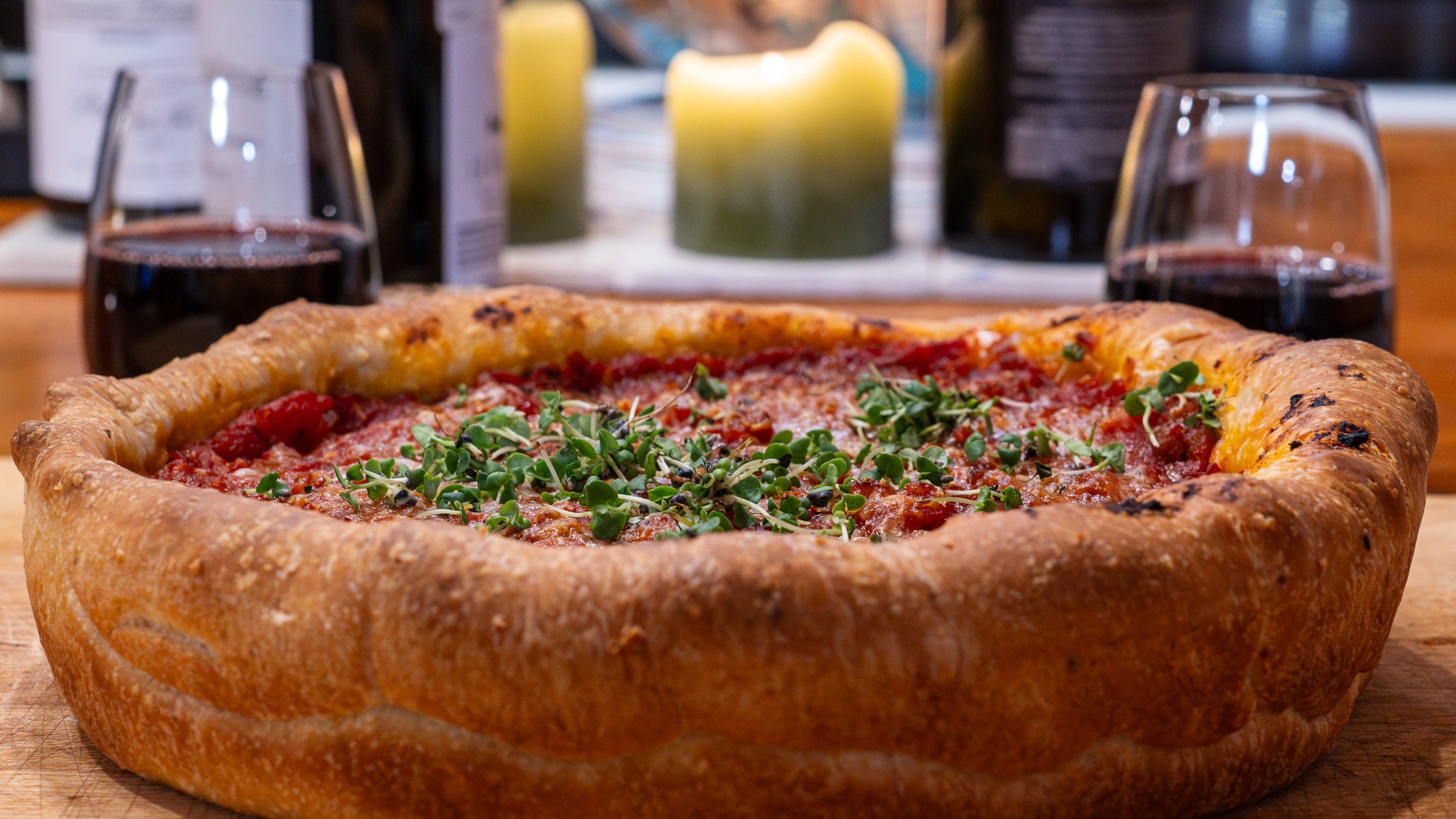
For weeks now, I’ve been grabbing things from our walk-in pantry. Every time I enter, I am met with those jars of pickled fiddleheads. Any normal person would just eat them in some other recipe. But I can be stubborn tenacious. Last weekend, I decided to try Amazon. Darn it all if there weren’t options for ordering Raclette cheese! Not deterred by the extra shipping cost, we decided to go for it. The cheese shipped out from the seller on October 29 and arrived today! It was well packed and arrived perfectly. Tonight’s menu is set. Melty raclette cheese served with boiled potatoes (traditional), pickled fiddleheads, pickled fireweed shoots, Alaskan reindeer sausage, and homemade sourdough bread. A nice bottle of Willamette Pinot Noir should be a perfect accompaniment. Cheers to tenacity!

#raclette #fiddleheads #pickledfiddleheads #foragingrecipe #wildalaska #chefdonachy #alaskacooking #baking #food #foodphotography #eatingwelloffthebeatenpath #alaskafood #alaskabush #fooddestination

Along the Herring Highway

Herring House (Nishin Goten)
West Coast of Hokkaido near HaboroJune 17, 2018

Somewhat paralleling the boom and bust of America’s west coast sardine/herring fishery (see Cannery Row), in the late 1800’s through the early 1900’s, fortunes were made and lost on the back of Hokkaido’s west coast herring fishery. The building in the above image is a Nishin Goten, a communal house for the herring fishermen of that era. Inside are the captain’s quarters, other areas where fishermen and other employees (I’m assuming the fishermen’s wives who were vital in processing the catch) could roll out their futons. Such houses featured a kitchen, a place to store slippers (in those days woven from grass) and a bit of furniture. These days, several Nishin Goten are preserved and open to visitors – well worth a stop if you’re traveling Hokkaido’s west coast along the famed Herring Highway.

Whole Fish Salted and Broiled: Easy, Elegant, Delicious!

dolly varden shioyaki_n

This Chukchi Sea Dolly Varden Char was liberally salted, broiled and served with roasted Peruvian potatoes and garlic cloves. Salt grilling or broiling brings out the natural sweetness of species ranging from porgy and snapper to trout, char and salmon. 

When a friend recently presented us with two harvested-from-the-ocean-this-morning char, we knew immediately what we wanted to do with one of them: shioyaki. Although Japanese cuisine is better known for sushi and sashimi, far more fresh fish on Japanese tables is served well salted and then broiled or grilled.

The Japanese eat a lot of fish, and it is for good reason that shioyaki fish is weekly fare in most households. It’s quick, it’s easy, and fish prepared this way are deliciously savory and sweet. This is also an excellent method for preparing freshly caught trout while camping. Simply clean the catch, skewer it lengthwise, cut a few shallow slashes into the skin, rub salt on the fish and roast it on an open fire or over a grill. Brook trout served this way make for memorable camp fare, as do Japanese iwana (char).

dolly varden side by side_n

This pair of sea run Dolly Varden char have all the characteristics of fresh fish: bright, clear eyes, firm, nicely colored flesh, and no evidence of bruising. 

Because the fish are seasoned only with salt (and perhaps the smoke from a grill or fire), it is imperative that it be absolutely fresh. When you’re purchasing fish, look for a healthy shine, bright colors and clear, bright eyes. The scales should be intact and the gills, if any remain, should be bright red. Don’t be shy about giving a fish you’re considering purchasing a whiff. It should smell clean. Fish does not smell fishy; it is bacteria growing on poorly cared for or old fish that carries the unpleasant smell often called “fishy.”

Salt-Broiled Whole Fish

  1. Start with a clean, fresh fish. If it is a salmon, trout or char, it need not be scaled, but all traces of gill and viscera should be removed. Rinse the fish in cold water and pat dry inside and out. (Fish, such as porgy, snapper and rockfish should be scaled.)
  2. Preheat broiler to high and position a broiling pan a few inches from the heating element. (You may have to experiment to find the right position in your oven.)
  3. Use a very sharp knife to cut shallow diagonal slashes about an inch apart down the length of the fish.
  4. Rub a generous amount of salt into the fish. Let rest for a few minutes up to half an hour. Coarse grey sea salt from France (Celtic sea salt) is perfect for this recipe.
  5. When the broiler is hot, coat the broiling pan with oil by either brushing on or spraying with a pump spray. Canola oil or light olive oil work well.
  6. Place the fish on the pan. It should sizzle. If it doesn’t, it will stick to the pan.
  7. Cook for approximately 8 to 10 minutes per inch of thickness. Do not move fish during cooking. (On a grill, you will want to turn the fish once to ensure even cooking.) The fish is done when the tail and fins are crisp, the eyes are opaque and clear juice is no longer bubbling up through the slashes. With a fat fish, you will see some white fat in the slashes. This is good.

This dish requires no further adornment and is delicious with a glass of cold sparkling water, a craft ale, or a fine daiginjyo sake.

Dungeness Crab in Beer and Miso

Whether fresh or previously frozen, Dungeness crabs and blue crabs are a great meal to linger over.

Flip a coin. Heads its Dungeness, tails its blue. We’re in either way. Some of the most memorable meals we’ve enjoyed were centered around freshly steamed or boiled crabs, good beer or wine, and a long, leisurely meal with just the two of us or with friends cracking and picking crabs.

We prefer fresh crabs whenever we can get them. In South Carolina, there was a private dock on a saltwater cut through the marsh that could be counted on to produce blue crabs on incoming tides. And when I lived in Oregon, throwing out a couple of crab pots was a matter of course on salmon fishing trips. Because Dungeness populations are depressed in the parts of Alaska we frequent, their harvest isn’t currently permitted in those locales. So most of the crabs we’ve been getting are purchased already cooked, but we still heat them before serving.

Our favorite way to boil-steam crabs is fairly simple. We start with about a half-bottle (6 – 8 ounces) of beer and 1 tablespoon of miso per Dungeness crab. Since more liquid than this is necessary, we add a cup of water or two. The idea is to ensure that there is enough liquid so that it doesn’t all boil off in the 12 minutes or so required to heat through a previously frozen Dungeness. For two crabs, add a 12-ounce bottle of beer, a little more miso, and, if necessary, a little more water.

I usually don’t immerse the entire crab. This is because I’m frugal (cheap) and hate wasting beer. I boil-steam the crab on one side for a few minutes, then flip it and continue cooking it for a few minutes more. If I’m doing multiple crabs, I arrange them in the pot as best I can and rotate them once during the cooking – although this really may not be necessary.

Previously cooked crabs are inevitably already plenty salty. The beer and miso bath gives them a mild sweetness. If you’re starting with fresh crabs, you might want to add some salt to the broth. A good rule of thumb is to steam fresh crabs for about 7 – 8 minutes per pound – which means a two-and-one-half pound crab needs about 20 minutes in the pot. One crab this side is usually plenty for the two of us, served with, say, a salad, fresh corn on the cob, and a loaf of crusty bread.

Our favorite dipping sauce? Melted butter, olive oil, garlic, lemon and soy sauce. For two people, melt about 6 tablespoons of butter. Add a clove of minced garlic and sauté  it for a minute or so. Then add 1 tablespoon of olive oil, the juice from half a lemon, and 1 tablespoon of soy sauce. A slice or two from a really great loaf of bread can be used to sop up any remaining sauce.

Crab goes great with a wide range of beers or a buttery Chardonnay.

Stuffed Alaskan Halibut

Wild Alaskan Halibut with bleu cheese, stuffed with mushroom-pine nut purée and Alaskan shrimp.

The other evening after making Salmon en Papillote I had a few tablespoons of mushroom-pine nut purée left over (see recipe here). I’d never made stuffed halibut but felt certain the purée would make an excellent stuffing. To enhance it further, I mixed in several Alaskan shrimp cut into smaller pieces. I made a slice in the halibut exactly as one would do with pita bread and spooned in the stuffing.

Next I rubbed salt and freshly ground pepper into the halibut fillet and set it aside. I then put about three tablespoons of olive oil and one tablespoon of butter in a casserole dish just large enough to hold the fillet, tossed in several cloves of garlic, and heated the dish in an oven set at 375 degrees F (190 C). Once the oil-butter mixture was heated through, I placed the halibut fillet skin side down and baked the fish covered for twenty minutes. Then I topped the fillet with bleu cheese and continued baking till the cheese was melted.

This recipe was as easy as it was delicious – one of the best halibut dishes we’ve had. A 3/4 to one pound fillet prepared this way will serve two.

Ten to 20 pound halibut like this one are perfect for the kitchen.