
* “Honda” is the Alaskan term for quad or ATV. “Snowmachine” is Alaskan for snowmobile. Out in the bush, bicycles are often called pedal bikes to distinguish them from hondas/ATVs, which are also often called bikes.

* “Honda” is the Alaskan term for quad or ATV. “Snowmachine” is Alaskan for snowmobile. Out in the bush, bicycles are often called pedal bikes to distinguish them from hondas/ATVs, which are also often called bikes.
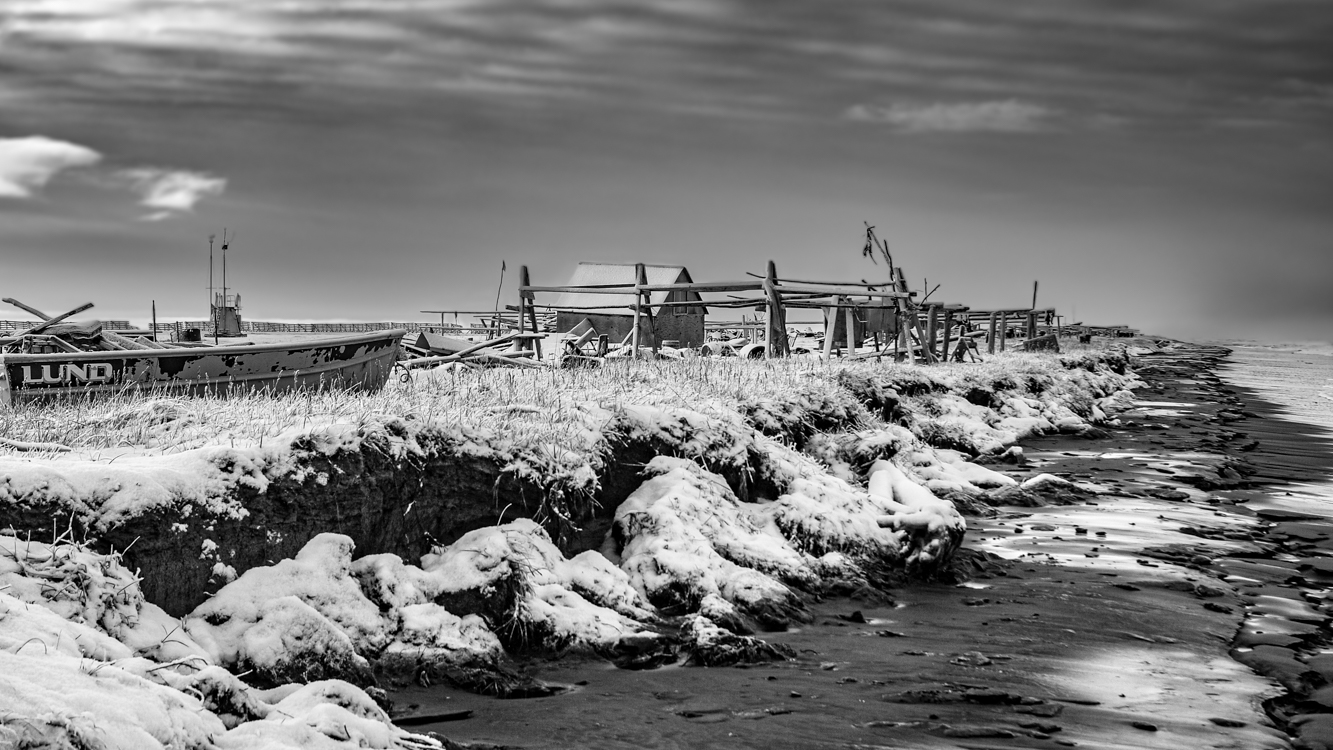
This camp along the shore of the Chukchi Sea almost looks like an ocean going vessel, the cabin itself the wheelhouse, a flag marking the vessel’s bow as it faces a fall sea. Snow but no ice, you can see how the ravenous ocean eats at the shoreline of tiny Sarichef Island. All this will be gone one day… perhaps in not so many years. October 31, 2010
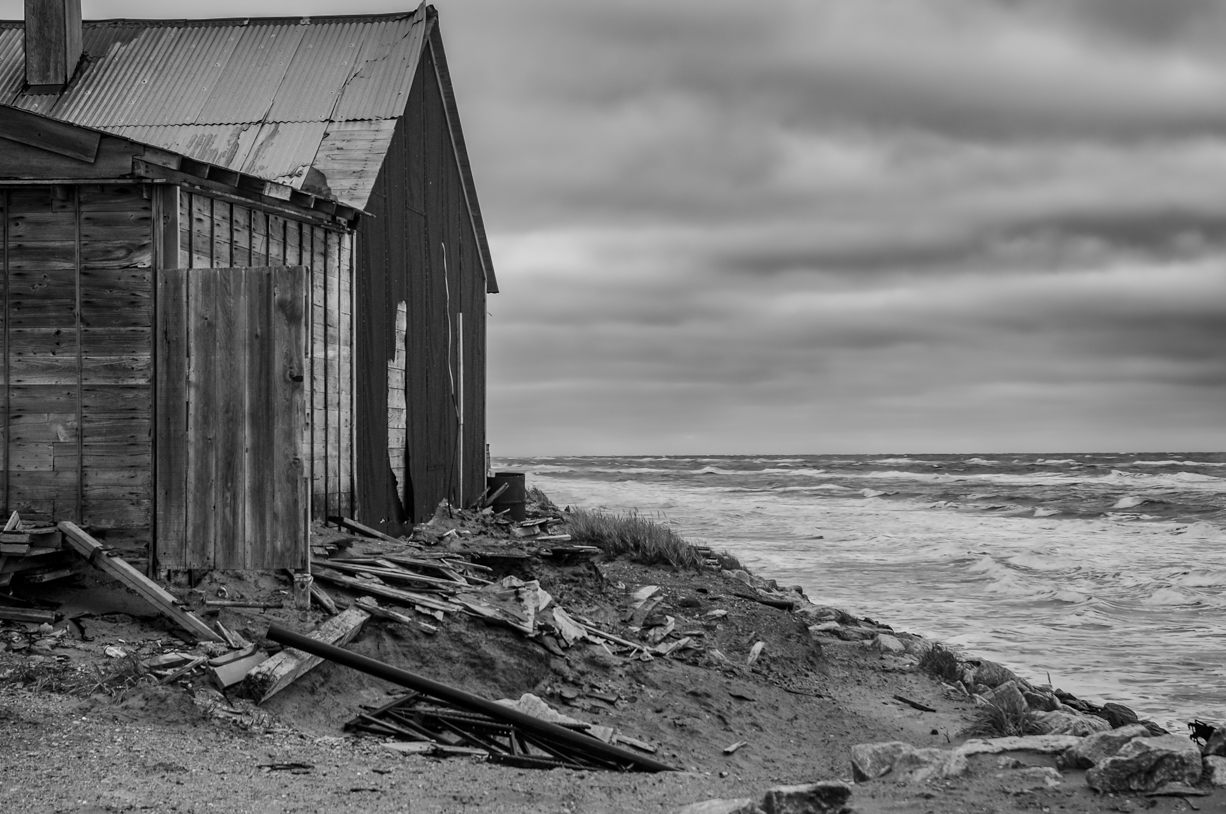
It is reported that since 1969, the ocean has eaten away 200 feet of land along the coast of already tiny Sarichef Island where Shishmaref is located. In the past, a sheet of ice forming in fall and lasting through spring kept the Chukchi sea blanketed and calm. Warming sea temperatures in the Arctic mean the ocean is freezing later. When fall and winter storms occur, packing winds that have traveled uninterrupted over thousands of miles of open sea, the surf thus generated claws at the barrier island without mercy. Particularly violent storms can rip away massive chunks of land. Entire homes have been washed away, a fate this abandoned house appears to be facing. Photograph: October 10, 2010
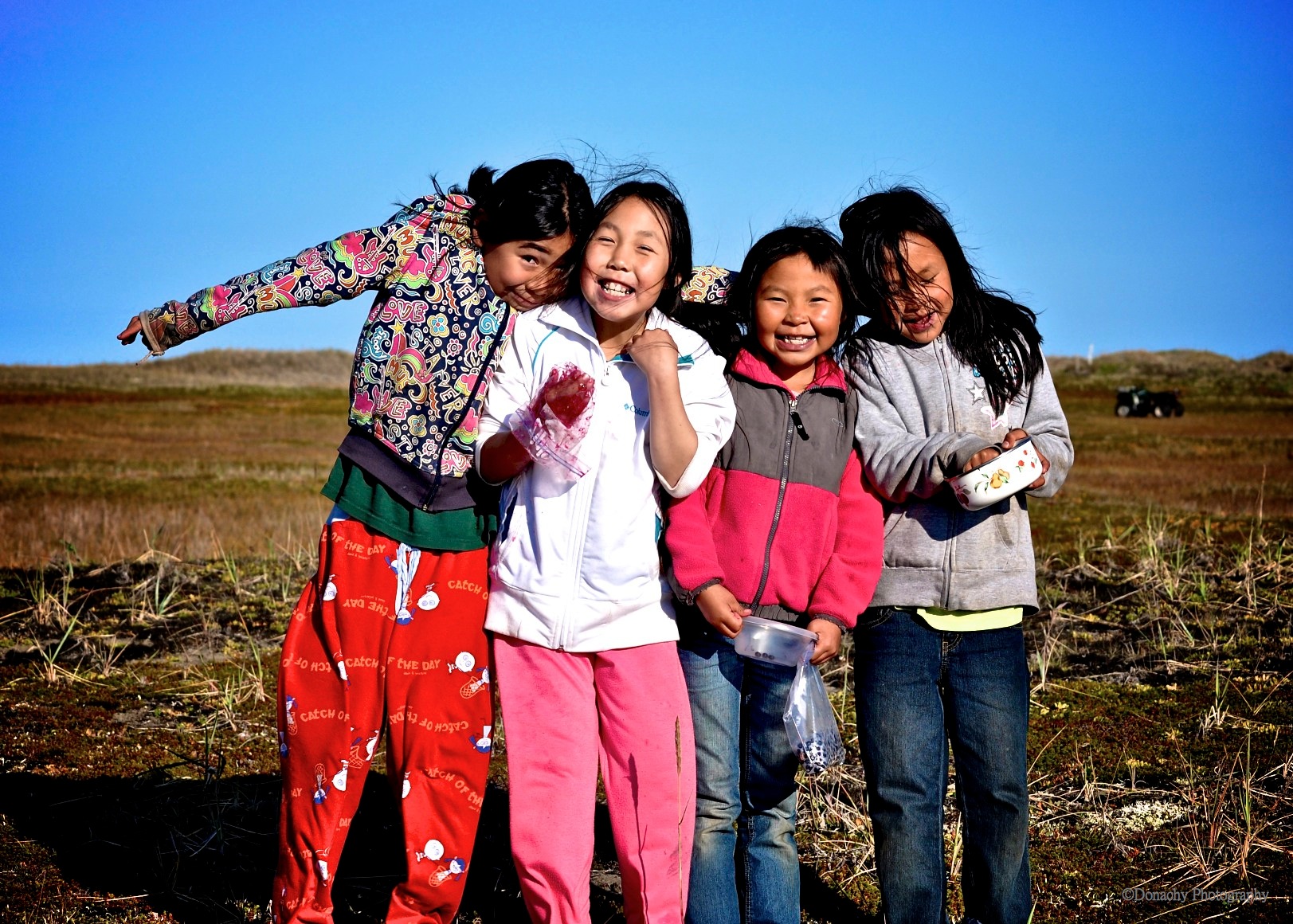
Friends from Shishmaref after an afternoon of blueberry picking. Gathering a cupful or two of these small, tart berries growing in scattered clumps across the tundra was work… the fun kind. The following morning, we celebrated with a stack of blueberry waffles.
Accustomed to the six and seven-foot tall blueberry bushes of Oregon where Barbra and I had picked berries by the bucketful when I lived in Astoria, we were surprised to learn that blueberries were growing right under our feet on our walks through the tundra near Shishmaref. “There’s lots,” one of my students told us. “We’re going to go tomorrow. You guys can follow.”
“Follow” is the village English way of saying “come along.” And sure enough, once we learned to key in on the unmistakable Autumn-red of the bushes (if ground-hugging plants that top out at six-inches can properly be called bushes), we began finding an abundance of small, perfectly ripe, deliciously tart berries. The comparatively thick, woody stems of some of these bushes suggested that they had weathered quite a few seasons near the Arctic Circle. Growing among the blueberries were crowberries (locally called blackberries) and low bush cranberries. Elsewhere in the far north, including in Europe, there are cloudberries, perhaps the most delicious berry on earth.

We walked along in the late summer sun, finding patches of berries here and there, crouching and kneeling to pick, and then moving on to find another patch of tell-tale red. Birds were out sharing the bounty – or maybe the insects associated wtih the fruit: lapland longspurs, white-crowned sparrows, savanah sparrows, and other small birds.

The pause that refreshes. A berry-picker gazes across the open tundra on Sarichef Island where Shishmaref is located, snacking on a bag of berries that probably aren’t going to make it all the way home. The red leaves near her feet? Yep. Blueberries!


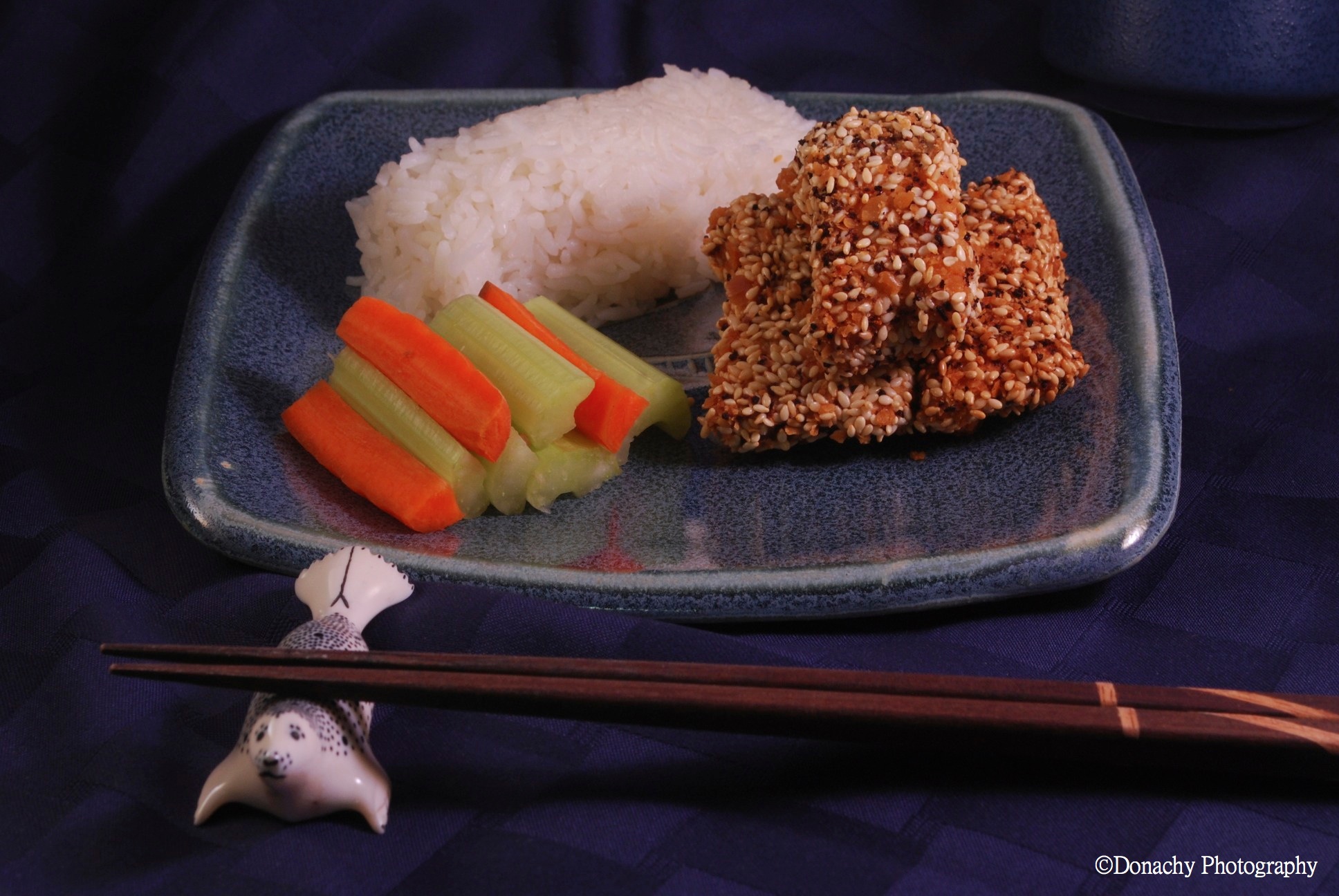
This is Recipe #3 of 9 in Barbra’s Salmon Challenge series. The spotted seal ohashi-oki (chopstick rest) was made by an artist in Shishmaref of walrus ivory and baleen.
I’m not sure why I mailed as many containers of sesame seeds to the bush as I did this year, but we have them in abundance. And we have lots of salmon. So…
This dish is easy to whip up, invites seasoning substitutions and additions, is visually attractive and really tasty. The other nice thing about this dish is that the crunch and flavor combinations lend themselves to accompaniment by a wide variety of condiments, from Japanese and Chinese dipping sauces to tartar sauce to a simple squeeze of lemon. Whatever you serve them with, they’re bound to disappear quickly.
Ingredients
1. Season the salmon cubes with sea salt and pepper and set aside.
2. In a glass bowl, mix together the sesame seeds and the crushed crackers.
3. In a Ziplock bag, mix together the flour and the ginger.
4. In a pan on the stovetop or in a deep fat fryer, heat oil to about 350 – 375 degrees. (I heat oil on a stovetop and check for readiness by dropping in a pinch of damp cracker crumbs. The crumbs will bubble fairly vigorously when the oil is ready. Don’t let the oil overheat or smoke).
5. Set oven on low “warm” heat.
6. Place 2 – 3 salmon cubes in the Ziplock bag and shake till thoroughly dredged with flour. Using tongs or chopsticks, coat the dredged cubes in egg, then roll them in the sesame seed & cracker mixture. Set aside. Repeat till all salmon cubes are coated with sesame seed & cracker mixture.
7. Place salmon cubes in hot oil, a few at a time. Oil should roil fairly vigorously around the cubes. Fry for about 2 minutes. If cubes begin to rise to the surface, you may be cooking them too long. Place cooked cubes on a plate covered with a paper towel to drain oil and keep warm in oven set on low heat.
8. Serve with fresh lemon wedges, tarter sauce, or other dipping sauce.
Serves 2 – 3. I found myself craving a hefeweizen with these.

This is our last day in Shishmaref. The sun is out in full force, and already the morning air is warm. Here and there, buntings and other birds are gathering nesting material.
The people of Shishmaref have been incredibly kind and generous with us. We’ve made friends here. The number of boxes we have just finished packing reminds us that we had intended to live here for years, not months. This was our home, and we are taking with us many good memories.
Life moves forward and happily it looks like the move to Point Hope will be positive for us in terms of career, adventure and just learning about new places, people and new customs. We are excited to live in another Inupiat village, and we have heard from many people that Point Hope is much like Shishmaref. As our boxes make their way 200 miles north, we find ourselves eagerly anticipating the next chapter.
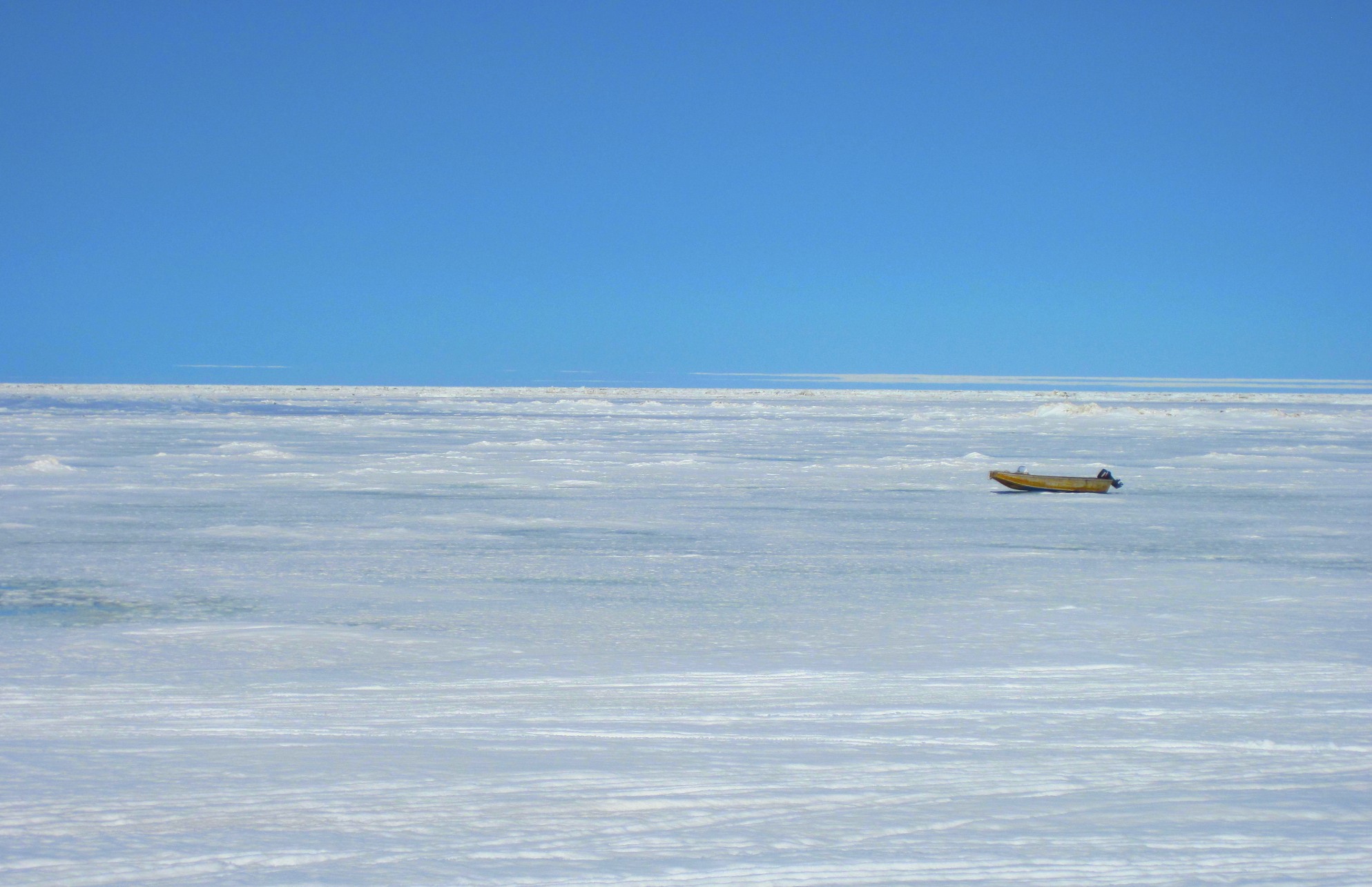
School has been out for a week. The sun is up all day. Children are playing. People are out socializing. Hunters have their boats on the sea ready for the ice to open enough to hunt oogruk (bearded seals). The birds are mating and nesting. Soon it will be time to gather eggs.
The rhythms of Sarichef island hum along.
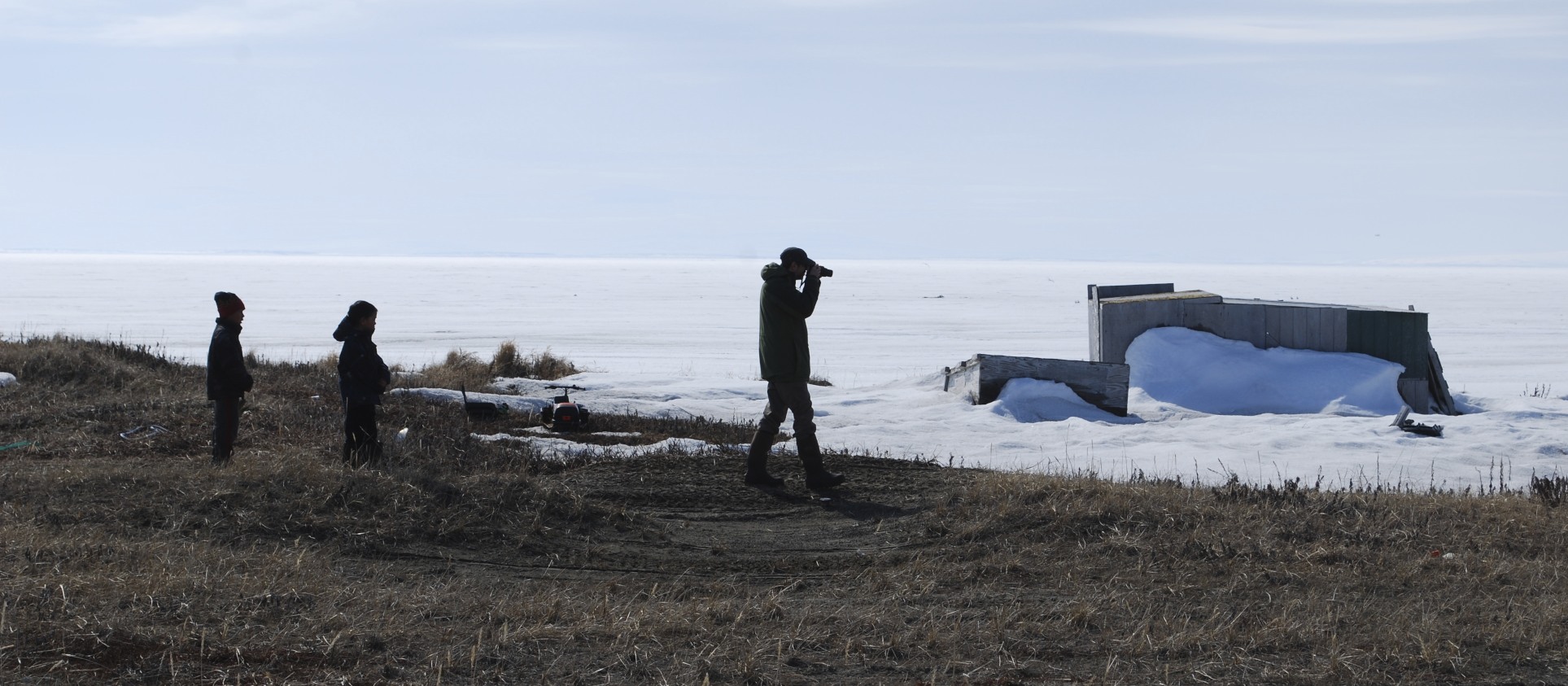
The kids here are really sweet in the most sincere and loving way.
Yesterday, we grabbed our cameras and went walking toward the west channel (the west end of the island). On the way, we ran into three students. On most walks, we might have a couple of kids join us. They usually stay with us part of our long walks. Not today. These guys hung on for the entire walk.
These students in particular LOVE us (especially Jack). They treat Jack like a rock star. It’s very cute and sweet. They would probably follow us to Point Hope! The photo above represents these boys well. They want to know about everything Jack does. Jack crept up on some birds to photograph them. The boys crept behind him to learn and watch.
We hope that the kids up in Point Hope are just like our young friends in Shishmaref.
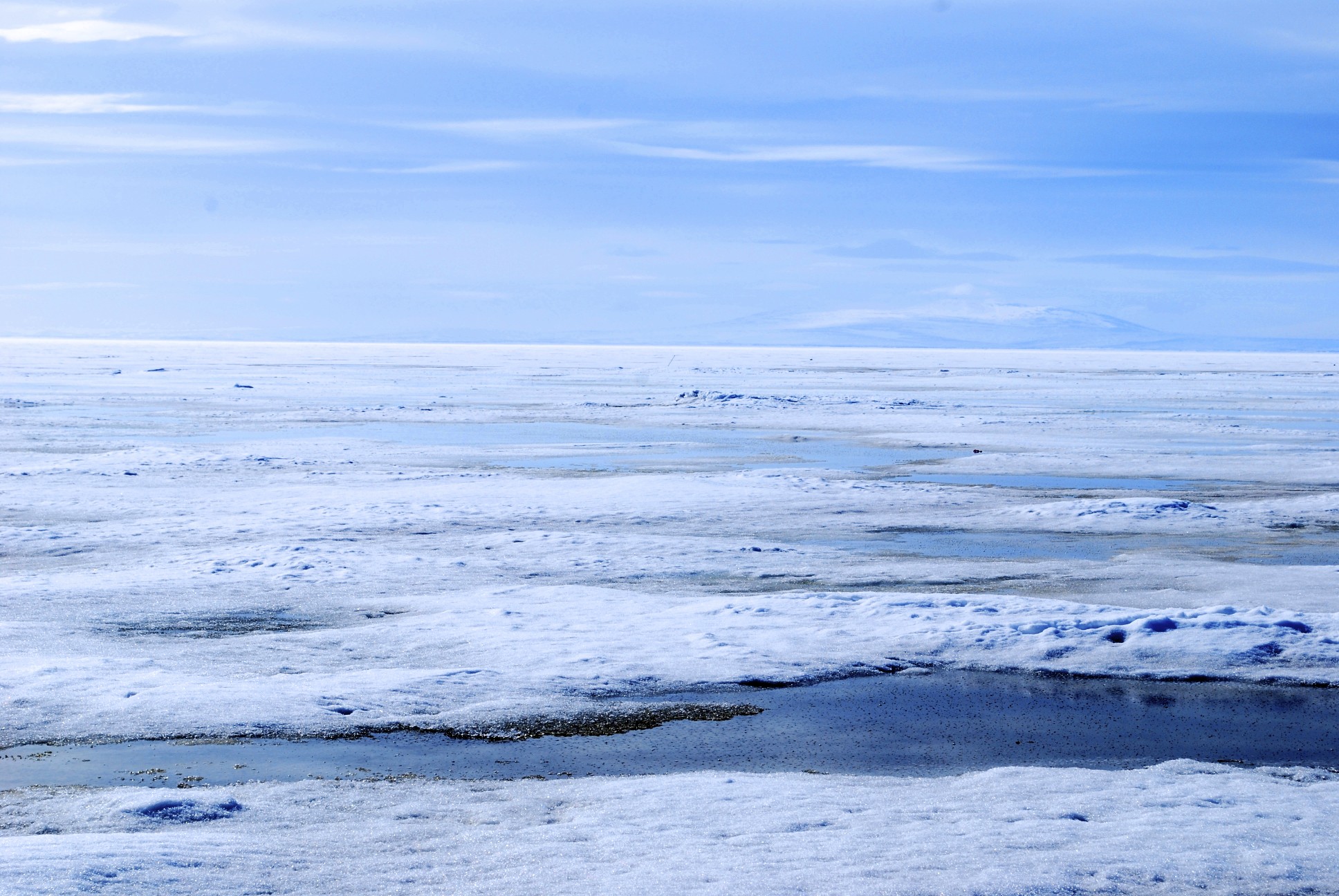
One side of Sarichef Island is bordered by the Chukchi Sea. One the opposite side is what the locals call the lagoon. It’s about five miles to land over this water. During the winter, there are snowmachine trails over the frozen water. Once the lagoon opens up, boats will be launched and used to travel across the lagoon and up the Serpentine River.
While waiting for the ice to melt on the lagoon, some brave souls will run their snowmachines. I say brave because the ice is melting on the surface, due to warmer weather and longer sunlit hours. At the same time, the ice is melting underneath due to the increasing river flow from land. Thin ice is referred to as bad or rotten ice.
One of my students told me that you could use a snowmachine in water. Remember, my students are six years old…and not always reliable. I told my students that couldn’t be. I asked my aide, and sure enough, if you drive fast enough, you can ski a snowmachine across water! Interestingly, a couple of days later, I saw a TV show about people who modified their snowmachines by taking as much weight off of them as possible in order to ski across the water.
People will ride across the lagoon on their snowmachines as long as they can. If they hit rotten ice, they gun it like heck to safety. I will leave this adventure to them.
 CutterLight