The Bones of a Village

New enough to reveal steel and aluminum nails, old enough to be well-weathered by the Arctic climate, the bones of this seal-skin whaling boat were left behind when Point Hope (Tikigaq) relocated two-and-a-half miles inland in the 1970s. Point Hope is one of the longest continuously inhabited places in North America.

The Inupiaq name for Point Hope Village, Tikigaq (tick-ee-yahk) means index finger and described the way the gravel point once hooked into the Chukchi Sea. Time and tide long ago washed away the crook of the finger, leaving behind a triangular point near enough to deep water that the whales that first drew the Inupiat people here thousands of years ago still swim close to shore. The 2.3 mile hike from the current town out to the point gets a little tough once the road ends and the pea-to-chunk-size gravel begins, but it is well worth the effort. In addition to bowhead and other whales, which are frequently sighted, the collision of currents at the point holds large schools of finger-sized baitfish, which in turn draw flocks of Arctic terns, gulls, murres, puffins, jaegers, guillemots and ducks while various sandpipers patrol the shore. At times, the sea and sky are filled with hundreds–if not thousands–of birds. The small fish also attract roving schools of pink, silver and Chinook salmon and sea-run Dolly Varden which in turn are followed by spotted, common and bearded seals. Walruses show up from time to time as well.

The walk to the point passes through the Old Village, a ghost town of semi-subetranean homes made from sod, whale bone and driftwood as well as more modern, wood and metal houses. It’s fascinating to walk through the Old Village and contemplate what life would have been like up here before electricity, running water, guns and gasoline engines–when the only “grocery stores” were the great herds of caribou 25 or more miles to the east, bowhead whales swimming in the freezing Arctic Ocean, and the various fish, seals, berries and plants gathered in their seasons.

Cloudberry Sorbet – Sublime!


Growing seasons here in the Arctic are short, and the cloudberries are at the end of theirs. Yesterday was our last opportunity to go picking. After a big pancake, egg and bacon breakfast at a friend’s house, our principal offered up the school’s suburban, so six of us drove out to the end of 7-Mile Road where the berries were rumored to be larger than those we’d previously found.

The thermometer read 50, but the chilly wind tugged much of the warmth away, making us happy to be dressed in warm layers. Small songbirds seemed to be everywhere, and a few jaegers patrolled the tundra looking for easy prey. Off in the distance, a majestic snowy owl glided from perch to perch, probably hoping to catch one of the incredibly fat ground squirrels that inhabit the tundra off-guard. Some of the berry patches were completely over, and others were full of fruit past their peak. But here and there we found berries that were just right, liquid amber in color and perfectly sweet. It took Jack and me about an hour to pick 10 cups.

Like everything else that grows on the tundra, cloudberry plants reach only a few inches off the ground. They grow in clusters on low mounds that rise a foot or so above the wet ground. Picking them requires lots of squats and bends making for a good workout. Jack was doing an uncharacteristic amount of berry eating while he was picking and finally came to a conclusion: “These berries would make really good sorbet.” Although I’d never made sorbet, I knew right away that he was onto something.

Back home, I processed the berries. The first step was to wash the berries. This proved to be much easier than my experience with other berries because there are virtually no bugs up here. The next step was de-seeding the berries. After unsuccessfully trying to smash the berries through two different sized strainers, I remembered I had cheesecloth. I loaded batches of pureed berries into the cheesecloth and squeezed the delicious fruit into a bowl until all that remained in the cheesecloth were bright pink seeds.

A couple of years ago, our daughter gave us a Cuisinart ice-cream maker. An electric ice cream maker may seem like an extravagant thing to ship to a home in the Arctic, but it has added a lot of enjoyment to our lives in both making and eating ice cream.

Sorbet is easy. Syrupy sugar water and a little lemon juice go into the freezer bowls along with the seeded, pureed fruit. This mixture is slowly churned for about 30 minutes. We love berries, but I think these are my favorites. The color is a rich salmon orange. The smell is sweet and tropical, with mango, papaya and peach flavors, and there’s a natural creaminess about them. Making one-quart batches, we ended up with a gallon of sorbet. We envision serving this in cookie bowls, with a few pieces of dark chocolate, or along with with homemade vanilla ice cream as a sumptuous 50/50 dessert.

Cloudberries and Freezer Jam

Ball Jars filled with freshly-picked cloudberries (often locally called salmon berries). We’ll add a little lemon juice, pectin, and sugar to the crushed berries, mix and simmer this in our bread maker for an hour-and-twenty minutes, pour the mixture back into the jars and put them in the freezer to set. This will provide us with some of the most tantalizing jam imaginable. Cloudberry jam… 

The morning was cool and cloudy, with mist and banks of fog rolling across Point Hope. We’d been told that we’d find berries about three miles east of town along Seven-Mile Road, and so seven of us had gathered to make the hike out. Two of the men carried 12 gauge shotguns and a third carried a side arm. Bears are always a possibility.

The wildflowers which all but carpeted the tundra when we arrived here nearly a month ago are mostly gone now, though here and there a few tiny yellow Alaska poppies and beautiful blue but deadly monkshood and other flowers are still blooming. And then, right about at three miles just as we’d been told, there they were… cloudberries, growing together in small patches where mounds of earth were just high enough above the boggy tundra to allow roots to drain. The unripe cloudberries (Rubus chamaemorus) were deep red and beautiful. The ripe ones are the amber-orange color of Chinook salmon flesh, giving their close relatives, salmon berries (Rubus spectabilis), their names.

Wherever cloudberries grow across the upper latitudes of North America and Europe, they are a prized delicacy, agreeably tart when barely ripe, becoming creamy rich and sweet as they continue to ripen. They contain twice as much vitamin C as oranges. Growing very close to the ground, the berries were surprisingly inconspicuous at first. But once our eyes adjusted to what we were looking for, the tundra seemed to sparkle with their red, orange and amber glow.

We picked for about two hours, happy to have worn Muck Boots as we slogged through the soft, wet ground. By the time hunger caught up with us and it was time to head back, Barbra and I had about three pounds of berries between us–enough for a few jars of the freezer jam which would make the hike well worth the effort.

On the walk back, the sun began to push its way through the thinning clouds, lighting the land around us. It was then that Barbra and one of our friends spotted a large white bird perched motionless on a hump out on the tundra. “It’s got to be an owl,” I said. “Let’s see.” We made our way toward the white shape until there was no doubt we were looking at a large snowy owl. These owls are huge, the heaviest in North America. When it finally spread its magnificent wings and lifted off, it revealed an underside of almost pure white–a male in its prime, grown fat on ground squirrels.

Razor Clam Fry

Jack has put the finishing touches on our kitchen in our new home and is already feeding us well. The above razor clams were dusted with seasoned flour, dipped in beaten eggs, and rolled in cracker crumbs in preparation for frying in olive oil. Having been frozen fresh, they tasted like they were just dug. Every bite evoked the wonderful memories of digging those clams just weeks ago.

I’m grateful that our school not only has a pool, but also a weight room this year!

Chapter 2 Point Hope

I hesitate to call it Chapter 2. What do I call the summers? Interludes or intermissions between the chapters? At any rate…

After the plane made it through lifting fog, we arrived in Point Hope last Wednesday. We planned to arrive early in Point Hope so we would have plenty of time to settle into our new home and get oriented to the village. Last year, we were faced with many unanticipated tasks that made our school year start seem frenzied. We wanted to ensure that there would be plenty of time this year in the event our hours overfilled.

We arrived laden with nine coolers stuffed with frozen foods. As we met our ride, we were cheerfully greeted in spite of all of our luggage! We drove the two miles into town on a mix of gravel and concrete roads. A quick tour revealed the general layout of the town and the locations of the grocery store, the post office and the school.

Our home is a palace compared to our place in Shishmaref. It’s a two bedroom, one bath home with tons of space. The ceilings are 10 feet tall. We have a flush toilet, a great shower and our own laundry room! (If you have been following along, you’ll remember the last house had essentially no bathroom and a water tank we had to fill every six weeks in order to have running water.) The school provided us a stand up freezer which easily stored all nine coolers worth of goods. The best thing about the house is that the kitchen, living room, and office are in an open floor plan. That is the perfect configuration for people who love to cook and simultaneously socialize.

We’ve walked out to the point a couple of times now. It’s 2.3 miles from our front door. Both times we’ve gone out, we’ve seen hundreds of birds. We’ve also seen bearded seals (oogruk in Eskimo) playing in the surf. Both are indicators that there are fish. The natives tell us the pink salmon have begun to run and soon there will be HUGE sea run Dolly Varden to catch. We are eagerly waiting for our fishing gear to arrive in the mail so we can go see what we can catch. Last year, we were given Dolly Varden to eat…delicious!

Back home, the house is coming together quickly. We’ve already tested out the bread machine. A warm, sweet, white loaf indicated perfect operation. Next test — the oven. Chocolate chip cookies should do the trick. (The postal workers and the school maintenance team will benefit from that batch. Boy, they did a lot of work delivering all of our boxes.)

Next week, our district sends us to the district office in Barrow. We’ll get to spend some time at the “top of the world.” Should be interesting…

Provisioning for a Year in the Bush

Above, Jack is zip-tying the lid to a Rubbermaid Roughneck tub at our storage unit in Anchorage.

Planning for a year in a remote village may seem like a daunting task. After two bush moves and two annual shopping experiences, I think we’ve nailed it.

In Walden, Thoreau lists everything he took with him to his life on the shores of Walden Pond. Fascinated and inspired by Thoreau’s list, we vigilantly documented all the provisions we sent out to Shishmaref last year and monitored what we used and didn’t use in order to prepare our shopping lists for this coming year.

Here’s what the advice of others and our own experiences have taught us.

1. Rubbermaid Roughneck. They come in a variety of sizes and are easy to stack and store. We label each tub and lid so all the holes we drill for the zip ties which keep them closed match up. The manufacturer says they are “unbreakable.” So far, they have been just that. Caution: most other tubs will break.

2. Cardboard boxes. The best boxes are reliable for only one use, and even then they are more difficult to ship and stack than the plastic tubs. We have gone away from using boxes.

3. Media mail. For books, CD’s, DVDs and other media, the post office gives a discount on their already inexpensive rates. Know that these items will be shipped on the slowest boat, at times will be stacked atop each other in huge piles, and will likely be tossed around. In our first move, just about the only boxes that were wrecked were those that had been sent at the media rate. This time around, we shipped our media in rubber tubs.

4. Dry goods. We think of food items in three categories: dry, refrigerated, and frozen. Our first advice is this: if you don’t have a Costco membership, get one! Costco has excellent prices and they seldom stock anything that isn’t of good quality. Unlike some other stores which, for a fee, will pack and ship your groceries for you, Costco is a “do-it-yourself” proposition. That’s fine with us. Not only do we save money by taking care of something we can do perfectly well ourselves, but in doing so we ensure that our items are properly packaged. And in addition to getting butcher-shop-quality meats and excellent produce, in shopping at Costco we are giving our hard-earned money to a business that is known for treating its employees and its customers fairly and ethically. We won’t name any businesses, but personally we can’t justify giving our money to a corporation that is constantly in the news fending off one law suit after another because they simply do not treat their employees ethically and with respect. Once we have purchased and packed our dry goods, we mail them at the parcel post rate of about 70 cents per pound.

5. Frozen goods. Alaska airlines as well as the the smaller airlines that provide service to the bush allow three checked items (50 pounds each) and one carry on item. We were advised to bring coolers as the checked items, so last year, we brought up three 58-quart coolers stuffed with frozen meat, juice, fruit, and vegetables. All the coolers ended up exceeding the airline’s weight limit by 20 to 25 pounds each, which irritated the employees at the ticket counter end cost as overage fees. This year, we are going to use Rubbermaid tubs instead of coolers. The tubs themselves are lighter than coolers, and by going with 14 gallon (56 quart) coolers and using crumpled newspaper for insulation and to take up some room, we should be able to stay within the weight limit. With items frozen solid (we have a chest freezer at our storage place), everything should hold up fine during travel. We’ll supplement what we buy at Costco with the razor clams, salmon, halibut and rockfish we harvest this summer. By the way, the large bags of frozen vegetables Costco carries are superb.

6. Refrigerated items. Last year, we really wanted cheese, yogurt, eggs, lettuce, apples, and tomatoes, and not knowing whether or not we could readily get these items in Shishmaref, we decided that we would pay the extra cost for “overnight” shipping. We knew that we wouldn’t actually get these things the next day, but we were hoping that our delivery would arrive in two or three days. Unfortunately, it took a full week for our items to arrive. As we unboxed our items, we were mentally preparing for the stench of rotten yogurt, cheese and lettuce. But amazingly, the only items we lost were the few small bags of frozen vegetables we had thrown in as ice bags. The vegetables had thawed and had begun turning to compost.

7. Items we forgot or ran out of. Our experience here is that if you forget something or something gets lost or ruined in transit, don’t worry. If the store in your bush community doesn’t carry something you need, you can pick up your phone and call the Fred Meyer store in Fairbanks. (Don’t bother with their online bush order service; it isn’t really set up to be practical.) Fred Meyer will mail or ship any item they carry in their store. They pack things well, their, customer service is excellent, and their prices are reasonable.

We’ve finished our shopping and packing chores for this year, and now we have the rest of the summer to camp, fish, boat, hike and play!
To Anchorage, or Not To Anchorage

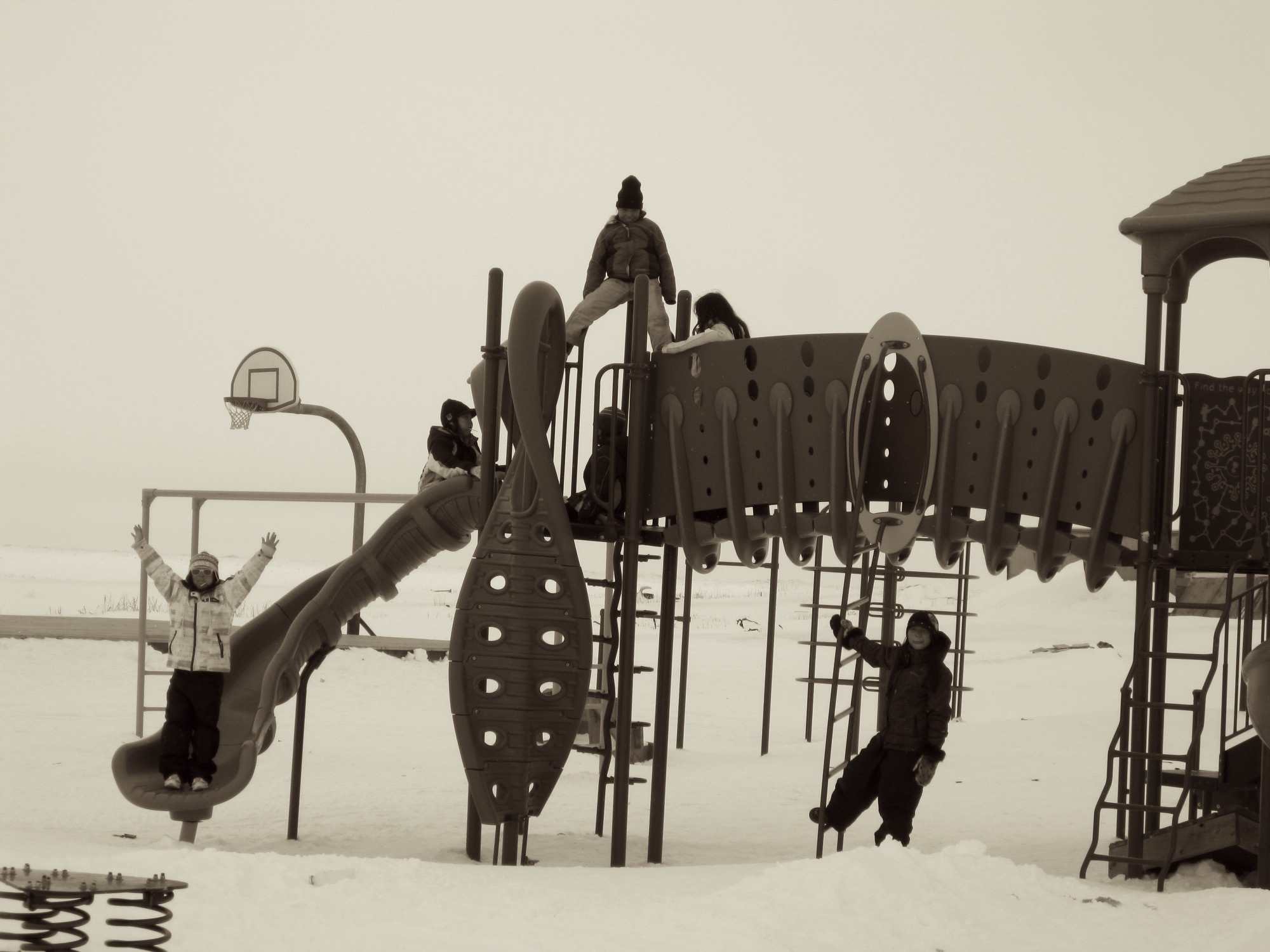
(Our Shishmaref kids)

That was the question.

Jack and I spent the weekend in Anchorage attending the Alaska Teacher Placement job fair. A fascinating experience better left to its own blog post…

Anyway…

We left Shishmaref Thursday morning and had a layover in Nome on the way to Anchorage. The weather was bright and sunny. It was around zero when we left Shish. We arrived in Nome and walked into town for lunch. It was chilly, but we were comfortable in our parkas. We spent the next few days in balmy 50 degree weather. It was amazingly warm.

So Anchorage is warmer than the Arctic Circle. Duh.

We started really selling ourselves…or trying to… on Anchorage. Its central location. Its activities.

After driving from the airport to the hotel, we were convinced that we are not ready to leave the bush. We love the friendly waves hello from everyone we pass in our village. We love the pace of village life. We love learning about the people we live amongst.

We really like experiencing a life that is extraordinary.

This summer, we will go hang out on the Kenai. There we can get our fill of roads, big crowds, and restaurants. Knowing us, I’m sure we’ll find many off the beaten track things to do, as well.

For now, the answer is Not To Anchorage.

We have just signed on with another bush school about 200 miles north of here (yes, you read correctly) in another Inupiat village. We are eager to get to know another community and their history and practices. We hope to put down roots for a little while and accomplish some personal and professional goals.

We are excited to start the next Alaska chapter in Point Hope.

To be continued…