Chignik Lake in 29 Photos: Summer’s End

Chignik Lake Alaska
Summer’s End

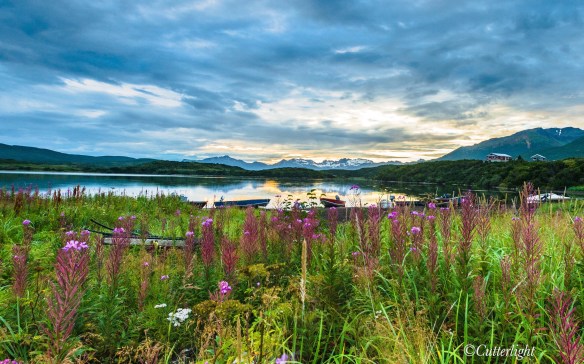
Our first year in Chignik Lake, we attempted to cram ourselves into a tiny, one-bedroom apartment. We were soon spilling out of it, prompting a move to a slightly larger home. In addition to offering more square footage, our present place serves as a terrific wildlife viewing blind. Situated just 30 yards from the lake, we’ve seen 13 mammalian species from our living room/dining room windows. Add to that loons, ducks, falcons, eagles, cranes, snipe, passerines and other avian species, and the view out the picture windows is kind of like having the National Geographic Channel on 24/7. When the Coho are in, we can actually see them from our place, prompting us on several occasions to drop dinner forks, pull fly rods down from their wall pegs and have a go at the migrating salmon. At night, sometimes ambling bears pass by so close that we can hear their paws crunching in the sand outside our open bedroom window.

But the view from the windows of our first place was also lovely, and although it didn’t offer the wildlife viewing our current home offers, a very cute, high-spirited ermine once ran right over the toe of my boot as I entered the mud room. Here was the window view on August 15, 2016, our first month at The Lake. I was just beginning to get into more serious photography at the time and made several technical mistakes in composing this picture. Yet, it remains one of our favorites. (Nikon D4, 17-35mm f/2.8, 1/320 at f/9.0, 17mm, ISO 1600)

Chignik Lake in 29 Photos: Fireweed

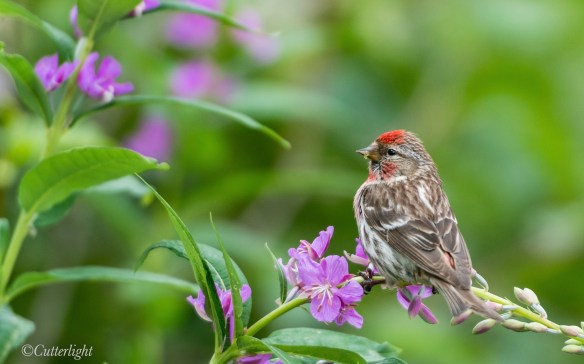
Redpoll Fireweed Chignik Lake
Fireweed

The first Fireweed shoots emerge in late May or early June. At that time, the dew-soaked four or five inch shoots are crimson red with a touch of purple, perhaps showing a hint of tangerine when backlit by the morning sun. This is the perfect time to clip a few at the base and sauté them as you would asparagus to be served with the evening’s grilled halibut.

From the moment those first crimson leaves emerge, we watch, marking spring, summer and fall by the stages of the Fireweed’s growth. By the end of June the plants have grown tall enough to brush against the tops of our Muck Boots as we follow bear trails to the river in search of Sockeyes, but they are flowerless and inconspicuous, overshadowed by Yellow Paintbrush, Nootka Lupine, Yellow Monkeyflower and Wild Geranium. A sister species, River Beauty, is already splashing gravel bars with fuchsia, reminding us that it is time to start searching the Chignik’s deeper pools for Chinook. The world is alive with activity. There will be fuzzy-headed Rough-legged Hawk chicks peaking out over their nest at The Bluffs, swallows gliding above the lake and bears which emerged winter-skinny from hibernation will be filling out on fat Red Salmon. The summertime sun barely sets; it is difficult to force oneself to turn in at night.

Come mid-late July, Fireweed crowns are nodding with buds. Any day now, the blossoms will burst into four-petaled, magenta-pink flowers. High summer at The Lake. Skiffin’ season.* From this point on, we will mark time not so much by clocks and calendar dates, but by whether or not we’re hungry or tired, how many salmon have been counted at the weir, how much the year’s new bear cubs have grown and the ascension of Fireweed blossoms as they progress to the top of the crown.

Toward the end of August, only a few petals cling to the tops of the plants. Below those petals is a progression of slim, red, bean-shaped seed pods growing heavier each day. Silvers have begun entering the river en force, marking the start of two months of remarkable fly-fishing. The newly arrived salmon are thick with muscle, spirited and dime-bright. But by mid-September, they will begin to show hints of autumn’s reds, golds and muted greens. The first fireweed seeds ride fall breezes on cottony parachutes – “Fireweed snow” we call it. Looking to the mountains, it is at about this time that we will see termination dust powdering the peaks.*

Summer’s end.
—————————————-

I made the above photography on August 6, 2020 shooting from my living room window. The house itself serves as a blind. The photo shows how Fireweed blossoms begin blooming at the base of the crown, buds yet to bloom further up the stalk. The bird is a Common Redpoll.  (Nikon D800, 70-200mm f/2.8 with 2.0 TC, 1/1250 at f/6.3, 400mm, ISO 1,000.

*skiffin’ – skiffing; boat-riding.

*Termination Dust is an Alaskan term referring to the first snow in the mountains, signifying the end of summer and the beginning of fall.

Chignik Lake in 29 Photos: There is a river…

Chinook King Salmon Chignik River
There is a river…

T-shirt and jeans, belly down, bare elbows on scratchy, crazy-red carpet my mother had insisted on, chin propped in cupped hands, I pored yet again over one of the articles in the magazines my grandfather had given to me and that were permanently scattered across my bedroom floor. I had, once again, escaped… to a world barely touched, to wilderness rivers, large fish, peace, calm… quiet.

All of it was fascinating, enthralling to my young mind. It was only 50 years ago, but the world was a different place. Less explored. Less trammeled. Discovery on a grand scale was still  possible. And so whether I was reading for the fourth, fifth or 11th time an article about fishing for the exotic Mahseer of India, skittish Bonefish in the Bahamas, ginormous Northern Pike in a seldom seen Canadian lake or mammoth Striped Bass in the Massachusetts surf, I found myself absorbed in the mystery of possibility and promise.

Early in life, I joined a fraternity whose members’ first contact with Latin was the binomial Salmo salar – “Salmon leaper,” Atlantic Salmon. Back then, there were still lots of Atlantics in the Canadian maritime provinces. They thrived in rivers with magical names: Miramichi, Grand Cascapedia, Restigouche… Scenes brought to life by writers such as A. J. McClane and Lee Wulff.

At the same time, Pacific Coho and Chinook in staggering numbers ranged all the way from northern California to sub-Arctic Alaska. A guy with a car, gumption and gas money could explore the West Coast fishing on his own, following in the steps of legends like Zane Grey and Bill Schaadt. I’d show my dad the articles, the photos of big fish – bass, pike, muskies, salmon, all of it. He’d rattle his Pittsburgh Press newspaper with a shake, look up for a moment, and absently say something like “That looks interesting,” in the way people say something looks interesting when, in fact, they have little interest in it.

Years passed by. Years became decades. As time slipped away, so did the salmon fishing I’d read of. Dams, development, timbering practices, pollution, overfishing, salmon farming, hatcheries… The 70s, 80s, 90s and the first two decades of the 21st century have visited a thousand cuts on salmon and their rivers. Throughout the world, from the Pacific Northwest to the Gaspé Peninsula to Scotland, Norway and beyond, the fish have responded by retreating. As rivers with strong runs of salmon have been pared down, the water that remains generally falls into one of two categories: those accessible only through outfitters, lodge owners and guides; and those where you can expect to fish among a crowd.

Neither option holds much appeal beside the dreams of exploration, adventure and discovery inspired by copies of Field and Stream, Outdoor Life and Sports Afield read in boyhood.

It has been a long, winding, unpredictable path that has brought me to this river. Most days Barbra and I have the fishing to ourselves, save for bears, otters, seals and eagles. We know it is unlikely to last… But for now, we are here and there are fish and there is quiet and solitude and dreams and dreams come true. (Barbra made this lovely photo on August 24, 2020. Tackle: Orvis Helios II 8-weight, Galvan T-8, WF floating line, 10′ leader w/ 20lb tippet, Chartreuse Rocket Man #2. Nikon D800, 24-70mm f/2.8, 1/640 at 7.1, 48mm, ISO 800)

 

Chignik Lake in 29 Photos: Sea Pup

Chignik Sea Otter pup
Sea Pup

Forest-like patches of bull kelp, a rocky shoreline, small islands and protected bays add up to Sea Otter habitat. While there always seem to be at least a few of these engaging animals in the nearshore sea along the Chignik coast, late spring and early summer when mothers can be found nursing pups is a particularly rewarding time to look for them. We found the pair in this photo on June 28, 2020 along with over 100 additional otters just outside of Anchorage Bay, an inset of the larger Chignik Bay. The mother’s surprised expression and the hint of the pup’s pink tongue set this photo apart from other captures we got that day.

Shooting from a boat at sea is always challenging as subject and photographer alike are continuously in motion. Reflected by water, light can overwhelm an image causing highlights to be blown out. For a moment, clouds obscured the sun, but there was still enough light to set the ISO low, close the aperture enough to keep both mother and pup in focus, and still shoot fast enough to get a clear image on a gently bouncing sea. (Nikon D850, 600mm f/4, 1/2500 at f/8, ISO 500.)

Chignik Lake in 29 Photos: Triplets

Chignik Lake Brown Bear Cubs
Triplets

The hundreds of thousands of salmon ascending the Chignik River each year nourish everything from bears to birds to berries. Each gleaming Pink, Red, Silver, Chum and King returning to its natal spawning grounds might be thought of as a nutritional brick – keystones to the fecundity and biodiversity of the Chignik drainage. All of us can support healthy salmon ecosystems – and the bears, eagles, orcas and other wildlife that depend on wild salmon – by making a commitment to not consume farmed salmon and to instead purchase wild-caught salmon. While it is true that wild-caught salmon generally costs more than farmed salmon, by purchasing wild fish value is accorded to the clean, free-flowing rivers they need in order to thrive. Think of the extra money spent as a contribution to these triplets and similar wildlife. And remember: If it doesn’t say “wild” on the market label or restaurant menu, the salmon is farmed. Almost all Atlantic Salmon in the marketplace – certainly all that is sold in the U. S. – is farmed.

The living room, dining room and bedroom windows of our home sit just 30 yards from a sandy beach on Chignik Lake. From June through September, Brown Bear sightings are virtually daily events. Even on the few days when we don’t actually see any Brownies on this bear thoroughfare, we find evidence of them in the form of freshly cast footprints. With so many bears in such close proximity to our house, Barbra and I can often get good photographic captures from our windows – safe for us and safe for the bears. Such was the case on June 22, 2020 when we noticed a familiar sow with her triplets on the beach. (Nikon D850, 600mm f/4, 1/250 at f/6.3, ISO 500)

Chignik Lake in 29 Photos: Upstream

spawning sockeye chignik river alaska
Upstream

Five species of Pacific Salmon spawn in Chignik Lake, Chignik River and its tributaries. Although numbers vary from year to year, the cumulative total of returning salmon is in the hundreds of thousands. There is a place on the river where at the peak of the run in July, the number of returning fishing splashing through the shallows can be heard from a quarter of a mile distance, like a cascade. The salmon in these shallows in turn attract massive brown bears, crying gulls, piping Bald Eagles, foxes, mink, otters, seals and other wildlife.

I made this photo on July 24, 2020, near the peak of the Chignik’s Sockeye Salmon run at the shallows described above. My primary subject that day had been bears, but as I watched salmon pushing through a piece of flat, shallow water I was struck by the silky quality of their wake. These spawning Sockeyes are a stunningly bright red, but I thought there might be a nicely contrasting, silvery black and white image to be made. (Nikon D850, 600mm f/4 with 2.0 TC, 1/500 at f/8, 1200mm, ISO 800)

Chignik Lake in 29 Photos: Blueback

Chignik Blueback Sockeye
Blueback

The Chignik River has two genetically distinct strains of Sockeye Salmon. The first-run fish, which might begin showing up as early as late April but which really don’t appear in significant numbers until June and continue entering the river through the end of July, are distinguished by their startlingly blue backs. From sometime late in July through September, a second run of Sockeyes ascends The Chignik. These later fish tend to run a little larger than the early fish and are distinguished by their marine green backs.

It would be difficult to overstate the eagerness that sweeps through the village as springtime nets are set in anticipation of the year’s first Sockeyes. In so many ways, these fish are the lifeblood of The Lake. A fish-counting weir, established by the Alaska Department of Fish and Game, is put in place at the end of May. By mid-June, thousands of fresh Sockeyes are counted each day as spring transitions into summer.

I’ve come to think of getting good photographic captures of fish as the toughest wildlife assignment. Bright light plays havoc on their shiny flanks. Dingy water makes obtaining a clear image impossible. Even perfectly translucent water rapidly absorbs light. Attacked by a variety of mammalian, avian and piscine predators, they’re wary, ever-watchful, often skittish subjects. Holding a fish out of water presents its own challenges, as squirming seems to be a nearly universal fish characteristic. And a fish out of water is just that – a being out of its natural element.

On a visit to the river on June 19, 2020, finding this blueback Sockeye in clear, shallow water and not in a disposition to flee presented a rare opportunity. Using different cameras and lenses, Barbra and I both composed several low-angle shots in order to capture the eye and flanks of this fish, but we ended up preferring this overhead perspective which we think really tells the story of The Chignik’s early-run bluebacks and the beginning of summer. (Nikon D800, Nikkor 24-70mm f2.8, 1/200 at f/8, 48mm, ISO 400)


Chignik Lake in 29 Photos: Dancer

Chignik Lake Alaska Sandhill Crane
Dancer

Situated at 56° North Latitude (similar to Moscow, Edinburgh, southern Sweden and the  Kamchatka Peninsula), we don’t have many resident birds. Thus, the springtime arrival of nesters is met with great anticipation each year. The entire village listens for the songs of early arriving Fox Sparrows followed by swallows, Wilson’s and Orange-crowned Warblers, Hermit and Gray-cheeked Thrushes, the eerie eventing-time winnowing of Wilson’s Snipe, the nighttime cacophony of migrating flocks of Cackling Geese and Brandt, piping Bald Eagles and the ratchety trumpeting of Sandhill Cranes. Standing close to four feet tall (nearly 120 cm) and with a wingspan of almost six-and-a-half feet (just less than two meters), the latter are extraordinary birds. Encountering a pair of adult cranes on a hike makes for a memorable outing.

It’s not just their physical stature that draws attention. Their brassy calls – repeated back and forth by flying pairs or given in answer to other cranes as they go about the business of establishing nesting territory – momentarily dominate the landscape. Even when the birds are secreted away unseen in some distant berry bog or patch of tundra, a frequent springtime query among residents at The Lake is “Did you hear the cranes?” In late summer or early fall, one of the most joyful sights we encounter is a trio of them flying high, heading south, the third bird a little smaller, a little drabber in color than the other two – a new member of the Sandhill community, evidence of a successful breeding season.

Barbra and I had hiked half-a-mile beyond the village to a place we call The Berry Bog . The date was May 22, 2019. It’s a good time of year to check the bog for violets and other wildflowers, nesting snipe and Savanah Sparrows, and signs of early emerging Brown Bears as well as the tracks of foxes, wolves, moose and cranes. We never expect to see these magnificent birds. They’re wary. But it’s a thrill when we do. (Nikon D850, Nikkor 600mm f/4 with 2.0 TC for a focal length of 1200mm, 1/3200 at F10, ISO 1250)

If you’d like to learn more about Chignik Lake’s cranes – and watch a short video featuring the incredible music they make – see: Birds of Chignik Lake: Sandhill Cranes – Wild, Resounding Tremolo

Chignik Lake in 29 Photos: Mist

Chignik Alaska Orca Migration Seal Hunting
Mist

Six miles downriver from our home on Chignik Lake, the river broadens and joins an estuary, Chignik Lagoon. A few miles beyond that, there is a massive, sheer rock cliff – an ocean head beyond which the Pacific stretches for thousands of miles. Each spring and again in fall whales and orcas travel along the coastline here.

My friend Fred Shangin and I had gone down the river and out around the head to set crab pots and a halibut skate in Castle Bay: May 6, 2018. It was a spectacular day. The seas were calm, at times glassed off, and although snow lingered on mountaintops we were comfortable in warm jackets as we cruised along the ocean. The crabbing and fishing were excellent. In short order we had a a large tub filled with Tanner Crabs and another filled with King Crabs. The skate, which Fred had baited with salmon, paid off as well and we headed home with a 40 pound halibut carpeting the deck of Fred’s skiff.

Just as we passed Eagle Rock at the entrance of Chignik Bay, our attention was drawn to a mighty commotion in the nearshore rocks. Orcas! An adult male, an adult female, a juvenile female… and a very young female not much more than a baby or perhaps a toddler. The cause of the commotion soon became evident. The adult female had caught a harbor seal. Rather than kill it, she and her male companion were escorting their catch to open water. Their daughters kept pace.

“Training Day,” Fred and I came to call the event. The adult orcas were using the seal to teach their daughters to hunt. Fred idled the engine and we watched for perhaps half-an-hour as the orcas pushed at the seal, dragged it here and there, held it under water, and then let it up to allow one of the youngsters to have a turn. I have photos in which the helpless pinniped wears in its eyes the expression of terror and dread of one who understands one’s fate. I did not choose those photos for this presentation, but if you take a second look at the picture above, you can see the alive but exhausted seal floating in front of the orca’s nose.

Life in The Chigniks has brought me more closely in contact with the natural world than I ever imagined I might be. One of the themes I keep confronting – an ineluctable truth – is how intelligent animals are. It’s an injustice to call them “critters;” and not much better to refer to them as “creatures.” They are beings, not so different from ourselves as some might imagine in terms of their relationships with each other, their capacity to learn, to observe, to experience emotion and to teach.

Again and again, Fred and I were struck by how close the orcas came to the skiff: so close that although I was not using a particularly long lens, at times I failed to get a shot. (How I wish Barbra had been along to witness the event and to work with a second camera!) In a vast ocean setting, the adults chose the piece of water Fred’s skiff occupied to conduct most of the teaching. They certainly were aware of us. At one point the male cruised just below the skiff, so close it’s huge dorsal fin might have touched the boat’s underside. When it broke the surface, it angled back to look at us. It felt very much as though they wanted us to see, to be part of the event. That, just as we were drawn to the orcas, they were drawn to us. (Nikon D5, Nikkor 70-200 mm F2.8, 1/1000 at f/16, 70mm, ISO 2000)

Chignik Lake in 29 Photos: Blue Flag

wild irises Chignik Lake Alaska
Blue Flag

In the first half of my life, I knew irises only as garden flowers, eye-catching in their stunning variety of whites, yellows, oranges, reds, blues and purples – the latter at times so dark they appear black. But I later discovered that among the approximately 300 species worldwide, there are many which are wild. One of the things I love about irises is that their peak tends to coincide with my June 30 birthday. I have come to think of them as birthday flowers.

Regardless of the species, I’d long referred to all varieties of this flower as “iris,” a name derived from the ancient Greek iris, which means “rainbow.” But recently I’ve come to learn that the vivid purple-blue wild specimens I’ve been seeing are among the types referred to as  “Blue Flag” in descriptive passages of certain novels featuring bucolic settings. It’s a fitting name for Iris setosa, the meadow and bog loving variety we have out here on the Alaska Peninsula. They are, to my eye, the most beautiful among the many wildflowers that bloom in the Chigniks, and serve as a sure sign that spring is coming to a close, that salmon are in the river, and that summer will soon be upon us.

Irises are unscented, an aspect of Blue Flag that brings to mind a line written by Steve Conrad and delivered by Sean Penn in the film, The Secret Life of Walter Mitty: 

“Beautiful things don’t ask for attention.”

I made the above photo just a few steps from our home on June 19, 2019, the day before summer solstice. There is a small meadow near the beach shared by Blue Flag Irises, Chocolate Lilies, Nootka Lupine, Northern Yarrow, Wild Geranium, Cinquefoil, Yellow Paintbrush and other wildflowers. Two challenges present themselves when photographing flowers. The first is light. Regardless of their color, petals are easily blown out under bright skies. So it is best to try to shoot during a brief period of soft light early or late in the day. The second challenge is, surprisingly enough, movement. Set atop willowy stalks, the slightest breeze can set the flowers into enough motion that they end up appearing as blurs in photographic images. A solution is to take full advantage of a calm, early morning and to make as many pictures of flowers as possible before the sun climbs too high in the sky. A good tripod is invaluable. (Nikon D850, Nikkor 600mm f/4.0, 1/400 at f/9.0, ISO 200)