Autumn Sign

Male Oregon Junco among Sitka Spruce Cones – Small flocks of Oregon Race Juncos, which had not previously been reported on the Alaska Peninsula, along with Slate-colored Juncos – only occasionally or rarely encountered on the peninsula, became regular fall through spring visitors during our years at The Lake. The mystery is, where were these birds coming from? Slate-coloreds nest in taiga forests two or three hundred miles northeast at the peninsula’s hip and beyond, but the Oregon’s closest summertime breeding grounds are unknown and would seem to be much further south. Juncos were not recorded during David Narver’s studies in the early 1960’s. It will be fascinating to monitor these population trends into the future… there is always more to discover. October 14, 2017

Goldeneyes

Photograph of a flock of a hen Common Goldeneye leading her first-year brood in flight down the Chignik River.
Goldeneyes – A flock of Common Goldeneyes flies down the Chignik River. The bright yellow on the bill tip of lead bird indicates a mature hen, so this might by a mother leading her first-year brood. Nicknamed “Whistler” for the distinctive whistling sound of their wings in flight, Common Goldeneyes are one of the Chignik’s most abundant fall, winter and spring ducks.

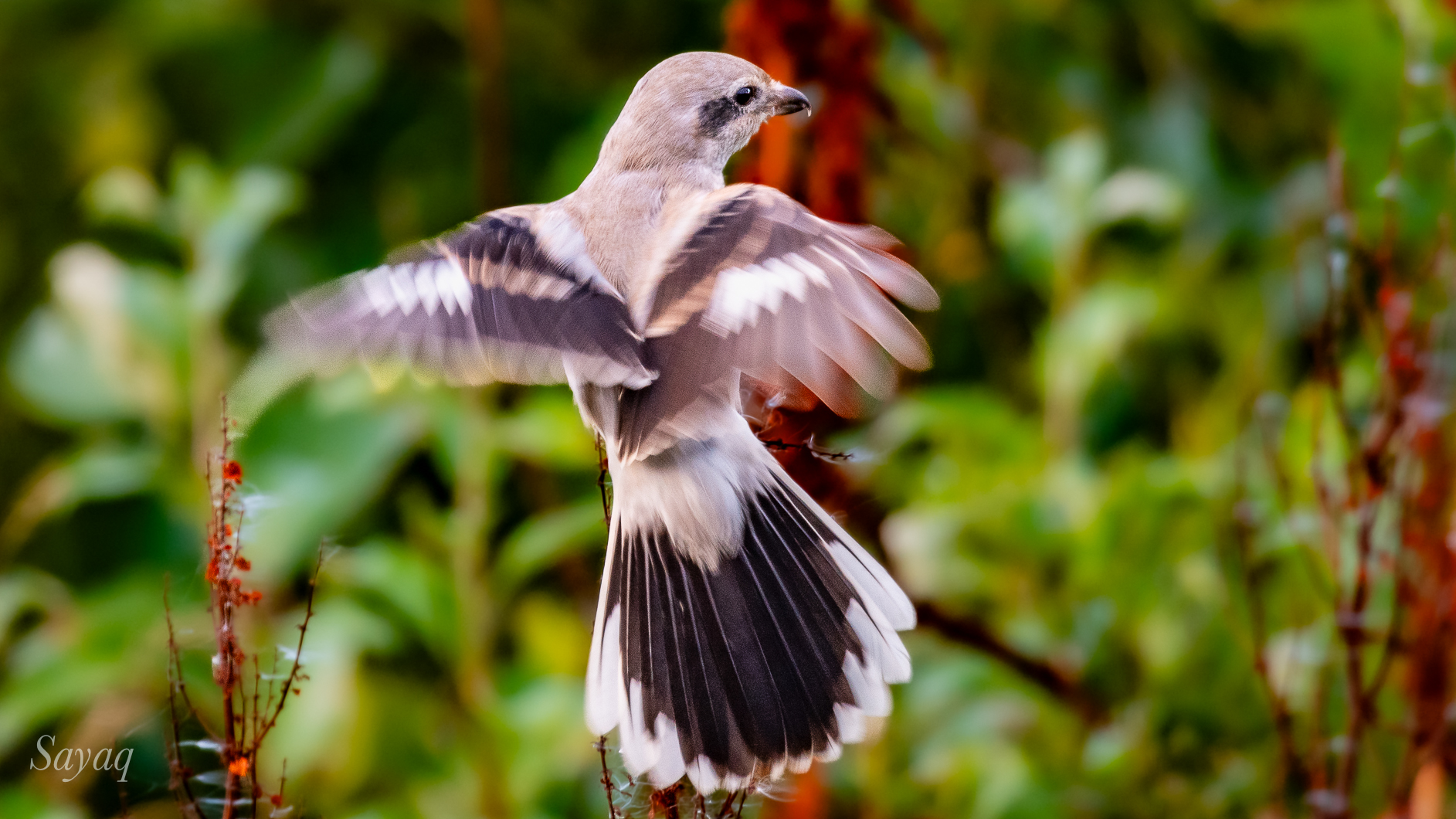
Autumn Shrike

Photograph of a Northern Shrike in flight as it settles onto a roost of autumn-brown Dwarf Birch.
Autumn Shrike – Northern Shrike burdock gone to rust and seed, Chignik Lake, 9/10/17
The brownish color of this shrike indicates a first-year bird. Mature adults are more gray, and the black eye mask is sharply defined and really pops. At The Lake, Northern Shrikes are typically arrive in late summer and remain common through fall with occasional specimens remaining into winter.

Spring Angels

Spring Angels
Returning Tundra Swans, flying above the Chignik River – Chignik Lake, March 17, 2017

At first it seemed counterintuitive to process this picture captured on a blue sky spring afternoon as a monochrome image, but I like the moodiness. I don’t know… what do you think?
The Swans at Broad Pool

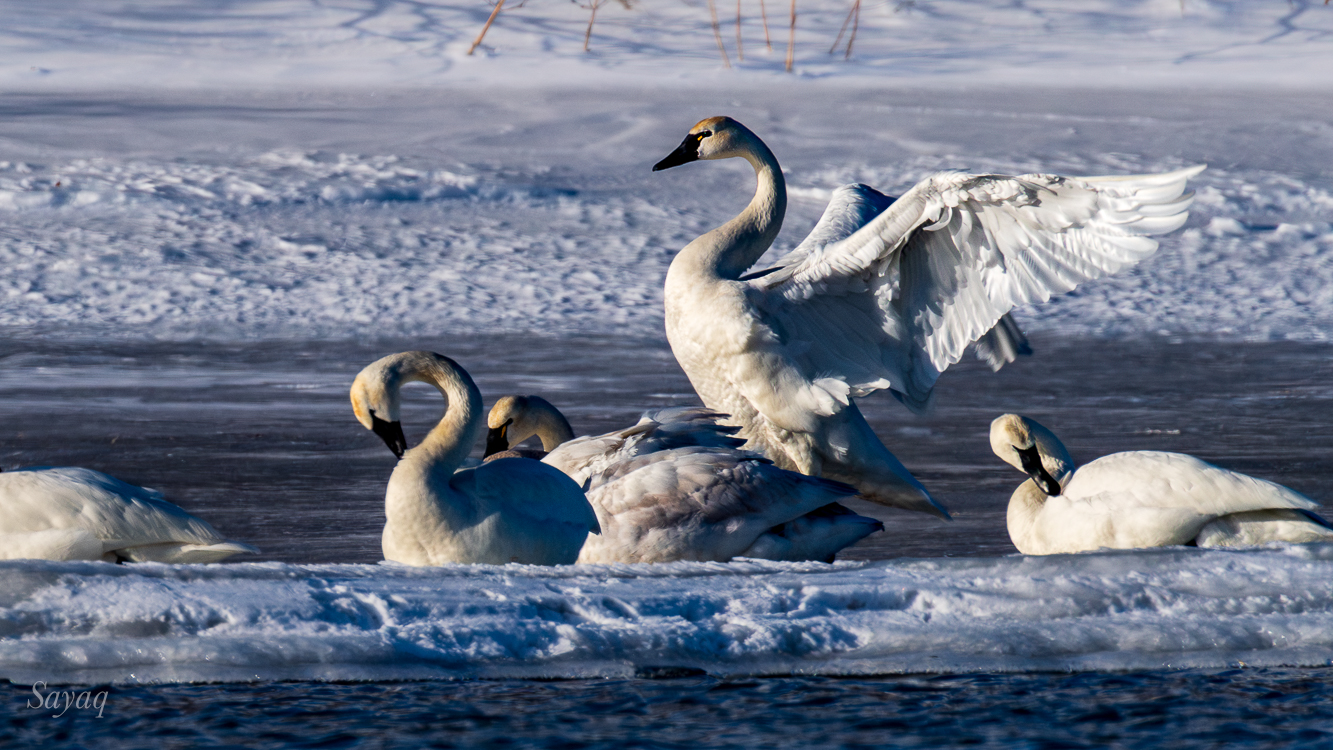
The Swans at Broad Pool Chignik River, 3/16/17
Each March, residents of Chignik Lake begin checking Broad Pool for early signs of spring – arriving flocks of Tundra Swans. The best swan viewing occurs in years when the river is partially iced over and therefore closed to boat traffic. This expansive pool has abundant Water Crowfoot, an aquatic vegetation preferred by swans and dabbling ducks. The swans, which mate for life and can live to be over 20 years old, will rest here and in other quiet water in the Chignik Drainage for up to a few weeks before breaking off in pairs and heading to tundra nesting sites on the Bristol Bay (northwest) side of the Alaska Peninsula. As human activity continues to cause the planet to warm and years of ice become fewer on the Chignik, Broad Pool may no longer provide a suitable resting place for returning waterfowl. Things are changing… fast. Get out and observe, photograph, document.

At First Sight…

Portrait of a mated pair of Sandhill Cranes facing each other in a field of flowers somewhere along the Alaska-Canada Highway... a Valentine's Card, #love.
At First Sight… We came upon this pair of Sandhill Cranes somewhere along the Al-Can – the Alaska-Canada Highway – on a drive north to Alaska. I’m always reminded of my first date with Barbra… the pink jeans she wore. I like the way the male crane’s beak is hanging open… a proper response.
Happy Valentine’s Day – for all you love
July 20, 2012

Spring Green

Spring Green Female in the lead and the trailing drake’s head lit up in the iridescent green that has earned the species the vernacular sobriquet “greenhead,” a pair of Mallards coast in for a landing on the Chignik’s Broad Pool. About a mile downriver from the village of Chignik Lake, the pool covers over 16 acres – approximately the size of 13 football fields including the end zones. Shallow and weedy, it is gathering place for returning springtime migrants such as Tundra Swans and genus Anus ducks (Mallards, Green-winged Teal, American Wigeons and Pintails). Slowly going through The Chignik Files, if and when I come across a good picture of Broad Pool, I’ll be sure to publish it. Since I’m in a March file right now, I am certain there will be photos of Tundra Swans, so look for a photo or two of these regal harbingers of spring in the near future. (March 14, 2017)

Knighted by a Finch

Male Pine Grosbeak, Chignik Lake, Alaska, February 3, 2017
Actually not grosbeaks at all but a member of the finch family, their large beaks are useful for feeding on leaf buds, much as ptarmigan which have similarly robust beaks.

I had only recently acquired the kind of camera equipment necessary for serious avifauna documentation when one fall morning as I was walking through the village, 20 pounds of camera, lens and tripod slung over my shoulder, a flock of Pine Grosbeaks descended all around me in the willows, scrub alders and salmonberry brakes along the dirt road. I knew the species from books but had never encountered them. Keen to get photographs, I set up to shoot. No sooner was I in position than one of their tribe flew over, rested for a moment on the long lens of my camera, and then hopped onto on my head. A passage from Walden came immediately to mind:

  “I once had a sparrow alight upon my shoulder for a moment while I was hoeing in a village
  garden, and I felt that I was more distinguished by that circumstance than I should have been by any epaulette I could have worn.” (Thoreau, Walden, “Winter Animals”)

I quickly made photographs documenting the species’ presence in that part of the world (David Narver did not observe them in the Chignik Drainage during his field work in the early 1960’s, and they are listed as “rare” or “uncommon” on peninsular checklists), but the species proved to be common in the years we were at The Lake and year by year I improved on those first pictures. As I continue sorting through the many thousands of photographs comprising “The Chignik Files,” I will show other photos of these beautiful finches… the Cardinal of the Far North.

Superb Owl Sunday!

Boreal OwlDenali National Park, June 6, 2017

I’ve gone around knocking on hollow trees most of my adult life, hoping a flying squirrel or owl would pop it’s head out. And then one day, it happened!
Down the Hatch!

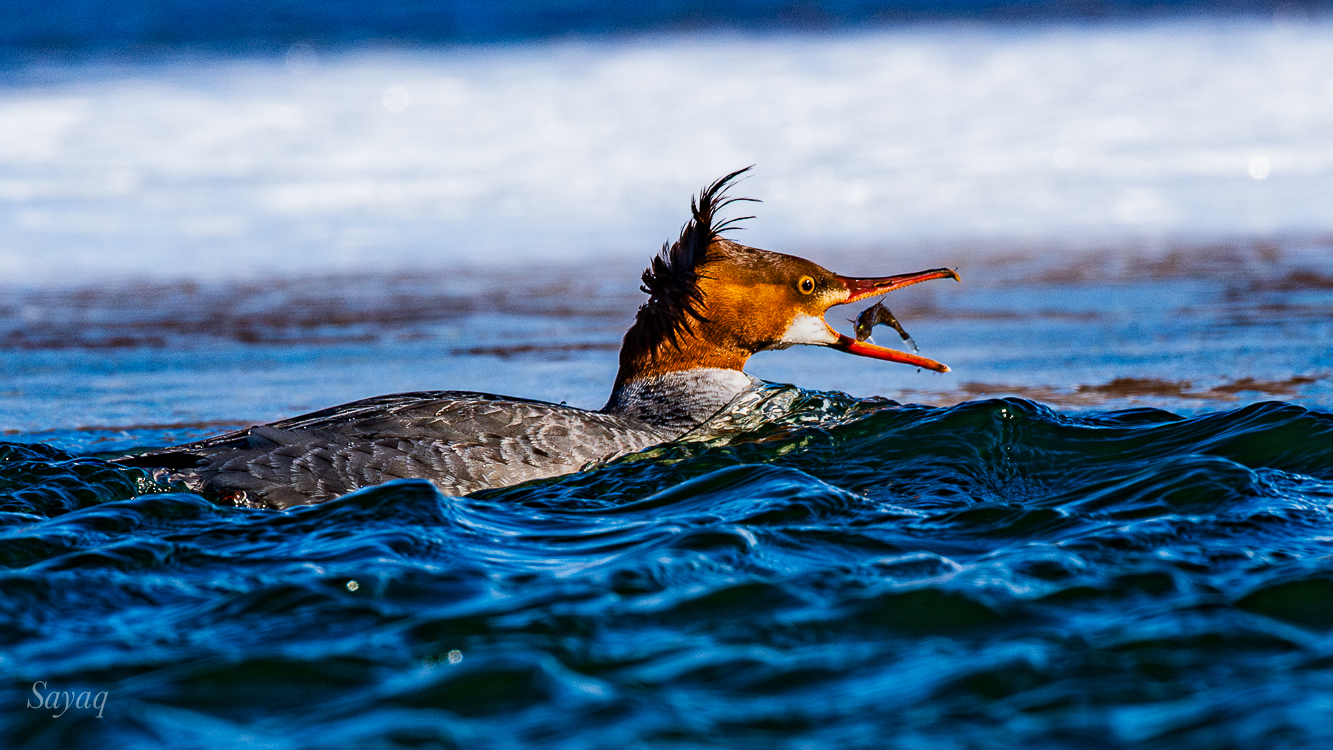
Down the Hatch!Female Common Merganser flipping and turning a Three-spined Stickleback to gulp it down head first. Chignik Lake, March 14, 2017