Birds of Chignik Lake – Tundra Swan: Harbinger of Springtime at The Lake

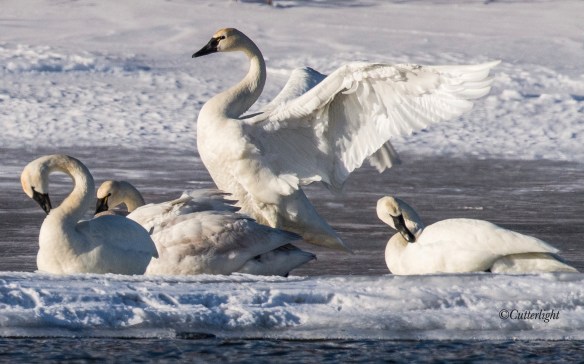
There may be snow on the ground and ice in the river, but when Tundra Swans begin showing up on the Chignik you know spring can’t be far behind. (March 16, 2017)

We were told that when swans show up on the river below the old dump, it’s a sure sign spring is on the way. While it seems possible to encounter Tundra Swans somewhere in the Chignik system in virtually any season (provided there’s open water), in early spring they’re still traveling in flocks, making it a good time to look for them. Prior to breeding, they’re often found with newly arrived ducks – Mallards, Northern Pintails, Buffleheads and other species.

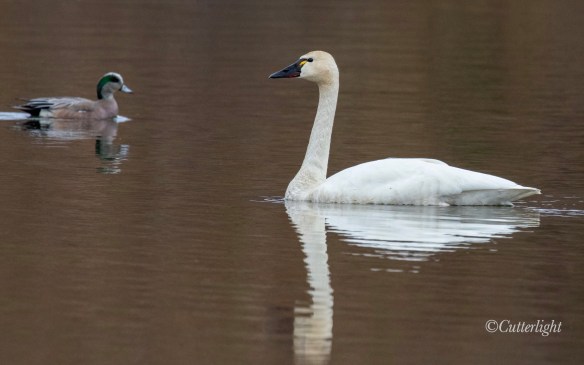
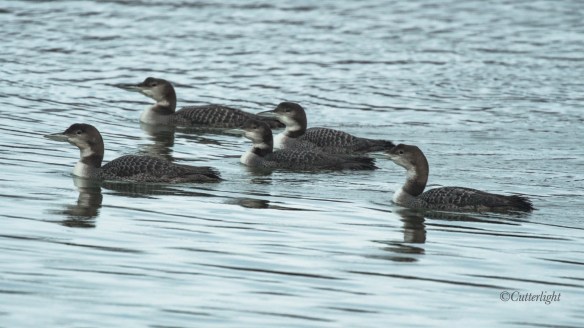
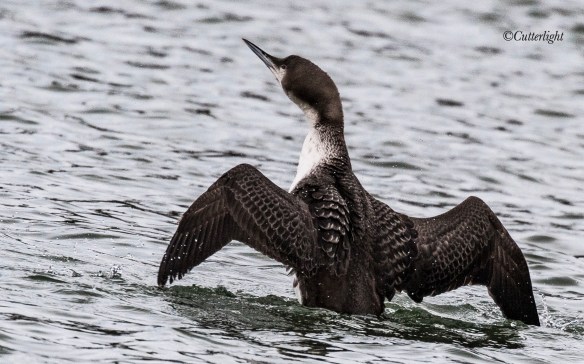
This Tundra Swan was part of a pair we found feeding with a small group of American Wigeons on the Chignik River. The yellow lores and a very white back are diagnostic. (May 4, 2019)

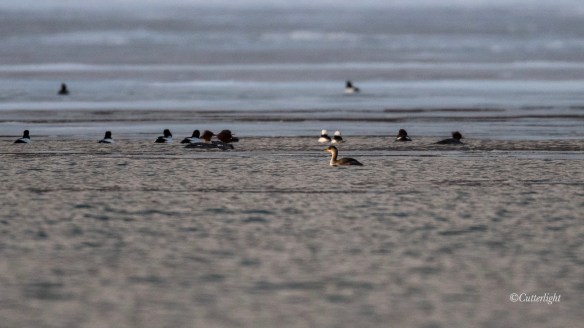
Swans and Ducks gather on The Chignik in Spring. In addition to the scaup, Mallards, Common Goldeneyes, and Buffleheads in this frame, Northern Pintails, and Red-breasted and Common Mergansers are often mixed in among the swans. (March 14, 2017)

A thin white line of several dozen swans underscores the Chignik Mountains at Black Lake. The shallow, weedy waters are important to waterfowl anytime the lake is ice-free. (January 3, 2018)

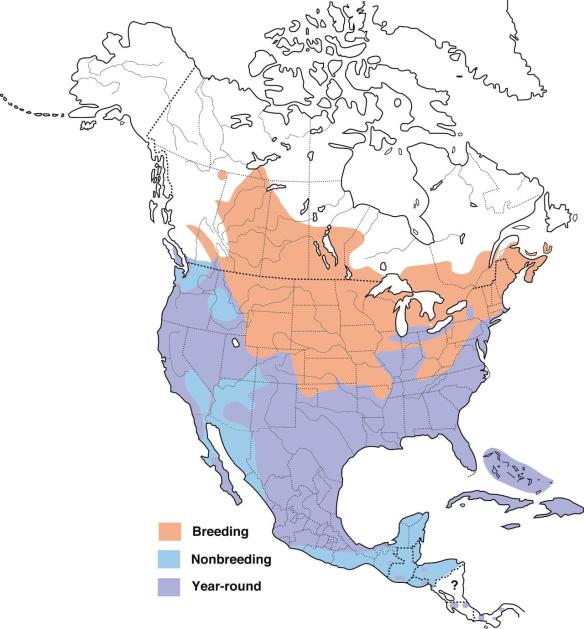
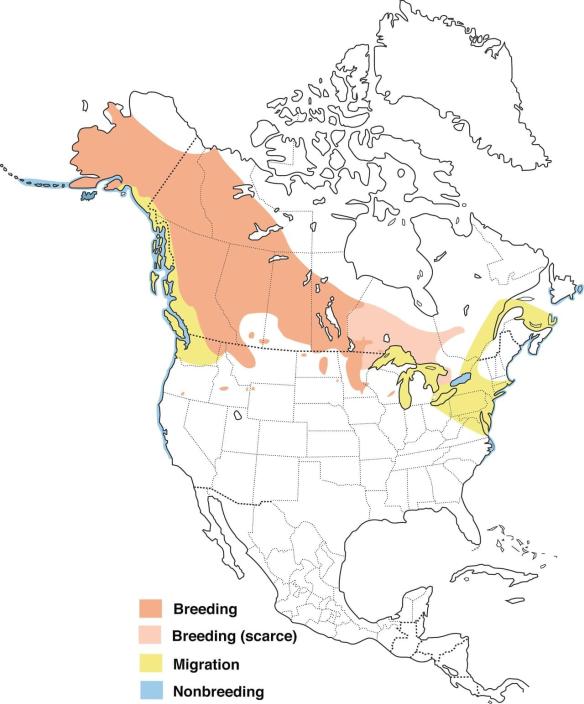
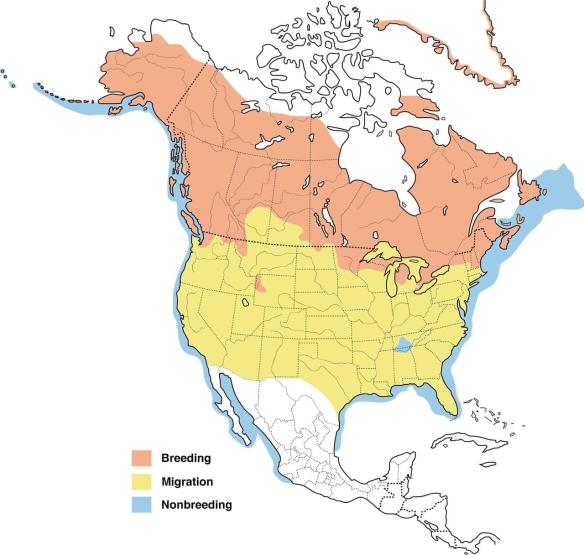
 Tundra Swan Range Map: with permission from The Cornell Lab of Ornithology, Birds of the World

Tundra Swan Cygnus columbianus
Order: Anseriformes
Cygnus: Latinized Greek for swan
columbianus: after the Columbia River (Meriweather Lewis of Lewis & Clark first named this species during their exploration across Northwest America)

Status at Chignik Lake 2016-19: 

David Narver, Birds of the Chignik River Drainage, summers 1960-63Uncommon on Black Lake

Alaska Peninsula and Becharof National Wildlife Refuge Bird List, 2010:
Uncommon in Spring & Fall; Common in Summer; Rare in Winter

Aniakchak National Monument and Preserve Bird List: Presence Documented

Previous Article: Pelagic Cormorant

Next Article: Emperor Goose – Alaska’s Painted Beauty

*For a clickable list of bird species and additional information about this project, click here: Birds of Chignik Lake

© Photographs, images and text by Jack Donachy unless otherwise noted.


Birds of Chignik Lake: Pelagic Cormorant

A hint of iridescent gloss in its plumage, a Pelagic Cormorants skims above Chignik Lagoon on a blue-sky day in late winter. Pelagics are common in The Lagoon where the fish they feed on are plentiful. Only very occasionally do they stray inland to the river and lake. (Chignik Lagoon, May 9, 2019)

My first close encounter with cormorants came at a pool I was fishing on Japan’s upper Tama River some years ago. I was in the midst of a fruitless morning when a cormorant of some sort showed up and elbowed its way into my pool. In no more than a few minutes it dove six times and caught six fish. Impressive.

Pelagic Cormorants are common all along the rocky, fish-rich Pacific side of the Alaska Peninsula. Red-faced and Double-crested Cormorants can be found along this coast as well. As for Pelagics, most of the very few we saw in the study area of this project were in flight as they headed up or down the Chignik System – perhaps from one side of the peninsula to the other.

Although their feet are webbed, cormorants’ middle toes are hooked – an aid in preening. 

Belying their common name, (and their binomial specific name, pelagicus), Pelagics rarely venture far out to sea, preferring rocky nearshore ocean waters.

This first-year Pelagic was encountered feeding below the salmon weir on Chignik River. (October 24, 2018)

Pelagic Cormorant Range Map: with permission from The Cornell Lab of Ornithology, Birds of the World

Pelagic Cormorant Phalacrocorax pelagicus
Order: Suliformes
Phalacrocorax: from ancient Greek name for cormorants – literally “bald raven”
pelagicus: of the open ocean

Status at Chignik Lake 2016-19: Uncommon/Occasional: At times are regular summertime visitors near the mouth of Clarks River on Chignik Lake

David Narver, Birds of the Chignik River Drainage, summers 1960-63Occasional on Chignik Lake after storms

Alaska Peninsula and Becharof National Wildlife Refuge Bird List, 2010:
Uncommon in Spring & Fall; Common in Summer; Rare in Winter

Aniakchak National Monument and Preserve Bird List: Presence Documented

Previous Article: Pied-billed Grebe

Next Article: Tundra Swan

*For a clickable list of bird species and additional information about this project, click here: Birds of Chignik Lake

© Photographs, images and text by Jack Donachy unless otherwise noted.

Birds of Chignik Lake: Pied-billed Grebe – an Alaska Peninsula First

As far as I can determine, this is the lone example of a Pied-billed Grebe recorded on the Alaska Peninsula. The facial striping indicates a first-year bird. (Chignik Lake, January 5, 2019)

The sun hadn’t yet peeked over the mountains rimming Chignik Lake when I noticed a small, grebe-like bird working a nearshore cove. I picked up the binoculars always handy near the living/dining room window and glassed the little bird.

The same bird as above in profile, skim ice in the background. (Chignik Lake, January 5, 2019)

Whoa! There’s a Pied-billed Grebe down below Fred’s! I exclaimed to Barbra. A couple of minutes later, I was clad in waders, camera fixed to its tripod slung over my shoulder. I quietly worked my way toward this out-of-place fellow. Wading out into the water, I stood still, hoping the bird might come closer to check me out.

The grebe did move in a little, but it was still a long shot and there was very little light. I set my aperture to its maximum opening, spun the ISO dial further than I would have cared to, and managed a couple of shots. Then the grebe swam off. Although it hung around for a few days, after that first morning it was always on the far side of the lake. And then it was gone.

From Wikipedia, a Pied-billed in summer plumage. (Mdf – First upload in en wikipedia on 21:02, 27 May 2005 by Mdf)

It’s hard to know what to make of a one-off such as this. Pied-billeds very occasionally have been reported in southern Alaska, but as the map below indicates, this individual was well beyond the typical range for this species. Things are changing in our world; it could be that Pied-billeds are pushing north. For now though, an occurrence such as this is best thought of as an “accidental.” In any event, I was happy to record this species. Maybe this small puzzle piece will have some significance in the future when others study the Chignik area.

Pied-billed Grebe Range Map: with permission from The Cornell Lab of Ornithology, Birds of the World

Pied-billed Grebe Podilymbus podiceps
Order: Podicipediformes
Podilymbus: Podi from Greek, refers to feet at the rear; lympus from the Greek kolympus = diver
podiceps: from Latin for rump-headed

Status at Chignik Lake 2016-19: Accidental

David Narver, Birds of the Chignik River Drainage, summers 1960-63: Not Reported

Alaska Peninsula and Becharof National Wildlife Refuge Bird List, 2010:
Not Reported

Aniakchak National Monument and Preserve Bird List: Not Reported

Previous Article: Red-necked Grebe

Next Article: Pelagic Cormorant

*For a clickable list of bird species and additional information about this project, click here: Birds of Chignik Lake

© Photographs, images and text by Jack Donachy unless otherwise noted.


Birds of Chignik Lake: Red-necked Grebe

What a beauty. The face striping marks this specimen as a juvenile. The Bend on the upper Chignik (just below the lake) proved to be a consistently reliable place to get close enough to waterfowl to score good photographs. (October 23, 2017)

Red-necked Grebes are another among the Chignik’s several fish-hunting birds. We didn’t see them often, but when they were on the lake or river we always grabbed our binoculars for a closer look. It’s a good bet that they breed on Black Lake or nearby tundra ponds.

Buffleheads, goldeneyes, mergansers… and center stage an adult Red-necked Grebe in nonbreeding plumage. (Chignik Lake, January 24, 2017)

These were two of three juveniles that visited the lake in the fall of 2017. (Chignik Lake, October 20, 2017)

Example of a Red-necked Grebe in breeding plumage. (Potter’s Marsh, Anchorage, Alaska. June 24, 2017)

Red-necked Grebe Range Map: with permission from The Cornell Lab of Ornithology, Birds of the World

Red-necked Grebe Podiceps grisegena
Order: Podicipediformes
Podiceps: from the Greek
podicis = rump – refers to the posterior positioning of the grebe’s feet
grisegena: from the Latin
griseus = gray & gena = cheek 

Status at Chignik Lake 2016-19: Occasional in Fall & Winter

David Narver, Birds of the Chignik River Drainage, summers 1960-63: Common on Black Lake; Rare on Chignik Lake

Alaska Peninsula and Becharof National Wildlife Refuge Bird List, 2010:
Uncommon in Spring, Summer & Fall; Rare in Winter

Aniakchak National Monument and Preserve Bird List: Presence Documented

Previous Article: Yellow-billed Loon

Next Article: Pied-billed Grebe – An Alaska Peninsula First

*For a clickable list of bird species and additional information about this project, click here: Birds of Chignik Lake

© Photographs, images and text by Jack Donachy unless otherwise noted.


Birds of Chignik Lake: Yellow-billed Loon

This handsome Yellow-billed Loon was hanging out in an eddy favored by piscivores on the Chignik River. During breeding season, in addition to a distinctive black-and-white chessboard back and bright red eyes, that massive bill would be a diagnostic lemon-sunshine yellow. (November 27, 2017)

When I began this project, I didn’t know that there was such a thing as a Yellow-billed Loon, so I was stoked when in November of 2016 a “different looking” loon sent me to my copy of The Sibley Field Guide. I’d love to see this species in its dramatic breeding plumage, but any sighting of this fairly rare bird constitutes a red-letter day.

What first drew my attention to the Yellow-bills I encountered was their size. Compared even with Commons, they’re large. And of course there’s that dagger Yellow-bills are armed with. While the bills of wintertime Commons can take on a light, blueish-silver color, there’s no mistaking the yellow in a Yellow-billed.

Salmon parr dimple the surface of The Bend on the Chignik River just below Chignik Lake. This is a good place to set a net for Sockeyes, cast a fly for Silvers, or check for fish-eaters such as otters, seals, eagles, kingfishers, mergansers and goldeneyes. (May 7, 2019)

—————————————————————

Range: Yellow-billed Loons are circumpolar Arctic breeders with about half of the world’s 10,000 birds living in Alaska. Their winter range includes the coastal waters of the Aleutian Islands, the Alaska Peninsula, and the Alaskan coast as it extends south and on into British Columbia. They are occasionally observed in fall and winter as far down the Pacific Coast as California, rarely to Mexico, occasionally to inland lakes.

Yellow-billed Loon: Gavia adamsii
Order: Gaviiformes
Gavia: sea mew
adamsii: after British naval surgeon & naturalist Edward Adams who collected and sketched this species

Status at Chignik Lake 2016-19: Occasional in Fall & Winter

David Narver, Birds of the Chignik River Drainage, summers 1960-63: Not Observed

Alaska Peninsula and Becharof National Wildlife Refuge Bird List, 2010:
Rare in Fall & Winter; Not Observed Spring & Summer

Aniakchak National Monument and Preserve Bird List: Probable but not Verified

Previous Article: Common Loon

Next Article: Red-necked Grebe

*For a clickable list of bird species and additional information about this project, click here: Birds of Chignik Lake

© Photographs, images and text by Jack Donachy unless otherwise noted.


Birds of Chignik Lake: Common Loon

Common Loon – Chignik Lake, August 17, 2018

Words such as “common,” “uncommon” and “rare” can be vexingly imprecise. So, what are the chances of seeing a Common Loon on Chignik Lake? Generally pretty good, which prompts the question: Have Common Loons – which David Narver recorded us “uncommon” back in the early ’60’s – become more common on The Lake in recent years? And if so, does that explain the relative absence of the smaller Red-throated Loon – which Narver reported as “common?” I love questions like this, even if the answers are tough to know.

These Commons appeared to be cooperatively feeding as they worked their way along the shoreline. (Chignik Lake, January 14, 2018)

We encountered Common Loons with some frequency – as individuals, in pairs, and at times in what appeared to be family groups of four or five. Commons’ diets are comprised mainly of small fish – lots and lots of them. According the Cornell Lab of Ornithology, a pair with two chicks can consume about half a ton over a 15-week period. Unlike River Otters, mergansers and goldeneyes, Commons usually swallow their prey underwater. I was therefore unable to observe what species of fish they might be targeting. Sticklebacks, small char and juvenile salmon are all likely candidates. The system also holds populations of smelt and sculpins.

Right down to it’s gem-like eye and armed with a serious bill, Common Loons surely rank as one of North America’s most striking birds. (Chignik Lake, August 17, 2018)

Even in silhouette, there’s no mistaking a loon. (Common Loon, Chignik Lake, August 20, 2016)

Common Loon Range Map: with permission from The Cornell Lab of Ornithology, Birds of the World

Common Loon Gavia Immer
Order: Gaviiformes
Gavia: sea mew
immer: perhaps from the Latin immergo – to immerse; or from the Swedish immer – which refers to the ashes of a fire and suggesting the loon’s coloration

Status at Chignik Lake 2016-19: Common to Uncommon

David Narver, Birds of the Chignik River Drainage, summers 1960-63Uncommon

Alaska Peninsula and Becharof National Wildlife Refuge Bird List, 2010:
Common in Spring and Summer; Uncommon in Fall; Rare in Winter

Aniakchak National Monument and Preserve Bird List: Presence Documented

Previous Article: Pacific Loon

Next Article: Yellow-billed Loon

*For a clickable list of bird species and additional information about this project, click here: Birds of Chignik Lake

© Photographs, images and text by Jack Donachy unless otherwise noted.


Birds of Chignik Lake: Pacific Loon

A Pacific Loon stretches between dives on a cold winter day. The Pacifics we encountered on Chignik Lake and Chignik River were wintertime visitors and therefore in their more drab plumage.  (Chignik River, January 12, 2018)

Pacific Loons are uncommon to occasional wintertime visitors on Chignik Lake and Chignik River. Although they sometimes appear in pairs, they didn’t arrive until well into wintertime and I saw no Pacifics in breeding plumage. As this species is known to nest on the Alaska Peninsula, it is possible that Pacific Loons could be found in spring and summer on Black Lake.

Abundant fish attract loons and other piscivorous birds to The Lake. As with other loons, in wintertime the estuary might be the best place to look for them. (Chignik Lake, December 5, 2017)

Several years before I got into birding (or serious photography), Barbra and I encountered this beautiful specimen in breeding plumage on a pond near Point Hope, Alaska. At the time, I didn’t realize that there is more than one species of loon! (Point Hope, Alaska, August 24, 2012)

Pacific Loon Range Map: with permission from The Cornell Lab of Ornithology, Birds of the World

Pacific Loon Gavia pacifica
Order: Gaviiformes
Gavia: sea mew
pacifica: of the Pacific region

Status at Chignik Lake 2016-19: Uncommon/Occasional

David Narver, Birds of the Chignik River Drainage, summers 1960-63: Not Observed

Alaska Peninsula and Becharof National Wildlife Refuge Bird List, 2010:
Rare in Spring and Summer; Uncommon in Fall and Winter

Aniakchak National Monument and Preserve Bird List: Probably Present but not Documented

Previous Article: Red-throated Loon

Next Article: Common Loon

*For a clickable list of bird species and additional information about this project, click here: Birds of Chignik Lake

© Photographs, images and text by Jack Donachy unless otherwise noted.


Birds of Chignik Lake: Red-throated Loon

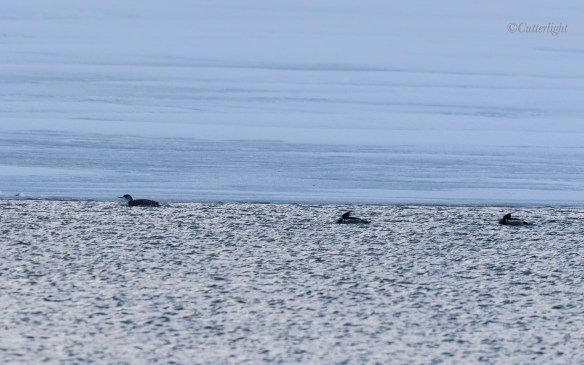
Fine and far off. In fly-fishing, the phrase refers to light tippets and long casts to wary trout. Here it refers to my lone Red-throated Loon sighting on Chignik Lake. It’s difficult to see the eponymous star-like speckling on its back in this photo, but a fine bill angled up slightly, a face showing more white than in other loons, and a smaller, more rounded overall profile add up to Red-throated. A pair of male Red-breasted Mergansers nap to the right on an icy Chignik Lake. (April 1, 2017)

Although Narver regularly encountered Red-throated Loons during his summertime observations in the early 1960’s, I recorded only one specimen during my three years at The Lake. This could reflect that in summertime Red-throateds mainly reside further up the watershed at Black Lake – and possibly breed there -, or it could indicate that in recent years Common Loons have supplanted their smaller cousins in the Chignik Drainage. Except for the breeding season, Red-throated Loons show a decided preference for salt water, so from fall through early spring Chignik Lagoon and nearby ocean waters – areas beyond the scope of this study – might be good places to check for them.

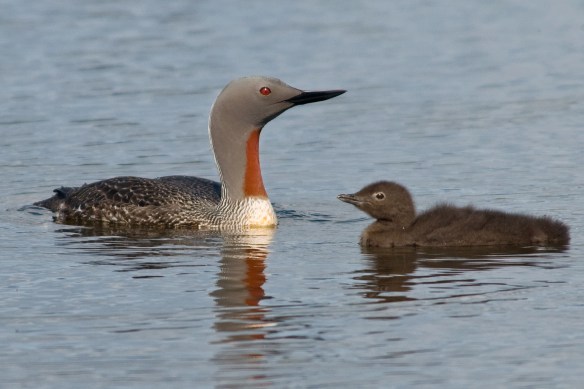
Red-throated in breeding plumage: Photo by David Karnå / Wikimedia Commons / CC BY 3.0

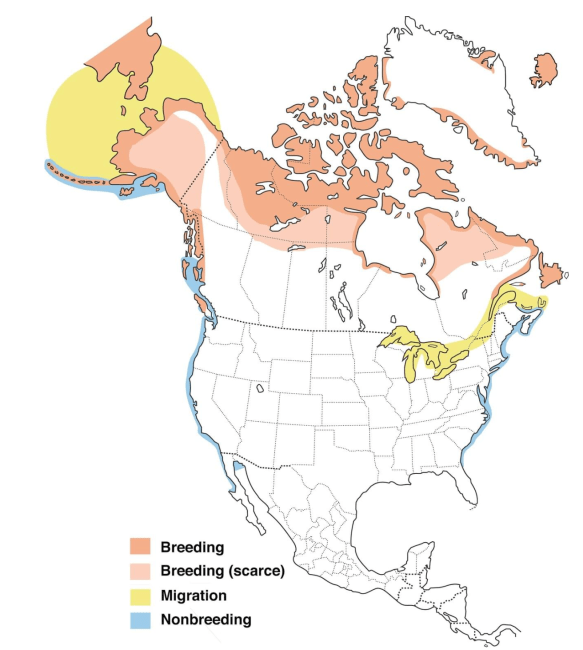
Red-throated Loon Range Map: with permission from Birds of North America

Red-throated Loon – Gavia stellata
Order: Gaviiformes
Gavia: sea mew
stellata: set with stars

Status at Chignik Lake 2016-19: Rare

Status on other relevant checklists:

David Narver, Birds of the Chignik River Drainage, summers 1960-63:
Common on Black Lake; Occasional on Chignik Lake

Alaska Peninsula and Becharof National Wildlife Refuge Bird List, 2010:
Uncommon in Spring and Summer; Rare in Fall and Winter

Aniakchak National Monument and Preserve Bird List: Presence Documented

Swallow Silhouette

Previous Article: Loons of Chignik Lake

Next Article: Pacific Loons

*For a clickable list of bird species and additional information about this project, click here: Birds of Chignik Lake

© Photographs, images and text by Jack Donachy unless otherwise noted.


The Loons of Chignik Lake

Beneath calm, blue skies a group of Common Loons cruise The Lake on a morning in late summer. In addition to Commons, I frequently encountered Pacific Loons. Yellow-billed Loons showed up two of three years, and just one Red-breasted Loon, which David Narver had reported as occasional in his earlier study, made an appearance in those years. Perhaps the estuary or the headwaters at Black Lack would have been a more productive place to look for the latter two species. (Photo: August 20, 2016)

Loons of The Lake

Of all the wild creatures which still persist in the land, despite settlement and civilization, the Loon seems best to typify the untamed savagery of the wilderness.
Edward Howe Forbush, Game Birds, Wild-Fowl and Shore Birds, 1916

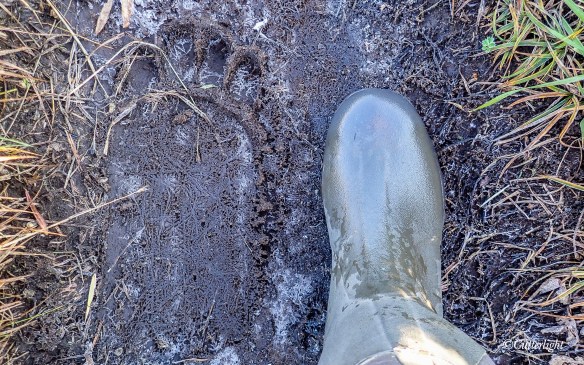
Often solitary, mysterious and romantically wild, it seems fitting that this project should begin with genus Gaviidae, the loons. We encountered our initial Chignik loons, a group of four Commons, in early August shortly after our arrival at The Lake. We had made our first hike to the mouth of Clarks River, three miles along quad trails that cut through willow and alder thickets and across rolling tundra, berry bogs and savannah-like meadows. Fireweed, yarrow, geranium and goldenrod were in full bloom, and electric flashes of yellow darting through brushy thickets offered tell-tale signs that warblers hadn’t yet migrated south. Along the way we took note of ripening blueberries, sampled the last of the salmonberries and measured our boots against the tracks of the Chignik’s massive Brown Bears – some of the largest in the world, we had read. Salmon parr flashed in air-clear pools at stream crossings and the prints of foxes, moose, wolves and Sandhill Cranes gave evidence that we were hardly alone in this sweeping landscape rimmed by snow-capped mountains.

Walking in the footsteps of giants. (September 24, 2017)

Two miles into the hike the trail curved down to a sandy lakeside beach. With huge paw prints coursing up and down the shoreline, the beach had the appearances of a Brown Bear superhighway. Vibrations transmitted through the sand by our own footsteps set the shoreline water into rippling motion as schools of salmon flipped their caudal fins and scurried for the safety of deeper water. Out on the lake, a pair of harbor seals popped up and gave us studied looks before slowly sinking out of sight.

This is amazing! we agreed.

Like River Otters, Red Foxes, and Black-capped Chickadees, ever-curious Harbor Seals can’t seem to help but pop up for a look when something new comes into their domain. Chignik Lake’s seals are not strictly lacustrine as is the Lake Iliamna population. However, in nearly every month there seem to be a few around. (March 9, 2019)

And then we spotted them: loons! Swimming together as they worked along the shoreline and occasionally diving to feed, they seemed unconcerned by our presence . At the time, the notion of making a multi-year study of The Lake’s birds was only barely beginning to form in my mind, and, as luck would have it, I had not brought my camera along on the six-mile round trip hike. Too bad. August was young and the birds were still wearing their distinctive chess-board breeding plumage. Their bright red eyes caught the sunlight as we watched through binoculars.

And then an odd thing happened. The loons began swimming closer to us. And closer. It was as though they were curious. We’ve had foxes, coyotes, otters, ermine, bears, whales, porpoises, Salmon Sharks and even a wolf engage in this behavior, and anyone who has spent time around chickadees knows that they often can’t help themselves from coming in to examine whatever has come into their territory. But loons? The very symbol of wilderness mystique? This was a new one for us. Soon, we no longer needed our binoculars. Even a simple pocket camera might have recorded a decent photograph. The soft morning light was perfect. Barely a ripple creased the lake’s calm surface.

As I bemoaned the fact that I had nothing to shoot with, Barbra consoled me with words of wisdom.

Just pet the whale.

Pet the whale… Nat. Geo. photographer Joel Sartore’s advice to sometimes set the camera aside and enjoy the moment you’re in. What a moment it was. Welcome to Chignik Lake.

Fireweed gone to seed. August 19, 2016.

Previous Article: The Chigniks – Avian Diversity and Change in a Remote, Unique Environment

Coming Next: Red-throated Loon

*For a clickable list of bird species and additional information about this project, click here: Birds of Chignik Lake

© Photographs, images and text by Jack Donachy unless otherwise noted.

The Chigniks – Avian Diversity and Change in a Remote, Unique Environment

The village of Chignik Lake is situated approximately halfway down the Alaska Peninsula. The Bering Sea lies to the northwest, the Alaska Gulf to the southeast, and the Aleutian Islands to the west. The main draw for birders are seabirds, but in this ever-changing landscape, you never know what will show up. Yellow-billed Loons and Tufted Ducks are among uncommon species occasionally seen here and passerines that have strayed well beyond their normal range show up every year.

The Chigniks

By any standards, the three tiny villages that comprise The Chigniks are remote. None of these communities have more than a few miles of road, almost all of which is unpaved. Where the roads end, a vast wilderness begins. From Lake Clark, located at what might be thought of as the peninsula’s hip, all the way to the big toe of Cold Bay, the entire area is comprised of 32,922 square miles, a size just slightly larger than South Carolina. Yet it is inhabited by fewer than 2,000 full-time residents. Humans are significantly outnumbered by the region’s Brown Bears, the latter some of the world’s largest specimens. In any given season, the population of each of the Chignik’s three villages ranges from about 50 to 70 residents, a bit more during summers of strong salmon returns as commercial fishermen swell the ranks. But even within these sister villages, there is a hierarchy of remoteness.
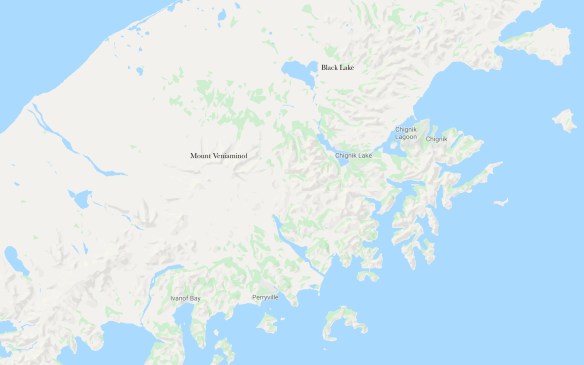
The three Chigniks – Chignik, Chignik Lagoon and Chignik Lake are situated halfway down the Alaska Peninsula on the Alaska Gulf side. On the peninsula’s northern side is famed Bristol Bay where tens of millions of wild Sockeye salmon are commercially netted each summer, making it the world’s most productive wild salmon fishery. Black Lake is the headwater lake of the Chignik system. Twenty-five miles to the west of Chignik Lake is Mount Veniaminof, an active volcano.

The Chignik Drainage begins with the headwater streams flowing into Black Lake, a relatively shallow, weedy body of water vital both as a Sockeye Salmon nursery and for the waterfowl habitat it provides. While some of the smaller streams are fed by the water soaked tundra surrounding the lake, the larger ones, including Black Lake’s main source, The Alec River, originate in mountain glaciers. The area is geologically active, with Mount Veniaminof 25 miles to the west occasionally belching smoke and ash – activity that is occasionally audible at Chignik Lake. The upper Chignik River, sometimes referred to as Black River, drains Black Lake and flows for approximately 13 miles before emptying into Chignik Lake. From its outlet at the eastern end  of the Chignik Lake, the Chignik River flows roughly six miles east into the brackish estuary called Chignik Lagoon.

The rugged, geologically young Chignik Mountains as viewed on the flight from Perryville. The most common way to reach Chignik Lake is by small plane; the local airstrip accommodates aircraft up to the size of a de Havilland Otter, a plane with a 10-seat capacity. The other way to reach the lake is to take a fishing boat or the ferry from Homer to Chignik (The Bay) and then transfer to a skiff for the run to Chignik Lagoon and up the Chignik River. (October 20, 2016)

The village of Chignik, often called Chignik Bay but locally referred to simply as The Bay, is an important commercial fishing hub. As a port of call on the Alaska Ferry system, it is the most cosmopolitan of the three communities. The village is home to a sport fishing lodge, a small general store and a boat harbor. Occasionally birders looking to add ocean species to their life lists and biologists conducting inventories visit The Bay. Thus the avian fauna in and near Chignik Bay is fairly well documented, though digging up an accurate checklist may prove challenging.
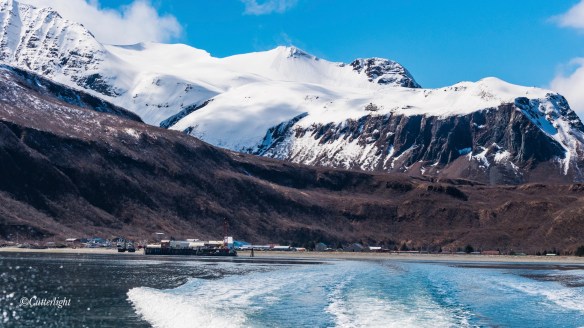
Tucked along a strip of beach and cradled by mountains, as a regular stop on the Ferry System Chignik Bay offers wildlife watchers an opportunity to check off a variety of seabirds and ducks as well as sea otters, seals, orcas, and whales. On shore, thick stands of alders and willow tangles provide cover and nesting sites for summer migrants including thrushes, warblers, and sparrows. Indian Creek, which flows through the village, can be a good place to watch spawning salmon and to perhaps get a look at American Dippers and Belted Kingfishers. (May 6, 2018)
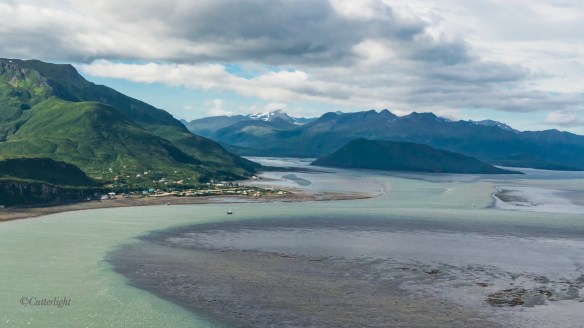
This is the view approaching Chignik Lagoon from the sea, looking toward the Chignik River. Chignik Bay lies a few miles around a small cape to the east. (August 14, 2018)

Chignik Lagoon is sprinkled along the shores of the estuary into which the Chignik River debouches. The tidally influenced mix of fresh and salt water is nutrient rich and a variety of species gather here to feed including Harlequins and Long-Tailed Ducks, cormorants, scoters, puffins and Marbled Murrelets. This is an important wintering area for Emperor Geese as well as a vital staging area for Pink, Sockeye, Chum, Chinook and Coho salmon preparing to ascend the Chignik River. From The Lagoon, the village of Chignik Lake is about a six mile skiff ride up the river. Along the way it’s common to see Brown Bears, Red Foxes, an occasional moose, and, less frequently, wolves, lynx, river otters, mink and possibly wolverine. Whenever salmon are in the system, Bald Eagles are abundant.
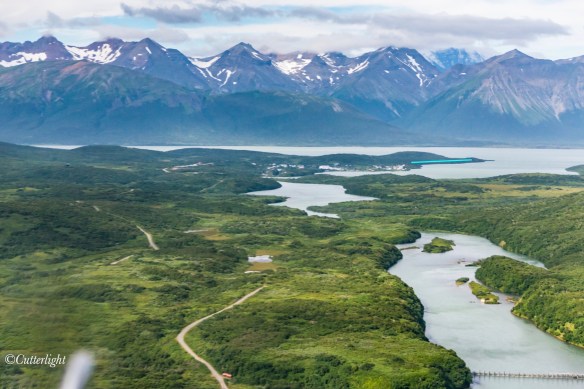
Hugging the shores of Chignik Lake just above its outlet into the Chignik River, the village of Chignik Lake (center) is comprised of a few houses and buildings and a sum total of about three miles of dirt road running from a short dirt airstrip (highlighted light blue, center-right) and terminating at a small boat landing on the river just below the bottom edge of this photo. Note the weir spanning the river, lower right. This guides migrating salmon toward an opening on the right-side bank where Alaska Department of Fish and Game personnel count them. All five species of Pacific Salmon found in North America enter the Chignik: Sockeyes, Pinks, Chum, Coho and Chinook, the numbers for all but Pinks have been depressed in recent years. A few Steelhead – the anadromous form of Rainbow Trout – also enter the Chignik. Dolly Varden char are abundant. (August 14, 2018)

Several factors contribute toward making the Chigniks in general and Chignik Lake in particular of interest to birders.

  • Varied habitat: From the headwaters to the Alaska Gulf, environmental features include marsh, bogs, tundra, kettle ponds, mountains, alder and willow thickets, grasslands, lakes, rivers, feeder streams, a few mature spruce trees, an estuary and the ocean.
  • Abundant and varied sources of food
  • The Chignik Drainage serves as a migratory passageway complete with sheltered, food-rich fallout areas.
  • Because this area is comparatively lightly studied and because the topography and therefore habitat are changing relatively rapidly, the possibility of recording a species new to the area is ever present.

Chignik Lake, August 14, 2016: Note the skiffs beached along the lakeshore. As the river is the only highway connecting Chignik Lake with other villages, eighteen foot aluminum Lund V-hauls are the region’s equivalent of economy-class pickup trucks. The relatively massive buildings in the center are the school and associated housing for teachers. Not long ago, when Sockeye runs were strong, as many as 60 students filled the classrooms. In recent years against a backdrop of declining salmon runs and a depressed economy, student enrollment has hovered around a dozen. A drop below 10 would result in a lack of funding from the state and would necessitate the school closing – a hard blow to a community already holding on by its nails. (August 14, 2016)

For a variety of reasons, I decided to confine this three-year study to a three-mile radius encompassing the village of Chignik Lake. With the threat of the school closing ever imminent, and thus Barbra’s teaching position at The Lake annually in doubt, investing in the skiff that would have been necessary to explore the upper and lower reaches of the Chignik system wasn’t practical. And in fact the reason we departed Chignik Lake at the end of three years was due to student enrollment falling below the state-mandated minimum of 10 and the school board consequently reassigning Barbra to Newhalen School further up the peninsula.

That being said, it should be noted that the entire Chignik Drainage ecosystem, from the headwaters at Black Lake to the estuary, is rapidly changing.

  • Jungle-thick alder growth is taking over much of the landscape, crowding out salmonberry brakes, swallowing tundra, and marching ever higher up mountain shoulders.
  • Winters are becoming milder. This has meant more rain, less snowfall, lighter snowpack, and possibly (this has been difficult to document with certainty), greater fluctuations in river and lake levels.
  • The lakes and river remain ice free for longer periods of time. In some recent years, neither Chignik Lake nor Chignik River have completely frozen.
  • Black Lake is showing signs of eutrophication marked by gradual shallowing, accelerated weed growth and warming.   
  • The estuary is accumulating greater loads of volcanic ash and other silt. This is spurring the growth of eel grass and other vegetation. In turn, these grass beds capture silt, thus contributing to a process of salt marsh expansion.
  • Chignik Lake and the main river also appear to be growing siltier and weedier.
  • White Spruce and other non-native evergreens which were introduced shortly after Chignik Lake became a permanent settlement in the 1950’s are now mature, providing shelter, nesting habitat and food for a variety of bird species.

A Brown Bear with a fresh salmon follows a trail up a Chignik River bank leading into a tunnel of vegetation. Every elder I’ve spoken with in the Chigniks tells the same story: the water is weedier and the trees are thicker than in the past. (September 22, 2018)

While a paucity of quality photographs or other documentation makes it impossible to quantify changes in terrestrial vegetation, there seems to be little doubt that tundra is disappearing, that alders have become dominant, and that these changes are impacting bird populations. As an example, Narver made no observation of woodpeckers during his four summers studying the drainage back in the early 1960’s and elders maintain that they are a relatively new bird to the area. Though they still aren’t abundant, in recent years virtually every resident has noticed Downy Woodpeckers in and near the village.
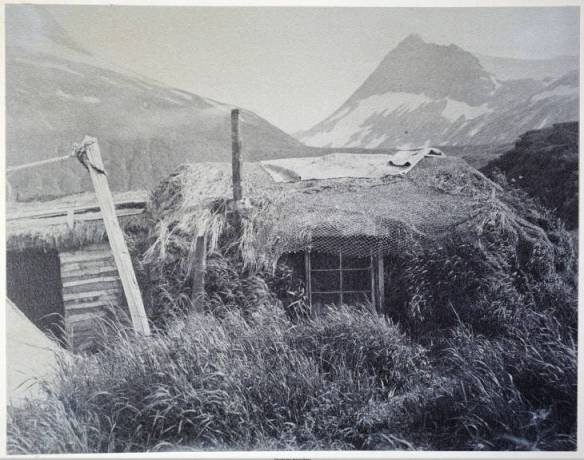
Thick grasses overtake this old-time wood and sod home at Chignik Bay, an area that has been inhabited for approximately 2,200 years. Stone tools found at temporary sites further up the peninsula indicate that humans have been utilizing the Alaska Peninsula’s abundance of natural resources for at least 9,000 years. (Barabara at Chignik, 1909: Alaska State Library – Historical Collections, PO Box 110571, Juneau AK 99811-0571; mailto:ASL.Historical@alaska.gov)

By contrast, Willow Ptarmigan, which Narver reported as “common” in the early ’60’s, are gone; no one saw or heard a sign of them during our three years at The Lake. While it could be that hunters have extirpated them locally, an equally likely explanation for their disappearance is that ptarmigan habitat has disappeared.

At the same time, undocumented observations and recollections can be notoriously inaccurate. Local residents misidentified Northern Shrikes as Camp Robbers (Canada Jays) and believed them to be a new species to the area. However, Narver noted shrikes in his study. During the three years of this study, they were common. It is possible that this species is intermittently present.

When the lupine bloom, the bumblebees get busy. Bombus ternarius, I think – an Orange-striped or Tri-colored Bumblebee. As is true of The Chignik’s birds and vegetation, local insect life, too, is no doubt changing. (June 19, 2019)
The wisest course regarding anecdotal accounts is to seek corroboration. However, that can often be challenging. In old photographs the landscape is generally a background blur, defying attempts to determine whether one is looking at alders, salmonberries or other vegetation. When did the lake freeze solid, on average, back in the 1960’s? Were the lake and the river always as turbid by late summer as they now are? What year were the first White Spruce trees planted? At one time, the story goes, there was a resident who knew how to catch the Chignik’s “Rainbow Trout” (most likely Steelhead), but he’s gone and the specific answers to such questions as when, where and how to go after these fish are gone with him. Among the little yellow and green birds that visit the area each summer, are there ever any Arctic Warblers in the mix? Is the absence of Ospreys due to the lack of a suitable nesting site, or are other factors at play?

These and many other questions remain open to inquiry by anyone with the curiosity and time to venture out into the Chigniks and explore. Each discovery and observation is a puzzle piece to be fitted into a larger picture in this fertile, dynamic, and rapidly changing ecosystem.

Next Article: The Loons of Chignik Lake

*For a clickable list of bird species and additional information about this project, click here: Birds of Chignik Lake

© Photographs, images and text by Jack Donachy unless otherwise noted.