Alaskan Clam Chowder

New England Style Clam Chowder garnished with a slice of lemon and salmon berry blossoms. All fruit blossoms are edible, and in addition to being beautiful, some are downright tasty.

These days, there seems to be a trend toward making New England Style Clam Chowders thicker and thicker. Unfortunately, to our taste, the thickness is achieved by adding lots of flour, resulting in a somewhat pasty if not downright bland bowl of soup. Our favorite chowders put clams and potatoes up front and emphasize flavor over thickness. We make both New England Style and Manhattan Style Clam Chowders in large pots, freezing the finished product in smaller containers and pulling them out on cold nights throughout the winter. While this is a great way to put to use all the razor clams we used to dig in Oregon and now dig in Alaska, it works well with other kinds of clams, too, as well as with canned clams such as the big, 51 ounce (3 pounds, 3 ounces) cans of SeaWatch chopped clams sold at Costco and other stores. The recipe is never the same twice. The one below is a recent version. One of the keys is to use not more than twice the potatoes, by weight, as clams.

Up here in bush Alaska, many of the communities are “dry” and I can’t use one of my favorite ingredients–sherry. If I could, I would add about a 1/4 cup of a quality dry sherry such as Dry Sack.

Ingredients: (We cook with dairy products from grass-fed cows, which research increasingly is showing is a significantly more healthful choice than dairy from cows fed on grain and processed feed.)

  • 3 pounds razor clams, chopped coarse (This is the weight of clams after they have been drained. But save and set aside their juice.)
  • clam juice you’ve set aside. The more, the better.
  • 4 1/2 pounds Yukon Gold or yellow potatoes. (These cook up creamier than Russets)
  • 2 sweet onions, chopped coarse
  • 1/2 pound bacon, cut into small pieces
  • water (as needed to cover potatoes while cooking)
  • 4 cups milk
  • 2 cups heavy cream
  • 6 cloves of garlic, chopped fine
  • 1/2 cup flour
  • 4 tablespoons olive oil
  • 4 tablespoons butter
  • 2 tablespoons sea salt
  • 1/2 tablespoon Italian seasoning (The Spice Hunter’s Italian blend is excellent)
  • 1 teaspoon freshly ground pepper (either black or rainbow)
  • 1 teaspoon dry tarragon, crushed (optional)
  • 1/2 teaspoon nutmeg (optional)
  • 5 – 7 very thin slices of lemon

1. Wash potatoes and remove any eyes, but do not remove the skins. Cut into ½ inch cubes and place in a large bowl. Set aside.

2. Fry the bacon pieces till tender. Do not crisp. Drain the grease and set aside.

3. In a large pot, add the olive oil and heat over medium-high. Add onions, stirring frequently for about five minutes until they begin to turn translucent. Add garlic and stir again.

4. Add flour and stir in thoroughly. Add two tablespoons of butter (or more olive oil) if necessary to completely mix in the flour.

5. Immediately add clam juice and milk. Stir.

6. Add potatoes, seasonings and salt and enough water to cover all. Slowly bring to a simmer and cook until potatoes become tender, stirring occasionally. About 45 – 60 minutes.

7. Add cream and lemon slices and return to just under a simmer or barely simmering.

8. Add the clams and the remaining butter and turn heat to low. On a propane stove, you may need a flame tamer. Continue cooking for 10 minutes.

Serve with a big hunk of toasted sourdough bread and a Chardonnay, a Pinot Gris, or a good ale.

Cloudberry Sorbet – Sublime!


Growing seasons here in the Arctic are short, and the cloudberries are at the end of theirs. Yesterday was our last opportunity to go picking. After a big pancake, egg and bacon breakfast at a friend’s house, our principal offered up the school’s suburban, so six of us drove out to the end of 7-Mile Road where the berries were rumored to be larger than those we’d previously found.

The thermometer read 50, but the chilly wind tugged much of the warmth away, making us happy to be dressed in warm layers. Small songbirds seemed to be everywhere, and a few jaegers patrolled the tundra looking for easy prey. Off in the distance, a majestic snowy owl glided from perch to perch, probably hoping to catch one of the incredibly fat ground squirrels that inhabit the tundra off-guard. Some of the berry patches were completely over, and others were full of fruit past their peak. But here and there we found berries that were just right, liquid amber in color and perfectly sweet. It took Jack and me about an hour to pick 10 cups.

Like everything else that grows on the tundra, cloudberry plants reach only a few inches off the ground. They grow in clusters on low mounds that rise a foot or so above the wet ground. Picking them requires lots of squats and bends making for a good workout. Jack was doing an uncharacteristic amount of berry eating while he was picking and finally came to a conclusion: “These berries would make really good sorbet.” Although I’d never made sorbet, I knew right away that he was onto something.

Back home, I processed the berries. The first step was to wash the berries. This proved to be much easier than my experience with other berries because there are virtually no bugs up here. The next step was de-seeding the berries. After unsuccessfully trying to smash the berries through two different sized strainers, I remembered I had cheesecloth. I loaded batches of pureed berries into the cheesecloth and squeezed the delicious fruit into a bowl until all that remained in the cheesecloth were bright pink seeds.

A couple of years ago, our daughter gave us a Cuisinart ice-cream maker. An electric ice cream maker may seem like an extravagant thing to ship to a home in the Arctic, but it has added a lot of enjoyment to our lives in both making and eating ice cream.

Sorbet is easy. Syrupy sugar water and a little lemon juice go into the freezer bowls along with the seeded, pureed fruit. This mixture is slowly churned for about 30 minutes. We love berries, but I think these are my favorites. The color is a rich salmon orange. The smell is sweet and tropical, with mango, papaya and peach flavors, and there’s a natural creaminess about them. Making one-quart batches, we ended up with a gallon of sorbet. We envision serving this in cookie bowls, with a few pieces of dark chocolate, or along with with homemade vanilla ice cream as a sumptuous 50/50 dessert.

Cloudberries and Freezer Jam

Ball Jars filled with freshly-picked cloudberries (often locally called salmon berries). We’ll add a little lemon juice, pectin, and sugar to the crushed berries, mix and simmer this in our bread maker for an hour-and-twenty minutes, pour the mixture back into the jars and put them in the freezer to set. This will provide us with some of the most tantalizing jam imaginable. Cloudberry jam… 

The morning was cool and cloudy, with mist and banks of fog rolling across Point Hope. We’d been told that we’d find berries about three miles east of town along Seven-Mile Road, and so seven of us had gathered to make the hike out. Two of the men carried 12 gauge shotguns and a third carried a side arm. Bears are always a possibility.

The wildflowers which all but carpeted the tundra when we arrived here nearly a month ago are mostly gone now, though here and there a few tiny yellow Alaska poppies and beautiful blue but deadly monkshood and other flowers are still blooming. And then, right about at three miles just as we’d been told, there they were… cloudberries, growing together in small patches where mounds of earth were just high enough above the boggy tundra to allow roots to drain. The unripe cloudberries (Rubus chamaemorus) were deep red and beautiful. The ripe ones are the amber-orange color of Chinook salmon flesh, giving their close relatives, salmon berries (Rubus spectabilis), their names.

Wherever cloudberries grow across the upper latitudes of North America and Europe, they are a prized delicacy, agreeably tart when barely ripe, becoming creamy rich and sweet as they continue to ripen. They contain twice as much vitamin C as oranges. Growing very close to the ground, the berries were surprisingly inconspicuous at first. But once our eyes adjusted to what we were looking for, the tundra seemed to sparkle with their red, orange and amber glow.

We picked for about two hours, happy to have worn Muck Boots as we slogged through the soft, wet ground. By the time hunger caught up with us and it was time to head back, Barbra and I had about three pounds of berries between us–enough for a few jars of the freezer jam which would make the hike well worth the effort.

On the walk back, the sun began to push its way through the thinning clouds, lighting the land around us. It was then that Barbra and one of our friends spotted a large white bird perched motionless on a hump out on the tundra. “It’s got to be an owl,” I said. “Let’s see.” We made our way toward the white shape until there was no doubt we were looking at a large snowy owl. These owls are huge, the heaviest in North America. When it finally spread its magnificent wings and lifted off, it revealed an underside of almost pure white–a male in its prime, grown fat on ground squirrels.

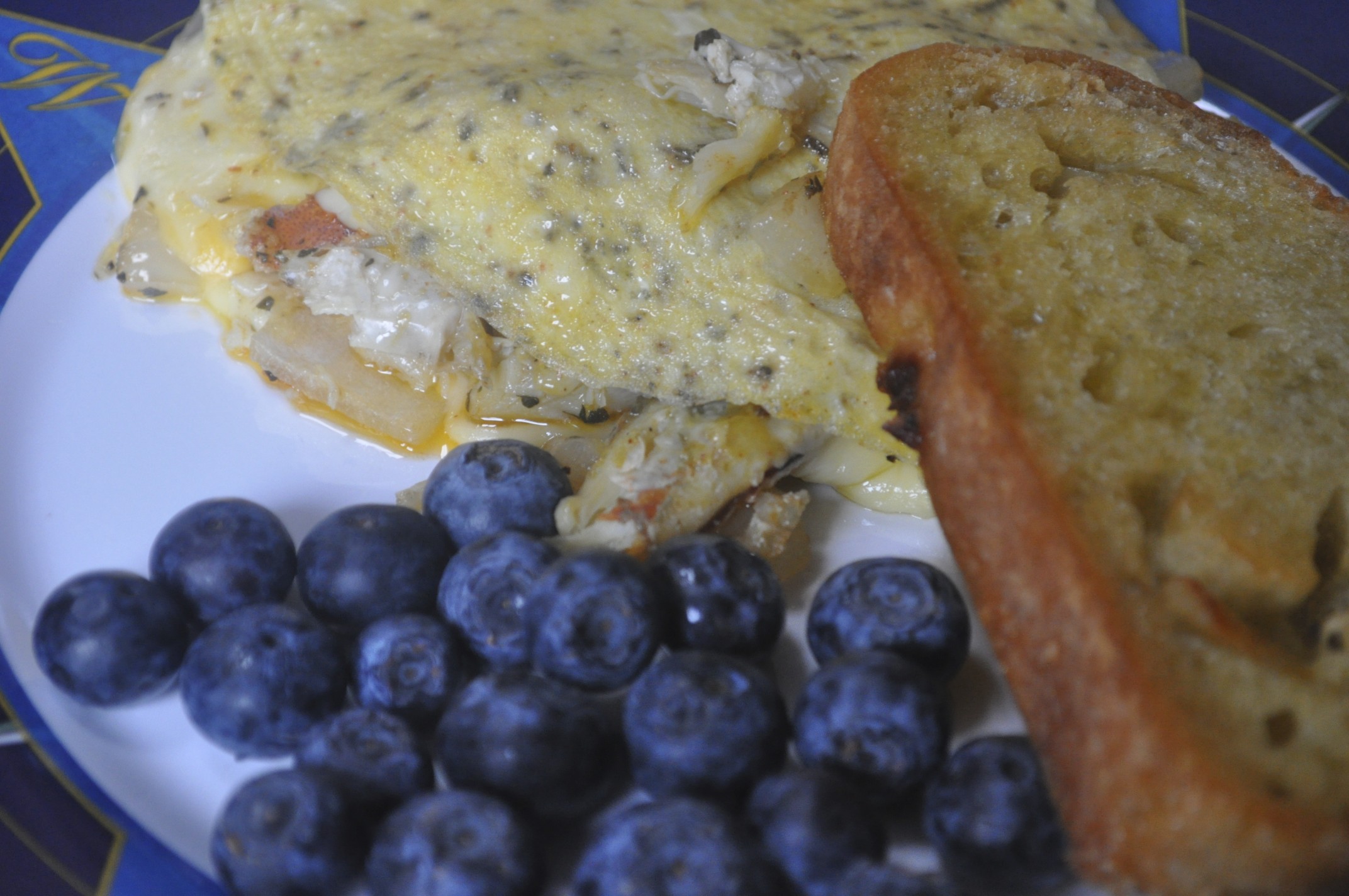
3-Egg Dungeness Crab Omelet

The previous evening, we had split a bottle or two of Willamette Valley Chardonnay and enjoyed a late dinner, watching the Fourth of July fireworks over Resurrection Bay from our camper while leisurely picking a couple of beautiful Dungeness crabs which I’d steam-boiled in miso soup. One of the things we love about meals like this is anticipating the omelets we’ll enjoy the next morning made from leftovers. Crab omelets run neck-and-neck with omelets made from fresh halibut or yelloweye rockfish as our very favorites. And, as it happens, I have an 11″ Swiss Diamond frypan that is perfect for making a three-egg omelet. (If you haven’t experienced cooking with Swiss Diamond cookware, we highly recommend you give it a try. Cooking eggs and fish, in particular, is a revelation.) One of the keys to making a good omelet is to heat ingredients in a separate pan before placing them on the egg.

Three-egg Dungeness Crab Omelet

  • 3 eggs
  • 1/2 cup shredded cheddar cheese (I often use Tillamook cheese, and sometimes English-style cheddars.)
  • Cholula hot sauce (Cholula is more robust than Tabasco without being hotter)
  • mixed Italian seasonings. (You can add separate ingredients, but the mixes made by Morton & Bassett or The Spice Hunter are very good)
  • freshly ground pepper
  • 1/2 teaspoon sea salt
  • olive oil (or butter)
  • 1 or 2 tablespoons of sherry (The better the sherry, the better the final product. I often use Dry Sack.)
  • 1/2 cup (or more) of cooked Dungeness crab meat

1. Place olive oil (or butter) in a 10 to 11 inch frypan and heat over medium-low heat, making sure to coat the entire bottom of the pan.

2. In a small bowl, add the eggs, Cholula, Italian seasonings, sea salt and sherry. Whisk thoroughly.

3. Pour the egg mixture into the pan. Make sure it doesn’t cook too quickly. You want it to be gently simmering, not frying.

4. Meanwhile, in a separate pan, heat a little olive oil and warm up the crab meat over low to medium-low heat.

5. When the egg is nearly cooked through but still a little moist on the upper surface, place the shredded cheddar and the crab meat on the egg. Add an additional couple of grinds of pepper, seasoning or salt, if desired. Place the cheese and crab in the middle of the egg and fold the two sides toward the middle, or arrange evenly on one half and fold the other half over.

6. Cover the pan with a lid and continue cooking on low heat until the cheese is melted–about two minutes.

Serve the omelet with  your favorite salsa, slices of avocado, or seasonal berries and a slice of bread pan-fried in olive oil. This dish isn’t just for breakfast and pairs equally well with a dark roast coffee or a good Chardonnay or Viognier. White meat fish such has halibut, rockfish or walleye can be substituted for the crab. Serves two.

Titanium Rings

July 14, Seward:

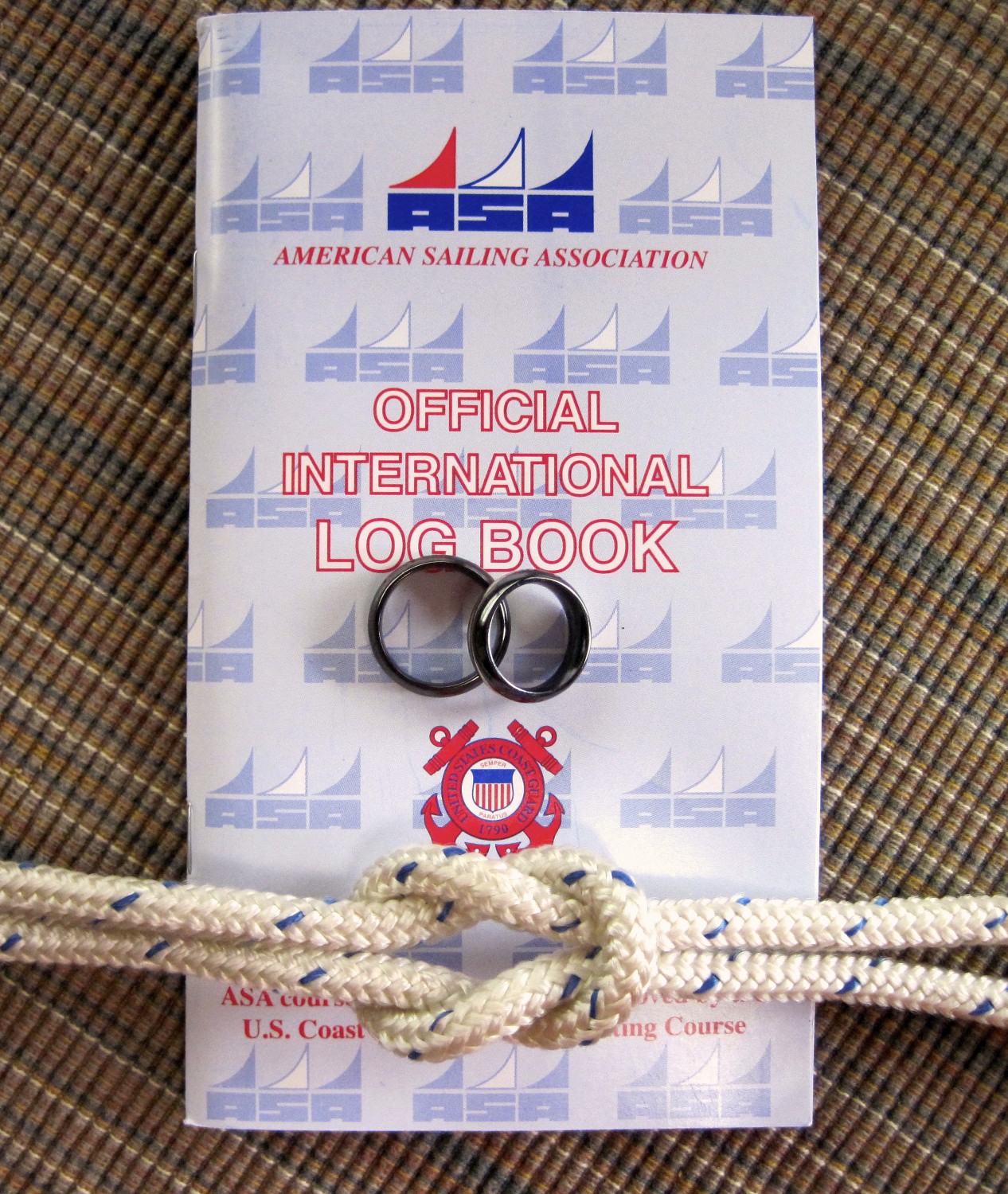
I don’t know why I want to go, but it has always been there. This restlessness. When I married Barbra, we exchanged titanium wedding bands with an inlay of white gold. The rings are incredibly light and strong and resistant to corrosion, characteristics sailors value in titanium. “Someday we will live on a boat,” we said.

A few months later we bought a small powerboat, a 22-foot C-Dory Angler. It is a beautiful craft, white with burgundy trim and lines pleasing enough that it regularly draws compliments. It’s 90 horsepower engine moves it along at 25 knots or so on flat seas. It’s got a pilot house to keep us out of the rain and cold, and enough open deck space for the two of us to comfortably fish from. We have spent many  nights sleeping in its cuddy cabin.

The first summer we trailered Gillie from California to Alaska, we slept on it 42 nights both on land and on the water. That summer we saw our first Dahl porpoises and our first glaciers, and we caught our first halibut and our first yelloweye rockfish. We made our first-ever longish run—90 miles from Valdez to Cordova. On another outing, we learned what it is like to lose the main engine 30 miles from port and what it feels like to limp home on the kicker engine with radar, depth finder and electronic charts all down. And we discovered that our little boat can handle fairly rough seas.

When the summer came to an end, we were left with two predominant  thoughts: We wanted to move to Alaska, and we wanted to get a bigger boat—one big enough to live aboard year-round.

The move from California was more easily accomplished than we anticipated. As it turned out, there is a demand for teachers in this state. We accepted jobs in the Arctic, hundreds of miles from roads. These jobs pay well enough to have allowed us to turn our attention to the passion of our lives: boats. There is scarcely a day that goes by that we don’t talk about them. How big? Power or sail? What kind? How much can we afford?

We read about them, we think about them, we dream about them…

We obsess about them.

These past two weeks we have been in Seward where we completed a six day sailing class during which we sailed 32 foot and 47 foot sloops.

Neither Barbra nor I had any previous experience with sailboats. But after six days of intensive instruction and learning, we now know how to use wind and cloth to make a fairly large boat move through the water.

And by acquiring that skill, we have at last come to an understanding of what we want in our next boat. I’m not going to put in caveats about the many things that could keep us from realizing our goal. We are mindful of those things.

But an important shift happened this past week. The pleasantly hazy “someday, somehow,” image of a dream has been replaced with the clarity and urgency and focus of a goal.

Our boat will be between 32 and 43 feet long. It will have a fiberglass hull, two staterooms, an efficient galley, and a cockpit designed for making ocean passages. It will probably be rigged as a cutter.

Our next boat will be comfortable, relatively easy to sail, and built tough enough to handle almost anything.

We will take it out on blue water, setting our course for places such as Hawaii, Japan, New Zealand and islands in the Pacific we don’t yet know. And Ireland and Greece and Belize and Argentina.

We think we can make ready in five years.

Get our finances in order, acquire a boat, improve our knowledge, hone our skills, set aside enough money to live off…

Cast off the stern line, cast of the bow line, unfurl the main and let her set, find the wind, and go.

This journey has begun.

Razor Clam Fry

Jack has put the finishing touches on our kitchen in our new home and is already feeding us well. The above razor clams were dusted with seasoned flour, dipped in beaten eggs, and rolled in cracker crumbs in preparation for frying in olive oil. Having been frozen fresh, they tasted like they were just dug. Every bite evoked the wonderful memories of digging those clams just weeks ago.

I’m grateful that our school not only has a pool, but also a weight room this year!

Arctic Ocean

We put our fingers into the icy cold water during our walk along the beach. It reminded me of the cold waters of Lake Tahoe in the Sierras. I remember swimming in those waters as a child until my body went numb. Jack remembered taking a dip in the Merced River in Yosemite…the shortest dip of his life.

There is a woman in Barrow who will issue a Polar Dip certificate, officially proving that the bearer has fully immersed herself in the Arctic Ocean. No gracias.

Top of the World!


We are in Barrow, Alaska for a little over a week. It is the northernmost city in the United States.

As the crow flies, we are miles away from everywhere…

728 from Anchorage, Alaska

2,582 from Sacramento, California

3,040 from San Diego, California

4,290 from Key West, Florida

4,071 from Paris, France

(This data courtesy of the following link: http://www.findlocalweather.com/how_far_is_it/ak/barrow.html)

Beautiful, inspiring Alaska

We love Alaska.

This state is beautiful. Jaw-droppingly beautiful in some cases. Contemplatively beautiful in others.

We are both inspired to take photographs, and so we carry at least one of our cameras with us at virtually all times. This diligence has paid off, enabling us to take advantage of some surprises.

As Malcolm Gladwell spells out in the book Outliers, one needs meaningful practice, and lots of it, to become expert at something. We study photography and others’ photos in order to better improve our skills, and then we go out and shoot, steadily accumulating our 10,000 hours.

This is a great place to do so.

Barge Delivery

During the summer, the ice on the sea is gone and barges have access to coastal communities. We understand it is cheaper to send goods up by barge versus the alternative, plane. It is quite a spectacle to see a barge loaded with what looks to be lego blocks from a distance, only to realize the shiny objects on the top are full-sized tanker trucks!

The newest addition to our community is a set of brand new garbage dumpsters conveniently placed throughout the town. (The city empties these bins daily.) We also noticed a brand new Chevy Suburban in front of the school…