Unknown's avatar

About Jack & Barbra Donachy

Writers, photographers, food lovers, anglers, travelers and students of poetry

Birds of Chignik: Double-crested Cormorant

Chignik Double-crested cormorant

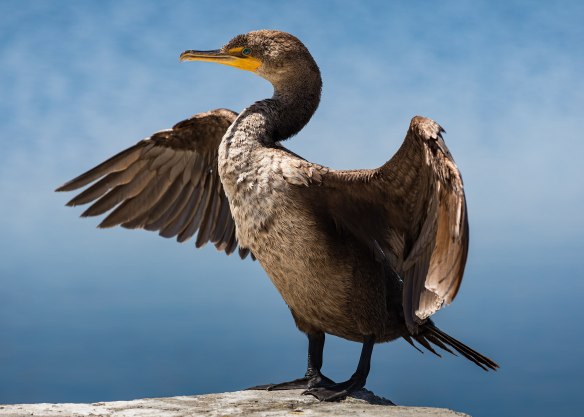
Next to Pelagic Cormorants (left), at first glance Double-cresteds are bulkier birds. The yellow lores and throat are diagnostic. As is also the case with Red-faced Cormorants, the coloration is due to bare skin, not plumage. Note, too, the Double-crested’s heavy, hooked bill.

From a distance, the Chignik’s three species of cormorants, like most cormorants worldwide, look pretty much the same: a gangly cross between a loon and a goose dressed in drab, brown-black plumage. But if you’re lucky enough to get near to a cormorant, you might find that they are actually quite striking.

Like our other cormorants, Double-cresteds are primarily piscivorous. They are far and away the most wide-spread and common of North America’s cormorants, and unlike our other species, Double-cresteds frequently nest in trees. This could account for the fact that they are more frequently seen in fresh water than Red-faced or Pelagic cormorants, though they are still at home on ocean waters.

“Mike” Michael L. Baird’s photograph captures the double crest of this Double-crested Cormorant in breeding plumage. CC BY 2.0, https://commons.wikimedia.org/w/index.php?curid=1995289

In non-breeding plumage, look for the yellow-orange skin around the Double-crested’s face. Photograph  © Frank Schulenburg, CC BY-SA 4.0, https://commons.wikimedia.org/w/index.php?curid=79611808

From a distance, this Japanese Cormorant looked as black and nondescript as any cormorant, but a closer look revealed a pallet of subtle hues..

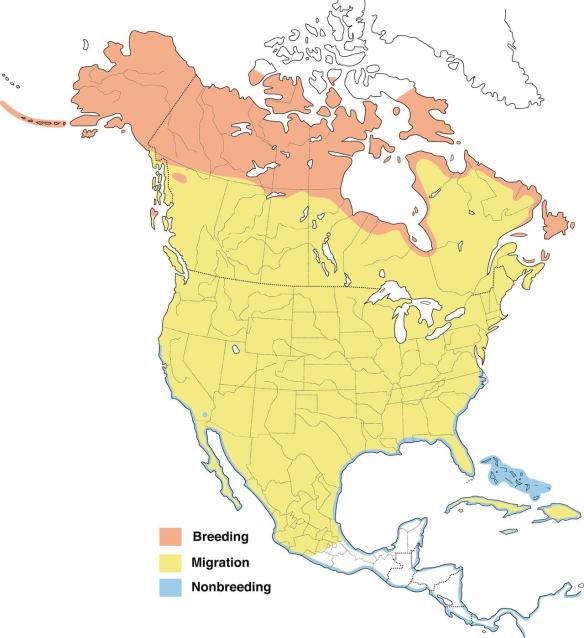
Double-crested Cormorant Range Map: with permission from The Cornell Lab of Ornithology, Birds of the World

Double Cormorant Phalacrocorax auritus
Order: Suliformes
PhalacrocoraxLatinized Ancient Greek = cormorant (from “bald” and “crow/raven”)
auritusLatin = eared (for its breeding plumage crests)

Status at Chignik Lake: Not observed in the freshwater drainage, but common in nearby coastal waters

David Narver, Birds of the Chignik River Drainage, summers 1960-63Not observed

Alaska Peninsula and Becharof National Wildlife Refuge Bird List, 2010:
Common in Summer; Uncommon in Spring & Fall; Rare in Winter

Aniakchak National Monument and Preserve Bird List: Present

Table of Contents for the Complete List of Birds of Chignik Lake
© Photographs, images and text by Jack Donachy unless otherwise noted.

Birds of Chignik: Red-faced Cormorant

Chignik red-faced cormorant

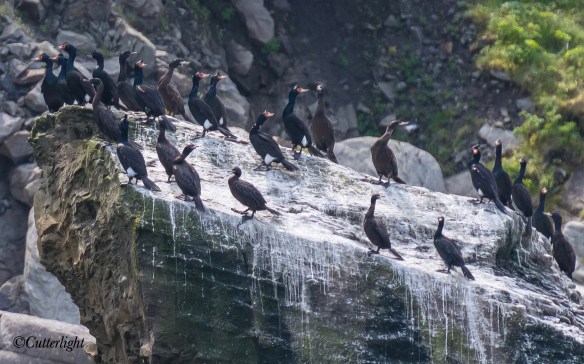
After a morning’s feeding, Red-faced Cormorants rest at a favorite roost near the outlet of Chignik Lagoon. 

Red-faced Cormorants are abundant in the sea near the villages of Chignik and Chignik Lagoon, and according to biologists their numbers appear to be increasing. They often roost and feed in mixed flocks alongside Pelagic and Double-crested Cormorants. Like other cormorants, they are primarily fish eaters, though they occasionally take crabs, shrimp and other marine invertebrates.

This beautifully colored Red-faced Cormorant was photographed by Lisa Hupp, USFWS, courtesy Wikipedia. The red face is actually bare skin which loses some of its color when the bird is not in breeding plumage.

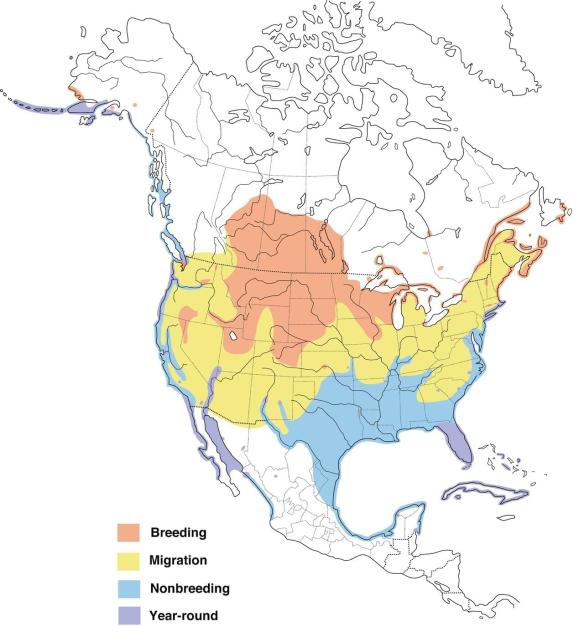
Red-faced Cormorant Range Map: By Netzach, https://commons.wikimedia.org/w/index.php?curid=45316418

Red-faced Cormorant Phalacrocorax urile
Order: Suliformes
Phalacrocorax: Latinized Ancient Greek = cormorant
urile: ?

Status at Chignik Lake: Not observed in the freshwater drainage, but common in nearby coastal waters

David Narver, Birds of the Chignik River Drainage, summers 1960-63Not observed (This is a marine species.)

Alaska Peninsula and Becharof National Wildlife Refuge Bird List, 2010:
Common in Summer; Uncommon in Spring & Fall; Rare in Winter

Aniakchak National Monument and Preserve Bird List: Present

Table of Contents for the Complete List of Birds of Chignik Lake

© Photographs, images and text by Jack Donachy unless otherwise noted.

Birds of Chignik Lake: Great Blue Heron – a Rare Visitor to The Lake

Great Blue Heron

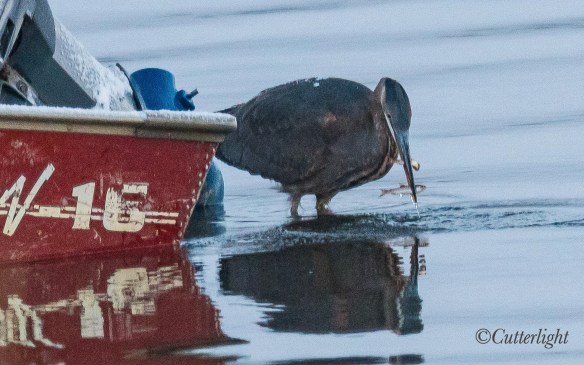
A young Great Blue Heron stalks the shadow cast by a skiff in search of Chignik Lake’s char. Although this bird stands three-and-a-half feet tall or perhaps somewhat taller, it probably weighs only five pounds or so. This is quite likely the first photographic documentation of this species on the Alaska Peninsula.

“A tiger – in Africa?!” The line is a favorite line from Monty Python’s The Meaning of Life, pointing out the improbability that it is a tiger that has bitten off the leg of Eric Idle (playing army officer Perkins) while he was sleeping. Nor is the Latin for tiger Felis horribilis as is proclaimed by Graham Chapman in his role as Dr. Livingstone. The film came to mind one cold November morning when in the predawn light beginning to illuminate the beach outside our window, I suddenly noticed the unmistakable silhouette of a heron.

(All) ” A heron?! At Chignik Lake?!”

Yes, Ardea herodias paid us a visit. In fact, as of this writing, I believe the bird is still here despite snow on the ground, freezing temperature and the imminent probability of the lake freezing in the next few days. I saw our new friend briefly perched on a utility pole near the lake last night, though this morning’s frigid 12° F temperature surely gave him pause. I use the pronoun “him” advisedly. Letting aside the fact that the English language’s “it” seems unduly impersonal in talking about living beings, it is generally young males of any given bird species that are the first to push the boundaries of range maps.

Great Blue Heron catching Dolly Varden

Two char in one grab! The overall dark, non-contrasting plumage indicates an immature bird. Despite its youth, this heron was nonetheless an efficient fisherman. We watched him work the shoreline taking one Dolly Varden after another. His best success came in the shadows of beached skiffs. The wary bird has been feeding in the twilight of dawn and dusk, which makes me grateful for a camera that will handle high ISO values.

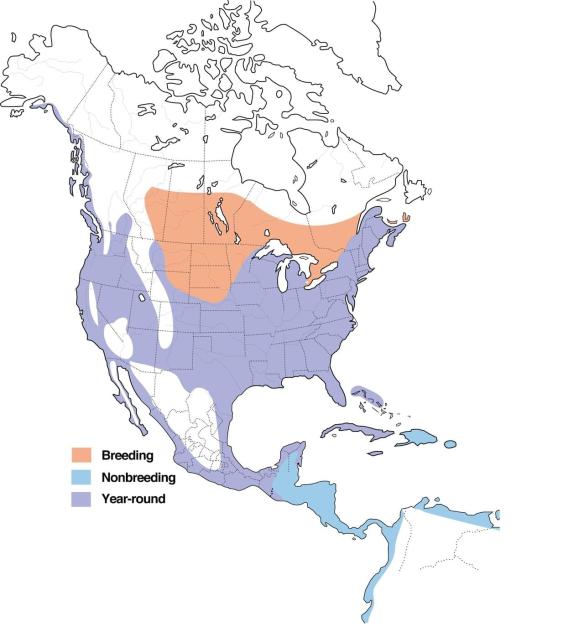
As can be seen on the map below, Great Blue Herons normally range as far north as coastal Southeast and South Central Alaska. With the population of this species growing in the lower 48 and as the climate continues to warm it will be interesting to see if herons become a more common part of the Alaska Peninsula’s avian fauna.

Great Blue Heron Range Map: with permission from The Cornell Lab of Ornithology, Birds of the World

Great Blue Heron Ardea herodias
Order: Pelecaniformes
ArdeaLatin = heron
herodiasAncient Greek erōdios = heron

Status at Chignik Lake: Rare to perhaps occasional visitor. Unconfirmed sightings have been reported by local residents of Chignik Lake as well as at Chignik Bay and, further down the Peninsula, Perryville. 

David Narver, Birds of the Chignik River Drainage, summers 1960-63Not observed

Alaska Peninsula and Becharof National Wildlife Refuge Bird List, 2010:
Not observed

Aniakchak National Monument and Preserve Bird List: Not observed

Table of Contents for the Complete List of Birds of Chignik Lake
© Photographs, images and text by Jack Donachy unless otherwise noted.


Birds of Chignik Lake: Water Dancer – the Fork-tailed Storm-Petrel

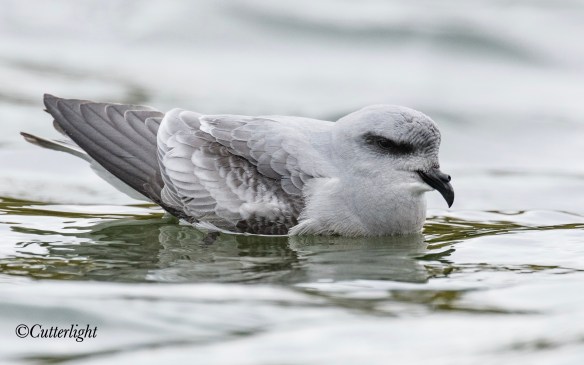
Truly akin to avian ballet dancers, Fork-tailed Storm Petrels patter across the water’s surface gleaning zooplankton and small fish as well as the oil from carcasses they might encounter.

The last of the huge winds that had been buffeting the peninsula were still putting heavy chop on the river as we surveyed the pool below the boat landing. These kinds of storms, often packing winds that would make the national news if they occurred elsewhere, can occur any time of year in the Chigniks. The very place name is, in fact, Alutiiq for “big winds.” Downriver towards the islands, shrill squawks drew our attention to a flock of small, grayish birds hovering, wheeling and diving. Some of them appeared to be running across the water’s surface.

Terns? I said to Barbra. Yeah. They must be some kind of tern. 

Even as I spoke, I knew what I was saying didn’t make sense. The Chignik’s Arctic Terns had long since fledged their young and migrated out. Besides, these birds didn’t really look like terns. Not like any I’d ever seen, anyway.

They’re not terns, Barbra replied. They can’t be terns. They’re cool. Look at them dance!

In that instant, it hit me. Petrels!

I’ve gotta get home and get my camera like, right now! I exclaimed. I’ve read about these! This might be my only chance to get them on the river! We hopped on our honda and sped the three-miles home over the hilly dirt and gravel road. I gathered up my tripod and the camera with the big lens attached, hurried into a pair of waders, and made haste back to the landing.

Fortunately the birds were still there. Better yet, they took little notice of me as I scurried down the shoreline and waded out into the river toward where they were foraging. There were perhaps 20 of these small, Purple-Martin-sized seabirds. The blue-gray cast of their plumage at times made them difficult to pick out against the blue-gray sky and river. These are going to be difficult, I thought to myself.

The birds would hover, descend, and then dance across the water. It very much put in mind a production of Swan Lake. Certainly it was one of the most beautiful foraging displays I’d ever witnessed. What little light was left in the cloud-covered late afternoon sky was going fast. But I stayed with it and eventually began making some decent photographs.

fork-tailed storm petrel

The foraging birds didn’t rest for but a blink. Storm-Petrels belong to a group of pelagic seabirds called Procellariiformes – tubenoses. The hollow atop the petrel’s beak aids in expelling excess salt.

I was lucky to encounter this species on the river. David Narver reported seeing this bird on the open seas just once on the Chignik, then too after a heavy storm.

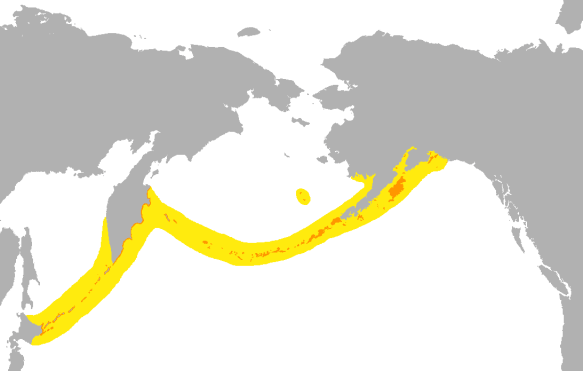
Fork-tailed Storm-Petrel Range Map: with permission from The Cornell Lab of Ornithology, Birds of the World

Fork-tailed Storm Petrel Oceanodroma furcata
Order: Procellariiformes
Oceanodroma: from ancient Greek okeanos = ocean + dromos = runner
furcata: Latin meaning forked

Status at Chignik Lake: Rare in the freshwater drainage, but probably common in or near Alaska Gulf offshore ocean waters

David Narver, Birds of the Chignik River Drainage, summers 1960-63: One observation on Chignik Lake after a severe storm

Alaska Peninsula and Becharof National Wildlife Refuge Bird List, 2010:
Rare in Spring & Summer; Uncommon in Fall; Not Reported in Winter

Aniakchak National Monument and Preserve Bird List: Presence Documented

Table of Contents for the Complete List of Birds of Chignik Lake
© Photographs, images and text by Jack Donachy unless otherwise noted.

Salmon Cheddar Bisque with Morels

Salmon Cheddar Bisque with Morel Mushrooms

I’ve been making A. J. McClane’s Lobster Cheddar Bisque for quite a few years. The original recipe appears in my all-time favorite book on cooking fish, McClane’s North American Fish Cookery. Although by now I’ve strayed from the original recipe, spending time in the kitchen with an icon whose books and articles influenced me to seek the life I’m now living is invariably pleasant.

In addition to the connection with one of my personal culinary and angling heroes, I enjoy creating this bisque with ingredients that are in their own right touchstones. The Tillamook cheddar I use takes me back to the years I spent on the Oregon coast; the Coho salmon I used to catch in those days is replaced in this current iteration with Chignik River Sockeye. In Oregon, a friend’s gift of a large paper bag filled with freshly picked chanterelles inspired one version of this soup; the morels we recently came into from interior Alaska have inspired another.

The last time I published the recipe for this soup, I used lobster mushrooms. You can check out that recipe at: Salmon Cheddar Soup with Lobster Mushrooms

Here’s how I made it this time around.

Ingredients

  • 1/2 pound pan-fried Sockeye salmon, boned, skinned and flaked or cut into bite-sized pieces
  • *1¼ cups or so of morel mushrooms, cut so that a slice of morel and a chunk of salmon might both fit in a soup spoon
  • soy sauce
  • part of a red bell pepper, diced fairly fine. (I used a little over a tablespoon of Penzeys dried bell pepper.)
  • ¼ cup shallots, diced fine (I used Penzeys dried shallots.)
  • 2 tablespoons flower as a thickening agent. (White rice flower works best for this as it imparts very little flavor. But regular all purpose flower is fine.)
  • 1 tablespoon each olive oil and butter (for sautéing the mushrooms)
  • 3 cups milk
  • 1¾ cups shredded cheddar cheese
  • 1 or two tablespoons Better than Bouillon lobster base (optional). This is salty, so if you use it, be sure to taste as you go.
  • ⅛ teaspoon ground nutmeg
  • 1 teaspoon smokey mesquite seasoning
  • ½ teaspoon smoked paprika

*When sautéing the mushrooms, a splash of Sherry or Chardonnay and a dash of soy sauce can be nice. It’s up to you.

Directions

  1. Heat olive oil and butter in the pot or sauteuse pan you will use to make the bisque. Medium heat.
  2. When the butter mixture begins to bubble, add the sliced mushrooms and toss to coat. Sauté the mushrooms for about two minutes. Add the shallots, bell peppers, a splash of white wine and soy sauce to finish. Lower heat.
  3. Vigorously stir in flour. Add milk, seasonings and lobster base. Stir till mixture begins to thicken. Keep it hot, but don’t let it boil.
  4. Add salmon and cheddar cheese. Taste the soup and add additional seasonings as necessary.
  5. Garnish with a pinch of paprika. Serve piping hot with a favorite bread.

Provided the soup wasn’t allowed to boil, it refrigerates well.

Take a Honda Tour of Chignik Lake, Alaska

As part of a project we’ve been working on, we’ve decided to take interested readers on a tour of our village. So Barbra put a GoPro on her head, fired up her Honda, and we went on a short land cruise. I’ve feathered in a few photos to provide an idea of what The Lake looks like when it’s not an icy-cold, winter-brown November day (when we made the video).

Imagining something you love through another’s eyes can be… well, eye-opening. It struck us how “empty” our village might seem to folks who take things like stores, government buildings, traffic signs, and bustling sidewalks (or any sidewalks) for granted. So, rather than the vibrance of an urban community, imagine instead the rhythms and energy of a community where you know everyone – literally, everyone. Where, instead of watching for oncoming traffic, you watch for ambling brown bears. And where the small community store is a convenience, but in reality your freezer is stocked with salmon from the nearby river, halibut, cod and crab from the nearby sea, moose and caribou from the surrounding land, and gallon upon gallon of hand-picked blueberries, raspberries and wild cranberries.

Enjoy the video and let us know what you think! (Oh, by the way, did I mention we have a position open for a health aide?!)

The Chignik Jack: Panko Crusted Coho Jack Salmon Stuffed with Dungeness Crab

panko crusted salmon stuffed with Dungeness crab

The perfect marriage of River & Sea – Dungeness-stuffed whole jack salmon.

Each year we try to take a couple of char or salmon in the pound-and-a-half to three-pound range, the perfect size for presenting head and tail intact. When I lived in South Carolina, I sought Puppy Drum (small Red Drum), Speckled Sea Trout, Summer Flounder and keeper-sized Striped Bass for these dishes. If I lived in the American midwest, I’d target Walleye or bass from cold water. In Japan, small suzuki (Japanese Sea Bass), hirame (Olive Flounder) and kurodai (Black Porgy) fit the bill.

The salmon in the photo was about 17 or 18 inches in length and weighed just over a pound-and-a-half. Jack is the name given to precocial male salmon that mature early and return to the river after only a year at sea. Were I running a restaurant, I’d offer this dish as a special and call it The Chignik Jack, as in,

“What’ll it be, Mac?”
“I’ll have the Chignik Jack.”

The recipe here couldn’t be more straightforward. The stuffing is comprised of the back meat of a Dungeness Crab, steamed or boiled and lightly seasoned, perhaps a bit of fresh lemon juice added to the cleaned meat. Crab meat tends to be wet, so use paper towels to gently squeeze out excess moisture from the cooked meat. You might even heat the meat in a dry, non-stick skillet to remove additional moisture.

The fish is scaled, gilled, gutted and cleaned. Spritz the stomach cavity with lemon juice, rub in a little salt, add the crab meat and then roll the fish in panko that you’ve seasoned with salt and Italian-style herbs. This is a relatively light dish; you don’t need any batter, just the seasoned crumbs.

Meanwhile, set the oven to 400° F and put enough olive oil on a broiling sheet or pan to cover it and heat it on a center-positioned rack till the oil is hot. I use a heavy, rectangular, well-seasoned cast iron pan for this kind of cooking, but a thinner baking sheet will work. The fish should sizzle when you place it on the pan. After about 4 minutes, check the down side to make sure it’s not browning too quickly. Continue baking for a total of about 8 minutes, and then carefully turn the fish to the other side. It can help to have someone man an additional spatula to help with this.

Bake for another 8 minutes, again checking  halfway through to make sure the skin and panko are browning properly. In the above fish, I set the oven to broil for the final couple of minutes to further crisp the presentation side. The tail came out crunchy as a potato chip – a delicacy in its own right. And speaking of delicacies, don’t forget the cheek meat just in back of the jaw; the scallop-like morsel has a texture unlike any other part of the fish.

Paired with a buttery chardonnay, this is a lovely meal to enjoy with your best friend.

Silver to Gold: October Fly-fishing on the Chignik

male Coho Salmon Chignik River Alaska

Sea-green shoulders gone to bronze, sliver flanks tinted rose – October on the Chignik

Chignik River Alaska

Found the hint of a honda trail overgrown with willow, alder. Hacked it open with anvil loppers and a handsaw, rode in as far as possible, parked, hiked to the crest of a hill blanketed in moss-like crowberry and ankle-high low-bush blueberry, tiny leaves candy-apple crimson, took in the view. Bear trail worn deep into the berry flat. Centuries? Millennia? Willow and alder thick, had to stoop, then crawl. Small creek, nearly hidden, then the bear trail again. Bear scat packed with berries, disc-like salmon vertebrae. Paw prints. Large, medium, small cubs. Otter scat. Fox scat. The river. Gulls crying, eagles gliding, kingfishers rattling, so many salmon ascending the shallow riffles, their splashing like a cataract. Retraced steps. Hacked out the trail thinking of fly rods, camera gear, companions. Fresh bear pile at the trailhead – must’ve heard or smelled this human and turned back. Morning’s work.

Fireweed Cotton

Next morning. Frost, fly rods, icy fingers. We pause on the hill crest, listen for bears, watch the brush below for movement. Breathe deeply. Sift the damp air in cold noses for bear scent, tap cans of pepper spray secured in wading belt holsters. Mist curling, rising, sun peeking over mountains. Gulls, kingfishers, magpies, chickadees, downy woodpecker. Thin, wispy murmurings… kinglets? Interludes of silence. Near silence. Always the gentle language of the river, primal score to everything here, song. New bear scat, prints punctuated by five sharp claw marks piercing ice-laced mud by the creek.
   Creek mouth, muddy cove. More bear tracks a foot under water. Wade in, cross the channel behind Dolly Island, shoals of startled salmon wake the water into soft, liquid surface folds ahead of us, gulls cry and lift from a rocky bar.

Salmon & Fall Reflection Chignik River Alaska

We follow a bear trail among a maze of bear trails across the island, through fireweed gone to cotton, yellow grasses, russet burdock husks, gray-brown cow parsnip seed crowns sunlit, wet with dew, glistening spider silk. Steamy breaths precede us as we stride toward our place along the stony shoreline. Yellowing cottonwood leaves. We have come here before, always by scow, noisy engine. Different hiking in. Quiet. Intimate. Assemble rods, thread line through guides, choose flies. Looking intently at the water, at first only reflections appear. We relax our vision to see past the surface, into the water, finding bottom. Stones. Then salmon. Lots. Males flanked in crimson, pink, maroon; females tarnished silver, blue metal, coppery backs.

female Coho Salmon Chignik River Alaska

The salmon are plentiful, but catching is not a given. Lifeless, finger-sized fish scattered here and there across algae-slick orange-brown bottom rubble – char, salmon parr, sculpins, sticklebacks. Some bitten through. Most whole. Salmon no longer feeding sometimes snap at small fish in their path, each day in the river teeth growing longer, sharper. Annoyance? Testosterone aggression? Memory of joy cutting through schools of anchovies, sand lances, herring? Or is it something more practical yet more mysterious… an instinct to eliminate whatever might later prey upon the salmon’s progeny, an itch in their jaws only scratched by the snap of a small fish’s spine, a tiny skull crushed?
   Flies are chosen with these thoughts in mind. We lack the decades – or centuries – of accumulated experience some possess. Our choices are guesses. Bright flies. Flies that pulse enticingly in current. Pink, chartreuse, strawberry, plum, marine blues and greens, streamers that sparkle and dart like panicked fish, flies that breathe with rhythm and the illusion of life even when held steady against the current. Double check knots. Flatten barbs. Step into the river as quietly as deer.

Coho Salmon in Fall Color Chignik River Alaska

From the silver of summertime to the colors of autumn… they’re gorgeous fish. It may be true that pound for pound, no species of salmon fights harder than Chinook. Hard to say. The kype-jawed buck Coho in this photo made five spectacular, cartwheeling leaps and two long, blistering runs.

Coho Salmon Pink Popper Fly

Streamers are most effective, but small wet flies and even poppers take fish.

Fly Fishing Coho Salmon Chignik River Alaska

In this, our fourth year on the river, the flats above Devil’s Nose have drawn us. Sockeyes in June and July, Pinks and Kings in July and August, Silvers from August through October. Dolly Varden char whenever salmon are present. Steelhead pass through here. A few. The river is the road connecting the three Chignik Villages; an occasional boat cruises by. Seldom another fisherman, even in summer. In fall seldom becomes rarely.

Coho Salmon Dill Sauce Chignik River Alaska

Winter soon. Months of dark and absence. Fly-fishing days of summer and fall relived over meals of salmon and bottles of wine… It is a time when speculation, plans, hopes for future seasons begin to take form. Newly fledged hawks, baby owls, sows and cubs, massive male bears chasing down spawning Reds, upcountry hikes and flowers, the wolverine at the mouth of Bear Creek, the big Chinook we saw lace reflections together.

Fly Fishing Salmon Chignik River

Terminal dust – summit snow marking the end of summer. A cloud you might surf, if only… Alders clinging to green, willows giving themselves to gold. Shafts of sunlight illuminate a shaded pool. Illuminating salmon. False cast to measure the distance. Back cast to load the rod as a powerful spring, then the forward cast. Quick, calm upriver mend. Strip, strip, strip… Eyes searching for the bit of purple and flash pulsing at the end of the leader. Scarlet flank catches the light as a buck salmon turns to follow. Anticipation pulls knees into a crouch. Lean forward, hopeful. Line abruptly taut. Quick strip followed by another to be sure, rod lifted into a satisfying arc, alive, water erupting in a geyser. Mind suddenly empty, free, thought vanished except for this moment of being. October on the Chignik.

Devil's Flats Chignik River

*   Upriver   *

Tomato Tarragon Halibut

I suppose that like many people, I grew up inculcated with the idea that dill and fennel are the quintessential herbs for fish and other seafood. Lately I’ve been circling back to rediscover the pleasant tang of dill, prompted by small bunches of the feathery stalks occasionally showing up in boxes of fresh produce sent to us from The Farm Lodge at Lake Clark. These days even when I don’t have fresh dill on hand, I’ve been making dry dill a regular part of certain salmon and shellfish recipes, particularly when I’m going for a bolder flavor than what might be supplied by, say, lemon grass.

Fennel is another matter. Neither of us have ever entirely warmed to the sharp anise taste and aroma it imparts. We like licorice, but not so much on salmon and subtly flavored seafood. When I discovered tarragon while searching for a fennel substitute some decades ago, it seemed I’d stumbled upon the perfect seafood herb. There’s an anise-like savor to it, but to our palate tarragon profiles as gentler and sweeter than fennel. It’s wonderful on steamed clams and mussels, makes an excellent a-little-something-extra in drawn butter dipping sauces, and beautifully complements virtually any white-meated fish from catfish to cod. In this recipe, tarragon brings together the flavors of garden-fresh tomatoes and halibut in a dish that is simple, beautiful and sumptuous. 

Try serving this dish with very thin slices of sourdough French bread or baguette pan-toasted in butter till crisp and seasoned with garlic.  

Tomato Tarragon Halibut

Ingredients

  • halibut fillets, patted dry to remove excess moisture. We prefer skin-on, but it’s up to the chef
  • extra virgin olive oil
  • onion, diced
  • garlic cloves sliced into fairly large pieces
  • sherry or other dry wine
  • tarragon, fresh or dried, to taste
  • fresh tomatoes, seeds removed, diced
  • Better than Bouillon clam base (optional) or use sea salt
  • soy sauce

Directions (You will need two frying pans.)

  1. Add olive oil to the first pan, apply medium heat and add the onions. You want the onions to caramelize, so don’t stir them too much. They’ll caramelize better if you mostly leave them alone.
  2. When onions begin to caramelize, add the garlic and stir. Cook for about 3 minutes – just until garlic begins to soften. Then add a little sherry and the tarragon. Stir and allow most of the wine to cook off. This only takes a minute or so.
  3. Add the tomatoes. Cover with a lid and reduce the heat so that the mixture simmers steadily. You want the mixture to cook down to a fairly thick consistency.
  4. As the tomato mixture is cooking, stir in either the clam base or salt. The clam base itself is quite salty. Don’t use too much. You want just a hint of the clam flavor. Alternatively, simply add a little sea salt. The mixture is very tasty either way.
  5. When the tomato mixture has cooked down, add olive oil to the other pan. Heat over medium until the oil is sizzling hot. Continue allowing the tomato mixture to simmer.
  6. Place the fillet(s) in  the hot oil presentation side up (skin side down if you’ve left the skin on.) The fillets should sizzle when they hit the pan. Pour a little soy sauce on the fillet. This will impart a pleasant umami flavor and will enhance the browning color when you flip the fillet.
  7. Cook uncovered for 3 minutes. Flip the fillets and cook the other side for 3 minutes.
  8. Place the fillets presentation side up in the tomato mixture. Cover with a lid and continue cooking for about four minutes. The general rule of thumb for fish is 10 minutes cooking time per inch of thickness. You can test the fillets for doneness by carefully inserting a knife and parting the meat. A perfectly cooked halibut fillet will be an opaque white all the way through and will flake cleanly. Don’t worry if you don’t get this perfectly right. If the fillets are a little overcooked, they will still be very good.
  9. Spoon out the tomato mixture on serving plates, add the fillet, and served piping hot with pan-fried toast. 

Any style of Chardonnay will pair well with this dish. Dry Riesling is another white option, but there’s enough oomph here to make a Pinot Noir a good choice as well.