The Arctic Ocean pushes sea ice into jagged heaps of translucent blue near shore. Further out, fog swirls on the horizon below a brooding sky.
Storm coming.
Point Hope, February 18, 2012.


The Arctic Ocean pushes sea ice into jagged heaps of translucent blue near shore. Further out, fog swirls on the horizon below a brooding sky.
Storm coming.
Point Hope, February 18, 2012.
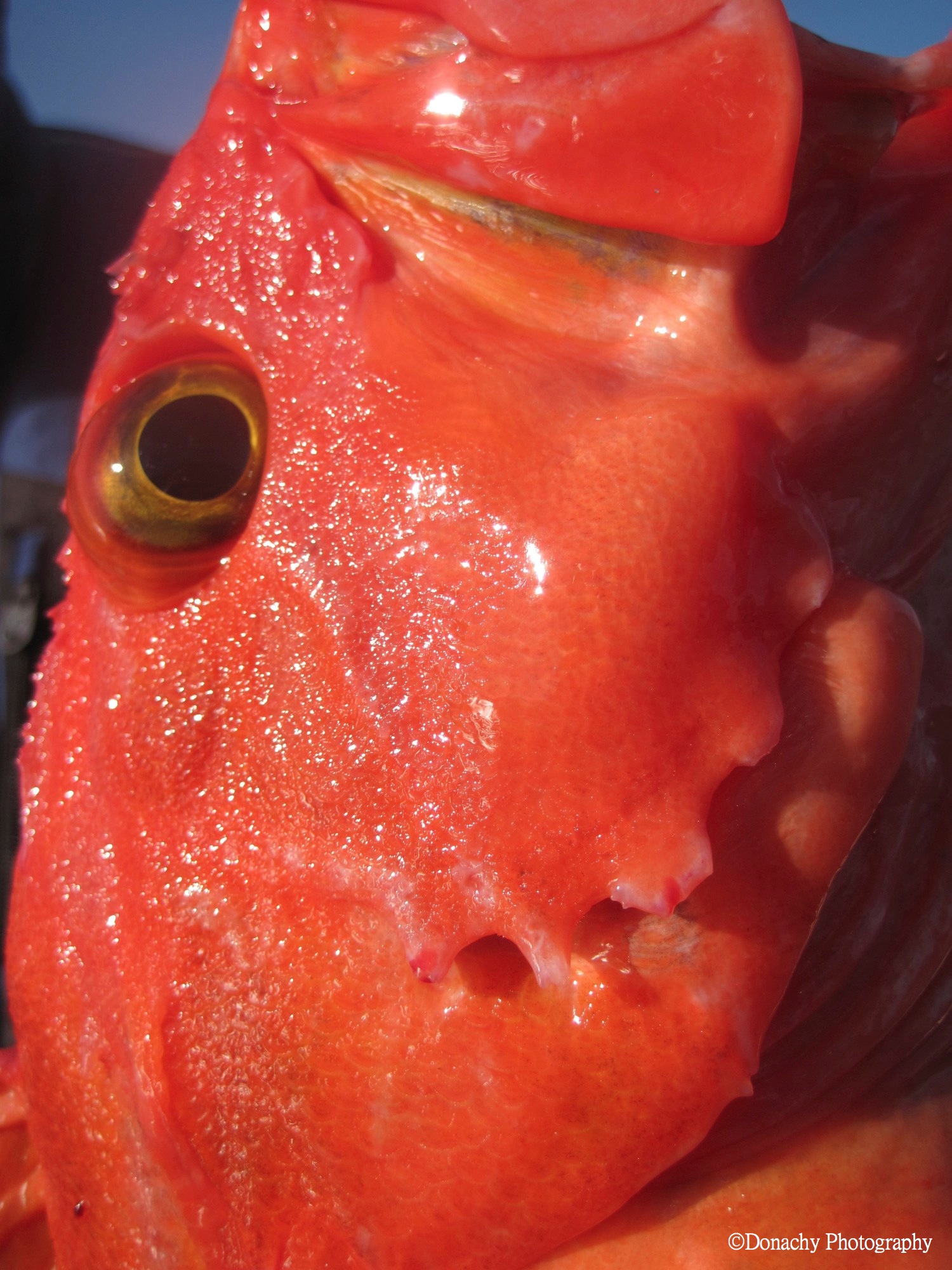
Yelloweye rockfish (Sebastus ruberrimus), a species of the Pacific Coast from Baja Mexico to Prince William Sound Alaska, is prized for its delicate flavor.
We’d spent most of the night on our C-Dory, drifting over deep water on Prince William Sound, admiring the moon and stars in the clear summer sky, talking about our life and occasionally dropping heavy, water-slicing knife jigs to the rocky bottom 160 feet below. Fishing was slow – a few small lingcod notwithstanding. The night was as still as a painting, the inky water mirroring the heavenly lights. With the engine cut off, the quiet was enveloping. When the yelloweye hit, I knew right away it wasn’t another ling. “Might be our yelloweye!” I said to Barbra as I worked the fish up from the depths.
And sure enough, it was. Barbra expertly scooped it up in the net, I did a quick fillet job, put it in a plastic container which I set in our cooler, and we headed back to port for some well-earned sleep. It was already early morning, though not quite yet dawn.
A few hours later when we woke, the sun was already high in the sky and the marina was bustling with activity. With daylight burnin’, we walked up the dock to the showers, blue skies and a few puffy white clouds overhead, deep green hanging on the mountains rimming the harbor.
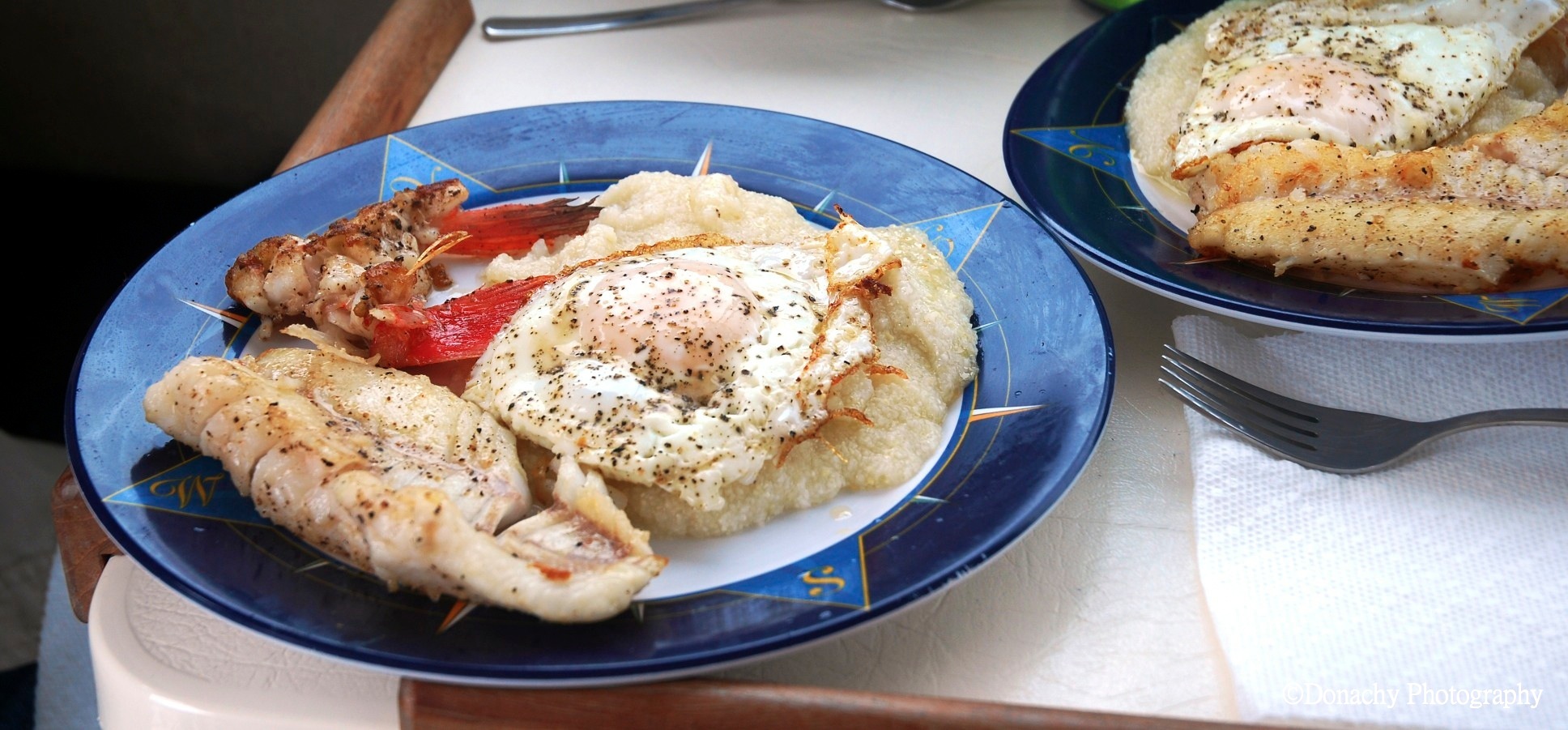
Back onboard Gillie I put the Coleman stove on the aft deck, fired it up, and after Barbra made coffee I fixed a fisherman’s breakfast of southern-style grits topped with easy-over eggs and a couple of yelloweye fillets along with the collars – that especially sweet piece of meat that includes the pectoral fin muscle. (The collar looks a little like a lobster in the above photo.)
Not a fancy breakfast, but a special one. I kept the seasoning simple: a little sea salt and black pepper ground coarse. The steaming plates of food accompanied by French roast coffee made for a great start to another day in paradise.
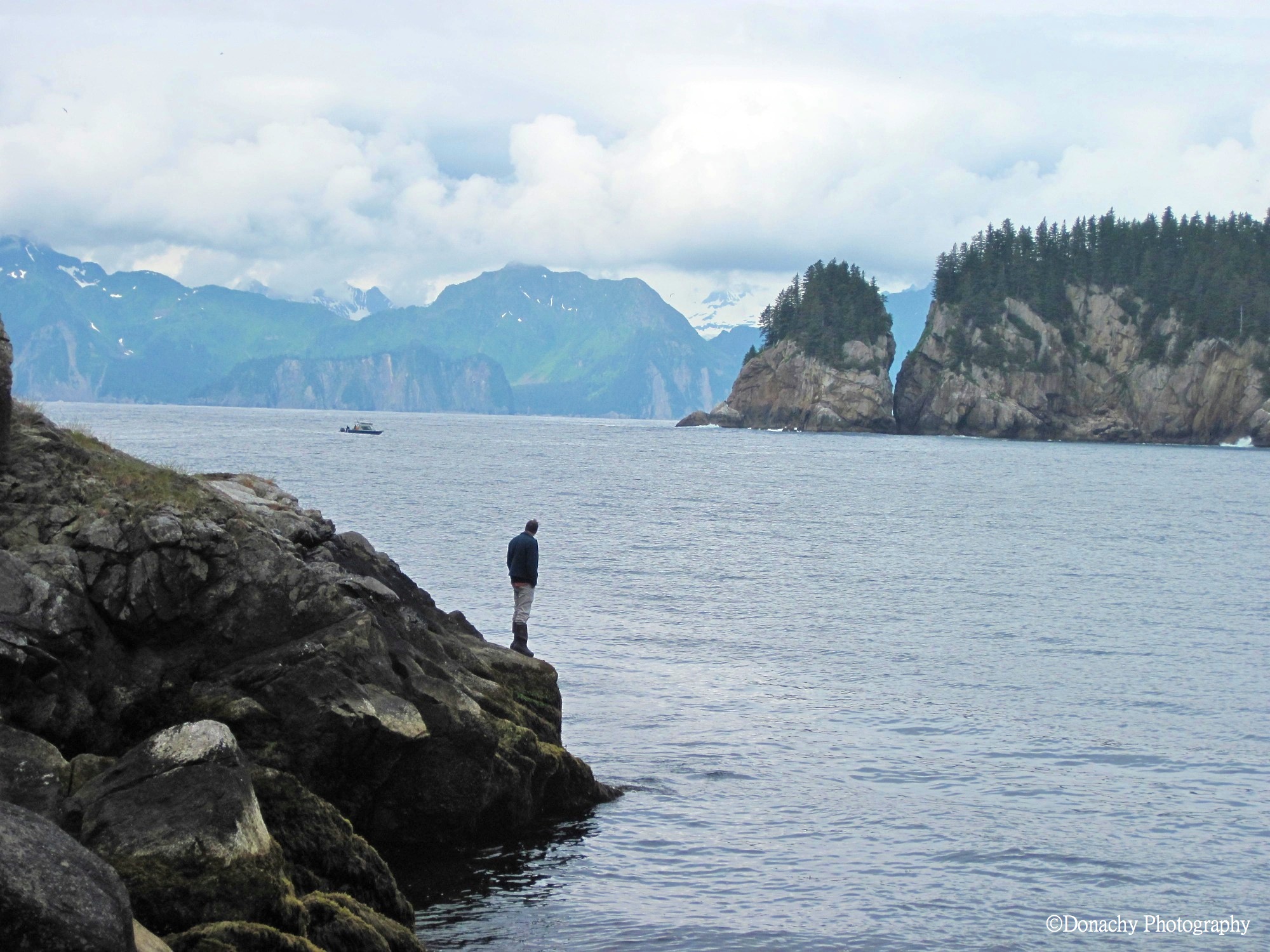
During our sailing class last summer, we took one of the sailboats out to this cove on Resurrection Bay where we anchored and then took the dinghy ashore to look around. Barbra caught me gazing wistfully across the water, contemplating the day we might have our own blue water cruising vessel. “We are tied to the ocean. And when we go back to the sea, whether it is to sail or to watch – we are going back from whence we came.” John F. Kennedy
This past week we made an offer on a sailboat. She was docked in Seward, where we took sailing lessons and were camping most of the summer. We went onboard to look her over a couple of times, and then, just before we left Seward, we saw her hauled out for a new coat of bottom paint. She’s a lovely vessel, neither too large nor too small by our sights, sea worthy and sea kindly enough to take us to any destination we have the guts and gumption to chart a course for, well-appointed enough to allow us to live in comfort once we arrive.
For the past seven months we’ve been kicking it around, researching other vessels, researching blue water sailboats in general, running numbers and scenarios and…
And we finally came to the realize that this – sailing – is like most other things in life that are worth doing: at some point there is nothing left to do but make a decision, push your chips forward, and go all in.
Today we received word that our offer was accepted. So we’re all in. Guess we’re going to learn something about boats and sailing!
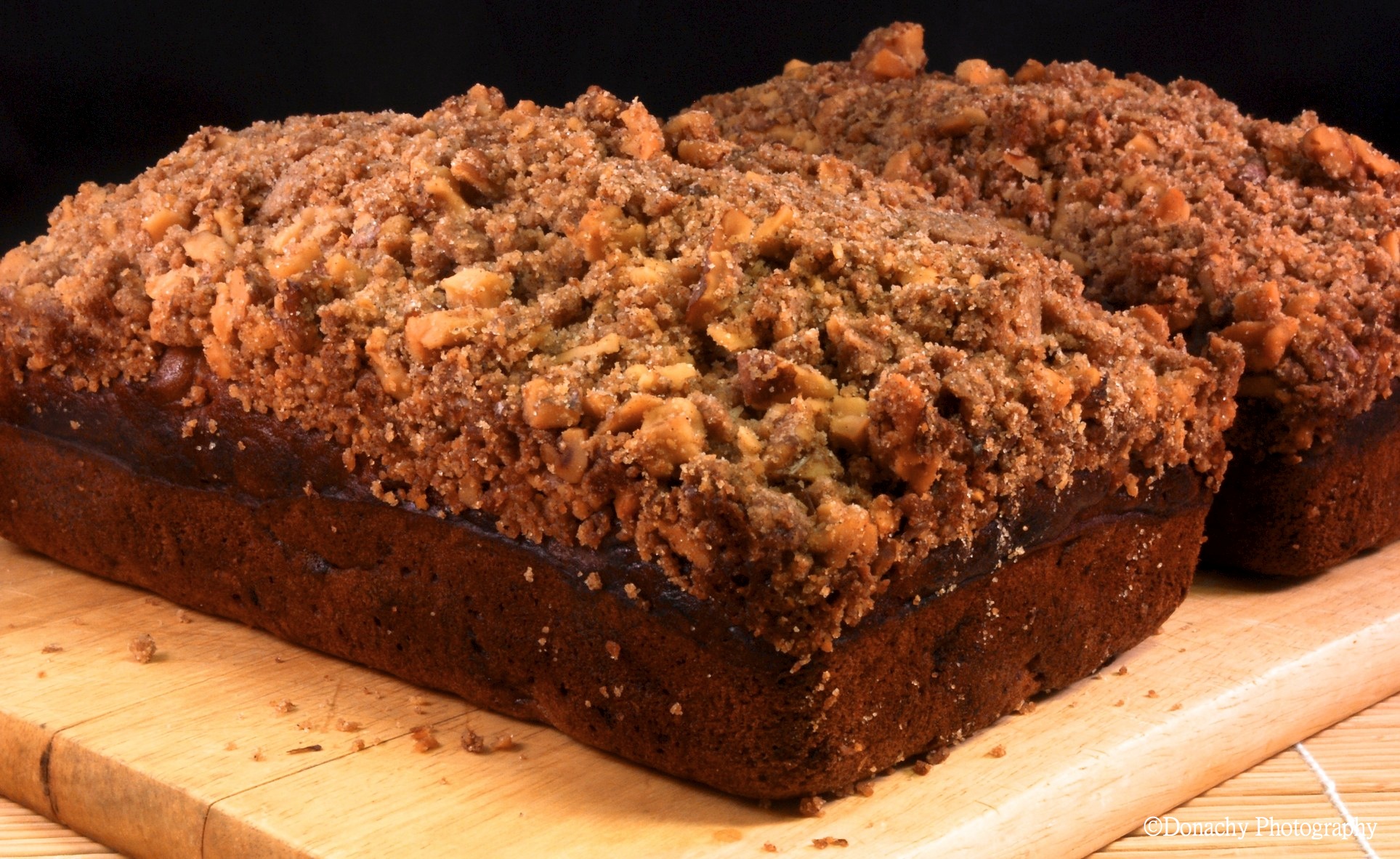
We brought these beautiful loaves of banana bread to a staff potluck, supplying cream cheese for a spread. They were an instant hit.
I have a tried and true banana bread recipe. It’s actually a fruit bread recipe in which I swap out the fruit and the spices. The recipe results in bread that is moist and flavorful. With an impending potluck, I wanted to amp up the recipe and my thoughts turned to coffee shop offerings where muffins and slices of sweet bread covered with streusel topping are always among the favorites. We love to slather a thick slice of this bread with cream cheese and then press the cream cheese into whatever crunchy walnuts may have fallen off. This makes for one decadent slice of bread!
Banana Bread with Crunchy Walnut Streusel
Makes two loaves
Ingredients
Topping
Directions
Pour yourself a big cup of coffee. Cut a thick slice of this bread and smear a generous amount of cream cheese onto it. Sprinkle any crumbs that have fallen off your slice back onto the cream cheese. Put on some coffee shop music. Close your eyes, take a bite, and imagine yourself in coffee shop in one of the world’s great cities… or in a hometown bakery.
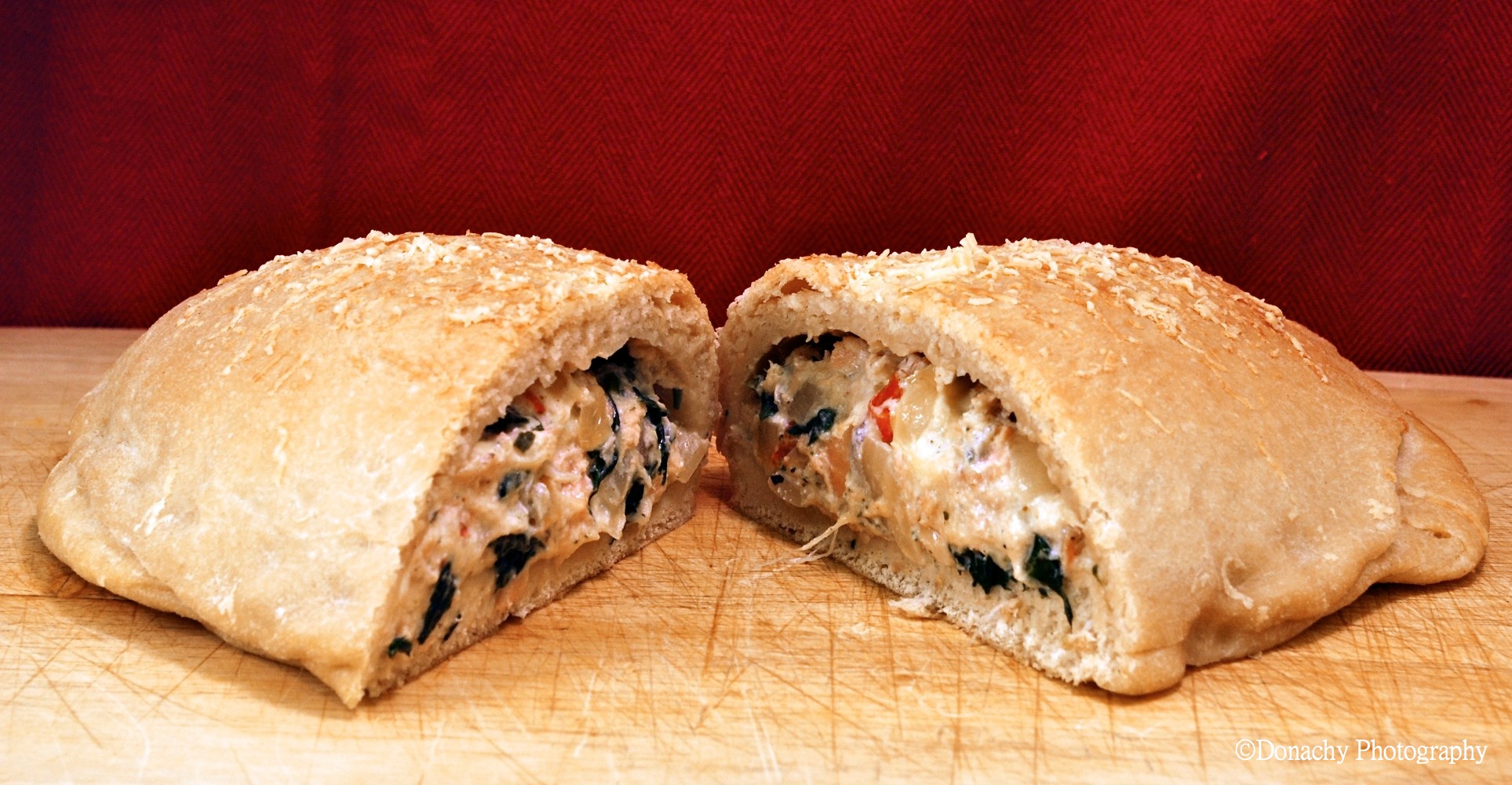
Number four in the Salmon Recipe Challenge. Savory salmon in a creamy cheese mixture enhanced with red bell peppers and spinach; all neatly wrapped in a warm Parmesan crust.
The salmon challenge was intended for Jack. After all, he is the master chef. But after a night of studying (I’m going for a master’s in education technology), I relaxed by surfing cooking and baking blogs where I came across a photo of a delicious-looking calzone. “Wouldn’t a salmon stuffed calzone be divine?” I thought.
I would start this recipe by saying that we dusted off our favorite mechanical kitchen device, our Zojirushi bread machine, but the truth is this machine never has time to collect dust. We use it once a week on slow weeks and more frequently than that on most weeks. We love our Zojirushi bread machine so much that we wrote a review on it for the company from which we bought it. Among the advantages a good bread machine offers is that it solves the often vexing problem of having the right environment for dough to rise.
The calzone dough is a standard pizza dough recipe adapted from the book 300 Best Bread Machine Recipes by Donna Washburn and Heather Butt.
Dough Ingredients
4. In medium skillet, heat olive oil over medium heat. Add onion and sauté for 4 – 5 minutes. Add bell pepper; sauté for 3 – 4 minutes until crisp-tender. Add garlic and spinach and cook until spinach is wilted. Set aside.
7. Place filling on one half of each circle. Fold calzone over, sealing the edges tightly with your fingertips making a scalloped edge. Cover and let rise in a warm, draft-free place until doubled in volume, 30 – 45 minutes. Meanwhile, preheat oven to 375 degrees F.
8. When calzones are formed, brush with 2 tablespoons Extra Virgin Olive Oil and sprinkle with 1/4 cup grated Parmesan cheese.
9. Bake in preheated oven for 20 – 25 minutes, or until the calzones sound hollow when tapped on the bottom.
These calzones were terrific out of the oven. They make great lunches, too.

When it comes to preparing pork loin cutlets, time on the grill – or under the broiler – is everything. We prefer cutlets cut thick – generally one-and-a-half to two inches. That translates to 16 to 18 minutes cooking time under a broiler or over fairly hot charcoal. The rub and attention to cooking time prevents these tender, lean cuts of meat from drying out. We purchase our cutlets in bulk from Costco and repackage them in pairs for freezing. In our experience, the quality of Costco meats is on par with that of specialty butcher shops.
The Perfect Pork Cutlet
In winter, roasted vegetables go well with this dish. Add a Pinot Noir with lots of dark cherries or berries.

This recipe makes about 3 1/2 gallons.
Chopping up all these ingredients is a bit of work. After that the cooking is pretty standard. This chowder freezes well and allows for many substitutions – including substituting a white-meated fish for the clams, or adding mussels, shrimp, squid, octopus, etc.
1. Mix tomato paste and thyme with approx. three cups of water and two tablespoons of olive oil and set aside
2. Cover the bottom of a large pot with olive oil and heat over medium-high. Add the carrots and cook for a minute stirring occasionally. Add the onions and cook for two minutes, stirring occasionally. Reduce heat to medium and add the celery, green beans and garlic, stirring occasionally for about three minutes.
3. Add the diced tomatoes, the tomato sauce mixture, the potatoes and remaining seasonings. Add enough water to cover the potatoes and simmer until soft. If the soup seems watery, add more tomato paste. Stir occasionally. Depending on the type of potato and size of cubes, this takes 20 to 50 minutes.
4. When the potatoes are of desired softness, stir in the chard or collard greens. Continue simmering for about 2 minutes.
5. Stir in the sweet corn, the clams and the clam juice. The corn will add considerable sweetness, as will razor clams. Give it a taste to see if it needs more salt, pepper, chili flakes or thyme.
Don’t overcook. As soon as the clams and corn are heated, the chowder is ready to serve. Garnish individual servings with a very thin slice of lemon, a few strips of nori, or grated parmesan cheese and serve with a hunk of crusty, fresh-baked bread.
(For more posts on razor clams, click on the tag “razor clams” in the upper left below the photo. Or click here for New England Razor Clam Chowder.)
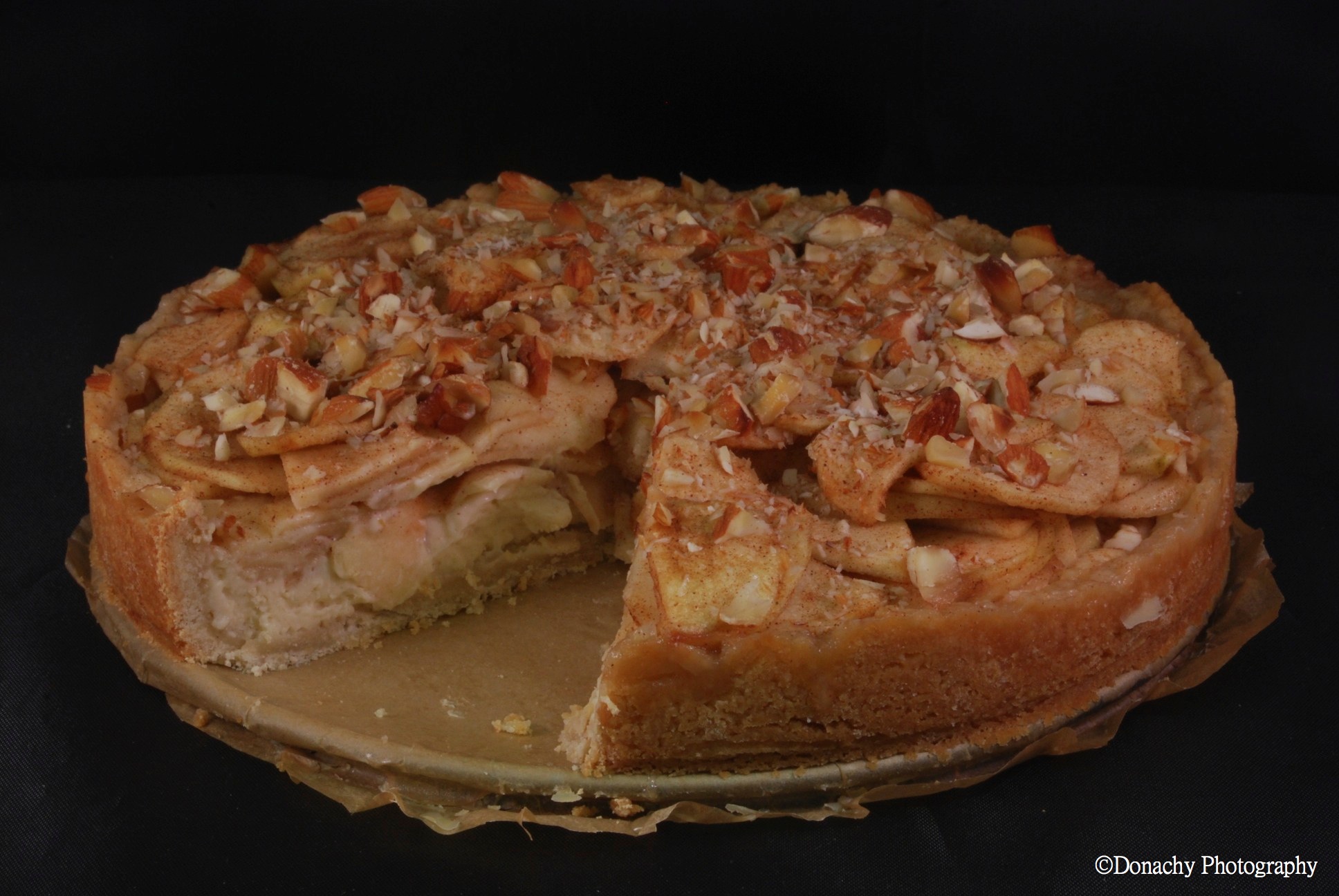
A big box of aging Granny Smith apples showed up at school. They were bumped and bruised but still firm and perfect for baking. With no one else showing interest in them, I took half-a-dozen home.
The grocery store reduces the price of overstocked items and expired items. We are always on the lookout for deals at the store because prices are through the roof up here. Remember the $8 red bell pepper?
A few Granny Smith apples and a package of just-expired but still perfectly good cream cheese were the inspiration for last weekend’s baking wonder. I searched allrecipes.com, which has a cool feature where the user can enter ingredients and matching recipes will be generated. A Bavarian Apple Torte recipe sounded great. The torte is built on a layer of shortbread cookie followed by vanilla cheesecake. This in turn is topped with baked apple slices tossed with cinnamon and sprinkled with sliced almonds.
Jack and I had a slice with our dinner that evening. It was incredible! The next morning, I took the rest of the torte to the school office where it disappeared in minutes (or seconds). The verdict was unanimous: this dessert is phenomenal. Hands down the best dessert I’ve ever made — and I’ve made lots! The other point in its favor? It’s incredibly easy to make. You will impress anyone you serve this to.
So, what are you waiting for?
Bavarian Apple Torte
12 servings
Ingredients
Directions
Recipe from http://allrecipes.com/recipe/philly-bavarian-apple-torte/detail.aspx.
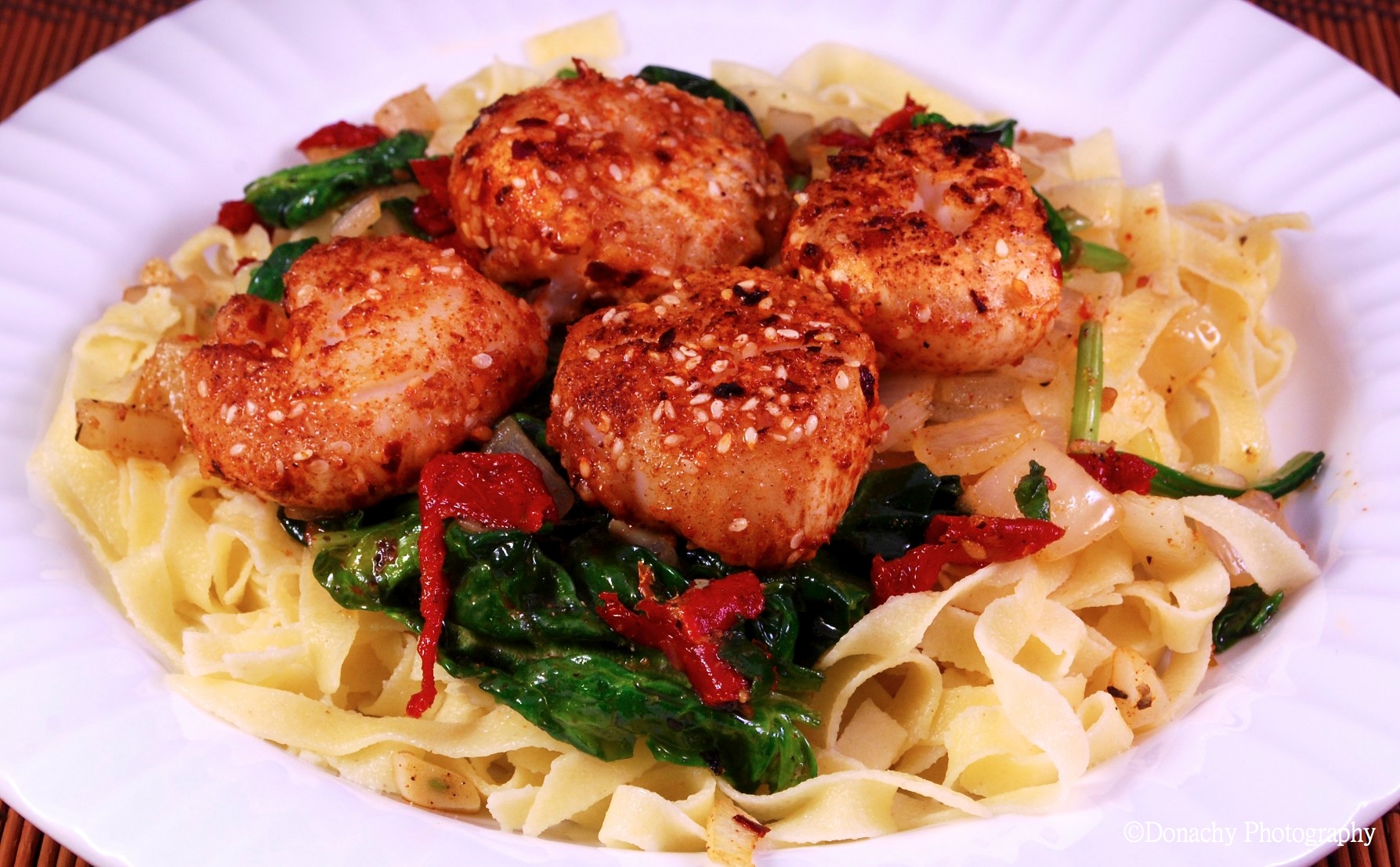
Large Alaskan scallops (from Kodiak) rolled in Thai Seasoning, pan-seared, and arranged on freshly made linguini topped with wilted spinach, sweet onion, garlic and sun-dried tomatoes. We brought five pounds of frozen scallops with us to the bush this year–and are happy to have done so!
I don’t use many pre-blended spices, but a good Thai seasoning blend has long been an exception. These days I’ve been using The Spice Hunter’s Thai Seasoning, but Spice Islands Thai Seasoning is (was?) very good as well. (I’ve been unable to find it in any Anchorage grocery store.) My guess is Penzeys Bangkok Blend is at least as tasty.
A little heat, a hint of sweet, Thai blends are great for spicing up squash or pumpkin soup, stir fry, or as a rub on chicken, pork, shellfish and fish.
The above scallops are a cinch. Roll the scallops (or shrimp, or pieces of fresh fish) in Thai seasoning and set aside. After that, you need bit of olive oil heated to medium high in a frying pan, a pair of tongs to move the scallops around to sear all sides, and about about one minute total cooking time for the scallops. (Don’t overcook them–even after removed from the pan, they’ll continue to cook, and they do not need to be hot when served.)
This dish is as good an excuse as I can think of to pop the cork on one of Oregon’s exquisite Pinot Gris.

A mighty little truck. The first year we came up to Alaska, 2009, we used our C-Dory as our camper and towed it up and back – more than 8,000 miles over 43 days with our 2004 Toyota Tacoma. We had a sunroof, which proved to be just the thing for wildlife photography. Here the rig is parked in front of Muncho Lake in Northern British Columbia. Right after we took this photo, three Rocky Mountain Sheep ewes and their several lambs crossed the road right in front of us. (See C-Dory 22 Angler: A Boat for Alaska)
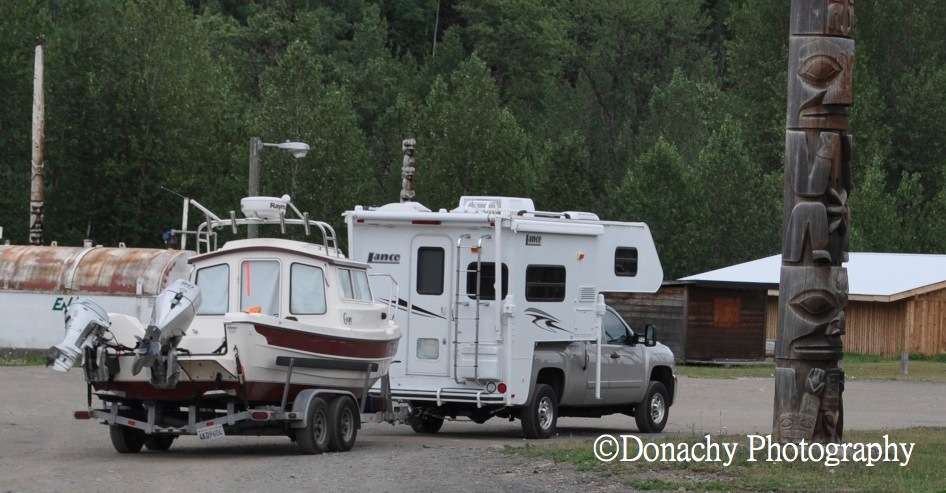
I have long admired the line from Robert Frost’s poem The Road not Taken, “…Yet knowing how way leads on to way…” for the simple, universal truth it holds. When we purchased this boat, we had no idea we’d be towing it to Alaska, using it as our camper both on land (it was a great conversation starter in campgrounds) and on the water. Nor did we have any idea that we would fall so hard for this great state. I don’t recall who spoke first, but on our way back to California that summer at some point one of us turned to the other and said what we’d both been thinking: “We need to figure out how to move up here.”
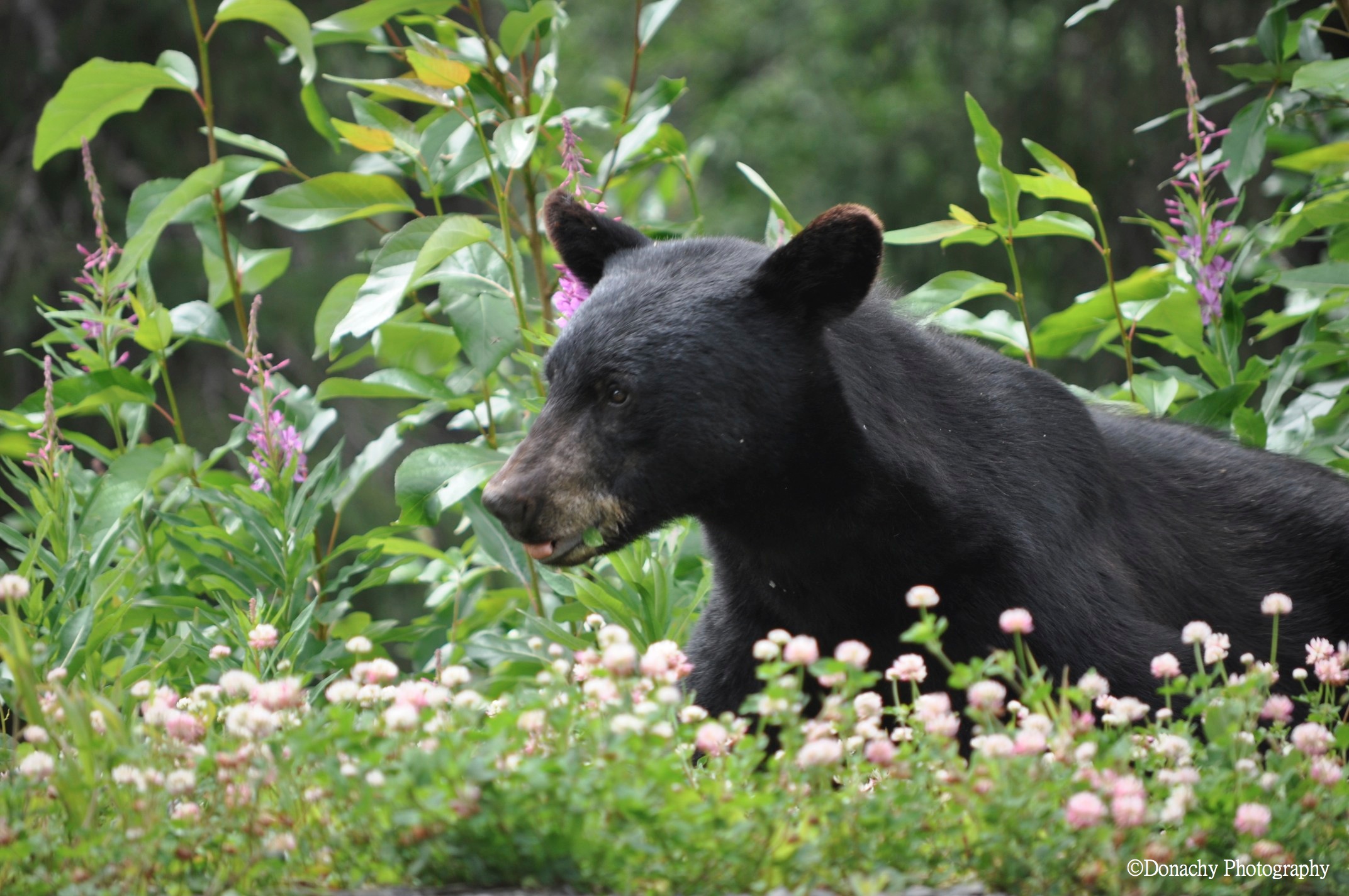
A few months later, we had job offers in the Alaskan bush, a new Lance camper and a Chevy Silverado 2500 pickup truck. We were ready!
The camper is equipped with air conditioning, heat, a shower and toilet, three-burner stove, a surprisingly large and very adequate refrigerator-freezer, TV, stereo, queen-sized bed, small dining table and comfortable seating, skylights and lots of cupboards and cabinets. Good headroom, too. We’re comfortable living small, so for the two of us it’s a plush set-up. We keep reminding ourselves that we’re preparing for a future chapter in our lives when, hopefully, we will live aboard a sailboat. An item we installed that has proved indispensable is the solar panel which, even on cloudy days, supplies enough of an extra trickle of electricity to make life easier.