
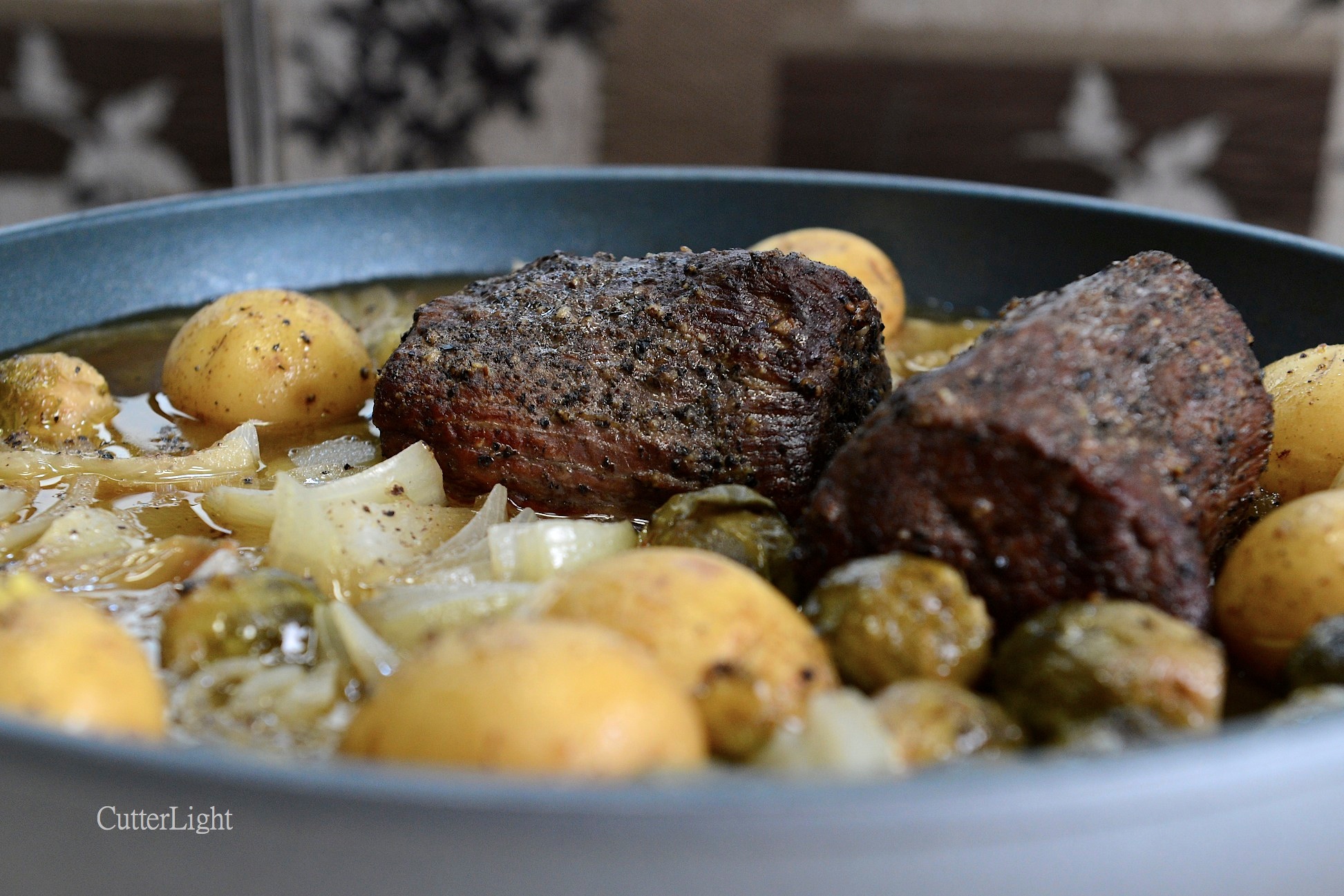
Elk roasts liberally rolled in freshly cracked pepper and slow cooked with sweet onions, baby Yukon Gold potatoes and the chef’s choice of additional vegetables is an appealing meal that can be prepared virtually anywhere. Recipe below.
Over the years we’ve become big fans of Swiss Diamond cookware. Covered eggs cooked over very low heat in their non-stick frying pans are a revelation. Nothing sticks, and as long as the manufacturer’s instructions regarding overly high heat are followed, the surface on this cookware remains in excellent condition through years of regular use.
My favorite Swiss Diamond pan is their big, 12.5 inch frying pan. We call it The Wagon Wheel and it’s perfect for everything from baking a pizza to frying fish to slow cooking a roast in in the oven. The challenge with a pan this large is fitting it into some ovens – such as the one on our Lance truck camper. In fact, even storing a pan of this size in a camper is no mean feat.
So I removed the handle. Permanently. It’s around somewhere, safely tucked away along with the hardware used to attach it. On the camper, we don’t need the handle. Oven mitts suffice.
The elk roasts were a gift from a friend. The recipe is uncomplicated. The finished meal is hearty and has great eye appeal – the perfect meal with a glass of old vine Zinfandel on a rainy evening in Seward, Alaska.
Braised Elk Roast
Ingredients
- 1 pound elk rump roast or similar cut from wild game or beef
- 1 large sweet onion, chopped coarse
- whole small potatoes
- other vegetables as desired: parsnips, carrots, brussels sprouts, garlic cloves, mushrooms and even chunks of pumpkin or squash are all good candidates
- olive oil
- freshly cracked pepper
- sea salt
- sherry or red wine
- additional seasonings such as rosemary, sage or thyme, if desired
Directions
- Preheat oven to 250 degrees F. (Our camper oven only turns down to 300 degrees F – a little hotter than perfect, but still fine.)
- Heat light olive oil or similar frying oil over sufficiently high heat to create a sizzle when the meat hits the pan. Sear the meat on all sides. Use tongs to hold the meat if necessary. About 2 to 3 minutes per side. Remove meat and set aside.
- Lower heat on pan to medium low. Deglaze pan by adding sherry or wine and use a spatula to gently scrape the brown fond created during searing. Slightly reduce liquid over medium to medium-low heat.
- Meanwhile place seared roast in a bowl. Roll the roast in olive oil, salt and freshly cracked pepper to give the roast a coating.
- Add additional olive oil to the pan as necessary. Add onions and other vegetables along with salt and pepper, stirring briefly to thoroughly coat with oil. Add the meat, cover the pan with a lid, and place in oven.
- Cook covered for an hour for a small roast, longer for a larger roast. Add additional wine or a little water to maintain a broth on bottom of pan, if necessary.
 CutterLight