Ink and Light: “Point Hope” – The Aurora Borealis & Jack London

x-point-hope-copy-n

Point Hope: Point Hope, Alaska

Solar winds disrupting Earth’s magnetic field cause the Aurora Borealis. They are often most spectacular on finger-numbingly cold nights in the depths of winter.

Point Hope is an Inupiaq Eskimo village of about 750 inhabitants located 200 miles above the Arctic Circle on Alaska’s North Slope. Originally known as Tikigaq (index finger for the slender peninsula that once extended into the Chukchi Sea before erosion took it away), the area is one of the oldest continuously inhabited places in North America. Subsistence hunting for caribou and Bowhead Whales continues to be an important part of the culture. With no roads existing beyond the village, the local airport (lit up in the above photo) is an important lifeline to and from the outside world.

…the aurora borealis flaming coldly overhead,
…the stars leaping in the frost dance,
…the land numb and frozen under its pall of snow…
Jack London – from The Call of the Wild, 1903

  – Jack London (1876-1916) was one of the first authors to become wealthy writing fiction. Mostly self-educated, after stints as a hobo, a sailor, and 30 days in the Erie County Penitentiary in the state of New York for vagrancy, he made his way to California where he attended high school and began writing in earnest.

“Dry and Sunny, a Break from Winter Weather” – OP Assignment #4

dunes big with human n

It doesn’t get much drier and sunnier than Mongolia’s Gobi Desert. Above, Khongoryn Els, the famed “Singing Dunes,” stretch across the landscape. See nine additional photos from our October 2014 trip below.

OLYMPUS DIGITAL CAMERA

As in any desert, no resource is more precious than water.

gazelle galloping kicking up dirt n

Well adapted for this parched climate, over a million Mongolian Gazelle flourish in arid steppe grasslands which include portions of the Gobi. Mongolia’s grasslands are considered to be one of the world’s last, great wilderness areas.

red-billed choughs sunset n

Red-billed Choughs, a striking member of the crow family, close out the day at Yolyn Am Canyon…

ibex bull 2nd look n

Earlier in the day a magnificent Siberian Ibex, protective of his harem, kept a wary eye on an approaching photographer.

OLYMPUS DIGITAL CAMERA

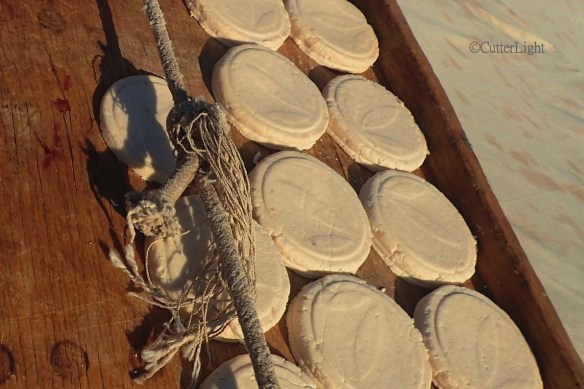
As we journeyed, we stayed with families in their gers (yurt homes). Here, aruul, a type of cheese, bakes into a hard cake on a tray atop a ger.

camel skull & white cliffs n

Not only dry but extremely cold and windswept, winters in the Gobi can be unforgiving. The worst of them are know as zud and can wipe out millions of livestock.

gobi-night-sky-10-17-2014-n

The nighttime skies were spectacular.  The Big Dipper hangs over our lighted ger. 

Not all deserts have camels, of course, but they certainly add an exotic element. In Mongolia, two-humped Bactrians are utilized for transportation, meat, milk and the most excellent cream cheese we’ve ever tasted. Here, Barbra’s mount and I exchange inquisitive looks.

photographer jack @ white cliffs n

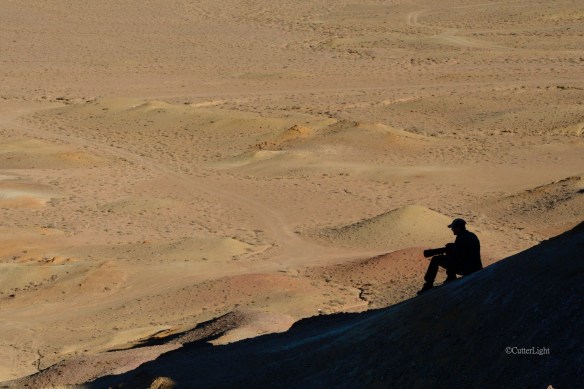
Our eight-day trek through part of the Gobi Desert was one of the highlights of our two-year stay in Mongolia. Not only did we get to briefly experience the lifestyle of one of the world’s few remaining semi-nomadic people, we also got to sample new foods, see exotic animals we’d read about in books as children, feel the Singing Dunes hum mystically through our bodies…  and, yes, riding a camel to seldom-visited sand dunes was a first and it was fun. At Bayanzag (pictured above), the legendary Flaming Cliffs where the first fossilized dinosaur eggs were discovered, we even found a large, fragile skull with teeth intact and a spine radiating out several feet, the fossilized remains of some species that no longer walks the earth. It’s 20° F (-7° C), a north wind swirling falling snow as I write this. A trip back to the Gobi through photographs was indeed a nice break from winter.

Next Thursday: Assignment #5 – Motivational Moments: the things that get us out of bed at 4:00 AM to go out and shoot; or that inspire us to sit for hours waiting for a capture. I already have a few ideas in mind. Stay tuned!

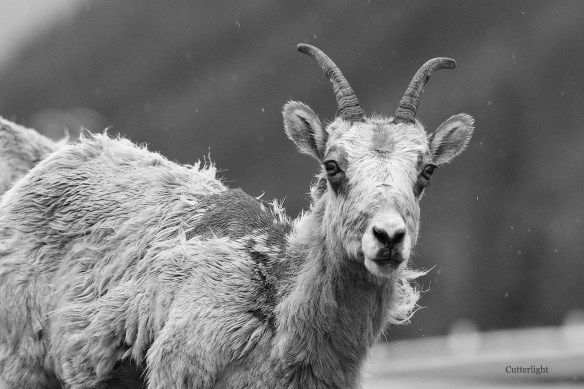
C’mere and give us a kiss

mountain sheep give us a kiss n

We’ve all been there – mornings when you’re out of cigarettes and reduced to digging through an overflowing ashtray; mornings when you can’t find your Scotch glass… or the sash for your robe. Your lipstick’s smeared from the night before, your head is pounding, you can’t even look at food and you just want to know that you’re still loved. (Stone Sheep Ewe on a rainy day in Alberta, Canada)

And Then Gillie was Gone… Or… Intrepid C-Dory Thwarts Thieves!

Gillie and Canola_n

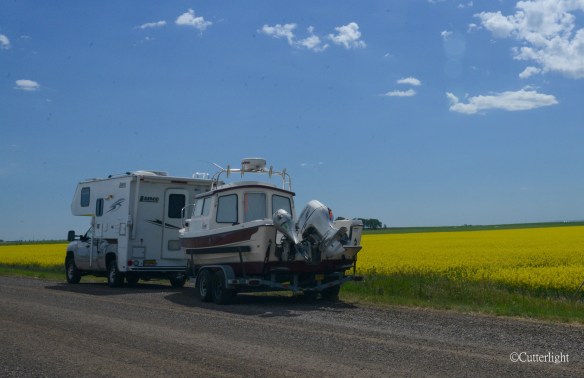
Gillie faithfully following her crew, enjoying the canola fields of Alberta.

July 18, 2016, Yukon Territory. In an incredible act of heroism, the fishing vessel Gillie, a 22’ C-Dory Angler freed herself from an attempted abduction. Following her captains north to Alaska on the Alaska-Canada highway, Gillie, along with Stanley the Chevy Silverado and Lance the Cab-Over Camper, had pulled off the highway for a driving break at the Smart Creek turn-out near the British Columbia/Yukon Territory border. Her captains were gone for mere minutes, looking for grayling and char in the trouty-looking river just out of Gillie’s view when the thugs attacked.

Armed with precisely the right tools, the perpetrators made short work of Gillie’s couplings, hitched her to their own criminal vehicle, and sped off. At this point, Gillie feared the worst. She imagined herself in a chop shop, her engines torn from her stern, her insides gutted. She shuddered, knowing she may never see her beloved captains again.

But when she shuddered, she noticed that in their haste, the thieves had neglected to properly secure the nut holding the hitching ball in place. Each time the speeding trailer hit a bump on the very bumpy Al-Can, Gillie put her own two tons of weight into the bounce. Bit by bit, the nut worked its way down the hitching ball shank.

“If I can just get free before they hit the chop shop…” She didn’t complete her thought. Not more than 50 meters up the road was a bright orange marker. She knew what that meant. Big Bump.

“This is it,” she thought, digging deep for the courage she’d need to withstand the crushing impact when the tongue of her trailer hit the pavement at 70 miles (110 kilometers) per hour. The front wheels of the thieves’ truck hit the bump, Gillie gave herself a mighty lift, the trailer wheels careened over the bump, Gillie slammed down hard on the hitching ball and, to her great joy, rebounded, catching just enough air to lift herself clear.

The tongue of the trailer came down with a heavy, metallic, grating crash! The safety chains holding the trailer to the truck went tight. Now, atop the trailer, still upright, Gillie was being dragged along while the tongue of the trailer cut a scar into the highway asphalt. From the cab of the truck, Gillie could hear loud shouting and words that can’t be printed here.

The next thing she knew, the truck was pulling off the highway. “Yea!” Gillie exclaimed in thought. But the shoulder was steeply canted. “If they go any further, I’m going to roll!” She thought in a panic.

Just in the nick of time, the whole rig skidded to a halt. The thieves burst out of their truck, cursing their “bad luck” and accusing each other. They had little choice and they knew it. Already, police between Watson Lake and Teslin were looking for the most unmistakable boat on the Al-Can. Gillie didn’t know it, but her captains had already supplied the Royal Canadian Mounted Police (who always get their boat) with a photo of Gillie and a description of a possible suspect vehicle. Gillie didn’t know this, but thanks to their friends who listened to police scanners, the thieves did know it. With a hot boat atop a disabled trailer and police on the lookout, the thieves had no choice but to cut and run.

Her captains were in the midst of a rather quiet, pensive dinner at the Yukon Motel and Restaurant in Teslin when Officer Stelter of the Royal Canadian Mounted Police entered the establishment and confidently strode toward their table, barely able to suppress a grin.

“She’s on the road, down at marker 1168. It looks like they abandoned her.”

The restaurant hostess quickly packed the dinner “to go.” The captains climbed into the Chevy, fueled up and hustled to the site, 42 miles to the east. By the time they arrived, Officer Stelter had already secured a brand new 2” hitching ball to the trailer – held fast in place with a properly tightened nut.

You never saw a bigger smile on a boat. Her captains were smiling pretty hard, too.

Bull Fight on the Al-Can

Bison Bull Fight n

Nearly a ton each, when wood bison decide to take over a piece of the Alaska-Canada highway, they do. Shooting from the deck of our C-Dory, we found ourselves surrounded by leathery thuds of muscle smacking muscle, the crack of horn on horn, hooves pounding pavement and turf as animals the size of small trucks worked themselves into sprints, snorts, grunts, bellows and the thick odor of bison. We’d been photographing more placid scenes in a herd of about 100 animals – cows and nursing calves, young bulls, grandpa bulls and The Kings – the taut-muscled mature males that stood hands higher than the other members of the herd. Aside from a few younger males occasionally testing each other with head-butts, all was tranquil. The older bulls, hump-shouldered, muscle-ripped massive beasts, grazed peacefully along with the cows and calves or rolled in dust wallows.

The dynamics changed in the blink of an eye. A couple of the big boys started snorting at each other, then locking horns hard and kicking up dust. Suddenly every big bull in the herd, including the largest bull, was on high alert, tails held high, heads lowered as they zeroed in on the point of conflict. Kicking up grass, shrubs, sand and dust, these muscle-sculpted kings moved with impressive speed in their attacks which were aimed at bellies and buttocks as well as heads and shoulders.

Vehicles on the road cautiously edged backwards to give the sparring bison sufficient berth. The motorcyclist seen on the left side of this photo turned around and headed in the opposite direction as the fight edged closer to him.

Still Life with Woodpecker

pileated woodpecker n

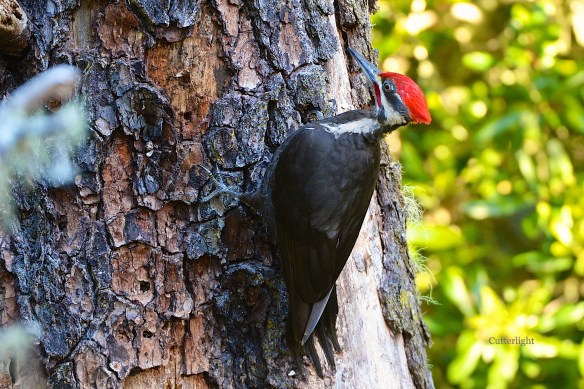
Traveling up Highway 1 through Oregon, heading back home to Alaska, reading Tom Robbins’ Still Life with Woodpecker along the way. Saw this pileated woodpecker in Bullards Beach State Park.

Lots of wildflowers and butterflies, too, and a herd of Roosevelt elk.

Still Life with Woodpecker

Snow and Flowers: It’s Spring in Mongolia!

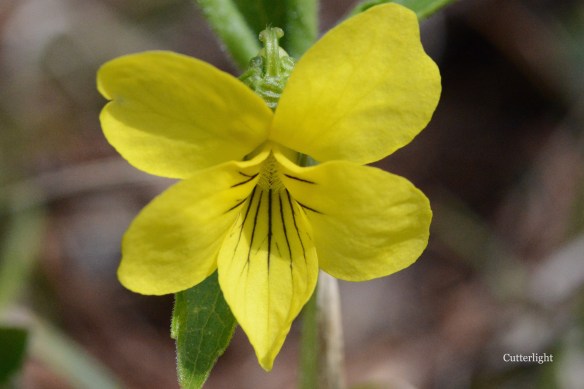
yellow flower beautiful n

Our most recent heavy snow was just two weeks ago, and we’ve had a few flurries since then. But out in the countryside near Ulaanbaatar, wildflowers have begun to grow in profusion. 

snow drop mongolia n

Snow drops (above) are among the very first flowers to show.

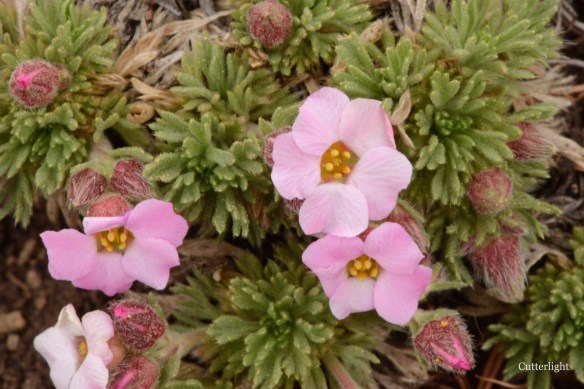
white flowers w yellow, pink orange n

Notice the small red ant on the right side of the photo. The centers of these particular flowers reveal a tell-tale indication of their age, with the youngest flowers having yellow centers. Most of the early wildflowers are small. But they’re everywhere, and close examination they often reveals intricate beauty…

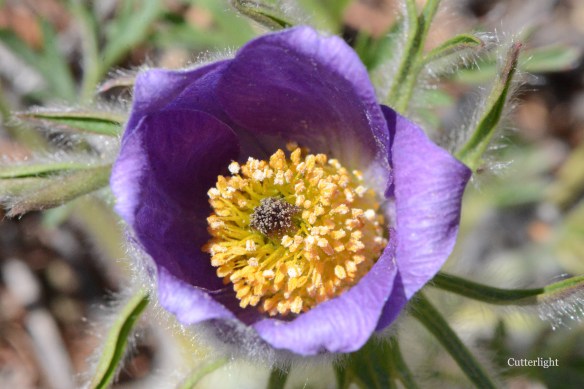
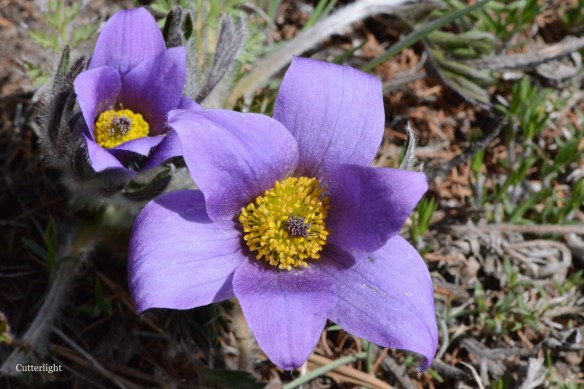
purple flower macro n

…making us wish we knew more about these splashes of color.

purple flower macro inside pollen n

pink flower macro stamens n

yellow poppy w pink n

forget-me-nots mongolia n

And happy to come across something as familiar as Alaska’s state flower, forget-me-nots.

rubarb wild n

There’s wild rhubarb, too, and wild mint and caraway are abundant.

purple flower Mongolia n

But it’s the flowers that capture our attention.

pink flower succulent n

And leave us vowing to take a botany course when we return to Alaska.

wild iris n

Bar May snowstorm n

The scene in Ulaanbaatar just over two weeks ago on May 11. 

Horse Skull, Springtime in Mongolia

horse head black n white n

Terelj National Park, May 2016. It was a hard, cold winter.


Back on the Water: Upriver Grayling in Mongolia

It felt good to finally get out on water. Prospecting for these handsomely marked grayling on a small river in Mongolia took us back to prospecting for trout in small waters in other places.

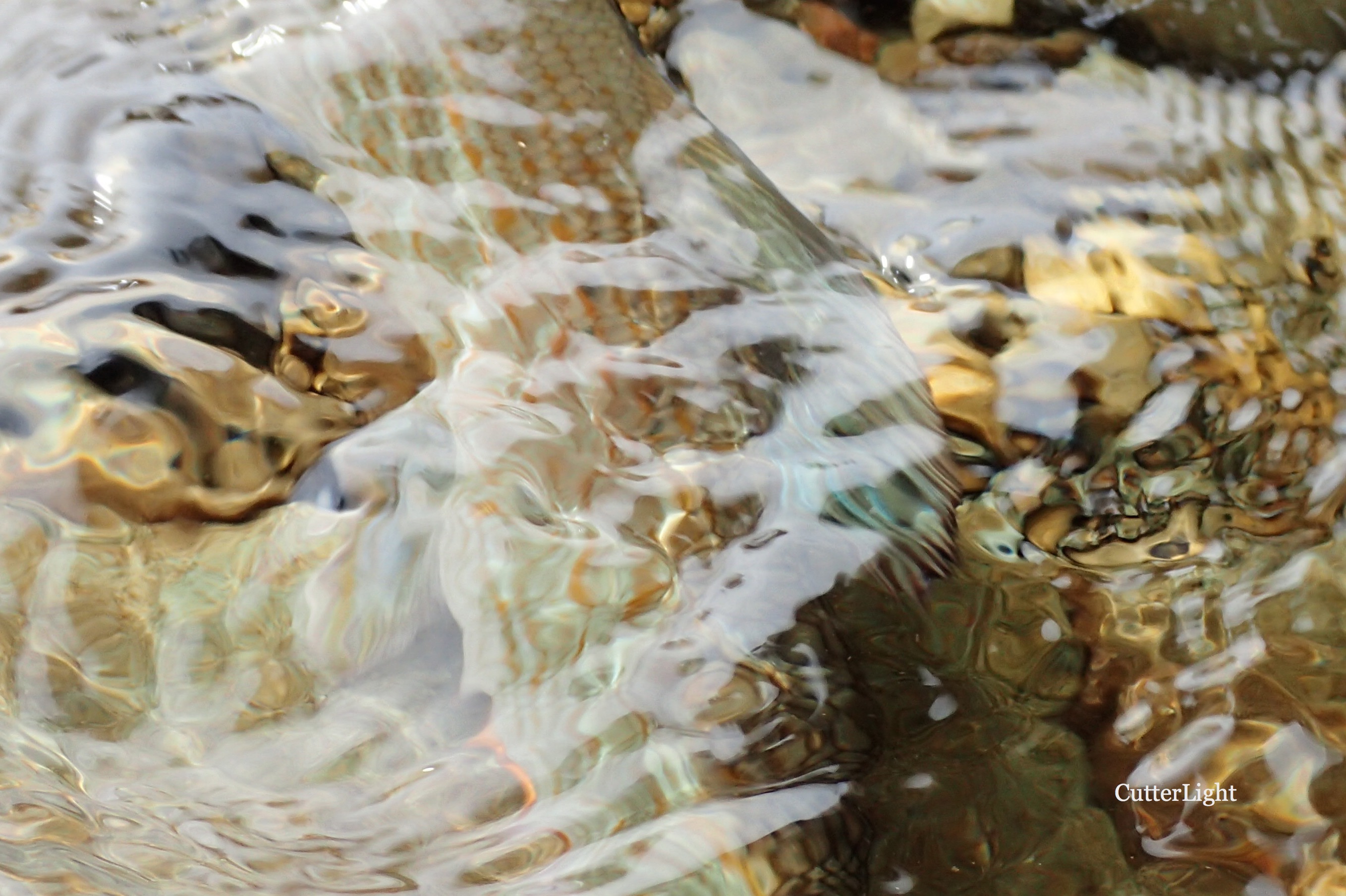
Nearly as translucent as water and marked like colored glass, the grayling’s dorsal fin…

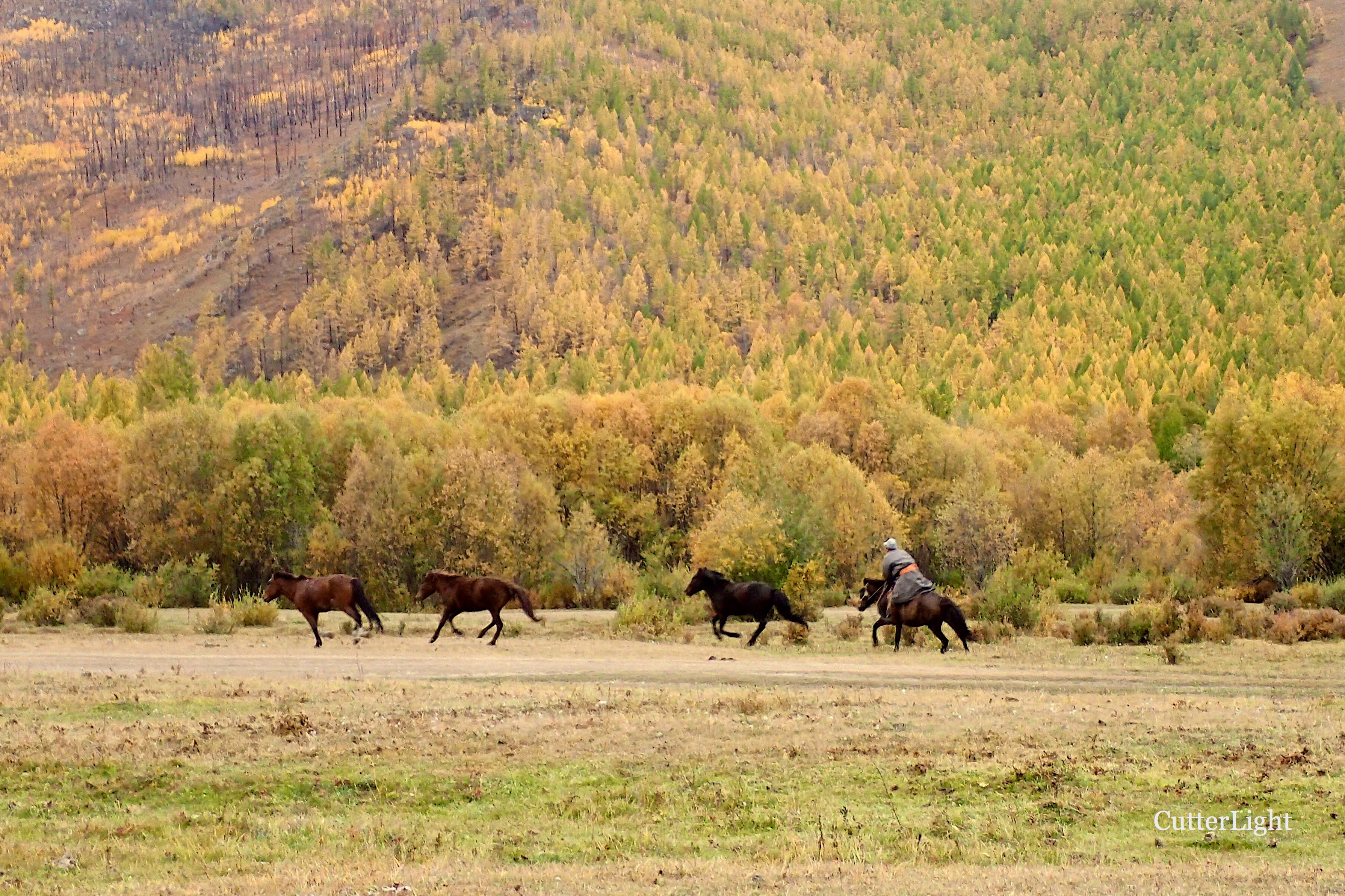
By mid-September, autumn has come to Mongolia’s steppes and mountains. By the end of September, we’ll have had our first snows.

Sluggish with cold and dark with Autumn, one of the year’s last grasshoppers. 

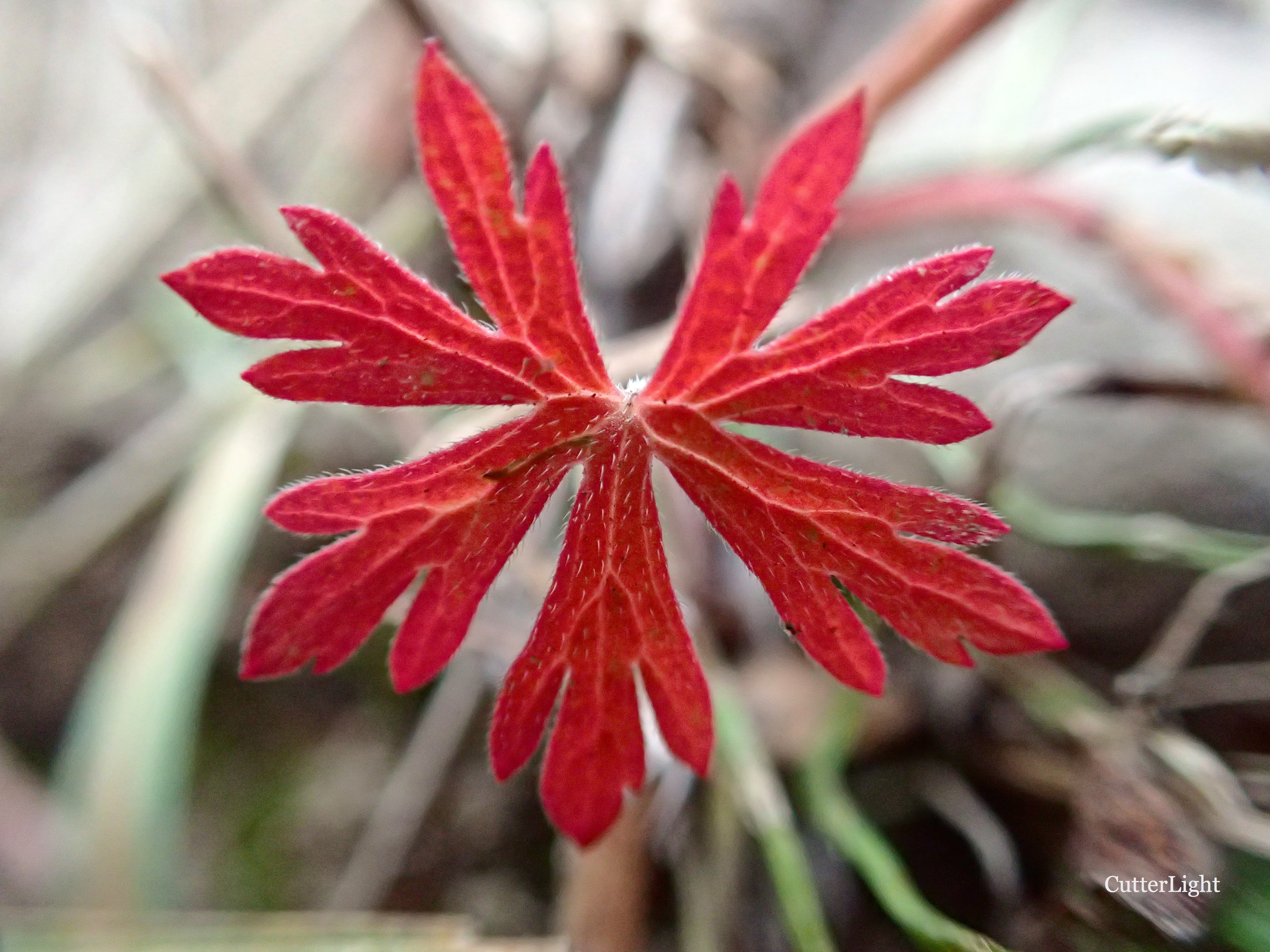
Yellows, golds and browns mixed with the blue-green of evergreens, predominant fall colors across this land. Here and there a touch of crimson. 

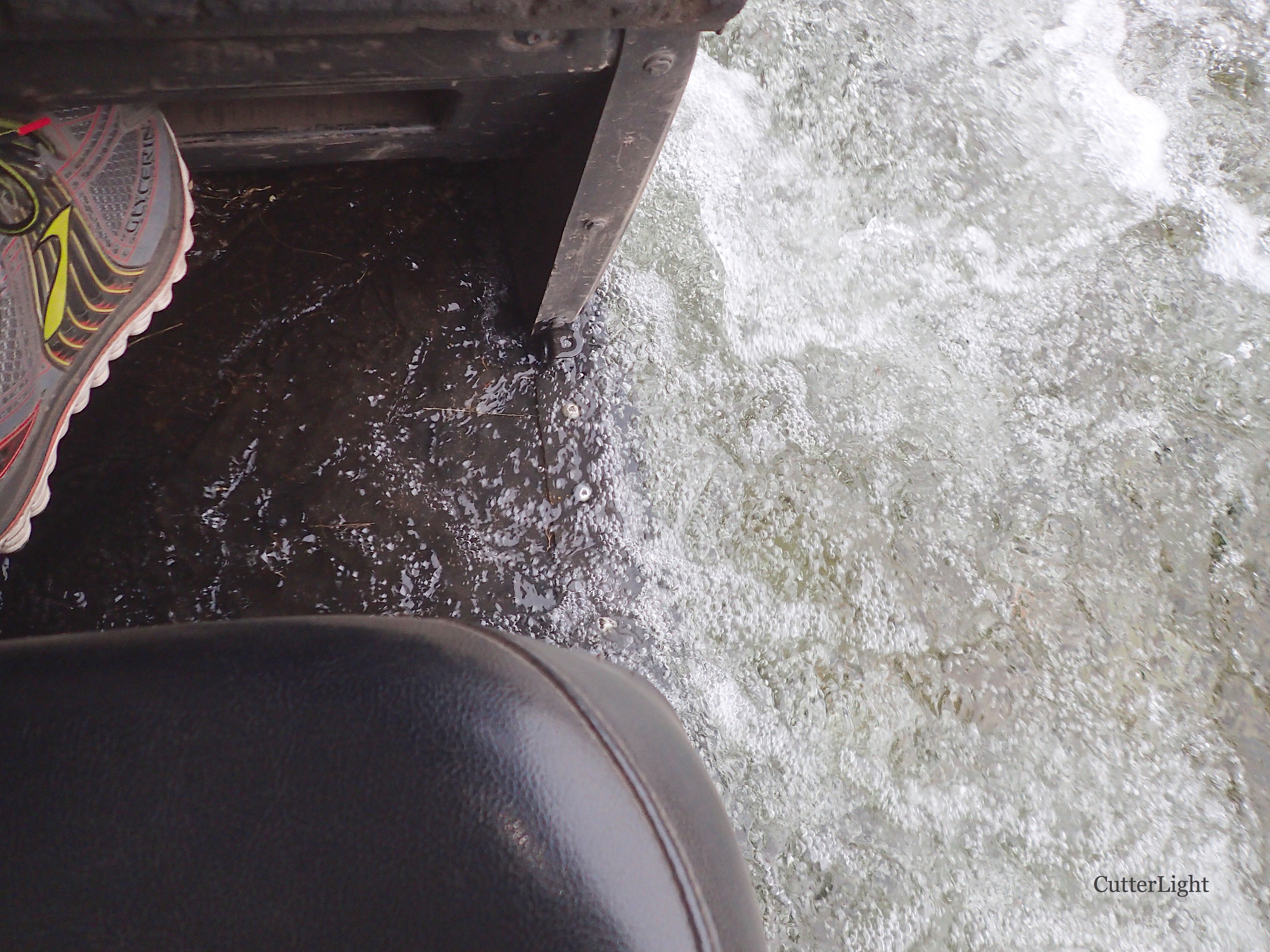
Feet up. Water pours across the floorboards of the doorless Polaris Ranger. One of several crossings.

Not everyone made it.

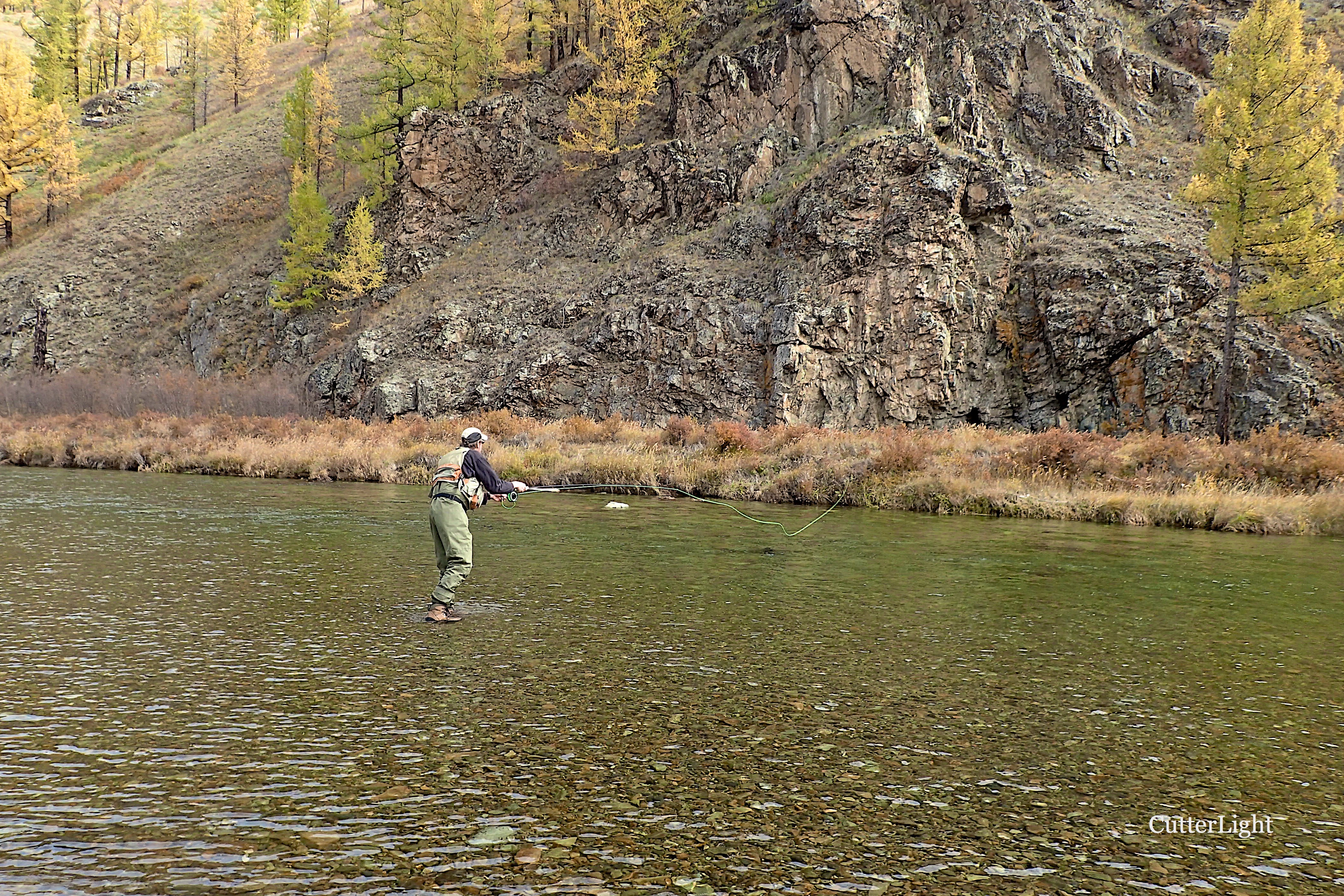
Stringing up. Something between rumor and someone’s good authority sent us up to these headwaters, prospecting.

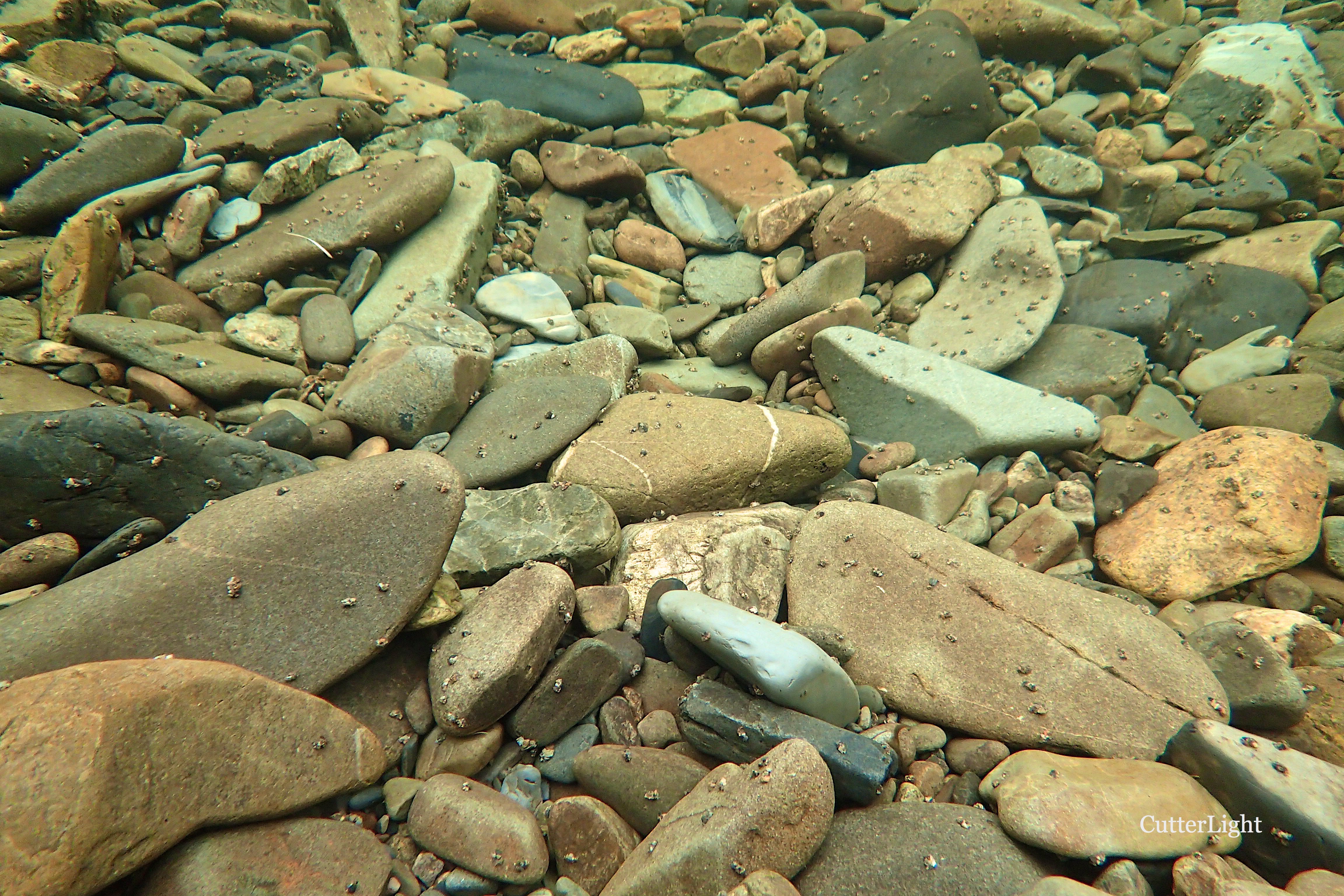
I stuck my camera into the icy water to get a photo of rocks speckled with caddis casings. 

OLYMPUS DIGITAL CAMERA

We encountered sporadic blue-winged olive mayflies. Rocks we flipped revealed caddis and stoneflies, a few loaches and this dragonfly nymph. 

Possible water, but not promising. Larch trees yellowed by frost-laced mornings, pools in shaded feeder streams iced over.

It feels like a lifetime ago that we were on our boat in Alaska, filling coolers with a years’ worth of ocean bright salmon, halibut and rockfish to sustain us through months in the Arctic Bush. Back to roots – a fly rod, a small river, drifting nymphs and dries. Bone satisfying to once again feel the weight of a fish. Could be a rainbow stream in Colorado, cutthroat water in Oregon, a brookie creek in Pennsylvania or a yamame stream in Japan. It all feels like home.

Barbra’s first grayling and her first fish in Mongolia.

We hiked and drove and hiked some more. At last we found the water I’d been looking for – the right depth, the right flow, the right-sized boulders breaking up the bottom at the right intervals. And there in front of us, tens of fish materialized out of nothing – out of water as clear as air – porpoising and splashing across a run maybe 60 feet long and half that width in pursuit of something tiny emerging from the water. Several times these grayling rocketed completely out of the water as they threw themselves at our mayfly patterns. A number of times we were both hooked up, simultaneously.

Eight inches or eighty pounds… It never gets old. The grayling were still feeding when we left, reluctantly, the sun low behind clouds.

OLYMPUS DIGITAL CAMERA

A backward look…

Grayling. Grayling water. Mongolia…

Our Annual Mongolian Khorkhog

exploding khorkhog n

Packed with sheep, potatoes, carrots, cabbage, sizzling hot fist-sized rocks and water, the piping hot contents of this milk can are tender and ready to be served. Let the khorkhog begin!

It’s a a tradition keenly anticipated at the International School of Ulaanbaatar (ISU). With our first week of school behind us, it’s time for faculty, staff and administrators to relax in the style of traditional Mongolia – with a khorkhog. In days past, the animal’s stomach would have served as the cooking pot. These days, it’s more common for khorkhog to be slow roasted with hot rocks, meat and vegetables placed in an old-fashioned milk can. Prepared thus, the meat comes out tender and flavorful, though as the photo suggests, containers are to be opened with caution.

steaming khorkhog n

A shovel handle is used to apply pressure to the milk can to slowly let off steam while ISU’s driver turned chef Baatar pulls a roasted potato from another can.

With a faculty, staff and student body representing over 30 nationalities, ISU is truly an international school. But the school’s roots are planted firmly in Mongolia. The site selected for this year’s khorkhog is on the outskirts of Ulaanbaatar on the shoulders of Bogd Khan Mountain, a place Mongolians point to with pride as the world’s oldest national park. An easy bike ride from our Ulaanbaatar apartment, we’ve come across signs of deer and wild boar on hikes and rides through the hills, and have encountered fox, sable, marmots and Eurasian red squirrels. We’ve also focused our binoculars on dozens of species of birds including demoiselle cranes, hoopoes, falcons, eagles, hawks, kites and numerous song birds.

imperial eager n

Circling high overhead, an imperial eagle checked out our feast.

khorkhog musicians in cell phone n

Song is a rich tradition in Mongolia, and once stomachs were full a guitar and drum came out. 

khorkhog singing n

Everyone knew the words to the Beatles’ classics!

khorkhog soccer n

Meanwhile, a group found a perfect pitch speckled with wildflowers for a game.

tug of war n

Rounds of tug-of-war were amiable enough…

wrestling at khorkhog n

… but wrestling, one of the Mongolia’s national sports, always has a serious edge to it.

Recent rains have turned the fields and forest lush shades of green, and wildflowers – not to mention abundant wild herbs such as mint, sage and caraway – are everywhere.

Mongolia fall foiliage n

Situated at over 1,300 meters (4,300 feet) above sea level and not terribly far south of Siberia, fall comes quickly on the heels of summer in Ulaanbaatar. Already nights are growing cool. In a few weeks time the larch trees where we recently held our khorkhog feast will turn gold with autumn.