Livin’ in a Van down by the River

Seward Harbor, May 21: This is the view from the back widows of our pickup truck camper, our summer home while we work to get Bandon ready to live on and to sail. Mornings start early up here, the first sunlight slanting into the camper a little after 5:00 AM – and getting earlier each day. Warblers and other songbirds are the first to wake. Too early for us. By the time we roll out of bed, gulls are calling and scolding and the high chirps of eagles have taken over. The fishing season hasn’t come into full swing yet, though a few engines can be heard making ready for a morning or a day on the water. Blueberry pancakes with maple syrup and strips of bacon on the side some days, fried eggs others, cold cereal when we’re really eager to get moving, but always with a ruby red grapefruit, a glass of orange juice and a big mug of coffee made from freshly ground beans. Then the walk to the end of the dock and a full day of work. In the photo above, as you look down the open water between the docks, Bandon is the last mast on the left.

We’ve submitted the paperwork to the coast guard in order to change the name of our Island Packet 350 from Tarsus to Bandon.

This is a sound vessel, and she surveyed well, but there is always work. The first of it has begun with giving every square inch of her interior – from her beautiful teak-wood sole to her overhead – a good cleaning. Meanwhile, there’s sorting through all the items previous owners left behind. From can openers to canvas, much of it is useful, and much of it is not. All of it requires a decision: toss out, donate to the  local thrift shop, or clean and restow.

Everything we touch, clean, move off or bring aboard makes this boat that much more ours. Bandon will be our home. In the near-term, that means about three months out of the year. And so we are outfitting it as such. This means furnishing it with good dinnerware (we went with Denby for our plates, bowls and pasta bowls), stemware (we found Schott Zweisel Tritan crystal wine glasses that look and feel luxurious but are exceptionally break resistant), and quality bourbon/Scotch glasses.

We anticipate that Bandon will be a full-on sailing vessel in every sense, but we recognize that even the most serious sailing vessels spend most of their days at anchor or in port. We want those days to be comfortable and inviting.

The Sailing Vessel Bandon

The t’s have been crossed and the final i dotted. All 37 feet and 12 tons of the sailing vessel Tarsus is ours.

What have we gotten into?

There’s a line from the film The Shipping News that seems to fit. “Course, you don’t know nothin’ about boats, but that’s entertaining, too.” 

Four years ago when we bought our C-Dory, Gillie, I’d never piloted a power boat longer than 12 feet – my dad’s aluminum car-topper with its 5 hp engine. Barbra had even less experience with boats. All we really knew was that we wanted a fishing boat. So we did our due diligence – read books, researched on the Internet, visited dealerships, checked out boats in marinas, talked to people and attended boat shows. In the end, we came to a familiar set of conclusions, the short of which go like this: There are a lot of boats for sale, and most of ‘em float. Out of all those boats, a few makes stand out. After that, everything is a compromise. The boat we really wanted was too big to readily trailer; thus it was not the boat we really wanted. We took the plunge, bought Gillie and a year later towed her all the way to Alaska, to the Port of Valdez, which is over 3,000 miles from Sacramento. We then launched her, ran 90 miles to the Port of Cordova, and spent the next eight days and nights fishing and camping aboard our boat in Prince William Sound.
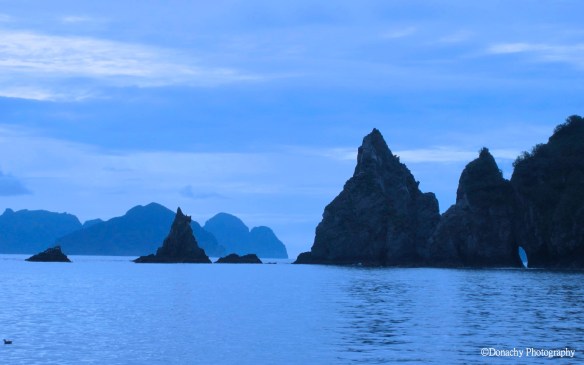
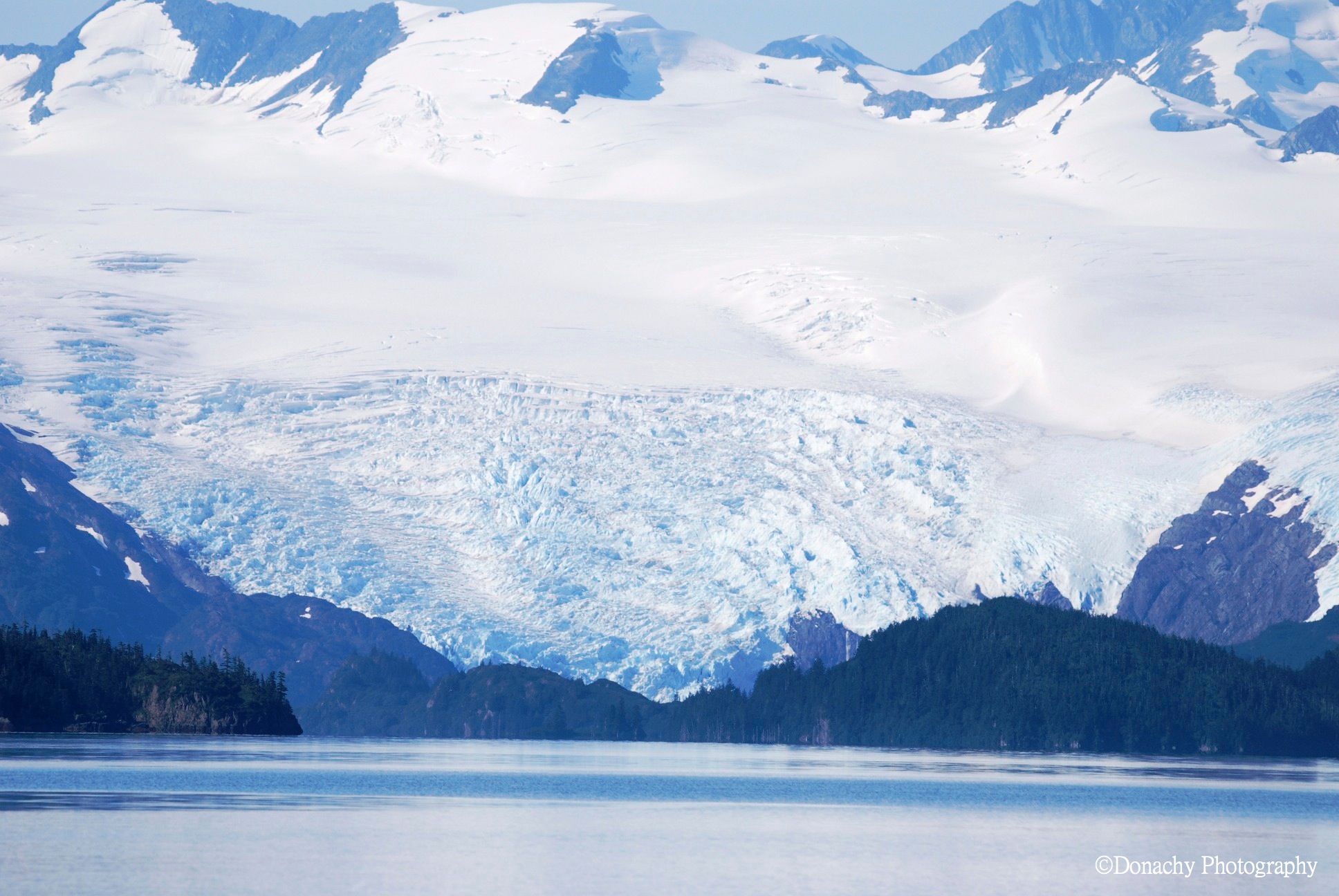
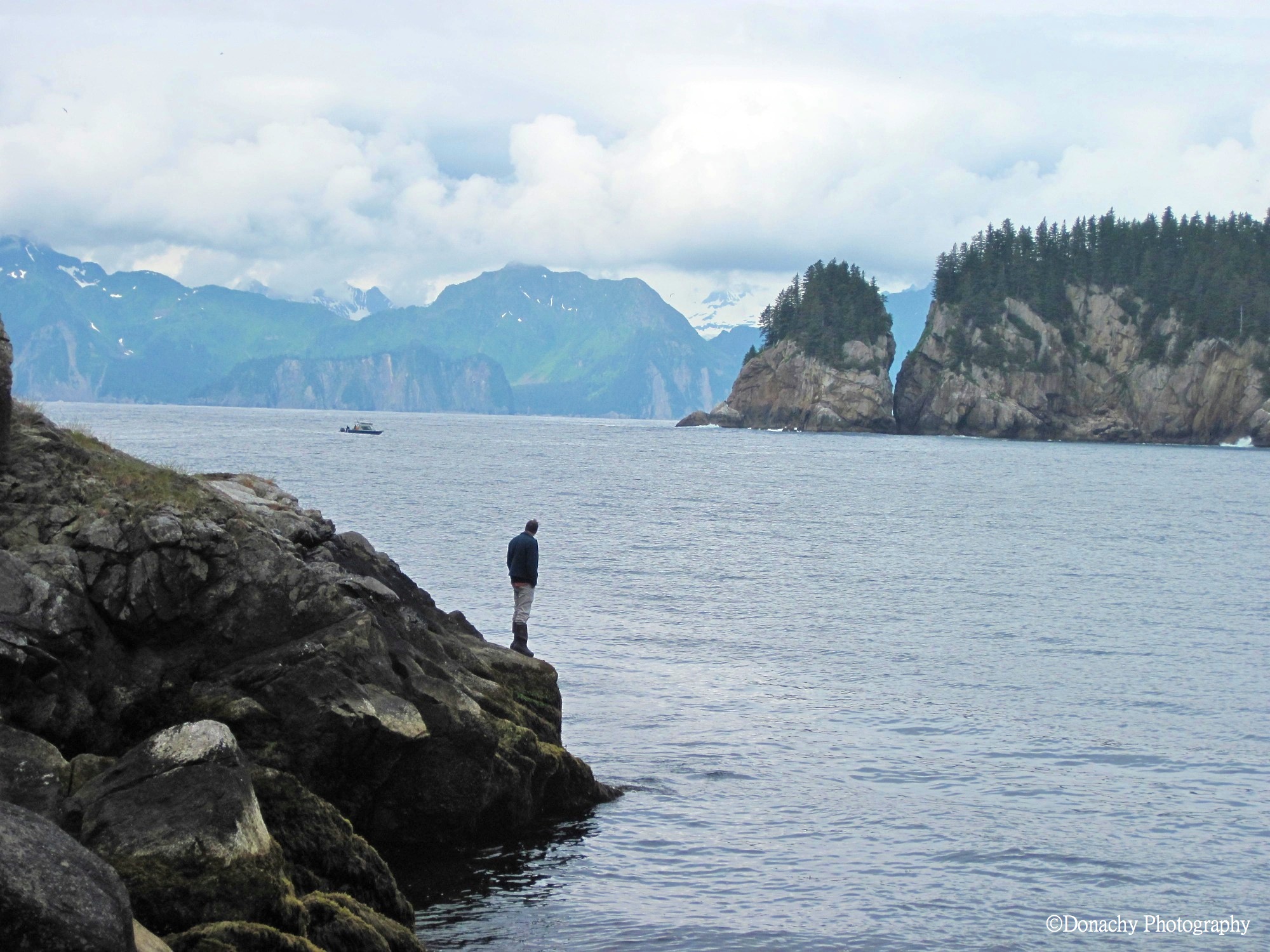
Above: Jagged rocks and islands create a maze leading from Resurrection Bay out into the Gulf of Alaska. Top photo: Massive Blackstone Glacier towers above its namesake bay near Whittier, Alaska.

Time and tide kept me from sailing, but I honestly can’t remember a time in my life when I didn’t want to sail. It’s always been there. Landlocked in western Pennsylvania, my family would take summer vacations to the coast – up to Cape Cod, down to North Carolina’s Outer Banks, west to Oregon – where we’d spend a week frenetically touring museums and historical sites, dining out in restaurants, perusing art galleries and shopping. For my part, I could have spent all day every day on those vacations doing nothing more elaborate than fishing the first tide of the day, combing the beaches, and walking the marina docks. The boats, particularly the sailboats, were magical. Mesmerizing. I’d see their owners emerging from below deck, or topside working on this or that, or just relaxing and looking off in the distance and I wanted to be those people. I had so many questions for them, but I never worked up the courage to break free from my family, approach one of them and ask. Questions like, How does it work? How do you steer it? Do you live on it? What does its name mean? Where have you been on it? Where will you go next?

Tarsus’ former owners were podiatrists. Although we haven’t completed a formal name change yet, on each piece of paper associated with the sale (for a boat this size, there’s nearly as much paperwork as in a home sale) we have penned in Bandon where the vessel’s name appears.
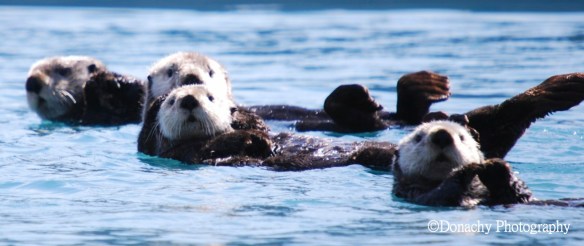
Sea otters are a common, always welcome sight along Alaska’s southeast and central coasts. 

There’s a small town on the southern Oregon coast where a river with runs of salmon, steelhead and striped bass joins the Pacific. Bandon. For a long time, Barbra and I looked at land on the Coquille River upstream from Bandon. In addition to the fish, the area has deer, turkeys, game birds and elk as well as good mushrooming and abundant wild berries. It’s a quiet part of the world, not overly far from wine country. We talked about a piece of land with trees, a spot for a garden, raising chickens there and cutting our own firewood for a wood burning stove in a cozy house where we would homestead.

Bandon is that. But it’s more. This time, it’s not the boat that represents the compromise. It’s the lifestyle. Choosing to become sailors means, at least for now, not becoming homesteaders. It means not driving our camper all over North America, or having a cabin on the shores of a lake full of walleyes, or collecting wine, or, in Barbra’s case, getting a pilot’s license.
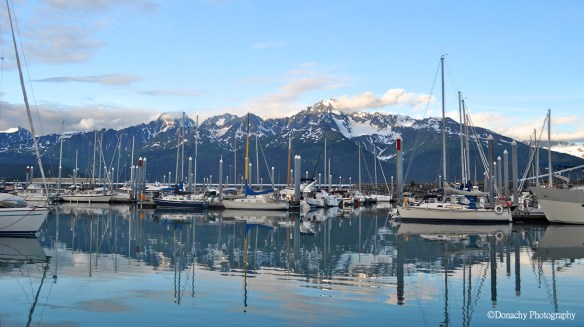
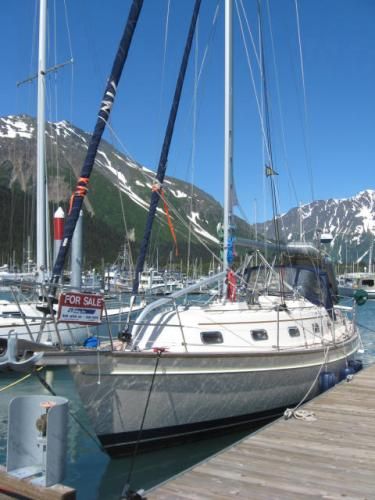
Bandon will be docked in the Marina at Seward, pictured here in early July.

To borrow from Robert Frost, Bandon is the road we’ve taken. She’s got a sound hull, every amenity and comfort we need and then some, and sails to take us over any sea. It is dreams come true for us, and in some of those dreams there is a placid lake full of walleyes, and endless summer days touring North America in our camper, a herd of elk feeding on windfalls beneath our apple trees, a salmon fresh from our river for Thanksgiving dinner, a wood burning stove and a freshly made blackberry pie.
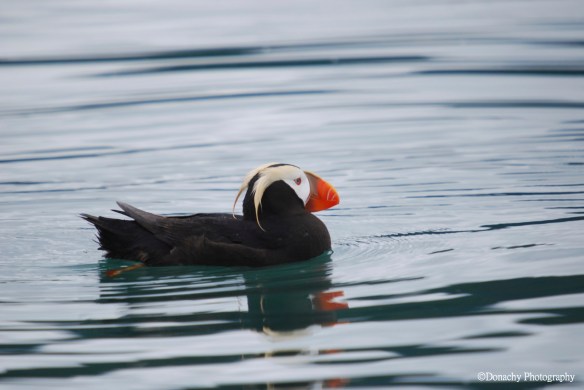
Resurrection Bay, where Seward is located, has one of the largest summertime concentrations of Coho salmon in North America. There is an abundant, varied and rich ecosystem in the bay, making it a premier locale for everything from watching sea birds and otters to seeing whales, dolphins and porpoises. The surrounding mountains are spectacular and help ensure for predictable winds, making Resurrection Bay a great place to sail. For more information about the sailing vessel Bandon, click on the word Tarsus.

A Boat to Sail the Ocean Blue

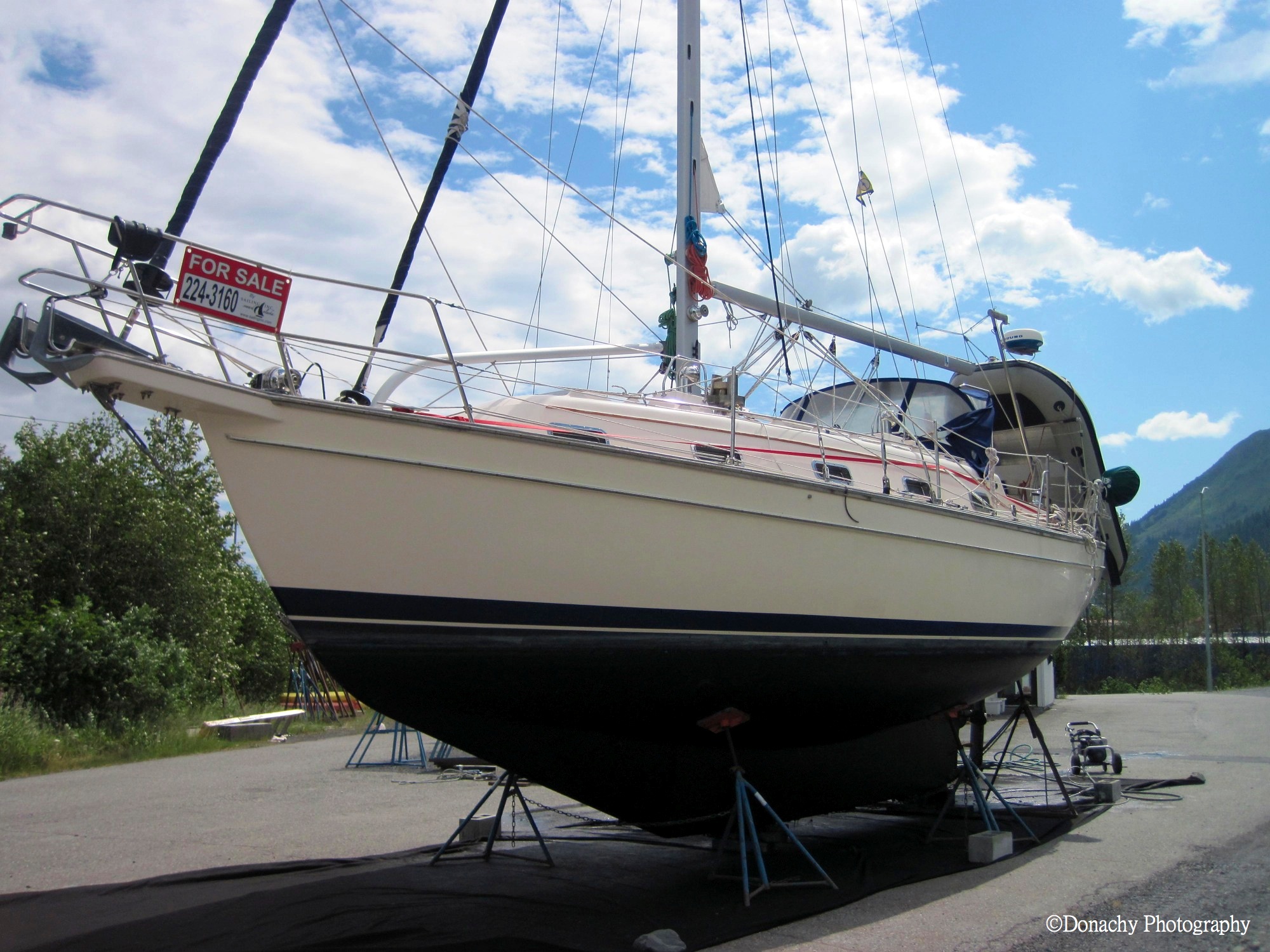
We fell in love with this 2002 Island Packet 350 last summer while visiting Seward. Here she is hauled out for survey on March 3.

Her tip-to-tip length is 37′ 10″, on deck she’s 35′, and at the waterline 29′ 4″. Her mast rises 48′ 3″ above the water. Rigged as a cutter, she’s also powered by a 38 hp Yanmar diesel engine. Displacement is eight tons. Gross tons: 12. 

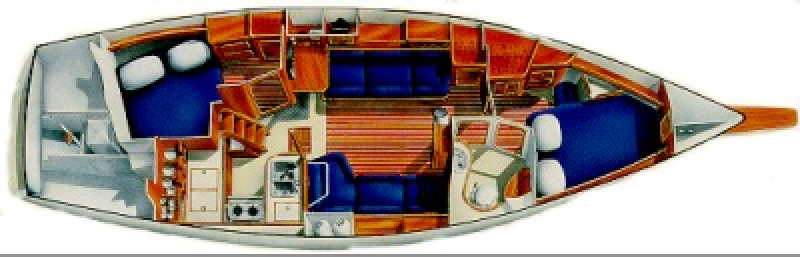
Below deck there are two staterooms (sleeping berths), one fore and one aft. The two settees convert to beds to sleep a total of six people. Teak deck, 6′ 4″ of headroom in the main cabin, and lots of storage space. The head, complete with shower, is located just aft of the forward stateroom. The fuel tank holds 50 gallons of diesel and the freshwater tank holds 100 gallons. There’s a dedicated navigation table, a dinette table that folds into a bulkhead when not in use, a smartly designed galley and easy access to the engine.

The gimbled two-burner stove with oven is the centerpiece of the galley. The narrow space allows the cook to wedge in and brace when the boat is moving. The microwave will go. 

Here she is this past summer with a fresh coat of bottom paint. She sure put a song in our hearts! (Click photo for larger view.)


To Sea “from whence we came”

During our sailing class last summer, we took one of the sailboats out to this cove on Resurrection Bay where we anchored and then took the dinghy ashore to look around. Barbra caught me gazing wistfully across the water, contemplating the day we might have our own blue water cruising vessel. “We are tied to the ocean. And when we go back to the sea, whether it is to sail or to watch – we are going back from whence we came.” John F. Kennedy

This past week we made an offer on a sailboat. She was docked in Seward, where we took sailing lessons and were camping most of the summer. We went onboard to look her over a couple of times, and then, just before we left Seward, we saw her hauled out for a new coat of bottom paint. She’s a lovely vessel, neither too large nor too small by our sights, sea  worthy and sea kindly enough to take us to any destination we have the guts and gumption to chart a course for, well-appointed enough to allow us to live in comfort once we arrive.

For the past seven months we’ve been kicking it around, researching other vessels, researching blue water sailboats in general, running numbers and scenarios and…

And we finally came to the realize that this – sailing – is like most other things in life that are worth doing: at some point there is nothing left to do but make a decision, push your chips forward, and go all in.

Today we received word that our offer was accepted. So we’re all in. Guess we’re going to learn something about boats and sailing!

Titanium Rings

July 14, Seward:

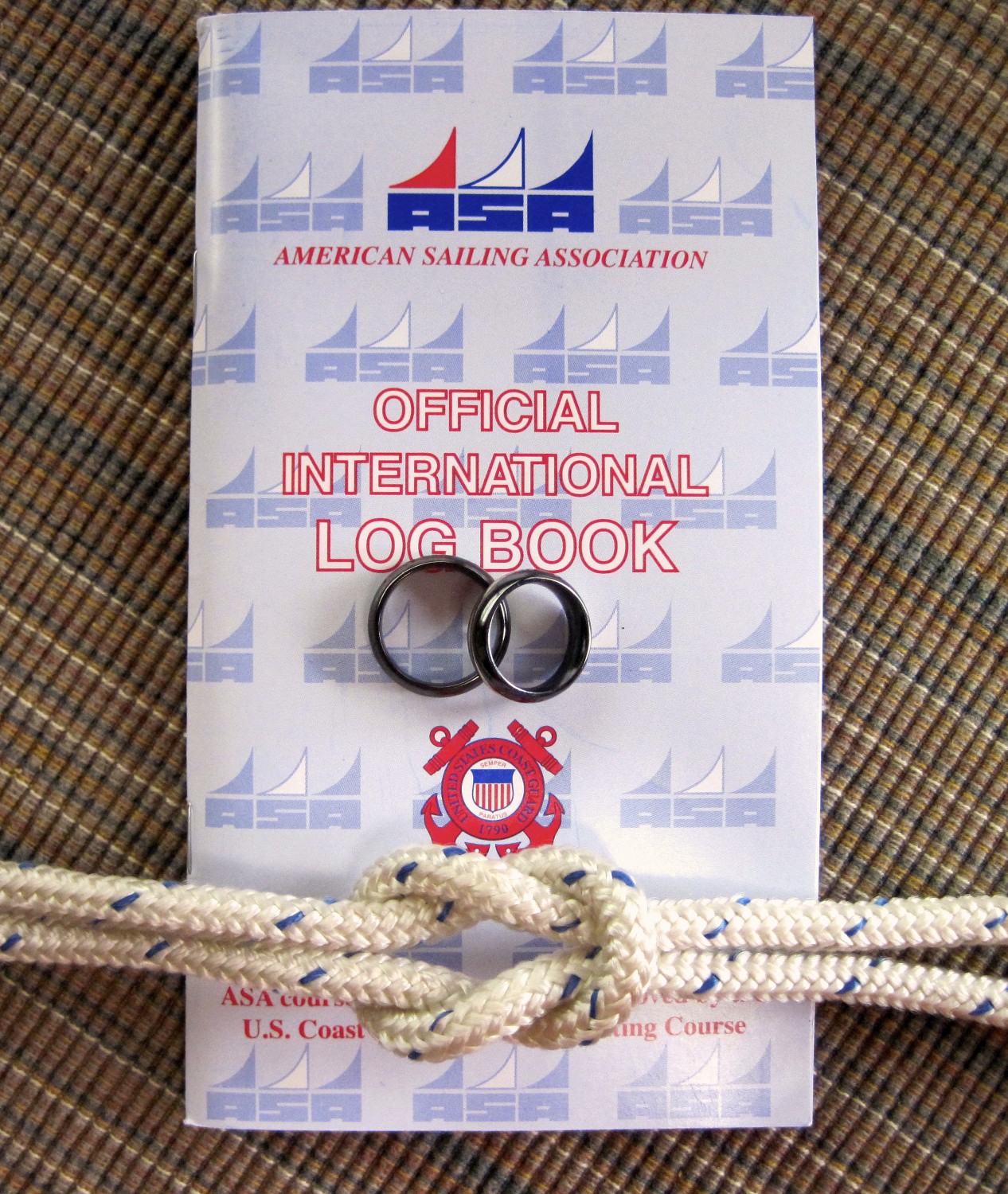
I don’t know why I want to go, but it has always been there. This restlessness. When I married Barbra, we exchanged titanium wedding bands with an inlay of white gold. The rings are incredibly light and strong and resistant to corrosion, characteristics sailors value in titanium. “Someday we will live on a boat,” we said.

A few months later we bought a small powerboat, a 22-foot C-Dory Angler. It is a beautiful craft, white with burgundy trim and lines pleasing enough that it regularly draws compliments. It’s 90 horsepower engine moves it along at 25 knots or so on flat seas. It’s got a pilot house to keep us out of the rain and cold, and enough open deck space for the two of us to comfortably fish from. We have spent many  nights sleeping in its cuddy cabin.

The first summer we trailered Gillie from California to Alaska, we slept on it 42 nights both on land and on the water. That summer we saw our first Dahl porpoises and our first glaciers, and we caught our first halibut and our first yelloweye rockfish. We made our first-ever longish run—90 miles from Valdez to Cordova. On another outing, we learned what it is like to lose the main engine 30 miles from port and what it feels like to limp home on the kicker engine with radar, depth finder and electronic charts all down. And we discovered that our little boat can handle fairly rough seas.

When the summer came to an end, we were left with two predominant  thoughts: We wanted to move to Alaska, and we wanted to get a bigger boat—one big enough to live aboard year-round.

The move from California was more easily accomplished than we anticipated. As it turned out, there is a demand for teachers in this state. We accepted jobs in the Arctic, hundreds of miles from roads. These jobs pay well enough to have allowed us to turn our attention to the passion of our lives: boats. There is scarcely a day that goes by that we don’t talk about them. How big? Power or sail? What kind? How much can we afford?

We read about them, we think about them, we dream about them…

We obsess about them.

These past two weeks we have been in Seward where we completed a six day sailing class during which we sailed 32 foot and 47 foot sloops.

Neither Barbra nor I had any previous experience with sailboats. But after six days of intensive instruction and learning, we now know how to use wind and cloth to make a fairly large boat move through the water.

And by acquiring that skill, we have at last come to an understanding of what we want in our next boat. I’m not going to put in caveats about the many things that could keep us from realizing our goal. We are mindful of those things.

But an important shift happened this past week. The pleasantly hazy “someday, somehow,” image of a dream has been replaced with the clarity and urgency and focus of a goal.

Our boat will be between 32 and 43 feet long. It will have a fiberglass hull, two staterooms, an efficient galley, and a cockpit designed for making ocean passages. It will probably be rigged as a cutter.

Our next boat will be comfortable, relatively easy to sail, and built tough enough to handle almost anything.

We will take it out on blue water, setting our course for places such as Hawaii, Japan, New Zealand and islands in the Pacific we don’t yet know. And Ireland and Greece and Belize and Argentina.

We think we can make ready in five years.

Get our finances in order, acquire a boat, improve our knowledge, hone our skills, set aside enough money to live off…

Cast off the stern line, cast of the bow line, unfurl the main and let her set, find the wind, and go.

This journey has begun.