Heading Home: Grizzly Bear Crossing Harding Ice Field

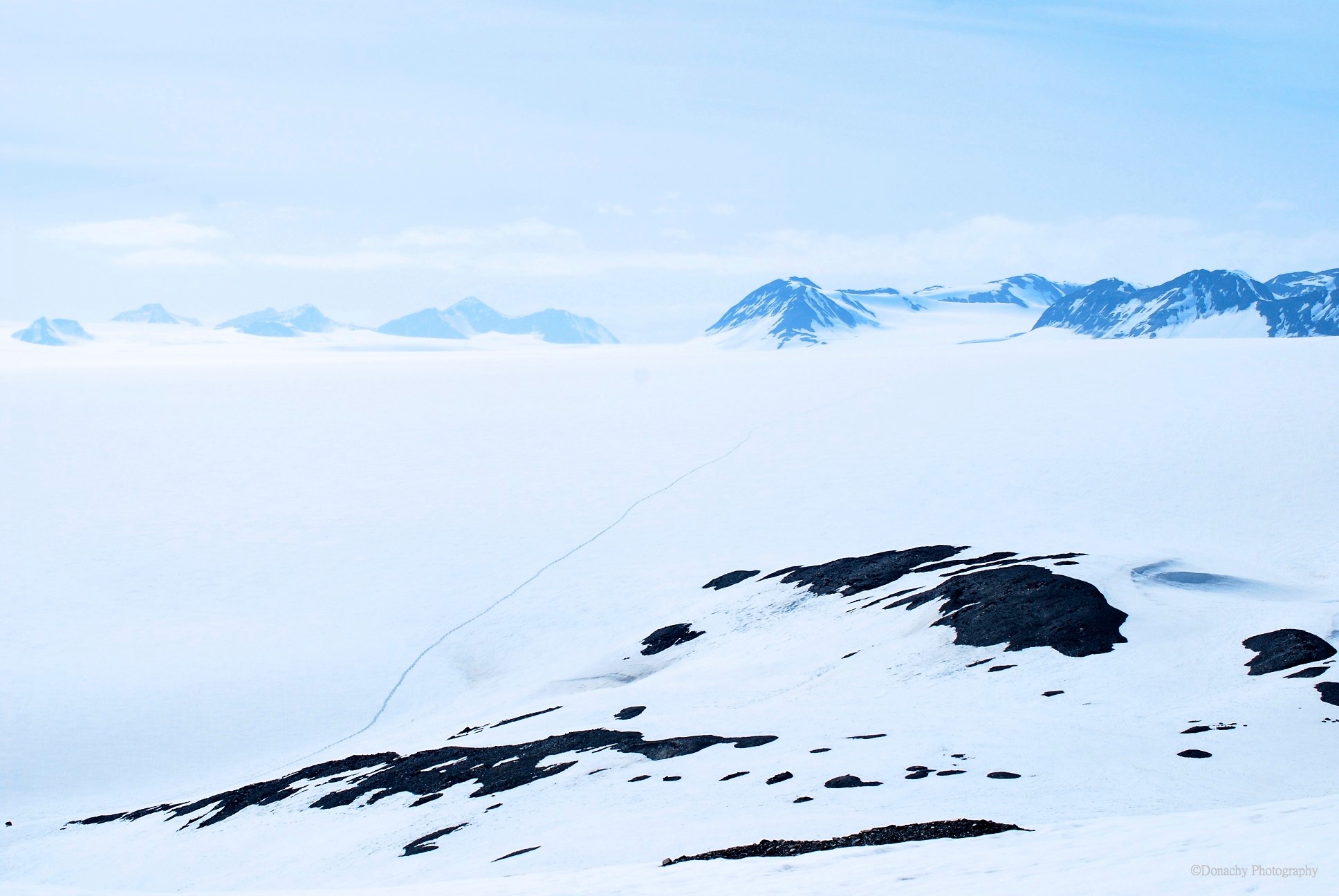
Hard to say where this bear, a mere dot on this icefield, was coming from. Somewhere across that vastness, heading toward Exit Glacier, down to salmon rivers. To a place I suppose he thinks of as home. 6/13/2011

The hike to Harding Icefield is a little over four miles up a mountain trail, more or less following a ridge above Exit Glacier. Patches of snow, wildflower meadows, birds, bears, maybe other wildlife along the way. There are many vast landscapes in Alaska. The view out over the Harding Icefield, the great mother ice lake that feeds Exit and dozens other glaciers is… otherworldly. We were on a rock outcrop overlooking part of Harding’s eleven hundred square miles. I was preoccupied with alpine flowers when Barbra noticed a trail across the snow-covered ice. It didn’t make sense. Till we spotted the bear.

Moving on from the photos we took in Mongolia, I’m now going through “Alaska Summers.” Some of these catalogues predate our trip to Mongolia. As I come upon images I really like – such as the above composition – I’ll share them here and on Instagram. jackdonachy, if you’re interested in following there. I also put most of these photos on Facebook – Barbrajack.

I like this photograph for the way it recalls a quote by Bob Dylan that describes Barbra, and me, and maybe this bear, and maybe you.

I was born very far from where I’m supposed to be, and so, I’m on my way home

Rivers of Ice: Glaciers, Icefields and Floating Sculptures of Blue

Icebergs such as this ethereal blue sculpture are the culmination of a dynamic process eons in the making.

It’s easy to imagine glaciers as static – water interrupted, subject to thaw and melt, but otherwise frozen in space and time. In reality, they’re more like slow moving rivers, pulled down by gravity, pushed forward by the unimaginable tonnage of ice and snow in the icefields where the originate. A fast-moving glacier can travel at a rate of 20 meters a day or more.

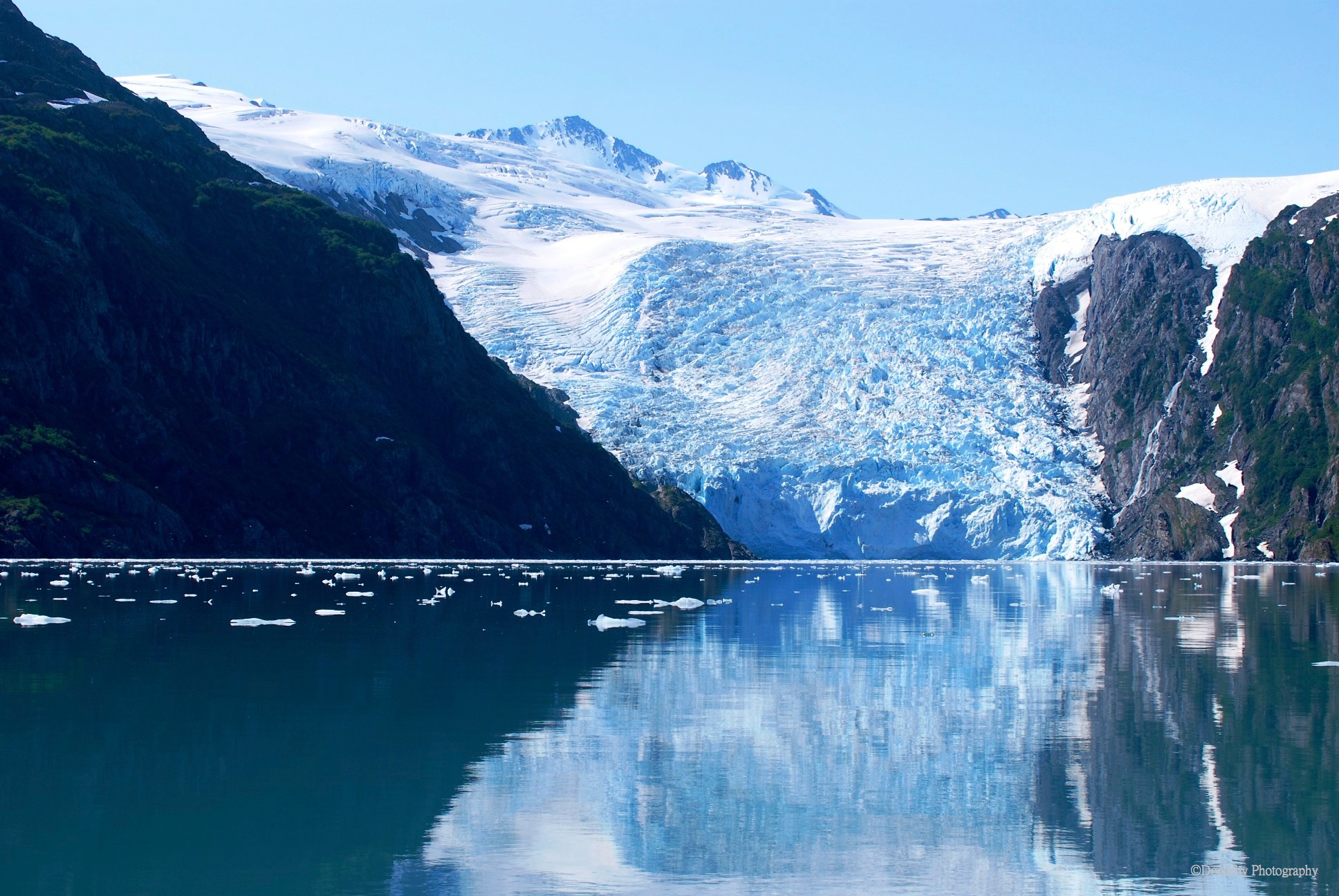
Tidewater glaciers are among the most dynamic forms of ice in nature. Like the Blackstone Glacier (pictured below), they flow from icefields, much as a mountain stream might originate as the outflow from an alpine lake. What makes tidewater glaciers so fascinating is that they don’t gradually turn to water as they descend down a mountain valley, warming and thawing with the descent.

Instead, tidewater glaciers terminate when they reach the sea. The ice continues to flow, pushing the face of the glacier forward. If the face of the glacier is large enough, the combination of forward movement and warmer air and water temperatures can result in spectacular calving events, with massive pieces of ice sloughing off into the sea.

The Harding Ice Field, which gives birth to three dozen or more glaciers, stretches out like a vast, island-studed lake. 

As soon as the freshly calved ice hits the water, it become part of sea’s ecosystem. Harbor seals (above) and black-legged kittiwakes (members of the gull family, below) use the frozen islands to rest, feed and stage hunts. The seals also use the ice as nurseries.