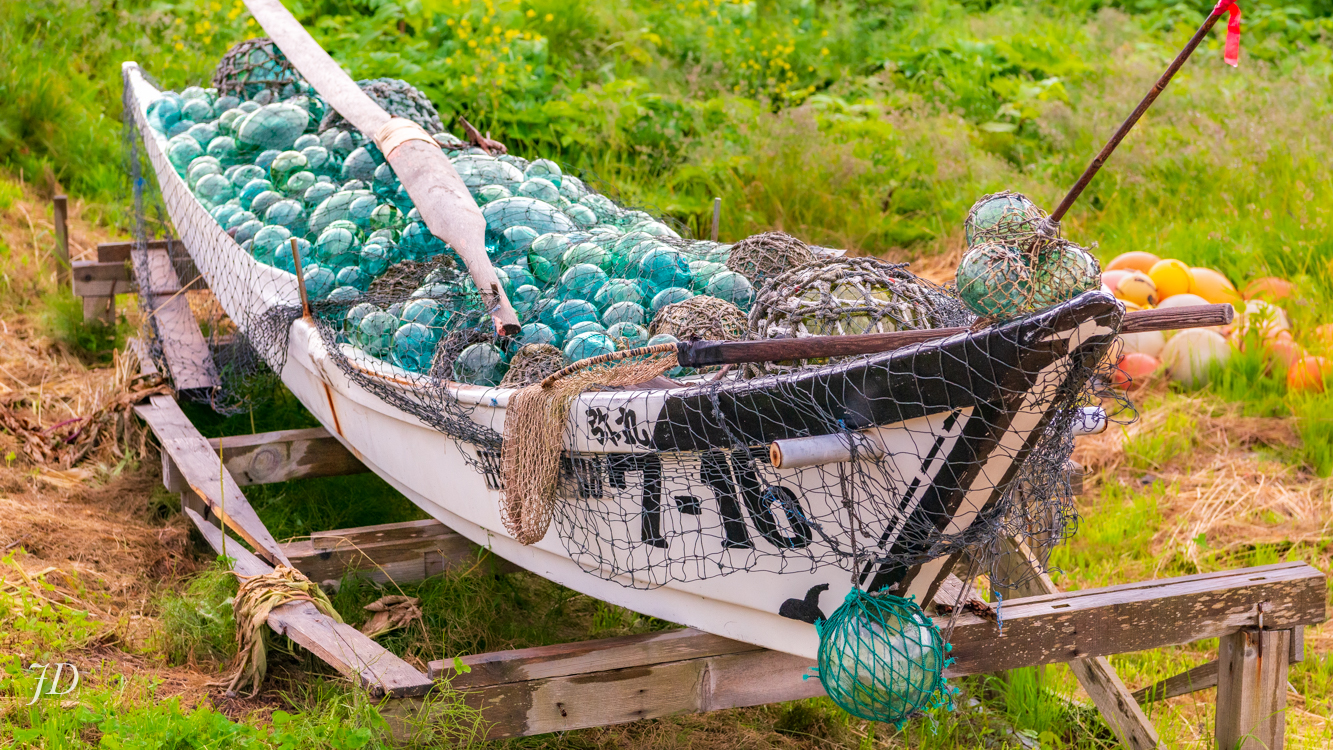
With the exception of a very few tennis-ball-sized glass floats used in skates set for Olive Flounder (hirame, 平目, ヒラメ), glass fishing floats are artifacts of yesteryear. Broken free from lines and nets perhaps decades ago, they still wash up on North American beaches, especially in parts of Alaska. We came across some beautiful collections during our Hokkaido trek. Here a loaded skiff on Yagashiri Island.
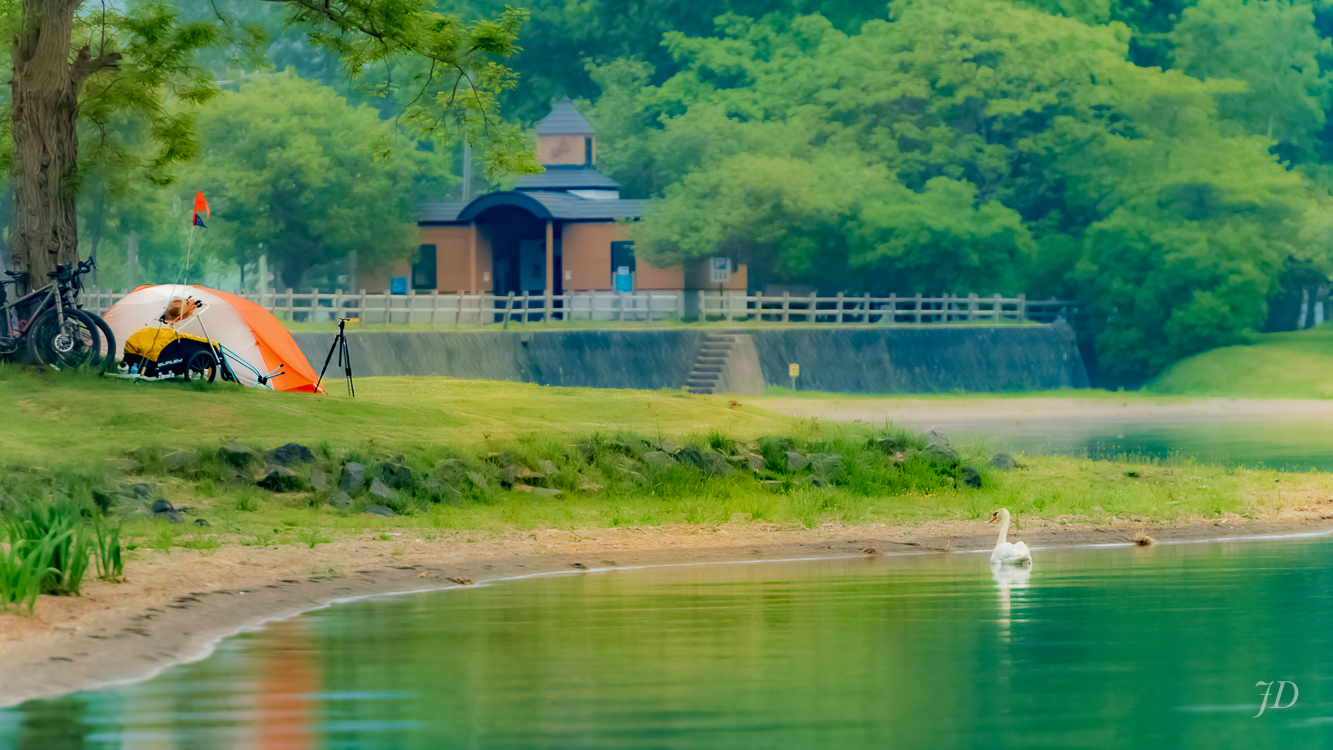
Thursday Morning Coffee Bar, Teuri Island Campground Teuri Island, Hokkaido Japan, June 21, 2018
Clean restrooms close by (to answer the first question on the minds of most casual campers), good clean drinking water, quiet, and the entire grounds to ourselves. I don’t imagine that the camping situation has changed much since we visited Hokkaido in 2018. Traveling to Teuri with our bicycles was easy via the ferry from Haboro on Hokkaido’s west coast. We only spent two days on Teuri, but agreed we could easily have enjoyed a week on this small, bird-rich island.
Scrolling down panels in lightroom as I brought up the above photograph, I decided to give a relatively new feature a try: Lens Blur. With a single click, this AI-driven feature isolated what it interpreted to be the subject and foreground and then blurred (decreased the clarity) of the background. It worked well – which is to say, I liked the result.
To be sure, a more competent photographer equipped with the right lens could easily have achieved similar results in-camera. But six years ago when I captured this image, I was a less competent photographer. Less competent not only from a technical standpoint, but also my eye was less well developed, and so I didn’t always appreciate the pleasing effect a bokehed background could add to a photograph.
While I could have used masks and clarity sliders to isolate the subject and achieve the same effect, this Lens Blur feature significantly speeded up the process. So…
I might have more to say about AI technology in future posts. It’s here, part of our world now. Lots to think about. JD
We found one terrific (often idyllic) campsite after another during our Hokkaido trek. Above is Nakatoya Campground on the shores of Toya-ko (Lake Toya). The lake formed in an ancient volcano caldera, complete with an island near the center – similar to Oregon’s Crater Lake. Overall, Hokkaido’s campgrounds were quiet, clean, and inexpensive. In fact, several were free and if memory serves even the most expensive site was only about $20 (in 2018). Most ranged from five to 10 dollars per camper per night.
In the past, language might have been a barrier to traveling in Japan. I speak some Japanese, which was immensely helpful, but these days with language apps right there on your phone, most locals eager to assist well-mannered visitors, and a lot of printed material such as highway signs, menus, national park information and so on written in English, even language differences need not impeded a tour of this wonderful, lightly-visited island. On a latitude approximating that of Oregon and Massachusetts, summertime biking in Hokkaido is pleasant, particularly along the coast.
I had forgotten that I’d softened so many of these Hokkaido images… Dreamy summertime bike trek.

 CutterLight