The End of One Life Cycle, The Sustaining of Another

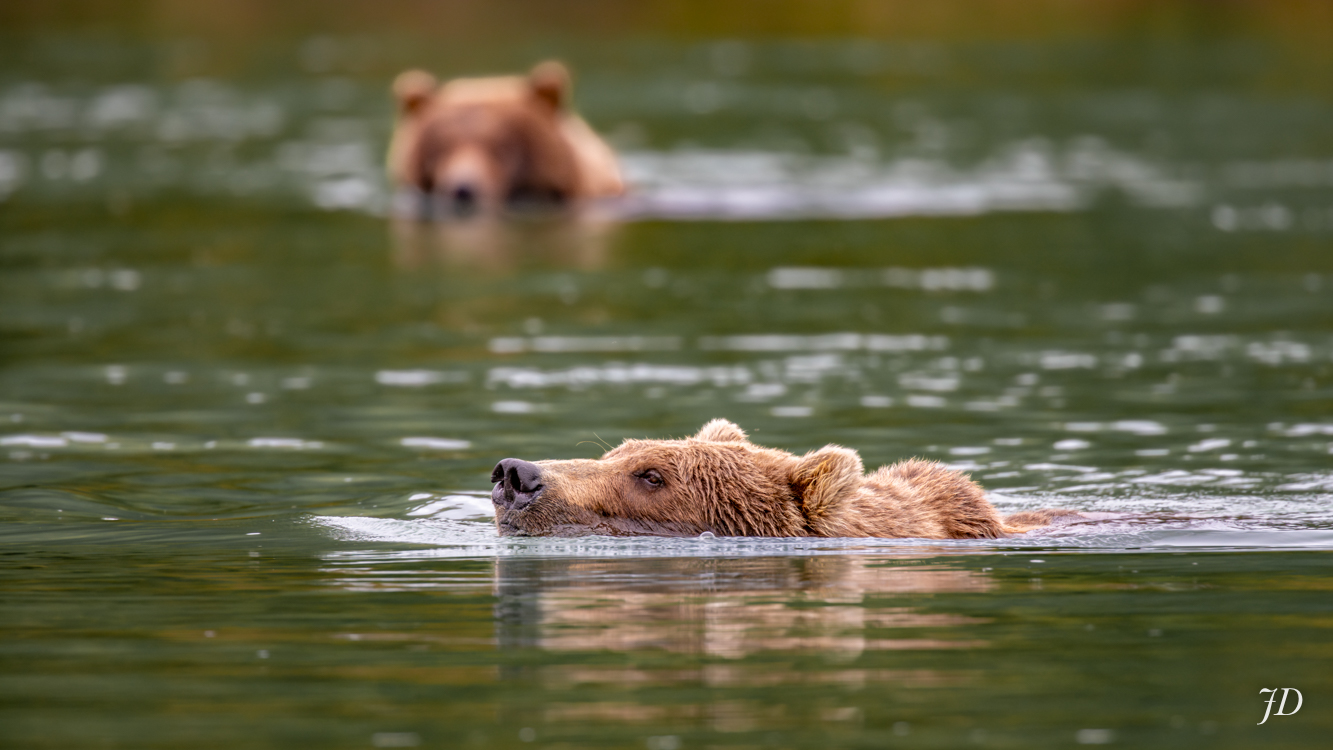
Harbor Seal and King Salmon
Chignik River, September 9, 2018

Chinook Salmon begin entering the Chignik in late June. They continue spawning into August. By September, spawning has ended and the spent salmon begin giving into the current, death at hand the big fish slowly drifting back downriver – easy meals for the Chignik’s Harbor Seals.

Silhouettes

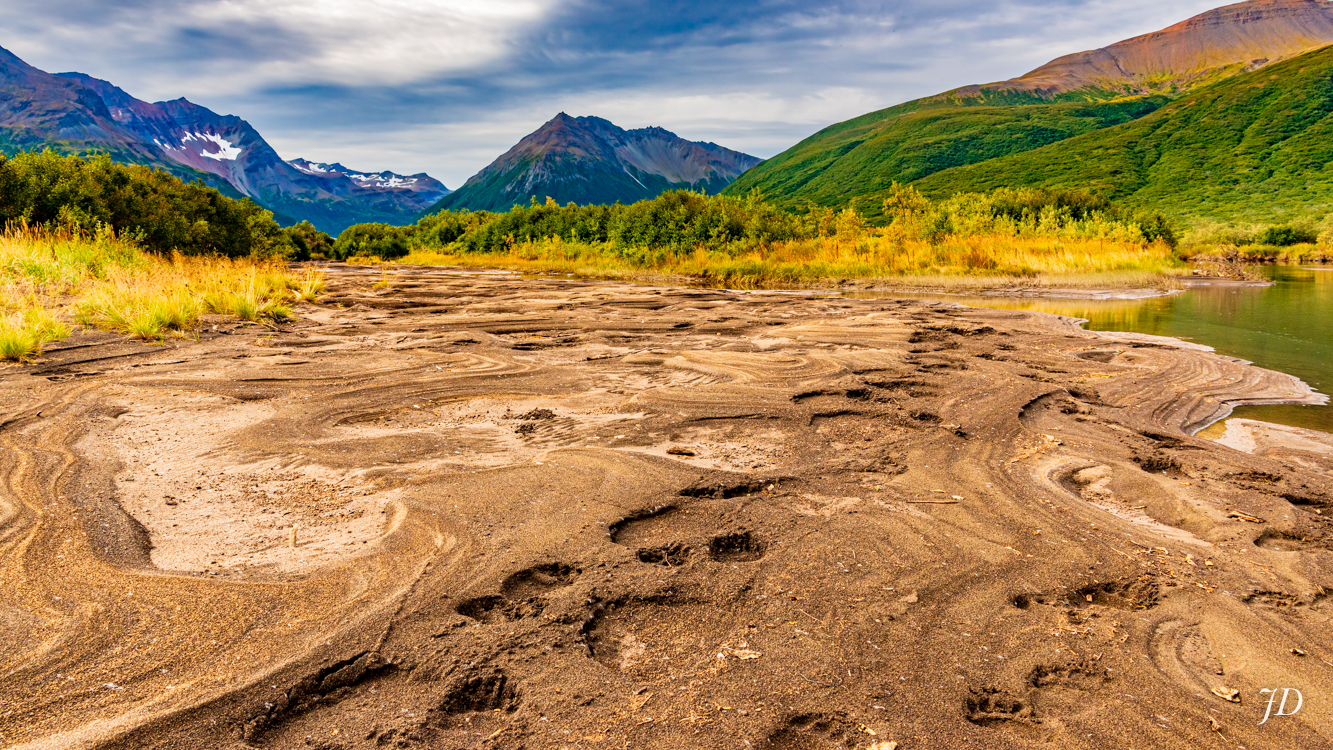
Margarette and Her Cub Chelsea at Paradise Bend
Chignik River, Dawn, September 8, 2018

One Fine Morning

One Fine Morning – Paradise Bend on The Chignik River
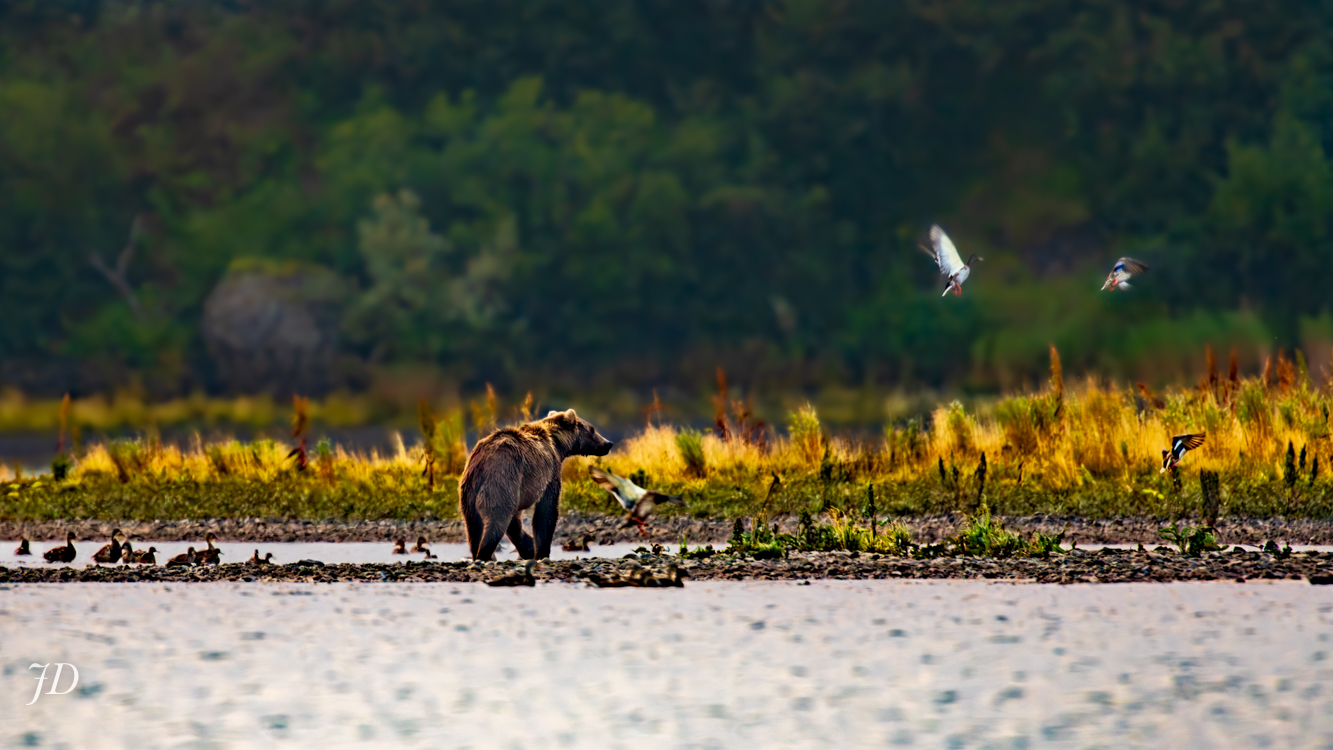
Ambling Bear, Mallards, Teal, White-fronted Geese, a splash of sunshine
September 8, 2018

I went to the woods because I wished to live deliberately, to front only the essential facts of life, and see if I could not learn what it had to teach, and not, when I came to die, discover that I had not lived. Henry Thoreau, Walden

On The Hunt

Ermine (Short-tailed Weasel)
Chignik Lake, Alaska Peninsula, August 2018

A Collared Lemming burst from a thicket of grass and swam across a narrow finger in the lake which was filled to the brim with recent rains. Just as the little rodent disappeared in a patch of thick grass on the opposite side of the water, an Ermine popped out from where the lemming had just come, paused, looked around, appeared to sniff the air, then also swam the same course. I was scrambling with my camera hoping to capture something of the surprise sighting and managed to capture the above image just before the Ermine dove into the grass.

We didn’t often encounter either of these species during our years at The Lake, but there was hardly a walk after a fresh snowfall that we didn’t come across small paired tracks left by Ermines bounding through snow, so they appeared to be fairly abundant. Cool animals. I would love to have made friends with one the way Sam made friends with Baron in My Side of the Mountain… The closest I came was when one ran across the toe of my boot and into the entrance of our house as I opened the door one morning.

Spirit Bird

Northern Shrike
Chignik Lake, August 15, 2018

My favorite fish is the Coho Salmon. I am absolutely fascinated by Lady’s Slipper Orchids. It’s difficult to name a “favorite” anything, and as I reflect on the matter it becomes apparent that it might be even more difficult to explain Why a given something is a favorite. The phrase “an integral part of the journey” flashes in my mind. The species in the above photo is the reason I became a serious birder and threw myself into photography. Oncorhynchus, Cypropedium, Lanius…

What is it in your life that has pulled you into travel, adventure, personal growth, new understandings?
JD

Black Cap Jazz Singer

This beautiful bird is regrettably saddled with the name of the man credited with identifying him… a name with an apostrophe s… as though no one else ever knew this bird and that by “discovering” this fine fellow the man now owns him. So let’s not call this happy singer by some name of ownership. He is an artist in his own right, Black Cap Jazz Singer. (Chignik Lake, Alaska, August 2018)

Every being has the right to a dignified name. Every human has the right to choose a name and an identity for himself, herself, themself. JD

Approaching The Lake from The Southeast

Chignik Lake, Alaska – August 14, 2018
Home

One Hangin’ and Heave Ho: the Compelling Cool of Environmental-Documentary Portraits

Heave Ho
Fred Shangin, cigarette hangin’ as per, puts his back into a pot of Tanner Crabs from Castle Bay off the gulf side of the Alaska Peninsula. May 6, 2018

Going through these many thousands of photos from The Lake and beyond – while at the same time these past few days putting together a magazine piece paying tribute to a recently deceased mentor and friend from my Pennsylvania youth – I find myself recognizing that as photographers one type of image we might not capture often enough is portraits of friends. The best of these photos are often environmental-documentary portraits – my own hybrid category to describe pictures that capture the subject in an authentic act of life in a setting that tells the viewer about that person’s life. There’s an art to it… the photo that isn’t staged; that doesn’t depict the subject self-consciously looking into the lens (or self-consciously looking away from the lens); an image that captures an authentic moment rather than a pose.

For me, learning to make these types of images has been predicated on a lengthy process of growth toward freedom from my own limiting shyness. Coupled with the kind of confidence that enables a photographer to make such portraits is, I think, a necessary agreement – tacit or verbalized – that gives the photographer permission to shoot at will (with appropriate discretion).

Strictly environmental portraits are in most cases staged. In making such an image, the photographer might have the subject sit at her fly-tying table as she ties or gives the impression of tying a fly. Noticing clutter, the photographer tidies up the scene. Further compositional considerations prompt lighting manipulation – perhaps nothing more than slightly moving a lamp or opening or closing a curtain, but manipulation nonetheless. Clothing choices are given thought, a certain tilt of the subject’s head is decided upon as favorable, perhaps a few already-tied flies are placed in the foreground, a book arranged so that it’s title can be read. Images such as this have their place, but to me there’s a compelling cool in a real-time photograph – a moment frozen, captured, documented as is with no quick brush through the subject’s hair, the everyday jacket with its stains, imperfect lighting, maybe a little motion blur or grain.

And in the case of the above photograph, one hangin’.

Female Transient Orca with Seal against Aleutian Mountain Landscape

Female Transient Orca with Seal against Aleutian Mountain Landscape
Training Day

I wasn’t sure what to call this photograph, so I’ve gone with straight description. The Alaska Peninsula’s Aleutian Mountains again provide a dramatic backdrop and (I think) stunning context for this photo of a female Transient Orca and her prey, a thoroughly defeated seal. Looking closely, you can see the seal’s facial whiskers near the Orca’s nose, his body further to the right. She’s lost a bit of skin from her snout, no doubt from raiding the rocky shoreline for catches such as the one she is now contemplating.

While the female Orca was using this living prey to teach her daughters hunting techniques, the male (see the previous two articles) was checking out our skiff.

Throughout our time with this group of Orcas the light was all over the place as clouds closed and opened above. Many images from this shoot came out flat, like blue-tinted monochromes. But a few, such as this one, are nicely lit as the sun just began to emerge from behind clouds.

Incoming

Incoming
Twice the male Orca swam beneath our small skiff, so near the hull we could see him plainly through the Alaska Gulf’s semi-clear water. Each time, he emerged on the other side very close, turning parallel with our watercraft, eyeing us. Using our 20-foot skiff as a comparison, I estimate his length at over 25 feet in length, shimmering, bulky, muscular, liquid, graceful. Was he simply curious? Cautiously keeping us in check while his mate and daughters practiced hunting with the still living seal she’d carried out into open sea to the left of this photo? Showing off? Warning us? Each time the male came in close our hearts rose in our chests, our breath stuck in our throats. I blew those shots, able to fit only a fraction of his massive body in the frame created by the 70mm lens, shutter speed too slow to freeze him as his movements always appeared slower than they actually were. But I did get this capture of him swimming in for one of those dives beneath our boat.

The light was in and out throughout the encounter, the sun at times obscured behind dark clouds, at other times breaking through clear blue skies. Here dappled light is filtered through thin clouds, creating a rainbow-like effect accentuating blues, mauves and purples. This image is interesting for the background landscape as well. The land mass to the left is Nakchamik Island. The smaller island to the right is the smaller of the two Kak Islands. On the right is (I think) Little Castle Cape on the mainland.
JD, Chignik Bay, Gulf of Alaska, May 6, 2018