Khorkhog: Eating, Drinking and Being Merry in Mongolia

OLYMPUS DIGITAL CAMERA

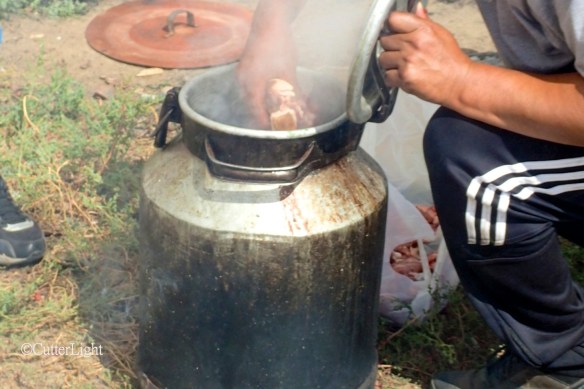
Traditional Mongolian barbecue consists of the meat of an entire animal (often sheep), fire-heated rocks and root vegetables placed together in a large cooking container. The heated rocks slow-cook the meat and vegetables while the sealed container keeps the flavor in.

To celebrate the beginning of the school year, our Mongolian colleagues prepared a khorkhog feast to share with us. Khorkhog refers to a Mongolian method of cooking meat as well as to the celebratory event where the meat is enjoyed.
OLYMPUS DIGITAL CAMERA

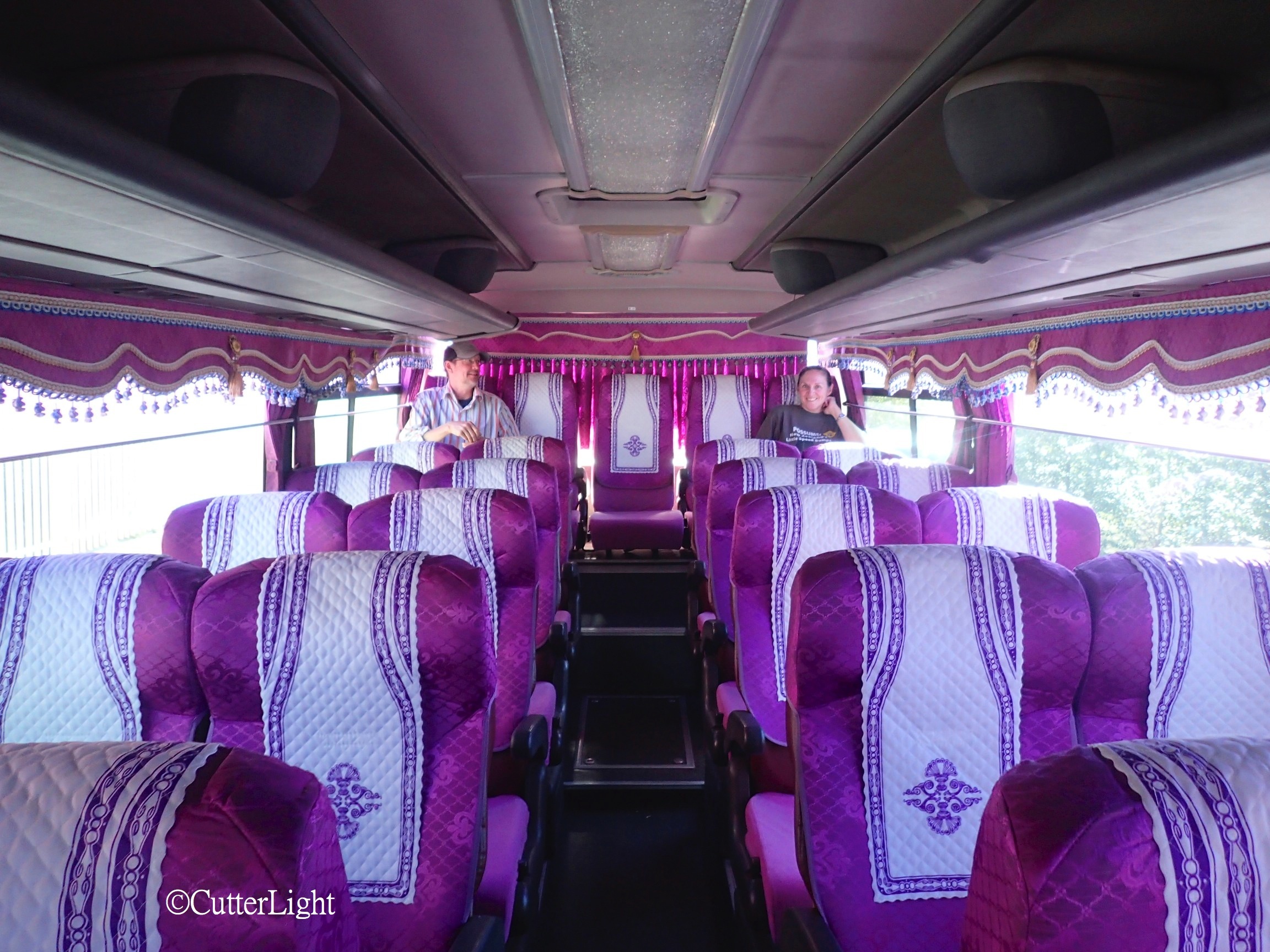
This elaborately decorated bus took us to the feast site. Opulent to our eyes, we were told that this is a “normal” bus. (Our friend Dawn Doig is seated on the right.)
OLYMPUS DIGITAL CAMERA

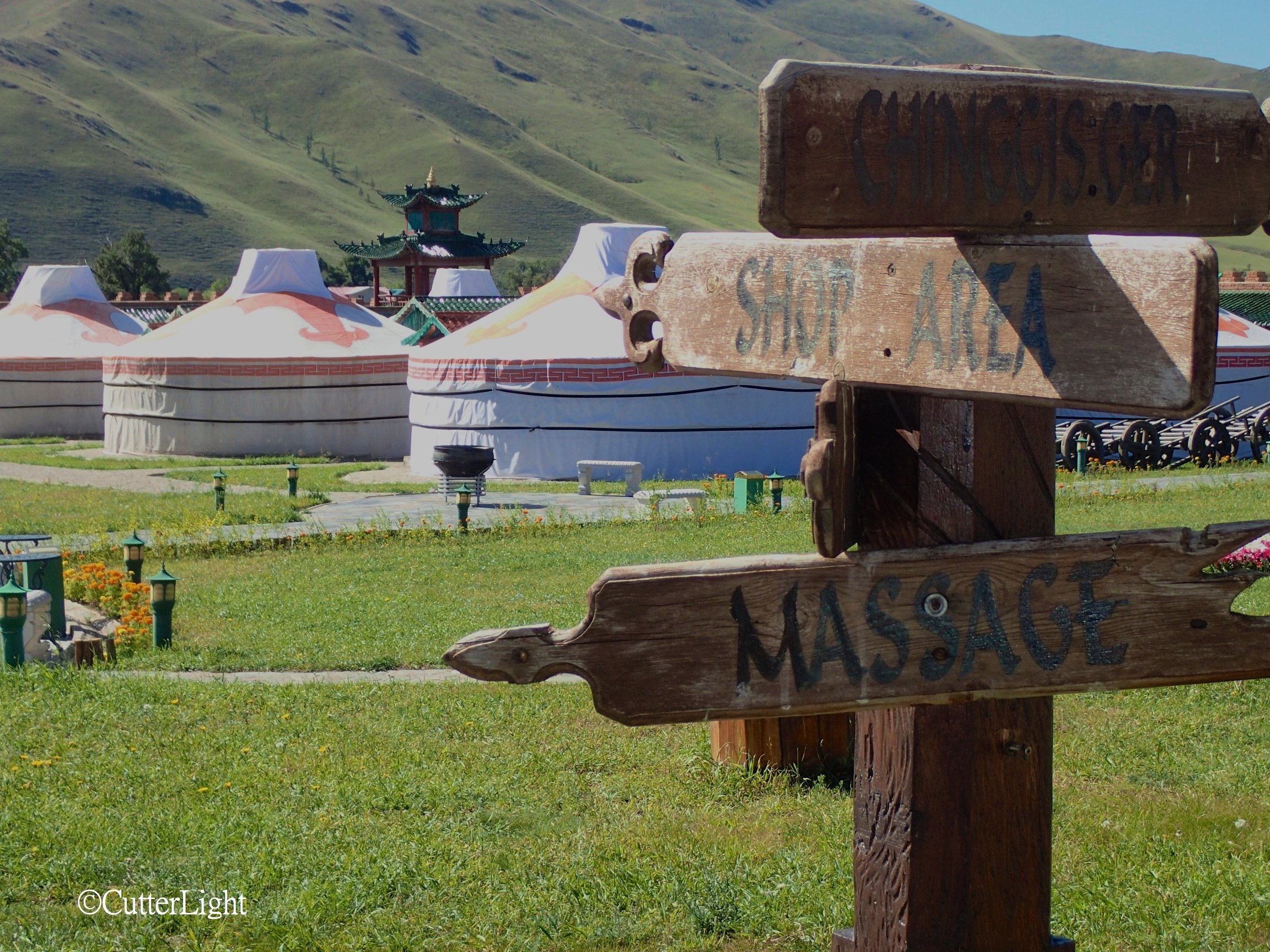
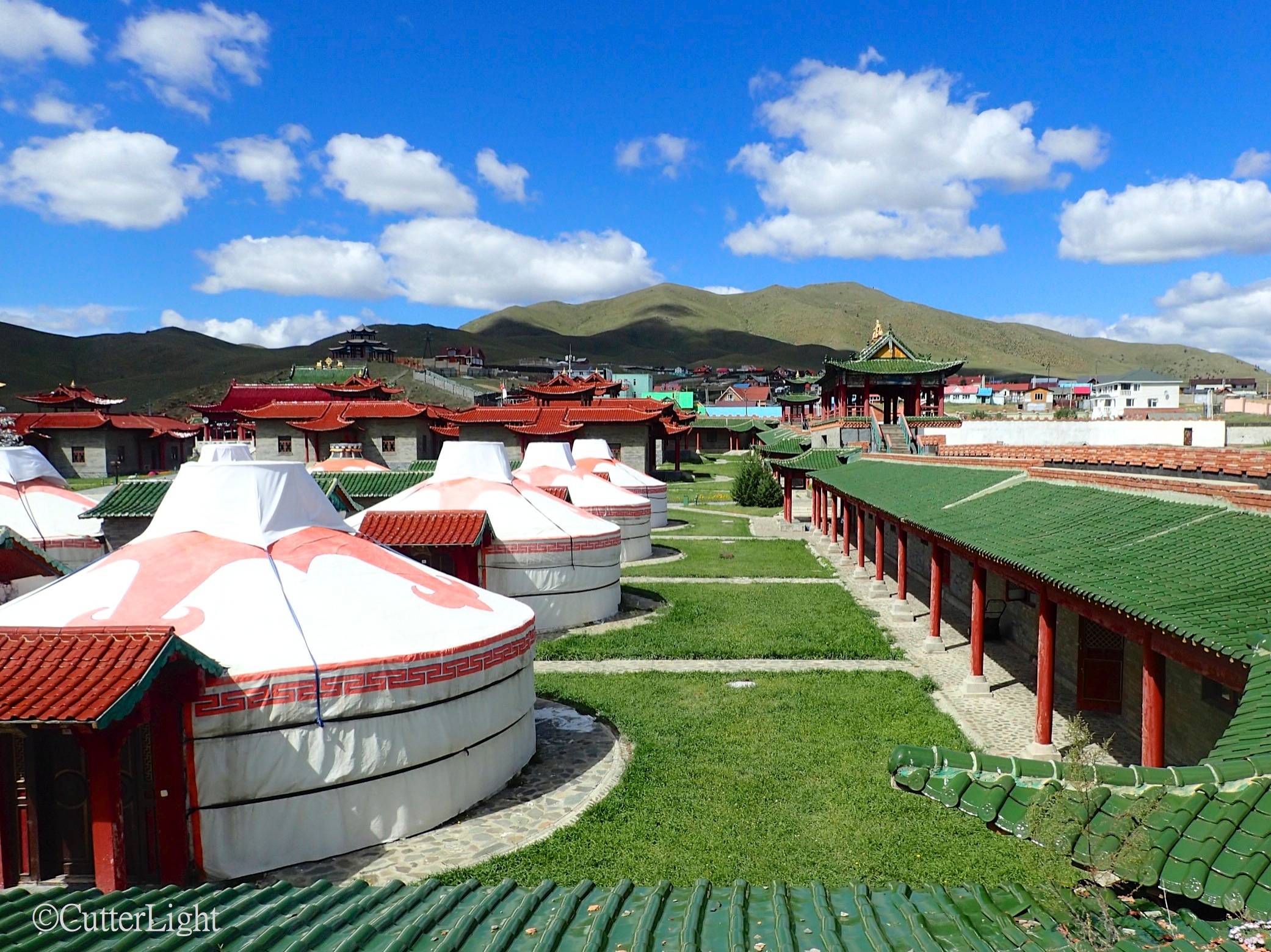
Our picnic site was located on the grounds of the Hotel Mongolia which offers upscale services along with ger (yurt) sleeping quarters. Traditionally made of felt walls and wood frames, gers are the portable homes of the nomadic people of the Mongolian steppe.

In the early 13th century a former Mongolian herder name Temujin was renamed Genghis Khan, ruler of all who live in felt tents. Under Genghis Khan and later his sons, the Mongolian Empire would eventually include an uninterrupted sweep of territory extending as far west as present day Hungary, east through southern Russia, central Asia, Northern China and Mongolia – the largest contiguous empire ever to exist. Military forays pushed into Southeast Asia and although never successfully invaded, Mongolian leadership even had their sights set on Japan. Present-day Mongolia is the 19th largest country – but with a population of about three million people is the least densely populated.

OLYMPUS DIGITAL CAMERA

In the center courtyard of the Hotel Mongolia is a silver tree fountain which was inspired by the Silver Tree of the ancient city of Karakorum, the 13th century capital of the Mongol Empire. The original sculpture was made of silver and other precious metals. When the khan wanted to serve drinks to his guests, the sculpture’s serpents would gush alcoholic beverages.
OLYMPUS DIGITAL CAMERA

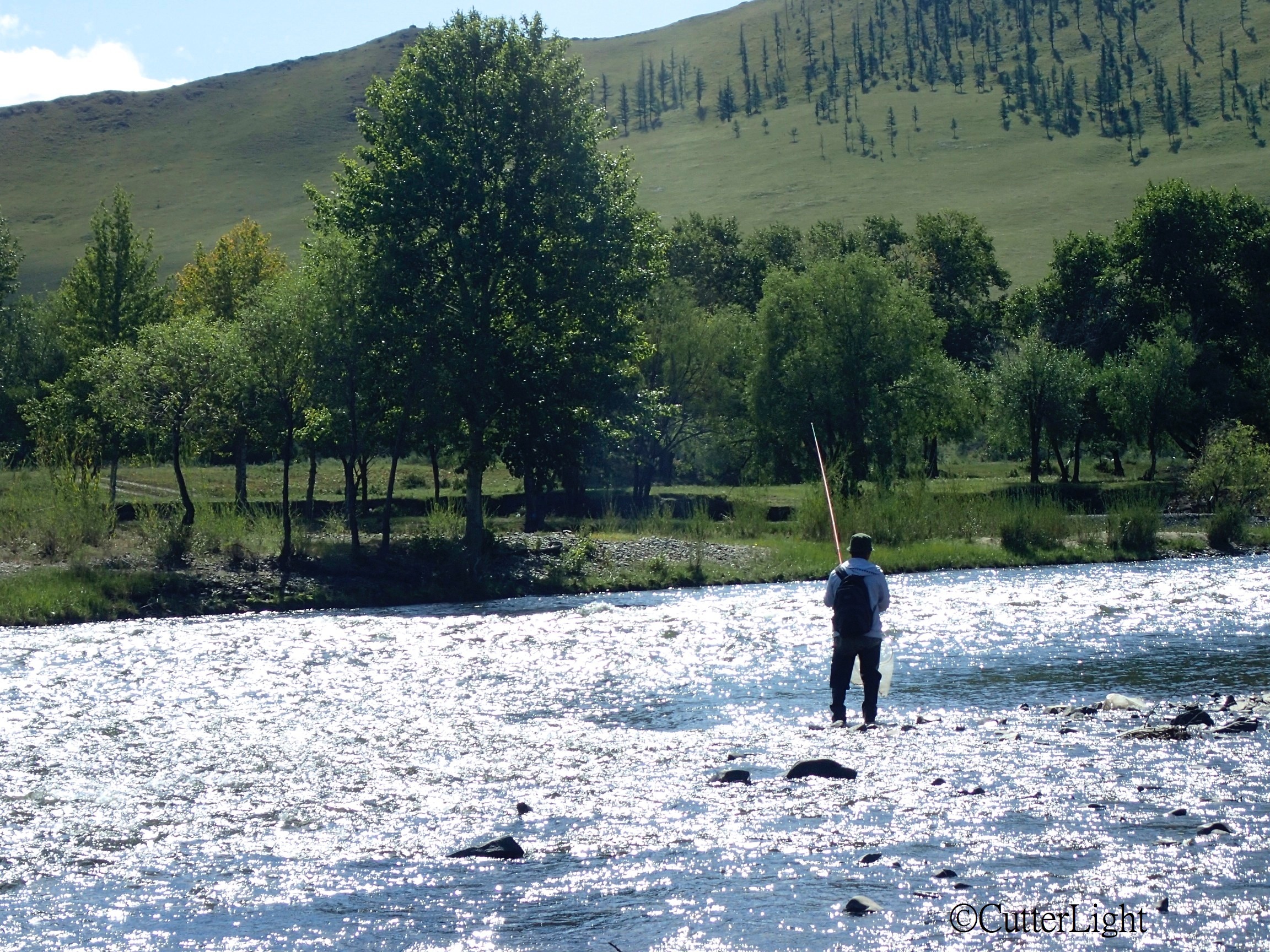
“Why didn’t you let me bring my tenkara rod?” Jack pouted as he watched a local fisherman try his luck in the Tuul River. Next time, Jack. Next time. The presence of stoneflies, mayflies and caddis larvae indicated good water quality, but we have yet to see a fish come out of this highly-pressured section of the Tuul River.
OLYMPUS DIGITAL CAMERA

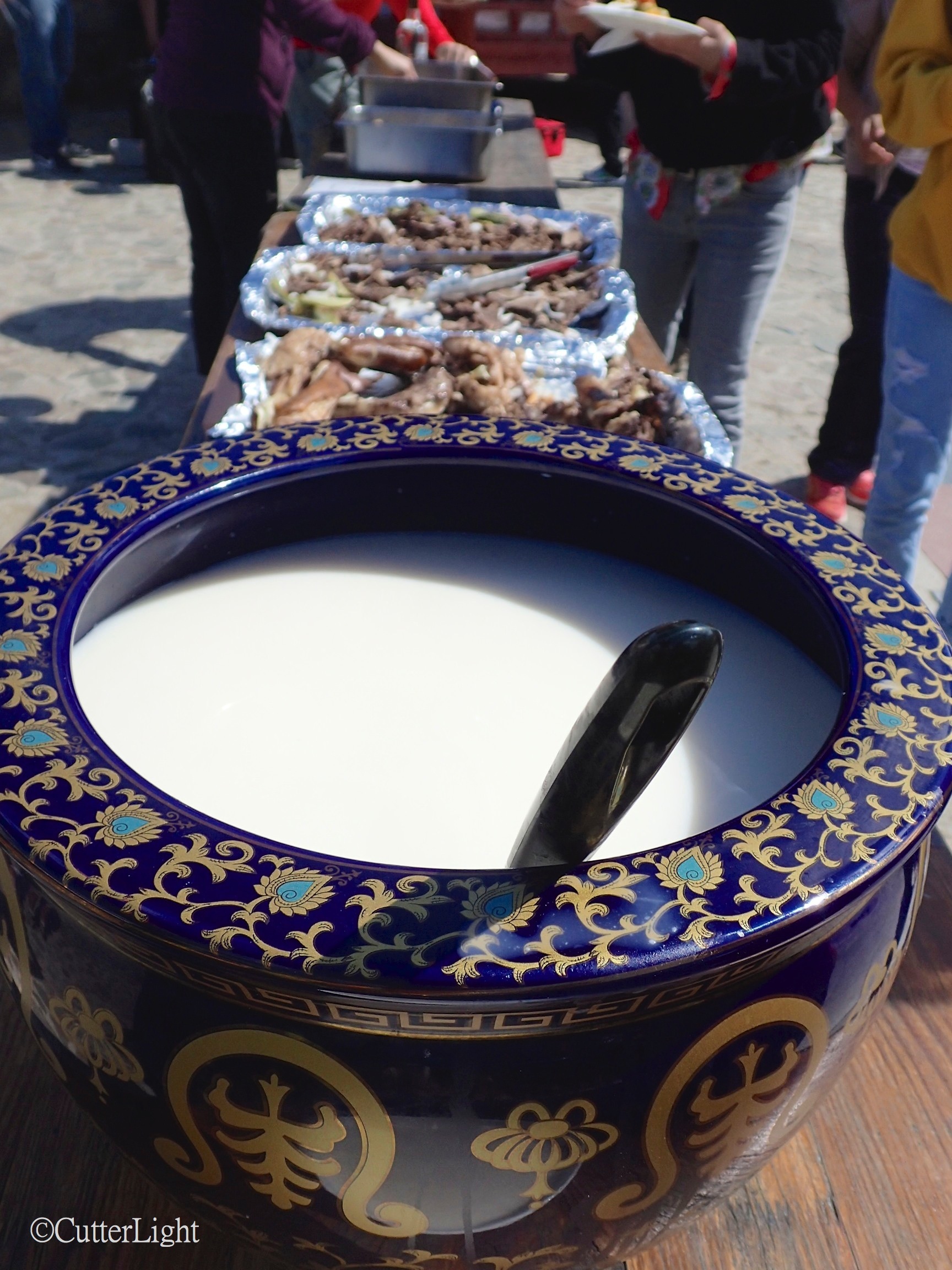
We were treated to a lovely picnic prepared by our Mongolian colleagues. Khorkhog meat cooked to perfection was served alongside roasted root vegetables and potatoes. An assortment of salads rounded out the meal and people were snacking on pine nuts from cones they’d found nearby. The centerpiece of the spread was a beautiful bowl of airag, fermented mare’s milk.
OLYMPUS DIGITAL CAMERA

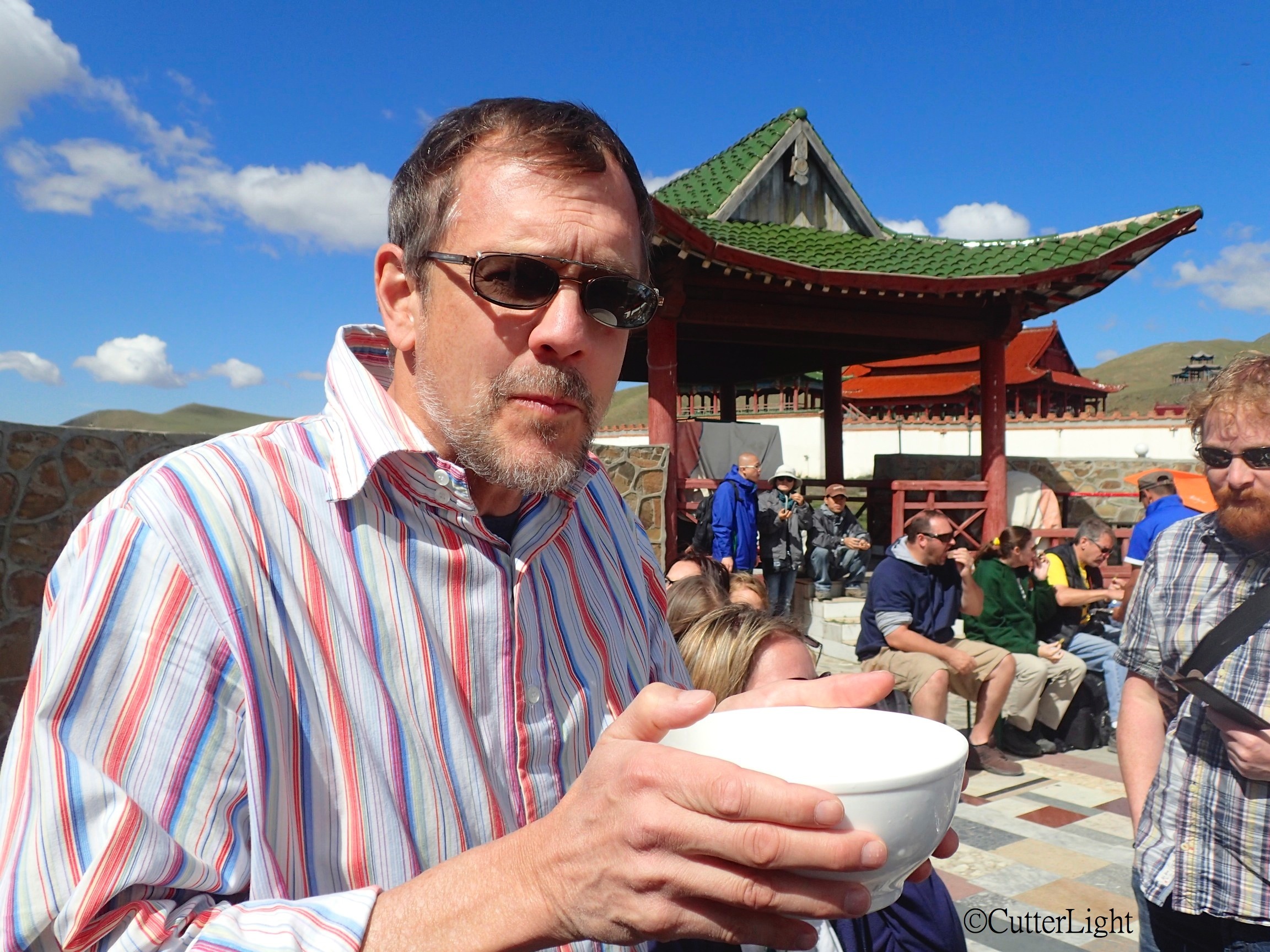
A bit of a sour face is a standard reaction upon first sampling a bowl of airag. We understand that this beverage is traditionally offered by nomadic hosts to guests in Mongolia. We anticipate sampling a few more airags in our future Mongolian adventures.
OLYMPUS DIGITAL CAMERA

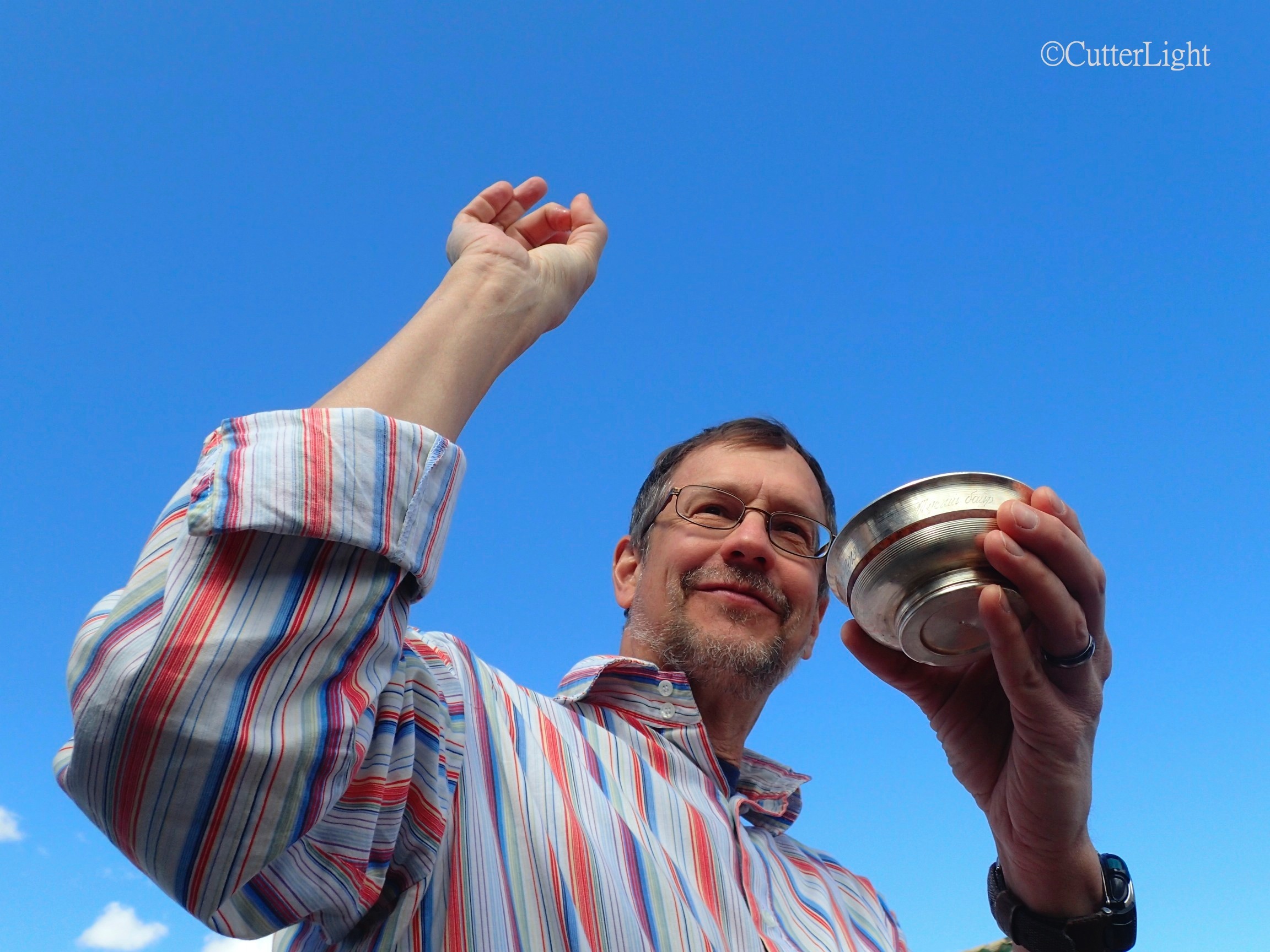
We were told it is customary to check the vodka (for poison?) by dipping one’s right ring finger into the drink and then scrutinizing the finger for black streaks. When the milk vodka passes the test, the drinker gives thanks to the spiritual world by flicking some of the liquid to the sky and to the left and right and then touching his forehead. This particular batch of mare’s milk vodka was brought by one of our colleagues whose family has a special recipe. The drink has a decided aftertaste of blue cheese.
OLYMPUS DIGITAL CAMERA

After a filling meal, we took a leisurely stroll atop the wall surrounding the hotel. Black kites, durian jackdaws, and red-billed choughs soared through the blue skies and we even startled a hare on our way to the picnic site.
OLYMPUS DIGITAL CAMERA

OLYMPUS DIGITAL CAMERA

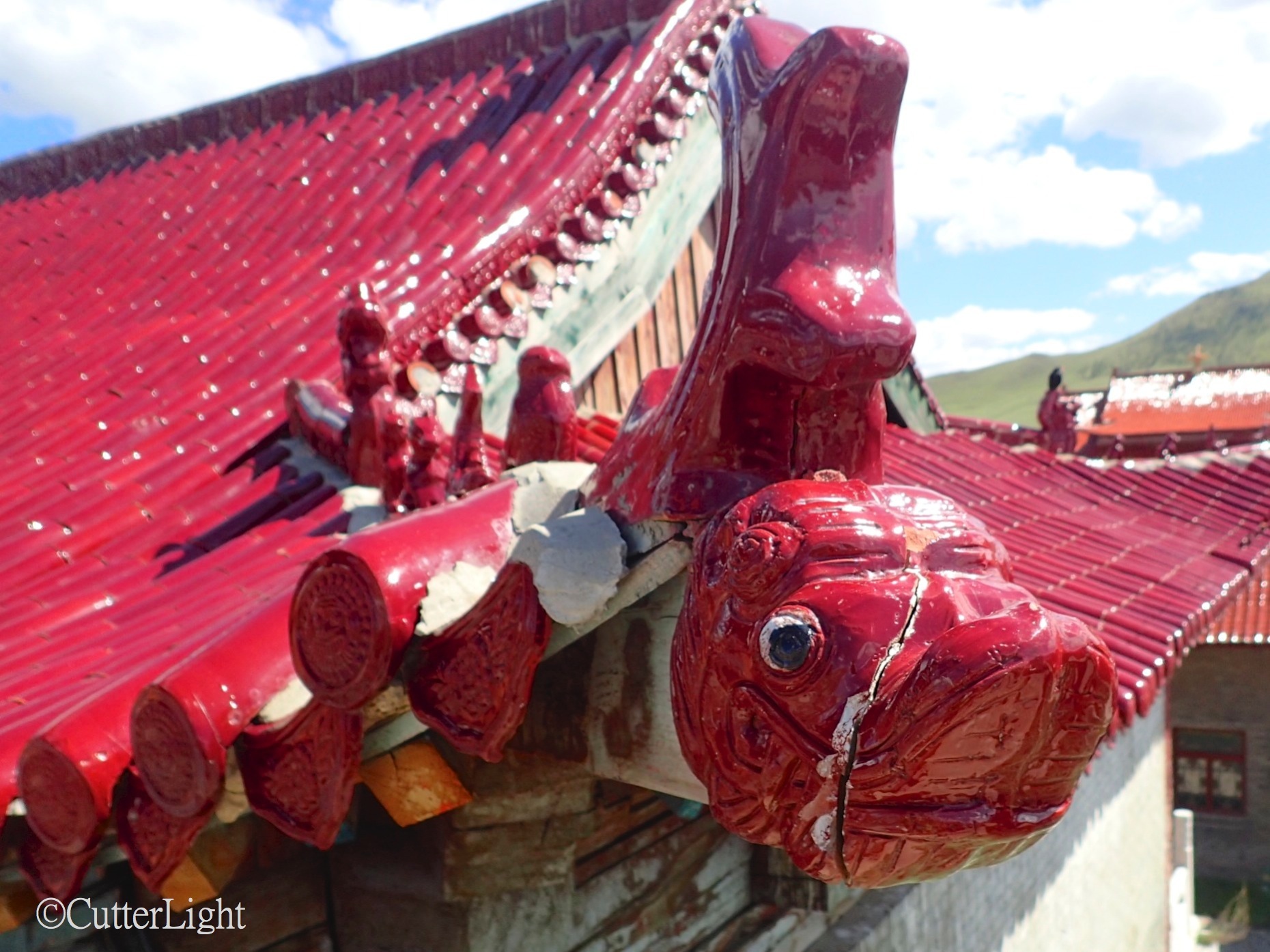
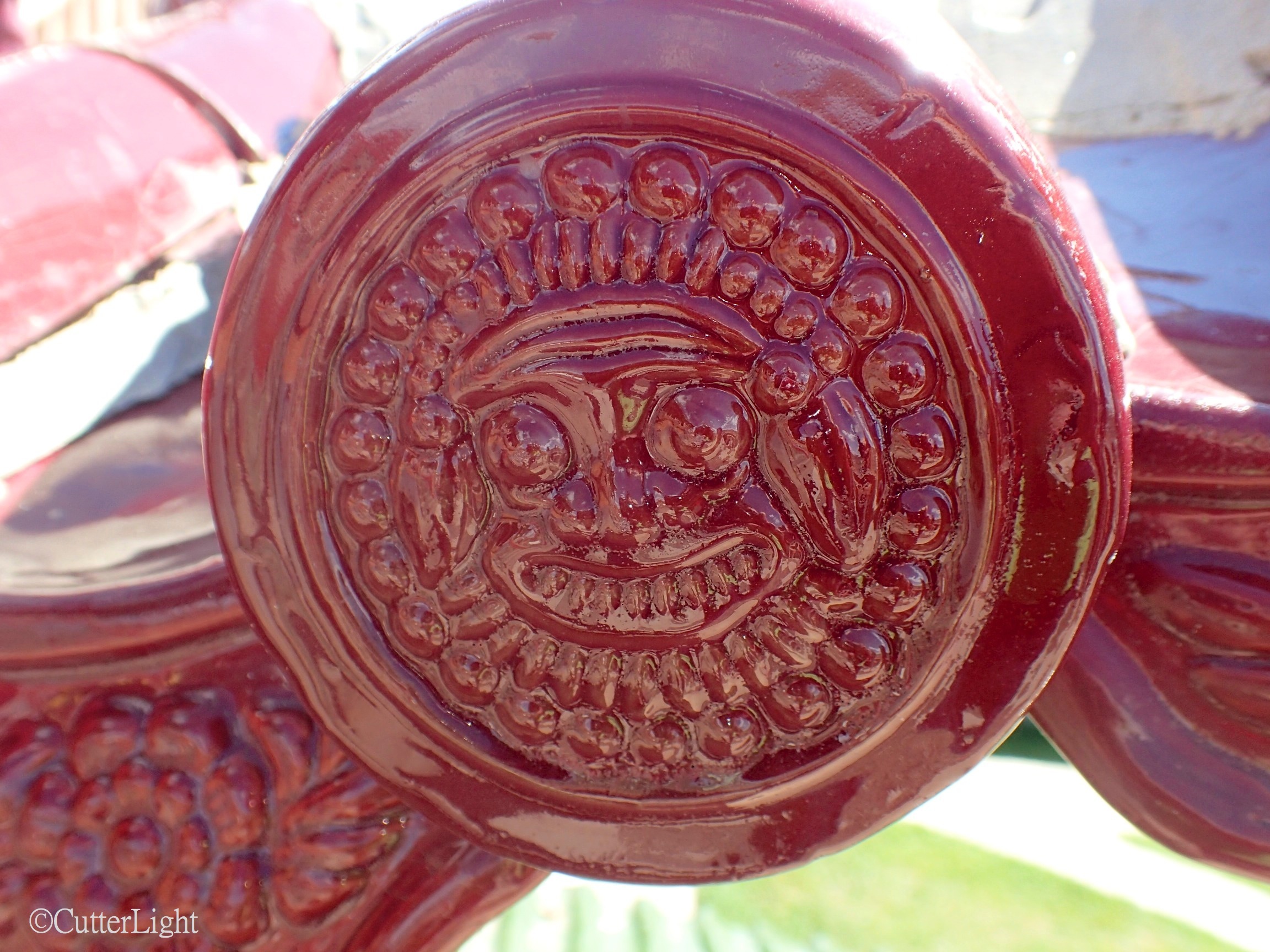
We stopped to check out the indicate details in the roof tiles of the main buildings.

OLYMPUS DIGITAL CAMERA Our walk ended where some of the men were preparing another khorkhog using the same cooking process as in the metal containers, but this time using a sheep’s stomach as the cooking vessel.

This was a day of feasting, drinking and being merry with new friends!
Hustai (Khustai) National Park, Mongolia: Biodiversity and Ancient Carved Gravestones

Przewalski's horses a n

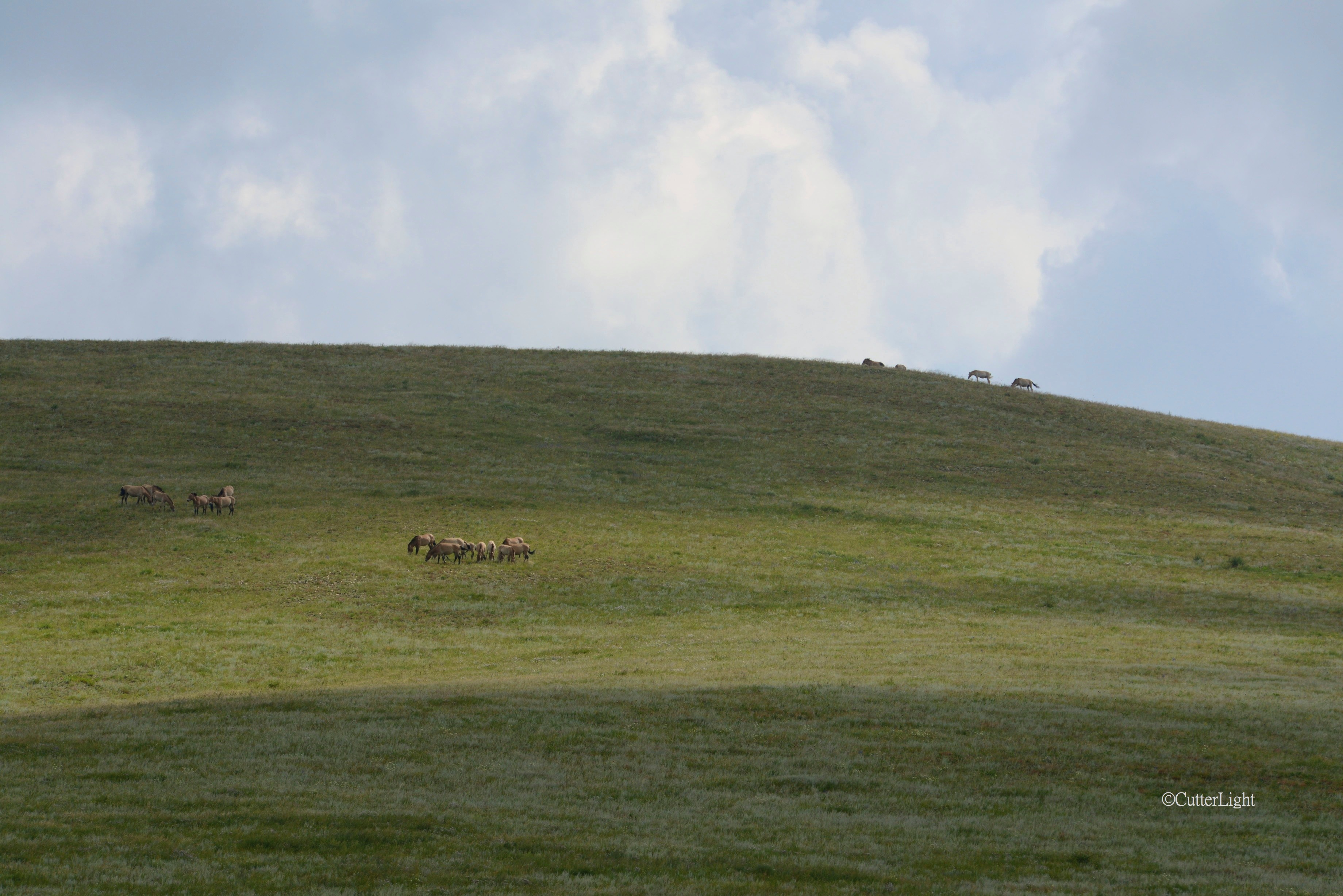
Wild Takhi, or Przewalski’s horses, graze the vast, rolling steppe lands of Mongolia’s Hustai National Park. Extinct in the wild by the late 1960’s, Takhi were reintroduced to Hustai in 1992 and have since flourished. Unlike the ferel “wild” horses of North America, Takhi are a true wild species – the only remaining wild horse in the world. We visited the park on a day when wildflowers and raptors seemed to be everywhere.

Located in Central Mongolia about 60 miles (100 km) west of the capital of Ulaanbaatar, Hustai National Park provides habitat for dozens of species of mammals and over 200 species of birds. Sixteen species of fish swim in the cold waters of the Tuul river which borders the southern edge of the park. On the day we visited in early August, recent rains had prompted a profusion of wildflowers.

Harebell n

Above, abundant hairbell blooms added vibrant splashes of color to the steppe as did pink bloom, (below). Interesting to us is that both species were familiar from hikes on the Alaskan tundra. 

Pink bloom n

marmots n

In any given year, as many as 150,000 marmots inhabit Hustai’s 195 square miles, providing food for the park’s foxes, wolves, lynx and birds of prey such as golden eagles.

black kite n

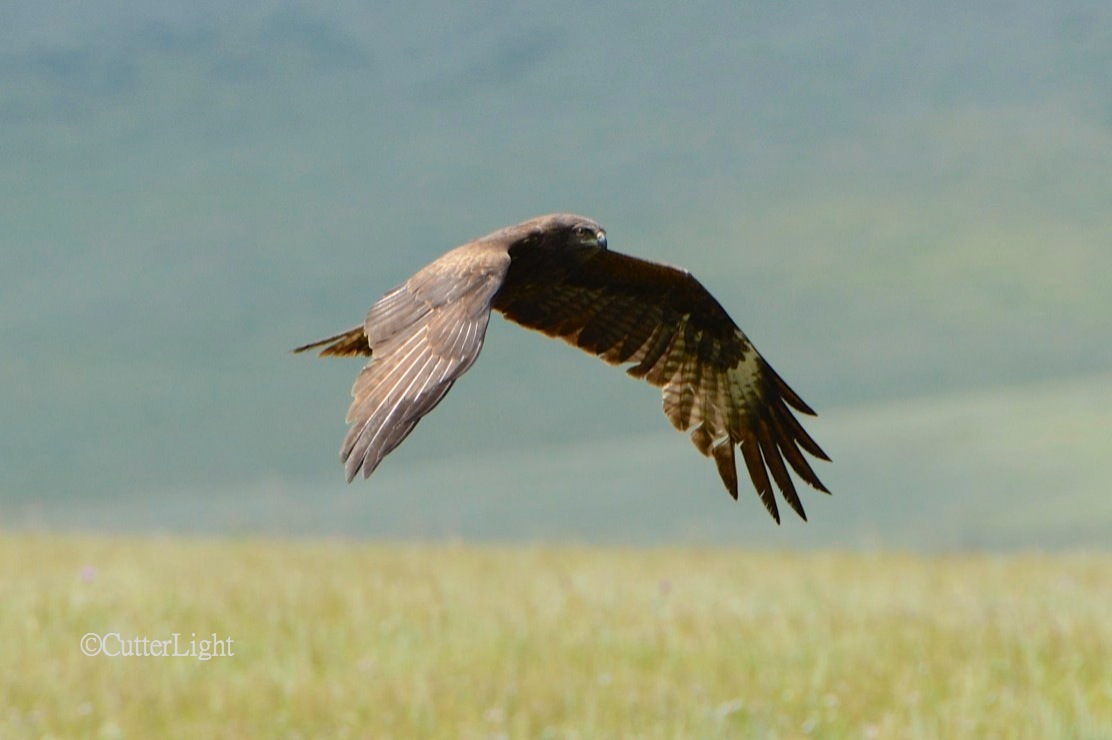
With our 200-400 mm lens in transit from the Nikon repair factory, we weren’t able to obtain the captures we wanted of the golden eagles and the beautifully marked lammergeiers we encountered. Happily, black kites like the handsome specimen above were abundant and not particularly shy. 

Mongolian herder n

His brightly colored traditional garb striking against the hazy pastels of the steppe, this nomadic herder was tending a mixed flock of sheep and goats. These herds share the grasslands with Mongolian gazelles, red deer, roe deer and the wild Takhi. 

DSC_7761 - Version 3 n

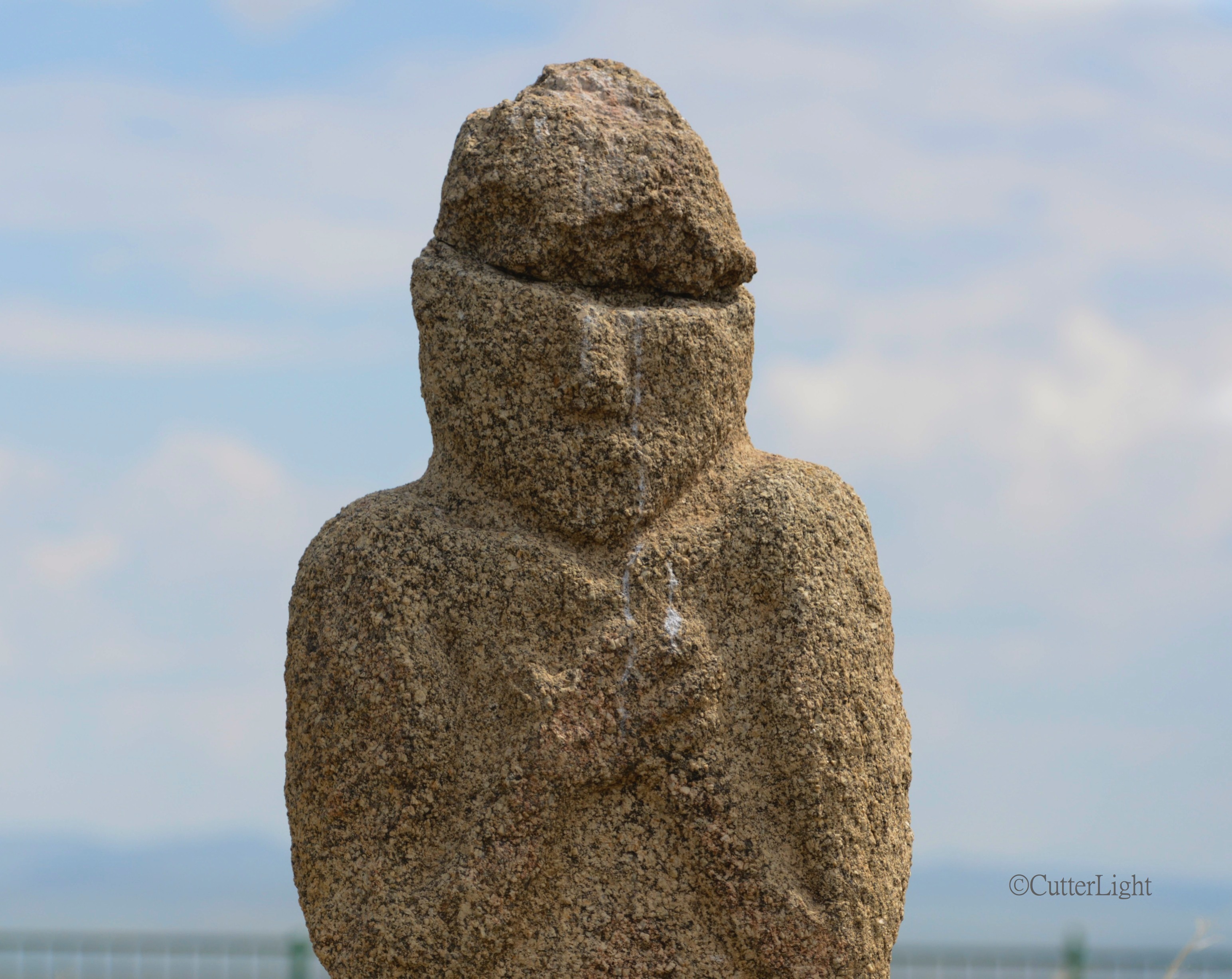
Some 1,200 to 1,400 years ago, a Turkic culture left behind groups of carved granite stone figures in the Hustai area. Elbows close to the body and hands folded across the heart, it’s likely that this six foot tall figure at the Ongot grave site is mourning the loss of a leader or nobleman. 

ram head stone n

Carved sheep represent spiritual sacrifice. Elsewhere, stylized lions watched guard over the grave site.

Pika n

Safely back at the entrance of his burrow, this pica posed for a moment before disappearing. The nearby steppe is also home to gerbils, hamsters and badgers.

pink wildflowers w ladybug n

Almost glowing, maiden pinks are said to have derived their name from the crenelated edges of their petals which appear to have been trimmed with pinking shears.

chiming bells Chiming bells are familiar throughout northern climes.

Prezwalski's horses b n

Horses do indeed make a landscape more beautiful. 

The Kindness of Strangers

OLYMPUS DIGITAL CAMERA

The America you miss is still there… if you look for it.

One of the best things about traveling is the great people we meet and the conversations we get into with them. At the end of a long day of driving, we eased our rig curbside in front of a beautifully landscaped cottage-style home on a quiet, tree-shaded street in Sultan, Washington. We were looking for a place to spend the night, and to our delight, the town was having a street fair complete with food booths, amusement rides, an auto show and live music. The challenge was finding a place to park our 50 foot combination of camper and C-Dory where we wouldn’t be in anyone’s way.

The owner of the house we were in front of was outside working in her garden. Jack and I understand that people can be irritated or suspicious to find a camper parked in front of their place. Whenever possible, we like to talk to homeowners so that they know our intent is to park overnight and not to move in. As is often the case, this homeowner, Toni, was happy to have us as temporary neighbors. After talking with her for a while and getting some tips on cool things to do in Sultan, we left her with a jar of our cloudberry jam. Then we got cleaned up and walked downtown to the fair which was reminiscent of the Autumn Leaf Festivals back in Jack’s hometown of Clarion, Pennsylvania and of thousands of similar fairs all across North America.

The next morning as we were preparing to depart Sultan, Toni presented us with a small cupful of deliciousness – beautifully ripe wild strawberries harvested from her garden. Time and again, these small, meaningful encounters with people add flavor and warmth to our travel. Whether it’s great service from a boatyard, restaurant or hardware store, conversations with business owners and chefs, or joys of the day and travel tips shared with the people we happen to have as temporary neighbors in a campground or at a local eatery, we continue to consistently discover that by turning off the endless cycle of negativity on news programs and going out and talking with people, the America we remember is still out there, waiting to be discovered.

OLYMPUS DIGITAL CAMERA

Summer street fair & auto show, Sultan, Washington, 2014.

Artists of the North Pacific Seas: The Watercolors of Dall’s Porpoises

Dall's Porpoise, full animal n

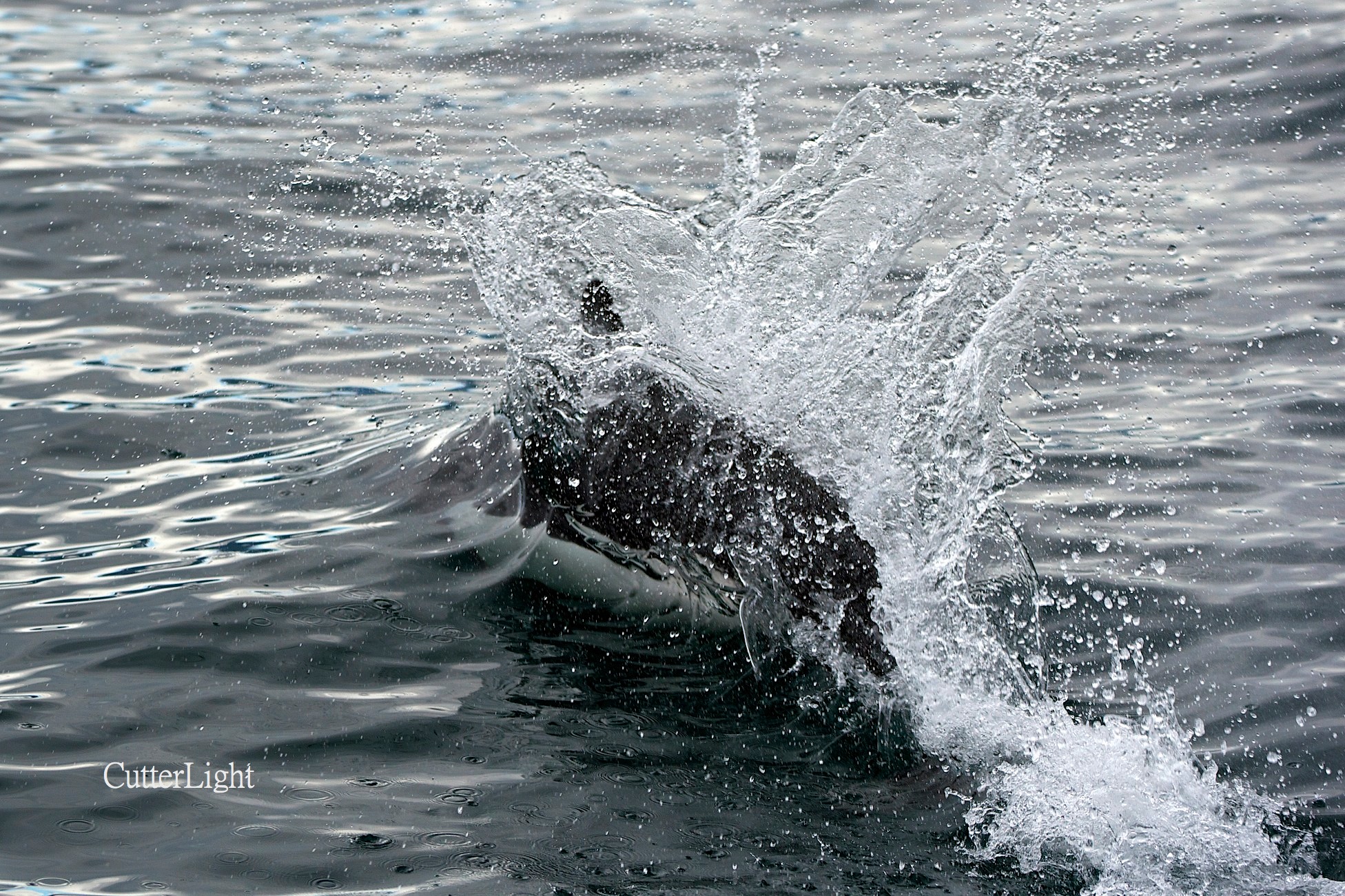
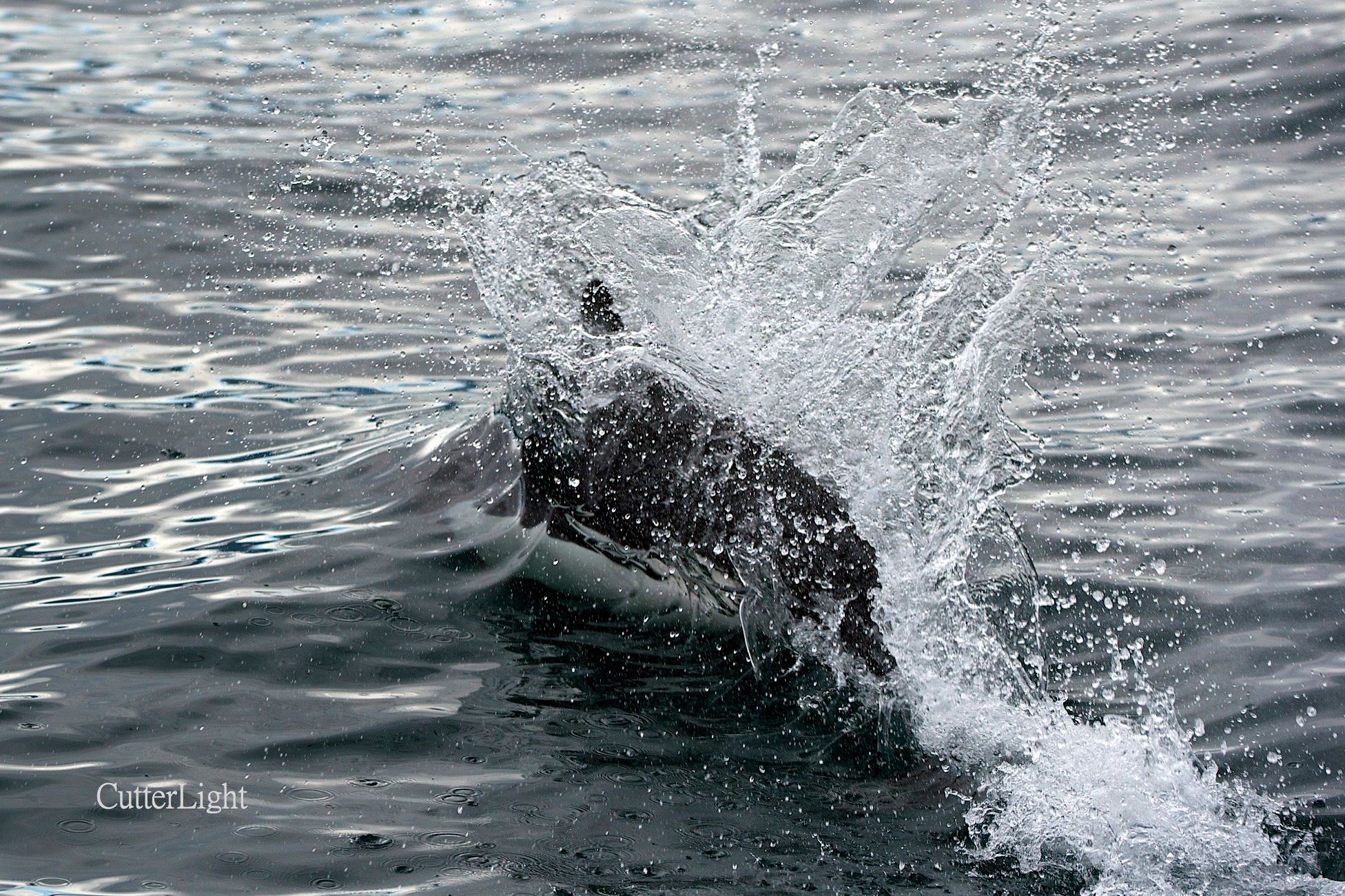
You might see a plume of ocean spray, a glimpse of black and white and if you’re close enough, you’ll hear a burst of expelled air as one of the speedsters of the sea comes up for a breath. Playing in the boat’s wake, Dall’s porpoises create ephemeral pieces of art out of seawater, light and air.

Dall's porpoise saltwater mohawk n

Water & Light Mohawk. Dall’s porpoises are capable of keeping pace with boats cruising at over 30 mph (55 kph), a speed that places them with or perhaps slightly ahead of Orcas and Pilot Whales as the sea’s fastest cetaceans. 

Dall's porpoise folded water n

Folded Glass. In Alaska’s seas, a steady diet of herring and other small fish help keep the population robust. Males, which attain larger sizes than females, can grow to a length of about eight feet and attain weights just under 500 pounds.

Dall's porpoise black and silver on blue n

Black and Silver. Typically traveling in pairs or in packs up to a dozen or so animals, tell-tale water spouts in the distance are a sign that the porpoises are in the area. If their stomachs are full and the speed of the boat is just right, they may come zipping across the water to play.

Dall's Porpoise Tail n

Watercolor Brush. Dall’s porpoises can seem to appear out of nowhere, and before long they disappear again. 

Dall's porpoise water burst n

Farewell Waterburst. Currently, populations of Dall’s porpoises are doing well. They prefer to swim over deep (500 feet), cold water along the continental shelves ranging from southern Japan, as far north as the Bering Sea, and along the west coast of America as far south as Southern California. As a species, they would benefit from international cooperation to conserve the fish stocks they rely on for food and to ensure that they are not accidentally caught in fishing nets.  


A Whale of a Tour: Cruising Alaska’s Kenai Fjords National Park

humpback breaching c n

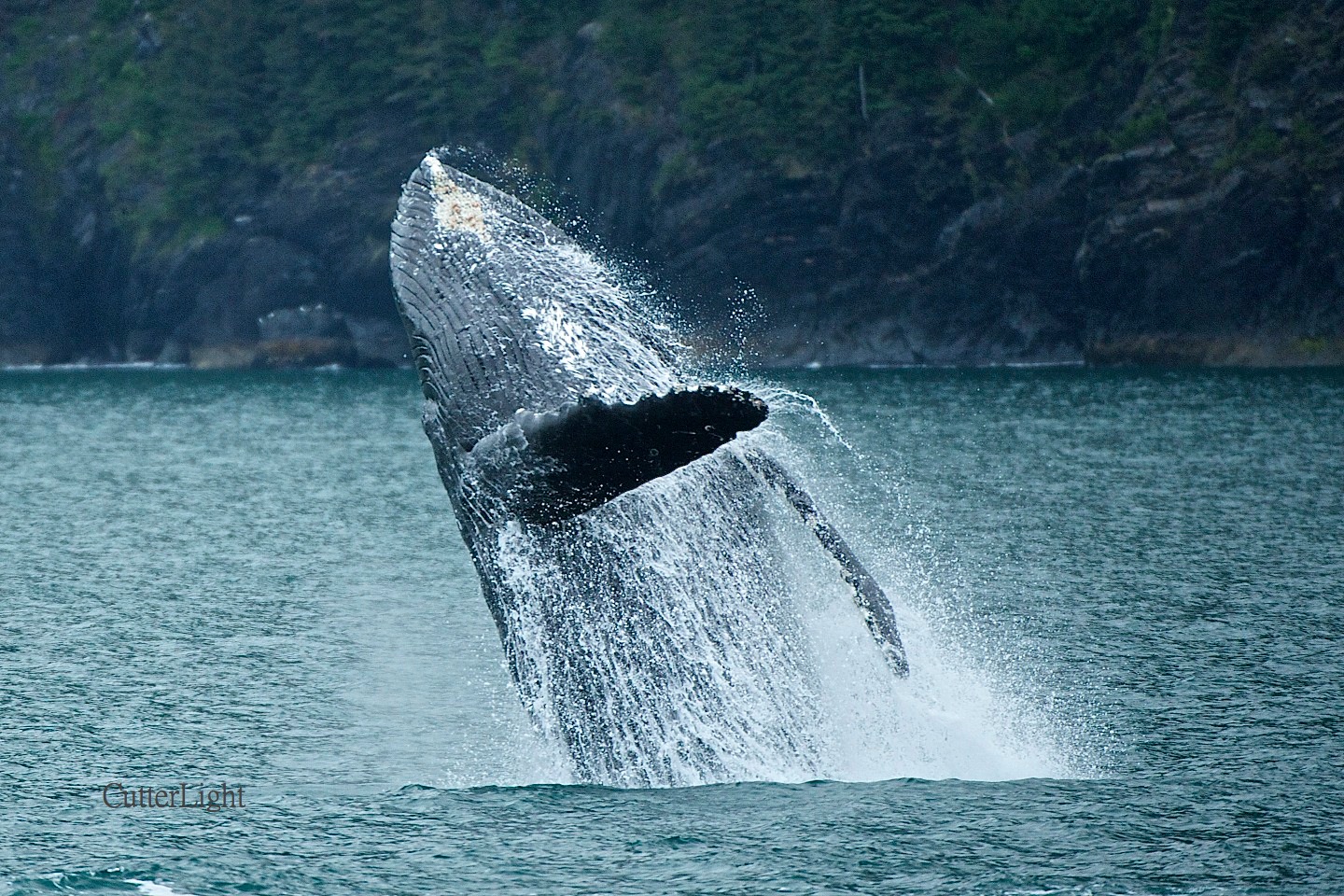
In what seemed to be sheer exuberance, this humpback whale heaved himself out of the sea again and again, the perfectly executed cannonballs sending up enormous showers. From eagles to orcas and sow bears with cubs to mountain goats with kids, a recent cruise of the Kenai Fjords National Park near Seward presented opportunities to photograph a number of Alaska’s wildlife stars.  

Last summer while salmon fishing aboard our C-Dory Angler, Gillie, we found ourselves suddenly quite close to three massive, bubble feeding, lunging humpback whales – the largest humpbacks we’ve seen to date. The whales and the salmon were drawn to the same thing: acres of herring so dense they were causing our boat’s sonar to misinterpret the vast school as seafloor. Between netting bright silver salmon for our daughter who was visiting from California, navigating the boat and snapping photos of the feeding leviathans we were kept on our toes. At one point the whales surfaced so close to our boat we could smell their breath. It was a bit unnerving.

whales lunge feeding major marine n

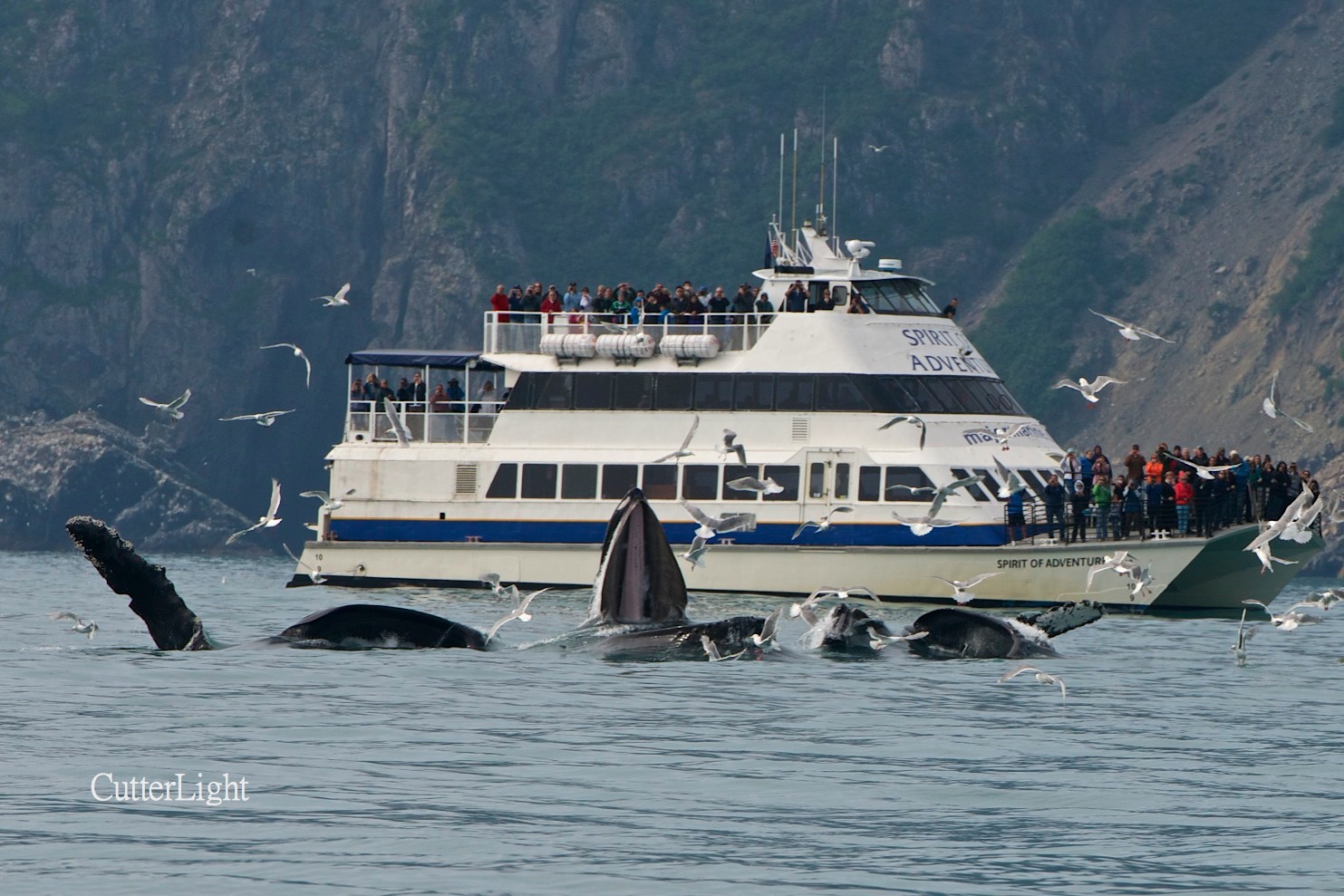
One moment the seas would be calm, the gulls and kittiwakes resting on the water with just a few sentinels circling about. Suddenly the birds aloft would cry out, signaling the sitting birds to take wing… and then these three massive whales would erupt from the sea. If you look closely, you can see a panicked herring barely escaping the gaping jaws of the center whale.  

That evening when we uploaded our photos, we were disappointed to find that the best of our whale shots were marred by the presence of a tour boat in the background. And then it hit us – why not see if the tour company would be interested in the pictures? That’s how we came into possession of tickets for Major Marine Tour’s all-day Kenai Fjords National Park nature cruise, complete with and an all-you-can-eat Alaskan salmon and prime rib lunch. Having now experienced three of these tours, we give them the highest possible recommendation for anyone interested in the wildlife and natural history of coastal Alaska.

eagle on sea rock n

Eagles are common along the shoreline of the fjords, and we never tire of admiring them. Not above scavenging, these opportunistic birds will prey on salmon, other fish, seabirds and even baby mountain goats. 

This past Monday we used four of our tickets to book ourselves and friends visiting from Montana on a tour on the Spirit of Adventure – the very boat we’d photographed the previous summer. A few brief sprinkles of rain aside, it was a beautiful day, and since it was a lightly-booked weekday cruise we had plenty of room at our dining table as well as at the ship’s rails when we were viewing glaciers and wildlife.

horned puffin on cliffs n

Both horned puffins (above) and tufted puffins nest in the cliffs above the fjords. 

horned puffin swimming n

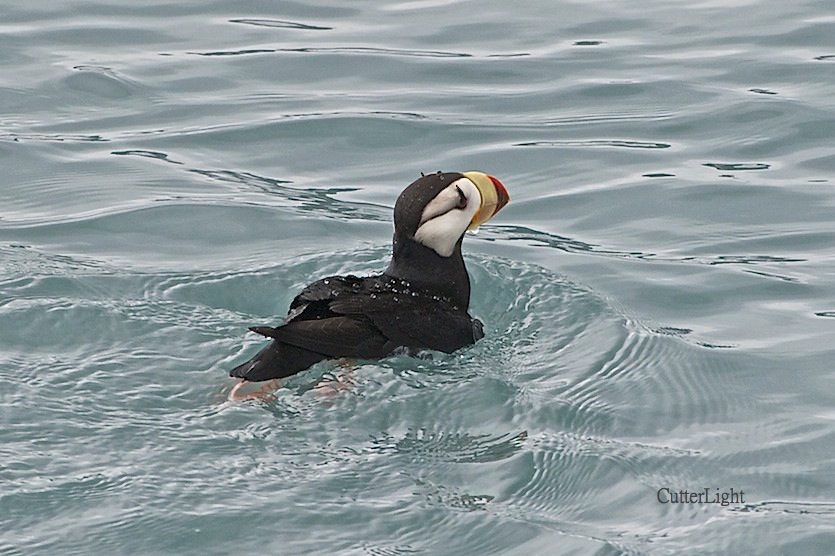
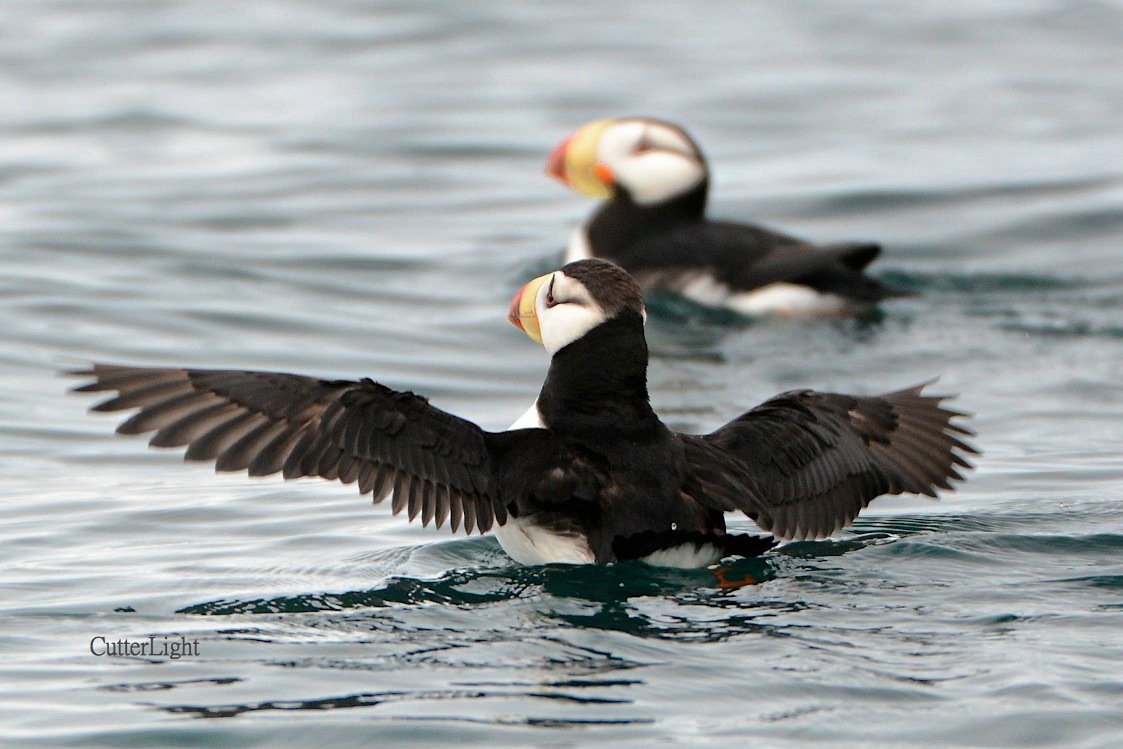
The feathery “horns” above their eyes give horned puffins their name. This one, fresh from a dive in search of small fish, popped up right next to the boat. 

Stellar's Sea Lions n

Certain places in the Kenai Fjords are important breeding grounds for Stellar’s sea lions. In recent years, their population has fallen into decline and although human overfishing may be the culprit, no definitive cause has been identified.

kittiwakes n monkey flowers n

Seep (or common) monkeyflower adorns the cliff walls of this black-legged kittiwake rookery. We didn’t spot any eggs, but the nests look complete and ready for this year’s broods. 

murres thick bill dense raft n

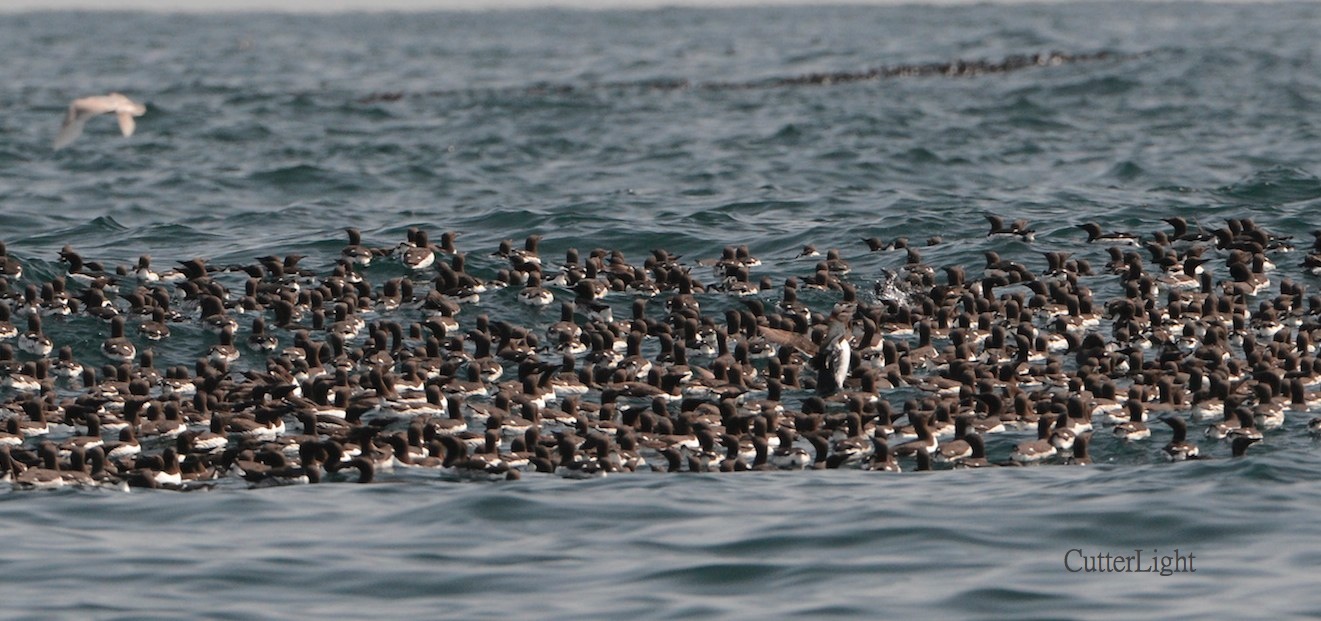
Meanwhile dense rafts of dozens or even hundreds of thick billed murres gather along current seams that push baitfish into tight schools where they become easy pickings. 

Dall porpoise w beak n

Reminiscent of the Tasmanian Devil of Warner Brother’s cartoon fame, Dall’s porpoises can appear at any time, zipping across the sea in plumes of spray in pursuit of the fish they feed on or just a good bow wake to play in. They are reportedly capable of speeds of around 35 miles per hour (55 kilometers). On this day, the porpoises were in a playful mood and the captain hit the boat speed just right. For several minutes half-a-dozen of these sleek speedsters zig-zagged across our bow. 

Holegate glacier sluffing ice n

Although wildlife is a major draw on these cruises, the fjords are equally famous for spectacular tidewater glaciers. Above, Holegate Glacier sloughs off tons of ice at a time in thunderous cascades. Note the seagull at the upper right of the photo. 

glacier ice margaritas n

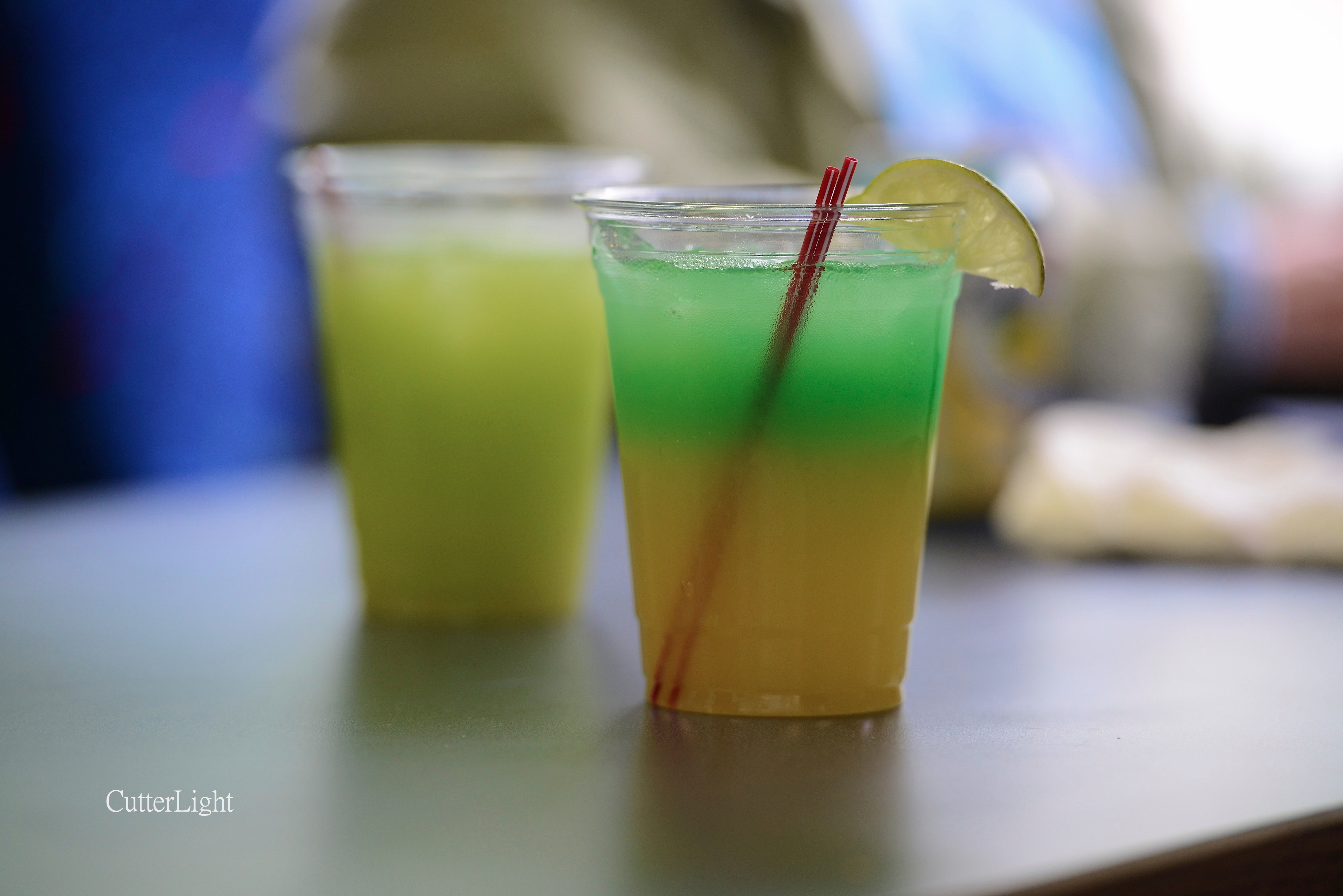
When the crew scooped up a pristine chunk of glacial ice in a net and announced that Glacial Ice Margaritas were being served, we couldn’t resist. The ice – which is hundreds to thousands of years old depending on which part of the glacier it comes from – is super dense, hard, clear and cold. 

sea otter on ice w harbor seals n

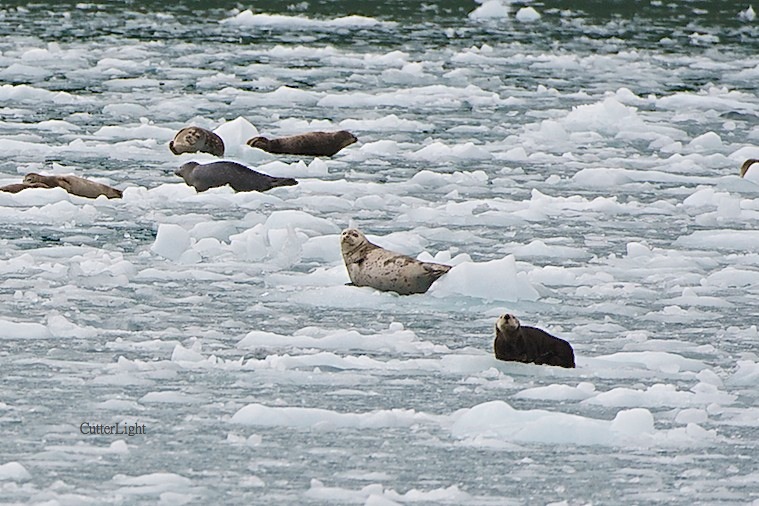
Near Aialik Glacier, dozens of harbor seals were hauled out on the ice along with quite a few sea otters such as the one in the foreground above. The National Park Ranger providing commentary aboard Spirit of Adventure remarked that prior to the Russian hunting of sea otters (which, by the early 20th century had nearly driven them to extinction) it was common to see sea otters hauled out on land. 

Orcas transient resurrection bay 2014 n

Throughout the seven-and-a-half hour cruise we kept a keen eye for orcas. The day had already been amazing – truly one for the books: leaping salmon, a sow black bear with cubs in a clearing on a mountainside, a nanny mountain goat with her young kid just above the high tide line, whales, porpoises, and a dozen or so species of sea birds all had checks next to them.

Toward the very end of the cruise, as we were nearing Seward, the pair in the above photo showed up. Kenai Fjords NP is home to three distinct types of these cetaceans: resident, transient and offshore. The three types have different diets: residents are salmon and fish eaters, transients focus on mammals such as seals and sea lions, and offshore orcas are known to hunt sharks and baleen whales. The three varieties also have different languages and DNA tests indicate that they do not interbreed. This pair – the male in back with the longer, more angular dorsal fin, the female in front with a shorter, more rounded dorsal fin – may be transient orcas.  

sleeping otter in harbor n

Even before the cruise begins there are wildlife viewing opportunities right in the harbor. This sleepy otter filled up on mussels he pulled from pilings before conking out for an after breakfast snooze. 

Cowboy Soup – The Day After Wagon Wheel Ribs

cowboy sparerib soup n

The leftover stock from oven-cooked Wagon Wheel Baby Back Ribs is the base for one of the best soups we’ve ever enjoyed. 

This soup doesn’t really have much to do with cowboys, except that if we were cowboys, this would be what we’d want to eat around the campfire. A cold night, wolves howling in the darkness, shooting stars above, a roaring fire cracking and sparking, a properly chilled Riesling… (We’re the kinds of cowboys who pack stemware.)

Cowboy Soup

Ingredients

  • 2 cups leftover liquid from Wagon Wheel Ribs
  • 1 pound leftover baby back ribs, meat cut from bone and sliced into bite-sized chunks
  • leftover bones, cracked
  • leftover potatoes, beans and onions
  • fresh sweet corn from one or two cobs (1 – 2 cups)
  • 1 cup smoked gouda cheese, shredded
  • bay leaf
  • additional potatoes, cut into large chunks, salted and seasoned as desired
  • additional spices and seasonings such as chili powder, jerk rub, Cholula sauce, Mongolian fire oil, oregano, mesquite seasoning, salt and pepper, as desired
  • sour cream

Directions

  • Place leftover ingredients from Wagon Wheel Ribs (liquid, meat, bones, potatoes, beans, onions) and bay leaf in a medium-sized pot and heat over medium heat, stirring occasionally. Simmer.
  • Meanwhile, place olive oil in a skillet and heat over medium heat. Add chunks of additional potatoes, seasoned as desired with salt, pepper, Cholula sauce and jerk rub. Cook till tender.
  • Add potatoes to soup. Stir in sweet corn and gouda cheese. Add additional seasonings if desired.
  • Serve piping hot with a dollop of sour cream.

Wagon Wheel Baby Back Ribs

wagon wheel spare ribs

Look Ma, no grill! Seasoned just right and slow cooked in the oven in a large pan along with potatoes and onions, these baby back ribs come out sweet, spicy, tangy and falling off the bone. See recipe below.

Oftentimes camp cooking proves to be the mother of invention. On a rainy, windy evening in Seward, outdoor grilling was out of the picture. But our appetites were already set on baby back ribs…

This one-pan method for baby back ribs is sure to be a crowd pleaser and is as close to no-fuss cooking as you can get. Cleanup’s a breeze, too. We use a 12.5″ Swiss Diamond pan – our wagon wheel – for this kind of cooking. It’s heavy, oven-safe and non-stick. Mirin, a very sweet rice wine used liberally in Japanese cooking, gives this dish a pleasant sweetness complementing the heat.

Wagon Wheel Ribs

Ingredients

  • 1 set baby back ribs, cut into individual-sized servings of 2 to 4 ribs each
  • a few small potatoes, some cut into large chunks, others left whole
  • 1 large sweet onion, chopped coarse
  • 2 cups black beans, already cooked
  • 4 cloves garlic, chopped coarse
  • mirin (or substitute a little sherry and honey)
  • olive oil
  • Cholula sauce
  • Mongolian fire oil
  • mesquite seasoning (optional)
  • a chili-based dry rub with some heat such as Jamaican jerk rub or any rub featuring powdered chili, oregano, cinnamon and similar seasonings
  • sea salt
  • freshly cracked pepper

Directions

  1. Preheat oven to 300 degrees F. (The oven in our camper only goes down to 300 degrees. You can cook these ribs more slowly and at a lower temperature if you prefer.)
  2. Rub plenty of the dry chili-based rub into each set of ribs. Set aside.
  3. Place roughly equal portions of mirin, Cholula sauce and olive oil in a large, oven-safe frying pan (one that has a lid) and mix together over low heat. Stir in a little Mongolia fire oil or similarly spicy oil. Stir in mesquite seasoning, salt and pepper. There should be enough liquid to amply cover the bottom of the pan.
  4. Add the ribs to the pan, turning each piece so that they are coated with liquid. Place meat side down, cover the pan with a lid and place in the oven. Cook for 30 minutes.
  5. Remove the pan from the oven. Turn the ribs over so that they are bone side down. Add garlic, onions, potatoes and beans. Cover the pan and return to the oven. Cook for an additional hour.
  6.  Test the meat and potatoes with a fork for tenderness. Meat should easily come off the bone. (Save the liquid for delicious Cowboy Soup.)

A dry or semi-dry Riesling is an ideal wine to pair with spicy pork ribs.

Sweet and Sustainable: Alaska Prawns and Shrimp (and a Great Place to Find Them)

spot prawns on soba n

Zaru soba (Japanese buckwheat noodles) topped with Thai-seasoned Alaska spot prawns makes a perfect summertime meal. See recipe below.  

The windshield has a crack running through it, there’s a little rust and a dent or two on the body, and some of the paint is chipping off the hand-lettered sign affixed to the vehicle’s side, but we look for Patrick Johnson’s little black truck every summer when we’re cruising around Alaska’s Kenai Peninsula and we hit the brakes when we find it. If we don’t happen across his truck, we go find him at his Shrimp Guys Seafoods shop in Soldotna. Patrick sells sashimi-grade seafood smelling as fresh and briny as the seas it comes from.

Alaska shrimp & scallops sign n

Maybe it’s my East Coast upbringing, but experience has taught that fancy shops with glitzy signage are usually not the best places to look for quality seafood. The first time we saw the above sign, which is attached to Patrick’s older model black pickup truck, it took me back to days in the Carolinas where small-time operations were hands down the best places to pick up fresh blue crabs, white shrimp, oysters and maybe a flounder to enjoy with a bottle of something white and dry for the evening meal.  

Alaska spot prawns fresh_n

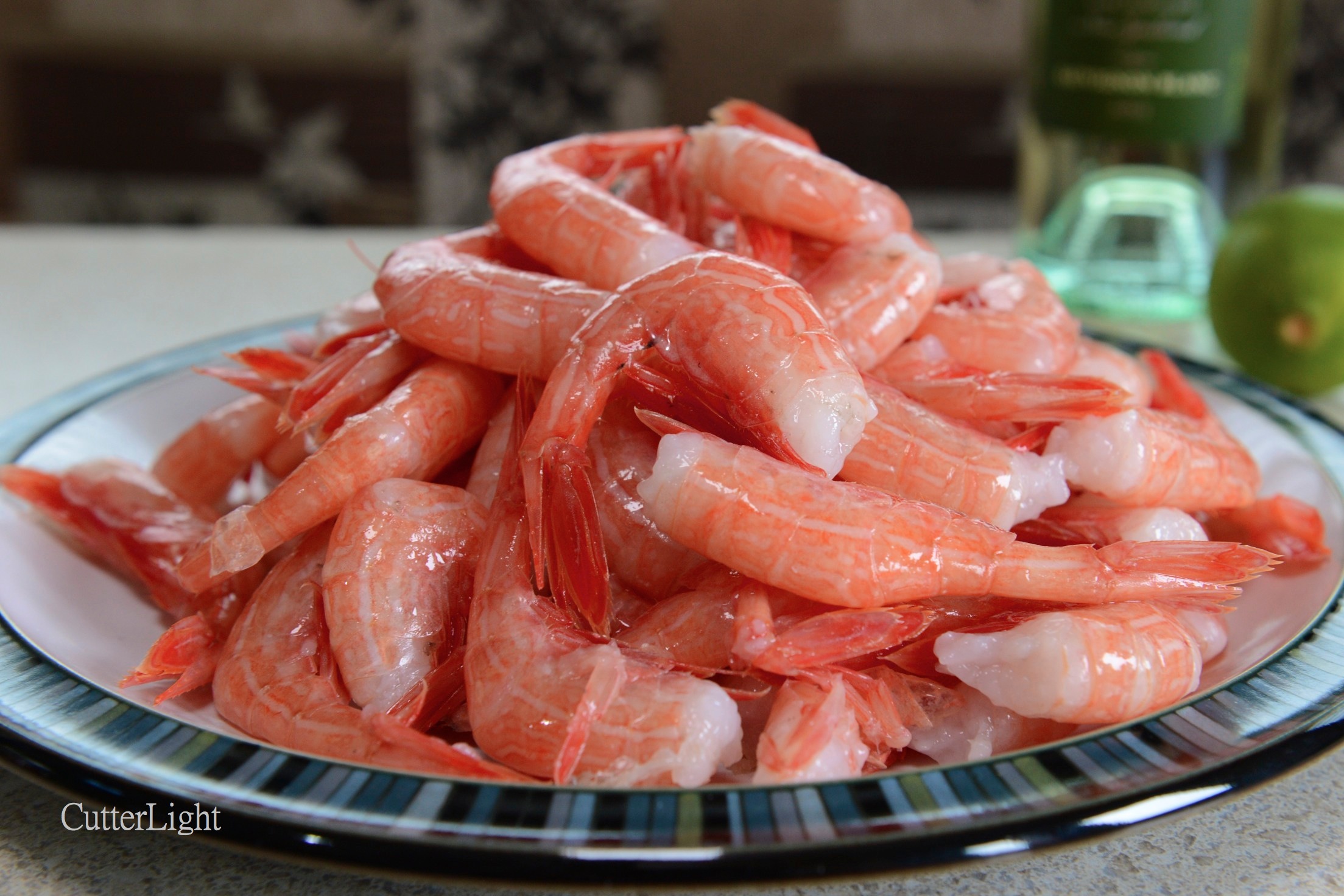
Alaska’s prized spot prawns, ready to be peeled, seasoned and treated every so briefly and gently with heat.

There are two secrets to great seafood: cook it while it’s fresh, and don’t cook it long. If seafood smells bad, it is. That “bad” smell is not seafood; it’s bacteria growing on seafood. A quality seafood shop (or the seafood counter in a well-run grocery store) will smell pleasantly of the ocean – a little briny, vaguely sweet.

As to cooking shrimp or prawns, a former mentor in South Carolina gave me advice that applies to everything from broiled salmon to fried summer fluke. He was showing me how to prepare the white shrimp I’d caught in a cast net and iced earlier that day. (Read in a slow, South Carolina drawl.)  Jack, a little butter, a little lemon and a little garlic – that’s all they want. And a minute-and-a-half in the pan. Remember, they’ll keep cooking after you’ve removed them from heat, so a minute-and-a-half really means you’re cooking them for two minutes. But get them off the heat before two minutes, or you’ll ruin them. side stripe shrimp n

Smaller than spot prawns, these Alaska side stripe shrimp have the soft texture and signature sweetness of the ama-ebi served by sushi chefs. They are excellent served raw and dipped in soy sauce with a hint of wasabi. Any leftovers make a superb omelet or open-faced shrimp melt sandwich. 

Zaru Soba with Thai Seasoned Spot Prawns (serves two)

Ingredients (This recipe is a snap to make with pre-made seasoning and dipping sauce.)

  • soba (Japanese-style buckwheat noodles)
  • 6 spot prawns, peeled, vein removed and cut open butterfly style along their length. Give them a squirt of lime or lemon and set aside.
  • 2 tbsp coconut oil (or olive oil)
  • Spicy Thai-style seasoning mix, or mix your own from powdered chili peppers, powdered garlic, cinnamon, nutmeg and sesame seeds
  • green onions, sliced thin
  • English cucumber, cut julienne – about 1 1/2 inch of cucumber per serving
  • nori (dried seaweed) cut into thin strips
  • wasabi
  • mentsuyu – chilled dipping sauce – available at Asian grocers or in the Asian section of most regular grocery stores. Or make your own from soy sauce, mirin, sake and bonito flakes.

Directions

  1. Use a bowl to coat prawns in seasoning and let stand.
  2. Boil soba according to maker’s directions. Rinse thoroughly in cold water and drain.
  3. Mix mentsuyu with cold water, according to maker’s directions. Mix in wasabi to taste and add a few slices of green onions.
  4. Heat coconut oil in a frying pan over medium heat. Add seasoned prawns. Use tongs to turn so that both sides are cooked – about 90 seconds total. Place on a plate to stop cooking.
  5. Place cold, drained soba noodles on two plates. Add prawns. Garnish with cucumber, onions and nori. Serve with individual side bowls of cold mentsuyu dipping sauce.

Enjoy this dish with a chilled bottle of Bianchello – a beautiful white wine from Central Italy that seems to have been created for light seafood dishes.

For sashimi grade seafood, contact Patrick Johnson at 907-394-4201 or email him at akjohnson98@gmail.com. You can find his shop at 44526 Sterling Highway, Soldotna, Alaska


Resurrection Bay Wildlife, a C-Dory Angler Tour: Sea Lions, Mountain Goats and More

sea lion roaring 2014 nWith a mighty roar this young bull sea lion bellows out that this rock in Resurrection Bay near Seward, Alaska is his rock. Nestled between snow-capped mountains and hosting an abundance of otters, porpoises, seals and sea lions, sea birds by the tens of thousands and with whales almost a given, the bay offers lots to look at. 

A morning filled with sunshine, calm seas and friends visiting from out of town were inspiration to take our C-Dory out for a lap around Resurrection Bay.

mountain goat may 2014 n

sea otter spy hopping 2014 n


Sea otters like this curious spy-hopper are abundant along the shoreline. Meanwhile, scan the mountainsides on the east side of the bay for puffy white balls; put binoculars on them and they might become mountain goats. 

A pair of juvenile sea lions were swimming in the harbor near our boat as we made ready, and almost as soon as we cleared the marina a harbor porpoise arced near our boat. Bald eagles chirped and spiraled in the blue sky overhead, terns and kittiwakes dive-bombed for small fish, and several cormorants, including a crested cormorant, were drying their wings on the remnants of a pier after a morning of fishing. horned puffins may 2014 nHorned puffins are among the tens of thousands of seabirds that nest in the rocky mountainsides surrounding Resurrection Bay.  whale tale may 2014 nNo cruise is complete without encountering the whales that call the outer parts of the bay and the nearby Alaska Gulf home. This sounding humpback appeared to be feeding on herring.  sea lions communicating nThere’s sometimes a fine line between love and aggression. At one point, the smaller sea lion appeared to have its mouth entirely inside the larger one’s. After some barking back and forth and a little more bared-teeth interplay, the larger animal slid into the ice water – perhaps to forage.

kittiwakes nesting 2014 n

Approaching Cape Resurrection by boat, you can smell the rookery well before your eyes pick out individual birds on the whitewashed cliffs. Here, thousands upon thousands of black legged kittiwakes jockey for position as they haphazardly construct precariously perched nests.

murres raft 2014 n

Dense rafts of murres rest near current seams that disorient small fish – the murres’ prey. At times, acres of herring can be seen just below the surface of Resurrection Bay’s waters.

murres 3 2014 n

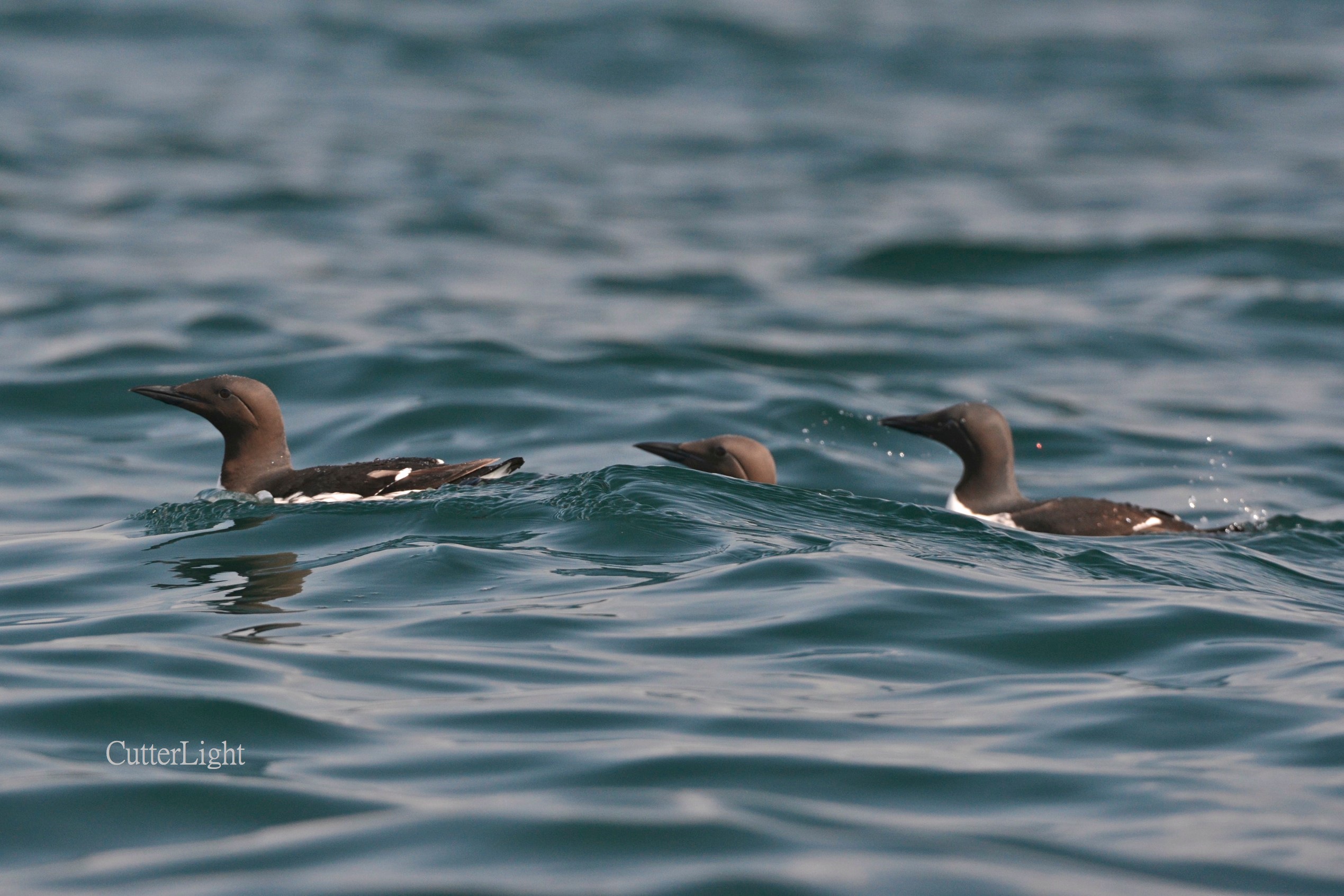
Thick-Billed Murres are so common it can be easy to forget what amazing birds they are. Somewhat stubby-looking on land, they can achieve flight speeds of 75 miles an hour. In water, they transform into sleek acrobats, capable of dives to over 300 feet deep – the length of a football field.  

tufted puffins may 2014 n

A pair of tufted puffins, golden sunlight illuminating their eponymous feathers, glide through the waters of Resurrection Bay in search of small fish.

Whether life takes you to coastal Alaska or some other shore, we can’t recommend a boat tour of inshore and nearshore waters highly enough. In Seward, local tour boat companies offer daily cruises captained by experienced National Park Service rangers – a not-to-be-missed experience.

C-Dory_new.jpg 

Braised Elk Roast Camper Style: One Pan Cooking in The Wagon Wheel

elk roast n

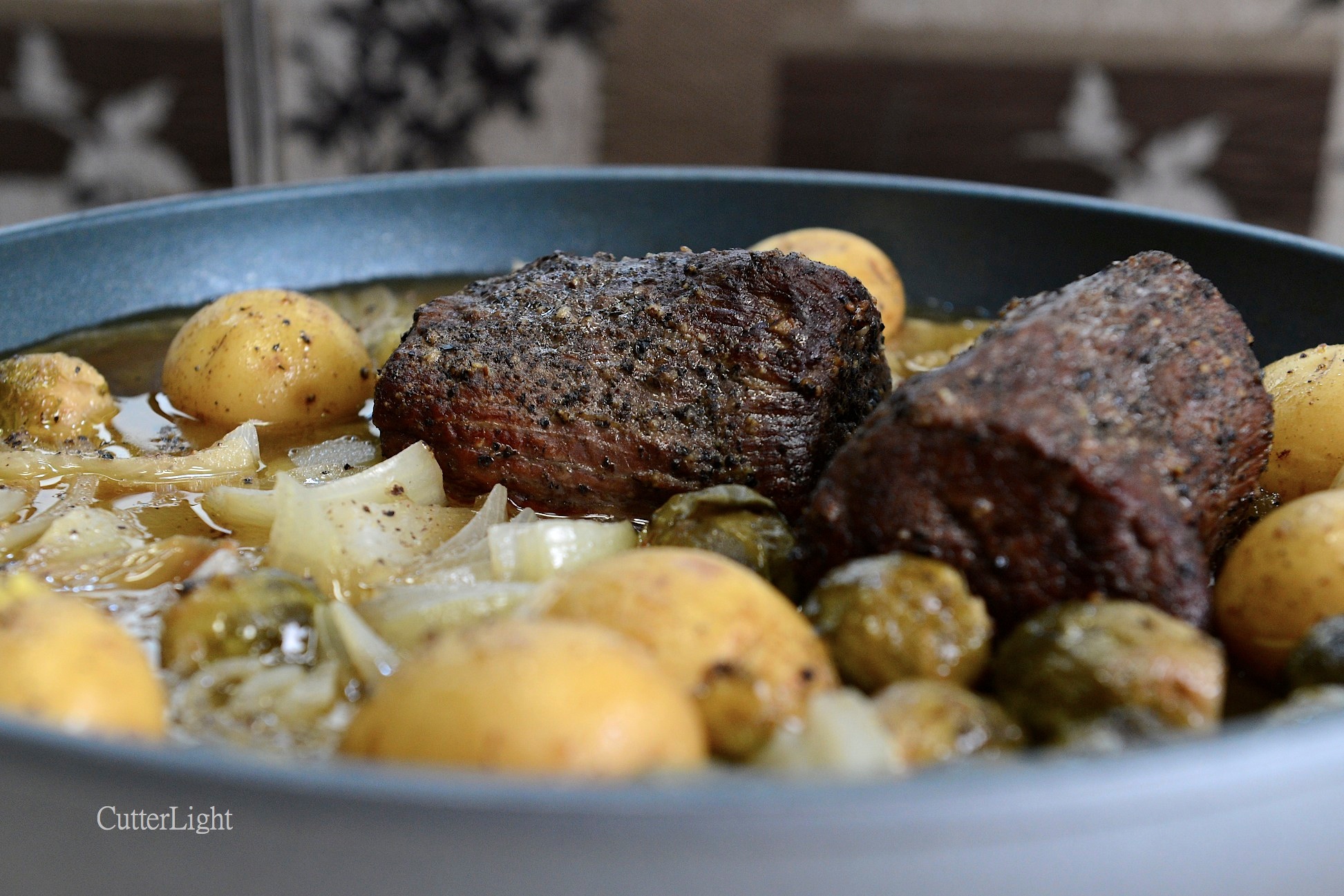
Elk roasts liberally rolled in freshly cracked pepper and slow cooked with sweet onions, baby Yukon Gold potatoes and the chef’s choice of additional vegetables is an appealing meal that can be prepared virtually anywhere. Recipe below.

Over the years we’ve become big fans of Swiss Diamond cookware. Covered eggs cooked over very low heat in their non-stick frying pans are a revelation. Nothing sticks, and as long as the manufacturer’s instructions regarding overly high heat are followed, the surface on this cookware remains in excellent condition through years of regular use.

My favorite Swiss Diamond pan is their big, 12.5  inch frying pan. We call it The Wagon Wheel and it’s perfect for everything from baking a pizza to frying fish to slow cooking a roast in in the oven. The challenge with a pan this large is fitting it into some ovens – such as the one on our Lance truck camper. In fact, even storing a pan of this size in a camper is no mean feat.

So I removed the handle. Permanently. It’s around somewhere, safely tucked away along with the hardware used to attach it. On the camper, we don’t need the handle. Oven mitts suffice.

The elk roasts were a gift from a friend. The recipe is uncomplicated. The finished meal is hearty and has great eye appeal – the perfect meal with a glass of old vine Zinfandel on a rainy evening in Seward, Alaska.

Braised Elk Roast

Ingredients

  • 1 pound elk rump roast or similar cut from wild game or beef
  • 1 large sweet onion, chopped coarse
  • whole small potatoes
  • other vegetables as desired: parsnips, carrots, brussels sprouts, garlic cloves, mushrooms and even chunks of pumpkin or squash are all good candidates
  • olive oil
  • freshly cracked pepper
  • sea salt
  • sherry or red wine
  • additional seasonings such as rosemary, sage or thyme, if desired

Directions

  1. Preheat oven to 250 degrees F. (Our camper oven only turns down to 300 degrees F – a little hotter than perfect, but still fine.)
  2. Heat light olive oil or similar frying oil over sufficiently high heat to create a sizzle when the meat hits the pan. Sear the meat on all sides. Use tongs to hold the meat if necessary. About 2 to 3 minutes per side. Remove meat and set aside.
  3. Lower heat on pan to medium low. Deglaze pan by adding sherry or wine and use a spatula to gently scrape the brown fond created during searing. Slightly reduce liquid over medium to medium-low heat.
  4. Meanwhile place seared roast in a bowl. Roll the roast in olive oil, salt and freshly cracked pepper to give the roast a coating.
  5. Add additional olive oil to the pan as necessary. Add onions and other vegetables along with salt and pepper, stirring briefly to thoroughly coat with oil. Add the meat, cover the pan with a lid, and place in oven.
  6. Cook covered for an hour for a small roast, longer for a larger roast. Add additional wine or a little water to maintain a broth on bottom of pan, if necessary.