Imperial Diver: What’s in a Name?

Imperial Diver (Common Loon, Gavia Immer)
Chignik Lake, Alaska Peninsula, August 2018

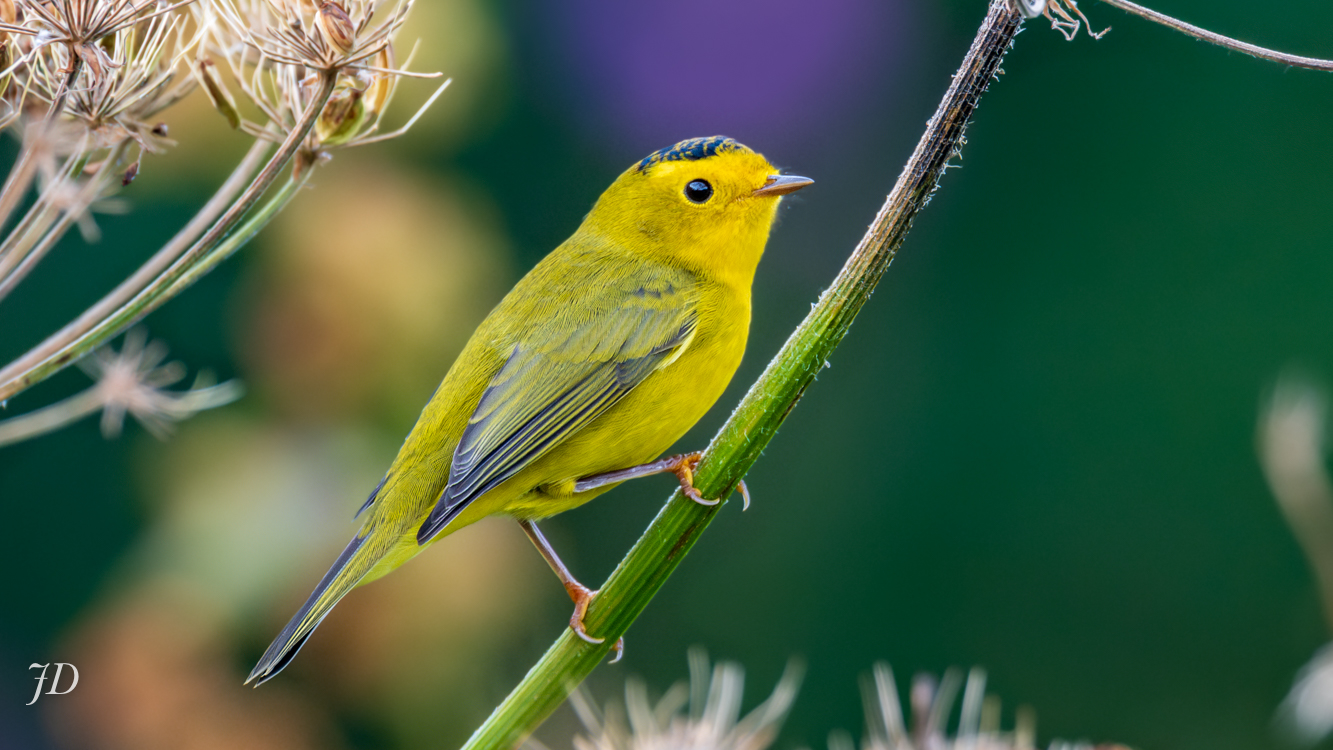
Upon publishing a photograph of a Wilson’s Warbler under the title Black Cap Jazz Singer a few days ago, reader Tanja Britton (see Tanja’s blog here), left a note alerting me to the American Ornithological Society’s decision to revisit the common names of species within AOS’s jurisdiction that are predicated on the names of the people (white men) who “discovered” or “identified” the bird in question as well as appellatives assigned by the “discoverer” to “honor” others. This would mean the renaming… the reimagining of a number of birds and our relationships with them: Steller’s Jay, Wilson’s Snipe, Baird’s Sandpiper, Audubon’s Oriole, Bachman’s Sparrow, and so on.

Hurray and about time. This “dibs!” approach to naming the beings we share this planet with could hardly reflect a more juvenile mindset. We, all of us, have the right to choose our own names, to imagine ourselves as we wish to be, to present our own identities and not to be enslaved by someone else’s idea of who we should be. We believe the same dignity should be accorded to all beings. And in fact, even in the instance of an “inanimate” object – such as, say, a salmon pool on a river – if one is looking at that landscape and can think only of imposing a person’s name on it, one is not looking closely enough.

Our view at Cutterlight has long been that if one creates a piece of art such as writing, a painting, a piece of music and so forth and one chooses to attach one’s name to said piece of art, it is appropriate and just that the creator’s name live on with that art for as long as the art lives. But this vain nonsense in pursuit of the illusion of immortality wherein buildings, airports, highways, and birding organizations are arbitrarily named after this person or that has always struck us as one of the least attractive impulses in Euro-American culture. The practice is as divisive as it is arbitrary – a fact we seem to be slowly waking up to as a society.

It is often the attitude among indigenous peoples of the Pacific Northwest that the totem poles they’ve created should be allowed to naturally decay over time rather than preserved. Their view is that all beings and all things have a span in which they exist in a certain state, at the end of which they must be allowed to follow their natural path into the next state of existing.

Amen.

Turning back to the matter of our avian friends…

As the AOS embarks on the enlightened task of reimagining the gray, nondescript names of men attached to various species, let them take one further step and strike from vernacular names disrespectful monikers such as “least,” “dwarf,” “lesser,” “house,” and the sobriquet we find most grating – “common.”

The only thing “common” about Gavia immer, the bird in the above photograph, is the unimaginative minds of whomever agreed this regal being should be so reduced. This bird can reach a bill to tail length of three feet (90 cm), a wingspan of four feet (130cm) and is reported to dive up to 250 feet (76 meters). “Common Loon” my foot.

They are Imperial Divers.

JD

Spirit Bird

Northern Shrike
Chignik Lake, August 15, 2018

My favorite fish is the Coho Salmon. I am absolutely fascinated by Lady’s Slipper Orchids. It’s difficult to name a “favorite” anything, and as I reflect on the matter it becomes apparent that it might be even more difficult to explain Why a given something is a favorite. The phrase “an integral part of the journey” flashes in my mind. The species in the above photo is the reason I became a serious birder and threw myself into photography. Oncorhynchus, Cypropedium, Lanius…

What is it in your life that has pulled you into travel, adventure, personal growth, new understandings?
JD

Black Cap Jazz Singer

This beautiful bird is regrettably saddled with the name of the man credited with identifying him… a name with an apostrophe s… as though no one else ever knew this bird and that by “discovering” this fine fellow the man now owns him. So let’s not call this happy singer by some name of ownership. He is an artist in his own right, Black Cap Jazz Singer. (Chignik Lake, Alaska, August 2018)

Every being has the right to a dignified name. Every human has the right to choose a name and an identity for himself, herself, themself. JD

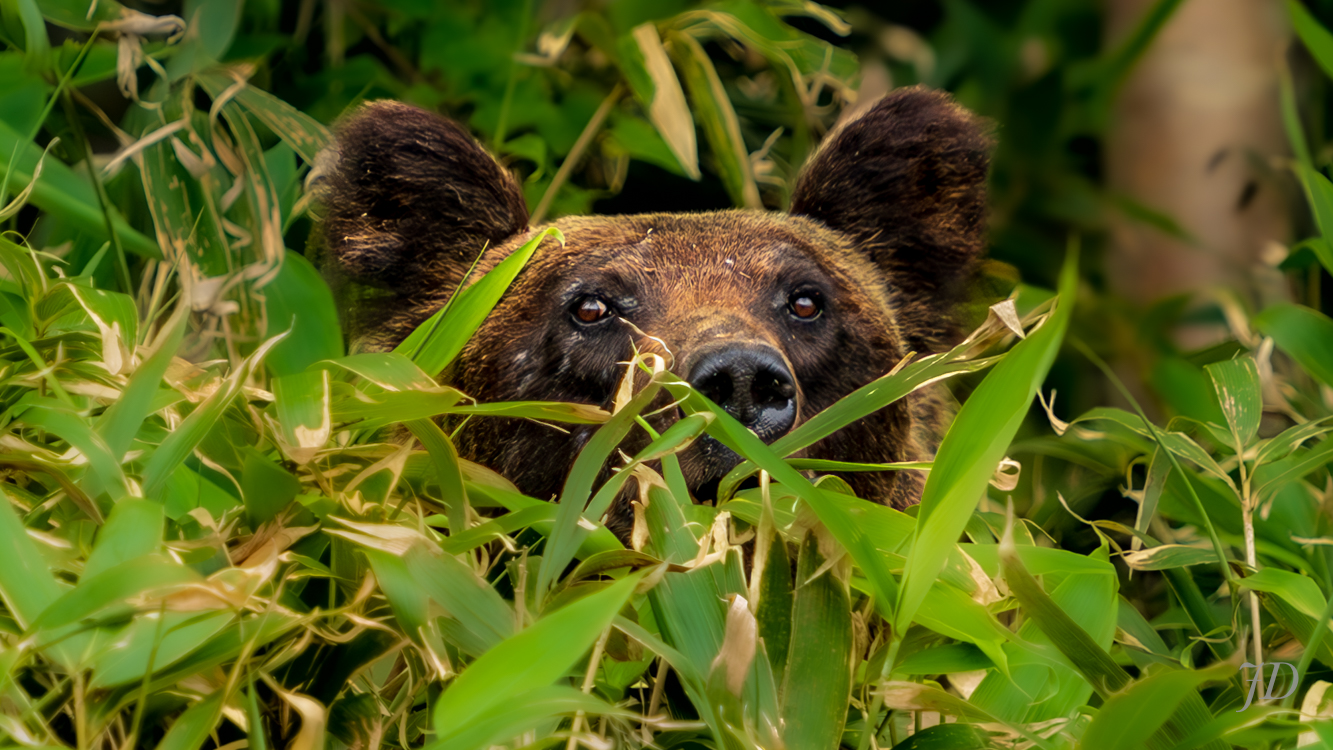
Ursus Arctos… In a Bamboo Forest?

Brown Bear in Bamboo, Shiretoko Peninsula, Hokkaido, Japan, July 21, 2018

Ursus Arctos is a holarctic species represented by several subspecies throughout the Northern Hemisphere including the Grizzlies of the North America West (U. a. horribilis), the massive Coastal Brown Bears of Kodiak Island Alaska (U. a. middendorffi), the equally impressive Chignik (Alaska Peninsula) bears (U. a. gyas) and various additional species scattered from the harsh Gobi Desert to Siberia, the Italian Alps and other regions. Adapted to a variety of climates and diets, physiologically Ursus arctos is the most varied of all bear species.

The Brown Bears we encountered in Hokkaido, U. a. yesoensis, are similar in appearance to the Coastal Brown Bears of Kodiak Island and the Alaska Peninsula which makes sense as, like their Alaskan cousins, Hokkaido’s Brownies subsist on a salmon-rich diet. But at an average weight of only about 450 pounds – large males topping off at under 700 pounds -, Hokkaido’s bears are small compared to those found in Alaska; Chignik and Kodiak bears can reach weights of well over half a ton.

Still, bears are bears and regardless of size, they can be fierce. Approximately 12,000 Brown Bears inhabit Hokkaido, a land area about the size of the state of South Carolina or the country of Austria and home to just over five million people. There have been 57 human deaths attributed to Hokkaido’s Brown Bears over the past 61 years. When the sow in the above photo cautiously emerged from the forest and woofed for her two cubs to follow her across the steep road we were pushing our bicycles up, we gave her the right of way.

The rugged, forested 470 square mile Shiretoko Peninsula where we encountered these and several other bears as well as Blakiston’s Fish Owls, Ezo Red Foxes, Sika Deer, Dall’s Porpoises, eagles and other birds is a UNESCO World Heritage Site.

The World’s Largest Owl is a Piscivore

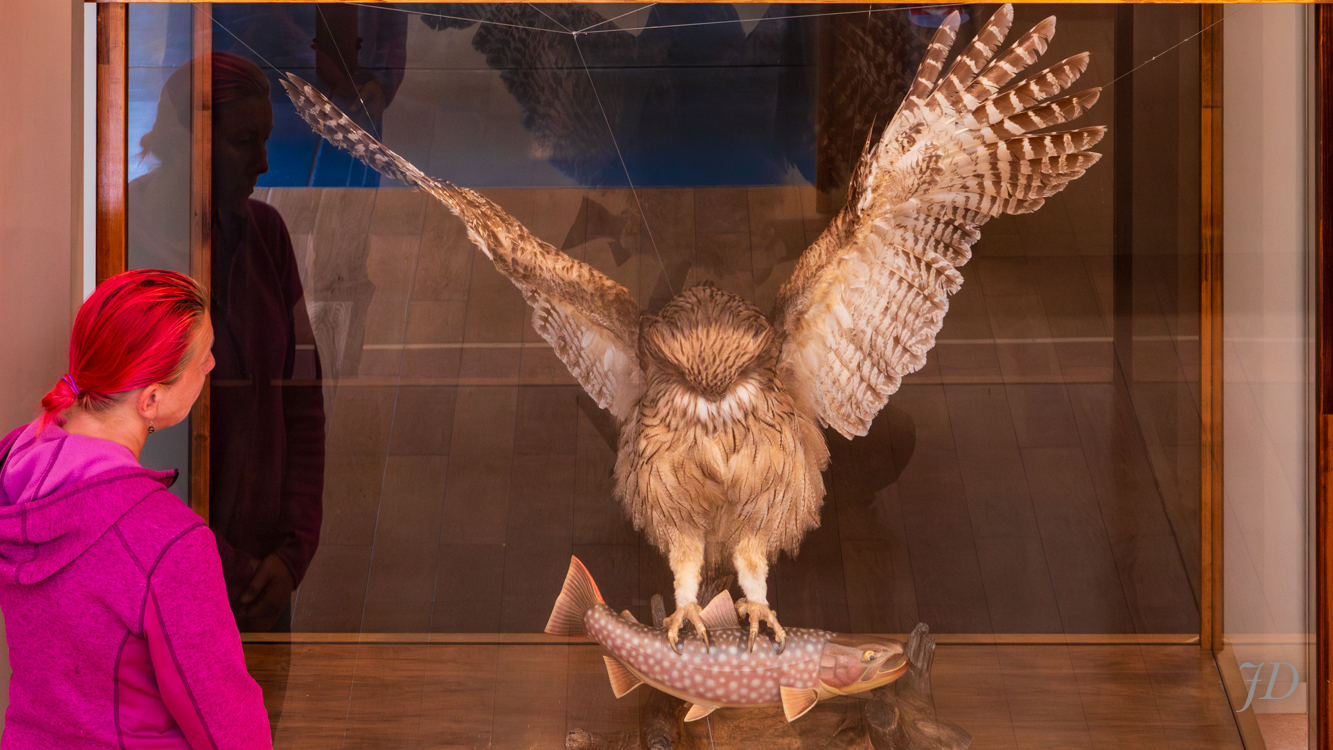
Blakiston’s Fish Owl
Shiretoko Peninsula, Hokkaido, Japan, July 23, 2018

With a wingspan ranging from about 5′ 10″ to 6′ 3″ (170 – 190 cm), Blakiston’s Fish Owls are generally regarded as the world’s largest living species of owl. The photograph above is of one of a known wild pair which have been banded. The owls regularly visit a small stream where a pool has been created with natural rocks and is regularly stocked with Cherry Trout (sakuramasu, O. masau). A small inn with windows overlooking the pool provides guests with opportunities for a glimpse of this rare species which may visit the pool at any time during the night. The indigenous people of Hokkaido, the Ainu, regarded these great owls as spiritual protectors of their villages.

For context, Barbra with this taxidermy specimen grasping a White-spotted Char (Rain Char). Blakiston’s Fish Owl is a type of Eagle Owl and therefore related to the familiar Great Horned Owl of North America. The Great Horned Owl has a wingspan of approximately four feet, two feet less than the Blakiston’s span of around six feet.

Eureka!

Japanese Glass Fishing Floats
Hokkaido, Japan, July 16, 2018

The summer I turned nine I encountered my very first Japanese glass fishing floats. I was in Oregon, and in addition to populating gift shops and restaurant decor, back then these mystical treasures still occasionally washed up on Oregon’s beaches, particularly after big winter storms. That summer I concluded my 13th consecutive reading of Call of the Wild, and Treasure Island and Robinson Crusoe were still fresh. My mind was filled with dreams of faraway lands. The floats, hand blown by craftsmen, fragile, beautiful, traveling across the vast Pacific over decades and thus providing a link not only with the exotic country of Japan but also with ships and fishermen and a culture of yore were utterly captivating.

Over the years, we’ve been gifted a collection of these floats from friends lucky enough to have lived along one of the few beaches where they still wash up. The gifts are appreciated… but it’s not the same as finding one myself. From California to Alaska, in all the years since that Oregon summer I’ve never visited a beach without harboring vague hopes of finding one.

Somewhere past the town of Shari (斜里町) as we approached the Shiretoko Peninsula, we stopped at a beach to have our breakfast and watch sport fishermen cast into the surf for Cherry Salmon.

Barbra found the first one. My stomach turned a little… conflicted. Happy for her find, but disappointed that it hadn’t been me. But where there’s one… maybe… Planting my feet where she found that first float, I scanned every inch of the beach through binoculars. And then, without a word, I handed the binoculars to Barbra and took off, running with all the joy of a young boy turning nine.

He Ain’t Comin’

He Ain’t Comin’

I made this image from a picture I took at Mokoto Train Station in Hokkaido when I looked up into a mirror above the waiting platform and saw Barbra there looking at her phone. There’s something about the scene – populated with houses and rail, and yet eerily empty – and Barbra, alone, looking at her phone -, that seemed to imply something universal about loneliness and the fine line between expectation and disappointment. Compositionally, the frame within the frame here appeals to me… as do… exotic elements such as Barbra’s bright red hair, Japanese writing and the ambiguity suggested by rail that appears to be rusted and perhaps no longer in use.

I am happy to acknowledge the influences of others… here a nod to Stefanie Schneider and her Instant Dreams series, which I invite readers to check out on Instagram or elsewhere. I’m not sure that there isn’t a hint of the old Twilight Zone TV series in this image as well… I think virtually all of us of a certain generation carry within our psyches some lingering effect of Rod Serling’s creation.

Speaking of which… as I attempt to build more exposure for my own work, I’ve been regularly posting on instagram. At some point, I intend to build a website dedicated to photography. Until then, Instagram is a good place to see photographs in one place without needing to click around a lot. If you’re interested, here’s the link: jackdonachy. Be sure to leave a “like” if you like what you see. Thanks!

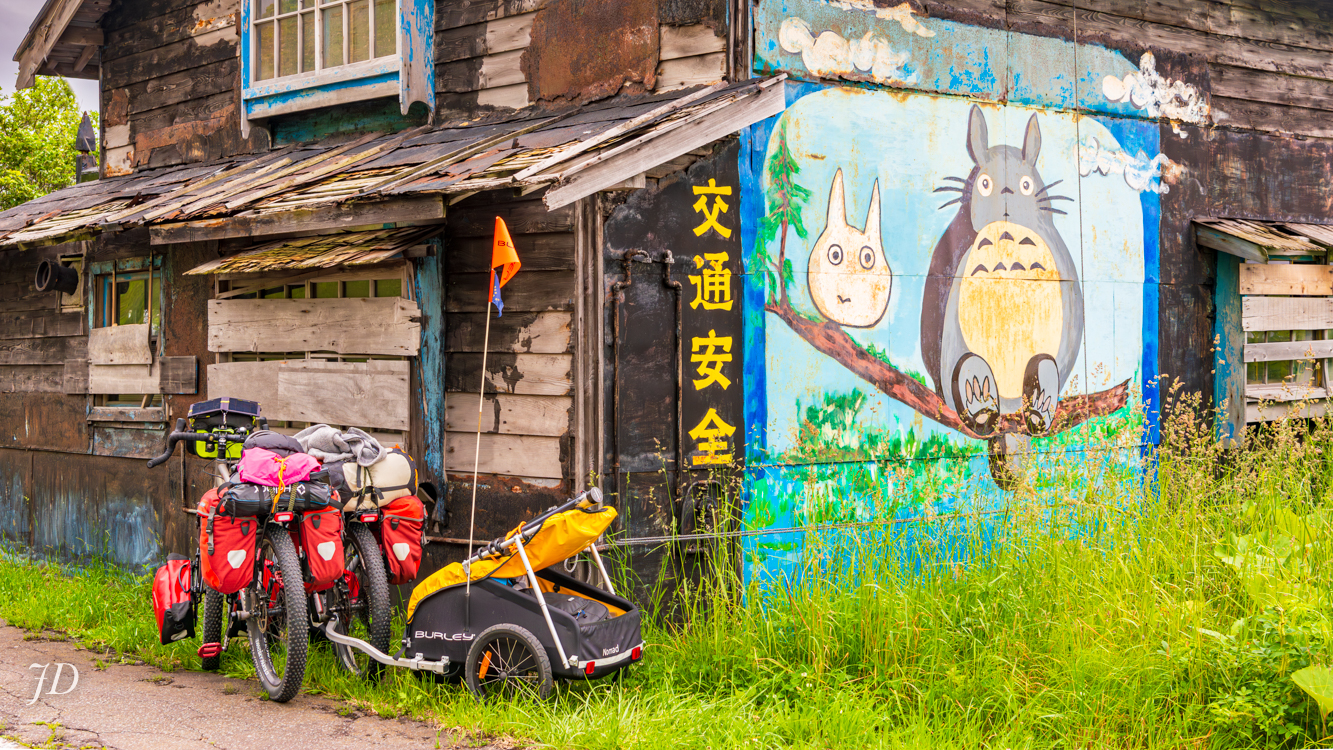
The Land of Totoro

Totoro Summer
Rishiri Island, Hokkaido, Japan, June 29, 2018

Rishiri-to (Rishiri Island), was one of four small islands we ferried to during our Hokkaido trek. Each of these islands offered beautiful, inexpensive campgrounds, and except for one night, we had the grounds to ourselves. One of my personal objectives during the trek was to have Babra experience authentic Japanese tempura. In a small shop run by an elderly couple on Rishiri-to, we found The Best fare of that kind I’ve ever had. 凡天 (Bonten) may or may not still exist as we found it six years ago; the couple was advanced in years, the shop was small, unassuming and might easily be overlooked. But among other dishes we sampled was tempura uni – sea urchin battered and fried to perfection tempura-style. Like the other three islands we visited, a road lacing along the coastline made bicycling a complete circumference (30-some miles in the case of Rishiri) enjoyable. Lots of birds, flowers, fresh air… and a couple of Totoro sightings!

Teuri Campground… and a note on AI Lens Blur

Thursday Morning Coffee Bar, Teuri Island Campground
Teuri Island, Hokkaido Japan, June 21, 2018

Clean restrooms close by (to answer the first question on the minds of most casual campers), good clean drinking water, quiet, and the entire grounds to ourselves. I don’t imagine that the camping situation has changed much since we visited Hokkaido in 2018. Traveling to Teuri with our bicycles was easy via the ferry from Haboro on Hokkaido’s west coast. We only spent two days on Teuri, but agreed we could easily have enjoyed a week on this small, bird-rich island.

Scrolling down panels in lightroom as I brought up the above photograph, I decided to give a relatively new feature a try: Lens Blur. With a single click, this AI-driven feature isolated what it interpreted to be the subject and foreground and then blurred (decreased the clarity) of the background. It worked well – which is to say, I liked the result.

To be sure, a more competent photographer equipped with the right lens could easily have achieved similar results in-camera. But six years ago when I captured this image, I was a less competent photographer. Less competent not only from a technical standpoint, but also my eye was less well developed, and so I didn’t always appreciate the pleasing effect a bokehed background could add to a photograph.

While I could have used masks and clarity sliders to isolate the subject and achieve the same effect, this Lens Blur feature significantly speeded up the process. So…

I might have more to say about AI technology in future posts. It’s here, part of our world now. Lots to think about. JD

Home with the Catch: Rhinoceros Auklet

Rhinoceros Auklet returning at Dusk with a Catch of Sand Lances and Squid
The grayish-white protuberance on the bill the horn that inspires the Rhinoceros Auklet’s name – is fluorescent and thus highly visible to their fellows when diving for fish or flying in dim light.
Teuri Island, Hokkaido, Japan, June 19, 2018

You might encounter this puffin relative just about anywhere along North America’s Pacific coastline, and in fact there are breeding populations scattered from Canada through Alaska’s Aleutian Islands. But perhaps the best place to see Rhinoceros Auklets is on Terui Island off the west coast of Hokkaido where they gather in the hundreds of thousands to nest – the largest Rhinoceros Auklet breeding colony in the world.

The northwest cliffs of Teuri are pockmarked with burrows which the auklets have dug deep into the sandy soil to keep their eggs and chicks safe from gulls and other predators. During the day, the parents leave their chicks behind as they venture out to sea where they dive for food – primarily Sand Lances and squid. As twilight gathers, the adult auklets return to home, somehow sorting out their burrows from among the tens of thousands of similar tunnels. Gulls await the returning auklets, keen on stealing an easy meal. This is an example of why for many species it is so important that their numbers remain vast. Were only a few auklets to return, they’d each make an easy target for the waiting gulls. But with hundreds of thousands flying in, the relatively few gulls are overwhelmed, and although the gulls manage to take a few meals, most of the auklets make it safely to their burrows where hungry chicks are waiting.

On Terui Island, guides are available to take birders out to the nesting site to observe the spectacle of returning auklets. Along a pathway, a few low lights allow for a good view of the birds as they scurry through low, dense vegetation. Some of the auklets will be quite close, but in order to get good photographs a fast lens and a camera capable of handling high ISO values is necessary as using additional lighting is not permitted (and would be wrong, even it were). You’ll be hand-holding and so you have to hope you catch one standing still to momentarily collect its thoughts, as in the above photograph. JD