Wild Trout and Salmon Make a Landscape More Beautiful: 10 Reasons We Use Our Alaska Permanent Fund Dividend to Support Trout Unlimited

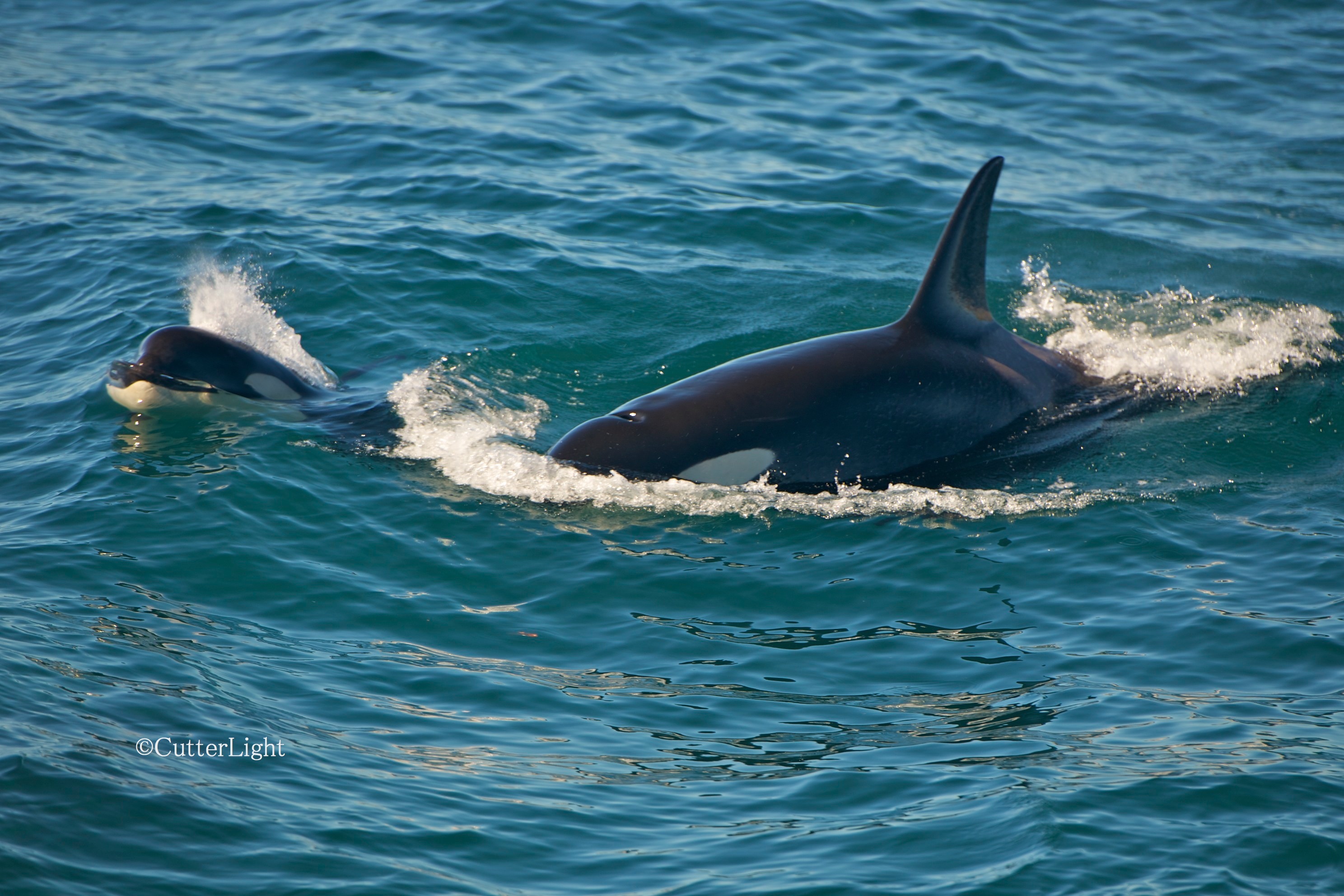
orca baby and mother n

Reason #1: Because baby orcas need milk, and this mother needs a healthy diet of wild salmon to produce that milk. (Orca mother and offspring, Gulf of Alaska)

monica at samon creek n

Reason #2: Because Monica’s pregnant and eating for three. (Brown bear affectionately named Monica by local park rangers, Salmon Creek, Hyder, Alaska)

currants wild n

Reason #3: Because the ocean is full of nutrients which salmon embody as they return to their natal rivers and streams, and salmon forests thrive on salmon fertilizer courtesy of all the bears, eagles, mink, crows, ravens, otters, foxes and other animals that eat salmon. (Wild currants, Ptarmigan Creek, Kenai Peninsula, Alaska)

merganser common

.merganser chicks swimming clear water n

.

.

.

Reason #4: Because this merganser needs to find fresh salmon eggs to keep her brood well fed and growing. (Common mergansers, Salmon Creek, Hyder, Alaska)

camp meal on Deschutes n

Reason # 5: Because a meal cooked under starlight after a day of fishing with your best friend tastes better than that same meal would anywhere else. (Tumalo State Park, Deschutes River, central Oregon)

Turkeys along the American River - Copy (3) - Version 2 n

Reason #6: Because what’s good for salmon and trout rivers is also good for so many of the other things in life we love. (Wild turkeys, American River, Sacramento, California)

first king barbra n

Reason #7: Because farmed salmon can’t put a smile like that on a friend’s face. (Barbra Donachy, first king salmon, Resurrection Bay, Seward, Alaska)

Sea Lions at Bodega Bay n

Reason #8: Because we don’t want to live in a world where biodiversity is limited to what can be grown on a farm, raised in a pen, or crammed onto a feedlot. (Sea lions, California North Coast, Bodega Bay, California)

maia on deschutes n

Reason #9: Because girls who grow up fishing with their dads…

Maia with nice silver n

…become women who fish with their dads. (Above: Maia Donachy drifting an elk hair caddis in the Deschutes Canyon, central Oregon. Below: Maia with a hoochie-caught silver salmon gorged with herring, Cape Resurrection, Alaska)

And reason #10: Because salmon make a landscape more beautiful.

red salmon spawning w tail up n

red salmon spawning under water n

.

.

.

.

.

chum salmon on colorful streambed n

Top photos: spawning sockeye salmon. Bottom photo: spawning chum salmon.

About Trout Unlimited: For 54 years, TU has been a leader in ensuring that we have cold, clean rivers and streams for generations to come. From Northern California to Alaska’s Tongass Forest, from Bristol Bay to the Appalachian Mountains, TU has been instrumental in getting  dams removed from rivers where they do more harm than good, keeping mining and drilling out of our most fragile ecosystems, and protecting trout and salmon forests. At the same time, TU has been dedicated to educating and involving the next generation of environmental stewards – our children and grandchildren. As illustrated above, TU’s efforts benefit much more than trout and salmon. Click here to find out how you can become a member: Trout Unlimited.

Ghost Trees and Ghost Birds: Video and a Poem

At some point during my youth in western Pennsylvania, I read about a magnificent bird – the ivory bill woodpecker, the Lord God Bird. I wanted badly to see one and I knew that my dad – a naturalist – would know where to look. “They’re gone,” he said. I looked at him quizzically. “They’re extinct. They need big, old forests, and the big, old forests have all been cut down.” My dad was right. You should know that going into this film – a feature-length documentary that is powerful and sad and very much worth seeing.

.

Ghosts of Trees, Ghosts of Birds

People imagine they see them still,

ivory bills,

in remnant stands of virgin forests

too small to sustain these great birds.

In that way God Lord Birds are everywhere –

an image in burnt toast, a shadow pulling itself

into a triangular head,

a flash of red

as the late sun slants through the canopy,

or a fractured rock on a hillside gathering the feathered light

and darkness like a black and white diamond on a water oak trunk.

Ghosts of trees, ghosts of birds

Their nesting holes,

five inches across, 50 feet up –

hewn into hardwood with bone-chisel bill –

gone, too,

vanished with the ancient forests

into the humid air

above the endless spread of soy bean fields

Ghosts of trees, ghosts of birds

And so we pause

in the late morning

and set our paddles across the canoe’s gunwales

amidst the cypress knees, black gum and snags

as the mist lifts from this swamp

far enough away from all that

that it could be

the last place on earth

these birds exist

and strain our ears

and listen for double knocks

that rose and died 60 years ago.

Farmed Atlantic Salmon: The Deadliest Catch

If you believe that farmed salmon are part of a solution, to anything, we hope you’ll watch Salmon Confidential. If you believe farmed salmon are a healthy food choice, we hope you’ll watch this video.

The setting is British Columbia, Canada. The protagonists are wild salmon, river keepers, and scientists. The film is a fast-paced hour that will leave anyone who watches it and who cares about the food they eat, about our planet’s wild places, and about government transparency and its proper role in mega-farming of all descriptions with serious questions.

“…and the kid looks at you and says, how could there have been thousands of salmon here, you’re just an old man exaggerating. And then I have to correct him, not thousands, tens of thousands.” Russell Chatham in Rivers of a Lost Coast talking about one small west coast river