Harbor Seals on Lake Ice Chignik Lake, Alaska, February 3, 2017
Various sources report that in the Northern Hemisphere, there are only five populations of strictly freshwater seals. These rarities are found in Lake Baikal and Lake Lagoda in Russia, Lake Saimaa in Finland, and Lac de Loups in Canada. Alaska’s Lake Iliamna also has a population of purely lacustrine seals.
Although the Harbor Seals of Chignik Lake have access to the ocean and travel into the salt water environment of the Alaska Gulf, they are commonly encountered in any month in the freshwater portions of the Chignik Drainage. Occasionally hunted for their oil by locals, harassed for their habit of poaching salmon from fishing nets and, particularly when hauled out like this ever wary of dogs and wolves, the Chignik’s seals tend to be rather shy. However, I’ve counted as many as a dozen hauled out on lake ice, and throughout the open water season on any given day you’re likely to see a seal or three cautiously pop their heads above water for a look around. In another photo in this series, there were nine seals. The light was a better in this shot, where eight are present. That’s a Common Goldeneye duck swimming in open water just in front of the arabesquing seal.
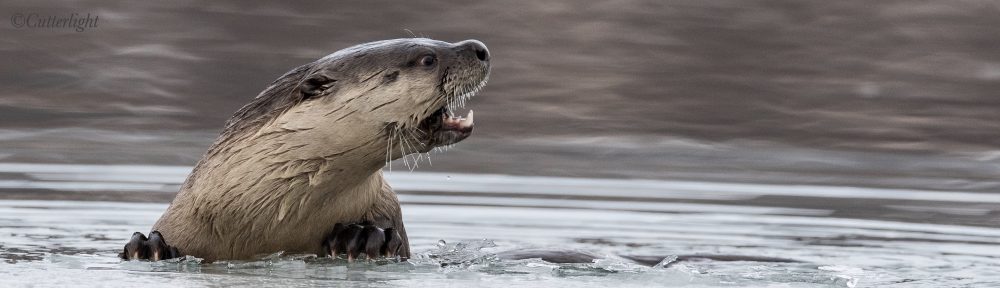
Breakfast at The LakeOther photos show that this River Otter’s right canine is partially broken off, but overall this specimen is in prime condition and perhaps the best fisherman of his or her tribe. Lovely evening light coming in from the left really lit up the fins on this Starry Flounder. Chignik Lake, February 2, 2017
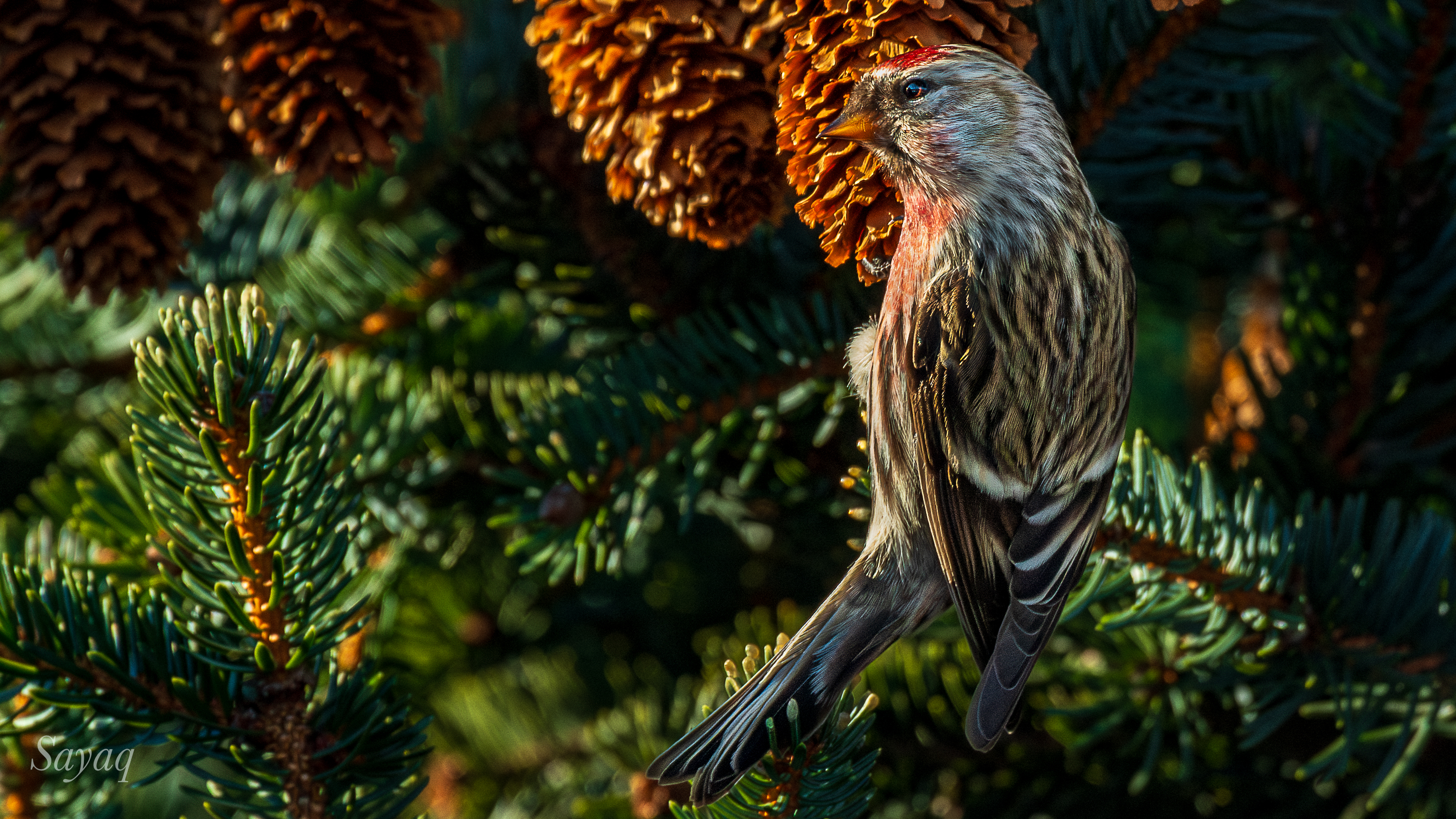
Common Redpoll, Sitka Spruce Grove Chignik Lake, February 3, 2017
Up and down Southwest Alaska’s Alaska Peninsula, Redpolls, Siskins, Crossbills and Grosbeaks – all members of the finch tribe – have typically been marked as uncommon, rare or absent, breeding in small numbers here and there but generally not species one expects to encounter on the windswept peninsula. However, as trees – particularly alders -, have become increasingly abundant in that part of the world, so too have the finches. Seeds of the tiny alder cones are relished by Redpolls; the tender leaf buds by Pine Grosbeaks. But nowhere has the recent emergence of trees more dramatically impacted avian life than in the village of Chignik Lake where 70-some years ago Sitka Spruce trees were transplanted from seedlings gathered on Kodiak Island.
Some of the spruce trees at The Lake now tower over the landscape, producing both shelter and food for a wide variety of birds. The seeds of mature cones draw Pine Siskins, Hoary and Common Redpolls, White-winged and Red Crossbills, Black-capped Chickadees, Black-billed Magpies and several species of sparrow. While they’re still soft and reddish-purple, immature cones are feasted on by Pine Grosbeaks. Meanwhile, the variety of invertebrates that have moved into the little groves of spruce trees provide sustenance for Downy Woodpeckers, Pacific Wrens, Golden-crowned Kinglets and Yellow Warblers. Great Horned Owls roost and nest in the dark shadows of spruce bows and Northern Shrikes, Merlins and an occasional Sharp-shinned Hawk hunt the songbirds attracted to the trees. My guess is that it’s only a matter of time – and not too distant time – before the first Steller’s Jays are reported at The Lake. In fact, based on a description a now deceased resident reported to me, I’m not sure they haven’t already been there.
But here’s a question: Are these trees actually an invasive species… like the Orange Hawkweed that only very recently has begun showing up at The Lake? Or, for that matter, the dandelions which have taken over the school yard (and also, in some years, provide food for the finches as they go to seed)? And what about the above-mentioned alders that are steadily crowding out what remains of the peninsula’s tundra?
For decades, the transplanted Sitka Spruce trees did not propagate themselves in the Chignik Drainage. But about five years ago that began to change when seedlings suddenly began volunteering themselves throughout the village. One might argue that even without human intervention it was only a matter of time before Picea sitchensis made its way down the peninsula. But couldn’t the same be said of the Orange Hawkweed, dandelions and even the Kamchatka Rhododendron that has naturally, over time, found its way to The Lake from its native grounds in far eastern Russia?
Dumping a bucket of carp or pike into a lake where they never before existed is one thing…
On the other extreme are dandelions and hawkweed, which seem to to have devised strategies to show up wherever environmental conditions suit them.
Somewhere in between are a vast array of flora and fauna that – with or without humankind’s assistance – are finding their way into new niches.
So, what do you think? Where is the line between happily-received newcomer and dreaded invader?
The Usual SuspectsRiver Otters on Frozen Chignik Lake. Note the Starry Flounder in the mouth of the otter at the left. The lakes sculpin, stickleback, char, salmon, flounder and an invertebrate – the isopod, Saduria entomon – figure into the diets of Chignik Lake otters. There is a lot of upwelling on the lake – spring water filtered through surrounding hillsides which emerges from the lake bottom. The spring water’s relatively stable temperature makes it relatively warm in winter, thus causing openings in the ice which the otters use to dive for food. February 2, 2017
Red Foxes tussle, nip and bark at each other. A Brown Bear might literally rip the face off a rival in a dispute over fishing and mating rights. Even cute little Black-capped Chickadees and Redpolls sometimes aggressively gape at each other and might engage in a quick peck to establish pecking order.
I suppose there are times when River Otters squabble, but in years of observing them at the lake, we never saw anything more than a look of envy cast from one otter toward another. (The coveting occurred over an exceptionally toothsome flounder one lucky fellow came up with.) Mostly, otters are the social goofballs of the four-legged world – rolling in snow, piling atop each other, sliding over ice and snow on sleek bellies, crowding together four-heads-at-a-time popping up from a hole in the ice, chasing each other in jaunty little parades as they scoot up and down the waterway. Maybe it was the Chignik’s abundant supply of fish that allowed for such conviviality. Whatever the reason, it was our observation that these inquisitive, cheerful beings simply like each other. And we think there’s a lesson in that for the rest of us.
A Portrait of KateIn truth, I do not know whether the regal fox we called Kate was male or female. One winter evening while I was photographing birds at the Spruce Grove she came by, and for a moment presented herself in the most beautiful chiaroscuro lighting, the last evening light breaking through spruce boughs.
FrostOur first year at The Lake, we got to know seven different Red Foxes well enough to name them. Each had different facial features and individual personalities. Here is Frost, named for her whitish face and brightness of the white parts of her coat and tail. It’s often difficult to distinguish sexes in foxes, especially during the winter season when their coats are full, but we referred to Frost as “she.” Of the seven foxes, she was the smallest, perhaps in her first year, and the most likely to bark at other foxes, or for attention from us. I made this portrait a little after sunset on December 31, 2016.
With a mighty roar this young bull sea lion bellows out that this rock in Resurrection Bay near Seward, Alaska is his rock. Nestled between snow-capped mountains and hosting an abundance of otters, porpoises, seals and sea lions, sea birds by the tens of thousands and with whales almost a given, the bay offers lots to look at.
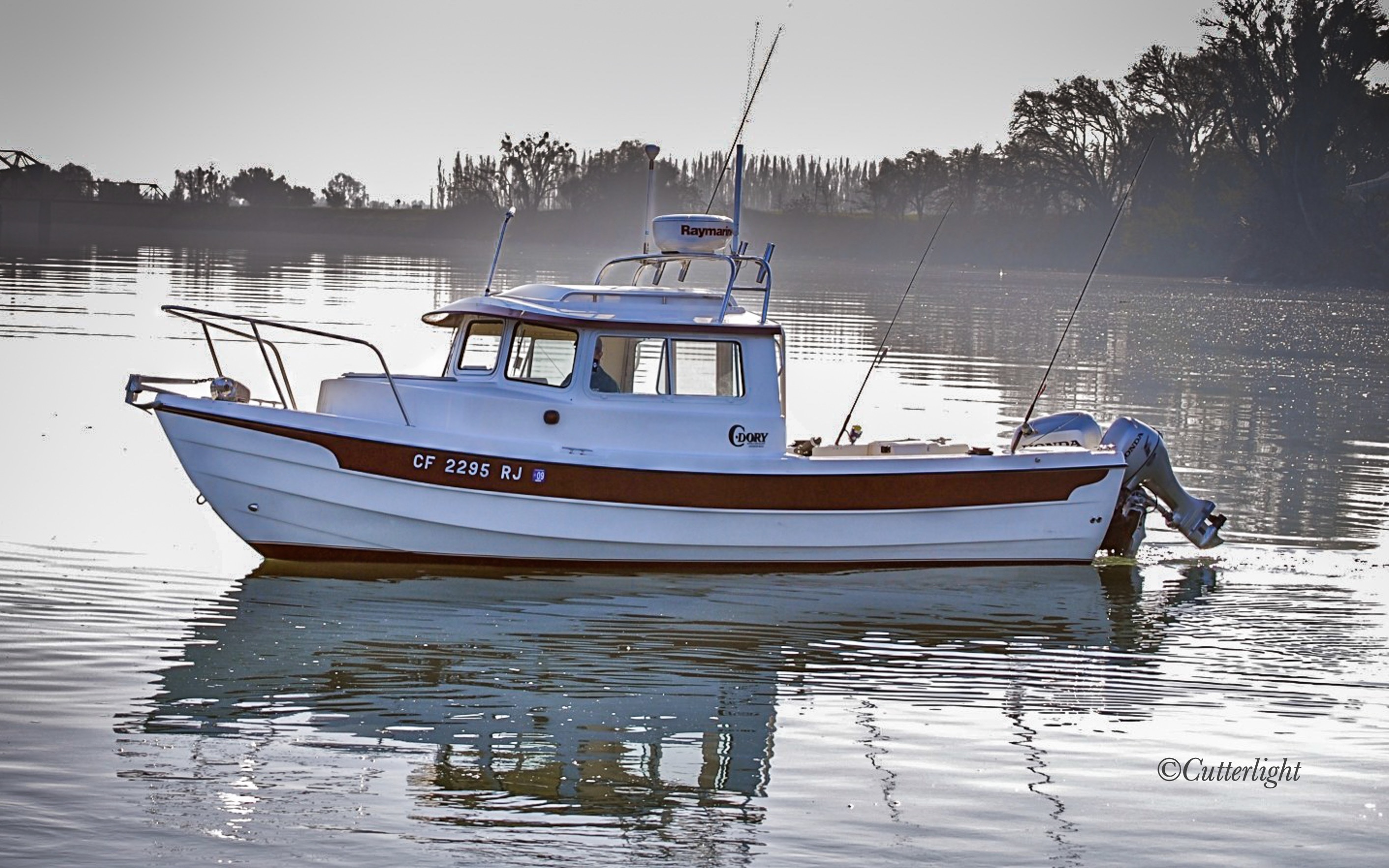
A morning filled with sunshine, calm seas and friends visiting from out of town were inspiration to take our C-Dory out for a lap around Resurrection Bay.
Sea otters like this curious spy-hopper are abundant along the shoreline. Meanwhile, scan the mountainsides on the east side of the bay for puffy white balls; put binoculars on them and they might become mountain goats.
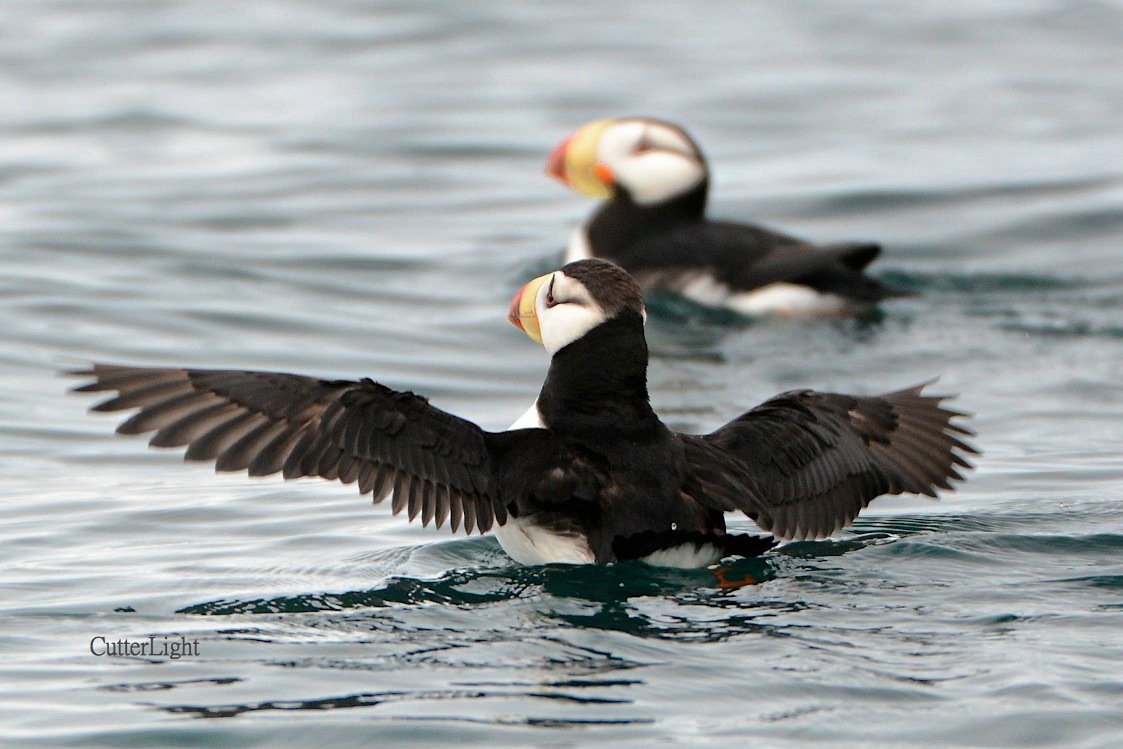
A pair of juvenile sea lions were swimming in the harbor near our boat as we made ready, and almost as soon as we cleared the marina a harbor porpoise arced near our boat. Bald eagles chirped and spiraled in the blue sky overhead, terns and kittiwakes dive-bombed for small fish, and several cormorants, including a crested cormorant, were drying their wings on the remnants of a pier after a morning of fishing. Horned puffins are among the tens of thousands of seabirds that nest in the rocky mountainsides surrounding Resurrection Bay. No cruise is complete without encountering the whales that call the outer parts of the bay and the nearby Alaska Gulf home. This sounding humpback appeared to be feeding on herring. There’s sometimes a fine line between love and aggression. At one point, the smaller sea lion appeared to have its mouth entirely inside the larger one’s. After some barking back and forth and a little more bared-teeth interplay, the larger animal slid into the ice water – perhaps to forage.
Approaching Cape Resurrection by boat, you can smell the rookery well before your eyes pick out individual birds on the whitewashed cliffs. Here, thousands upon thousands of black legged kittiwakes jockey for position as they haphazardly construct precariously perched nests.
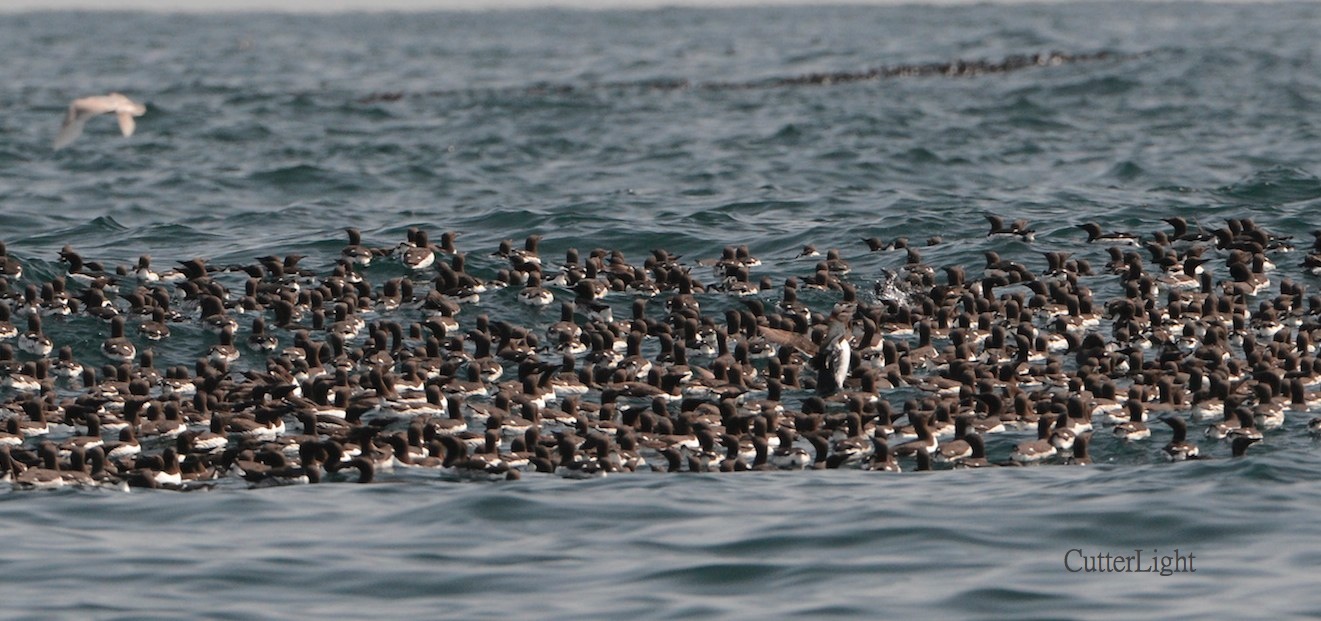
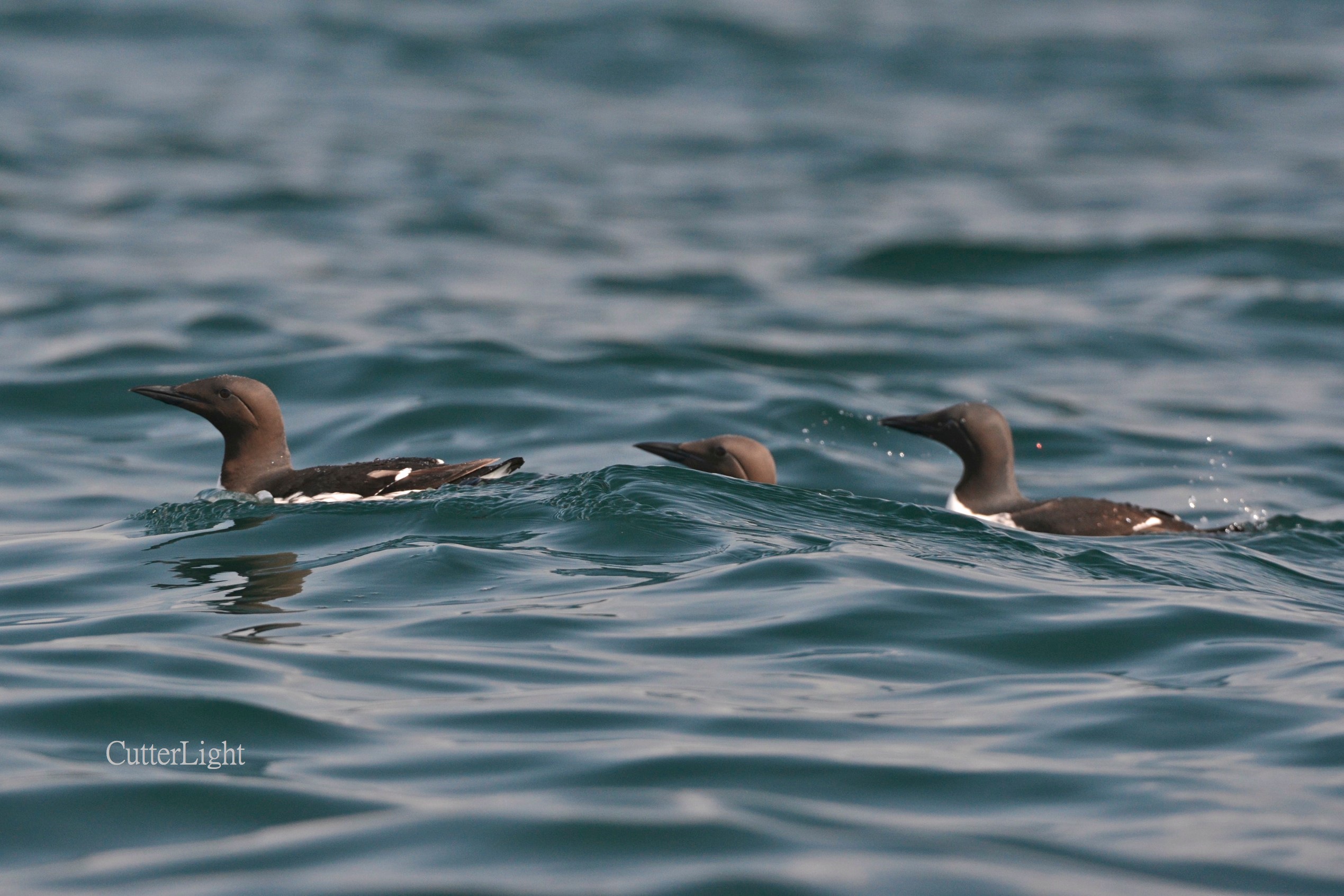
Dense rafts of murres rest near current seams that disorient small fish – the murres’ prey. At times, acres of herring can be seen just below the surface of Resurrection Bay’s waters.
Thick-Billed Murres are so common it can be easy to forget what amazing birds they are. Somewhat stubby-looking on land, they can achieve flight speeds of 75 miles an hour. In water, they transform into sleek acrobats, capable of dives to over 300 feet deep – the length of a football field.
A pair of tufted puffins, golden sunlight illuminating their eponymous feathers, glide through the waters of Resurrection Bay in search of small fish.
Whether life takes you to coastal Alaska or some other shore, we can’t recommend a boat tour of inshore and nearshore waters highly enough. In Seward, local tour boat companies offer daily cruises captained by experienced National Park Service rangers – a not-to-be-missed experience.
The drive from Anchorage to Seward can usually be counted on for wildlife viewing. Grizzly bears, black bears, Dall sheep and moose are all possiblities, and eagles are a given. On our first trip of 2013, we found a young moose grazing on pond weeds and willow buds.
Last year at this time we were shooting with a Nikon D60 and a D90. Our three most frequently used lenses were a Tamaron landscape lens, a Nikon 60 mm prime and a Sigma 50-500. We got some really good photos with this gear, but we were eager to make some upgrades.
Although it’s late May, Alaska’s Kenai Peninsula is still pretty brown and you don’t have to go very high in elevation to find everything covered in snow. But spring is definitely here. Today (May 24), temperatures in Seward broke 60 under cloudless blue skies.
After months of reading and research and lengthy discussions with a new friend who knows way more about this than we do, we purchased a D800, a D4 and several new lenses. Equally important was taking Joel Sartore’s 24-lecture course Fundamentals of Photography, a first-rate DVD course offered through The Great Courses. We had been reading all kinds of articles and books and we subscribe to Outdoor Photographer. We had also taken a few courses at Ritz Camera back when we were living in Sacramento, California. All of this was useful. But none if it provided the learning experience Fundamentals of Photography gave us. Armed with our new gear and committed to faithfully following Joel’s lessons, we could see our skills improving from week to week.
Our usual MO while driving Alaska’s highways and hiking the trails is to have either a landscape lens or a normal lens on one camera body and a larger wildlife lens on the other. We still talk about the time when, new to this part of the world, we saw two magnificent bull moose feeding near each other at a small lake. “I’m sure we’ll see lots of these now that we’re up here,” one of us said as the other kept driving. Needless to say, we’re still looking for another shot like that one. Lesson learned.
Hopefully this summer will be another Alaskan safari – packed with birds, fish, mammals, wildflowers and the kind of scenery that causes one’s jaw to drop and hang.
Stunning in their soft, white coats, Arctic foxes (Vulpes lagopus) are common in this part of Alaska. The size of a small dog and as soft on their feet as a cat, these omnivores forage on whatever is available, from berries to insects to small mammals and birds – and it appears, big, fat marine worms!
In the past few weeks, there have been spawning events on our beaches near Point Hope. A couple of weeks ago, we were hearing about small fish – probably capelin (smelt) – coming ashore with the surf. More recently, we’ve been finding large marine worms on the beach. The size of Ball Park Franks, the appearance of these worms has coincided with egg cases in areas of coarse sand and gravel. In turn, these spawning events have drawn numbers of snowy owls and Arctic foxes looking for easy meals to the point of land west of town.
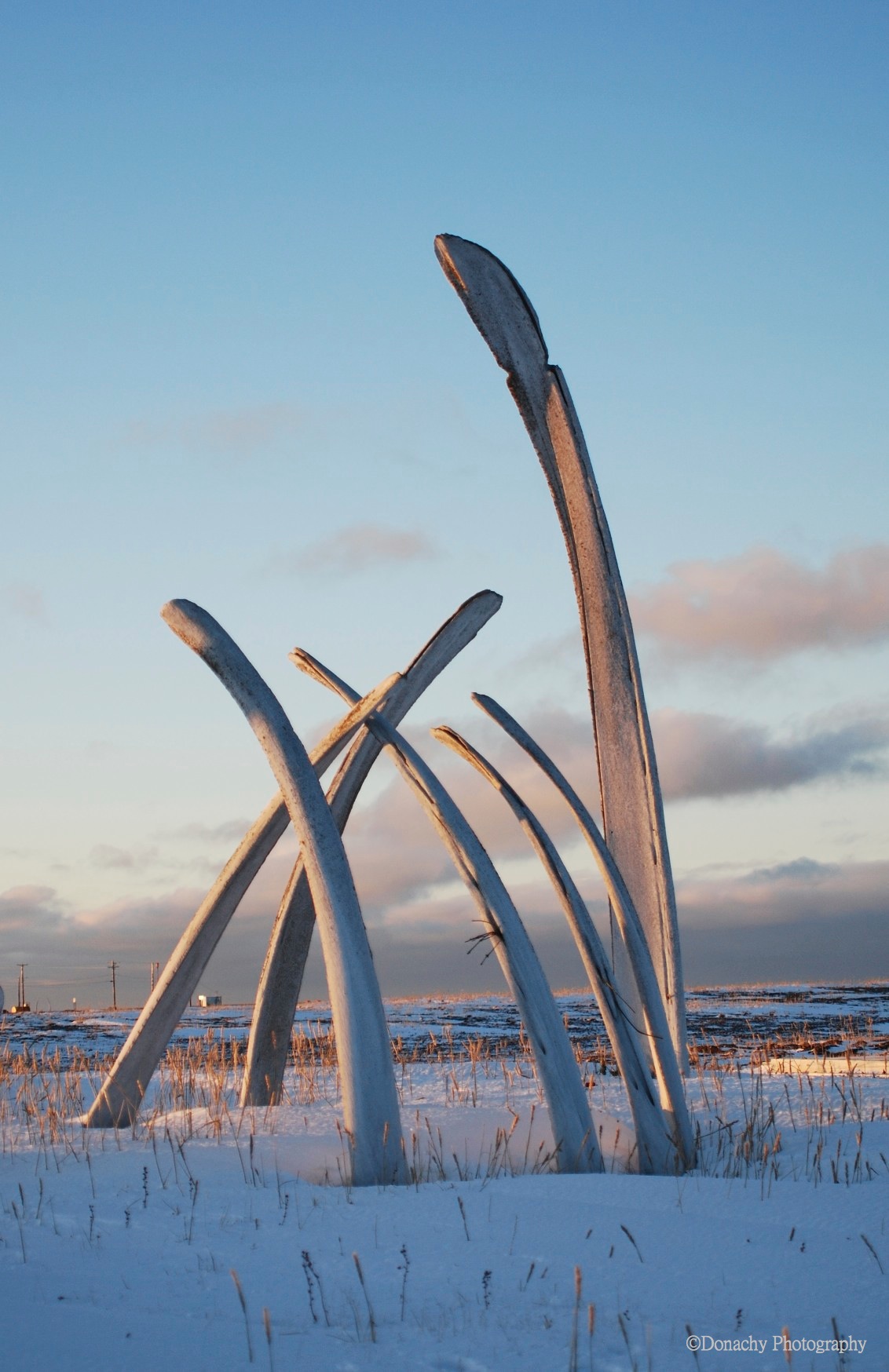
Morning sunlight slants through the jawbones of bowhead whales commingled with crosses at the Tikigaq cemetery in Point Hope, Alaska.
Not so long ago, National Geographic Magazine ran an article about domesticating foxes. Apparently there’s been some success, as breeders in Russia select the most gentle, friendly, trainable and inquisitive offspring generation upon generation. At an average size of six to eight pounds, Arctic foxes would be just the right size to curl up on the sofa for an evening of popcorn and a movie.
Like ribs pushing up from the tundra, these bowhead jawbones mark the resting place of one of Tikigaq’s last shamans.
The diversity – and sheer number – of animals and plants that manage to hack a living out of this cold land amazes us. Far from being the vast, frozen desert the Arctic has often been described as, each season brings with it an astounding number and variety of flora and fauna to the land and sea around Point Hope. Tracks in the snow near our house reveal that we have a weasel or two living beneath our porch!







 The drive from Anchorage to Seward can usually be counted on for wildlife viewing. Grizzly bears, black bears, Dall sheep and moose are all possiblities, and eagles are a given. On our first trip of 2013, we found a young moose grazing on pond weeds and willow buds.


 CutterLight