The Perfect Bow-ties

Freshly-made farfalle pasta, sprinkled with flour to prevent it from sticking, ready for a pot of salty boiling water.

Two months ago, I was going to throw the pasta machine out the window and be done with the whole homemade pasta idea. But those who know me, know I am tenacious (ok, stubborn). With each new attempt at spaghettis, angel hair, fettuccine, lasagna and ravioli I figured out another piece of the puzzle. From the frustrating beginning of sticky or crumbly dough, I pressed on until my fettucine strands no longer stuck together and the lasagna noodles no longer crumbled apart. And yesterday, Jack’s favorite: farfalle! I turned out a double batch cut from lasagne noodles and pinched together in the center to form perfect little bow ties.

Then Jack upped the ante. The farfalle were boiled for three minutes and topped with a mix of sautéed onions, garlic and pine nuts and served with rockfish a la meunière. Oven-roasted brussels sprouts, orange slices and steaming cups of honeybush tea complimented the main entrée. Cloudberry sorbet made from berries we’d picked in late summer ended the meal perfectly.

Rugelach with Cranberries and Pecans

I’ve always enjoyed rugelach. After discovering that the primary ingredients in the dough are butter and cream cheese, it is obvious why these cookies are so good. I found several recipes that had the same premise for the dough and a variety of different fillings. Armed with different recipes and ingredients that were in my pantry, I created a version of rugelach with ingredients we’d brought with us to the bush.  It came out delicious! The filling is a fruity complement to the soft and flaky crust.

Arctic Rugelach

Ingredients:

Dough

  • 1 cup unsalted butter, softened
  • 1 (8 ounce) package cream cheese, softened
  • 1/4 cup white sugar
  • 1 teaspoon vanilla extract
  • 2 cups all-purpose flour
  • 1/4 teaspoon salt
Filling:
  • 1/2 cup fruit preserves (I used apricot, peach, and mango preserves)
  • 1/4 cup packed light brown sugar
  • 1/2 teaspoon ground cinnamon
  • 3/4 cup chopped dried Craisins
  • 1 cup finely chopped pecans
  • 6 tablespoons white sugar
Coating (applied just prior to baking):
  • whites from two eggs
  • 2 tablespoons white sugar
  • 1 teaspoon ground cinnamon
 Directions
  1. In a medium bowl, cream together the butter and cream cheese. Beat in 1/4 cup of sugar and the vanilla extract. Combine the flour and salt; stir until well blended. Turn out dough onto a piece of plastic wrap and press together to form a ball. Divide the ball into 4 portions. Shape each portion into a flat rectangle, so it is ready to roll after being chilled. Wrap each rectangle in plastic and refrigerate for at least 2 hours or overnight.
  2. Preheat the oven to 350 degrees F (175 degrees C). In a small bowl, toss together the brown sugar, 6 tablespoons white sugar, craisins and finely chopped pecans. Set aside.
  3. Take the 2 tablespoons white sugar and mix with the one teaspoon cinnamon in a small bowl. Set aside. This will be used to sprinkle over the top of the cookies before baking.
  4. Roll out each portion of dough into a rectangle about 1/8 inch thick. Spread about 2 tablespoons of the fruit preserves over each rectangle, then sprinkle each one with some of the Craisins & nut mixture. Roll up the rectangle, jellyroll-style, so you have a long log shape. Brush log with egg whites and generously sprinkle with the sugar & cinnamon mixture. Using a knife, cut each log into 12 pieces and set on parchment-lined or greased baking sheet.
  5. Bake for 16 to 18 minutes at 350 degrees F in the preheated oven, until golden. Rotate the cookie sheet halfway through to ensure even baking.
  6. Remove cookies from baking sheet to cool on wire racks.
  7. As tempting as they will be hot out of the oven, let the cookies cool before you enjoy them. They’re better cool.

Yields: 48 cookies

Mailanderli (Swiss Butter Cookies)

Growing up, my favorite Christmas cookie was Mailanderli. This Swiss recipe yields buttery, crunchy golden cookies with a citrus essence. As a kid, I loved making the dough and cutting shapes with shiny metal cutters. After the cookies were baked, we kept them in a brightly colored Christmas tin. I remember eating them by the dozen. Christmas is here again and this year I was inspired to bring this tradition back into my own home.

Mailanderli

Ingredients

  • 4 eggs
  • 1 1/4 cups white sugar
  • 1 1/8 cups butter, melted and cooled to lukewarm
  • 1 pinch salt
  • 4 cups all purpose flour
  • 1 1/2 teaspoons grated orange (or lemon) zest
  • 2 egg yolks, beaten

Directions

  1. Beat the two egg yolks and set aside. These will be used to brush to the tops of the cookies later.
  2. Whisk eggs in a large bowl. Blend in sugar and beat until mixture is thick and pale, about 10 minutes. Mix in the melted butter and salt. Gradually fold in the flour and orange zest. Cover and refrigerate for at least one hour or, preferably, overnight.
  3. Preheat oven to 325 degrees F (165 degrees C). Lightly grease cookie sheet.
  4. On a floured surface, roll out dough to 1/4 inch thickness. Cut into desired shapes using cookie cutters. Place cookies on greased cookie sheet and brush with beaten egg yolks.
  5. Bake in preheated oven until golden at the edges, 15 to 20 minutes. Cool cookies on racks.
Yields about 50 cookies

This recipe was slightly modified from Cindy’s. See original recipe at: http://allrecipes.com/recipe/mailaenderli/detail.aspx

Wild Alaskan Salmon Lox

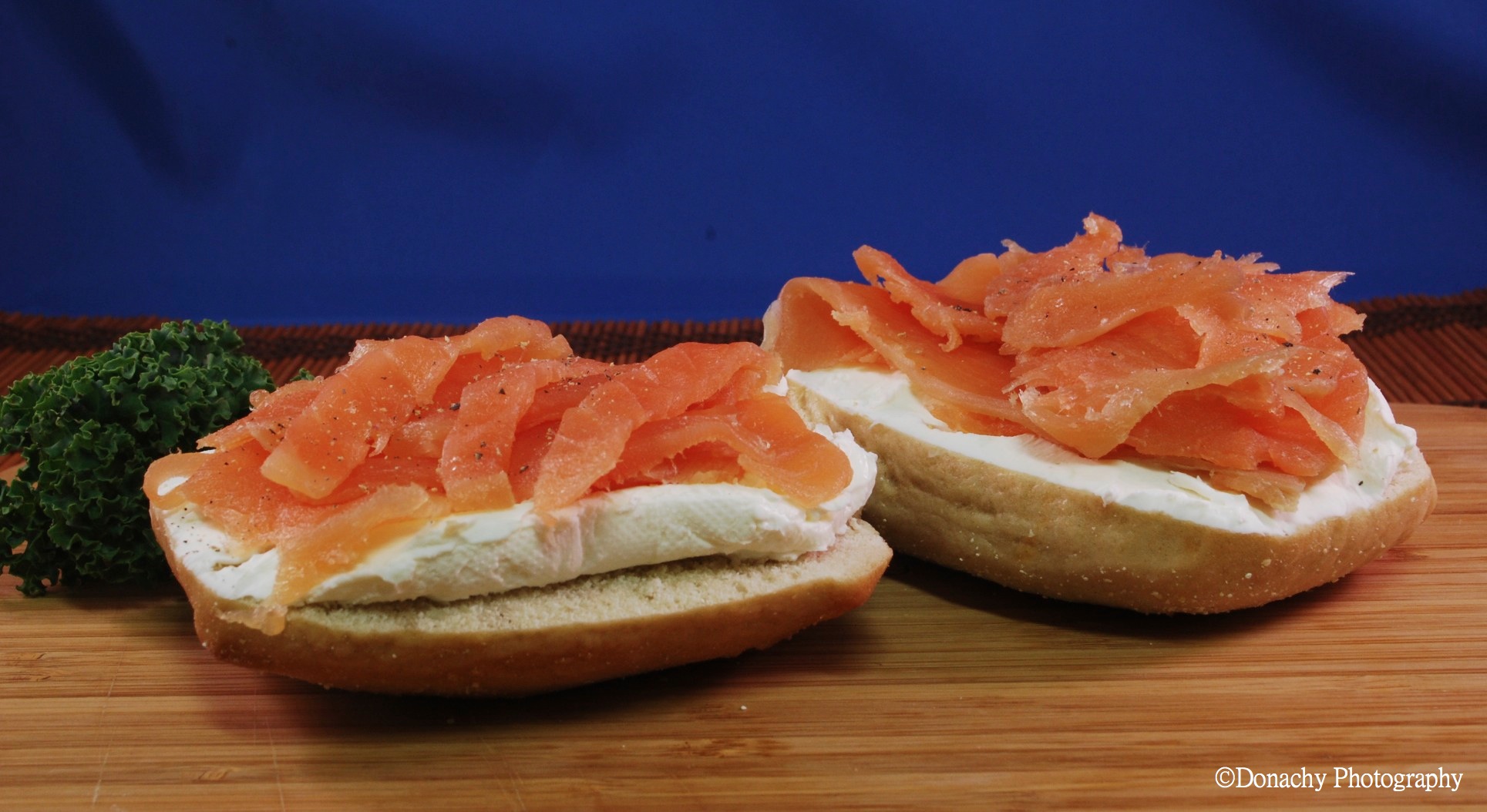
Something like necessity inspired us to try our hand at making lox, although “necessity” might be a bit strong. On the other hand, there is no kosher deli in Point Hope… so where to obtain a freshly baked bagel topped with cream cheese and deliciously salty cold-cured salmon? Growing up, it was always a treat on those rare occasions we could afford it. Someone had to know how to make it at home, right? To the internet!

After perusing foodie blogs, recipe pages and YouTube videos, we were ready to give it a try. Jack put together a blend of natural coarse sea salt, smoked sea salt, brown sugar and cracked pepper which we then packed onto the fillets before pressing them together and placing them in the refrigerator. At the allotted five days of curing time, we were thrilled  at how our first lox came out. Cut thin, the beautifully translucent slices of wild salmon were appropriately dense, salty and imbued with the freshness of the Alaskan sea. Although Internet recipes cautioned against using frozen fish, ours came out nicely, probably because our fish had been kept on ice before being filleted and then vacuum packed and flash-frozen shortly thereafter. In that regard, our frozen fish is fresher than most “fresh” fish.

We made cream-cheese-and-lox-roll-ups for a party (they vanished in no time),  scrambled some into eggs, and have been enjoying it on crackers and cream cheese. As satisfying as each of these dishes have been, we both craved bagels for our new delicacy.

I accepted the mission and searched out different recipes and techniques. I started the dough in the bread machine–a wonderful tool for making sure the temperature is right–and after shaping the dough into bagels I finished them on the stove and in the oven. The first batch turned out eight beautiful bagels–golden brown on the outside, agreeably chewy, and the perfect texture on the inside.

The thing we like most about living off the beaten path is the time we have (and take) to do things we would have been unlikely to do in our previous lifestyle. There’s a sense of accomplishment that has become a regular part of our lives… lox and bagels…from scratch! When it comes time to move back to a road system–whether we end up on the Kenai Peninsula, Oregon, Washington, California, Belize or some place we haven’t fully considered yet–, I can’t imagine that we will go back to buying the things we’ve learned to make. We agree we don’t ever again want to be so busy that we don’t have time to make things ourselves.

P.S. In an ironic turn of events, our little Native Store in Point Hope recently got lox! I didn’t even bother to look at the price. I did see people go in with gold bars and polar bear furs to trade. Ha ha.

A Perfect Night

Full moon over Prince William Sound near Whittier, Alaska

Summer days in Alaska are long–near midsummer, they are nearly endless. In our home states of California and Pennsylvania, fall is the season we like best. Up here, it’s summer.

We were camping on our boat in the marina at Whittier one summer in early August. The fishing had been only so-so, but with massive glaciers spilling into protected bays and rafts of sea otters in the nearby waters, the nature viewing was spectacular. On our last day, at about 6:00 p.m. with the sun out and clear skies above, Jack and I decided to take the C-Dory out for an evening cruise. We motored out as the last of the boats of fishermen and sightseers were heading in. We didn’t really have a plan. We just wanted to be out on the water.

Once we got a few miles beyond the harbor, we found a spot to fish and so we cut the motor. There was not another boat in sight. It was as if no one else in the world existed. Surrounded by mountain peaks dusted in the remainder of last winter’s snow, the sea was glassy-calm. Gillie barely rocked as we drifted silently with the current. The slowly setting sun, lit up the few low clouds. As the sun slipped below the horizon, the full moon glowed against a dark blue sky.

We began to pick up fish here and there–mostly small lingcod. The moon climbed higher in the sky and shone brighter and brighter, it’s reflection dancing across the water as our own movements caused the boat to rock. At times we broke the quiet with talk about different possibilities for the future. But for long stretches we were quiet, lost in our own thoughts, washed in this phenomenal night.

The shaker lings continued to periodically attack our jigs, and then Jack connected with something that fought differently. He worked the fish up from 160 feet down and I did net duties on a beautiful yelloweye rock fish. With a fish in the cooler that would provide for a gourmet breakfast the following morning, it was a good place to call it a night. I started up the engine and guided us home across the moonlit water.

A Point Hope Thanksgiving or Do You Have Turkeys North of the Arctic Circle?

Translucent pink Muktuk (whale skin and blubber), whale meat, and whole Arctic grayling were passed out to guests at the Point Hope Thanksgiving feast.

Like Shishmaref, the residence of Point Hope generally don’t have big family Thanksgiving celebrations at home. It is a community event. Turkeys and hams flood into the village in preparation for the big feast. (Yes, we do get turkeys north of the Arctic Circle.) Anyone who volunteered an oven received either a turkey or a ham to prepare. We received a 22 pound ham which we cooked and delivered to the school gym. Large quantities of traditional dishes such as stuffing, candied yams, corn and cranberry sauce were brought in to the school pot-luck style. By 4 p.m., volunteers had carved turkeys and hams and all the side dishes were readied to be served.

After key community members gave speeches expressing thanks, the village was ready to share the meal. The first course? Muktuk (the layer of whale skin attached to the pink blubber shown in the above photo) and chunks of frozen whale meat. Many people brought out sharp knives and small containers of seasoned salt and immediately carved into their frozen chunks of whale. Others, like us, had brought Ziplock bags in order to save the pieces to eat later at home. Both muktuk and whale meat are traditionally eaten raw, boiled, or fried. We talked to the owner of the local restaurant who suggested slow cooking the whale meat in a stew. Sounds like a good idea. Tune in later for that culinary feat. The community also shared whole frozen grayling, dolly varden, and big chunks of salmon. Of course, the elders were served first, but there was plenty to go around to everyone.

The next course featured platefuls of traditional Thanksgiving fare. Seated around the perimeter of the school gym on the floor and in chairs brought from home families and friends engaged in conversations. There were probably 500 people altogether. At one end of the gym, tables covered with huge sheet cakes were waiting to be cut and served for dessert.

Obviously, Thanksgiving is not a traditional Inupiat celebration. In our readings of Alaska history and in conversations with history buffs, we’ve learned that the Inupiat people had celebrations and traditions similar to many of the traditions that the missionaries introduced several decades ago. The similarities made it easy for the Inupiat to adopt new holidays. For example, the divvying up of whale meat was already a fall tradition. Folding Thanksgiving into this tradition was logical.

Roasted Garlic and Squash Gnocchi

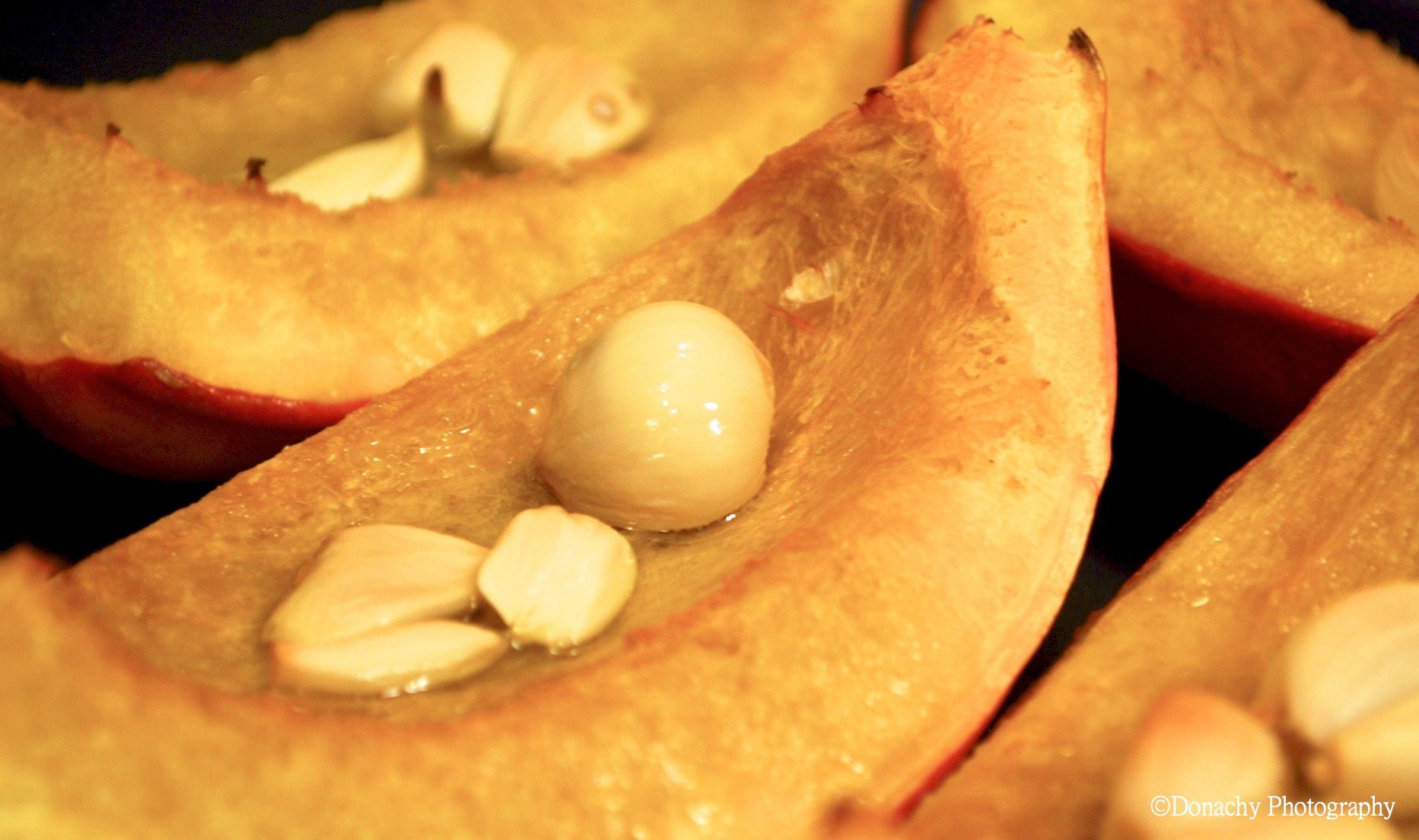
 Acorn squash and garlic, roasted and ready to become part of a batch of gnocchi.

This was my first attempt at homemade gnocchi, a form of pasta I really enjoy. The recipe I came up with today wasn’t difficult, but it was somewhat time consuming. I oven-roasted the acorn squash and the garlic for about 45 minutes. I then squeezed the soft, roasted contents out of each garlic skin (not the husks, but the skin itself) and mashed the garlic together with the squash once it was cool enough to handle. Then, I rolled the gnocchi dough into long, thin logs and chopped them into bite-sized pieces. I used a fork to make the traditional marks on the gnocchi–these slight indentations help sauce stick to the pasta.

Roasted Garlic and Acorn Squash Gnocchi

one acorn squash

one head of garlic

enough olive oil to coat a baking sheet with additional olive oil brushed onto the squash

3 cups all purpose flour (and more to coat rolling surface)

one egg

dash salt

Preheat oven to 350 degrees. Coat baking sheet with olive oil. Cut squash in half and remove seeds. Cut squash halves into 3 or 4 pieces. Brush olive oil onto squash pieces and place them skin side down. Place garlic cloves onto squash. Bake for 40 minutes or until squash and garlic are soft (a fork should go easily through the squash). Remove from oven and allow to cool.

When cooled, squeeze roasted garlic out of its skin into a bowl. Scoop soft squash meat out of its skin and place into same bowl. Mix thoroughly. Then mix in flour, egg and salt. You may need to add in more flour if mixture is too sticky. Dough should form into a nice ball.

Slice off an inch or so of the ball and roll it with the palm of your hands into a long “worm” no more than an inch in diameter. Make sure your surface is well floured. Cut off  pieces that are a little smaller than bite-sized. If you would like to make gnocchi with the fork indents, go to youtube and check out one of the videos. As they say, a picture is worth a thousand words. Once the gnocchi are formed, cook them in a pot of boiling water until they float to the top.

Serve with butter or olive oil and parmesan cheese or with a light tomato sauce. The gnocchi can also be fried in olive oil or butter and served with parmesan cheese.

This recipe makes about 200 gnocchi. Extras can be frozen.

C-Dory 22 Angler: A Boat for Alaska

The Gillie: Our 2008 C-Dory 22 Angler taking a cruise on the Sacramento River

“Gillie” is a Scottish term that refers to a fishing or hunting attendant, much like a guide. As such, armed with an excellent electronic fish-finding unit, a dependable 90 hp Honda engine (and an 8 hp kicker), and enough open deck to comfortably fish two or three anglers (four in a pinch), this boat has proved to be a reliable gillie. Barbra and I have spent many nights both on the water and on land snuggly tucked away in the cuddy cabin, and the dinette table in the pilot house is just big enough for the two of us to enjoy a meal. These boats are capable of storing an amazing amount of gear, the hull is tough, and on flat water loaded down with fishing gear and four medium-sized adults, it tops out around 25 knots (about 29 mph). Inside the pilot house with the Alaskan bulkhead door closed, making long runs is both warm and quiet. The 90 hp Honda trolls beautifully when we’re running rigs for salmon, and the shallow draft (well under two feet) allows us to get in the rocks in pursuit of species close to shore.

Ask a typical boat owner what the best boat is, and they’re likely to tell you, “The one I own right now.” That’s how we feel about our C-Dory. With a beam of only 7’9″, it’s a breeze to tow, yet it’s enough boat to feel safe on fairly big water–from the California coast to the ocean bays of Alaska. You’ve probably heard the quip that goes, “The two happiest days in a boater’s life are the day he buys the boat and the day he sells it.” Not with a C-Dory. The happiest days are the ones we have it on the water.

Warm Memories of Savory Stuffed Cabbages

Food memories have a huge positive impact on people’s lives. I once wrote a ten page essay titled “Soul Food”  to challenge a college English class. It was an analysis of foods from my past and how they have influenced the person I am now. I loved certain dinners my mom made…cheese pies and apple pies, beef burgundy stew over mashed potatoes, raclette. It’s obvious why, during the winter months, this blog turns most of its attention to food.

One of my strongest food memories is of my grandmother’s stuffed cabbages. We didn’t get to see my Nana very much as we lived 3,000 miles away. She would always spend hours in the kitchen, preparing for our visits. Sometimes, when she would visit us, she would cook cabbage rolls at our house. I especially loved the sweetness of the meat enveloped in the slow-cooked cabbage leaves. We asked her for the recipe but for whatever reason she never shared it. Maybe she thought it was her special gift to us to make it, not to teach us how to make it. After she died, I thought I would never taste Nana’s cabbage rolls again.

Several years ago, I bought  a crock pot and an accompanying recipe book. The book was an ordinary crock pot book. I cooked my way through it until I got to the stuffed cabbage recipe. My expectations were low. I was surprised and pleased (surpreased) to taste the results of the recipe which were nearly identical to my Nana’s cabbages!

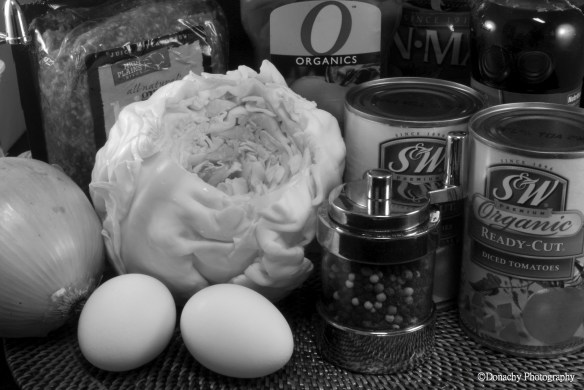
I wound up selling the recipe book when I moved to Alaska. I did keep the one cabbage recipe in the event I wanted to recreate this delicious dish. Turns out at $7 a head, cabbage is not a depression era vegetable in the bush. It is gold…too rich for my blood. As luck would have it, a friend had most of a cabbage head she no longer wanted and traded me for granny smith apples she needed for a pie. Barter is still alive and well in bush Alaska!

From Crock-Pot Specialties

Spicy Cabbage Rolls

6 large cabbage leaves

2 tbsp water

1/4 cup minced onion

1/2 lb. lean ground beef

1 tbsp ketchup

1 small egg, lightly beaten

2 tbsp raw long grain rice

1/2 tsp salt

1/8 tsp pepper

8 oz. stewed tomatoes

2 tbsp raisins

2 tbsp cider vinegar

2 tbsp brown sugar

2 tbsp dark corn syrup

In a saucepan, immerse cabbage leaves in enough boiling water to cover and simmer for about 5 minutes or until pliable. Remove from water carefully and drain. In bowl, make stuffing by combining water, onion, ground beef, ketchup, egg, rice, salt, and pepper. Cut out heavy ribs from the cabbage leaves. Divide stuffing into 6 equal portions; place a portion in center of each cabbage leaf and fold the leaf around it. Secure with a wooden toothpick. Place the rolls seam side down in the crock-pot.

Combine remaining ingredients and pour over cabbage rolls. Cover and cook on Low setting for 8 – 10 hours.

Remove rolls to warm serving platter. Spoon sauce over rolls before serving.

2 or 3 servings (about 1 1/2 quarts)

Smacznego!

Arctic Sunset

At 2:21 p.m. on December 6, 2011 the sun will set in Point Hope. Of course, in most places, the sun will rise again the next day. This is not the case here. The sun will not rise again until 1:56 p.m. on January 7, 2012.

This afternoon, I could see the most beautiful pink and orange reflection out my kitchen window. The sunset and the ocean called to me. It was 12 degrees out with just a light wind, tolerable with my down jacket, mittens, face mask, and snow boots. The colors in the sky were magical. Swatches of blues and pinks hovered above the icy sea washed with an electric orange glow. The snow leading to the beach was pristine except for scattered caribou prints. Seven foot cliffs of packed snow loomed over the eroded beach. The edge of the ocean was covered in undulating sheets of ice showing only patches of open sea. The frozen crust lifted and fell slowly as the ocean below it was beginning its winter slumber.

In California, I used to visit the coast in order to replenish my energy. The foaming and crashing sea along the West Coast always rejuvenated me, especially when my spirits were low. The Arctic Ocean imbues a person with a sense of calm and peace. As I looked to my left and right up and down the icy beach, others, too, were taking in the view.