The Kindness of Strangers

OLYMPUS DIGITAL CAMERA

The America you miss is still there… if you look for it.

One of the best things about traveling is the great people we meet and the conversations we get into with them. At the end of a long day of driving, we eased our rig curbside in front of a beautifully landscaped cottage-style home on a quiet, tree-shaded street in Sultan, Washington. We were looking for a place to spend the night, and to our delight, the town was having a street fair complete with food booths, amusement rides, an auto show and live music. The challenge was finding a place to park our 50 foot combination of camper and C-Dory where we wouldn’t be in anyone’s way.

The owner of the house we were in front of was outside working in her garden. Jack and I understand that people can be irritated or suspicious to find a camper parked in front of their place. Whenever possible, we like to talk to homeowners so that they know our intent is to park overnight and not to move in. As is often the case, this homeowner, Toni, was happy to have us as temporary neighbors. After talking with her for a while and getting some tips on cool things to do in Sultan, we left her with a jar of our cloudberry jam. Then we got cleaned up and walked downtown to the fair which was reminiscent of the Autumn Leaf Festivals back in Jack’s hometown of Clarion, Pennsylvania and of thousands of similar fairs all across North America.

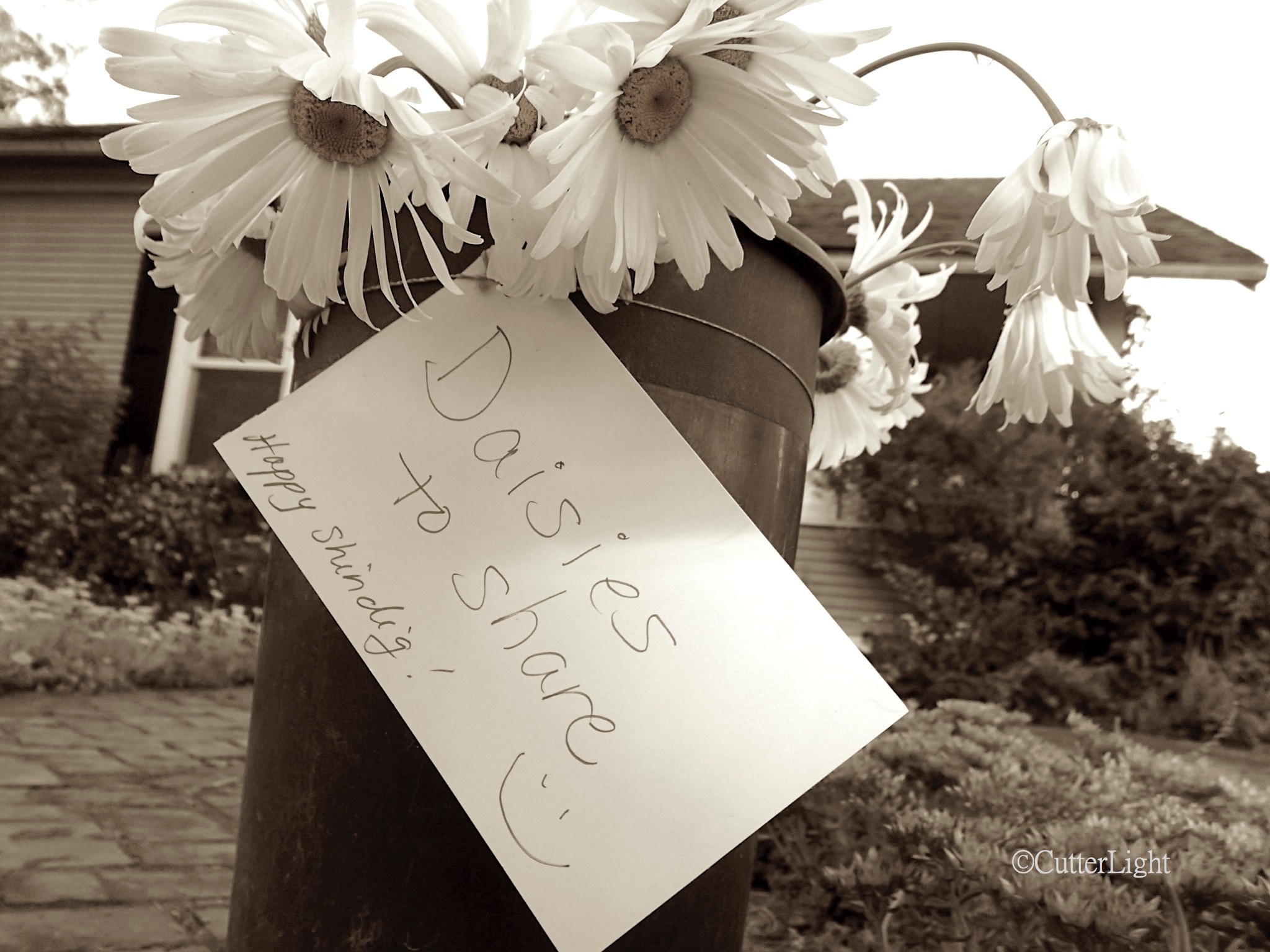
The next morning as we were preparing to depart Sultan, Toni presented us with a small cupful of deliciousness – beautifully ripe wild strawberries harvested from her garden. Time and again, these small, meaningful encounters with people add flavor and warmth to our travel. Whether it’s great service from a boatyard, restaurant or hardware store, conversations with business owners and chefs, or joys of the day and travel tips shared with the people we happen to have as temporary neighbors in a campground or at a local eatery, we continue to consistently discover that by turning off the endless cycle of negativity on news programs and going out and talking with people, the America we remember is still out there, waiting to be discovered.

OLYMPUS DIGITAL CAMERA

Summer street fair & auto show, Sultan, Washington, 2014.

A Whale of a Tour: Cruising Alaska’s Kenai Fjords National Park

humpback breaching c n

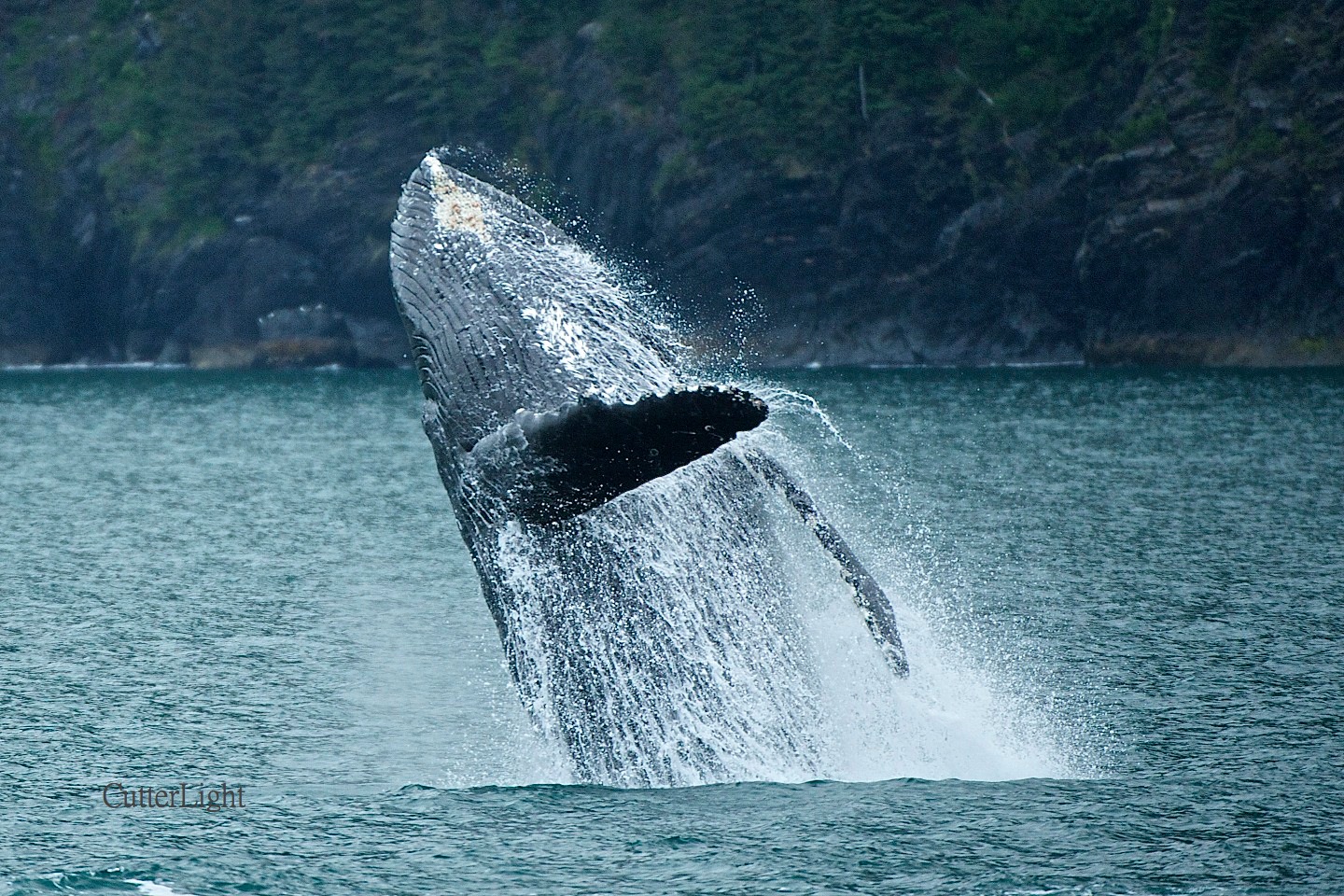
In what seemed to be sheer exuberance, this humpback whale heaved himself out of the sea again and again, the perfectly executed cannonballs sending up enormous showers. From eagles to orcas and sow bears with cubs to mountain goats with kids, a recent cruise of the Kenai Fjords National Park near Seward presented opportunities to photograph a number of Alaska’s wildlife stars.  

Last summer while salmon fishing aboard our C-Dory Angler, Gillie, we found ourselves suddenly quite close to three massive, bubble feeding, lunging humpback whales – the largest humpbacks we’ve seen to date. The whales and the salmon were drawn to the same thing: acres of herring so dense they were causing our boat’s sonar to misinterpret the vast school as seafloor. Between netting bright silver salmon for our daughter who was visiting from California, navigating the boat and snapping photos of the feeding leviathans we were kept on our toes. At one point the whales surfaced so close to our boat we could smell their breath. It was a bit unnerving.

whales lunge feeding major marine n

One moment the seas would be calm, the gulls and kittiwakes resting on the water with just a few sentinels circling about. Suddenly the birds aloft would cry out, signaling the sitting birds to take wing… and then these three massive whales would erupt from the sea. If you look closely, you can see a panicked herring barely escaping the gaping jaws of the center whale.  

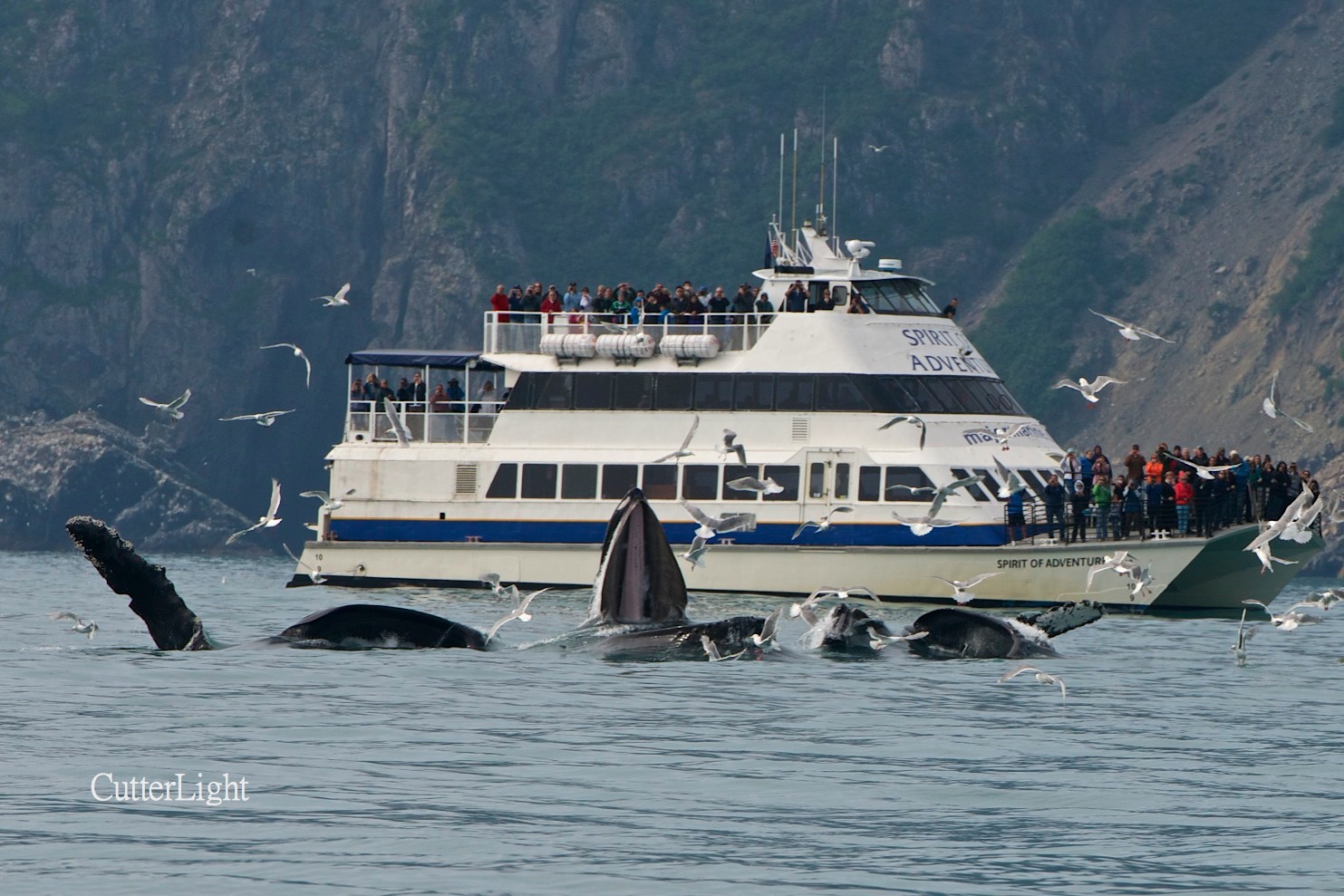
That evening when we uploaded our photos, we were disappointed to find that the best of our whale shots were marred by the presence of a tour boat in the background. And then it hit us – why not see if the tour company would be interested in the pictures? That’s how we came into possession of tickets for Major Marine Tour’s all-day Kenai Fjords National Park nature cruise, complete with and an all-you-can-eat Alaskan salmon and prime rib lunch. Having now experienced three of these tours, we give them the highest possible recommendation for anyone interested in the wildlife and natural history of coastal Alaska.

eagle on sea rock n

Eagles are common along the shoreline of the fjords, and we never tire of admiring them. Not above scavenging, these opportunistic birds will prey on salmon, other fish, seabirds and even baby mountain goats. 

This past Monday we used four of our tickets to book ourselves and friends visiting from Montana on a tour on the Spirit of Adventure – the very boat we’d photographed the previous summer. A few brief sprinkles of rain aside, it was a beautiful day, and since it was a lightly-booked weekday cruise we had plenty of room at our dining table as well as at the ship’s rails when we were viewing glaciers and wildlife.

horned puffin on cliffs n

Both horned puffins (above) and tufted puffins nest in the cliffs above the fjords. 

horned puffin swimming n

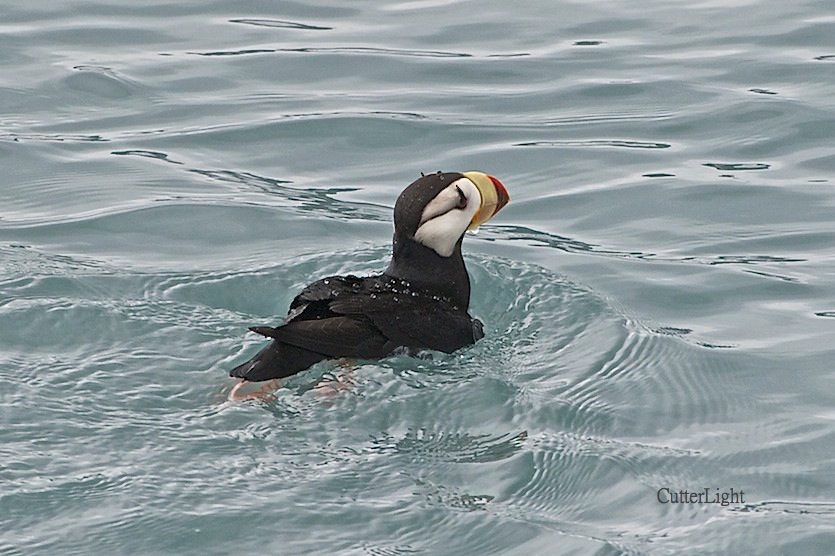
The feathery “horns” above their eyes give horned puffins their name. This one, fresh from a dive in search of small fish, popped up right next to the boat. 

Stellar's Sea Lions n

Certain places in the Kenai Fjords are important breeding grounds for Stellar’s sea lions. In recent years, their population has fallen into decline and although human overfishing may be the culprit, no definitive cause has been identified.

kittiwakes n monkey flowers n

Seep (or common) monkeyflower adorns the cliff walls of this black-legged kittiwake rookery. We didn’t spot any eggs, but the nests look complete and ready for this year’s broods. 

murres thick bill dense raft n

Meanwhile dense rafts of dozens or even hundreds of thick billed murres gather along current seams that push baitfish into tight schools where they become easy pickings. 

Dall porpoise w beak n

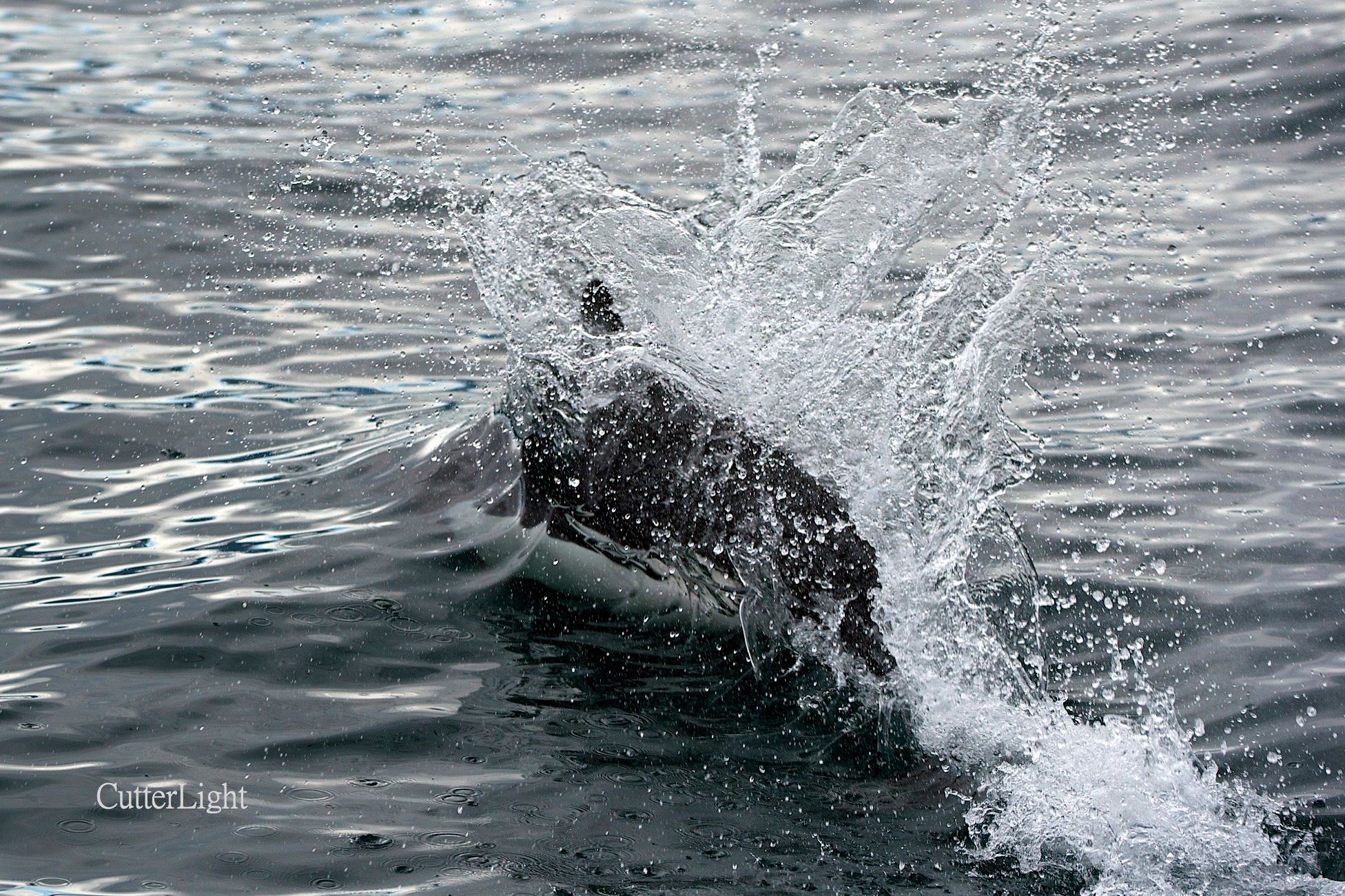
Reminiscent of the Tasmanian Devil of Warner Brother’s cartoon fame, Dall’s porpoises can appear at any time, zipping across the sea in plumes of spray in pursuit of the fish they feed on or just a good bow wake to play in. They are reportedly capable of speeds of around 35 miles per hour (55 kilometers). On this day, the porpoises were in a playful mood and the captain hit the boat speed just right. For several minutes half-a-dozen of these sleek speedsters zig-zagged across our bow. 

Holegate glacier sluffing ice n

Although wildlife is a major draw on these cruises, the fjords are equally famous for spectacular tidewater glaciers. Above, Holegate Glacier sloughs off tons of ice at a time in thunderous cascades. Note the seagull at the upper right of the photo. 

glacier ice margaritas n

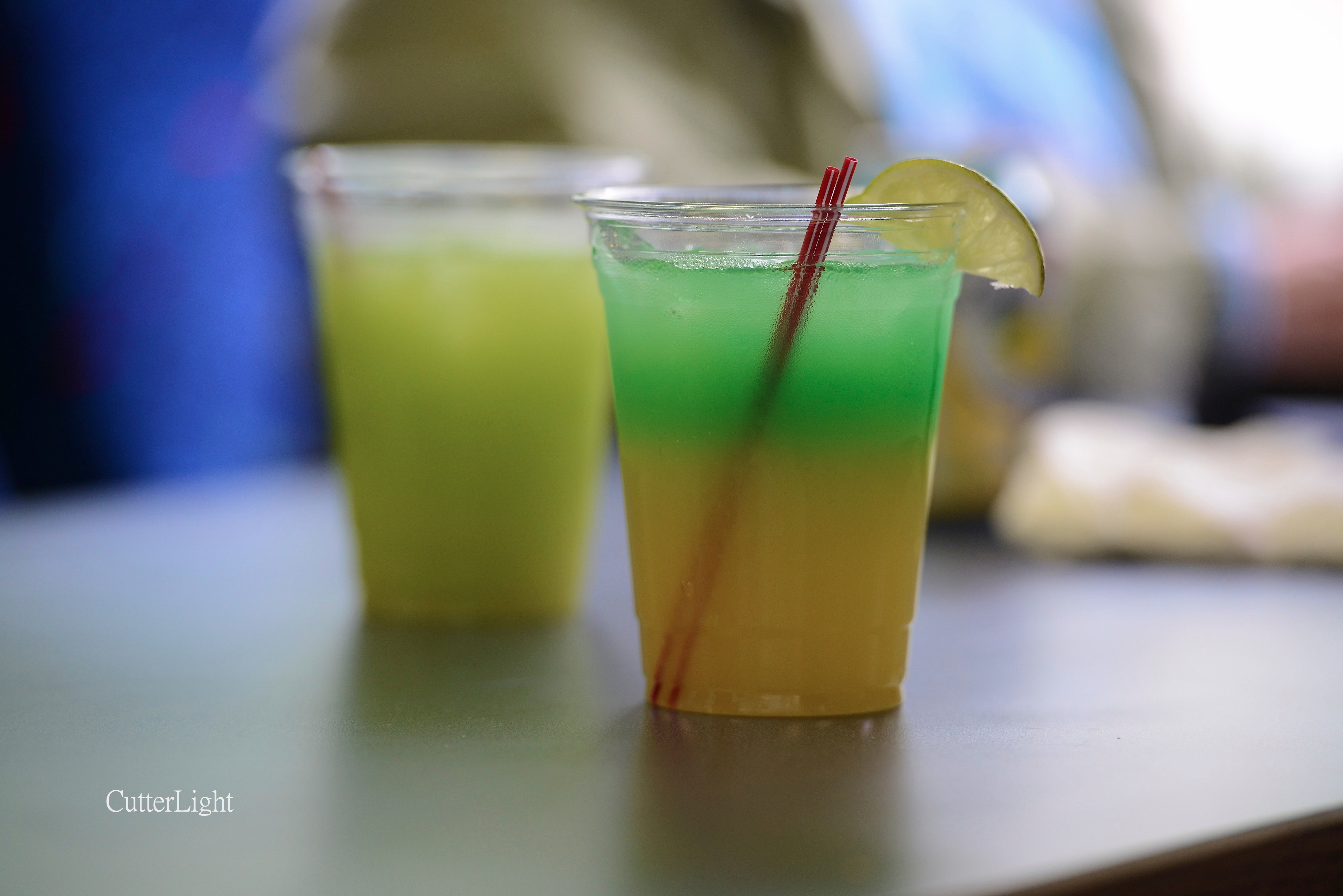
When the crew scooped up a pristine chunk of glacial ice in a net and announced that Glacial Ice Margaritas were being served, we couldn’t resist. The ice – which is hundreds to thousands of years old depending on which part of the glacier it comes from – is super dense, hard, clear and cold. 

sea otter on ice w harbor seals n

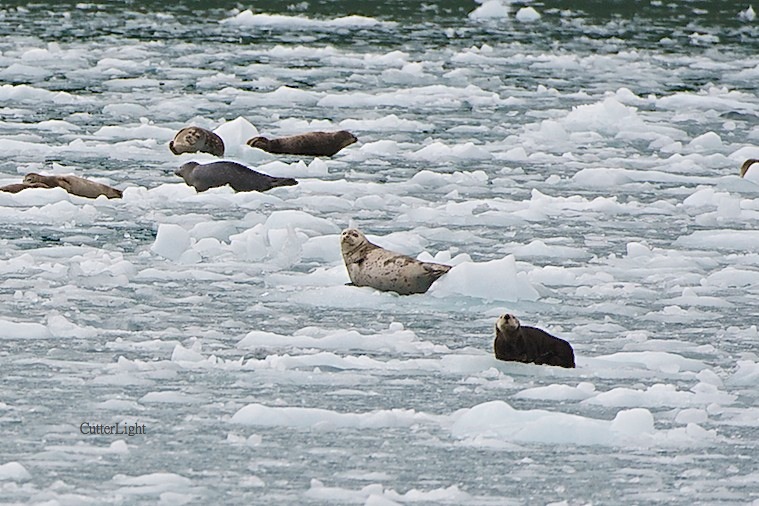
Near Aialik Glacier, dozens of harbor seals were hauled out on the ice along with quite a few sea otters such as the one in the foreground above. The National Park Ranger providing commentary aboard Spirit of Adventure remarked that prior to the Russian hunting of sea otters (which, by the early 20th century had nearly driven them to extinction) it was common to see sea otters hauled out on land. 

Orcas transient resurrection bay 2014 n

Throughout the seven-and-a-half hour cruise we kept a keen eye for orcas. The day had already been amazing – truly one for the books: leaping salmon, a sow black bear with cubs in a clearing on a mountainside, a nanny mountain goat with her young kid just above the high tide line, whales, porpoises, and a dozen or so species of sea birds all had checks next to them.

Toward the very end of the cruise, as we were nearing Seward, the pair in the above photo showed up. Kenai Fjords NP is home to three distinct types of these cetaceans: resident, transient and offshore. The three types have different diets: residents are salmon and fish eaters, transients focus on mammals such as seals and sea lions, and offshore orcas are known to hunt sharks and baleen whales. The three varieties also have different languages and DNA tests indicate that they do not interbreed. This pair – the male in back with the longer, more angular dorsal fin, the female in front with a shorter, more rounded dorsal fin – may be transient orcas.  

sleeping otter in harbor n

Even before the cruise begins there are wildlife viewing opportunities right in the harbor. This sleepy otter filled up on mussels he pulled from pilings before conking out for an after breakfast snooze. 

Changes: With Feet in Two Worlds Now

Point Hope from plane n

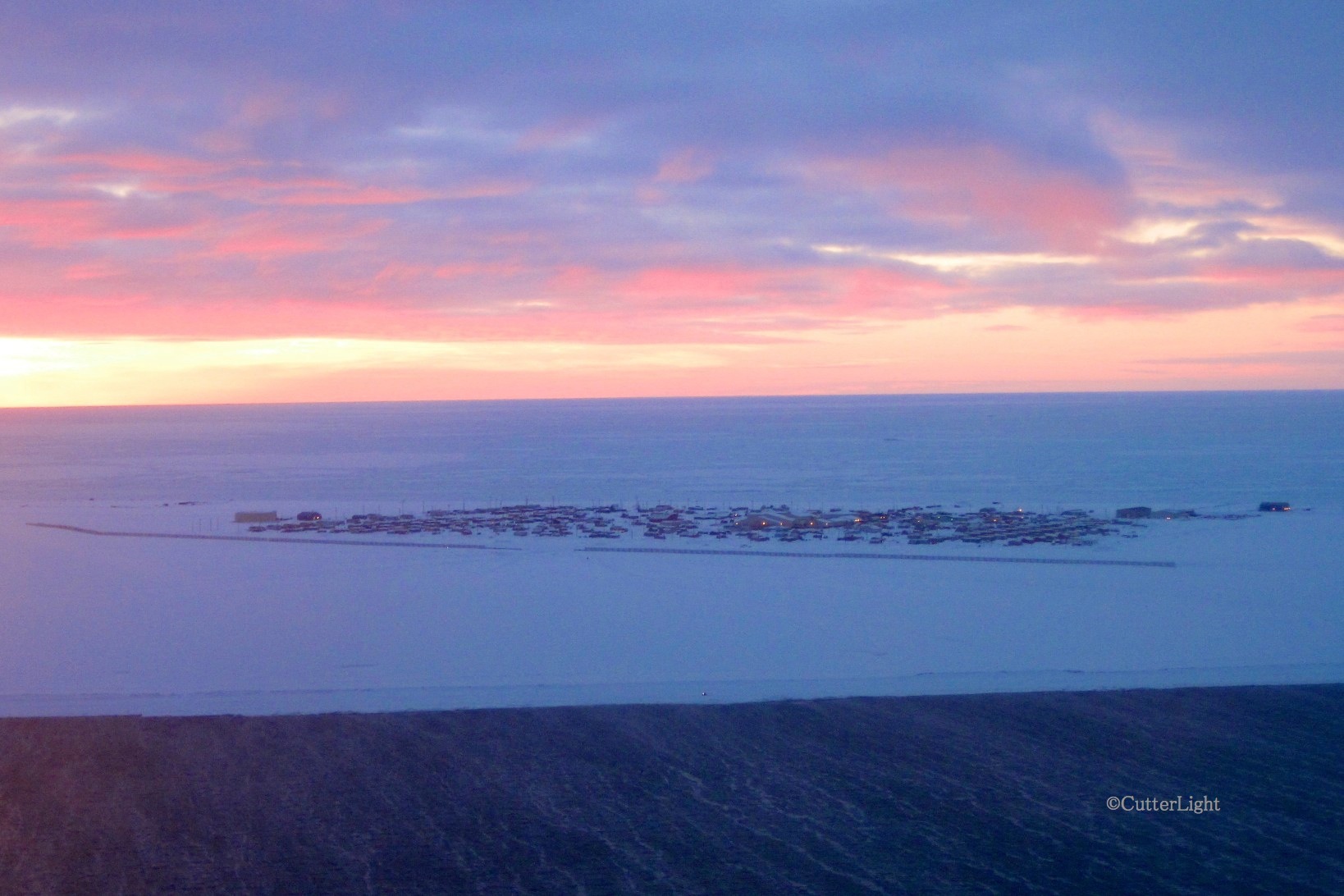
From the air on the south side of the peninsula, our village of Point Hope is a small interruption in a vast, roadless, icy land. This photo was taken in late January from a little six-seat plane as we flew in from a trip to Anchorage. What’s missing in this picture? Sea ice. There should be a thick sheet of it in the foreground where this year there is only open water.

Back in early November, we made the decision that this would be our final year in Point Hope. We’ve loved living here, and the decision was not easy. The people of this village – our adopted hometown these past three years – have been kind and generous and fierce and proud, attributes we greatly admire. Our students have been wonderful, and when you teach in a building where from kindergarten through senior high there are fewer than 200 students, they all become your students. In our combined 30+ years of teaching, neither of us had ever bonded with students the way we bonded with the students of Tikigaq School.

freezing rain point hope n

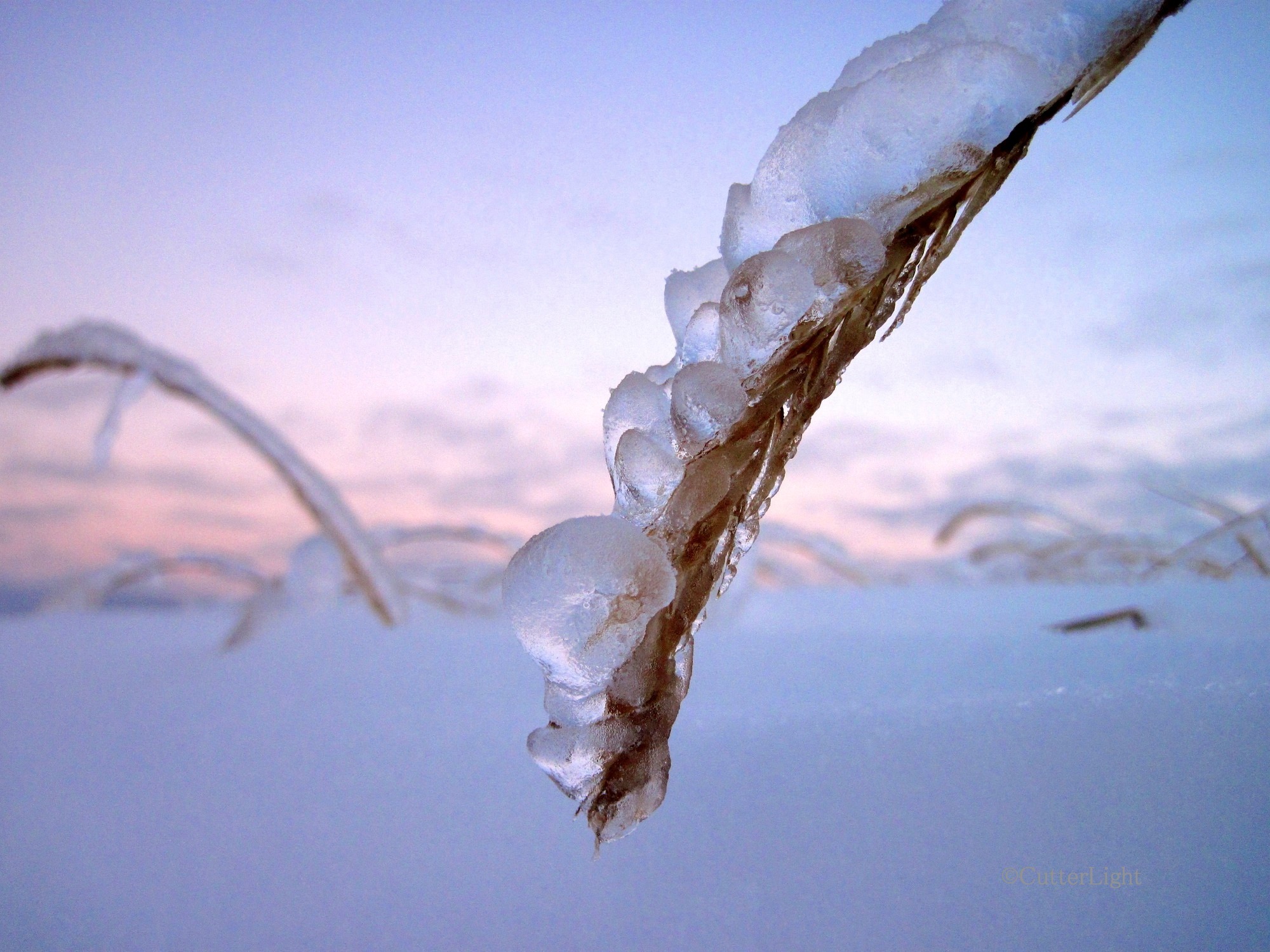
Freezing rain turned this stalk of grass into a silvery jewel. Rain in January in Point Hope is not completely unheard of, but days in a row of such weather during what is usually the coldest month of the year is highly unusual.

In mid-December we turned in our resignations, not sure where we would go next, urged only be the sense that it was time for us to go. The pull is a feeling that is difficult to describe or explain. The letters of resignation were short, polite, appreciative, but with them we cut the cord. No safety net. No turning back. We began to focus on our next move.

Aurora feb 2014 a n

A few nights ago, the aurora borealis put on a show. This was not one of the dancing, colorful displays we’ve seen in the past, but a steady, emerald swath glowing just above the northern horizon. 

At first, we were limiting our consideration to Alaska, dreaming of a situation in the Southeast where we might live within an easy walk of our boats and our new school. Our free time was consumed wtih the routine but critical tasks associated with a job search: revising our resumés, shoring up our references, researching schools and communities, distilling our careers and lives into tightly written letters of introduction. As two souls with nomadic DNA and Gypsy blood caught in this modern “career path” world, it’s a process we’ve been through many times.

But this time around, there was a twist to the job hunting. We both constructed online career histories on Linkedin, a networking website for professionals. Out of the blue, Barbra received a query from a headhunter with an agency that places teachers, administrators and technology experts with overseas schools. Although the particular company the inquiring person represented didn’t interest us, it got us thinking.

What if…?

Could we…?

What would we do with our boats?!?

tikigaq old bones_new

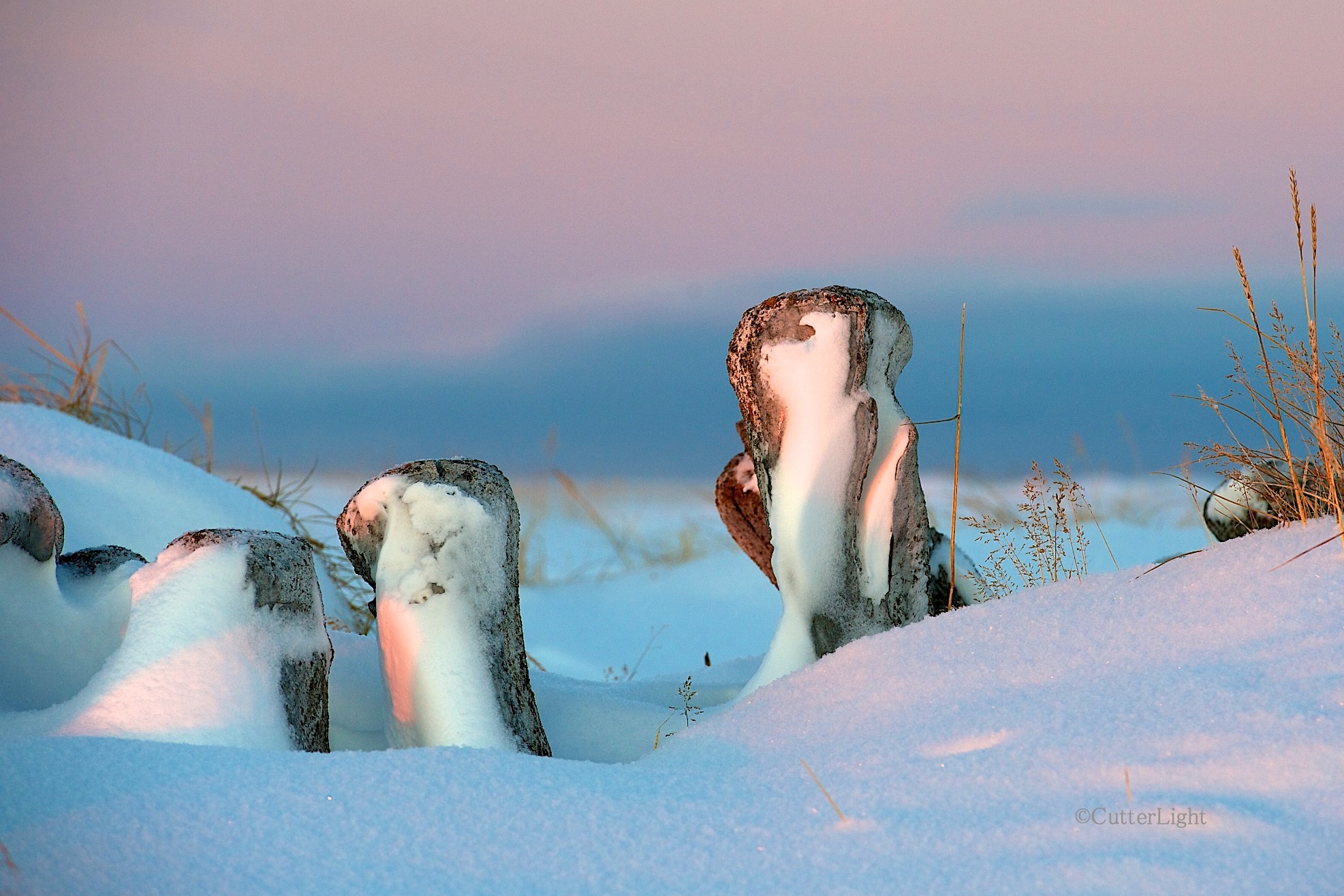
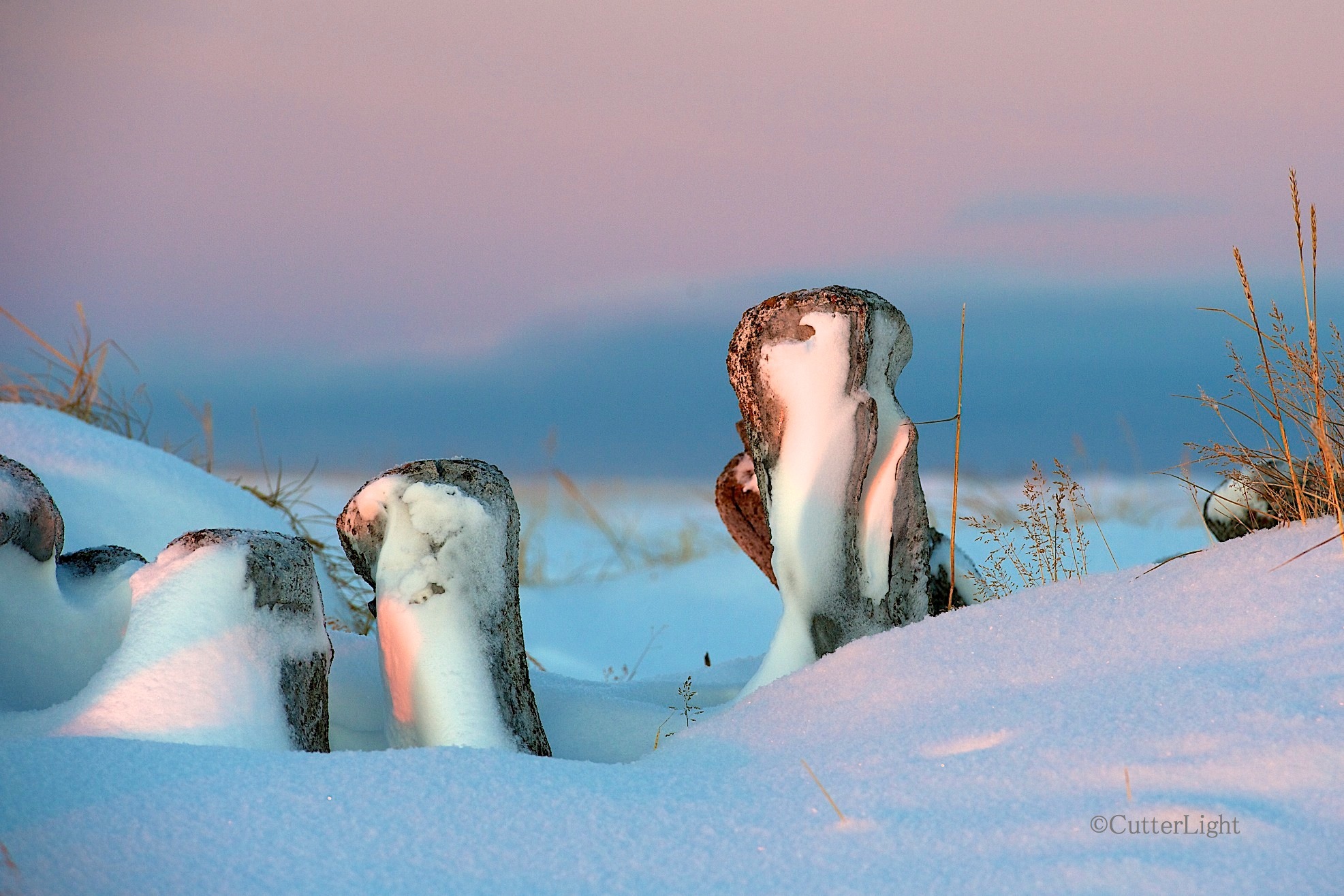
Early morning light bathes whale bones in the ghost town of Old Tikigaq pink and gold after a night of fresh snow.

After careful research, we signed aboard with Search Associates, an agency that works with over 600 internationally-minded schools in 160 countries. While we lacked the experience with International Baccalaureate programs these schools desired, our backgrounds are rich in quality experience and our references are strong. We allowed ourselves to dream, and although we thought that in order to get our foot in the door we’d accept the right position in virtually any country, there were a few countries that were very much on our short list. Our dream list.

One of those countries was Mongolia. Several years ago, when we were living in Sacramento, our local Trout Unlimited chapter invited a guest who had recently made a film about fly fishing in Mongolia for lenok (an ancient form of trout) and taimen (the world’s largest trout/salmon). The vast, sparsely populated countryside was sublime. The rivers were pristine. The idea of a remote camp out on the steppes, the guides speaking Mongolian, the huge night sky filled with stars after a day spent pursuing species of fish few anglers will ever encounter, our stomachs filled with rock roasted meat, our minds pleasantly humming with yak-milk vodka, and beyond the camp neither a light nor a human sound for as far as one could see or hear, is an idea that has been growing in us ever since.

We are due in country on July 31. It appears that we’ve already found a nice apartment just a few minute’s walk from the International School of Ulaanbaatar in Mongolia’s capital of Ulaanbaatar. We’re thrilled. This is just the dose of “New” we’ve been craving.

A couple of weeks ago, we were in the Anchorage airport, flying back to Point Hope when we suddenly encountered a scent that, for us, will always be pleasantly, irresistibly memorable. Muktuk. Whale fat. We looked around and soon found a small group of people who appeared to be Eskimo pushing a cart loaded with coolers, no doubt the source of the mildly sweet, rich smell. “We’re two among 0.00000-something percent of people in the world who can instantly identify that smell,” I said to Barbra as we laughed about our arcane expertise.

This morning one of Barbra’s students, Dmitri, came to school wearing the same scent. “Wow,” Barbra said with a smile. “You smell like muktuk!”

“Yeah,” Dmitri smiled back. “It’s good, isn’t it.”

Little stories like that keep us wanting to explore and experience.

pt hope from plane dawn n

Sunrise over Point Hope, a village by the Chuckchi sea.

November Light: Old Tikigaq and Project Chariot – 160 Hiroshimas in the Arctic

umiak sunrise n

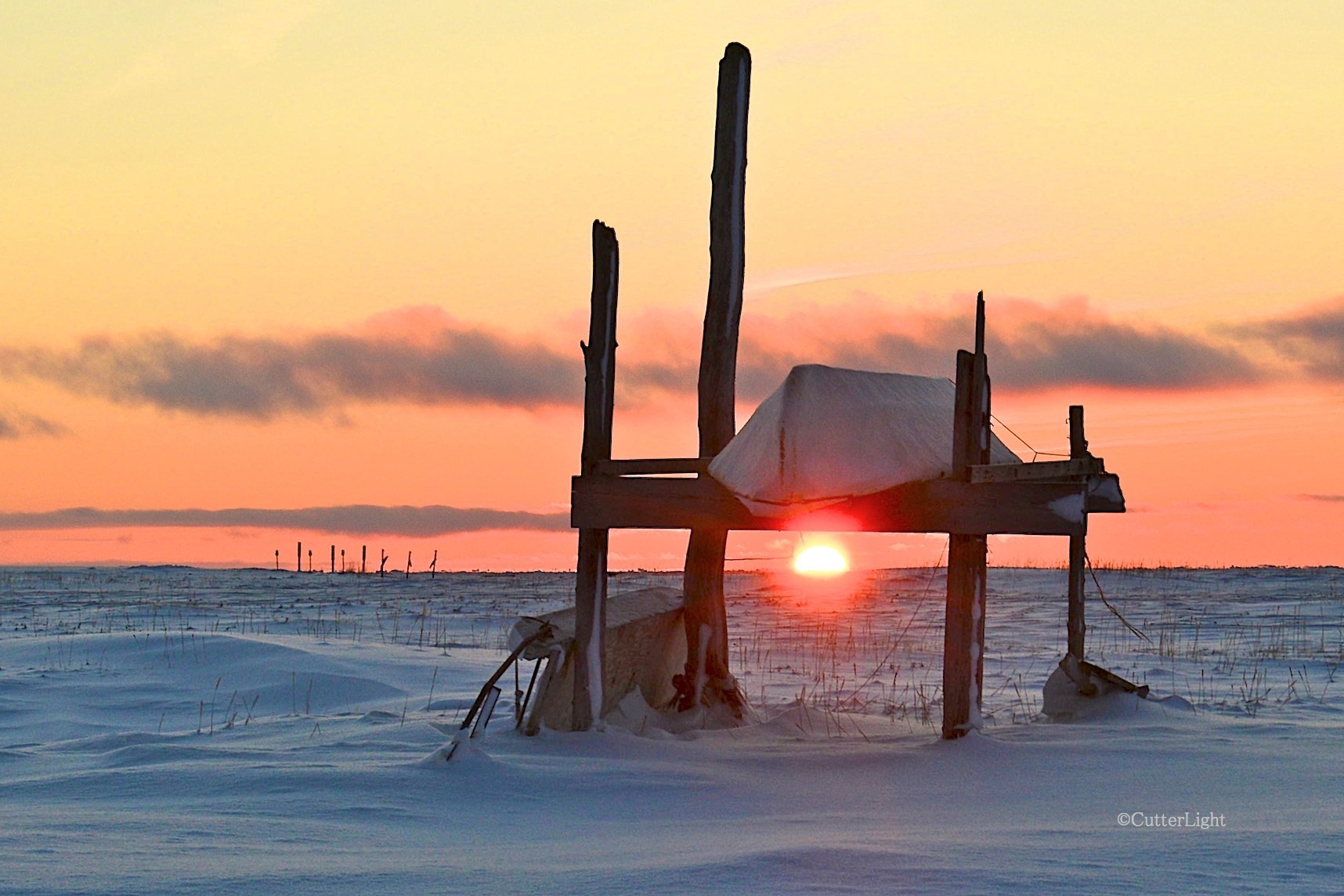
November 29, 12:46 p.m.: Framed below a seal skin umiak whaling boat, the sun edged itself above the southern horizon and lingered for just two hours and 24 minutes. On December 7, the sun will stay below the horizon and remain there for 28 days.

In 1958, under the direction of Edward Teller, the U.S. Atomic Energy Commission (AEC) devised a plan to detonate a series of nuclear devices 160 times the force of the bomb dropped on Hiroshima. These bombs were to be exploded just 30 miles southwest of the Inupiat village of Point Hope, Alaska. Teller’s plan – if an action so dangerous and misguided can even be called such – was to blast out a harbor in this far north coastline. The United States government didn’t bother to tell the local residents of this scheme. Nor did they take into consideration that the land in question dId not belong to the United States government; it was and still is sovereign Inupiat territory.

old tikigaq bones nov light n

Whale bones mark a sod igloo buried in snow in the ghost town of Old Tikigaq, which was abandoned in the mid 1970’s. Although the sun is only in the sky briefly in November, it is a glorious time of year. This is the November light we have been waiting for.

A caribou hunting party stumbled across AEC engineers and para-military personnel encamped at the mouth of Ogoturuk Creek, near Cape Thompson. That’s when the questions and the lies began.

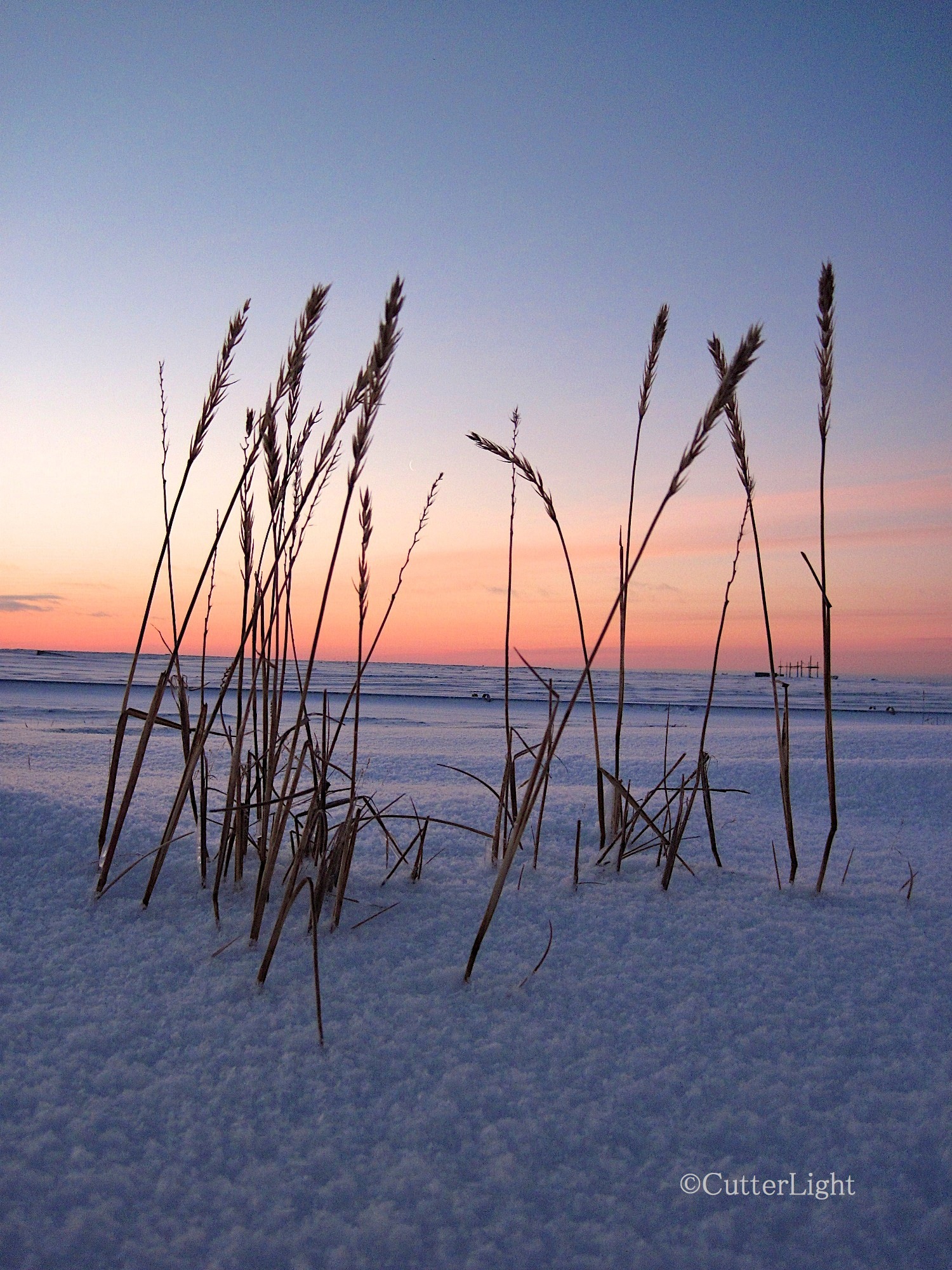
grass snow dawn n

Grass silhouetted against the southern sky just before dawn, the frozen sea stretching to the horizon near Point Hope, Alaska.

In the end, Teller’s heartless plan was stopped. The bombs were never detonated. The experiment to determine how much radiation local flora, fauna and humans could survive was never carried out.

This is a story of heroes. There was Howard Rock, the co-founder of the Tundra Times, a highly educated, literate Inupiat leader who wrote the first, insistent letters to the United States government demanding that this plan be immediately halted. There were the white scientists from the University of Fairbanks, Pruitt and Viereck, who raised their voices against the project, and in standing up for the Inupiat people and standing against the government were fired by University President, William Wood, who played a less noble role in this story. There were the millions of citizens in the United States and all over the world who were in the streets, protesting nuclear tests of this kind. And there are the people of Point Hope who stood up to the government then and who are still fighting to force the United States government to tell the whole story of Project Chariot.

Because this story is not over.

old tikigaq house winter n

Over time, as erosion steadily ate away the finger of land jutting into the Chukchi Sea, the old town had to be abandoned. This fall, the entire area was inundated with water when high winds and hurricane force gusts pushed sea water over the rock sea wall protecting the north side of the point.

Although Teller lost his bid to detonate the world’s most destructive arms, in what feels like a tit-for-tat payback, under his direction, in secret, another group of engineers and military personnel were dispatched to the Project Chariot site. This time, they spread radioactive waste on the ground and in the stream. And they buried something there. Something in large, sealed drums.

To this day, the United States government has refused to divulge what was buried.

Since that time, the incidence of cancer has been higher than the national norm among the people of Point Hope. Higher than it should be, even taking into consideration other factors. These are some of the best people we’ve ever had the honor to be associated with. Kind, generous, resourceful, resilient, tough. Their government owes them answers.

whale jaw arches dawn n

Tell-tale tracks leave evidence that an Arctic fox was patrolling Old Tikigaq just before we hiked out. These whale bone jaws located near the airstrip a mile and a half from town welcome visitors to Point Hope. The area around Point Hope is one of the oldest continuously inhabited places in the Americas – maybe the oldest. While many Inupiat (Eskimo) cultures were nomadic, here the animals came to the people. The point of Point Hope formerly extended far to the west out into the Chukchi sea, bringing the land in close proximity to migratory paths of seals, whales, walruses, char, salmon and other fish. Two impressive capes, Thompson to the south, Lisburne to the north, are home to tens of thousands of sea birds. To the east, Point Hope is situated near the migratory route of thousands of caribou. The sea and the land are the garden that has sustained people here for thousands of years.

For more about Project Chariot, see the book The Firecracker Boys by Dan O’Neill. And although it is difficult to obtain a copy, there is an excellent, 73-minute documentary film titled Project Chariot, copyrighted 2013 NSBSD & Naninaaq Productions: UNCIVILIZED FILMS.

First Sea Ice, Point Hope 2013

snow arc point hope beach n

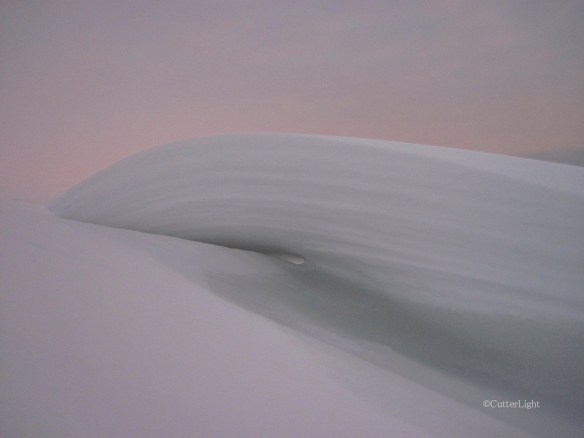
Wind and cold sculpted this mixture of sea spray and snow into a delicate arch. The sea ice has been late in coming to the Chukchi Sea this year. This photo was taken at 3:00 p.m. with the winter sun already skimming low on the horizon. Our month of day-long darkness will begin December 6.

The thick, slushy sea ice hisses and softly moans as it moves with the current past ice already frozen fast to shore. The hissing is vaguely reminiscent of a soft autumn breeze filtering through the dry leaves of oaks and maples in my native Pennsylvania. The moans sound like the muted voices of whales deep below the sea. All else is still, the ice stretching out as far as one can see. There is no wind, and there is no other sound.

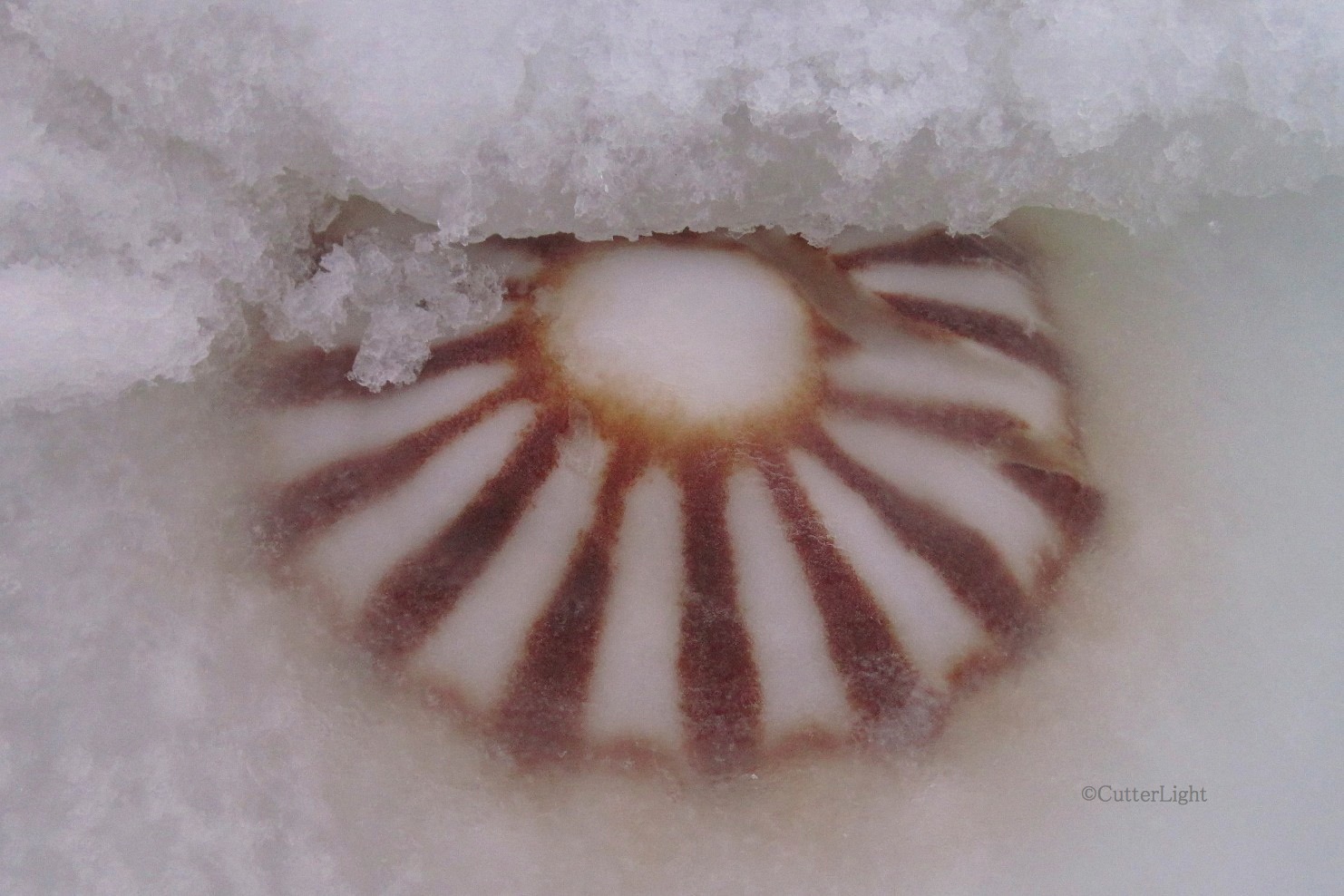
sea jelly caught in ice n

This sea jelly, entombed in shore ice, is about the size of a polar bear’s paw.

We searched for signs of life, perhaps a seal out on the ice or a snowy owl coursing the shoreline, or even the tracks of an Arctic fox. There is nothing, just the steady hiss of the ice as it flows before us. We walk along the pebbled beach for maybe a mile and finally spot a small group of ravens. Tough birds, making a living up here during the winter.

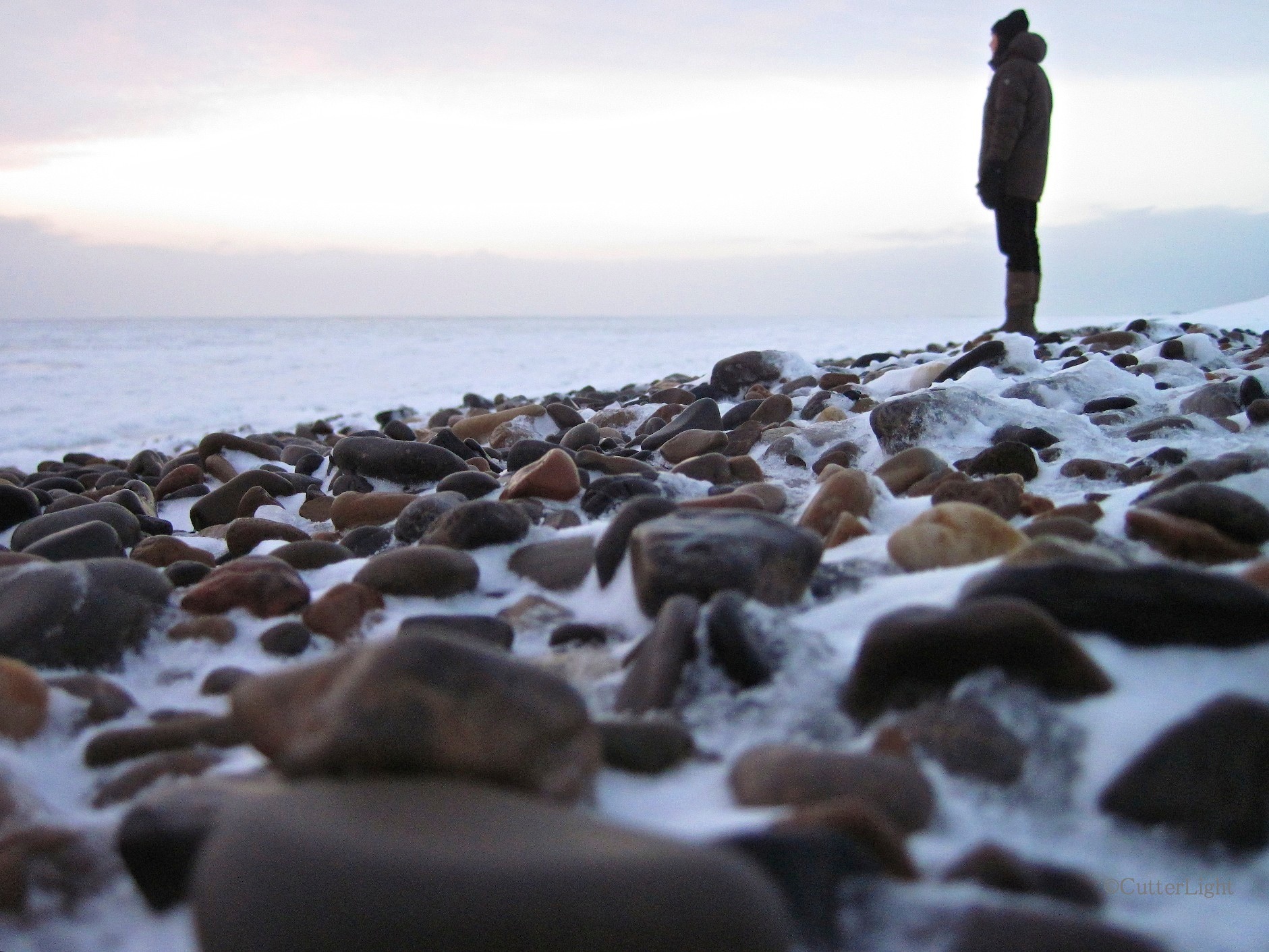
point hope frozen beach n

If you look closely among the rocks along the Point Hope Beach, it’s common to find jade. Less common are fragments of mastodon tusks.

first sea ice 2013 n

Thick ice prevents the shore from eroding during winter storms. Polar bears depend on the ice to hunt seals. Things are changing up here. The ice seems to be coming later, and there is less of it. Red foxes are becoming more common, pushing out their smaller Arctic cousins. Once winter truly locks up the sea and the sun sinks below the horizon, there is no place on earth that is quieter. It is cold and stark but beautiful. 

sea jelly caught in ice b n

We don’t always take our big cameras along on walks. Today we relied on “Little Blue,” our Cannon PowerShot D10, our trusty point and shoot.

Ptarmigan and Cloudberries: A Walk on Alaska’s Arctic Tundra

willow ptarmigan pair n

Looking almost like exquisite mounts in a museum diorama, these Willow ptarmigan (Lagopus lagopus) proved to be quite approachable. While hiking on the tundra near Point Hope in September we came across two coveys totaling about 20 birds.

cloudberries early frost

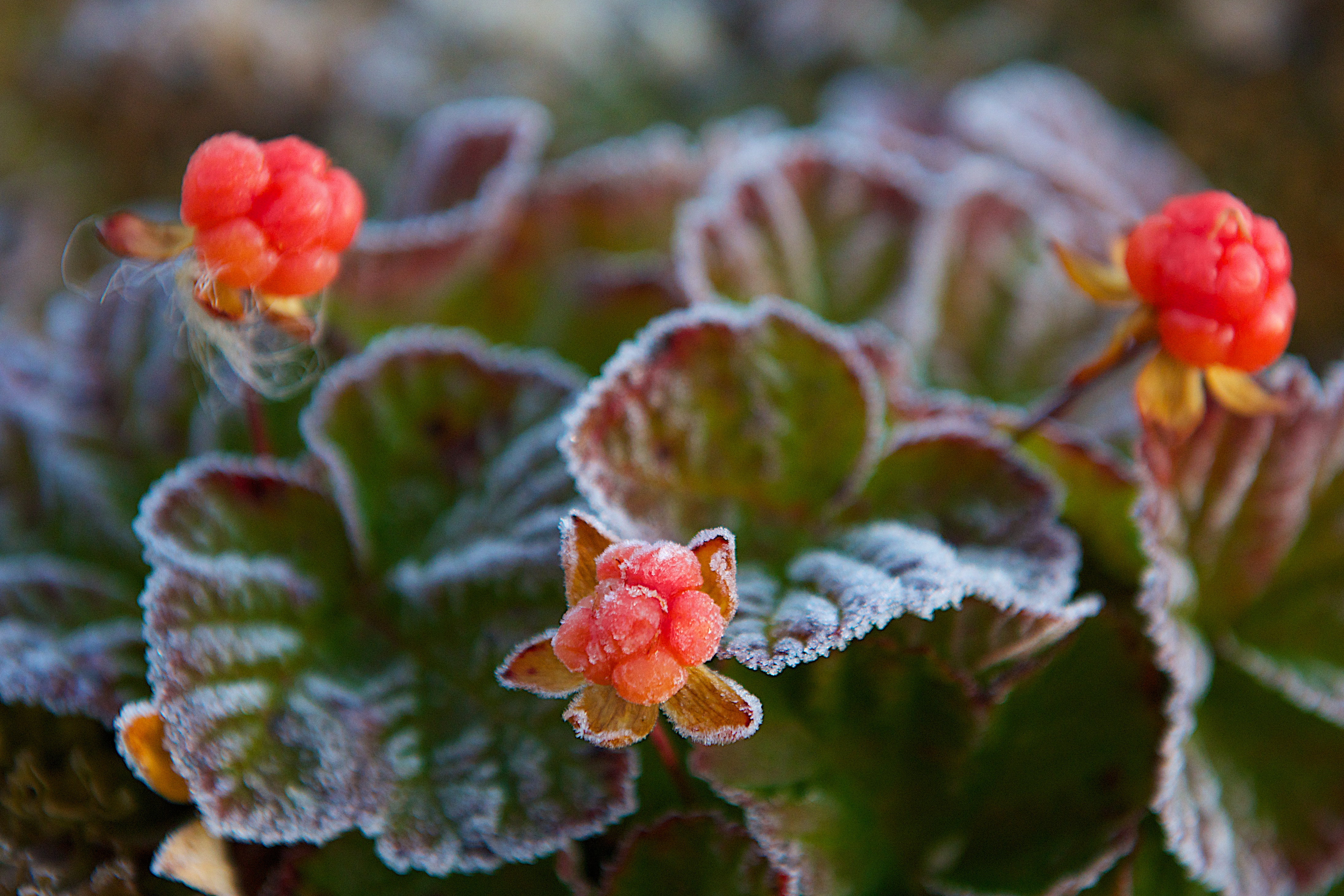
Nipped with frost, these cloudberries tasted like sorbet and were no doubt what had drawn the ptarmigan.

willow ptarmigan jack shooting n

Barbra cautiously approached the birds as I lay on my stomach, inching through the boggy terrain, shooting, hoping a few shots might come out.

willow ptarmigan solitary n

The plumage of these fall birds is in transition from the mottled browns and reds of summer to the snow white of winter. These are the same species as the red grouse of Scotland.

willow ptarmigan barbra approaching n

Barbra crouches and stalks closer to the birds. Note the densely feathered legs. The Latin lagopus translates to “hare foot” for the resemblance of ptarmigans’ feather-covered legs and feet to those of snowshoe hares. 

caribou antler fall tundra n

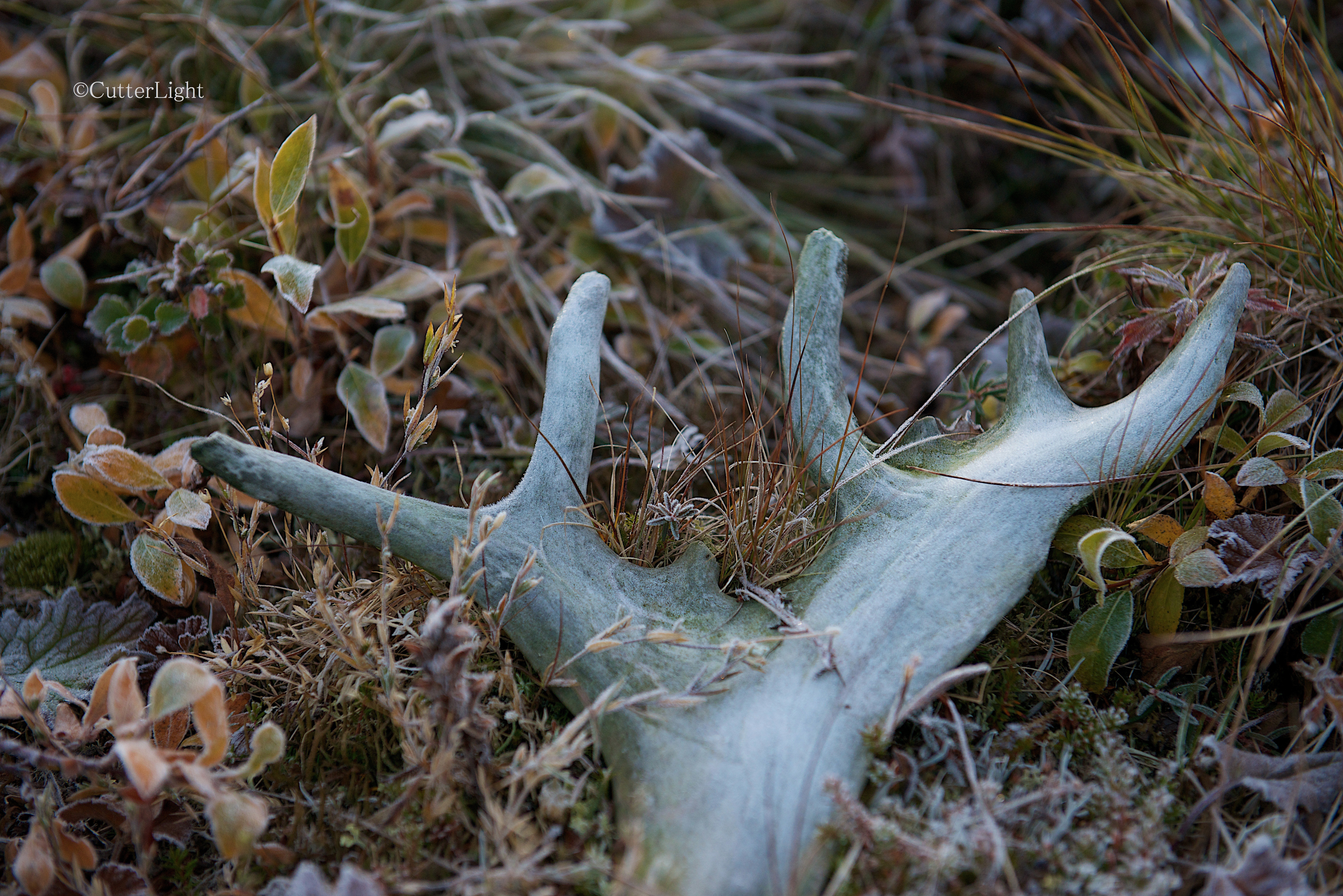
There’s always evidence of a rich ecosystem on the Arctic tundra. Caribou antlers, bird nests, animal burrows and an amazing array of plants are part of our walks.

brown bear track tundra beach n

Brown bears (grizzlies) are common visitors to the beaches and tundra near Point Hope. We found a set of fresh tracks along the shores of an inlet off the Chukchi Sea not far from where we encountered the ptarmigan. Red foxes, Arctic foxes, Arctic ground squirrels, weasels and caribou are frequently seen mammals. Wolves and musk oxen are less common, but also figure in the mix. In the foothills and mountains east of Point Hope there are wolverines and at higher elevations, Dall sheep. Rarely, moose are seen in the scrub willows along the nearby Kukpuk River, and during the winter months polar bears show up both on the sea ice and on land. 

snow geese lifting off n

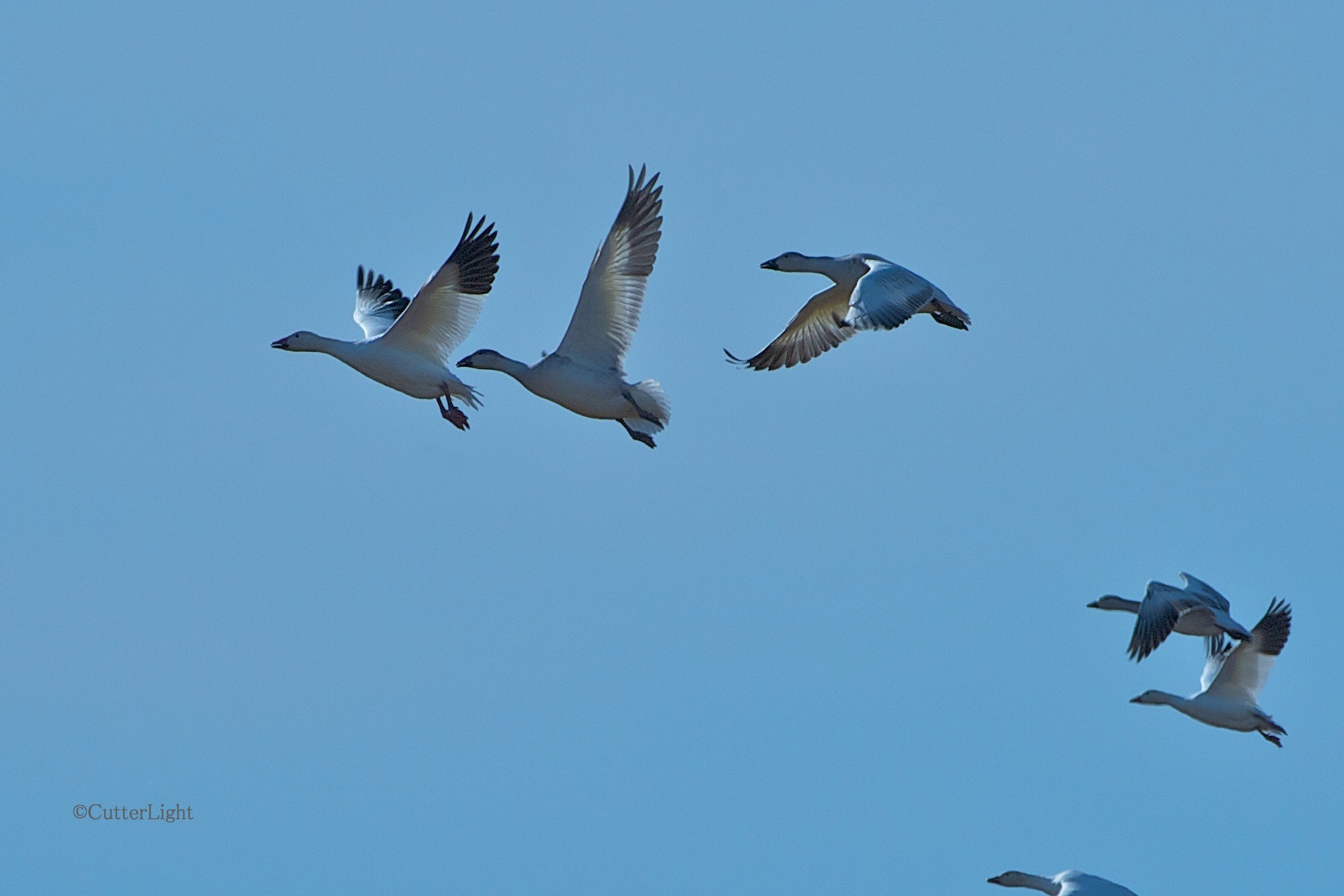
During the fall migration, snow geese are fairly common. (Above and below)

snow geese lifting off close n

Brandt, Canada geese, and a wide variety of ducks and shore birds are also common.

willow ptarmigan in flight n

When the ptarmigan finally had enough of us, they glided off a few yards, regrouped and resumed feeding. At that point we turned for home. 

cloudberries frozen in hand n

A handful of frozen sweetness for the road. 

cranes flying into the hills n

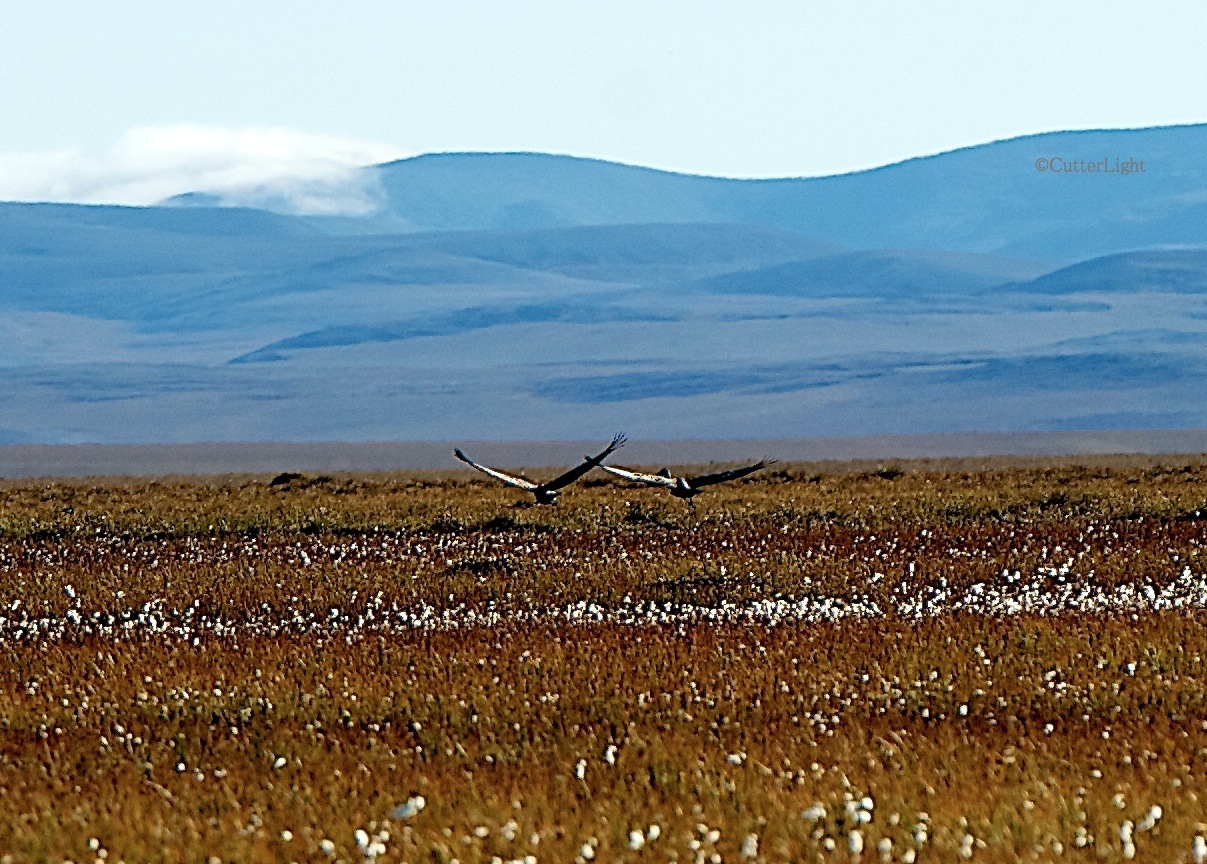
A pair of sandhill cranes lifts off above the last of the cotton grass on the tundra near Point Hope.

Plastic Seas: From Water Bottles to Cigarette Butts, It All Becomes Tiny Particles, and It’s the Tiny Particles that are Most Deadly

jellyfish micro purple n

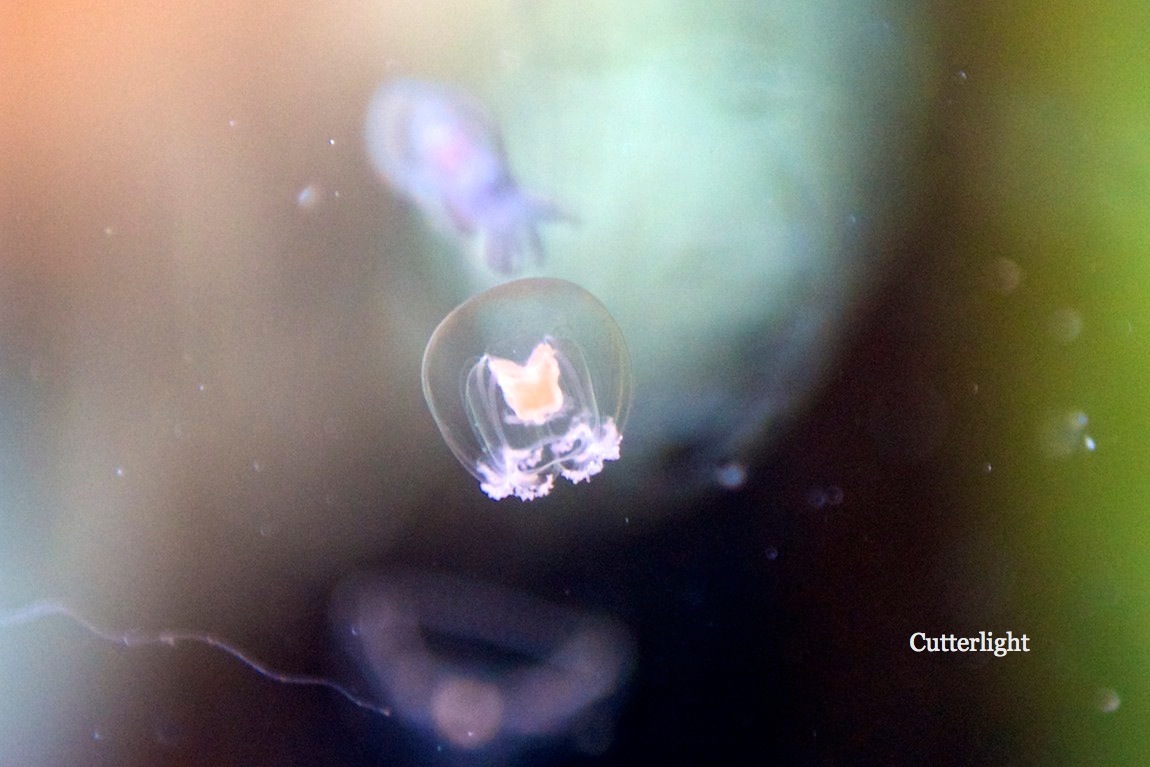
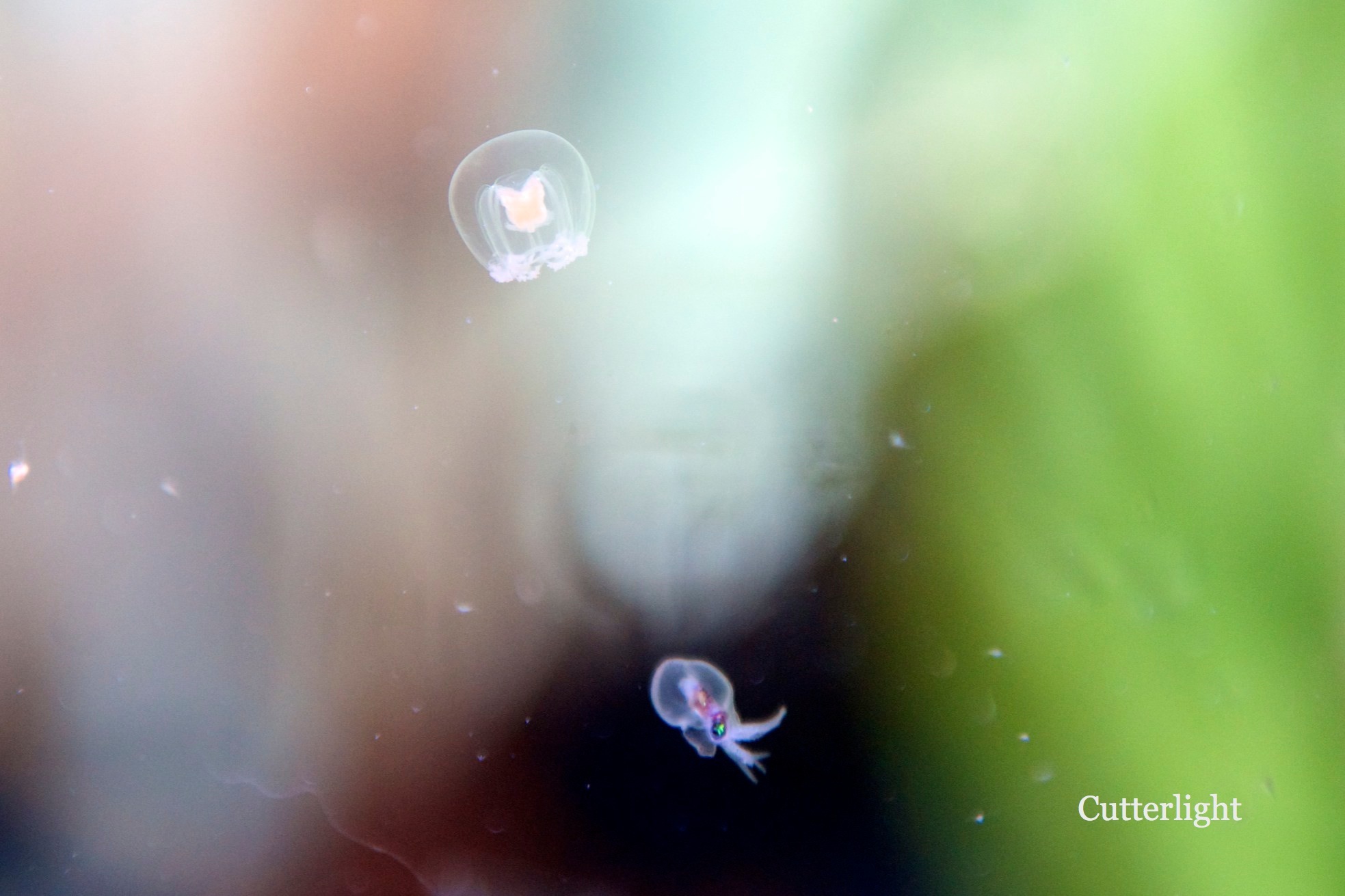
This tiny jellyfish and the octopus behind it are about the size of a pencil led, translucent, and barely visible to the naked eye. Key species near the base of the food web such as herring, sardines, menhaden and mullet routinely ingest plastic fragments as they filter the water for the nutritious plankton they feed on. 

herring pacific sealife center n

Pacific herring feed by facing into the current, hanging their jaws open, and sifting out tiny plants and animals. As plastics break down into fragments – as all plastics from discarded shopping bags to cigarette butts eventually do – the fragments mix in with the rest of the planktonic drift and are consumed by small fish… which are in turn consumed by larger fish, whales, sea lions and us.

squid micro eye n

The tethered balloon that slipped from a child’s hand

The monofilament net the fisherman left hanging on a reef

The cigarette butt that doesn’t matter

jellyfish micro blue orange n

and shopping bags,

and Christmas ribbons,

and cups used only once

and the plastic packaging

inside the shopping bags,

the throw-away toys

inside the Christmas package

the straws and the lids on the used-once cups

are smothering our oceans

and everything in our oceans

and us.

These photos were taken at the Seward Sea Life Center in Seward, Alaska. Visit an aquarium today to learn more about what you can do to help keep our oceans clean and healthy.

jelly fish n squid micro a n

Wild Trout and Salmon Make a Landscape More Beautiful: 10 Reasons We Use Our Alaska Permanent Fund Dividend to Support Trout Unlimited

orca baby and mother n

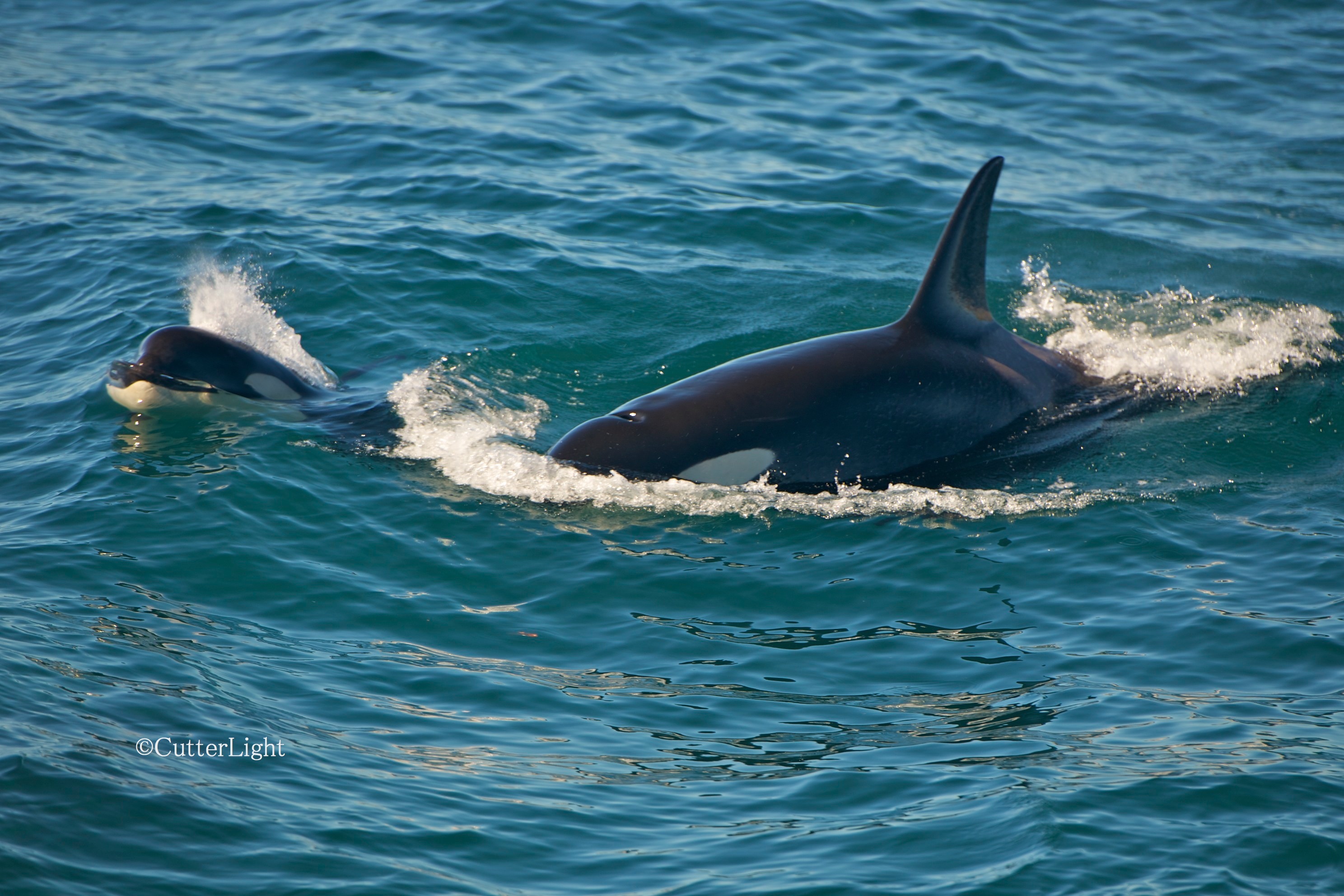
Reason #1: Because baby orcas need milk, and this mother needs a healthy diet of wild salmon to produce that milk. (Orca mother and offspring, Gulf of Alaska)

monica at samon creek n

Reason #2: Because Monica’s pregnant and eating for three. (Brown bear affectionately named Monica by local park rangers, Salmon Creek, Hyder, Alaska)

currants wild n

Reason #3: Because the ocean is full of nutrients which salmon embody as they return to their natal rivers and streams, and salmon forests thrive on salmon fertilizer courtesy of all the bears, eagles, mink, crows, ravens, otters, foxes and other animals that eat salmon. (Wild currants, Ptarmigan Creek, Kenai Peninsula, Alaska)

merganser common

.merganser chicks swimming clear water n

.

.

.

Reason #4: Because this merganser needs to find fresh salmon eggs to keep her brood well fed and growing. (Common mergansers, Salmon Creek, Hyder, Alaska)

camp meal on Deschutes n

Reason # 5: Because a meal cooked under starlight after a day of fishing with your best friend tastes better than that same meal would anywhere else. (Tumalo State Park, Deschutes River, central Oregon)

Turkeys along the American River - Copy (3) - Version 2 n

Reason #6: Because what’s good for salmon and trout rivers is also good for so many of the other things in life we love. (Wild turkeys, American River, Sacramento, California)

first king barbra n

Reason #7: Because farmed salmon can’t put a smile like that on a friend’s face. (Barbra Donachy, first king salmon, Resurrection Bay, Seward, Alaska)

Sea Lions at Bodega Bay n

Reason #8: Because we don’t want to live in a world where biodiversity is limited to what can be grown on a farm, raised in a pen, or crammed onto a feedlot. (Sea lions, California North Coast, Bodega Bay, California)

maia on deschutes n

Reason #9: Because girls who grow up fishing with their dads…

Maia with nice silver n

…become women who fish with their dads. (Above: Maia Donachy drifting an elk hair caddis in the Deschutes Canyon, central Oregon. Below: Maia with a hoochie-caught silver salmon gorged with herring, Cape Resurrection, Alaska)

And reason #10: Because salmon make a landscape more beautiful.

red salmon spawning w tail up n

red salmon spawning under water n

.

.

.

.

.

chum salmon on colorful streambed n

Top photos: spawning sockeye salmon. Bottom photo: spawning chum salmon.

About Trout Unlimited: For 54 years, TU has been a leader in ensuring that we have cold, clean rivers and streams for generations to come. From Northern California to Alaska’s Tongass Forest, from Bristol Bay to the Appalachian Mountains, TU has been instrumental in getting  dams removed from rivers where they do more harm than good, keeping mining and drilling out of our most fragile ecosystems, and protecting trout and salmon forests. At the same time, TU has been dedicated to educating and involving the next generation of environmental stewards – our children and grandchildren. As illustrated above, TU’s efforts benefit much more than trout and salmon. Click here to find out how you can become a member: Trout Unlimited.

Ghost Trees and Ghost Birds: Video and a Poem

At some point during my youth in western Pennsylvania, I read about a magnificent bird – the ivory bill woodpecker, the Lord God Bird. I wanted badly to see one and I knew that my dad – a naturalist – would know where to look. “They’re gone,” he said. I looked at him quizzically. “They’re extinct. They need big, old forests, and the big, old forests have all been cut down.” My dad was right. You should know that going into this film – a feature-length documentary that is powerful and sad and very much worth seeing.

.

Ghosts of Trees, Ghosts of Birds

People imagine they see them still,

ivory bills,

in remnant stands of virgin forests

too small to sustain these great birds.

In that way God Lord Birds are everywhere –

an image in burnt toast, a shadow pulling itself

into a triangular head,

a flash of red

as the late sun slants through the canopy,

or a fractured rock on a hillside gathering the feathered light

and darkness like a black and white diamond on a water oak trunk.

Ghosts of trees, ghosts of birds

Their nesting holes,

five inches across, 50 feet up –

hewn into hardwood with bone-chisel bill –

gone, too,

vanished with the ancient forests

into the humid air

above the endless spread of soy bean fields

Ghosts of trees, ghosts of birds

And so we pause

in the late morning

and set our paddles across the canoe’s gunwales

amidst the cypress knees, black gum and snags

as the mist lifts from this swamp

far enough away from all that

that it could be

the last place on earth

these birds exist

and strain our ears

and listen for double knocks

that rose and died 60 years ago.

The Language of Fishing: A Father and Daughter Story

Maia @ Ja-ike n

Fishing with Maia at Ja-Ike (Snake Pond) in Ishikawa Prefecture, Japan. Ja-Ike was full of large bluegills and bass, and in spring when everything was newly green it was perhaps the most beautiful stillwater we have ever fished. Wild wysteria with their white and lilac blooms draped the trees and reflected in the clear water, and wild yellow irises could be found along the shore. (The image above and some that follow were scanned from snapshots taken in the day.)

We recently drove Maia out to the short strip of pavement that serves as our airport here in Point Hope and saw her off, back to her home in Berkeley, California, where she is finishing the last leg of her senior year in college. She’d just spent part of her winter break visiting us in our Arctic home. For two beautiful weeks, we did nothing more elaborate than watch movies, cook together, eat great food, and catch up. On the short drive to the airport, a ground blizzard (high winds whipping up already fallen snow) forced me to creep along at the speed of a brisk walk. It was 10:00 a.m. and still pitch black. Once we got to the airport, the three of us, Maia, Barbra and I, sat in the car, heater blasting, talking, waiting. We wondered if the small plane would be able to make it up from Kotzebue.

Suddenly the runway lights came on. A few minutes later we found the lights of the plane in the dark sky as it made its descent. The lone passenger disembarked and the pilot helped a couple of the locals unload supplies for the Native Store onto a pickup truck. When they were finished, we hugged and said our good-byes and Maia climbed aboard. Fifty-mile-an-hour gusts were rocking the little plane and pushing the windchill deep into the negative degrees, but the skies above were clear. Should be a routine flight, and with a tailwind no less, Bar and I agreed. Still, a father worries.

Maia Flying Kite_n

Flying a kite on Folley Beach, South Carolina. 


Maia and I started fishing together not long after she learned to walk. Our excursions began on the banks of the Sakuragawa (Cherry River) in Ibaragi Prefecture, Japan. Like Ja-Ike, Sakuragawa had healthy populations of large bluegills and largemouth bass, and like kids the world over, Maia’s earliest fishing experience was shaped around a pole with a line tied to the end, a float, a hook and a worm. 

Back then, the fishing wasn’t really about the fishing. There were flowers and frogs, water snakes and dragonflies, bike rides and walks. I’d put Maia in a little red seat that attached to the handlebars of my three-speed town cruiser and we’d take off, looking for promising water, singing songs and naming birds and stopping at little shops for snacks along the way. Among our favorite finds were the colorful little kawasemi (Eurasian kingfishers) we’d sometimes spy along the river banks and the mysterious evidence of mozu (shrikes) where they’d impaled their tiny victims on garden fences and small tree branches.

Maia's First Salmon, Columbia River n

Maia caught her first salmon, a bright Coho fresh from the sea, on a late summer day near the mouth of the Columbia River not far from our home in Astoria, Oregon. Is there any better dinner than a good fish you caught yourself?

But most of all, those early fishing trips were about us – two buddies, hanging out, discovering a world that was new for both of us. It didn’t matter if we caught fish. In fact, sometimes we didn’t even get around to the fishing. There was always lots to see and explore. We never had a bad day.

Bison Burgers at X-C Nationals, Lincoln, Nebraska_n

Qualifying for nationals in cross country meant a trip to Lincoln, Nebraska and post-race bison burgers. That evening, Maia talked me into going to a movie based on a book she’d recently read and was quite excited about. Although I didn’t become a Harry Potter fan, there is magic in doing things with a person you love, and I have a very fond memory of a pasta dinner at a downtown restaurant followed by watching “Harry Potter and the Philosopher’s Stone” together.

Later, other things became the focal points of our lives: violins and piano lessons, cross country races and track practice, hikes and a black Labrador Retriever-Australian Shepard mix that was lovable and wild. But fishing remained. It was a constant in our lives, an unbroken thread that gave us a common language even in those times when common language between a father and his teenage daughter sometimes became elusive.

Blonde Violinist - _n

Blonde hair and a red violin – and springtime trips to a nearby lake to fish for trout and to pick fiddlehead fern heads to sauté in the pan with those trout.

Razor Clam Limit with Maia - n

Cinching up the bag on two limits of razor clams at Clatsop Beach, Oregon – fried clams for dinner!
Maia & Neal Exit Glacier Trail_n

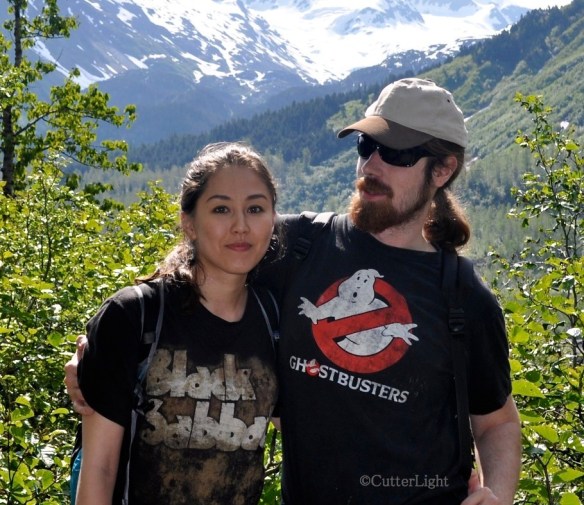
On the Exit Glacier Trail near Seward, Alaska, with boyfriend Neal. 

Although Maia’s on her own now, we still get together every summer. We hike and explore and boat and enjoy good meals, and our days often end with a bottle of this or that and stories. And we always work in some fishing.

Maia at the helm of Bandon_n

At the helm of our sailboat, Bandon, in Resurrection Bay near Seward, Alaska in June, 2012.

Maia will graduate from college this spring with a degree in music composition and theory. Each time she visits, she brings us an iPod jammed with excellent music – everything from obscure Sinatra to the latest Buck 65 and tons of stuff I’d never find on my own (but end up liking). Maia’s study of music is taking her into a world that, in its depths, goes far beyond my understanding of the subject, and her life near San Francisco couldn’t be much more different than our lives up here in Alaska. And so sometimes we return to the language we know – a language of five-weight fly rods, elk hair caddises and pheasant tail nymphs. We talk of the trout waters we’ve fished and the waters we’d like to fish. And invariably we circle back to the ponds and rivers we knew in Japan and the bluegills we used to catch there, and the bike rides and those those striking little kingfishers with their shimmering turquoise backs.
Read more at: Fishing and Camping along Oregon’s Deschutes River