On a Frozen Sea

On a Frozen Sea, the two of us, April 14, 2013, near Point Hope, Alaska. This is about two miles from the village of Point Hope on a trail broken through huge chunks of ice, as seen, and marked here with a hook. Sea ice here is several feet thick – safe enough, but several of our local friends had stories about getting temporarily stranded when the ice they were on ice broke free from the main sheet. The gun is a precaution against Polar Bears.

I’ve enjoyed going back through photographs from our four years in Arctic Alaska. Although there are a number of additional pictures I’m reasonably happy with, the truth is that most of the images we made in those years constitute memories rather than art. As self-taught photographers, we still had a lot to learn about light, and how cameras interpret light, and composition, and optimal camera settings, lens choices and technique. Moreover, the images we made in those early days have a somewhat random feel about them as we hadn’t yet developed a vision for how we wanted to shoot and what we wanted to make images of… what stories we wanted to tell. We’d love to go back and revisit those scenes, and from time to time we discuss the possibility… but as Frost warned, way leads to way.

When we left Point Hope in the spring of 2014, we traveled to Mongolia where we lived for the following two years. We’re looking forward now to revisiting that collection. So, we hope to see you “in Mongolia!” JD

Tracks

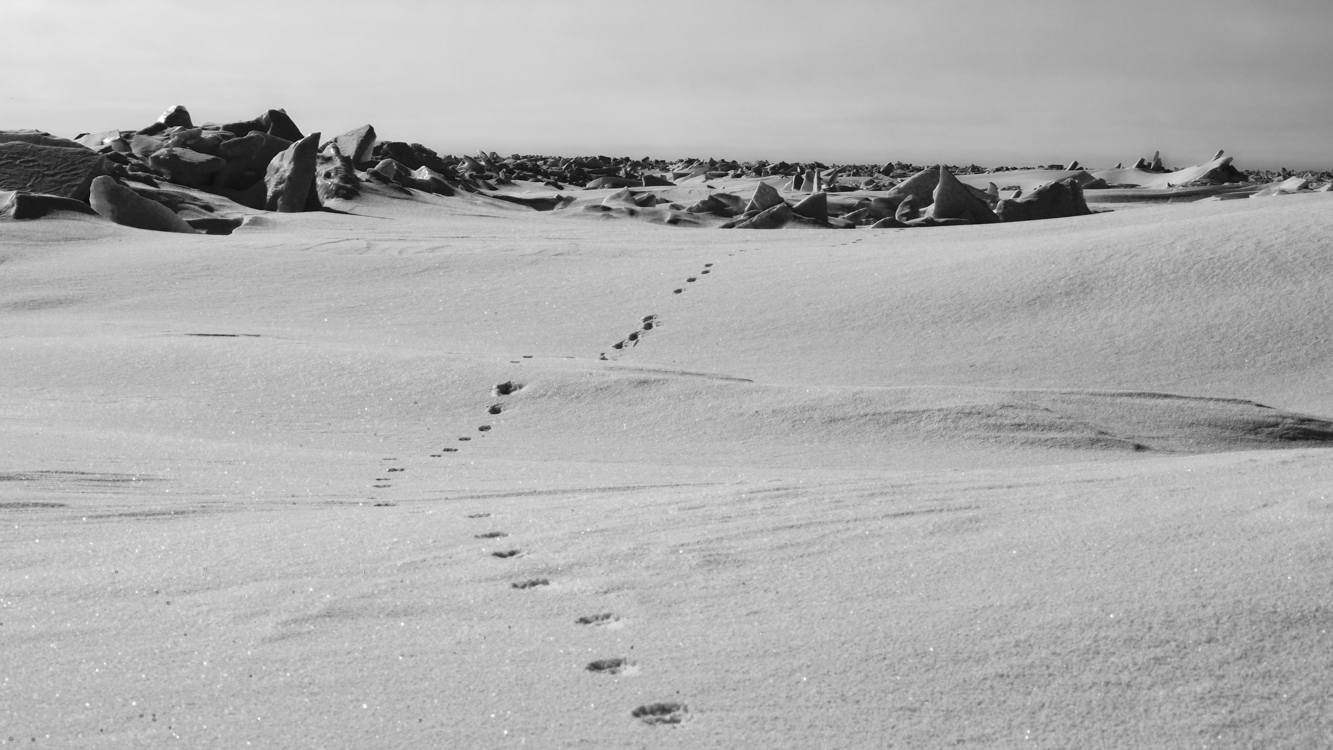
Polar Bear tracks disappear into the other worldly landscape of ice and snow on the frozen Chukchi Sea near Point Hope. The great bears continuously roam the ice in search of seals and the remains of whales that have been caught. By average weight, Polar Bears rank as the world’s largest bear. However, the Coastal Brown Bears of Kodiak Island and the Chignik River drainage on the Alaska Peninsula can weigh as much and stand taller. April 26, 2012

Icehenge

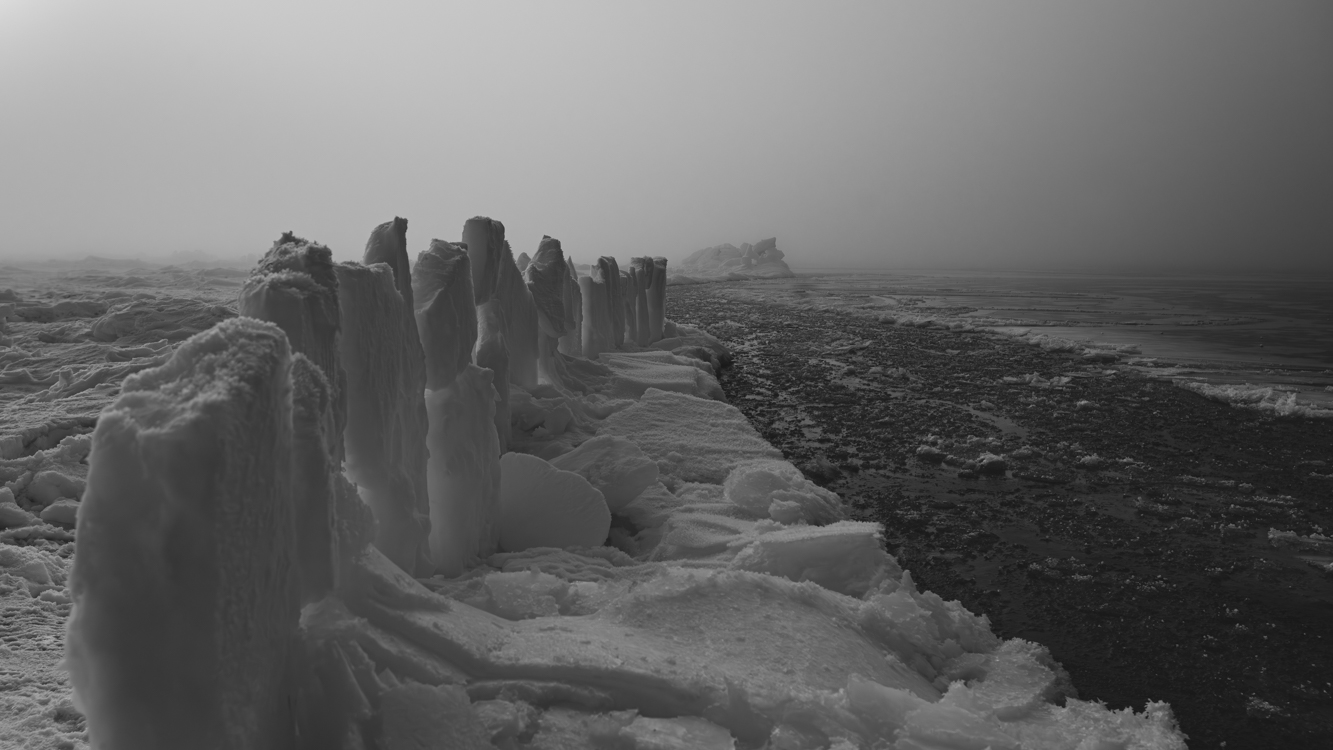
Black and white photograph of a hunting blind made of large ice slabs positioned along the edge of Arctic sea ice by Inupiat whalers.
Three miles out on the frozen Chukchi Sea, 125 miles north of the Arctic Circle, thick fog lifts to reveal slabs of ice positioned by Inupiat whalers to serve as a hunting blind along the edge of a slushy lead. Both Bowhead and Beluga Whales are taken as they migrate through these open lanes between sheets of ice. Near Point Hope. Alaska, May 3, 2012

The Catch: Bringing a Whale up on Sea Ice in Arctic Alaska

Inupiat whaling on the frozen Chukchi Sea near Point Hope, Alaska. April 26, 2012

As Bowhead Whales go, this was a small one – perhaps 10 tons or so. We had hiked approximately three miles from the village of Point Hope across the frozen Chukchi Sea to the camp where we had heard a whale had been caught. Locals had traveled by snowmachine and honda (snowmobile and ATV). There is always the danger of encountering a Polar Bear in this environment, and so we were armed. After snapping this picture I handed the camera to Barbra and took a place on the rope.

The open water in this picture is called a lead – an opening between two sheets of ice. You can see, across the water, the jumble of ice along the edge. Sea ice is often not the smooth sheet of white one might imagine. It continuously buckles, pushes up along pressure ridges, drifts apart and then presses back together. In a way, it behaves like the Earth’s tectonic plates, buckling, heaving, colliding, lifting. And so in order to make a whaling camp, trails must first be made through these places where jagged ridges of ice, individual chunks the size of cars, some much larger, must be broken through and smoothed out.

It is a lot of work to take a whale.

Nose Pressed to Glass

Sea Ice1_n

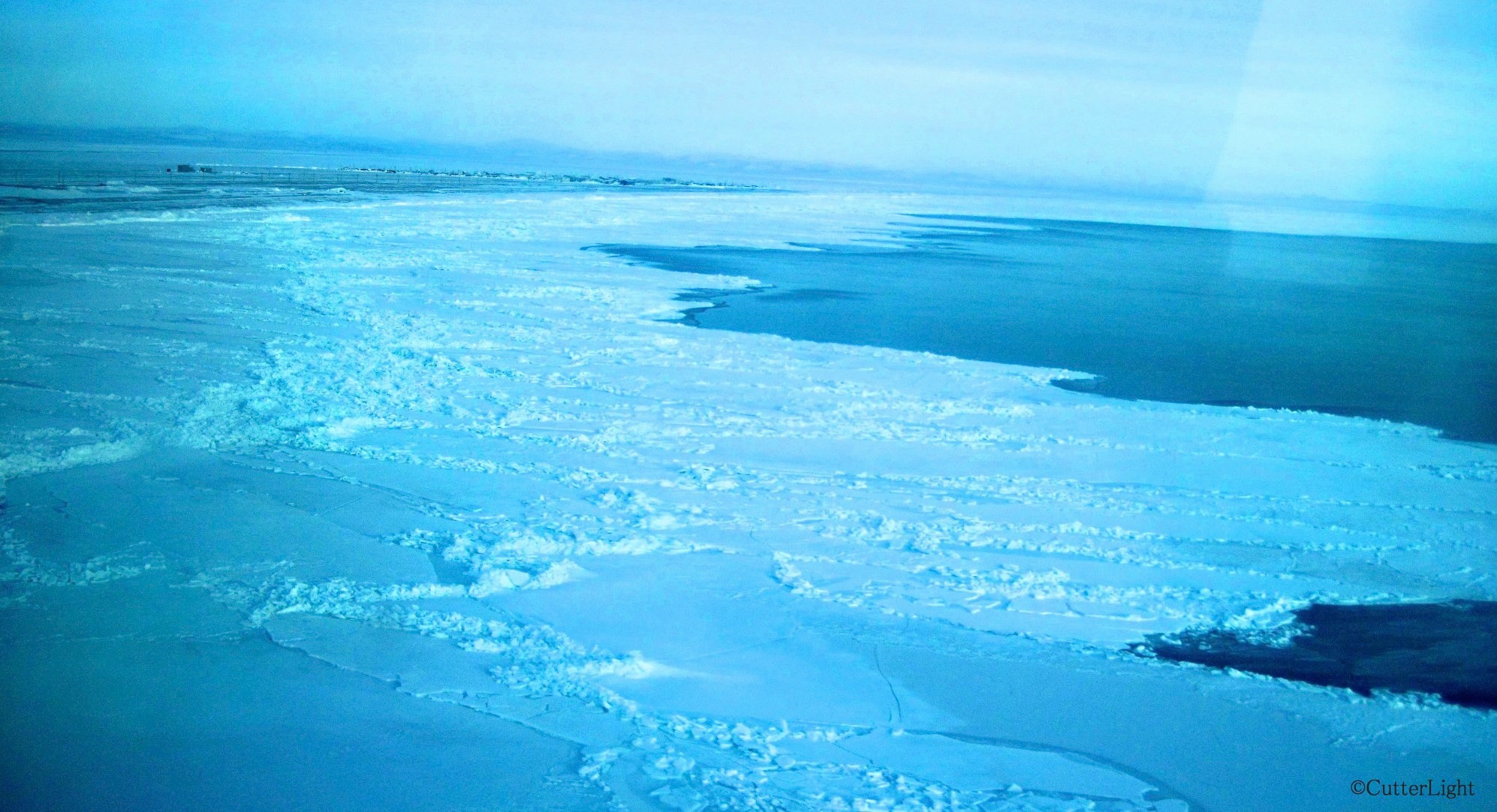
Sea ice fascinates us. Our village can be seen in the upper left of this photo. At the time of the photo, north winds had blown much of the ice away from the land. The “sticky ice,” the ice which clings to the shore, can usually be relied on to be safe to walk on. Even this sticky ice is subject to the whim of Mother Nature’s strong winds and current. 
Sea Ice2_n

Piles of ice form along pressure points of the frozen surface of the sea. There are many histories of boats navigating too late in the season and becoming stranded or crushed between these pressure points.

Sea Ice3_n

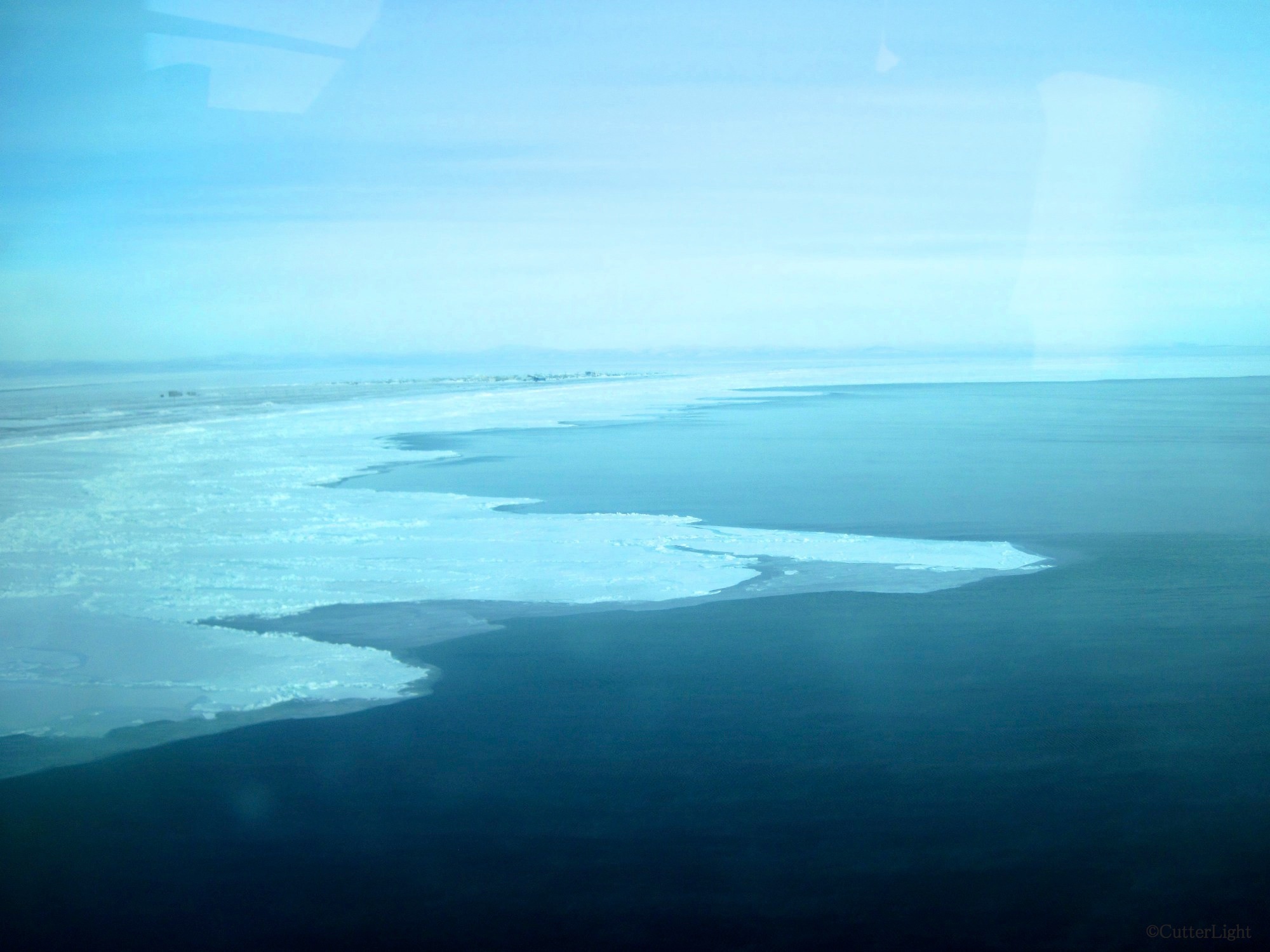
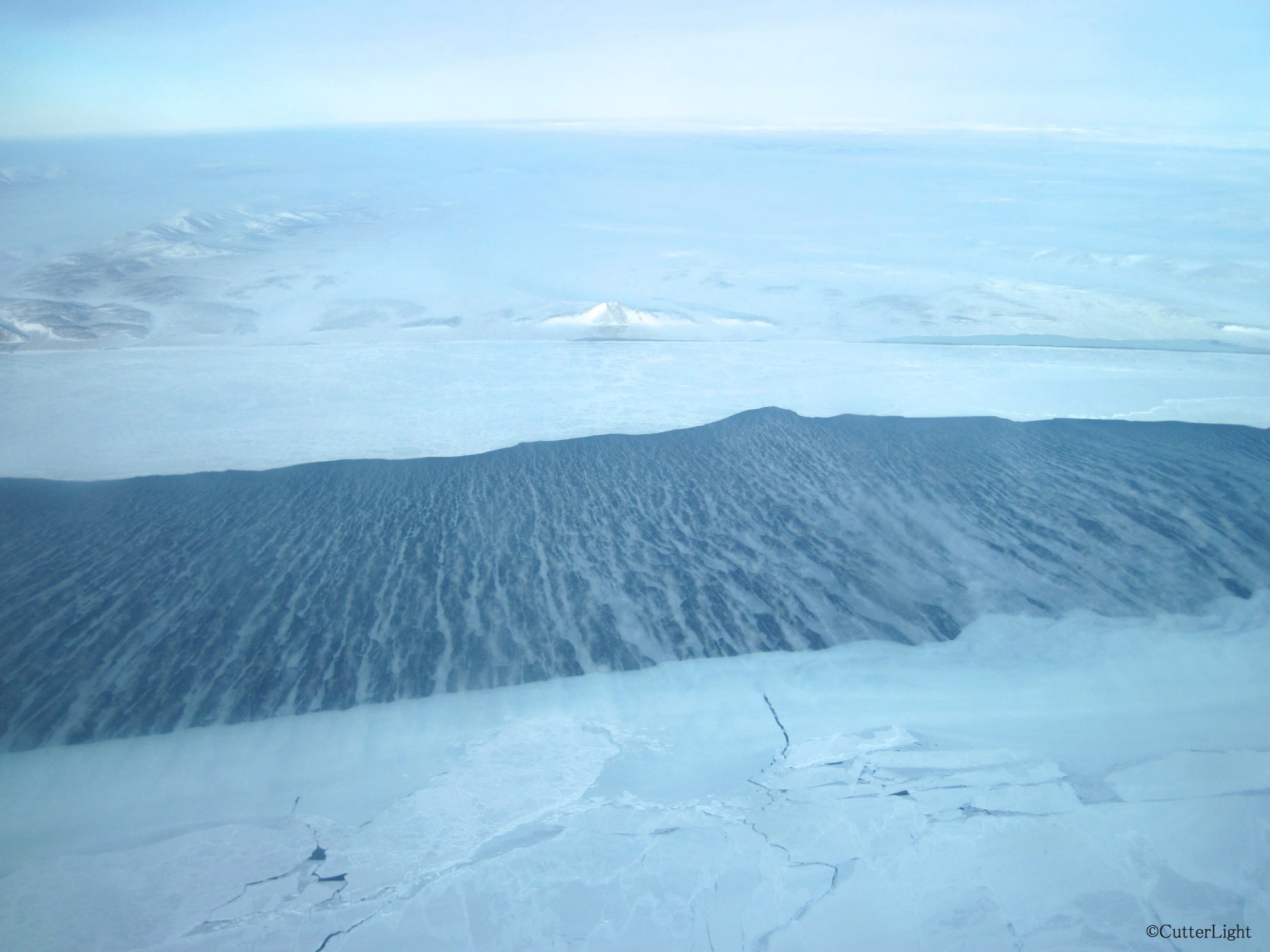
Recently, wind from the south has closed this lead – the open water to the right. The view from our village today is solid ice as far as the eye can see. The villagers are readying their seal skin boats to go whaling. Soon the bowhead migration will begin. When the north wind blows open a lead, the whaling crews of Tikigaq will patrol the open water in hopes of catching animals that are in their Spring migrations. These whales make up a critical part of the subsistence catch in this Inupiat village.
Project Chariot_n

I’ve recently been reading the book The Firecracker Boys. This true story is about a crazy post WWII idea some engineers and scientists had for using a nuclear bomb to blast a harbor between the peak in the center of this photo and the ridge on the left. This is about 25 miles east of Point Hope. The proposed  H-bomb  was to be 163 times the strength of the bomb that was dropped on Hiroshima. Scientists and engineers promised to sculpt the land based on human requirements. It was part marketing (using bombs for good) and part wild scientific experimentation. It’s a shocking and crazy true story!
PHO 1_n

Nose pressed to glass, I peered out from the bush plane window as we lifted straight up, like a helicopter, in the 40 m.p.h. north wind. It seemed scary on the ground. With gusts well above 40 m.p.h., the plane arrived, landed on the airstrip and never turned into the usual parking area. I fought my way toward the plane, slipping along the airstrip as if being pushed down by a strong arm. Once in the plane, I felt calm and safe with skilled bush pilots at the controls.

PHO 2_n

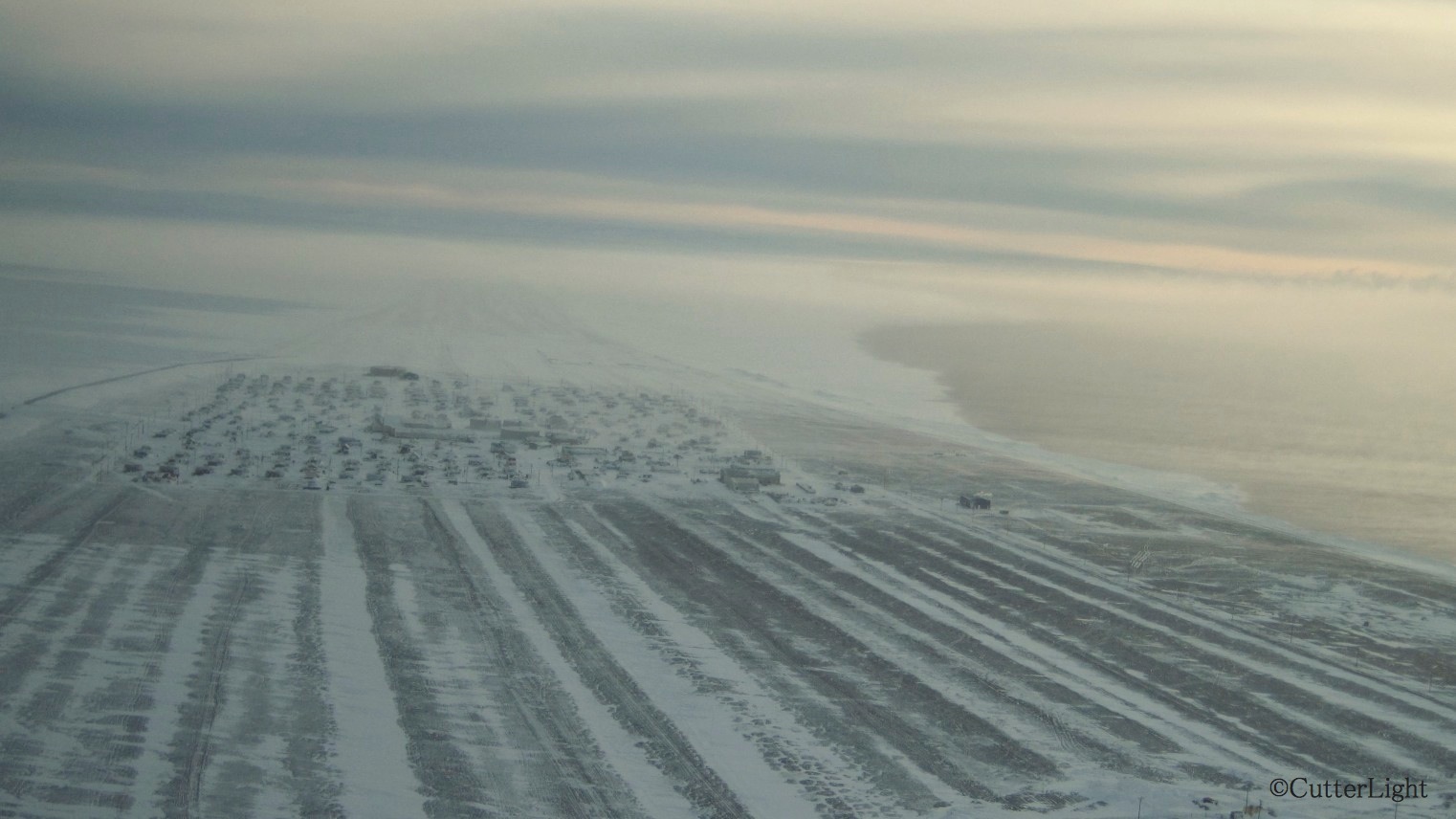
From the air, the village looks like a patchwork quilt as rooftops peak above a blanket of snow. If the snow and ice were sand, Point Hope could be any beachfront real estate in the world!
Spring Thaw

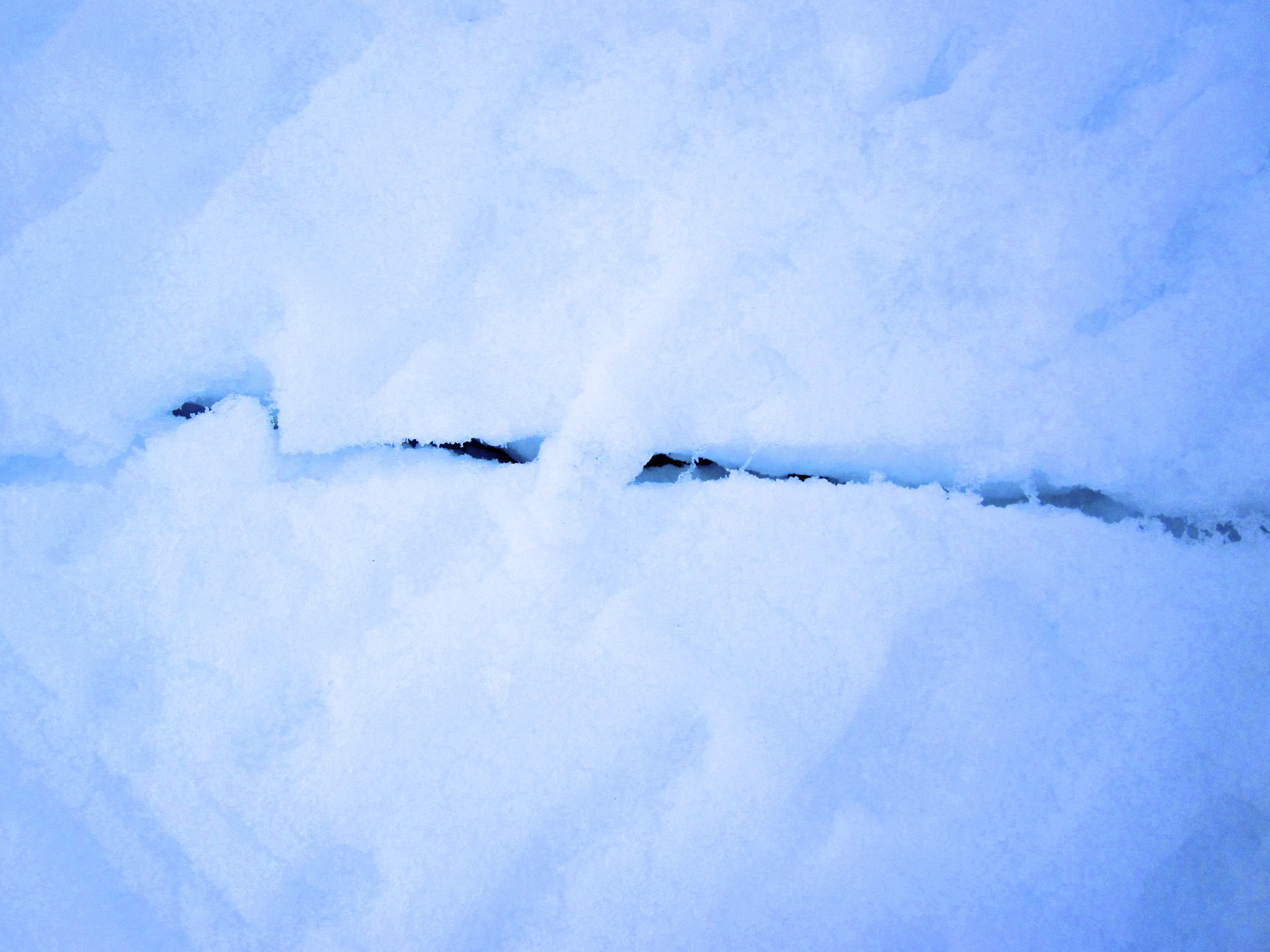
Above is a picture of a thin crack in the sea ice near shore here in Shishmaref.

The earth is leaning into the sun, more so each day, and at last winter is letting go. For a few consecutive days now, the temperature has soared to just above freezing. What was once a deep pack of snow so cold it squeaked under boot fall has turned to slush, and today, for the first time in many months, there are a few small pools of open water. Although snowdrifts up to several feet high remain in places and most of the island is still covered in snow, here and there a few brown tufts of last year’s grass have emerged amidst bare patches of sand. Light breezes coming out of the south feel luxurious on our faces. We leave our hats and mittens behind.

Yesterday, two Canada geese passed overhead, coming home.

Sculpture

It is gloriously beautiful these days. The sun shines so bright. It beckons you outside. I feel the sun on my face and wait to feel the warmth. I guess I will need to wait longer. Even though the sun is brilliant, -17 is too cold to feel the suns rays on my face!

Sea Ice

Out of context, I’m not sure if this photograph makes sense. This shot was taken looking straight down onto Norton Sound from an airplane. The lower part of the photo is the sea ice that sticks to the coast. You can see the pattern of the snow as it’s blown across the ice. The blue in the center is the sea water. The ice above the blue is the free ice that is blown around by the wind. I thought it was interesting that I could see the layers on the broken edge of the ice down into the sea water.

The ongoing fascination with sea ice continues…