
Chignik River, September 22, 2018


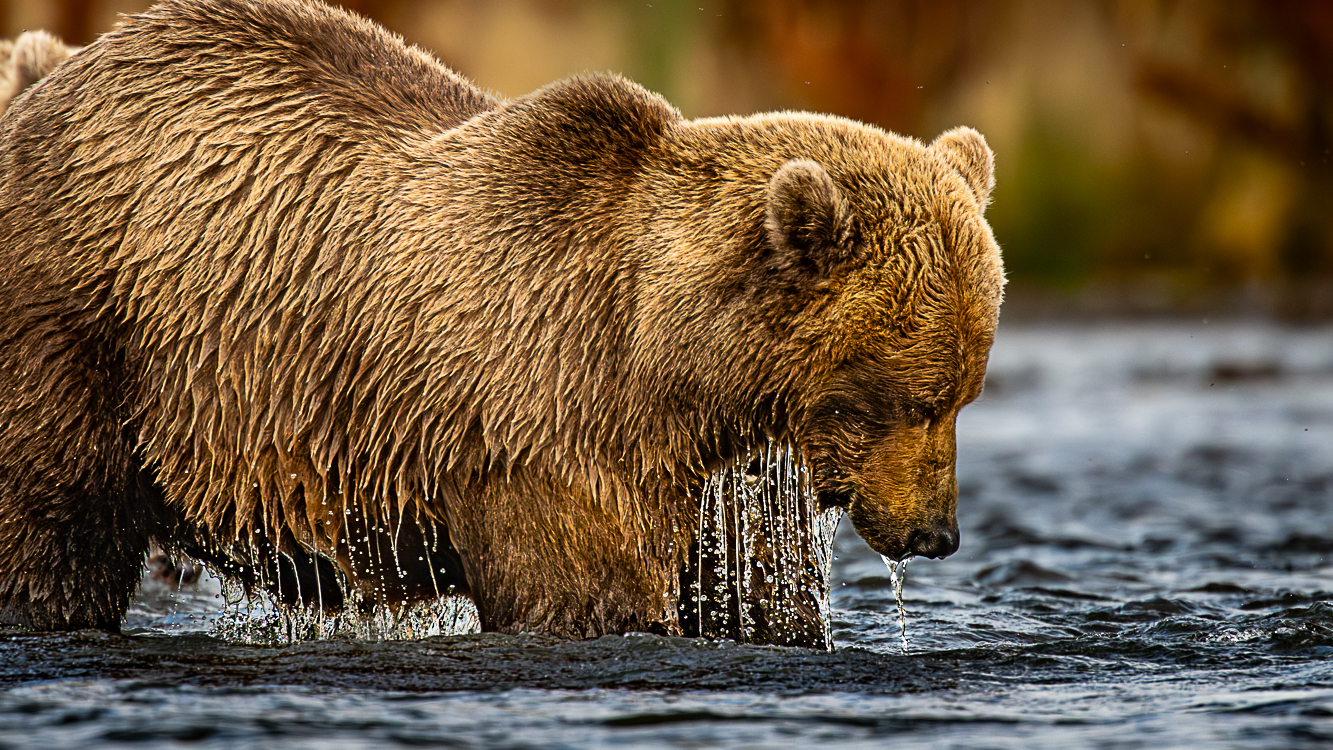
A second bear is just barely visible in the upper left of this photograph of a healthy sow that has trapped a spawning Sockeye Salmon in her forepaws beneath the water. Anytime the salmon are running from July through November, bears can be expected along the river and lake.

During the several years we fished the water at Paradise Bend (our name for an expansive area of tidally influenced braided runs and gravelled, vegetated islands), we only encountered other anglers on one occasion. Their guide had them casting in the wrong places – unproductive water unlikely to hold salmon. In due time their casts became listless, eventually gave way to billed caps lifted and head-scratching, and then to searching glances at each and beseeching looks toward the guide. They left fishless, and that was the only time we encountered anglers on “our” pool.
Paradise is a very special place, often beautifully lit by morning light, frequented by some of the world’s largest Brown Bears, traversed by moose, mink, fox, otter and wolf, shorelines decorated in season by magenta fireweed, sunflower-like arnica, marsh marigold and a dozen other showy blooms. At any time of year the water is free of ice you might hear the ratchety call of a kingfisher, and all summer long there are the songs of thrushes, sparrows and warblers to cheer the day. Gulls and eagles scavenge the islands when the fish are in, and in spring the wide, weedy shallows load up with Tundra Swans and hundreds of ducks. The ducks, particularly Mallards and Green-winged Teal, return en force in fall, and it was near Paradise that I encountered a brilliantly marked male Spotted Redshanks – a rare stray from Asia.
Tucked back in a bend off the main channel where boats never ran, it was easy to lose oneself during a morning at Paradise. Schools of newly arriving Coho pushing up tidal-bore-like bulges of smooth water as they arrived in the main pool were a thrill, and the fishing could be agreeably challenging in the clear, shallow water where we could watch the fish come to our flies. At the take, we would strip-set and then brace for long runs punctuated by cartwheeling acrobatics. There were more productive pools on the river, but none more enjoyable to fish.
Maybe even more satisfying than these periods of activity were the times in between, the water temporarily empty of salmon, the big sky, the vast landscape, bird song, rushing water and quiet… a place to let thoughts find their own way and perhaps to visit with a friend or love from the past who, for whatever reason, is now absent. There are a lot of reasons to take down a fly rod from its wall pegs and go to the water. There is the fishing, of course… but there are times when the promise of uninterrupted thought is the more compelling motivation.


There is a river…
T-shirt and jeans, belly down, bare elbows on scratchy, crazy-red carpet my mother had insisted on, chin propped in cupped hands, I pored yet again over one of the articles in the magazines my grandfather had given to me and that were permanently scattered across my bedroom floor. I had, once again, escaped… to a world barely touched, to wilderness rivers, large fish, peace, calm… quiet.
All of it was fascinating, enthralling to my young mind. It was only 50 years ago, but the world was a different place. Less explored. Less trammeled. Discovery on a grand scale was still possible. And so whether I was reading for the fourth, fifth or 11th time an article about fishing for the exotic Mahseer of India, skittish Bonefish in the Bahamas, ginormous Northern Pike in a seldom seen Canadian lake or mammoth Striped Bass in the Massachusetts surf, I found myself absorbed in the mystery of possibility and promise.
Early in life, I joined a fraternity whose members’ first contact with Latin was the binomial Salmo salar – “Salmon leaper,” Atlantic Salmon. Back then, there were still lots of Atlantics in the Canadian maritime provinces. They thrived in rivers with magical names: Miramichi, Grand Cascapedia, Restigouche… Scenes brought to life by writers such as A. J. McClane and Lee Wulff.
At the same time, Pacific Coho and Chinook in staggering numbers ranged all the way from northern California to sub-Arctic Alaska. A guy with a car, gumption and gas money could explore the West Coast fishing on his own, following in the steps of legends like Zane Grey and Bill Schaadt. I’d show my dad the articles, the photos of big fish – bass, pike, muskies, salmon, all of it. He’d rattle his Pittsburgh Press newspaper with a shake, look up for a moment, and absently say something like “That looks interesting,” in the way people say something looks interesting when, in fact, they have little interest in it.
Years passed by. Years became decades. As time slipped away, so did the salmon fishing I’d read of. Dams, development, timbering practices, pollution, overfishing, salmon farming, hatcheries… The 70s, 80s, 90s and the first two decades of the 21st century have visited a thousand cuts on salmon and their rivers. Throughout the world, from the Pacific Northwest to the Gaspé Peninsula to Scotland, Norway and beyond, the fish have responded by retreating. As rivers with strong runs of salmon have been pared down, the water that remains generally falls into one of two categories: those accessible only through outfitters, lodge owners and guides; and those where you can expect to fish among a crowd.
Neither option holds much appeal beside the dreams of exploration, adventure and discovery inspired by copies of Field and Stream, Outdoor Life and Sports Afield read in boyhood.
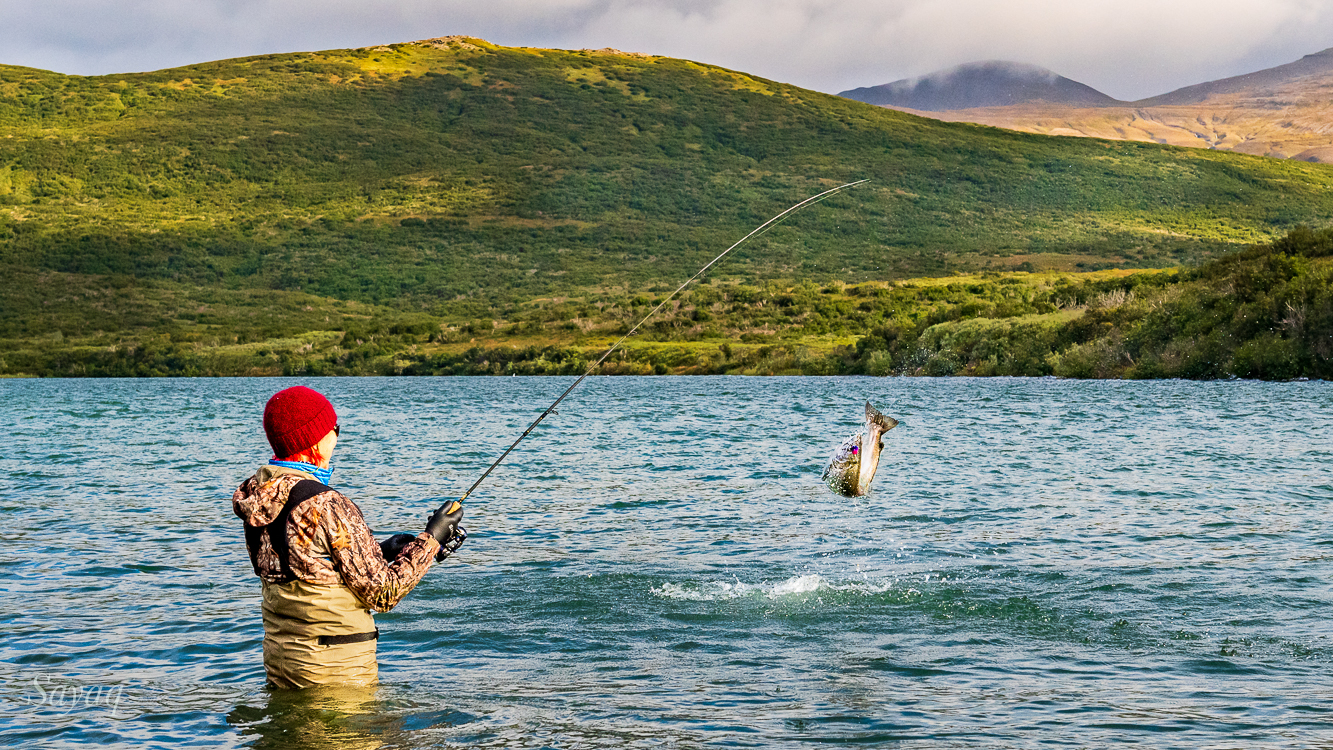
It has been a long, winding, unpredictable path that has brought me to this river. Most days Barbra and I have the fishing to ourselves, save for bears, otters, seals and eagles. We know it is unlikely to last… But for now, we are here and there are fish and there is quiet and solitude and dreams and dreams come true. (Barbra made this lovely photo on August 24, 2020. Tackle: Orvis Helios II 8-weight, Galvan T-8, WF floating line, 10′ leader w/ 20lb tippet, Chartreuse Rocket Man #2. Nikon D800, 24-70mm f/2.8, 1/640 at 7.1, 48mm, ISO 800)

The Gillie: Our 2008 C-Dory 22 Angler taking a cruise on the Sacramento River
“Gillie” is a Scottish term that refers to a fishing or hunting attendant, much like a guide. As such, armed with an excellent electronic fish-finding unit, a dependable 90 hp Honda engine (and an 8 hp kicker), and enough open deck to comfortably fish two or three anglers (four in a pinch), this boat has proved to be a reliable gillie. Barbra and I have spent many nights both on the water and on land snuggly tucked away in the cuddy cabin, and the dinette table in the pilot house is just big enough for the two of us to enjoy a meal. These boats are capable of storing an amazing amount of gear, the hull is tough, and on flat water loaded down with fishing gear and four medium-sized adults, it tops out around 25 knots (about 29 mph). Inside the pilot house with the Alaskan bulkhead door closed, making long runs is both warm and quiet. The 90 hp Honda trolls beautifully when we’re running rigs for salmon, and the shallow draft (well under two feet) allows us to get in the rocks in pursuit of species close to shore.

Ask a typical boat owner what the best boat is, and they’re likely to tell you, “The one I own right now.” That’s how we feel about our C-Dory. With a beam of only 7’9″, it’s a breeze to tow, yet it’s enough boat to feel safe on fairly big water–from the California coast to the ocean bays of Alaska. You’ve probably heard the quip that goes, “The two happiest days in a boater’s life are the day he buys the boat and the day he sells it.” Not with a C-Dory. The happiest days are the ones we have it on the water.
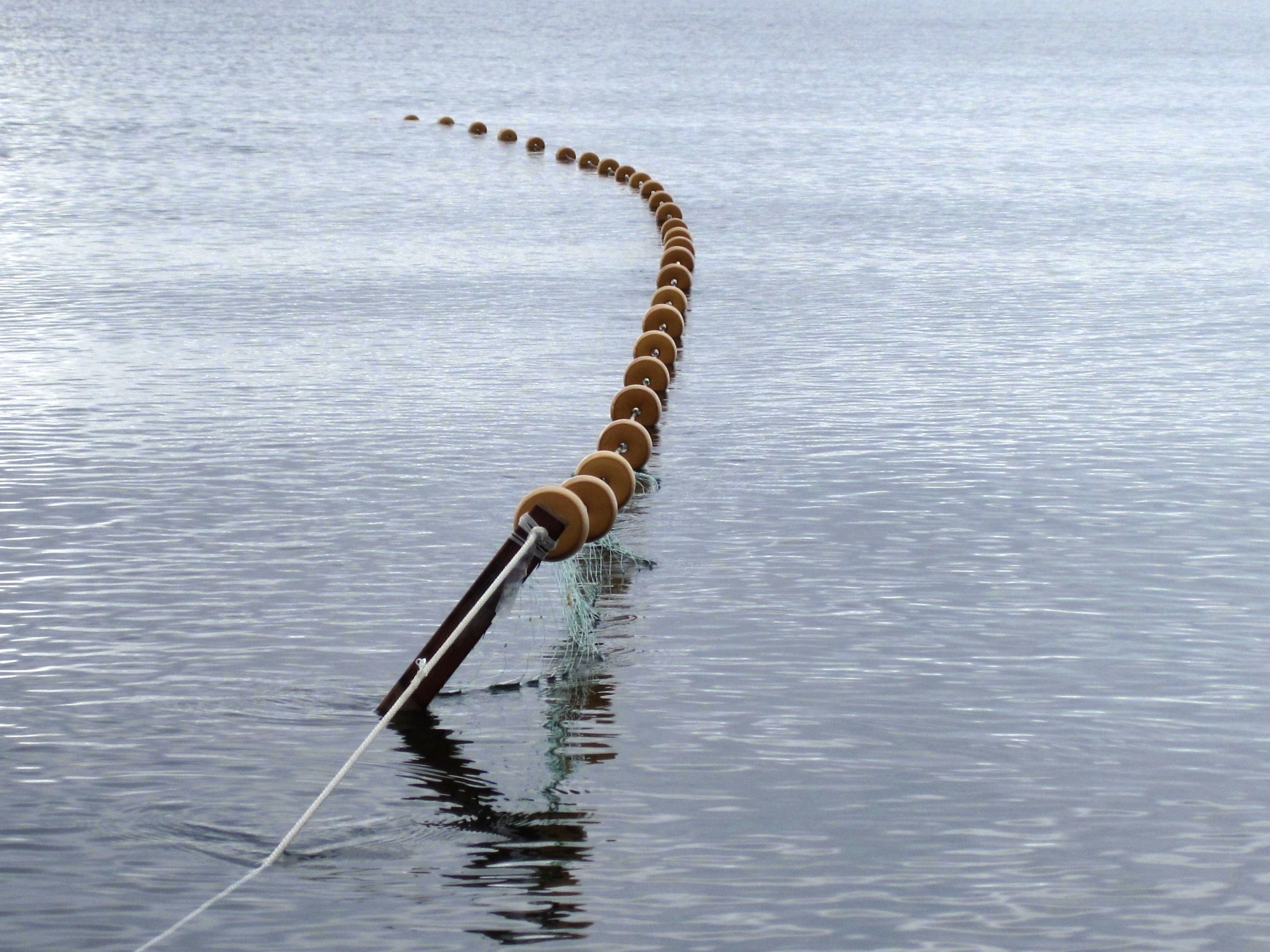
September 4: We’d be wanting to learn how to set a net from shore, so when a couple invited us to come fishing with them, we jumped at the opportunity. The way nets are set here is pretty ingenious.
The first order of business is to get a big enough weight out from shore to securely anchor the far end of the net. In Shishmaref and lots of other places, they use small dingies or other watercraft to accomplish this. But the current runs strong near Point Hope, and high winds can come up quickly. In the past, lone anglers launching small boats off the beach led to drownings. So a different method for getting the cloth sacks of rocks which serve as weights out into deeper water was developed. Here fishermen use long poles–sometimes lengths of two-by-fours nailed together. The fish often run quite close to shore, so even 25 feet or so can be far enough and a 30 foot net set is all you need. The pole is threaded through a loop on the top of the weight, enough floatation in the form of plastic buoys is attached to the end of the pole to keep everything floating as its pushed out, and then the pole is pulled back and the weight drops to the bottom.
Meanwhile, a long line has been run through one end of the net, top to bottom along a piece of wood attached to the net and is also run through the weight. With the ends of the line tied together to form one long loops, and controlled from the beach, this line is pulled until one end of the net is snugged up against the weight. The top and bottom lines are adjusted so that the net is positioned upright, and the lines are tied off to two stakes on the beach. At the other end of the net–the one closest to the beach–another line holds the net in place and is similarly tethered. Corks keep the top of the net up, and a lead line keeps the bottom of the net down. It sounds a bit complicated, but in practice the whole process is fairly simple and intuitive.
Once the net is set, the fishing is much like any kind of fishing anywhere. You wait, hoping to see the tell-tale dancing of corks, or maybe a splash as a large fish entrapped in the net swims to the surface. Up here the quarry are salmon (pinks, silvers and Chinook), and the highly prized “trout,” i.e. sea-run Dolly Varden. While you wait for the fish to come along, you might see grey whales or even Orcas, seals, or maybe a walrus. Hundreds of thousands of seabirds nest and roost on the cliffs of Cape Thomson to the south, so the sea is usually alive with murres, gulls, puffins and more.
 CutterLight