Tag Archives: nature
Goldeneyes

Water Necklace

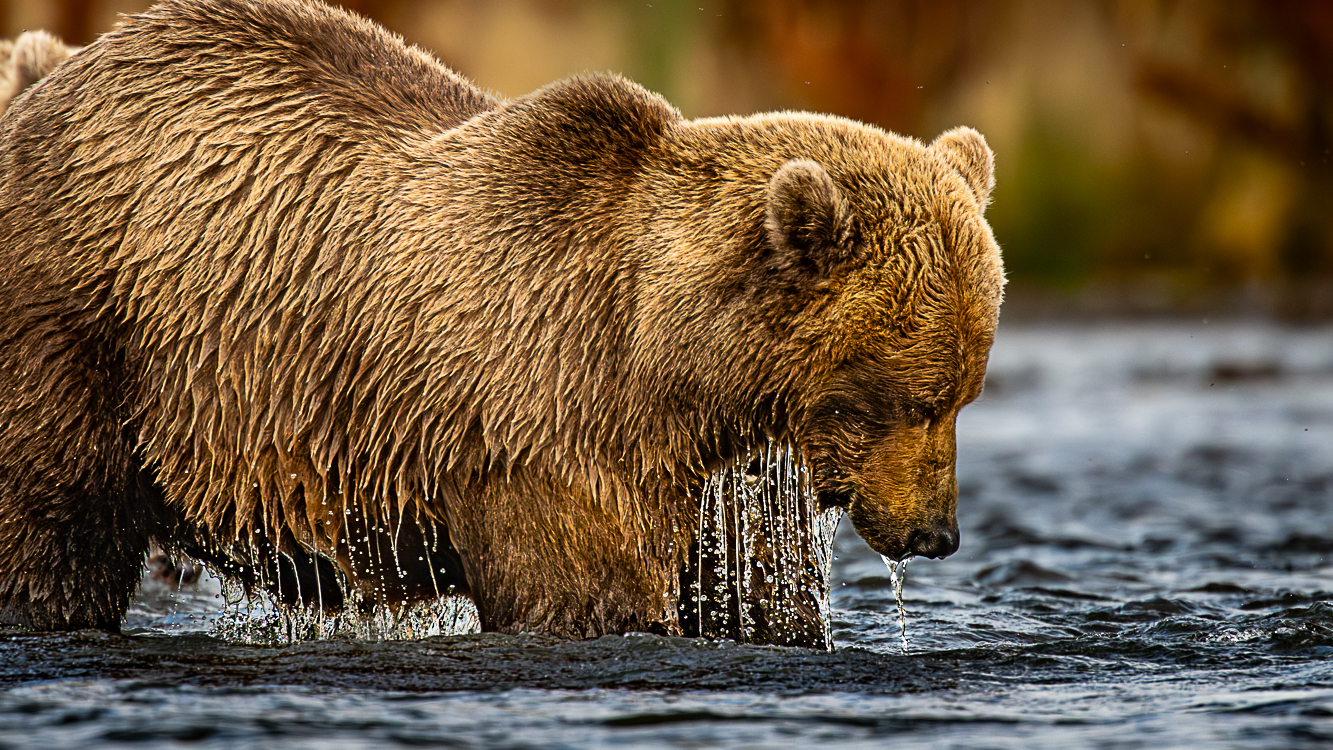
A second bear is just barely visible in the upper left of this photograph of a healthy sow that has trapped a spawning Sockeye Salmon in her forepaws beneath the water. Anytime the salmon are running from July through November, bears can be expected along the river and lake.
Under a Broken Sky

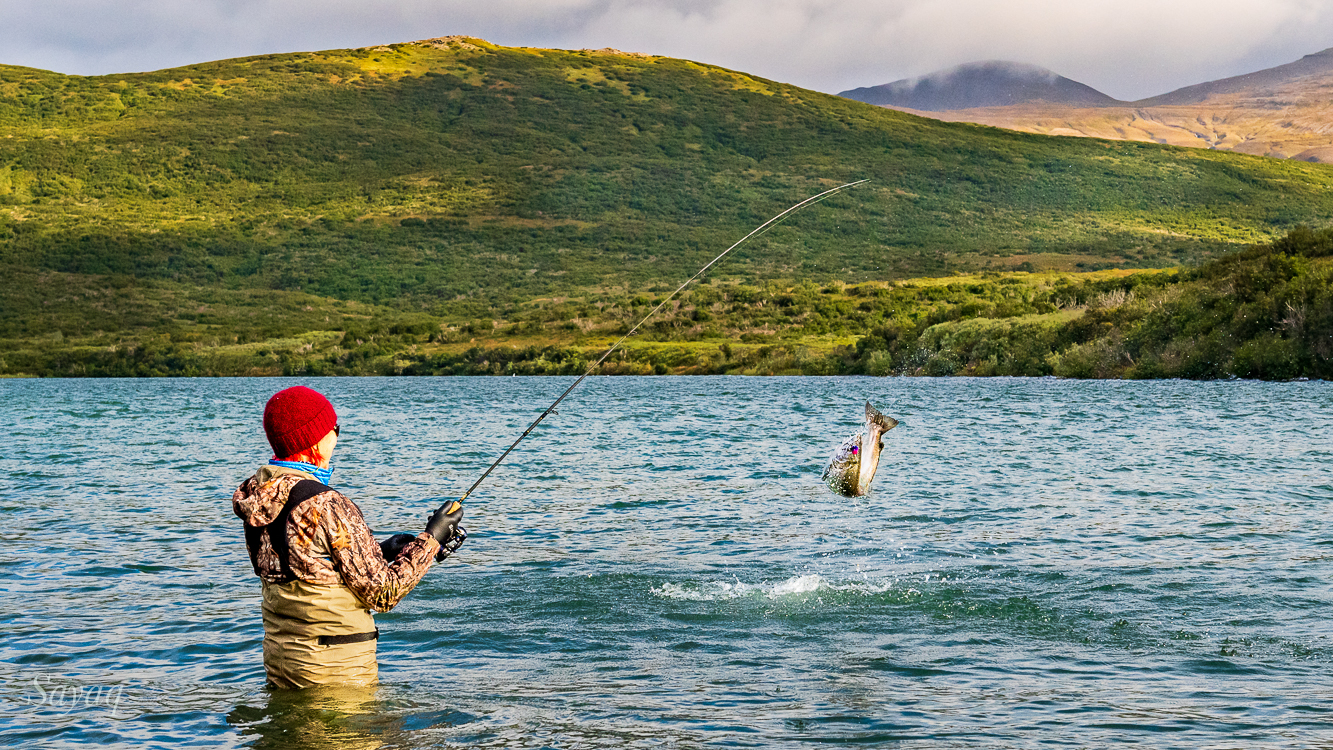
During the several years we fished the water at Paradise Bend (our name for an expansive area of tidally influenced braided runs and gravelled, vegetated islands), we only encountered other anglers on one occasion. Their guide had them casting in the wrong places – unproductive water unlikely to hold salmon. In due time their casts became listless, eventually gave way to billed caps lifted and head-scratching, and then to searching glances at each and beseeching looks toward the guide. They left fishless, and that was the only time we encountered anglers on “our” pool.
Paradise is a very special place, often beautifully lit by morning light, frequented by some of the world’s largest Brown Bears, traversed by moose, mink, fox, otter and wolf, shorelines decorated in season by magenta fireweed, sunflower-like arnica, marsh marigold and a dozen other showy blooms. At any time of year the water is free of ice you might hear the ratchety call of a kingfisher, and all summer long there are the songs of thrushes, sparrows and warblers to cheer the day. Gulls and eagles scavenge the islands when the fish are in, and in spring the wide, weedy shallows load up with Tundra Swans and hundreds of ducks. The ducks, particularly Mallards and Green-winged Teal, return en force in fall, and it was near Paradise that I encountered a brilliantly marked male Spotted Redshanks – a rare stray from Asia.
Tucked back in a bend off the main channel where boats never ran, it was easy to lose oneself during a morning at Paradise. Schools of newly arriving Coho pushing up tidal-bore-like bulges of smooth water as they arrived in the main pool were a thrill, and the fishing could be agreeably challenging in the clear, shallow water where we could watch the fish come to our flies. At the take, we would strip-set and then brace for long runs punctuated by cartwheeling acrobatics. There were more productive pools on the river, but none more enjoyable to fish.
Maybe even more satisfying than these periods of activity were the times in between, the water temporarily empty of salmon, the big sky, the vast landscape, bird song, rushing water and quiet… a place to let thoughts find their own way and perhaps to visit with a friend or love from the past who, for whatever reason, is now absent. There are a lot of reasons to take down a fly rod from its wall pegs and go to the water. There is the fishing, of course… but there are times when the promise of uninterrupted thought is the more compelling motivation.
Lake Sunrise

From our living and dining room windows, we would follow the position of the sun as it changed with each season. Autumn mornings, when the sun rises over the lower end of the lake, are often spectacular. Coho Salmon are still migrating up the lake and river at this time of year, and on still mornings such as this we would watch from our windows for wakes and bulges along the shoreline. Chignik Lake, 10/16/17
Leaper at The Bend

Chukchi Chess
Autumn Shrike

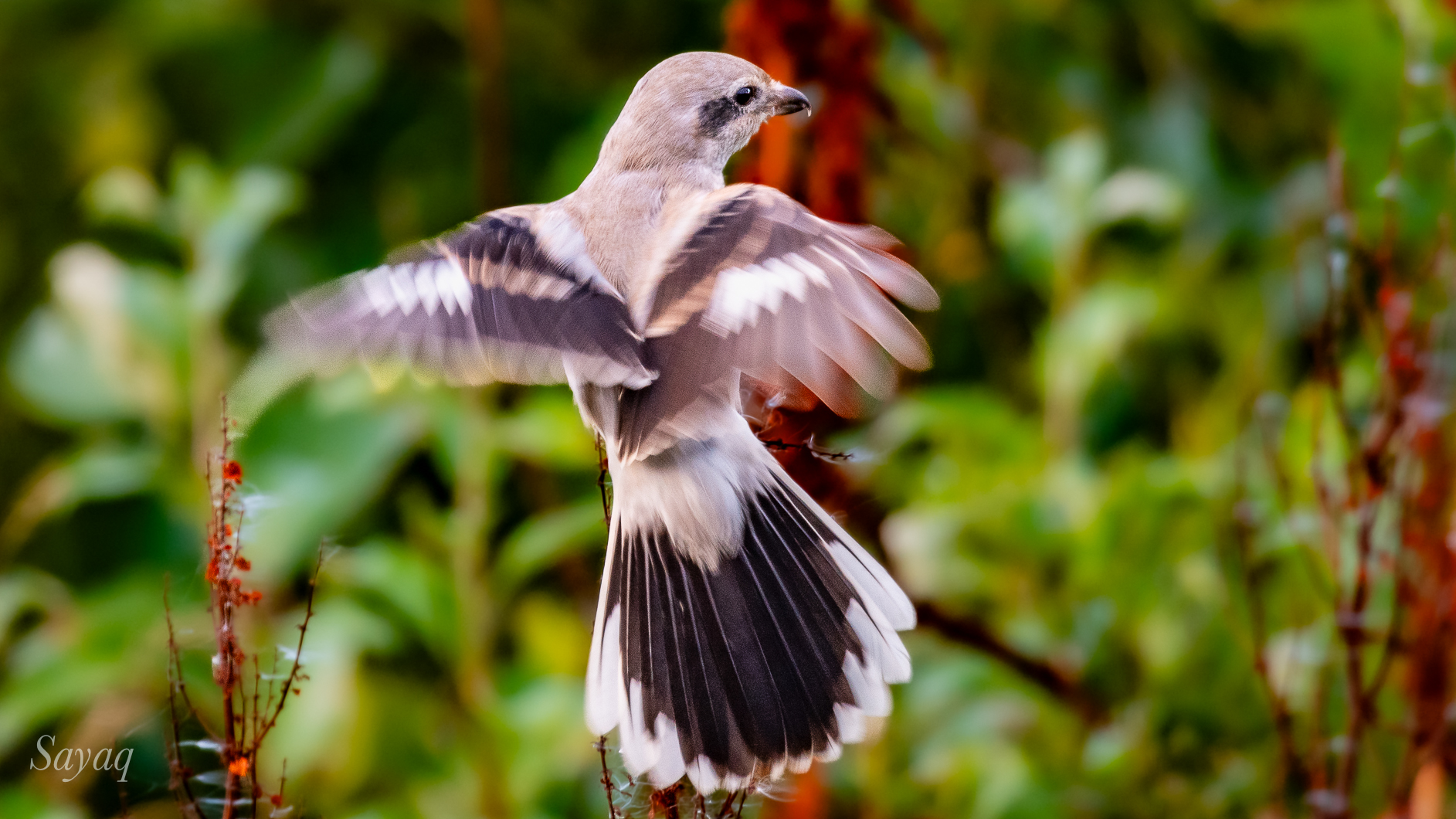
The brownish color of this shrike indicates a first-year bird. Mature adults are more gray, and the black eye mask is sharply defined and really pops. At The Lake, Northern Shrikes are typically arrive in late summer and remain common through fall with occasional specimens remaining into winter.
Little One

Wilderness Camp – but What Is Wilderness?

Denali National Park, 6/7/17
We procured a backcountry permit at the park office, took a shuttle bus a ways into the park, debarked and backpacked into the landscape in this photo to spend a couple of nights. The only sign of people we came across was a plastic lens cap from a camera – something accidentally lost, not littered. Caribou and Dall Sheep, Wolf prints and Wolverine tracks… A Grizzly Bear caused us to change our course… Short-eared Owls cruising low, nesting Willow Ptarmigan hens – the males waking us at first light with their call of Potato! Potato! Potato. Tree Sparrows flushing from tiny ground nests where clutches of blue-green & brown eggs were crowded together. We came across Caribou antler sheds; a moose rack attached to a skull suggested a successful hunt by wolves. In 1846, Thoreau needed only to travel from Concord, Massachusetts to Maine’s Mt. Katahdin* to immerse in the vital contact with wilderness he sought. During the 2022-2023 season, 105,000 tourists traveled to Antarctica – up from just 5,000 only a few years prior… which was up from somewhere near zero not so long before that. Even Alaska’s remote, far-north rivers are typically floated by multiple parties each year. Not long ago I came across a recent piece of video depicting an unimproved campsite I overnighted at on youthful floats down my native Clarion River. The site was seldom used in those days, nearly pristine, and you could nice-sized large trout in the pool and the riffle water that flowed by. The contemporary video showed trampled vegetation, fire pit scars, bags of trash…
There are no doubt as many definitions of wilderness as there are human expectations of what might be present or absent in such a place. The one certainty is that wilderness is becoming more difficult to find, to immerse in, to discover and explore. My recollection of reading Thoreau’s account of his attempt to ascend Katahdin is that at some point the climb (or was it the descent?) was terrifying. Perhaps therein lies a piece of what wilderness means… a place cut off from civilization, where things could go wrong, and if they do, you’re on your own. There’s something liberating in it.