Chignik Lake in 29 Photos: Otter Pile

Chignik Lake River Otters
Otter Pile

Our first winter in the village, the lake froze solid. Temperatures plunged during a period of calm. Ice-over occurred quickly and the new ice was clear and dense. The lake hadn’t frozen solid in recent years, and so I became the first person in five years to walk across the lake. At one point, Barbra and I hiked up the frozen lake as far as Clarks River. We even did some cross country skiing after a snowfall left the lake blanketed in white.

Most of the river froze as well, and it is certain that bodies of water further up the peninsula also turned to hard water. Due probably to subsurface springs, a few acres of water near the lake’s outflow – right in front of our house – never froze. This open water became a a refuge for all kinds of wildlife – several species of ducks, Harbor Seals, hunting foxes and eagles, and, for a short time, a wolf. Bundling up in warm clothing and crawling out onto the ice day after day, I encountered species of ducks that aren’t often seen here and got some beautiful wildlife photographs.

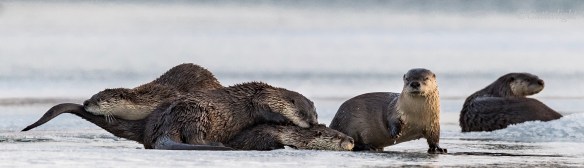
My favorite subjects were a group of River Otters that used the edge of the ice and openings as they hunted, played and rested. They’re common throughout the Chignik drainage, but they’re shy, and so although we frequently see them, we don’t often get opportunities to make good portraits of them.

At first the otters in the above photo were so cautious I was unable to approach near enough to get photos of more than the “these are otters” variety. Down on my belly, I’d edge forward across the frozen lake pushing my camera on its tripod before me. I’d hear their alarmed snorts from a distance and watch them slip like silk into the water, gone.

But day by day they became more accustomed to my presence. And they are intelligent, inquisitive beings. I think eventually they couldn’t help themselves in permitting closer proximity between us.

Among North American carnivores, River Otters are unique. Truly communal by nature, I’ve never seen them squabble the way bears and foxes often do. Although I would imagine that from time to time these playful fellows and gals must engage in spats, their more usual disposition toward each other is captured in the above image.

I’ve upgraded my equipment and improved my camera skills since that first year, so I keep hoping for another cold winter, an absence of trappers, and an opportunity to get to know these fascinating residents of The Lake better. Chignik Lake, January 2, 2017. (Nikon D5, 600mm f/4 + 1.4 TC, 1/1000 @ f/8, ISO 2500, 850mm)
Chignik Lake in 29 Photos: Rule of Tonnage

Brown Bear Chignik Alaska
Rule of Tonnage

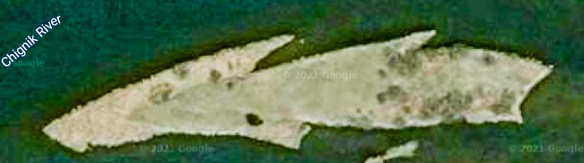
We had parked our scow near a familiar cottonwood growing on a 270 yard long, fish-spear-shaped island in a pool we call Devil’s Flats. The Flats are a massive 16 acre piece of water featuring two islands of substantial size and every kind of promising salmon water an angler might imagine. The cottonwood tree sits at the tip of what might be thought of as a backward-angled barb on a spear. There is a shallow eddy behind the barb which offers a secure place to leave a boat anchored to the bank.

We’d walked downriver to a second barb extending out into the water – a good place to set up for an evening of fishing. Our backs were to the river as we assembled our rods, laced up our lines and chose flies. Behind us, fresh Silvers, colored-up Reds and a few nearly spawned-out Pinks finned languidly in water the color of clear, liquid emeralds. It was the Silvers that had drawn us to the pool, ten to twelve pound fish still bright from the sea.

I was, as usual, talking when Barbra interrupted me with a sharp, hoarsely-whispered, “Listen!” I knew instantly what to listen for. Directly in front of us just out of view behind the island’s dense growth of willows, thick grasses and flowering plants gone to seed was a bear and there was little doubt that it was heading straight for the point of land where we had set up.

Casting about for a course of action, the best I could come up with was the proposal that we simply back away. “He probably just wants to fish,” I offered. Suggested. Hoped.

“Hey bear! We’re here!” I called out as we began backing into the river. Barbra joined in the familiar call of “Hey bear!” as, fly rods in one hand, the other on our holstered cans of bear spray, we felt our way backward, searching for firm footing among slick riverbed rocks in our hobnailed boots. Spare rods, the net, fly boxes and a backpack were on the shore where we’d left them. The snapping and cracking of autumn-browned vegetation grew louder as the bear drew closer. We both remember thinking that we hoped he didn’t step on our rods.

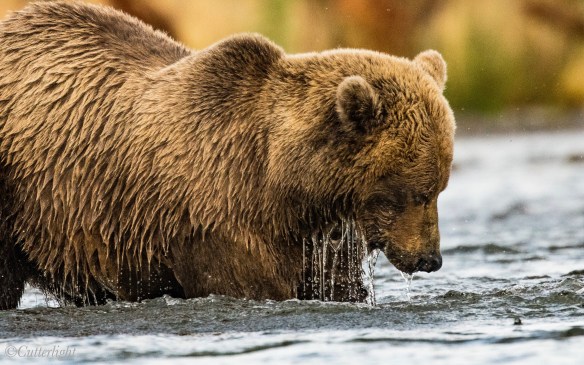
Suddenly, 900 pounds of hungry bruin emerged from the brush. I’m hesitant to apply human emotions to bears, but he squinted at us as we stood out in the water making our strange (but non-threatening) vocalizations, then he surveyed the gear strewn across his path, and then he shifted his look back to us with what appeared to be a mixture of confusion and annoyance – weighted heavily toward annoyance. He finally gave a little huff, entered the river where it eddied behind the barb of the spear, splashed forward to trap something with his forepaws, stuck his head into the water and came up with a male humpy fixed squarely between his jaws. His efficiency was laudable. Water cascading down his face, the salmon wiggling wildly in his mouth, the bear gave us another look. He seemed to be gauging our reaction to his catch. Assured that we weren’t going to contest his meal, he moved into shallow water and tore into the fish. “Look at the size of those claws!” I whisper-shouted to Barbra. We were in water only knee-deep, as close as we’ve ever been to a feeding bear.

When that snack was finished he waded a few feet downriver and repeated the trick. Another pink, this one a female. He nimbly held it between his enormous paws and took a might chomp. Ripe eggs burst from her belly. The bear, which initially had emerged only a few feet from us, was dozens of yards downriver by the time it caught its third salmon, a crimson-bodied, green-headed Red. With the pool crasher finally at a safe distance, our breathing and heart rates began returning to normal.

“Rule of tonnage!” Barbra exclaimed with a laugh as we waded ashore. The reference is to a nautical phrase we picked up in our sailing days. While not a law, per se, it is an acknowledged matter of practicality that a smaller vessel (us) is well advised to make way for a larger vessel (the bear) when on the same course. Arriving at the bank we traded fly rods for cameras, however the bear had continued moving downriver and by now wasn’t offering much of a photo opportunity. But we’ve got the story of that encounter and photos from other days at Devil’s Flats that recall the memory and our sense of awe at being so close to such a magnificent animal and the smiles – “Rule of tonnage.”

Conditions have to be just right to get quality images of bears on the Chignik. Optimally we hope for a fair weather evening coinciding with a falling tide. As the sun drops into the valley, it floods Devil’s Flats with soft light so that downriver subjects are bathed in gold. A falling tide concentrates the salmon, making it easier for bears to successfully fish. I made this photography on September 18, 2020. (Nikon D850, 600mm f/4 with 2.0 TC, 1/600 at f/8, 1200mm, ISO 2000)

Fish Spear Island

Chignik Lake in 29 Photos: Fireweed

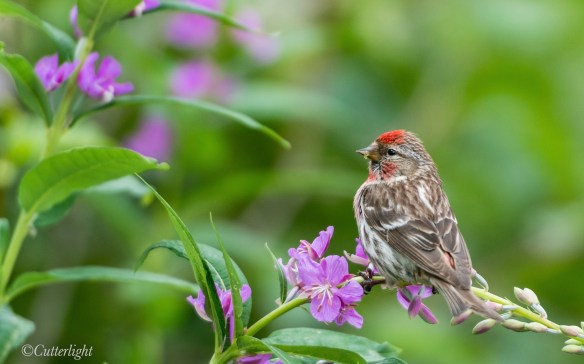
Redpoll Fireweed Chignik Lake
Fireweed

The first Fireweed shoots emerge in late May or early June. At that time, the dew-soaked four or five inch shoots are crimson red with a touch of purple, perhaps showing a hint of tangerine when backlit by the morning sun. This is the perfect time to clip a few at the base and sauté them as you would asparagus to be served with the evening’s grilled halibut.

From the moment those first crimson leaves emerge, we watch, marking spring, summer and fall by the stages of the Fireweed’s growth. By the end of June the plants have grown tall enough to brush against the tops of our Muck Boots as we follow bear trails to the river in search of Sockeyes, but they are flowerless and inconspicuous, overshadowed by Yellow Paintbrush, Nootka Lupine, Yellow Monkeyflower and Wild Geranium. A sister species, River Beauty, is already splashing gravel bars with fuchsia, reminding us that it is time to start searching the Chignik’s deeper pools for Chinook. The world is alive with activity. There will be fuzzy-headed Rough-legged Hawk chicks peaking out over their nest at The Bluffs, swallows gliding above the lake and bears which emerged winter-skinny from hibernation will be filling out on fat Red Salmon. The summertime sun barely sets; it is difficult to force oneself to turn in at night.

Come mid-late July, Fireweed crowns are nodding with buds. Any day now, the blossoms will burst into four-petaled, magenta-pink flowers. High summer at The Lake. Skiffin’ season.* From this point on, we will mark time not so much by clocks and calendar dates, but by whether or not we’re hungry or tired, how many salmon have been counted at the weir, how much the year’s new bear cubs have grown and the ascension of Fireweed blossoms as they progress to the top of the crown.

Toward the end of August, only a few petals cling to the tops of the plants. Below those petals is a progression of slim, red, bean-shaped seed pods growing heavier each day. Silvers have begun entering the river en force, marking the start of two months of remarkable fly-fishing. The newly arrived salmon are thick with muscle, spirited and dime-bright. But by mid-September, they will begin to show hints of autumn’s reds, golds and muted greens. The first fireweed seeds ride fall breezes on cottony parachutes – “Fireweed snow” we call it. Looking to the mountains, it is at about this time that we will see termination dust powdering the peaks.*

Summer’s end.
—————————————-

I made the above photography on August 6, 2020 shooting from my living room window. The house itself serves as a blind. The photo shows how Fireweed blossoms begin blooming at the base of the crown, buds yet to bloom further up the stalk. The bird is a Common Redpoll.  (Nikon D800, 70-200mm f/2.8 with 2.0 TC, 1/1250 at f/6.3, 400mm, ISO 1,000.

*skiffin’ – skiffing; boat-riding.

*Termination Dust is an Alaskan term referring to the first snow in the mountains, signifying the end of summer and the beginning of fall.

Chignik Lake in 29 Photos: Triplets

Chignik Lake Brown Bear Cubs
Triplets

The hundreds of thousands of salmon ascending the Chignik River each year nourish everything from bears to birds to berries. Each gleaming Pink, Red, Silver, Chum and King returning to its natal spawning grounds might be thought of as a nutritional brick – keystones to the fecundity and biodiversity of the Chignik drainage. All of us can support healthy salmon ecosystems – and the bears, eagles, orcas and other wildlife that depend on wild salmon – by making a commitment to not consume farmed salmon and to instead purchase wild-caught salmon. While it is true that wild-caught salmon generally costs more than farmed salmon, by purchasing wild fish value is accorded to the clean, free-flowing rivers they need in order to thrive. Think of the extra money spent as a contribution to these triplets and similar wildlife. And remember: If it doesn’t say “wild” on the market label or restaurant menu, the salmon is farmed. Almost all Atlantic Salmon in the marketplace – certainly all that is sold in the U. S. – is farmed.

The living room, dining room and bedroom windows of our home sit just 30 yards from a sandy beach on Chignik Lake. From June through September, Brown Bear sightings are virtually daily events. Even on the few days when we don’t actually see any Brownies on this bear thoroughfare, we find evidence of them in the form of freshly cast footprints. With so many bears in such close proximity to our house, Barbra and I can often get good photographic captures from our windows – safe for us and safe for the bears. Such was the case on June 22, 2020 when we noticed a familiar sow with her triplets on the beach. (Nikon D850, 600mm f/4, 1/250 at f/6.3, ISO 500)

Chignik Lake in 29 Photos: Upstream

spawning sockeye chignik river alaska
Upstream

Five species of Pacific Salmon spawn in Chignik Lake, Chignik River and its tributaries. Although numbers vary from year to year, the cumulative total of returning salmon is in the hundreds of thousands. There is a place on the river where at the peak of the run in July, the number of returning fishing splashing through the shallows can be heard from a quarter of a mile distance, like a cascade. The salmon in these shallows in turn attract massive brown bears, crying gulls, piping Bald Eagles, foxes, mink, otters, seals and other wildlife.

I made this photo on July 24, 2020, near the peak of the Chignik’s Sockeye Salmon run at the shallows described above. My primary subject that day had been bears, but as I watched salmon pushing through a piece of flat, shallow water I was struck by the silky quality of their wake. These spawning Sockeyes are a stunningly bright red, but I thought there might be a nicely contrasting, silvery black and white image to be made. (Nikon D850, 600mm f/4 with 2.0 TC, 1/500 at f/8, 1200mm, ISO 800)

Chignik Lake in 29 Photos: Dancer

Chignik Lake Alaska Sandhill Crane
Dancer

Situated at 56° North Latitude (similar to Moscow, Edinburgh, southern Sweden and the  Kamchatka Peninsula), we don’t have many resident birds. Thus, the springtime arrival of nesters is met with great anticipation each year. The entire village listens for the songs of early arriving Fox Sparrows followed by swallows, Wilson’s and Orange-crowned Warblers, Hermit and Gray-cheeked Thrushes, the eerie eventing-time winnowing of Wilson’s Snipe, the nighttime cacophony of migrating flocks of Cackling Geese and Brandt, piping Bald Eagles and the ratchety trumpeting of Sandhill Cranes. Standing close to four feet tall (nearly 120 cm) and with a wingspan of almost six-and-a-half feet (just less than two meters), the latter are extraordinary birds. Encountering a pair of adult cranes on a hike makes for a memorable outing.

It’s not just their physical stature that draws attention. Their brassy calls – repeated back and forth by flying pairs or given in answer to other cranes as they go about the business of establishing nesting territory – momentarily dominate the landscape. Even when the birds are secreted away unseen in some distant berry bog or patch of tundra, a frequent springtime query among residents at The Lake is “Did you hear the cranes?” In late summer or early fall, one of the most joyful sights we encounter is a trio of them flying high, heading south, the third bird a little smaller, a little drabber in color than the other two – a new member of the Sandhill community, evidence of a successful breeding season.

Barbra and I had hiked half-a-mile beyond the village to a place we call The Berry Bog . The date was May 22, 2019. It’s a good time of year to check the bog for violets and other wildflowers, nesting snipe and Savanah Sparrows, and signs of early emerging Brown Bears as well as the tracks of foxes, wolves, moose and cranes. We never expect to see these magnificent birds. They’re wary. But it’s a thrill when we do. (Nikon D850, Nikkor 600mm f/4 with 2.0 TC for a focal length of 1200mm, 1/3200 at F10, ISO 1250)

If you’d like to learn more about Chignik Lake’s cranes – and watch a short video featuring the incredible music they make – see: Birds of Chignik Lake: Sandhill Cranes – Wild, Resounding Tremolo

Chignik Lake in 29 Photos: Bursting

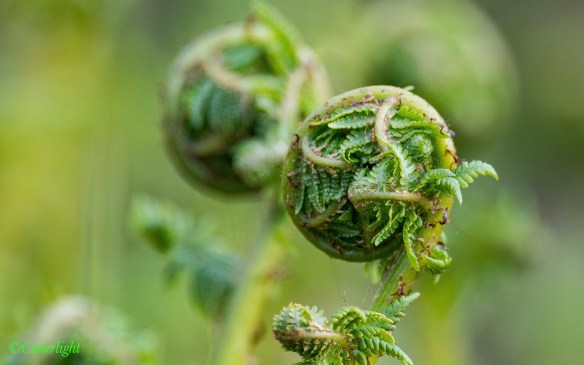
Chignik Lake Fiddlehead FernBursting

Seasonally, the Chignik calendar for spring, summer, winter and fall fits well with the actual dates of winter and summer solstice and spring and autumn equinox. So, while back in my native western Pennsylvania I thought of summertime as starting at the beginning of June, here at The Lake it doesn’t feel like summer until Chinook Salmon begin to enter the river in late June. The main exception to this view of seasonality at the Lake is that our summers are a bit truncated. Autumn comes early.

I made this photograph on June 4, 2019 on a hike to Clarks River – a trek made memorable by our first bear sighting of the year. With the school year having finished weeks ago, we had been going out every day, soaking up as much of our beloved countryside as possible before our scheduled move to Newhalen later in June. Chignik Lake’s school enrollment had dropped below 10 students; the school board had voted to close the school and transfer Barbra. A strange mix of springtime joy and melancholy stirred within our hearts. We did not want to move. But perhaps the understanding that we soon would be leaving created in us a deeper appreciation for the beauty we were surround by.

Willows had just begun to leaf out, and the year’s first flowers were emerging – salmonberries, wild geranium, pink lousewort, delicate purple violets, cinquefoil and lupine. Heavy buds hung from iris and chocolate lily stems. Fireweed was just beginning to push up through the soil in thin red shoots. Our avian spring migrants had returned, and the hike was alive with the songs and calls of swallows, thrushes, sparrows, warblers, yellowlegs, gulls and cranes. Just a few days prior, on May 28, Donny had caught the year’s first Sockeye Salmon in his net. Eagles had begun to post sentinels along the river, watching for more fish to arrive. My memory of the hike is of warmth, but I can see from a photo I took of Barbra that we were still wearing substantial coats and gloves.

While Barbra was photographing alder catkins, (the long, golden-yellow flowers that hang from male trees), I turned my attention to the tightly furled fiddlehead ferns in the above photo. My mind was more on birds than plants, so I had affixed my wildlife lens to my camera and had even attached a teleconverter. But when I looked through the viewfinder, I liked the image so I composed the shot. There’s nothing like a long lens for creating bokeh. (Nikon D850, Nikkor 600 mm + 2.0 TC = 1200 mm, 1/25 at f8, ISO 650)

Birds of Chignik: Kittlitz’s Murrelet – North America’s Rarest Seabird

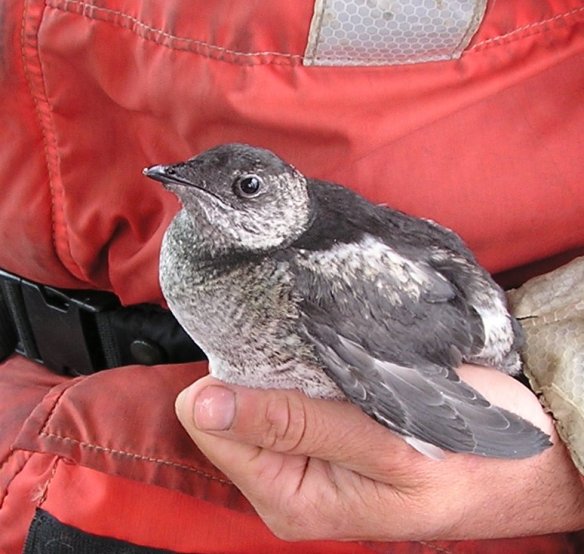
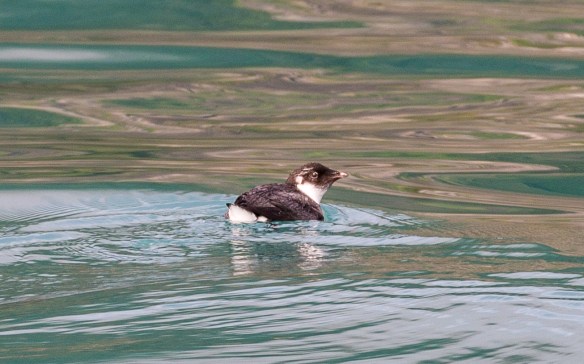
This Kittlitz’s Murrelet was caught in Kachemak Bay, Alaska (near Homer). Note the very small bill compared to the similar Marbled Murrelet. (Photo U.S. Fish & Wildlife Service on Wikipedia)

Kittlitz’s Murrelets are an uncommon, poorly studied species. Only a few nests have been located. They indicate solitary pairs (as opposed to colonial nesters) choosing sites above the tree line on the southern slopes of rugged mountains. Often the nests are located on scree fields associated with past or present glacial activity. The pair lays just one egg. The Kittlitz’s’ diet is not well known, but as bill size and shape generally indicate feeding preferences, it might be surmised that they pursue somewhat different prey than the closely related Marbled Murrelet, which has a larger, slightly curved bill.

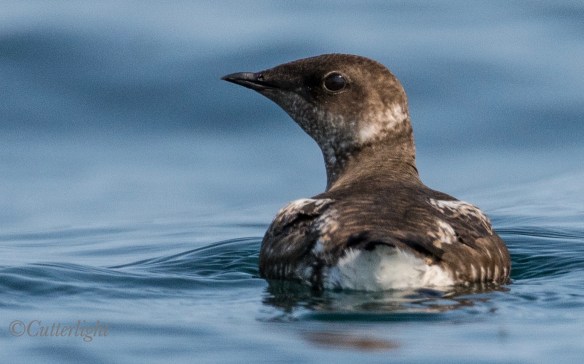
Although the specimen in the above photo doesn’t show it, in addition to a small bill Kittlitz’s Murrelets show golden-brown in their plumage during breeding season. Non-breeding birds tend toward mottled white and black much like their Marbled cousins, but in the Kittlitz’s the eye is surrounded by white whereas in the Marbled a black cap extends downward to cover the eye and the upper cheek. (See the photos in Marbled Murrelet – Seabird of Moss Nests and Old Growth Forests.)

This Kittlitz’s Murrelet shows a bit of golden-brown in its breeding plumage. Again, note the very small bill. Diving birds, they are known to prey on fish such as sand lances and herring as well as on crustaceans. (Photo U. S. Fish and Wildlife Services)

These are small birds, only about 9.5 inches from bill to tail. We will continue carefully checking the murrelets we encounter in Chignik Bay and Chignik Lagoon in hopes of getting a clear photograph. This is one of the rarest seabirds in North America. There aren’t many good photos of this species, and none at all that I could find of a Chignik bird. On the upside, our local coastal waters support abundant populations of both sand lances and herring which appear to be among the Kittlitz’s preferred dietary items, particularly during the nesting season. It is believed that about 14% of the Kittlitz’s population breeds on the Alaska Peninsula.

Due to this this species’ association with glaciers during breeding season, Kittlitz’s Murrelets appear to be particularly vulnerable to the impact of global warming trends.

Kittlitz’s Murrelet Range Map: Alaska Department of Fish and Game

Kittlitz’s Murrelet Brachyramphus brevirostris
Order: Charadriiformes
Family: Alcidae
Genus: Brachyramphus – from Ancient Greek brakhús = short + rhámphos = beak
Species: brevirostris – Latin: short-beaked

Status in Marine Waters near Chignik: Uncommon

David Narver, Birds of the Chignik River Drainage, summers 1960-63: Not observed as this is a marine species

Alaska Peninsula and Becharof National Wildlife Refuge Bird List, 2010: Uncommon in all Seasons

Aniakchak National Monument and Preserve Bird List: Present

Table of Contents and Complete List of Birds of Chignik Lake

© Photographs, images and text by Jack Donachy unless otherwise noted.

For a list of reference materials used in this project, see: Birds of Chignik Lake

Birds of Chignik: Marbled Murrelet – Seabird of Moss Nests and Old-Growth Forests

Chignik Marbled Murrelet

Although rarely present in great numbers, Marbled and Kittzlet’s Murrelets can often be observed in the estuarial waters of Chignik Lagoon and along the rocky coast of Chignik Bay. (Chignik Bay, July 28, 2020)

Before I began this project, it never occurred to me that forest habitat might be critical to a seabird. Yet such is the case with the Marbled Murrelet. Although Russian explorers first identified this species in 1789, it’s nesting habits remained a mystery until 1974. Hoyt Foster, a tree-trimmer working high up on a Douglas Fir in California’s Big Basin Redwoods State Park noticed a ball of fluffy down in a mossy tree branch. He carefully wrapped the bird and took it to a biologist who identified it as a Marbled Murrelet chick.* Thus, a great mystery in avian biology was solved, and yet another very good reason was added to the growing list of reasons to preserve the remaining remnants of the West Coast’s old growth forests. Of particular importance to murrelets are those coastal forests growing within about 45 miles of rocky coastlines from northern California through southeastern Alaska.

Marbled Murrelet, Kenai Fjords, Alaska. The light-colored bill makes me think this is a recently-fledged specimen. Fully grown, this species measures just under 10 inches on average – small as seabirds go. (July 22, 2012)

In addition to moss covered tree branches, a smaller number of Marbled Murrelets lay their solitary egg amidst rocks on talus slopes and among boulders. Either way, the nests are unadorned and inconspicuous. Both parents feed the chick, generally returning in twilight or darkness to avoid leading predators to the nest. Like other diving seabirds, their diet consists of fish and other small animals they might catch in nearshore ocean waters.

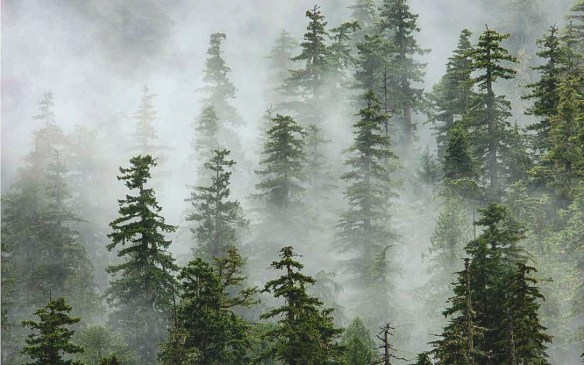
Cascade Mountains, Oregon: photo by Matt Betts, April 12, 2016

When you think of nesting Marbled Murrelets, think of ancient trees, early morning fog sifting through fir and redwood limbs covered in thick moss and a small, vulnerable seabird nestled into that moss, her body warming one tiny, downy being

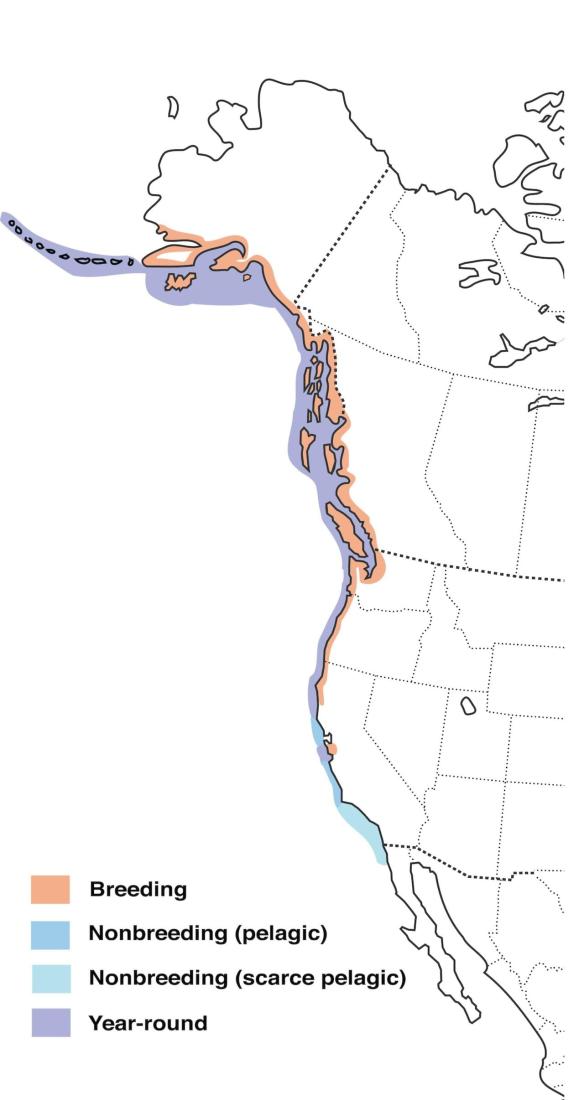
Marbled Murrelet Range Map

Marbled Murrelet Range Map: with permission from The Cornell Lab of Ornithology, Birds of the World

Marbled Murrelet Brachyramphus marmoratus
Order: Charadriiformes
Family: Alcidae
Genus: Brachyramphus – from Ancient Greek brakhús = short + rhámphos = beak
Species: marmoratus – Latin: overlain with marble

Status in Marine Waters near Chignik: Not abundant but frequently encountered in Chignik Bay and Chignik Lagoon; Infrequently encountered on Chignik Lake, particularly in Clarks River Bay

David Narver, Birds of the Chignik River Drainage, summers 1960-63: Uncommon on Chignik lake

Alaska Peninsula and Becharof National Wildlife Refuge Bird List, 2010:Uncommon in all Seasons

Aniakchak National Monument and Preserve Bird List: Present

*See: Frost, Garrison, A Seabird in the Big Trees, Audubon Audublog, June 3, 2013

Table of Contents and Complete List of Birds of Chignik Lake

© Photographs, images and text by Jack Donachy unless otherwise noted.

For a list of reference materials used in this project, see: Birds of Chignik Lake

Birds of Chignik: Common Murre – “The Flying Penguin”

Common Murre Alaska Gulf

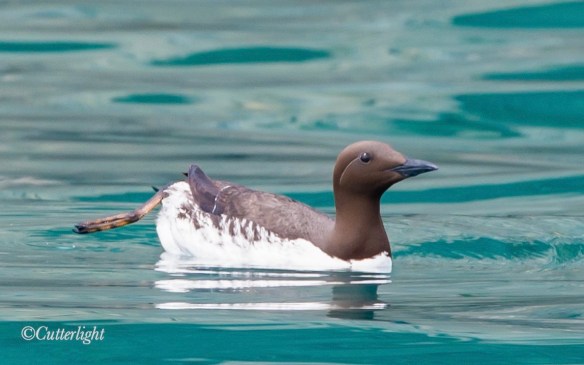
The barring on this murre’s flank indicates a Common Murre. Thick-billed Murres, a close relative, have unmarked flanks. Standing about 15 to 18 inches tall, these somewhat penguin-like birds are close relatives of the Great Auk, a bird that stood 30 to 33 inches tall and went extinct in the mid-1800s. (Photo Resurrection Bay, Alaska, July 2012)

I haven’t yet managed to get a good photo of Chignik Bay’s murres, though we see them from spring through fall on excursions out onto salt water. Chowiet Island, located about 68 miles from Chignik Bay, is a known breeding site for this species.

When not nesting, murres are birds of the open sea. In fact, one of the most astonishing wildlife scenes we’ve ever witnessed was on a day in late summer when we hiked out to the tip of the peninsula at Point Hope. Apparently our hike coincided with the end of the breeding season. We stood on the beach and watched in awe as thousands upon thousands of murres and other seabirds poured from nearby sea cliffs and streamed passed us toward the open sea where they would spend the coming winter months. Having brought along no cameras, we drank in the moment, doing our best to commit the image to memory.

murres and puffins, Tikigaq Point Hope

At the tip of the Point Hope Peninsula 200 miles above the Arctic Circle, a birder can stand on the pebbled shoreline of the Chukchi Sea and watch murres, puffins, loons, ducks and other seabirds fly back and forth from nesting sites to feeding grounds throughout the nearly endless Arctic day. Flying from right to left, the birds in the photo are returning to nests, as evidenced by sand lances hanging from the bill of one of the puffins and one of the murres. You can bet that the rest of the flock have stomachs and gullets crammed full for waiting mates and youngsters! (August 20, 2012)

Unfortunately, the combination of a warming earth (and warming seas), oceans filling up with plastic and overfishing are taking their toll on murres. Although they remain abundant in most regions, numbers appear to be declining almost everywhere. The concern with any species that thrives as part of a crowd is that a threshold might be crossed after which numbers plummet drastically. We’ve seen this with avian species such as Eskimo Curlews and Passenger Pigeons as well as (I suspect) populations of salmon. Some species simply do better when there are lots of them.

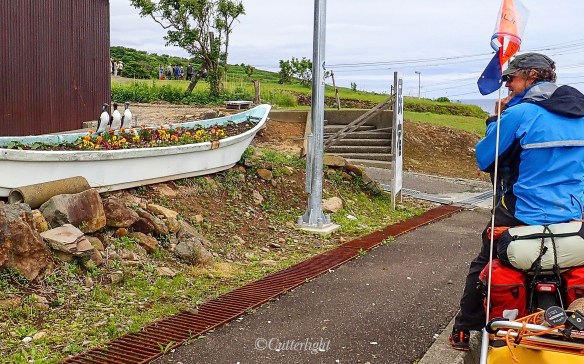
Teuri Island Murres Flowerbed

As recently as 1963, there were an estimated 8,000 Common Murres nesting on Teuri Island off the coast of Hokkaido, Japan. When we visited the island in 2018, there were only eight. For certain species, when numbers become too low predation overwhelms the individuals that remain. This appears to be the case with Teuri’s murres. The few remaining birds are no match for the island’s Slatey-backed Gulls and aggressive Large-billed Crows. At some point, restoration efforts become nearly futile. Teuri’s murres are celebrated in art and literature and in decorative memorials such as this skiff converted into a flower garden. 

murres on sea stack near Homer Alaska

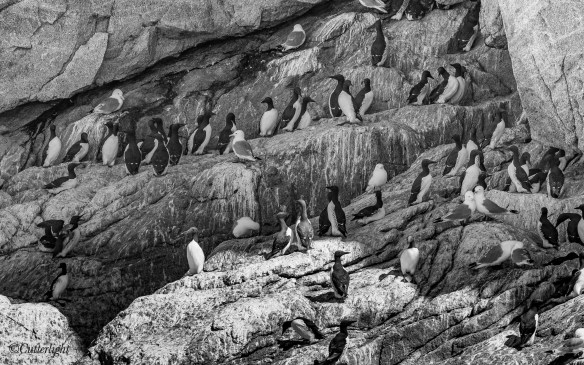
It truly is a joy to encounter a large colony of seabirds. These murres have crowded onto a sea stack near Homer, Alaska. (July 2009)

Common Murres on Sea Cliffs Kenai Fjords Alaska

Although they remind one of penguins, murres are actually members of the auk family. Capable of diving to depths of 150 feet or slightly more, they pursue fish, squid and krill as they “fly” through the water. (Kenai Fjords, Alaska, July 2013)

I’m looking out the window at an icy Chignik Lake as I write this on a blustery day in January, but I’m anticipating a calm morning at sea this coming summer when Barbra and I might be able to get a halibut for the cooler along with some good photos of our local murres.

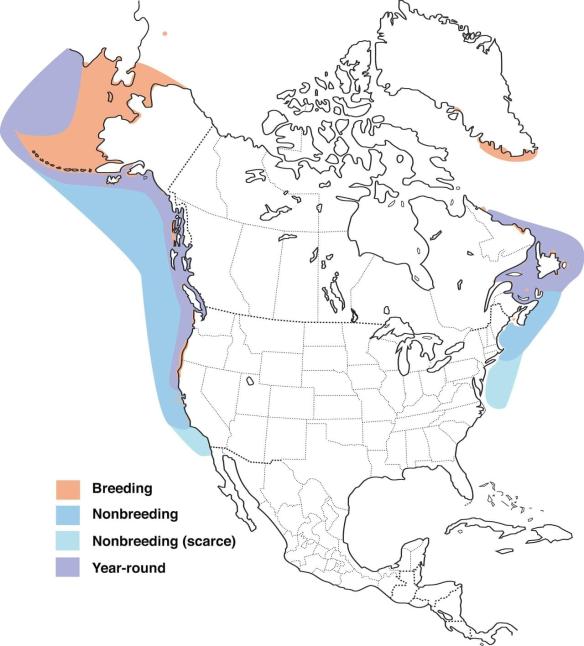
Range Map Common Murre

Common Murre Range Map: with permission from The Cornell Lab of Ornithology, Birds of the World

Common Murre Uria aalge
Order: Charadriiformes
Family: Alcidae
Genus: Uria – from Greek ouriaa for a waterbird
Species: aalge – Danish aalge from Old Norse alka = auk

Status in Marine Waters near Chignik: Common

David Narver, Birds of the Chignik River Drainage, summers 1960-63: Not observed, as this is a marine species

Alaska Peninsula and Becharof National Wildlife Refuge Bird List, 2010:
Common in Spring, Summer & Fall; Uncommon in Winter

Aniakchak National Monument and Preserve Bird List: Present

Table of Contents and Complete List of Birds of Chignik Lake

© Photographs, images and text by Jack Donachy unless otherwise noted.

For a list of reference materials used in this project, see: Birds of Chignik Lake