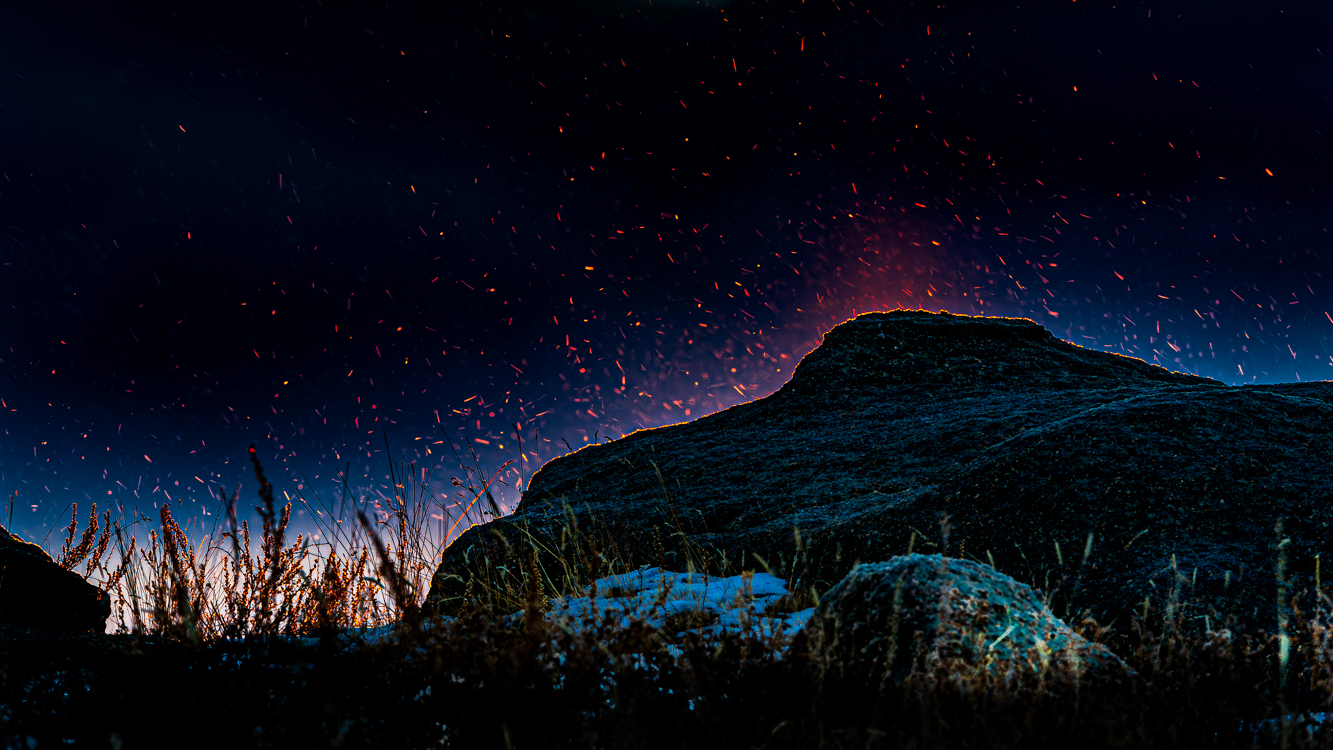
Ice Needles
4


There is not a clear date as to when we began to routinely create our images in RAW format. Most (all?) of the instructional material we had studied paid too little attention to this matter, or waffled on it, and so we didn’t appreciate the differences in the two formats.
Now we shoot everything – every image we might ever use other than strictly for ourselves – in RAW. Which is to say that while we sometimes use our phone to make a quick JPEG photo of our very fine kitty-cats Georgie and Kita for Facebook, or to take a field shot of a mushroom or flower we wish to identify, we’ve pretty much given up the idea that a JPEG file will suffice when we want to capture anything more than a quick record. We say that even though we have published photographs from original JPEG files in national magazines. And we say that knowing that at least one friend scored a national magazine cover with a JPEG phone shot.
So, yes, it’s possible to get a very nice capture in JPEG. In fact, oftentimes sports photographers shoot in JPEG – particularly when getting a photo out to a publisher in a timely manner is paramount. In a well-lighted stadium filled with agreeably contrasting colors, there may not be a need to retouch a photograph. Similarly, on a blue-sky mid-day at the beach, there may not be much – or any – advantage to capturing the scene in RAW format over JPEG.
But setting such circumstances aside, one’s odds of making a satisfying image increase if one begins with a RAW file. That same beach in soft morning or evening light or under a sky filled with storm clouds will photograph with more richness and subtlety when captured as a RAW file.
However, shooting in RAW is predicated on having the ability to retouch (process) the original image file in Lightroom or some similar program – and then committing oneself to doing so. Because the drawback to shooting in RAW is that images tend to look flat until they’ve been retouched.

So…
Generally speaking, if one’s objective is to take good – and perhaps sometimes even beautiful – pictures for an audience of family and friends, or simply to make a field record for one’s own use, and to do so with as few complications as possible, set the camera to JPEG, shoot away, and have fun.
If one’s objective is to more consistently create beautiful and even artistic images, set the camera to RAW, and then commit to evaluating and retouching images with editing software. Such software is the digital analog to processing film in a darkroom. Because a RAW image contains much more information than does a JPEG image, the software will provide more control when it comes to adjusting white balance, bringing out detail in shadowed areas, fine tuning color, sharpening details and controlling the amount of noise in an image.
One place the difference between RAW and JPEG most obviously manifests itself is in skies. Generally speaking, there’s not a lot that can be done to a sky in JPEG before noise – graininess, weird colors, strange lines – begins to emerge. RAW provides considerably more latitude before noise emerges… and once you begin to notice noise in images, you can’t stop noticing it.
Which brings me to this concluding observation. Whether one wishes to grow as a writer, musician, fly-fisherman, photographer, chef or in any creative activity, next to studying the accomplishments of others and applying the lessons therein, there is no substitute for mindful, purposeful self-editing. If you shoot in RAW, you will be compelled to edit your work.
Growth will come from that.

A dzud (zud, зуд) is a weather-related phenomenon in arid parts of central Asia. It could be heavy snow or ice; or a lack of snow or rain; severe cold; drought. Any widespread weather pattern that prevents livestock from obtaining sufficient food or water. Mass deaths… and economic disaster for the semi-nomadic families who follow their animals – goats, sheep, yaks, camels, horses – from place to place across steppelands, grasslands and desert. Roughly a third of Mongolia’s 3.3 million people live this life – among the world’s last nomadic herdsman.

I rendered this as both a monochrome and a color image – a coin flip as to which I prefer.
I’d been interested… very interested… in photography ever since my early teens, but I didn’t pick up a camera and use it in any meaningful way until we traveled to Arctic Alaska, four years prior to the above photograph. I could have benefitted – perhaps a great deal – from a formal course of study in the subject. I guess. I’m not sure. Generally speaking, there are both benefits and drawbacks imbedded in the process of learning from others; just as there are benefits and drawbacks to learning on one’s own. Despite four years of somewhat purposeful shooting in Alaska, when we arrived in Mongolia I still didn’t really understand how a camera works. Nor did I have a vision of what kind of images I hoped to make. But once in a while I saw something I liked and I did what I could to make a capture… camera settings often somewhat randomly chosen, insufficient thought and visualization as to what the final, retouched image might look like (or what I hoped it would look like)… and any time a human subject was involved, struggling to overcome what is at times almost crippling shyness and apprehension on my part in order to get the picture. Often failing to overcome that apprehension and letting the moment pass.
So the question remains: Would I have benefitted from, for example, attending formal classes in photography at a respected institution under the guidance of expert instructors? Well, yes, for certain in regards to speeding up my learning curve with respect to technical and scientific aspects as to how a camera works and how film or an image sensor interprets light, and to gain a better understanding of the interplay between camera bodies and lenses. I read, on my own, and viewed a number of instructional videos addressing these subjects… and can report that while they were somewhat helpful, there is a lot of misinformation, and incomplete information, and misleading information on these matters – much of it dispensed by experts and by people who present themselves as experts. People who perhaps know what they are talking about or writing about, but who are not teachers and who don’t know how to teach and who have a difficult time imagining or understanding what a student needs to know… or how a student will receive and apply a given piece of information. Setting that aside, I suppose the answer is probably “Yes,” I – or anyone new to photograph – would benefit from interactive instruction where the primary purpose is to acquire knowledge of how a camera works and how light works and how a camera interprets light.
I suspect such a course of study would be helpful in the same way that prior to writing a novel or a magazine article, it’s necessary to have acquired an understanding of punctuation, syntax, paragraph structure and plot. Understanding basic structures – in any endeavor – can spare one from a lot of fumbling around.
But I wonder if, after 10,000 hours of mindful practice (a concept toward mastery I fundamentally accept), the person who began the journey initially studying under a master doesn’t end up more or less at the same place as the person who embarked alone, and vice versa. After all, whether the matter at hand is photography, writing or fly-fishing, once basic skills are acquired it is left to each individual to determine their own path as to how they hope to develop those skills. Realistic or conceptual; poetry or prose; salmon rivers or saltwater flats.
A problem with instruction beyond basic concepts is that it can end up creating a box around the student.
So… I think that, if it’s an option, by all means find someone from whom to learn the fundamentals – in any endeavor. But don’t linger there. Get the basics. And then go out and put them to use… learning more basics along the way, but more importantly, freeing oneself to pursue one’s own passions and to thereby develop one’s own vision.
I suppose the main thing, in any endeavor, is simply to get started.
The sooner the better.

Outdoor Photographer’s challenge two weeks ago: an environmental, visual or cultural photo depicting a strong connection with a specific place. Here, our hostess at her ger in the Mongolian countryside prepares a pot of suutei tsai to take the chill off an October night – piping hot milk with a little tea and a dash of salt.

It doesn’t get much drier and sunnier than Mongolia’s Gobi Desert. Above, Khongoryn Els, the famed “Singing Dunes,” stretch across the landscape. See nine additional photos from our October 2014 trip below.

As in any desert, no resource is more precious than water.

Well adapted for this parched climate, over a million Mongolian Gazelle flourish in arid steppe grasslands which include portions of the Gobi. Mongolia’s grasslands are considered to be one of the world’s last, great wilderness areas.

Red-billed Choughs, a striking member of the crow family, close out the day at Yolyn Am Canyon…

Earlier in the day a magnificent Siberian Ibex, protective of his harem, kept a wary eye on an approaching photographer.
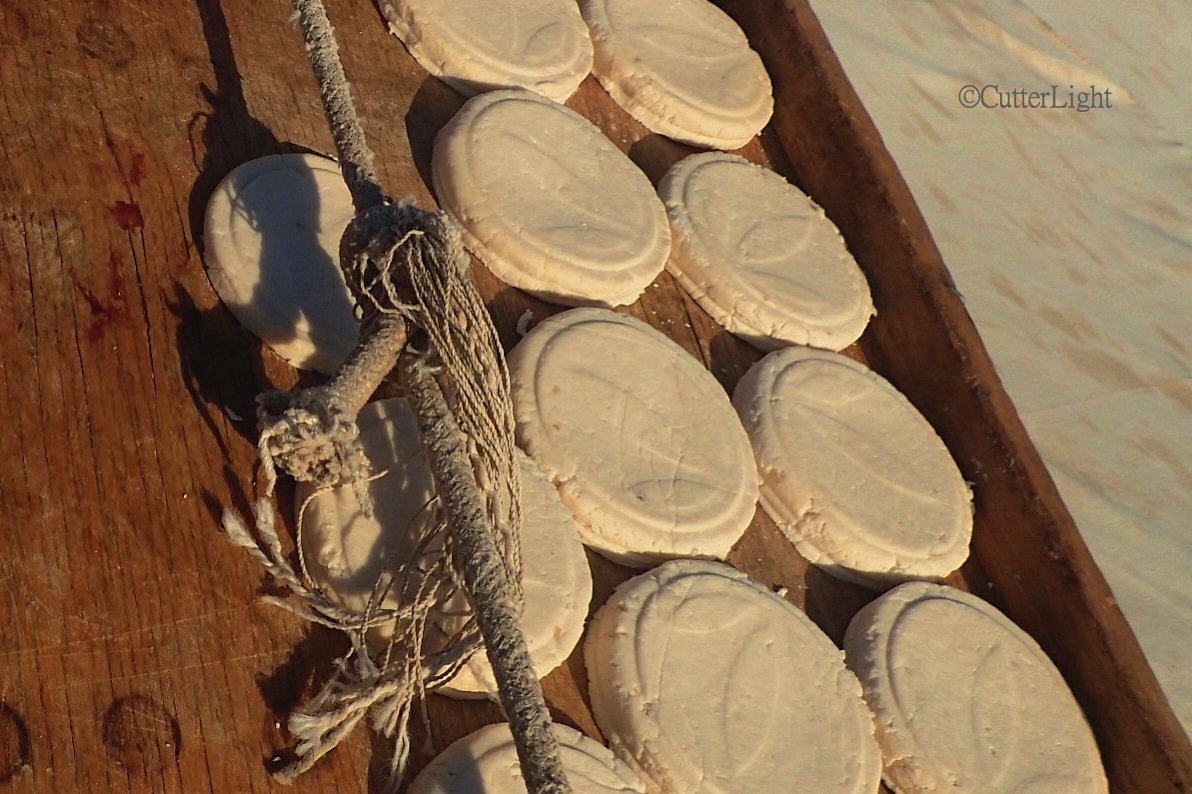
As we journeyed, we stayed with families in their gers (yurt homes). Here, aruul, a type of cheese, bakes into a hard cake on a tray atop a ger.

Not only dry but extremely cold and windswept, winters in the Gobi can be unforgiving. The worst of them are know as zud and can wipe out millions of livestock.

The nighttime skies were spectacular. The Big Dipper hangs over our lighted ger.
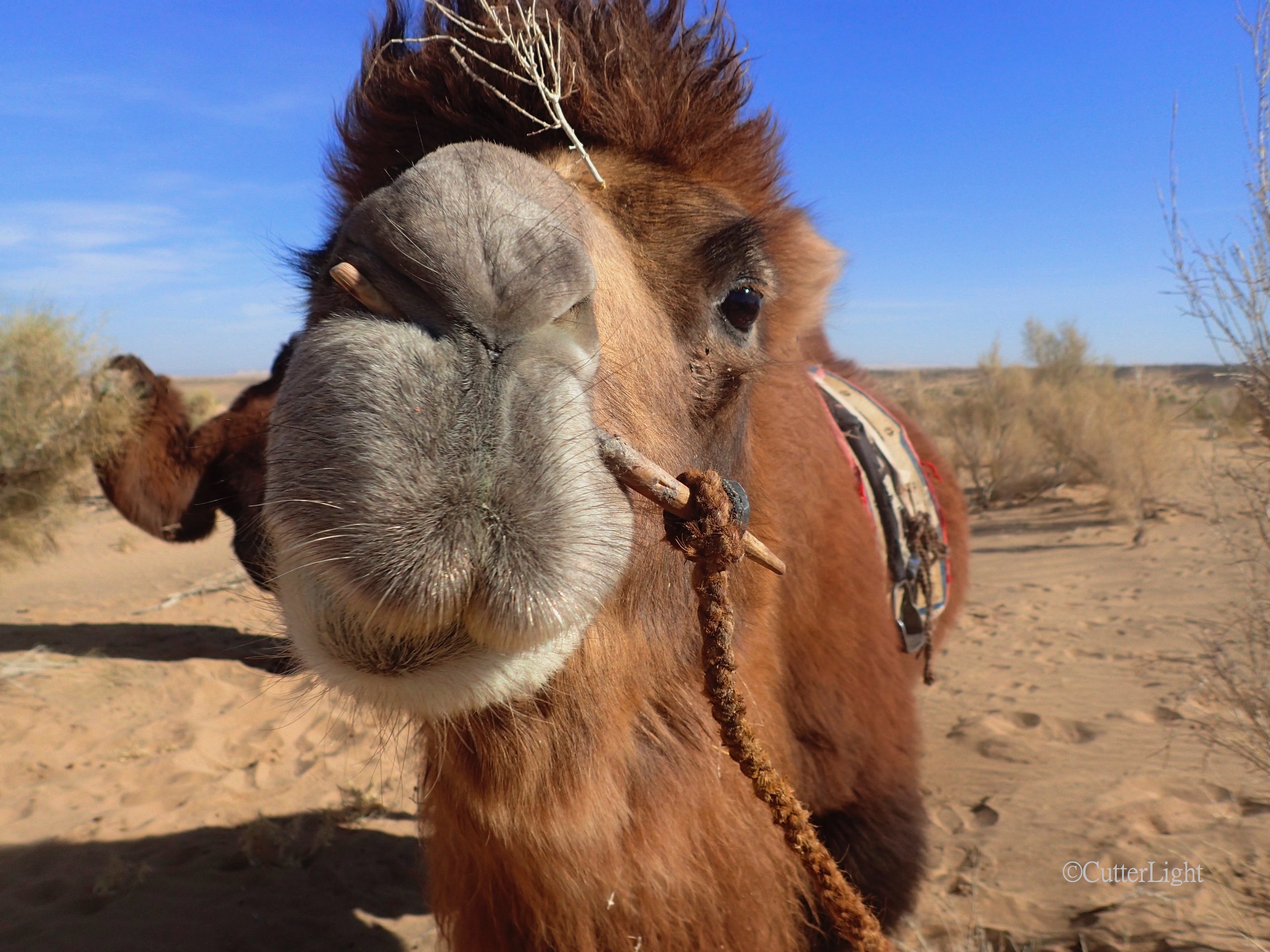
Not all deserts have camels, of course, but they certainly add an exotic element. In Mongolia, two-humped Bactrians are utilized for transportation, meat, milk and the most excellent cream cheese we’ve ever tasted. Here, Barbra’s mount and I exchange inquisitive looks.

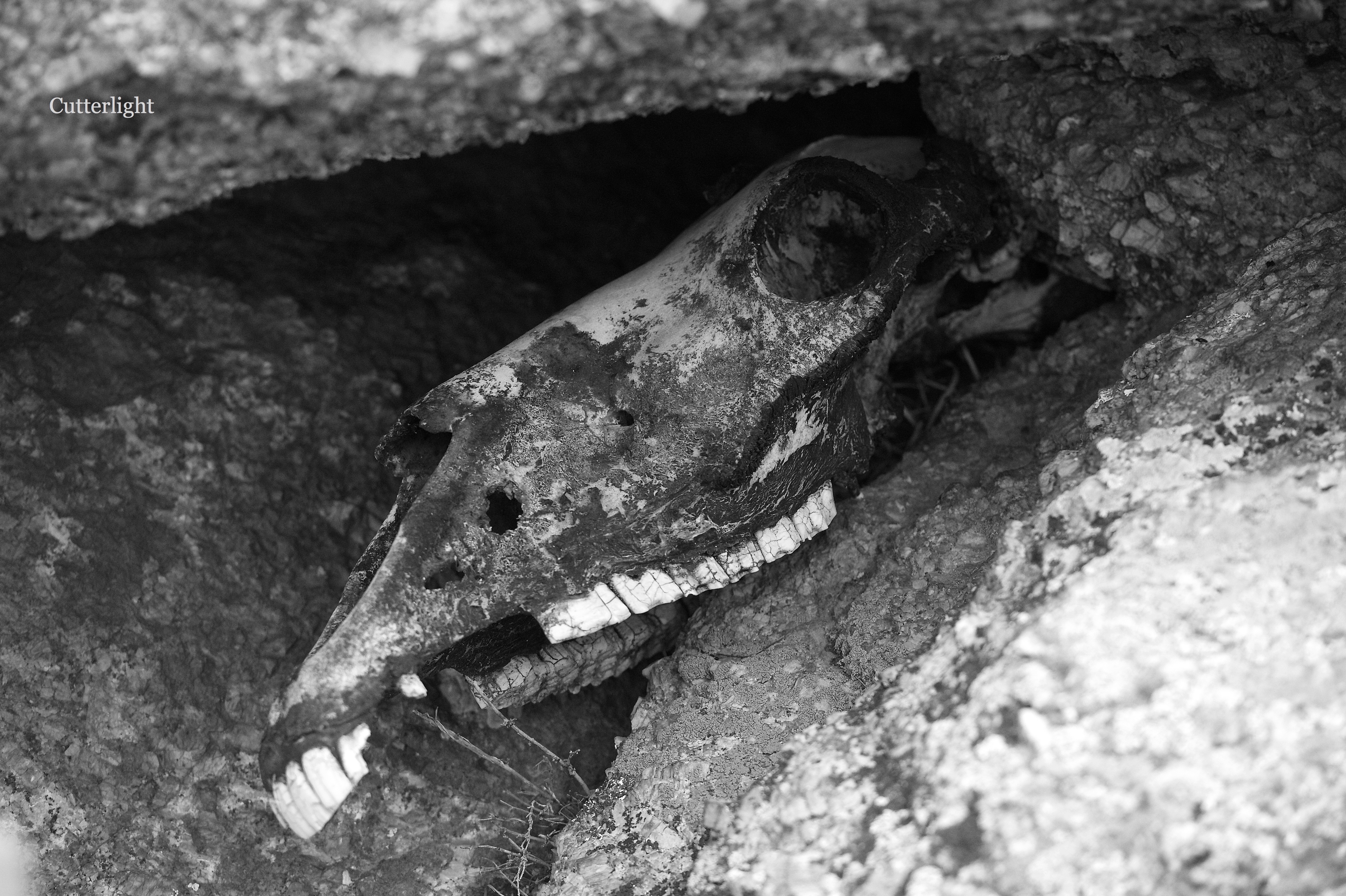
Our eight-day trek through part of the Gobi Desert was one of the highlights of our two-year stay in Mongolia. Not only did we get to briefly experience the lifestyle of one of the world’s few remaining semi-nomadic people, we also got to sample new foods, see exotic animals we’d read about in books as children, feel the Singing Dunes hum mystically through our bodies… and, yes, riding a camel to seldom-visited sand dunes was a first and it was fun. At Bayanzag (pictured above), the legendary Flaming Cliffs where the first fossilized dinosaur eggs were discovered, we even found a large, fragile skull with teeth intact and a spine radiating out several feet, the fossilized remains of some species that no longer walks the earth. It’s 20° F (-7° C), a north wind swirling falling snow as I write this. A trip back to the Gobi through photographs was indeed a nice break from winter.
Next Thursday: Assignment #5 – Motivational Moments: the things that get us out of bed at 4:00 AM to go out and shoot; or that inspire us to sit for hours waiting for a capture. I already have a few ideas in mind. Stay tuned!

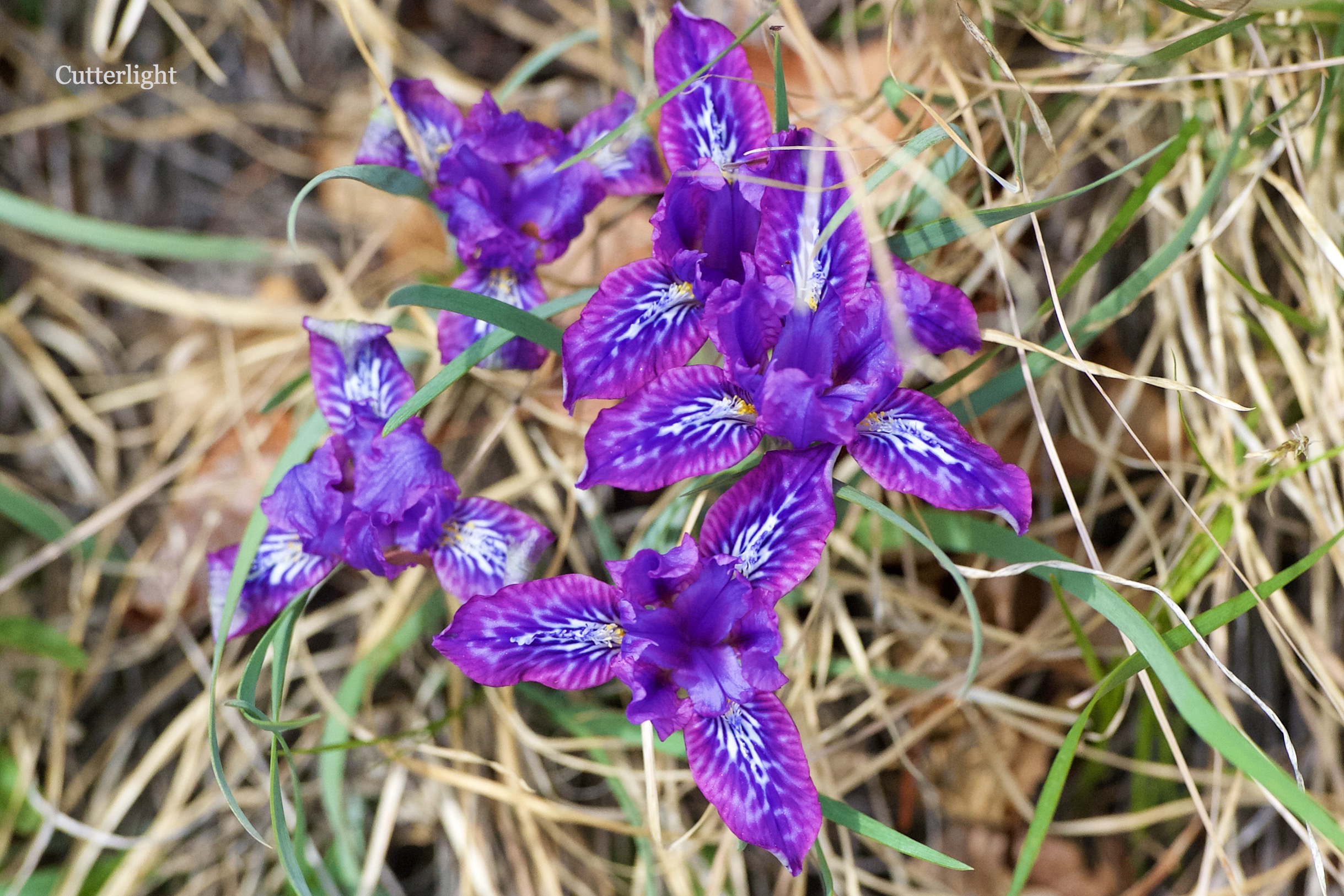
Our most recent heavy snow was just two weeks ago, and we’ve had a few flurries since then. But out in the countryside near Ulaanbaatar, wildflowers have begun to grow in profusion.

Snow drops (above) are among the very first flowers to show.
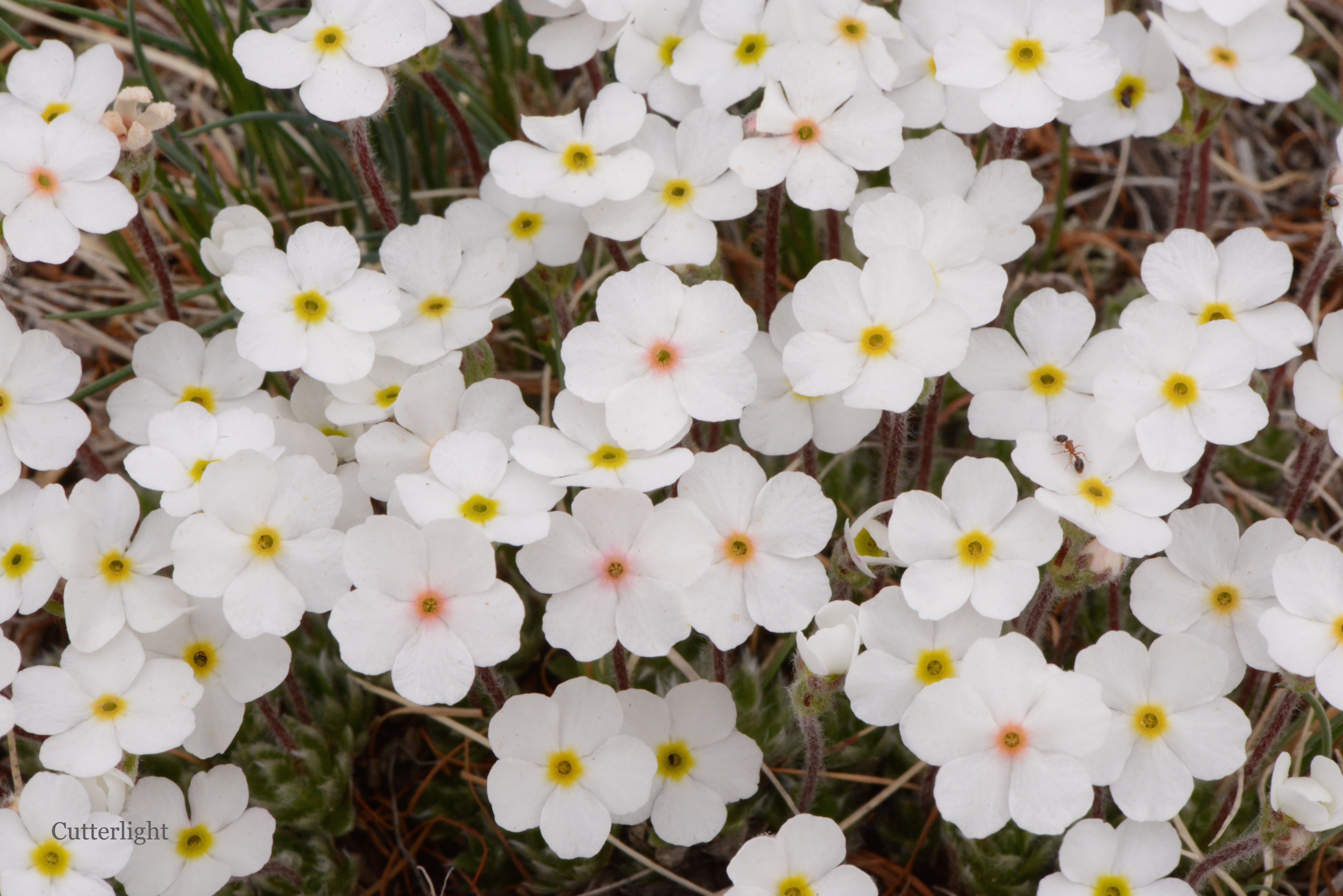
Notice the small red ant on the right side of the photo. The centers of these particular flowers reveal a tell-tale indication of their age, with the youngest flowers having yellow centers. Most of the early wildflowers are small. But they’re everywhere, and close examination they often reveals intricate beauty…

…making us wish we knew more about these splashes of color.


And happy to come across something as familiar as Alaska’s state flower, forget-me-nots.

There’s wild rhubarb, too, and wild mint and caraway are abundant.

But it’s the flowers that capture our attention.

And leave us vowing to take a botany course when we return to Alaska.

The scene in Ulaanbaatar just over two weeks ago on May 11.
Terelj National Park, May 2016. It was a hard, cold winter.

Black-veined white (Aporia crataegi), Ulaanbaatar, Mongolia.
For a few days in late June, maybe a week, these black-veined whites (that’s their name) were everywhere. In the air, in the bills of birds, sipping on purple flowers. And then they were gone. In that one week, they were beautiful…

Like drops of bright red sealing wax, pigment is enclosed in the translucent sheathing of extended secondary feather shafts, giving waxwings their name.
In the midst of the 11-minute walk from our apartment to our school in Ulaanbaatar earlier this week we heard a familiar “wheezing” sound from nearby treetops. The friend we were walking with must’ve thought we were crazy as I abruptly spun around and began crossing the road toward the origin of the sound. But Barbra knew what it was about. “Waxwings!” I exclaimed as I approached the tree where they were perched. Barbra confirmed the sighting. “Yep! Look at their crowns.”

For the past few days, small flocks of Bohemian waxwings have been putting smiles on our faces. On their way to nesting grounds in the conifer forests of Siberia, these flocks don’t hang around long. Until recently the southern edge of Ulaanbaatar near the Tuul River was covered in berry bushes, poplars and willows. Each year, less and less of this habitat remains as Ulaanbaatar’s human population grows…

…but here and there a small patch of what it used to be remains. Every little bit of this habitat is increasingly critical. Even a few berry bushes edging apartment buildings helps.
If you’ve never seen waxwings in good light, I’m not sure I can adequately describe them. Their primary wing feathers are streaked with pure white and edged in yellow the color of daffodils in sunlight. The just-dipped-in-paint sheen on these feathers is reminiscent of crayon gone over with watercolor paint. But it’s the candy apple tips of their secondary wing feathers that give waxwings their name. The red is not on feathers. Rather, it’s opalescent pigment encased in modified, translucent feather shafts.

During their nesting season, waxwings often eat insects. The rest of the year, it’s berries, berries, apples, and more berries – sometimes hundreds of berries in a single day. We walk past these bushes every day and never noticed the winter-preserved berries still clinging to them. But the waxwings noticed. They need this fuel as they fly on to Siberia.
You could be almost anywhere in the Northern Hemisphere and never see a single waxwing. Ottawa, Canada; Sacramento, California; Clarion, Pennsylvania; Sapporo, Japan; – to name a few places where waxwings may or may not be. And, in the wrong light, you might pass right by them and dismiss them as robins or sparrows.
Wheezing. That’s what gives them away. If you hear birds wheezing, look closely. Get them in the right light. You won’t believe what you see.

The only bird with a brown crest – as though the black eye paint and warrior feathers weren’t distinctive enough.
My first sighting of waxwings occurred many years ago on western Pennsylvania’s North Fork of Redbank Creek. I was fly-fishing in early spring, and as I worked my way around a bend in the stream I came upon a leafless poplar that was as lit up as a Christmas tree with waxwings. I thought I’d never seen anything as beautiful in my life. The paint-dipped tips of their feather seemed to glow in the evening light and I stood motionless in the water, mesmerized till they suddenly filled the sky.

This photo shows that the waxwing’s red wing tips are featherless extensions of wing shafts.
In mid-winter, they light up the holly bushes on the campus of the College of Charleston where I earned my master’s degree.
In Sacramento, they filled the camphor tree in our front yard – gorging on berries, wheezing their calls to each other, brightening our day.
The birds we encountered in the lower 48 were cedar waxwings, smaller relatives of bohemians. But here we are, many thousands of miles removed from Pennsylvania trout steams, holly bushes in the Deep South and a lovely, mid-town bungalow in California.
Connected by waxwings.

A pair of waxwings look north against the pale dusk in Ulaanbaatar. They still have hundreds of miles to go before reaching the conifer forests of Siberia where they’ll build their nests and bring the next generation of waxwings into the world. Not many berry bushes here anymore, and a hunk of metal overlooking a construction site makes for a cold roost.
 CutterLight