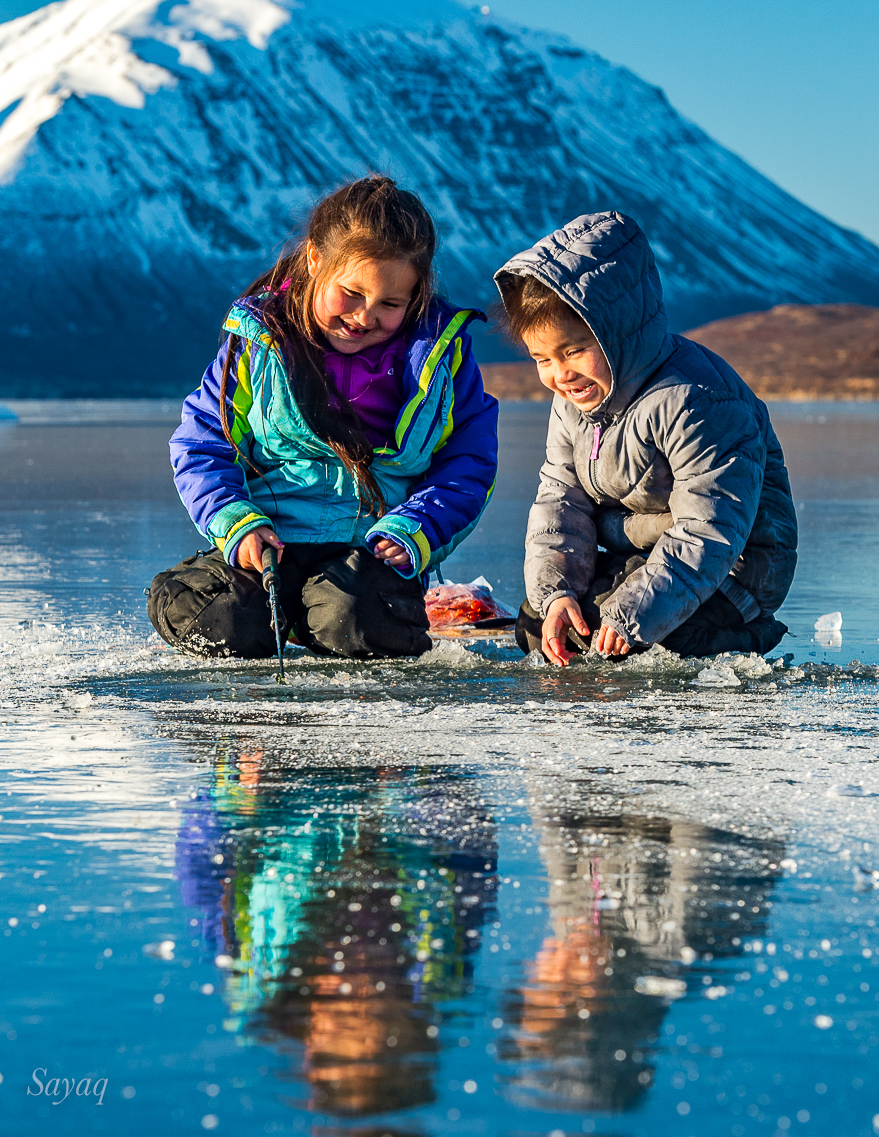
With salmon roe for bait and a small jig on the end of their line, these girls were hoping for some of The Lake’s Dolly Varden Char and Pond Smelt. I’m not sure they caught much, but it sure looks like fun.
Chignik Lake, 1/10/17


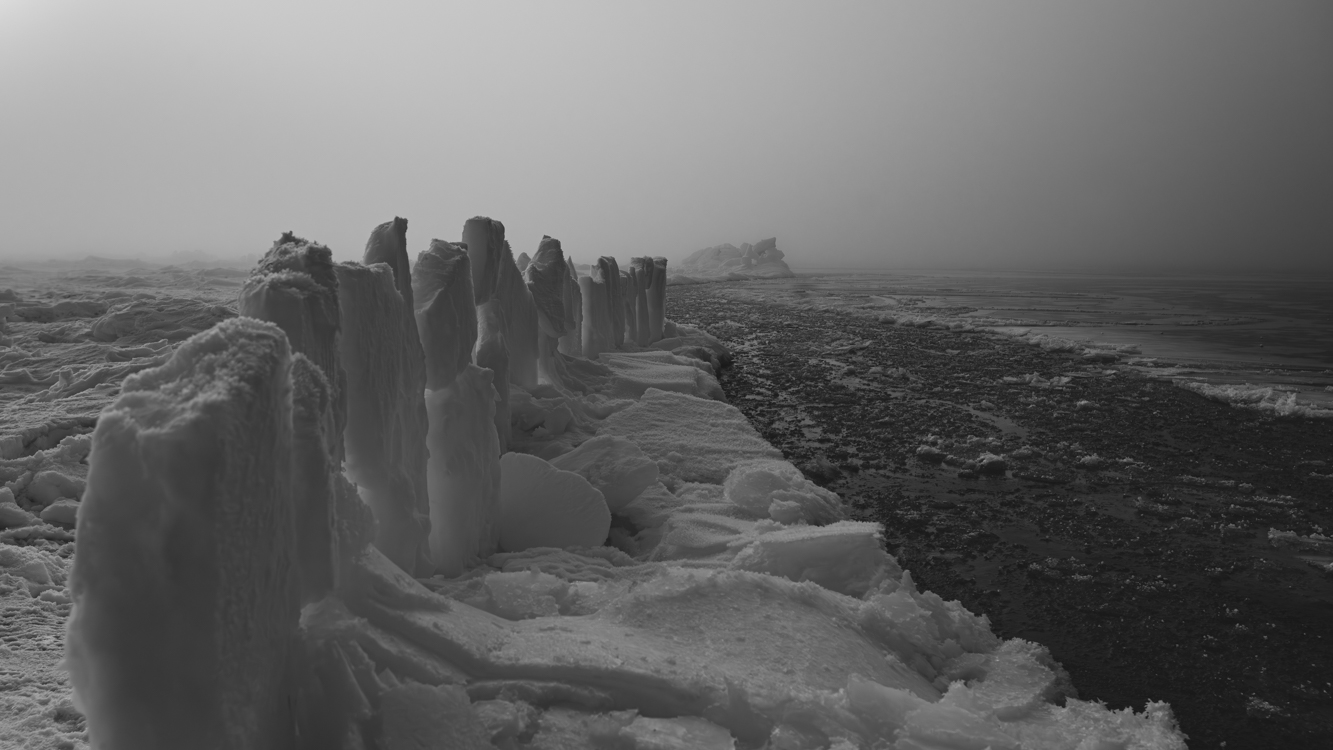
In late winter and early spring, our Inupiat friends in Point Hope began talking about “breaking trail” across the frozen Chukchi Sea so that snow machines (snow mobiles) and hondas (ATVs) could be driven out to leads (open lanes in the ice) in order to set up whaling camps. “Breaking trail?” Informed by our experiences with freshwater lakes, we wondered, “Can’t you just drive out across a smooth blanket of ice?”
Well, as we learned, a frozen sea isn’t like that. As ice forms and expands and is pushed around by winds and currents, sheets separate (creating leads) and later are pushed together again, the resulting pressure ridges can heave up massive jumbles of jigsaw ice. Some of the chunks are as large as a garage. This was all new to us the first time we hiked out to a camp. In the above photo our eyes are drawn to an otherworldly sphere and pyramid lit blue in pre-dawn light.
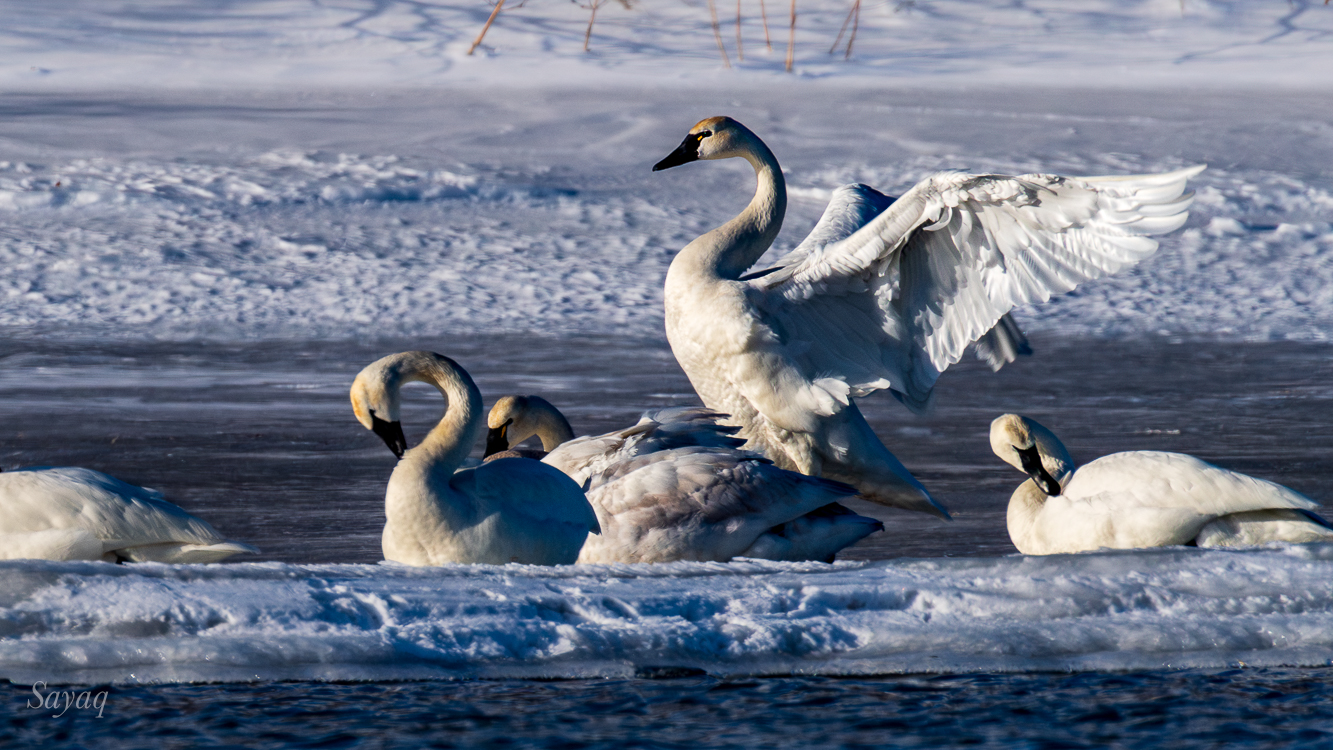


An October snow blankets the beach on Sarichef Island. The sea is still open. For now.
I remember my family taking me to the beach when I was very young. I loved the feeling of the warm sand on my feet and the gentle, salt-scented breeze on my face. I especially loved the energy I felt from the crashing waves. Sometimes when we had to go home, when we had to leave the beach, I would cry. Now, my home is a two-minute walk from the beach. Even though we’re only 22 miles south of the Arctic Circle, in late summer the days were surprisingly warm. Temperature weren’t much different from those on beaches in Northern California or Oregon.
But that was two months ago. Soon, the sea will freeze. On our daily walks along the shore, we notice patches of ice on the sand, and the near-shore water where it is most shallow is slushy at times. Most of the shorebirds are gone now.
 CutterLight