The End of One Life Cycle, The Sustaining of Another

Harbor Seal and King Salmon
Chignik River, September 9, 2018

Chinook Salmon begin entering the Chignik in late June. They continue spawning into August. By September, spawning has ended and the spent salmon begin giving into the current, death at hand the big fish slowly drifting back downriver – easy meals for the Chignik’s Harbor Seals.

Harbor Seals on Lake Ice

Harbor Seals on Lake Ice
Chignik Lake, Alaska, February 3, 2017

Various sources report that in the Northern Hemisphere, there are only five populations of strictly freshwater seals. These rarities are found in Lake Baikal and Lake Lagoda in Russia, Lake Saimaa in Finland, and Lac de Loups in Canada. Alaska’s Lake Iliamna also has a population of purely lacustrine seals.

Although the Harbor Seals of Chignik Lake have access to the ocean and travel into the salt water environment of the Alaska Gulf, they are commonly encountered in any month in the freshwater portions of the Chignik Drainage. Occasionally hunted for their oil by locals, harassed for their habit of poaching salmon from fishing nets and, particularly when hauled out like this ever wary of dogs and wolves, the Chignik’s seals tend to be rather shy. However, I’ve counted as many as a dozen hauled out on lake ice, and throughout the open water season on any given day you’re likely to see a seal or three cautiously pop their heads above water for a look around. In another photo in this series, there were nine seals. The light was a better in this shot, where eight are present. That’s a Common Goldeneye duck swimming in open water just in front of the arabesquing seal.

Rivers of Ice: Glaciers, Icefields and Floating Sculptures of Blue

Icebergs such as this ethereal blue sculpture are the culmination of a dynamic process eons in the making.

It’s easy to imagine glaciers as static – water interrupted, subject to thaw and melt, but otherwise frozen in space and time. In reality, they’re more like slow moving rivers, pulled down by gravity, pushed forward by the unimaginable tonnage of ice and snow in the icefields where the originate. A fast-moving glacier can travel at a rate of 20 meters a day or more.

Tidewater glaciers are among the most dynamic forms of ice in nature. Like the Blackstone Glacier (pictured below), they flow from icefields, much as a mountain stream might originate as the outflow from an alpine lake. What makes tidewater glaciers so fascinating is that they don’t gradually turn to water as they descend down a mountain valley, warming and thawing with the descent.
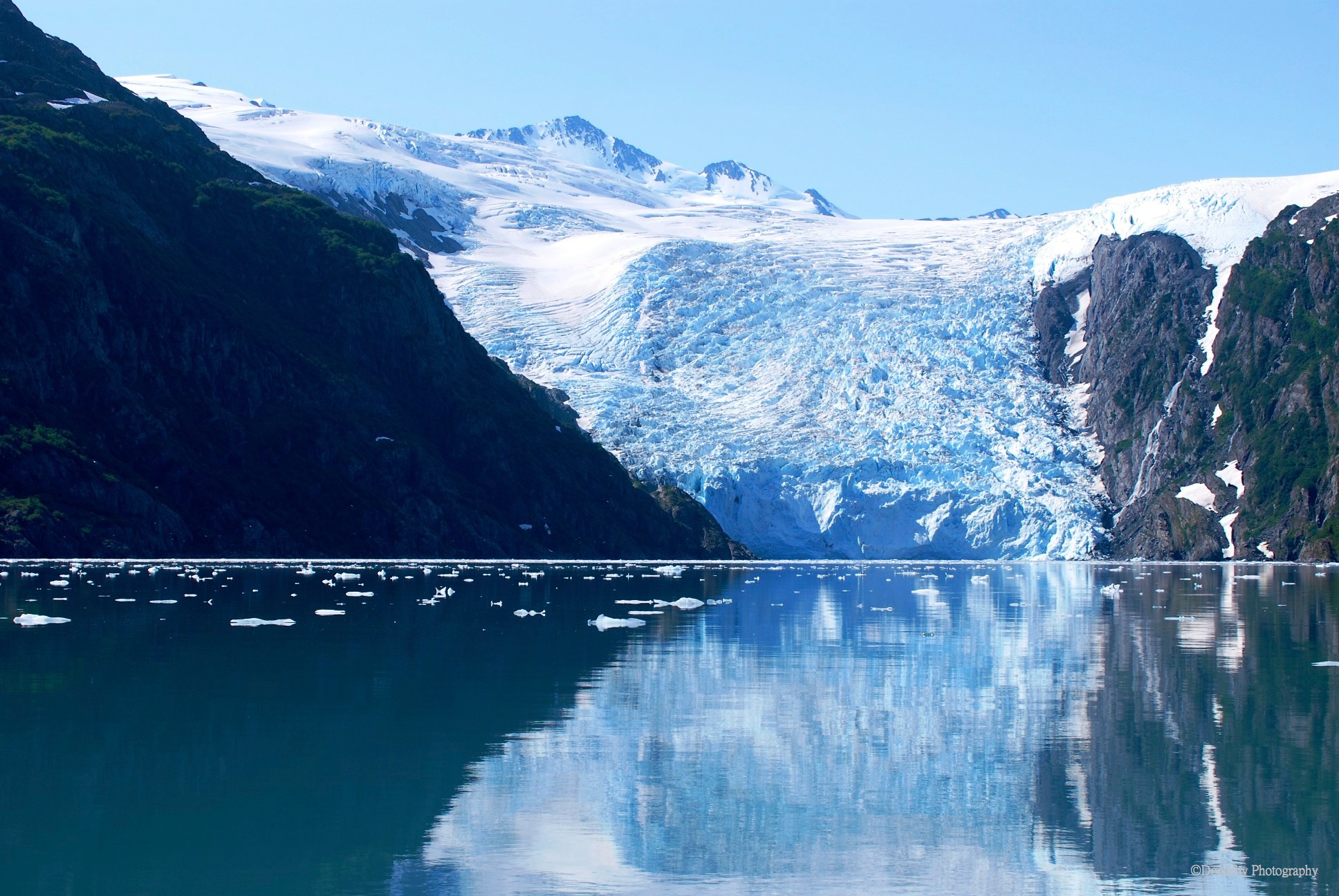
Instead, tidewater glaciers terminate when they reach the sea. The ice continues to flow, pushing the face of the glacier forward. If the face of the glacier is large enough, the combination of forward movement and warmer air and water temperatures can result in spectacular calving events, with massive pieces of ice sloughing off into the sea.
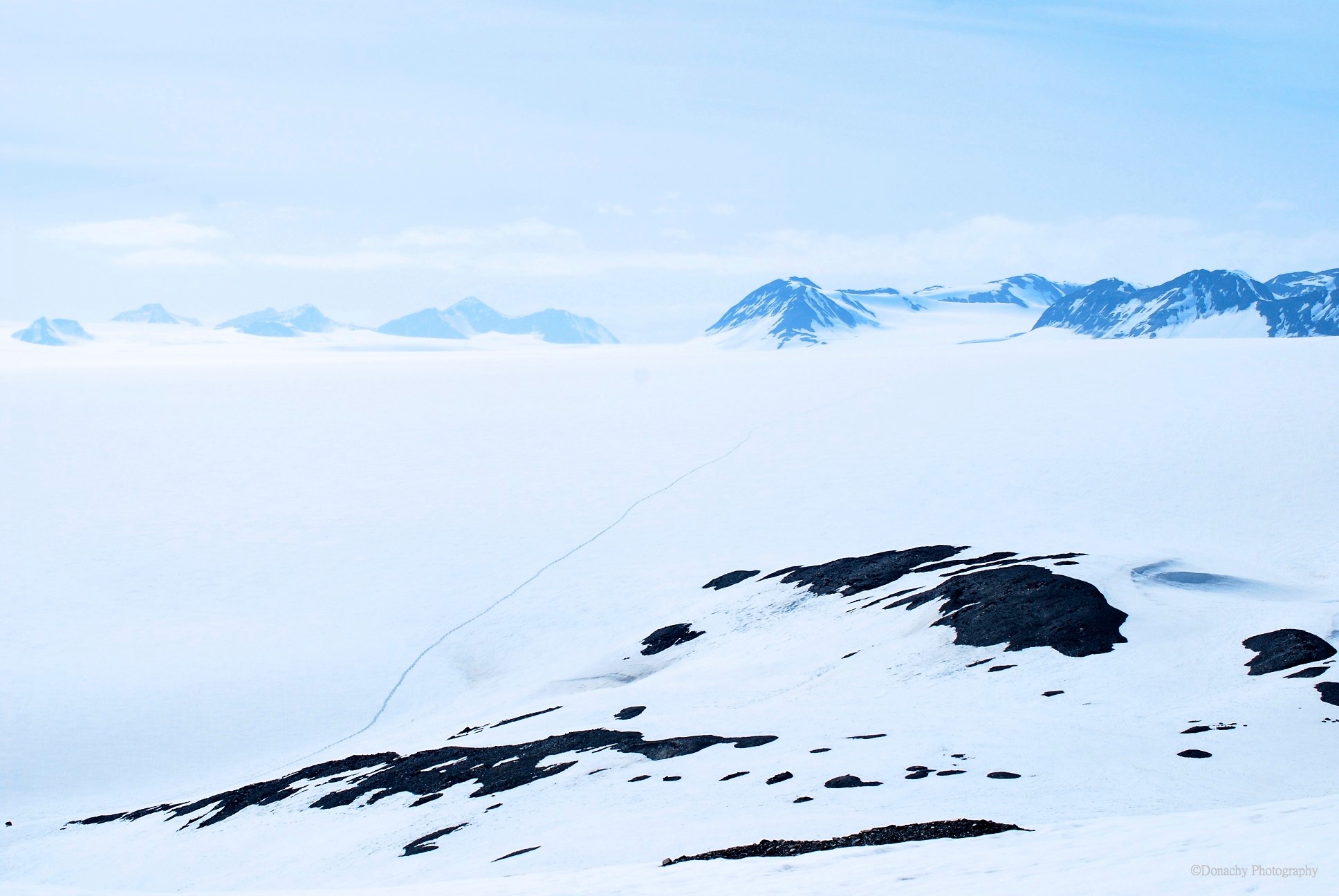
The Harding Ice Field, which gives birth to three dozen or more glaciers, stretches out like a vast, island-studed lake. 

As soon as the freshly calved ice hits the water, it become part of sea’s ecosystem. Harbor seals (above) and black-legged kittiwakes (members of the gull family, below) use the frozen islands to rest, feed and stage hunts. The seals also use the ice as nurseries.