I’m making progress with the Chignik Lake photos, finally well into the 2018 folder.
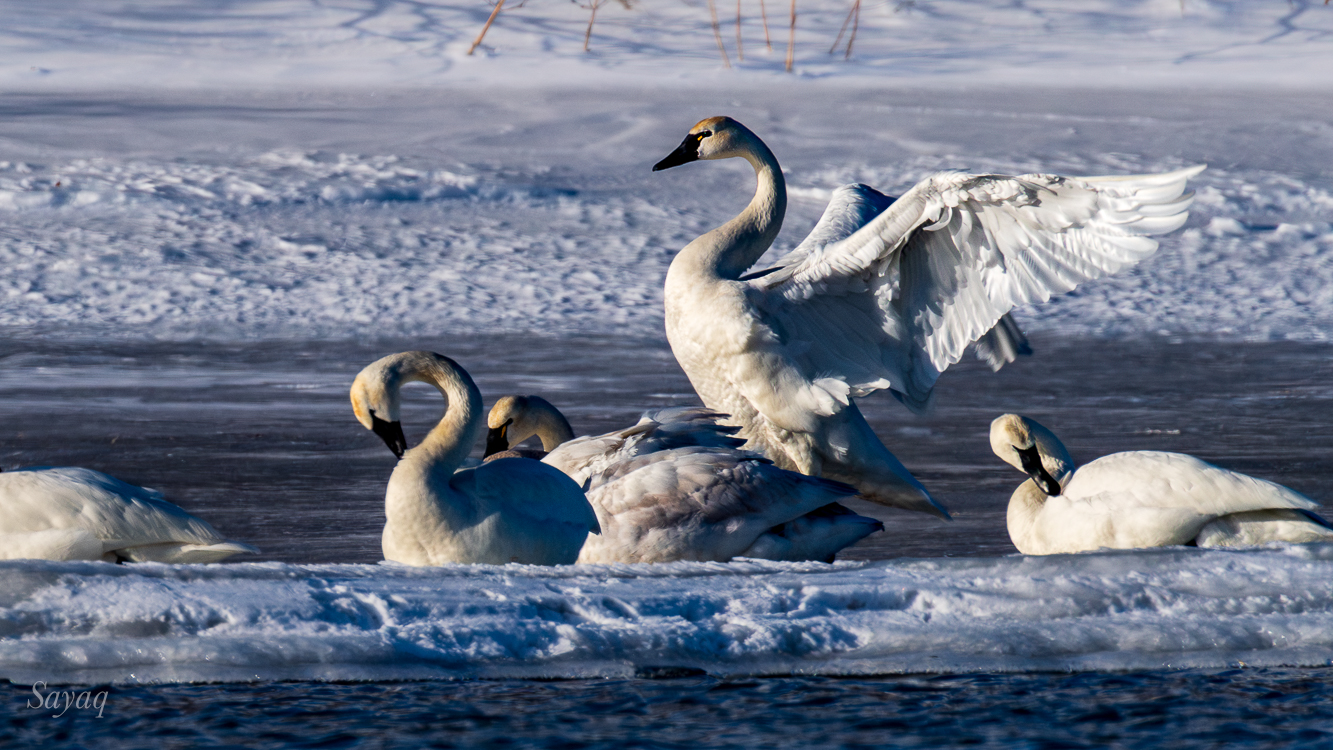
Chignik Lake, January 17, 2018.


When I initially got into studying the Chignik Drainage’s birds, I thought that a loon was a loon was a loon, a species I knew primarily from seeing Common Loons. I assumed that that is what a loon is. It turns out that there are five species of Gavia, four of which occur in the Chignik Drainage. In order of common occurrence, they are: Common Loon, Pacific Loon, Yellow-billed Loon and Red-throated Loon. (Only the rare Arctic Loon is absent from The Chignik.) It is probable that in the salt waters of the nearby Alaskan Gulf that from fall through spring it is the Pacific Loon that is most common.
We encountered Yellow-billeds as wintertime visitors to the main lake and the river outflow just below the lake. In wintertime, their plumage is rather drab (you’ve got to go to the most northern parts of Alaska, or Siberia, to see them in their stunning breeding colors); however, even in winter these, the largest of the five loons, were easily distinguished from Common Loons by their big, lightly-colored, yellow-tinged bills. We found the Yellow-billeds to be shy and to prefer deep water. The only photos I was able to get were taken using a 600mm lens affixed with a 2.0 teleconverter of far off specimens – and even those images require significant cropping to present a picture such as the one above. Still, Yellow-billeds are uncommon to rare and adding them to the Chignik Drainage List – perhaps a first documentation and almost certainly a first photograph – was a thrill.
Any documentation of this sort is important. As the planet continues to rapidly warm – due largely to a certain overpopulated species’ reliance on burning fossil fuels and turning forests to farmland – things are changing. Fast. (It’s not just that the climate is warming – it’s been doing so for a very long time. It’s the recent rapidity at which it is warming.) Audubon’s climate model projects a 64% loss of winter range for Yellow-billed Loons in coming decades. Not centuries. Decades.
Wherever you live, it is likely that you can see changes in flora and fauna over time. And these changes are not due only do warming. Although in pure numbers countable trees have increased in many areas, most of this new growth is in the form of pulp and timber forests – trees destined to be cut down just as they are reaching maturity. As fewer forests are allowed to reach and sustain maturity, there is less mast (acorns, other nuts, seeds and seed-bearing cones) for animals to forage and often fewer nesting sites as well. Wild grasslands have nearly disappeared from our landscapes. In many locales, streams, rivers and lakes have become warmer, shallower and increasingly over-nutrified owing to run-off from fertilized lawns and farms. So grab a pair of binoculars, a notebook, your iPhone or camera and get out and observe. The regular outings might prove to be a great education, and a daily walk is invigorating.


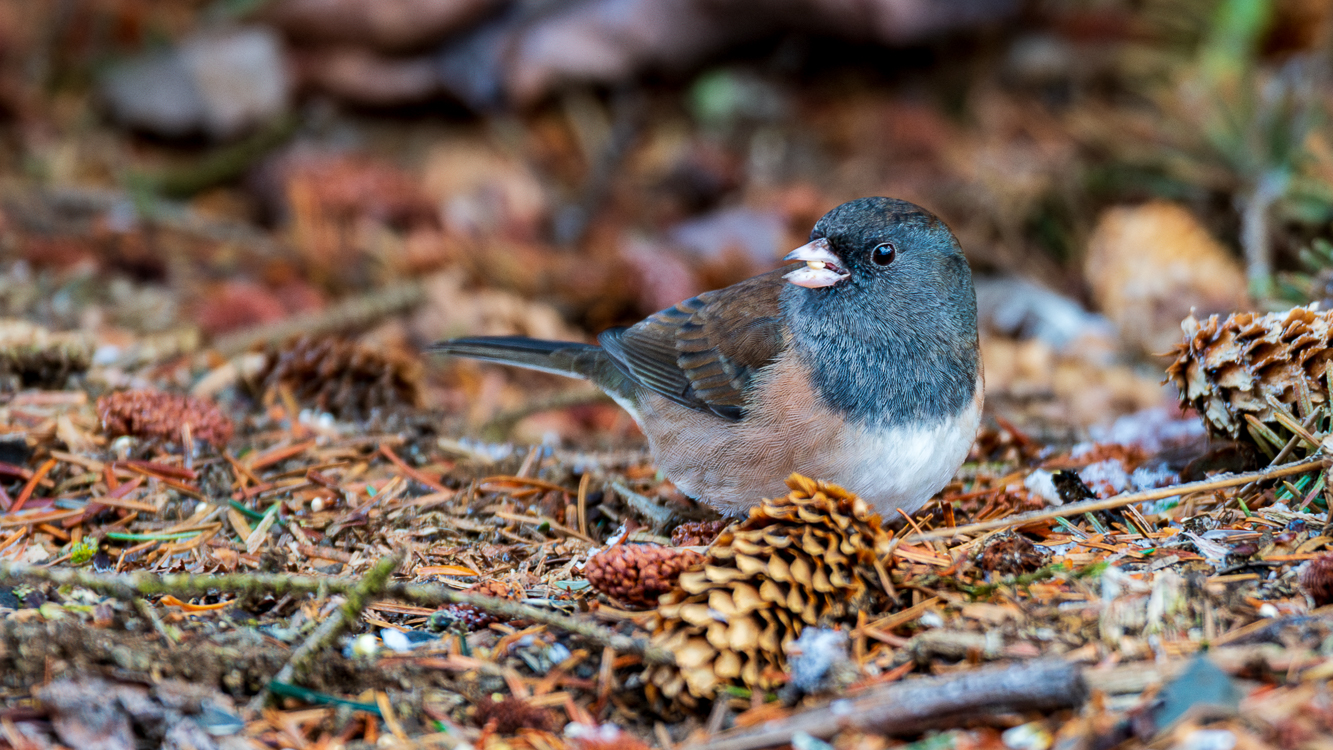
“I’ve been hoping to see you!” Sam came out to intercept me as I was walking along the dirt road past his house on my way to Sitka Spruce Grove. It was an overcast, cold November morning, the tinny smell of snow in the air. “I’ve been seeing a bird I’ve never seen out here. Batman birds. They have a dark head, like Batman’s hood. Nick’s been seeing them too. We’ve been calling them Batman birds.”
“Yeah. I’ve been seeing them too. Just in the last few days, right?”
“Yeah. I’ve never seen them before. What are they?”
“Oregon Juncos. They’re not supposed to be here. I’ve checked my books and range maps on the internet. This might be the first time they’ve ever been out here.”
Sam, in his early 70’s and not more than five-six looked up at me as he rolled the burning cigarette he was holding between his thumb and his first two fingers. For a moment nothing was said. He lifted his arm to take a drag and looked out over the landscape as he let the smoke out. Winter-brown salmonberry breaks and willows, scrub alders an even more drab shade of brown covered the country all the way to the treeline on nearby snow-capped mountains, country that in Sam’s youth had mostly been tundra.
“Things sure are changing here,” he said.
There are still people in denial, people who not so very long ago dismissed Climate Warming as some sort of hoax, who refused to believe any scientists except those who work for the fossil fuel industry. Most of those hardcore deniers have given up the tack of total denial. But they haven’t gone away, and they certainly haven’t conceded their error. Instead, the refrain now is initial agreement, “Yes, it appears the earth is getting warmer,” followed by a deflating return to denialism with, “but the world has always been changing.”
Not with this rapidity it hasn’t – the occasional meteor strike notwithstanding.
The result is that almost anywhere one lives, change can be observed in real time. This might be manifested in new species of flowers and other plants, new birds, other vertebrates, insects… or the rather sudden absence of formerly familiar species. Anyone with a camera has a chance to contribute to real-time, meaningful documentation of the change that is occurring right now all around us.
It’s not just the natural world that is undergoing rapid change. As expanding urbanization follows an overpopulated species across the globe, historic buildings are being torn down, forests leveled, rivers rerouted, lakes and aquifers emptied. Things that had remained much the same for decades, for generations even, are suddenly in a state of upheaval.
Photography is used for many things: to capture holiday moments; family portraits; events of all kinds; and increasingly, to make fine art. But some of the most compelling photographic images have always been and continue to be well-composed, straightforward documentation.
Anyone with a camera can make a meaningful contribution. Get out and shoot.

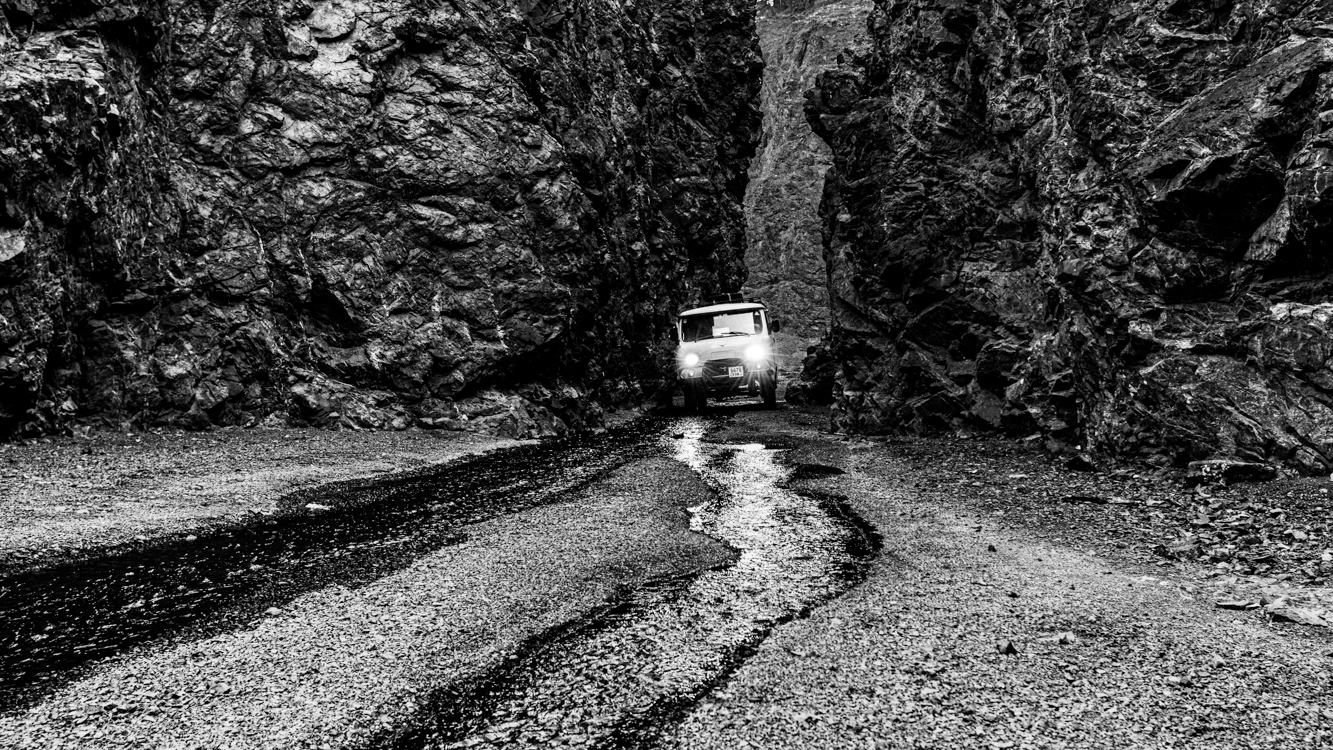
Our brief time in Yolan Am, a narrow gorge in the northern Gobi Desert, was a highlight of our two years in Mongolia. We encountered a number of Siberian Ibex there – the Eurasian wild Mountain Goat, the males of which sport massive, backward curving horns -, a Central Asian Pit Viper, raptors including eagles and Lammergeiers, Red-billed Choughs, Chukars and other birds, Mongolian Pikas, gerbils and other wildlife. We stayed in a nearby ger, a yurt-like home common in the Mongolian countryside, and kept our energy up on traditional Mongolian fare (goat meat and mutton are commonly featured).
The Yolan Am Ice Field, which formerly became several meters thick over the course of each winter and remained throughout the year, now becomes a small stream by early fall. If you get the opportunity, by all means go. The entire Gobi Desert region is fascinating. And things are changing. Quickly.

A dzud (zud, зуд) is a weather-related phenomenon in arid parts of central Asia. It could be heavy snow or ice; or a lack of snow or rain; severe cold; drought. Any widespread weather pattern that prevents livestock from obtaining sufficient food or water. Mass deaths… and economic disaster for the semi-nomadic families who follow their animals – goats, sheep, yaks, camels, horses – from place to place across steppelands, grasslands and desert. Roughly a third of Mongolia’s 3.3 million people live this life – among the world’s last nomadic herdsman.

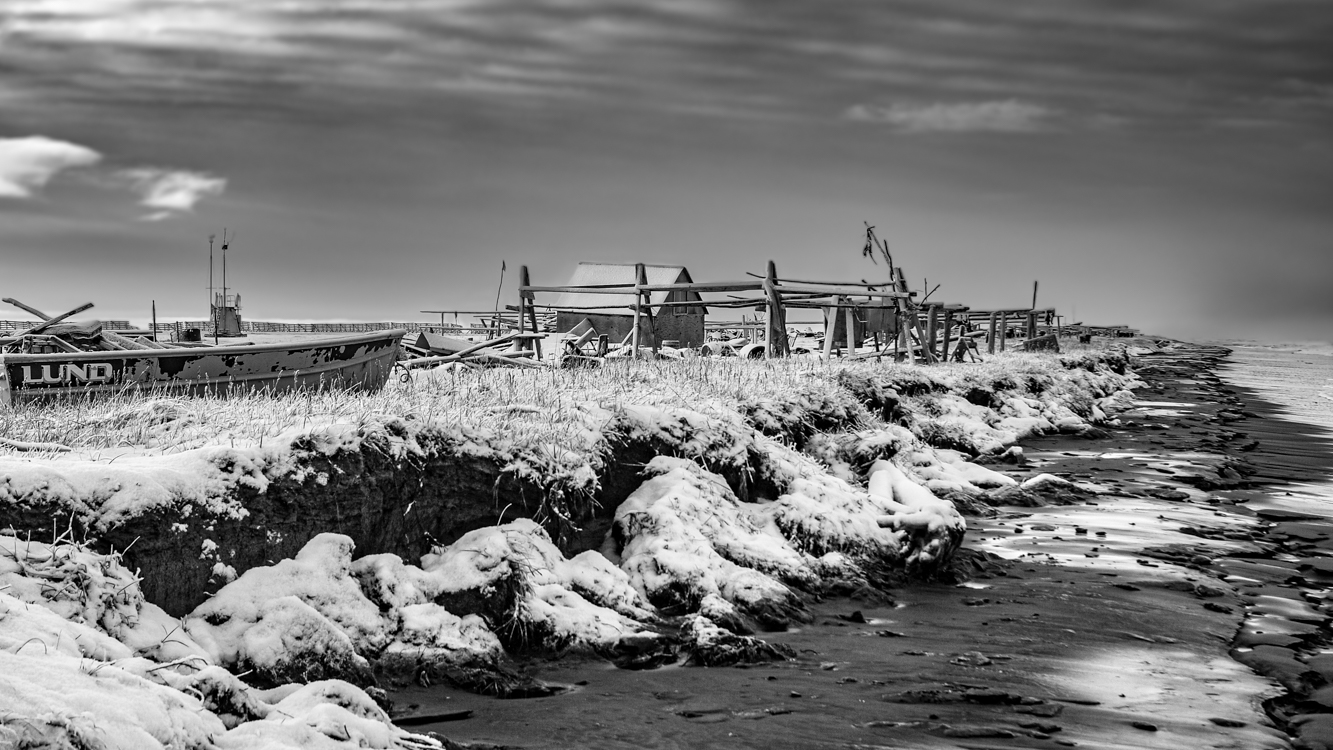
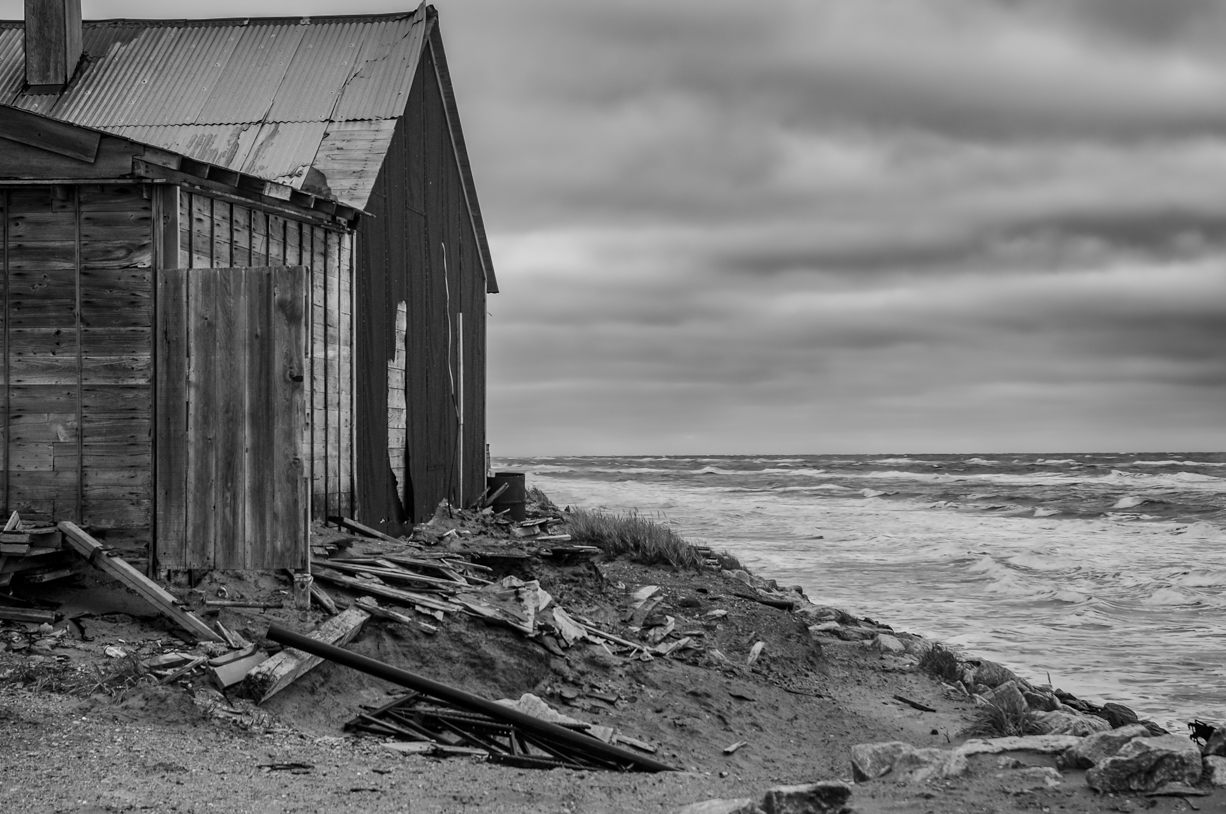
This camp along the shore of the Chukchi Sea almost looks like an ocean going vessel, the cabin itself the wheelhouse, a flag marking the vessel’s bow as it faces a fall sea. Snow but no ice, you can see how the ravenous ocean eats at the shoreline of tiny Sarichef Island. All this will be gone one day… perhaps in not so many years. October 31, 2010

It is reported that since 1969, the ocean has eaten away 200 feet of land along the coast of already tiny Sarichef Island where Shishmaref is located. In the past, a sheet of ice forming in fall and lasting through spring kept the Chukchi sea blanketed and calm. Warming sea temperatures in the Arctic mean the ocean is freezing later. When fall and winter storms occur, packing winds that have traveled uninterrupted over thousands of miles of open sea, the surf thus generated claws at the barrier island without mercy. Particularly violent storms can rip away massive chunks of land. Entire homes have been washed away, a fate this abandoned house appears to be facing. Photograph: October 10, 2010
It has only been two weeks since winter solstice and I can already tell the sun is stretching higher into the horizon. I wasn’t the only one who sensed this. On Sunday, I was amazed to see the community bustling with activity. People were out tooling around on their snowmachines (snowmobiles to you in the lower 48). Children were out playing in snow clothes, tethered to sleds. There were combinations of people pulling sleds by snowmachine. The general air in the community was buzzing with life and movement.
Besides the sunshine, the other noticeable difference was the temperature. It was 39 degrees! No hat was needed. No gloves were needed. It was downright balmy. Ok, maybe that’s a wee bit of exaggeration. But it was way warmer and sunnier than it has been.
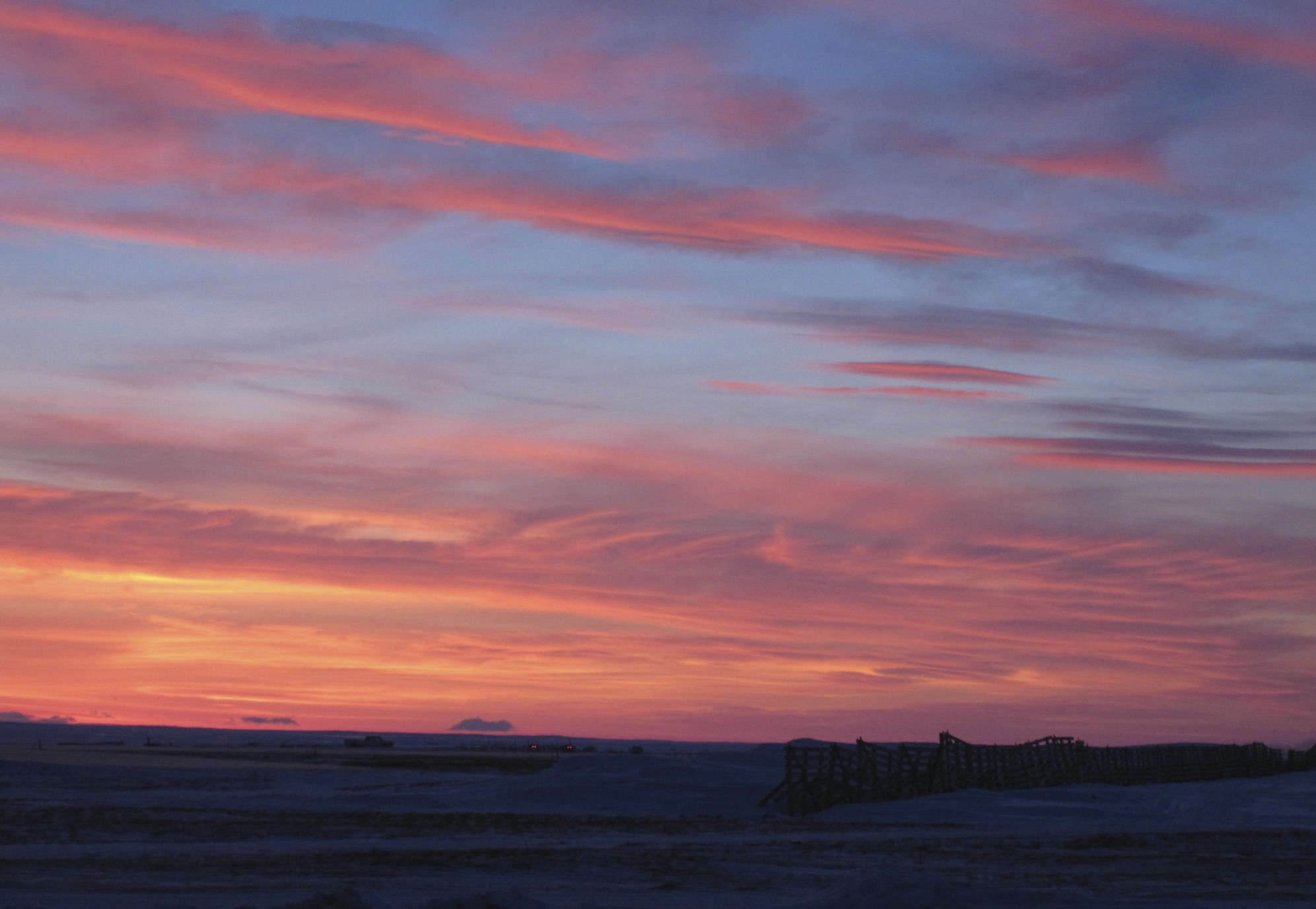
After enjoying the beautiful day and contemplating the amount of activity, one more glance at the sky revealed a sunset beyond words. The sky was an unspeakable pink on an azure backdrop. The photograph taken is a good representation of the colors. Now, imagine being engulfed in this sky.