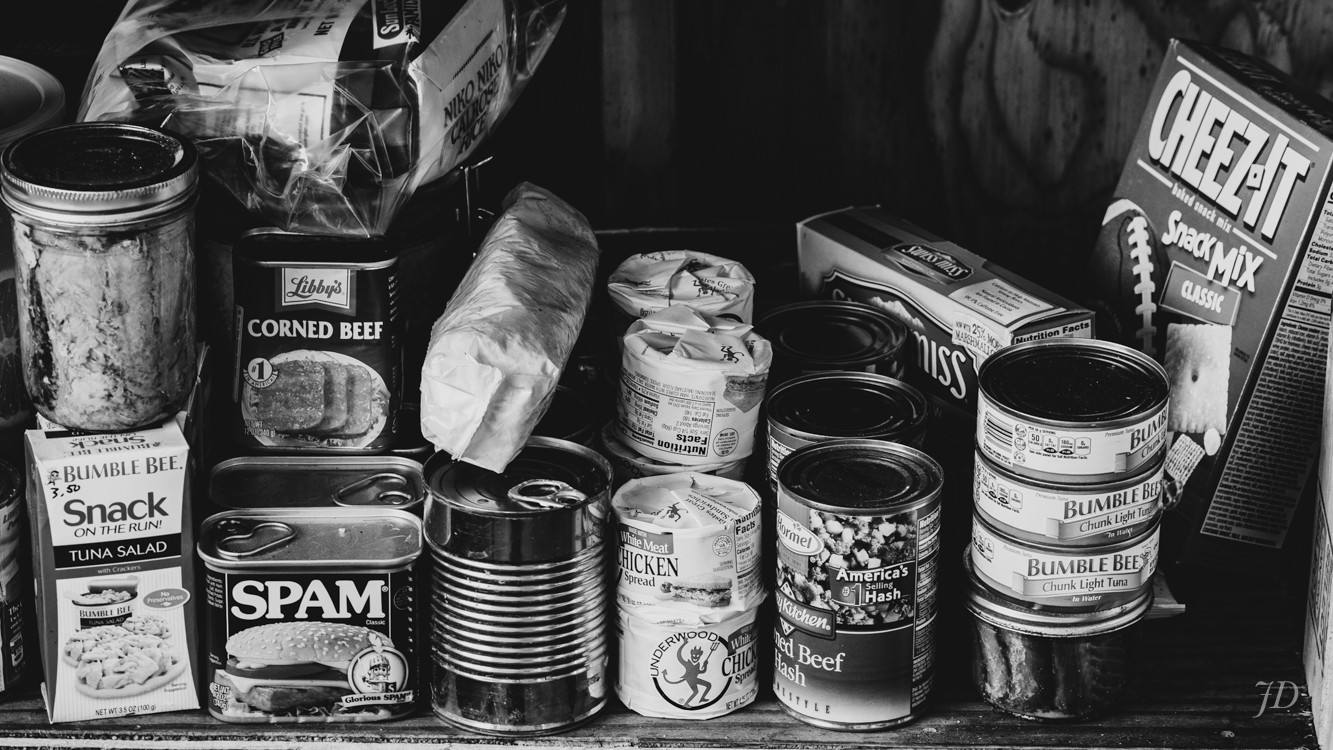
The Well-stocked Wilderness Larder We had packed in sufficient quantities of our own food and so were in no danger of going hungry when a dangerous winter storm came up out of nowhere, flash-freezing Black Lake and stranding us in a tiny cabin on its shores. But I admit… it had been a long time since I’d had a slab of fried spam; it proved to be more than I could resist. Black Lake in the Chignik Drainage, January 2018
Golden-crowned Kinglet – Chignik Lake, December 2017 Sitka Spruce Trees transplanted at The Lake from Kodiak shoots 70 years ago provide a great deal more than just cone seed forage for finches and chickadees. Golden-crowned Kinglets and a few other avian species glean the boughs, bark and understory for invertebrates. Here a lucky female kinglet has come upon a silk-wrapped treasure – perhaps a spider egg case or an insect trapped and wrapped.
Yellow-billed Loon – Chignik Lake, Alaska, 11/27/17
When I initially got into studying the Chignik Drainage’s birds, I thought that a loon was a loon was a loon, a species I knew primarily from seeing Common Loons. I assumed that that is what a loon is. It turns out that there are five species of Gavia, four of which occur in the Chignik Drainage. In order of common occurrence, they are: Common Loon, Pacific Loon, Yellow-billed Loon and Red-throated Loon. (Only the rare Arctic Loon is absent from The Chignik.) It is probable that in the salt waters of the nearby Alaskan Gulf that from fall through spring it is the Pacific Loon that is most common.
We encountered Yellow-billeds as wintertime visitors to the main lake and the river outflow just below the lake. In wintertime, their plumage is rather drab (you’ve got to go to the most northern parts of Alaska, or Siberia, to see them in their stunning breeding colors); however, even in winter these, the largest of the five loons, were easily distinguished from Common Loons by their big, lightly-colored, yellow-tinged bills. We found the Yellow-billeds to be shy and to prefer deep water. The only photos I was able to get were taken using a 600mm lens affixed with a 2.0 teleconverter of far off specimens – and even those images require significant cropping to present a picture such as the one above. Still, Yellow-billeds are uncommon to rare and adding them to the Chignik Drainage List – perhaps a first documentation and almost certainly a first photograph – was a thrill.
Any documentation of this sort is important. As the planet continues to rapidly warm – due largely to a certain overpopulated species’ reliance on burning fossil fuels and turning forests to farmland – things are changing. Fast. (It’s not just that the climate is warming – it’s been doing so for a very long time. It’s the recent rapidity at which it is warming.) Audubon’s climate model projects a 64% loss of winter range for Yellow-billed Loons in coming decades. Not centuries. Decades.
Wherever you live, it is likely that you can see changes in flora and fauna over time. And these changes are not due only do warming. Although in pure numbers countable trees have increased in many areas, most of this new growth is in the form of pulp and timber forests – trees destined to be cut down just as they are reaching maturity. As fewer forests are allowed to reach and sustain maturity, there is less mast (acorns, other nuts, seeds and seed-bearing cones) for animals to forage and often fewer nesting sites as well. Wild grasslands have nearly disappeared from our landscapes. In many locales, streams, rivers and lakes have become warmer, shallower and increasingly over-nutrified owing to run-off from fertilized lawns and farms. So grab a pair of binoculars, a notebook, your iPhone or camera and get out and observe. The regular outings might prove to be a great education, and a daily walk is invigorating.
Female Red Crossbill digging into a Sitka Spruce cone. Her crossed bill helps her pry apart the cone’s scales so her muscular tongue can fish out the winged seeds. Note the purple accents in her feathers, which are not often apparent. Chignik Lake, 11/27/17
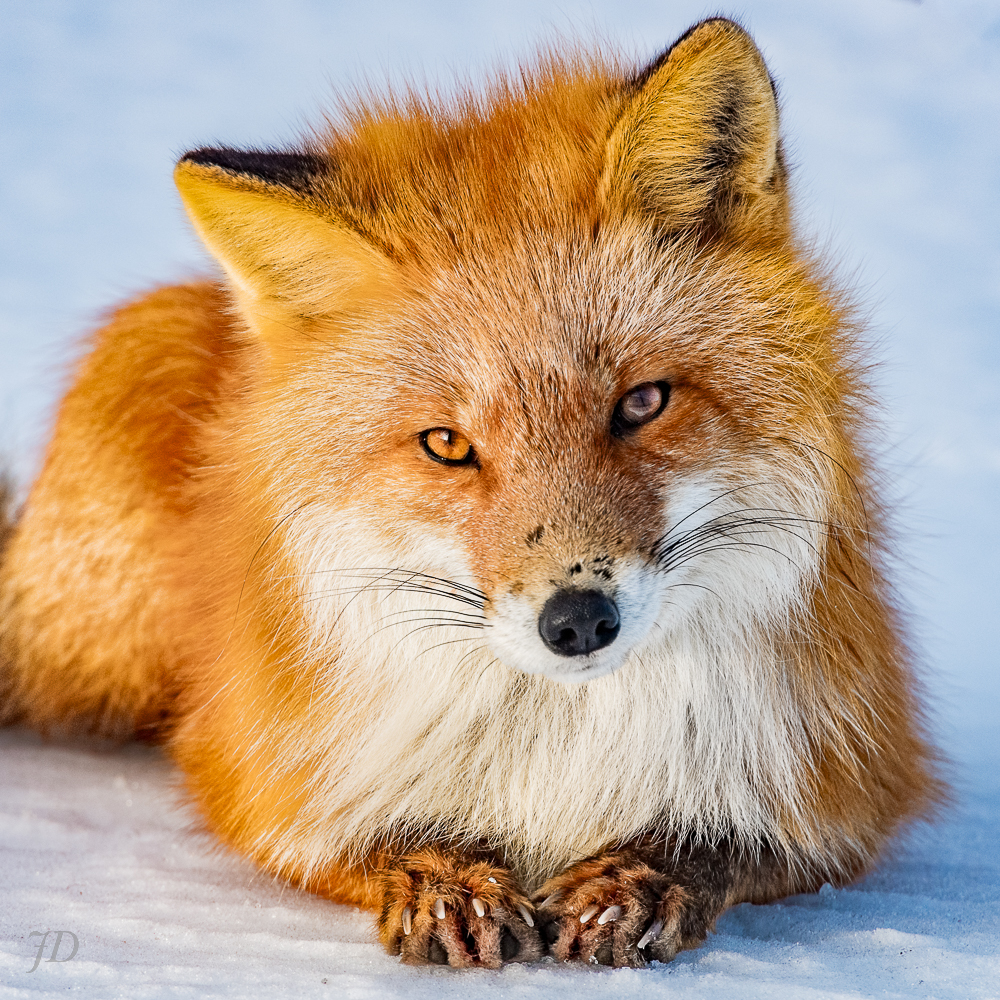
Young Master Speck Among all Alaska’s wildlife, is there any like our Foxes for hitting the precise nexus of beautiful, handsome and cute…Chignik Lake, April 1, 2017
Barbra feeding Black-capped Chickadees at the Sitka Spruce Grove. Intelligent little beings, as we we left our home to walk the half-mile to the grove to replenish the feeders we’d hung there, our little chickadee friends would find us and fly alongside. It didn’t take much coaxing to further earn their trust.
Male Pine Siskin Thousands and thousands of photos either culled and discarded or key-worded, retouched and placed year by year, month by monthinto digital folders. Still lots to go. Now into late October and early November of 2017, I hadn’t remembered that I got some nice captures of Red Crossbills and Pine Siskins that fall – finch species that generally do not appear on range maps for the Alaska Peninsula and which David Narver did not observe in his Chignik River Drainage study conducted in the early 1960’s. With the exception of Pine Grosbeaks, Alaska’s finches – which also include White-winged and Red Crossbills, Hoary and Common Redpolls and Pine Siskins – depend heavily on cone seeds. The siskin in this photo would probably not be at The Lake were it nor for the Sitka Spruce trees transplanted as seedlings from Kodiak Island back in the 1950’s. Now mature and beginning to reproduce on their own, these spruces provide shelter and seeds for chickadees, sparrows, finches and magpies as well as a diverse array of invertebrates for all the above along with woodpeckers, wrens, kinglets and warblers. These passerines in turn provide a source of food for owls, falcons and shrikes. Want to change the world? Well, you could try yelling at the evening news on TV… or you could plant a few trees.
Studio Fox – Pausing to perhaps contemplate a recent meal or the nextone on a wet morning in late fall,this fox and I encountered each other at the boat landing where an assortment of fuel drums, an abandoned truck and other objects made for a interesting background. Shooting with a long lens and a wide-open aperture helped create this bokehed background. Chignik River, November 27, 2017
Pink Salmon Spawning, Post Office Creek – Locals call the pretty little stream bisecting Chignik Lake village The Crick. We thought it deserved a more honored sobriquet, and so since it cuts through a culvert and passes beneath the road near what used to be the post office, we called it post office creek. It is populated with char and sculpins and very occasionally salmon spawn there. September 19, 2017
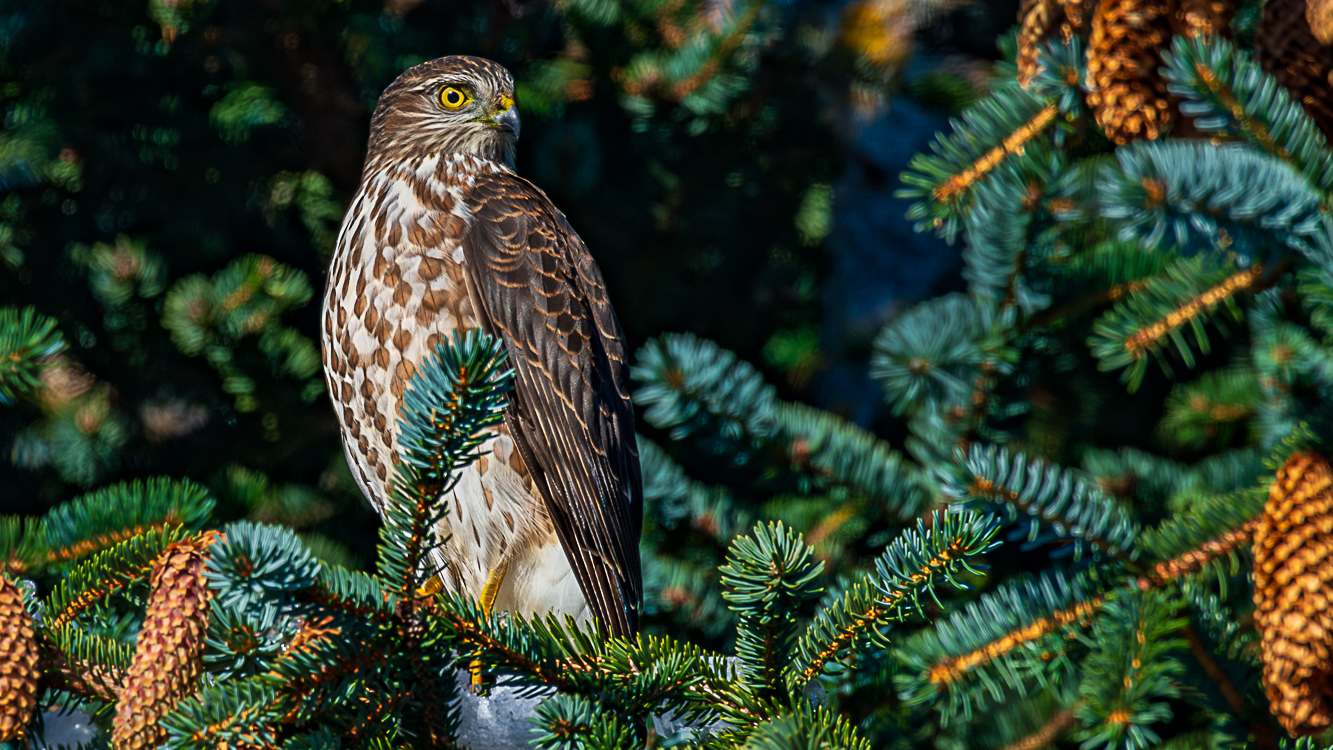
Sharp-shinned Hawk, Sitka Spruce Grove, Chignik Lake, October 23, 2017 Rare visitors to the Alaska Peninsula, Narver did not document Sharp-shinned in his Chignik study of the early 1960’s, so this is perhaps the first documentation of the species in the Chignik River drainage. The specimen in this photograph arrived with passerines migrating south, was seen off and on for a couple of weeks, and then left. The mottled leaf-like pattern on the chest indicates a juvenile. Adults chests are more evenly ruddy.




 CutterLight