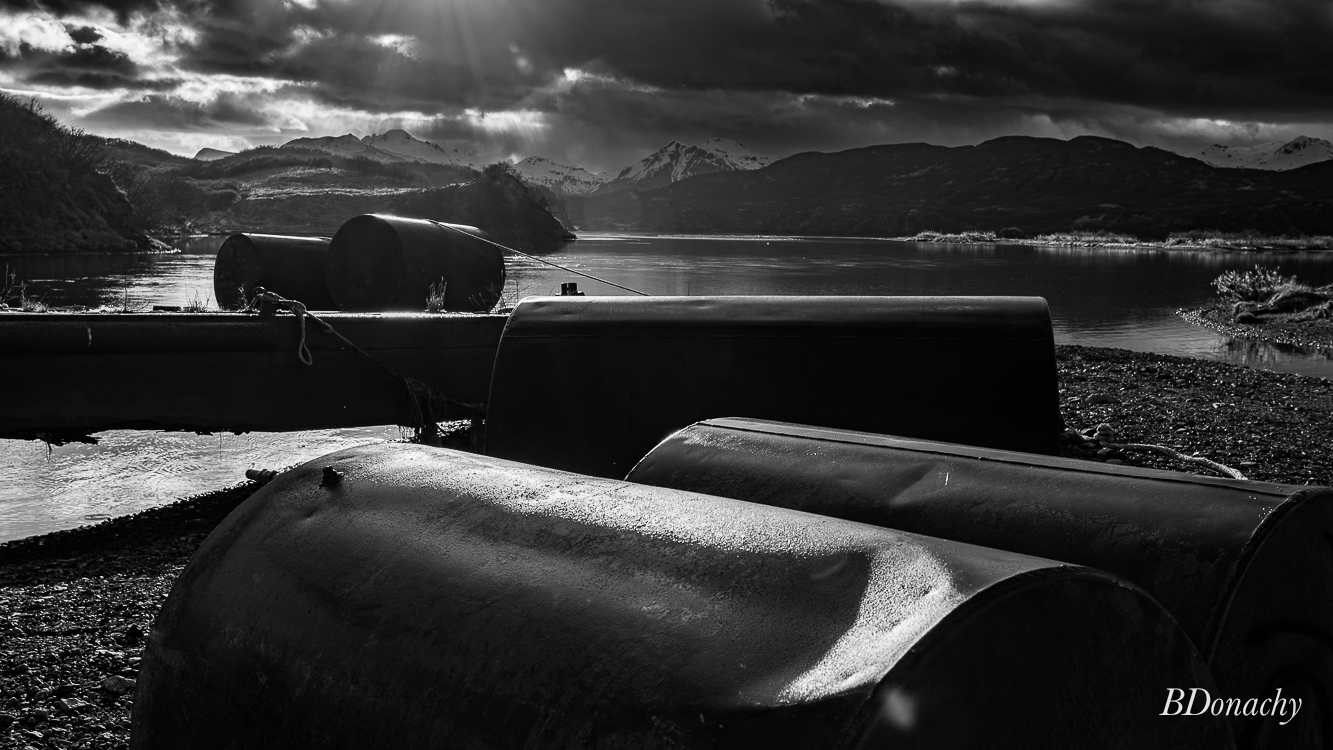
Fuel Oil Drums at The Pad Chignik River Barge Landing, May 16, 2019
Barbra has an eye for moody images such as this early morning landscape of diesel oil drums at the barge landing on Chignik River. The scene is the terminus of the three-mile road that travels from the airstrip, winds through the village of Chignik Lake (population 50 something), and then follows the river along steep hillsides till it ends here at the landing. These drums are barged to this point, about six miles upriver from the salt water lagoon, on high tides of about 10 feet or more. On lesser tides, the river is too shallow for the barges to run. From here, the fuel is loaded onto a truck and carried to the diesel generators that provide the village’s electricity. Gasoline, too, along with any sort of large stuff such as vehicles and building material is brought into the village in this fashion.
Such are some of the logistical consideration in a wilderness village.
Good Morning Alaska Peninsula Brown Bear, Ursus arctos gyas. Chignik Lake, October 3, 2018
Alaska Peninsula Brown Bears share the same genus and specific name as Grizzly Bears of interior Alaska, Canada and the Lower 48: Ursus arctos. They differ only in the subspecific name: gyas in the case of these Peninsula Brown Bears; horribilis for Grizzlies.
I present this image here at a 16:9 ratio because that works well on most screens. But when I print it to show, I will print it as a square and ask that it be hung at eye-level, as a kind of mirror. There is more going on behind those eyes than where the next meal is coming from.
And yes. My heart was pounding wildly to find myself suddenly this close…
Tundra Swans at Black Lake – The jagged Aleutian Mountains loom in the background over this bay on remote Black Lake on the Alaska Peninsula. A flock of approximately six dozen Tundra Swans rests on ice in the foreground. Not readily discernible in this photo, a few ducks, mostly Mallards, are milling about in the open water near the ice. This broad, shallow, weedy lake at the headwaters of the Chignik River Drainage provides waterfowl habitat as well as an important nursery for salmon that spawn in various tributaries. The most practical way to access the remote waters of Black Lake is by skiff – about 17 winding miles from the village of Chignik Lake up Chignik Lake and then up Black River.January 3, 2018
Friends Don’t Let Friends Eat Farmed Fish Alaska is home to a number of iconic bumper stickers. It is my understanding that in former times, this Suburban served as Chignik Lake’s ambulance. That was awhile ago…
Spring Angels Returning Tundra Swans, flying above the Chignik River – Chignik Lake, March 17, 2017
At first it seemed counterintuitive to process this picture captured on a blue sky spring afternoon as a monochrome image, but I like the moodiness. I don’t know… what do you think?
Sam Stepanoff preparing to get in a few casts for the Chignik’s elusive Steelhead. A fellow birder, Sam helped confirm Juncos as new to The Lake and certain finches as previously uncommon or rare. The 13-apartment nesting box he made was often filled to capacity with Tree Swallows. As a subsistence angler, Sam was surely responsible for one of the greatest non-commercial distributions of salmon in North America – beach seining, smoking and canning the Chignik’s wonderful Sockeyes and sending the jarred product off to friends and family not lucky enough to live along the banks of a great salmon river. He is missed. (February 3, 2017)
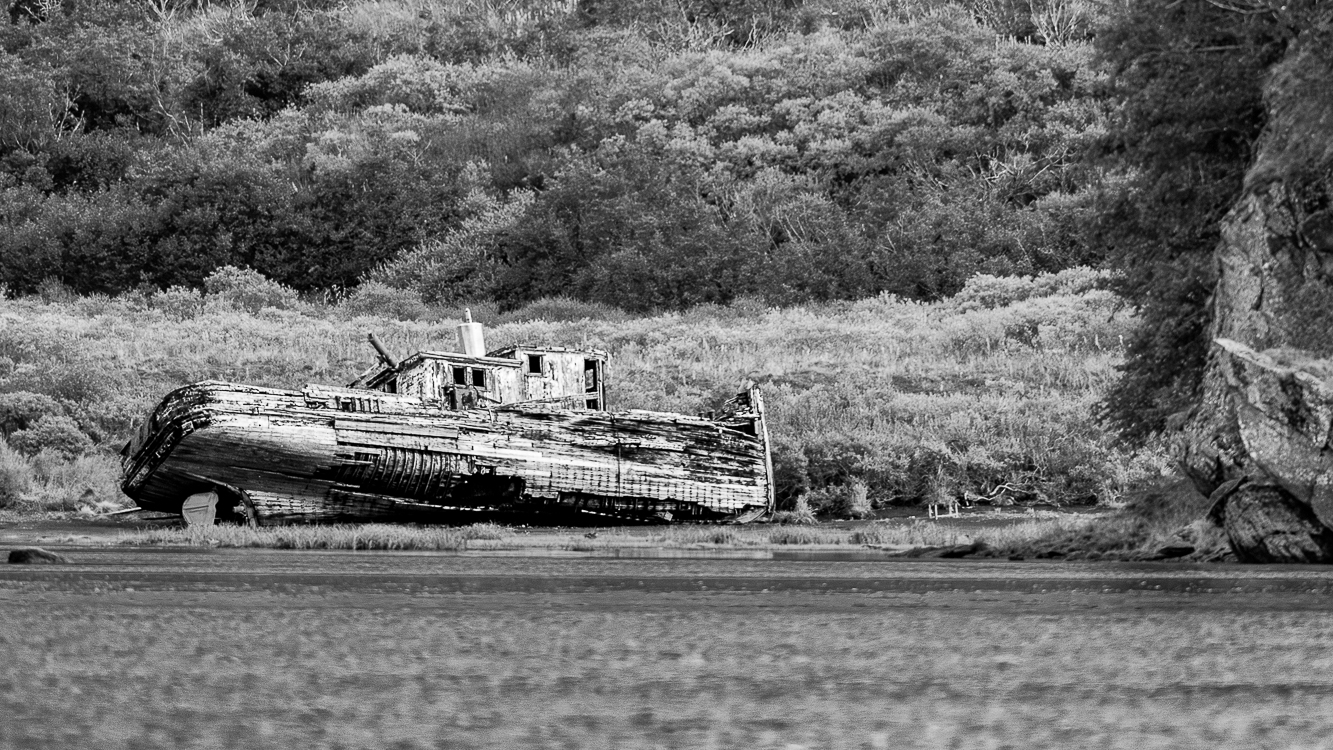
Back in the DaySalmon Seiner from the wooden boat era in the Chigniks Chignik River, September 23, 2016
Concurrent with publishing this photo, I’m putting out a request on other social media asking my Chignik friends for more information on this vessel. I don’t know a lot about boats, but I’m fairly certain that this is a salmon seiner, perhaps built sometime in the 1940’s or 1950’s. It was aground, as you see here, about two miles up from the salt chuck when I noticed it tucked into the back of a wide river cove accessible only on high tides. The tide was out, the person whose skiff I was riding in was in a hurry to get down to Chignik Bay, so I settled for this passing shot. I always intended to go back and get additional photographs, but it never worked out. Years later, I saw what appeared to be the same vessel on a beach at Chignik Bay – perhaps towed there by someone who valued its history.
The lesson here, such as a lesson exists, is to be careful… mindful… about passing up shots – even if the composition is imperfect. No doubt every serious photography has in their memory banks a list of pictures that theypassed on and later came to regret not getting. You arrive at a new locale, note a species of bird that is new to you, assume that they must be abundant there, pass on the shot and never see another bird like it. You keep telling yourself you’ll make a portrait of that special friend – and never create the right moment. Or you tell yourself that you’ll come back to make a photo of the stunning landscape before you. But way leads to way and you never return.
While no one can get every shot they’re presented with, some of the ones we pass on haunt us. They become very much like those big fish that got away, growing larger over time… until all those photos and fish meld into a single image of a monster of a Japanese Sea Bass emerging from the surf, shaking her massive head, and then dark tunnel vision as the white jig breaks free from her jaws and comes springing back through the air as your knees turn to rubber – that Sea Bass my own personal metaphor for In my life as a photographer: a rare Spotted Redshanks flitting around me as I cast flies to Chignik River Salmon, assuming the bird to be more common than it is; a Parasitic Jaeger stuffed so full of fish it could barely fly perched near me on shore the first time I hiked out to Tikigaq Point, again, making the assumption that this would be a regular occurrence I’d have other opportunities to capture; portraits of my friends and neighbors at The Lake… the “some other day” I was going to photograph them never arriving.
So, imperfect as this photograph is, I’m glad I got it when I had the opportunity. A boat like this will never again be seen on the Chignik.
I’ll update this post if I discover additional information.
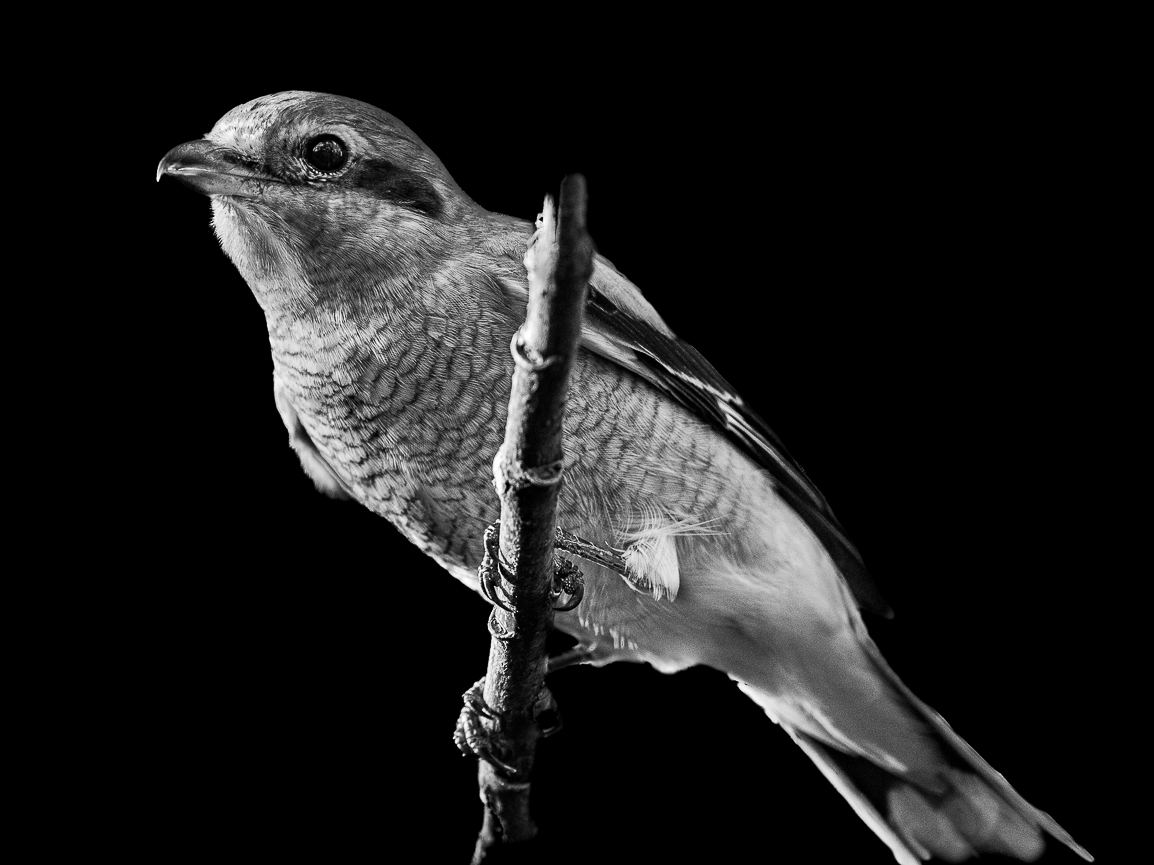
Spirit Bird– The day we arrived at The Lake, I heard the cry of a bird unlike I had ever heard. I’m not sure how I knew, but I knew. Shrike. I looked up to where it was perched on a utility wire. “Uncommon to rare,” according to Sibley. At the time I didn’t know much about photography or birds, but in that moment I understood that I was in a special place and that there was work before me. And so I ordered a new field guide and a copy of the Cornell Lab of Ornithology Handbook of Bird Biology (716 pages, more a tome than a handbook), acquired a long lens, and began.8/27/16
Sawbill: Red-breasted Merganser with salmon parr catch, Chignik Lake, Alaska, 12/31/16. One of my first photos of this species. Note the formidable serrations on the bill, hence the colloquial “Sawbill” sobriquet. The image, as it pertains to The Lake, is somewhat misleading as a piece of documentation. In my observation, our diving ducks were far more likely to make a meal of sticklebacks than of salmon parr.
It has been a daunting task, going through not merely thousands, but tens of thousands of photographs Barbra and I have taken during the 16 years of our marriage. In the early days, I did not shoot. It took Barbra’s coaching to instill in me the confidence to pursue a photography dreams I had set aside long before I met her.
Recollections grow blurry with time. Add to that the fact that we often didn’t see what we may think we saw; that frequently we didn’t experience what we thought we experienced. Anyone who has ever faithfully kept a journal and then gone back later to reread events recorded there will invariably think to themself, “Huh… that’s not the way I remember it,” a firmly held memory tripped up by one’s own written record. No one can accurately write about their own life and pretend that it is some sort of self-biography.
All memoir is fiction, and rightly belongs in that section of the bookshop or library next to other novels. It is folly to call memoir “autobiography” and tuck up next to the truer stuff of biography. With that understanding, we proceed.
Four months into my 12th year, the fall of 1971, I discovered on my father’s bookshelves A. J. McClane’s McClane’s Standard Fishing Encyclopedia and International Angling Guide a 1,057-page tome that changed my life and in retrospect provided a vital stepping stone along a path that led to The Chignik. Filled with angling lore, photographs, fish recipes, fly patterns, fly-rod theory, and species by species, state by state, country by country descriptive synopses it was, from the time it was published in 1965 on through the 1970’s, the one volume virtually every serious student of angling had on their shelves. The color plates featuring dozens of flies, accompanied by recipes for their patterns, made the book a must all by themselves. It was from that book, at the age of 11, that I learned to tie an Alaska Mary Ann, a fly of no meaningful application on the Brook Trout and stocked Rainbows and Browns of my Pennsylvania youth, but which I kept in my fly box as a kind of talisman holding within its wisp of white calf tail wing, jungle cock eye and silver tinsel ribbing a life I dreamed of.
I wasn’t permitted to be in the small library where McClane’s was shelved, but arriving home from school each day well before my parents returned from their teaching jobs at the local state college gave me an hour or so of privacy with this wonderful book before the sound of the kitchen door opening signaled me to spring up from the oriental carpet where I’d been kneeling over the book, return it to its place, quietly ease the den door shut, slip out of the room and sprint up the stairs to my bedroom. Minutes later, I would come back down the stairs and find my parents in the kitchen. All the while my younger sisters would have been in the downstair TV room, glued to and hypnotized by reruns of Gilligan’s Island and similar fare.
Anyway, at some point it came to me that 1) angling connected the world as did virtually no other pastime, far more widely and passionately practiced than anything else I could think of and that 2) A. J. McClane, editor-author of this massive compendium of angling expertise, angling editor of Field and Stream magazine, regarded as the foremost angling journalist of his time, would not live forever. Someone would become the next A. J. McClane.
Why not me?
My first mistake in attempting to embark on this journey was to share this dream with my parents. She put a needle in the balloon of my hopes with a single syllable laugh. He dismissed my aspirations with the same two-word opinion he voiced anytime I expressed a hope or goal. You’re delusional.
Nonetheless, when I mentioned to him the book I’d found and asked to borrow it, he allowed me to take it to my room. I doubt he had ever read more than a few pages out of it and probably hadn’t touched it in years. So the book became mine, and I pored over it. That Christmas, I once again engaged in the annual futility of asking for a for Christmas present. I wasn’t allowed to cook in her kitchen, so for the immediate future I had no means of beginning to acquire McClane’s culinary skills, but a friend of my father’s had recently taught me to tie flies and to cast a fly line and I was getting the hang of all that. I needed a camera. The little bit of money I’d made painting my godfather’s garage that summer had already been spent on clothing for school. So I asked my college educated, college teaching parents for a camera. “That’s all I want,” I told them. “I need a good camera. Don’t get me anything else. Just a good camera.” I supplied them with a specific model that was popular at the time. I suppose the term for what I was hoping for would be an “enthusiast’s” camera – something of sufficient quality to learn with.
I should have know better, having been through this charade with them every Christmas of my sentient life. That year, in addition to the usual packages of underwear (for Christmas… sigh… I should have given her a dusting cloth and a can of Pledge), there was the usual assortment of stuff I had no use for – enough of it that, added together, it would easily have paid for the camera I had pleaded for along with many rolls of film.
There was a camera… a Kodak Hawkeye Instamatic II… a ridiculous “all plastic” model from which it was impossible to coax a decent image. The camera was a promotional gimmick available for free at department stores. Purchase a couple rolls of film and a couple more of “magic cubes” flashcubes, and Kodak made money off of it. I have an image in my head of showing the camera to an uncle who was a skilled amateur photographer and the way he silently turned it over in his hand as though trying to make sense of it while searching for something positive to say, finally concluding that there was nothing to say before simply saying “Here you go,” as he handed it back to me and turning a quizzical look toward his sister. That spring, on a trip to Washington, D.C., I saw seven and eight year olds with the camera. It was of no use to me.
Lacking the means to pursue McClane-esque dreams on my own and with no support to be had from my parents, I honed my expertise in one of the great gifts I learned living with them: the art of turning my attention elsewhere. Along any path, on any journey, one is likely to encounter obstacles. The ability to find a path around those obstacles, to continue moving forward in life, cannot be overestimated in its value. Resilience. Head up, looking for an open window when a door is closed. My parents did not mean to teach me this art; I’ll never know exactly what their intent was. But the art of moving forward is the finest thing I learned while negotiating my way through life with them.
Years passed. Decades. I never completely got the idea of photography out of my head… but it seemed that the older I got, the more trepidation I had about picking up a camera and beginning to learn. When a friend invited me to attend a photography exhibit during a visit to L.A., the art I was looking at seemed so far beyond anything I might be capable of that, then in my 40’s, I concluded I would never by a photographer.
Enter Barbra.
When I began seeing her, she was shooting with digital bodies matched with an assortment of lenses. She’d taken classes at the college level, and in the pre-digital era had converted a closet into her own darkroom. It was all way beyond me, but I couldn’t conceal my curiosity. Cueing off my obvious interest, she repeatedly encouraged me to give it a go. With feelings tugging me in contradictory directions, initially I demurred. Months passed before I worked up the courage to finally ask her to show me how her D90 worked.
That seems like a lifetime ago. Year by year, new skills, new knowledge and growing enthusiasm have led to acquiring ever more sophisticated gear – and, in this digital age – an ever growing body of images. Using Lightroom (think of it as a digital darkroom with a searchable database and library) to retouch and catalog these images, I’d been doing a steady job of keeping up with our pictures till a disaster of the most fortuitous kind struck.
While transferring Lightroom files to a new computer, we wiped out all the key-working and all the edits. Countless hours of work vanished.
Turns out, that was a good thing.
Because my original key-wording was a mess. I didn’t initially understand that “key word” is best thought of as a, single, word. So I had photos tagged with long phrases, and hence a long list of keyword phrases which resulted in a headache of cluster and a difficult to search data base.
The photo retouching I had done in those days was subpar as well. Practice makes better. The more retouching I performed, the better I became at it. Not only that, my eye developed. Even before we lost all those edits, looking back on my files I was beginning to see that my early edits needed work – that in many cases, I would be better off resetting the photo to its original state and starting over.
So…
At this point, I’ve gone through our scanned photos, wedding photos, Sacramento Days, Alaska-Canada Highway, Seward Summers, Shishmaref, Point Hope, Mongolia, San Francisco. Along the way, I eliminated thousands of pictures, key-worded and retouched the keepers… and continued learning.
At last, I have reached the tens of thousands of images we created at The Lake. My view is that if a picture is worth keeping, it’s worth cataloging so that it can readily be located, and it’s worth retouching (cropping, adjusting exposure, hue, vibrance, contrast, sharpness) to bring out its best qualities. I have a friend whose father left behind, at death, thousands of photographic slides. “What am I supposed to do with this?” he said, mild exasperation in his voice as he motioned towards cabinet drawers jammed full of uncatalogued slides.
Either hire someone to go through and curate them or make a bonfire, I suggested.
I can’t bring myself to add up how many photos are yet to be finished. When climbing a mountain, a glance at the summit should be enough; after that, it is best to keep one’s eyes on the path just ahead.
Seven year’s of images from the Alaska peninsula, plus our bicycle trek in Hokkaido and other summertime adventures during those years. But it’s good work, the kind that puts a smile on my face as I revisit happy memories. I confess that I teared up when I opened the first image from our Lake years – an aerial landscape of endless, jagged, snow-capped peaks as we flew down the Alaska Peninsula for the first time to live among Alutiiq Native Americans in a tiny wilderness village along one of the world’s last, great, seldom-touched salmon rivers. The extraordinary fly-fishing that followed; the bird project; the flowers and wildlife and landscapes and people.
I’ll continue to post a photo each day or so from this massive library – a sample of those that I really like. My hope is to finish sometime this spring, at which point I’ll be ready to move forward with the next project.



 CutterLight