
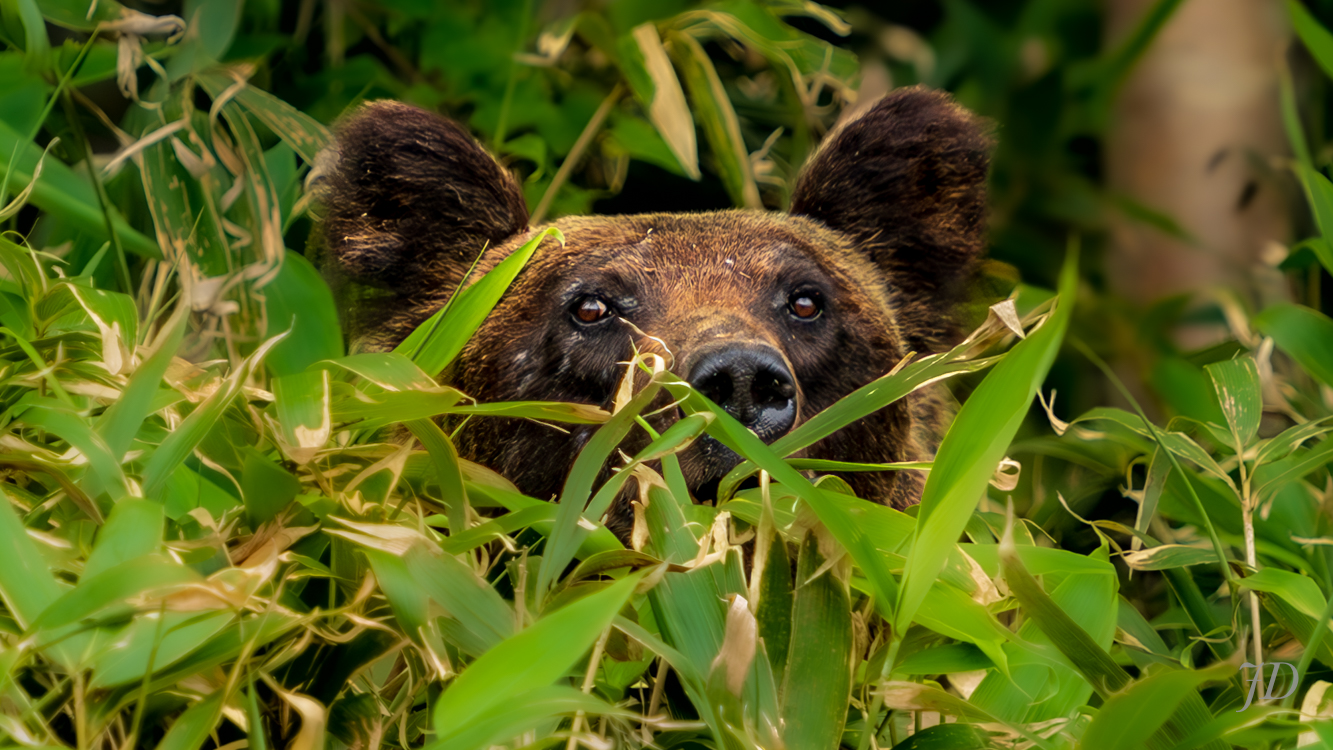
Ursus Arctos is a holarctic species represented by several subspecies throughout the Northern Hemisphere including the Grizzlies of the North America West (U. a. horribilis), the massive Coastal Brown Bears of Kodiak Island Alaska (U. a. middendorffi), the equally impressive Chignik (Alaska Peninsula) bears (U. a. gyas) and various additional species scattered from the harsh Gobi Desert to Siberia, the Italian Alps and other regions. Adapted to a variety of climates and diets, physiologically Ursus arctos is the most varied of all bear species.
The Brown Bears we encountered in Hokkaido, U. a. yesoensis, are similar in appearance to the Coastal Brown Bears of Kodiak Island and the Alaska Peninsula which makes sense as, like their Alaskan cousins, Hokkaido’s Brownies subsist on a salmon-rich diet. But at an average weight of only about 450 pounds – large males topping off at under 700 pounds -, Hokkaido’s bears are small compared to those found in Alaska; Chignik and Kodiak bears can reach weights of well over half a ton.
Still, bears are bears and regardless of size, they can be fierce. Approximately 12,000 Brown Bears inhabit Hokkaido, a land area about the size of the state of South Carolina or the country of Austria and home to just over five million people. There have been 57 human deaths attributed to Hokkaido’s Brown Bears over the past 61 years. When the sow in the above photo cautiously emerged from the forest and woofed for her two cubs to follow her across the steep road we were pushing our bicycles up, we gave her the right of way.
The rugged, forested 470 square mile Shiretoko Peninsula where we encountered these and several other bears as well as Blakiston’s Fish Owls, Ezo Red Foxes, Sika Deer, Dall’s Porpoises, eagles and other birds is a UNESCO World Heritage Site.


 CutterLight