Naturally occurring layers, dimensions, and patterns.

Naturally occurring layers, dimensions, and patterns.

One-hundred and twenty clams
That’s a lot of razor clams. Back on the Oregon coast, the limit was thirty for the two of us. We love razors, they are THE best eating clams. Driven by our love of clams and the best clamming tide of the summer, we cruised down the Kenai coast to see what we could catch.
We got to the beach well before the peak low tide. The beach was suspiciously devoid of people and very rocky. The day before, a family of campers had told us that this beach was “loaded” with clams. Maybe we had been punked! Patience, Donachy’s, patience.
We walked south in hopes of finding sand or evidence of clams. The day was sunny, and the blue skies were reflected in the glassy waters of Cook Inlet. Shouldered with snow, Mount Iliamna loomed in the distance, catching clouds like wisps of cotton. Bald eagles seemed to be everywhere. We walked immersed in the beauty and stillness, the sun warming us.
As the tide continued to recede, here and there patches of sand began to show. And then, so did the people. Trucks and ATVs drove by and continued down the beach. A-ha! After a few more minutes of walking we joined the two dozen or so people who were beginning to dig. There were old, young, and in between. Dads were coaching kids. Groups of young girls were squealing and giggling with each clam they pulled from the wet sand.
As we joined the diggers, we were amazed at the quantity of shows—the tell-tale dimples in the sand made by each clam’s syphon. Two years earlier, we dug some clams at a nearby beach. They were huge, but we didn’t find many. On this beach, the clams were smaller, but still a good size for eating. After digging for a bit over an hour, we decided we’d better count and see where we were. We were shocked to find we had already dug one hundred clams! We were almost disappointed knowing that we only could dig twenty more.
The morning of clamming and walking the beach had been a blast! We knew we had our work cut out for us cleaning and prepping the razors for cooking. Armed with a six-pack of Alaskan White Ale and the high the two big bags of clams left us with, we went back to camp to finish the task.

This is our last day in Shishmaref. The sun is out in full force, and already the morning air is warm. Here and there, buntings and other birds are gathering nesting material.
The people of Shishmaref have been incredibly kind and generous with us. We’ve made friends here. The number of boxes we have just finished packing reminds us that we had intended to live here for years, not months. This was our home, and we are taking with us many good memories.
Life moves forward and happily it looks like the move to Point Hope will be positive for us in terms of career, adventure and just learning about new places, people and new customs. We are excited to live in another Inupiat village, and we have heard from many people that Point Hope is much like Shishmaref. As our boxes make their way 200 miles north, we find ourselves eagerly anticipating the next chapter.
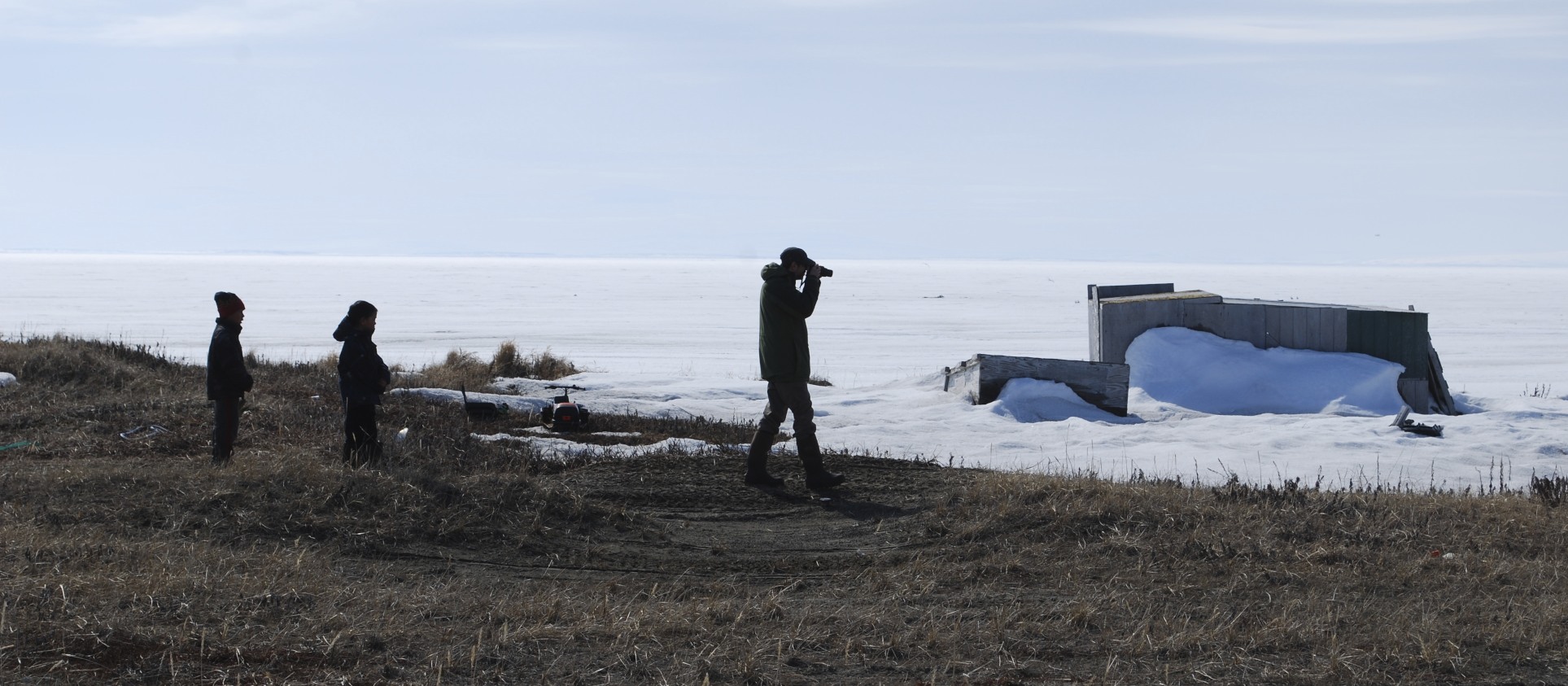
The kids here are really sweet in the most sincere and loving way.
Yesterday, we grabbed our cameras and went walking toward the west channel (the west end of the island). On the way, we ran into three students. On most walks, we might have a couple of kids join us. They usually stay with us part of our long walks. Not today. These guys hung on for the entire walk.
These students in particular LOVE us (especially Jack). They treat Jack like a rock star. It’s very cute and sweet. They would probably follow us to Point Hope! The photo above represents these boys well. They want to know about everything Jack does. Jack crept up on some birds to photograph them. The boys crept behind him to learn and watch.
We hope that the kids up in Point Hope are just like our young friends in Shishmaref.
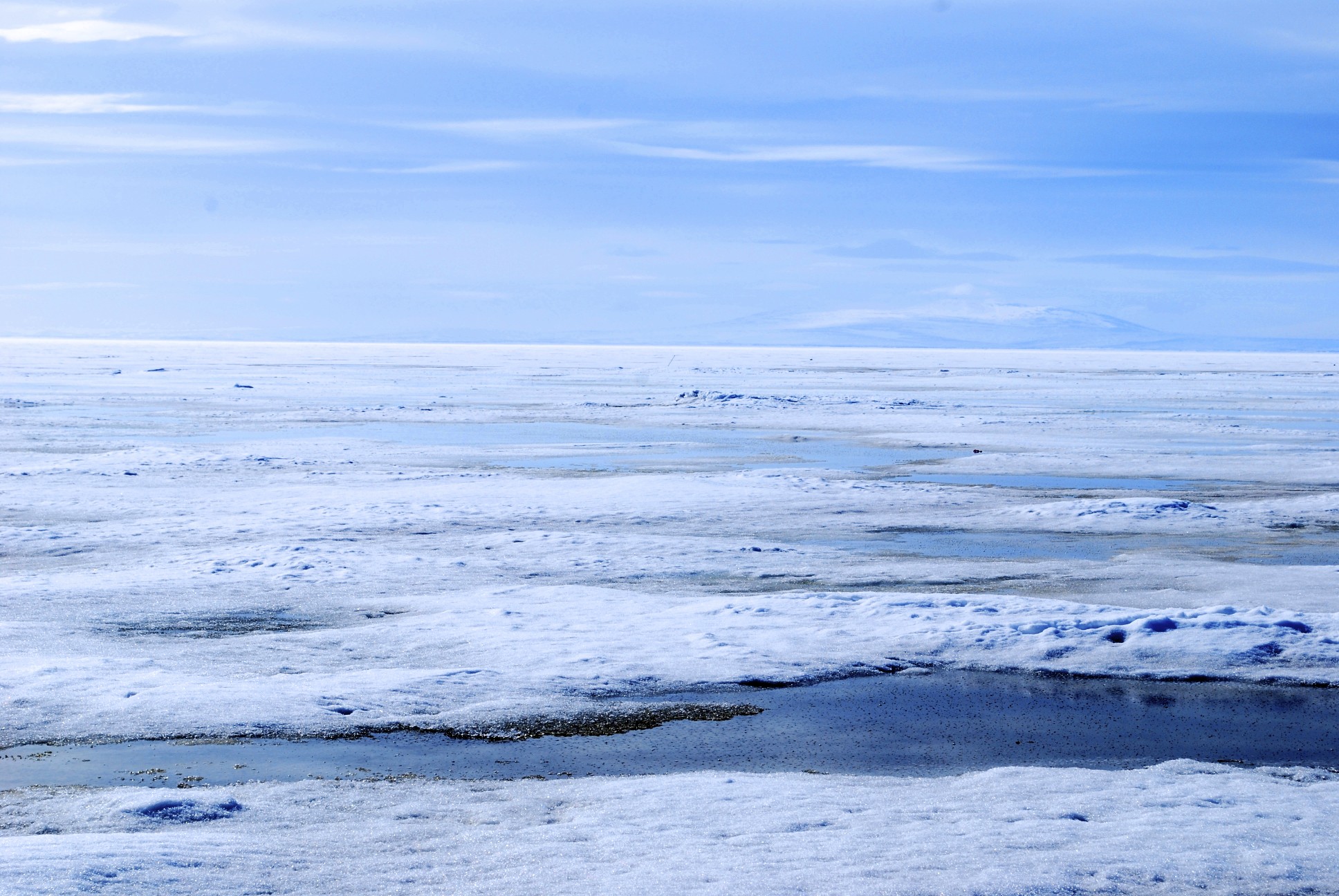
One side of Sarichef Island is bordered by the Chukchi Sea. One the opposite side is what the locals call the lagoon. It’s about five miles to land over this water. During the winter, there are snowmachine trails over the frozen water. Once the lagoon opens up, boats will be launched and used to travel across the lagoon and up the Serpentine River.
While waiting for the ice to melt on the lagoon, some brave souls will run their snowmachines. I say brave because the ice is melting on the surface, due to warmer weather and longer sunlit hours. At the same time, the ice is melting underneath due to the increasing river flow from land. Thin ice is referred to as bad or rotten ice.
One of my students told me that you could use a snowmachine in water. Remember, my students are six years old…and not always reliable. I told my students that couldn’t be. I asked my aide, and sure enough, if you drive fast enough, you can ski a snowmachine across water! Interestingly, a couple of days later, I saw a TV show about people who modified their snowmachines by taking as much weight off of them as possible in order to ski across the water.
People will ride across the lagoon on their snowmachines as long as they can. If they hit rotten ice, they gun it like heck to safety. I will leave this adventure to them.

The snow fence is a constant. A comment on a previous photo of the fence was that it was lonely. After seeing the snow fence live through the seasons, I see it as a steadfast guardian. It is a protector. It stands through high winds and snow drifts. It holds its ground as the tundra softens around its feet.

A nice long walk today resulted in some interesting sights. It was in the 30s. Amazing how former Californians can adjust so easily to the weather up here. At the beginning of our walk, we were swaddled in hats, parkas, and gloves. By the end, our jackets were tied around our waists. Hats and gloves were stowed.
It is phenomenally beautiful here. The sun warms our souls. The skies are wide open and expansive. Spring is beginning to shoot up in the grass giving thoughts to newness, growth, and promise.
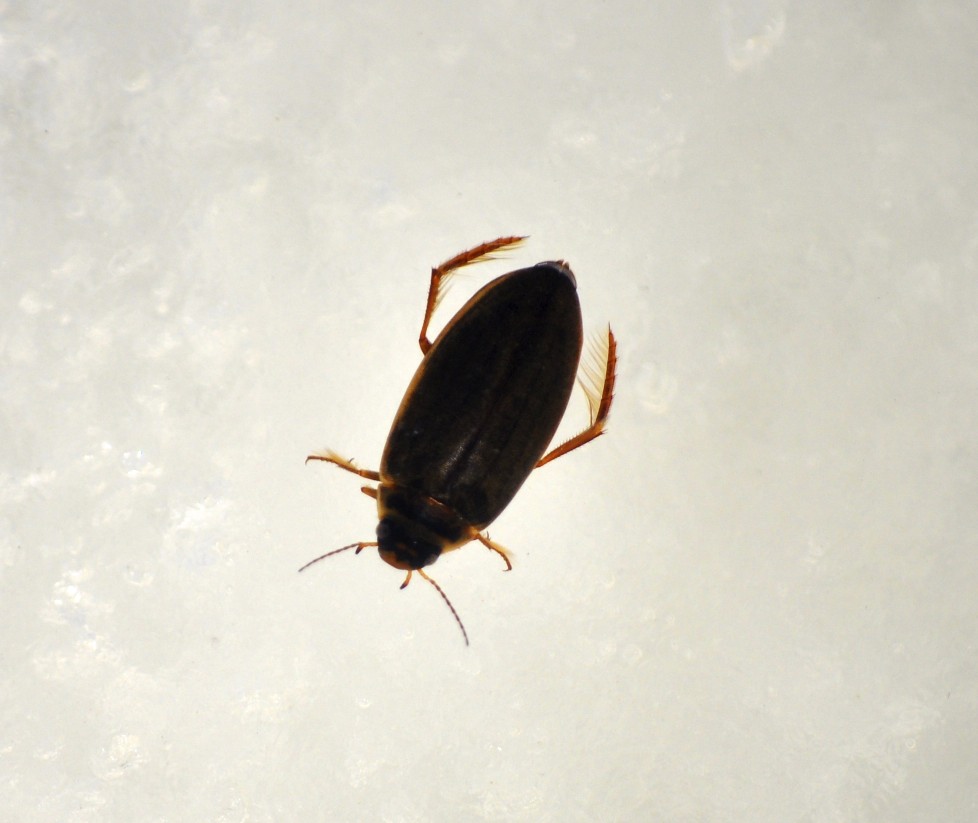
Looking like a lab specimen on glass under a microscope, this 3/4 inch long predacious diving beetle was photographed where it was found in a vernal pond swimming in a few inches of very clear water over a bed of ice. These beetles suddenly seem to be everywhere, scooting through the myriad clear, shallow, temporary ponds with their oar-like back legs.
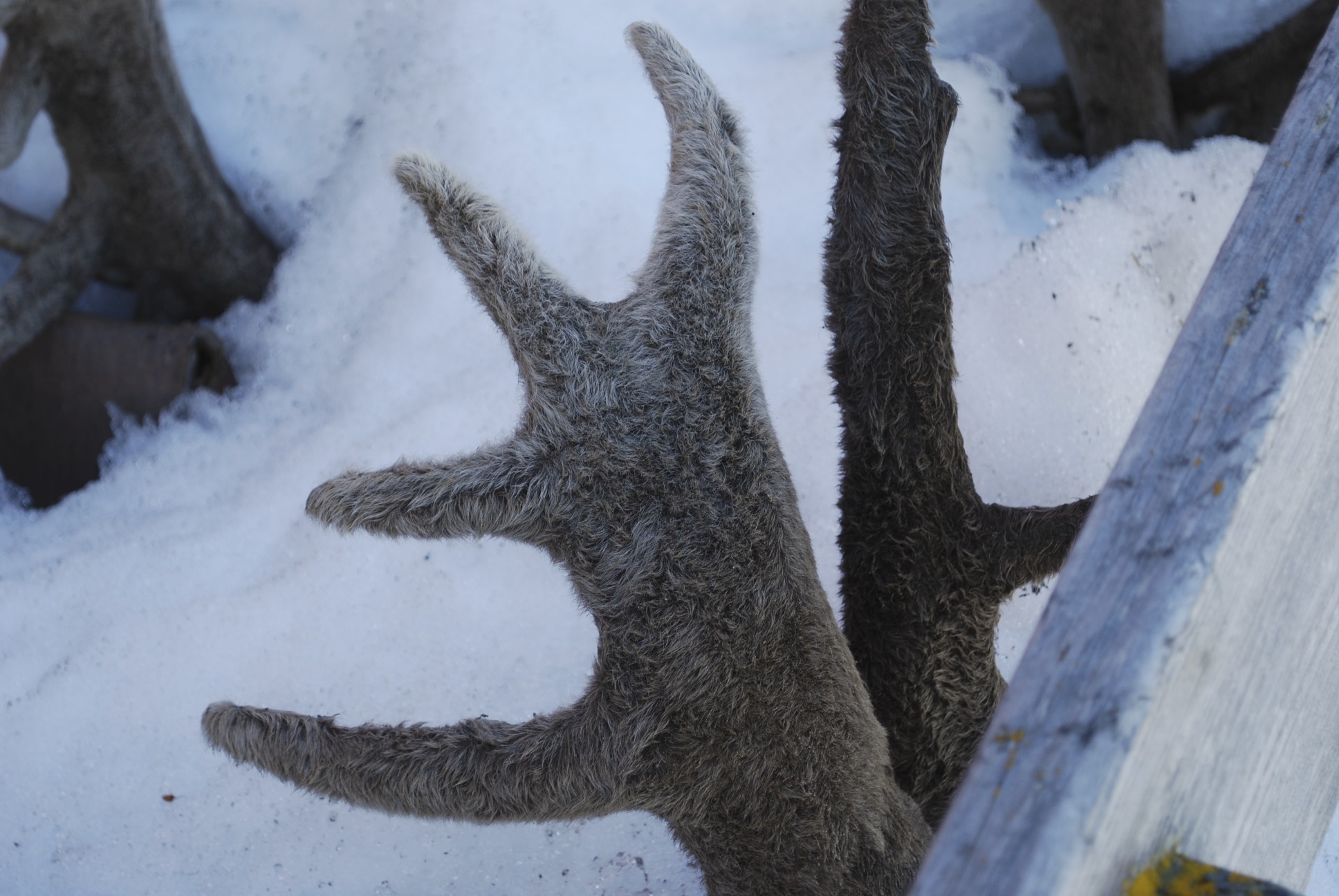
As the snow melts, interesting things are being uncovered.

I think it was Agatha Christie who stumped me with a story of a body which had been found lying by a puddle of water with no murder weapon to be found. Though I puzzled over this, I couldn’t figure it out.
Today as we walked around our village, we heard a loud crash, almost like thick glass shattering. We turned to see fragments of a large icicle smashed on the ground next to the school. Looking up, we saw clear, sharply pointed, pendant masses hanging menacingly. These icicles were substantial–their girth the size of pop cans. Hung next to each other, they resembled monstrous fangs ready to devastate.
 CutterLight