Perfect Pork Cutlet with Cowboy Rub & Roasted Raspberry Chipotle

When it comes to preparing pork loin cutlets, time on the grill – or under the broiler – is everything. We prefer cutlets cut thick – generally one-and-a-half to two inches. That translates to 16 to 18 minutes cooking time under a broiler or over fairly hot charcoal. The rub and attention to cooking time prevents these tender, lean cuts of meat from drying out. We purchase our cutlets in bulk from Costco and repackage them in pairs for freezing. In our experience, the quality of Costco meats is on par with that of specialty butcher shops.

The Perfect Pork Cutlet

  1. Pick a rub with some heat and thoroughly apply it to the cutlets. (I used The Spice Hunter’s Cowboy BBQ Rub this time.)
  2. Preheat a broiling pan under the broiler on high heat.
  3. When the pan is hot, spray or brush it with olive oil. (Refillable pump spray bottles are perfect for this.) Continue preheating another minute or two to get the oil good and hot.
  4. Place the pork cutlets on the broiler pan. They should sizzle.
  5. Set a timer for 16 – 18 minutes.
  6. After 8 minutes, use tongs to turn the cutlets over and continue broiling for remainder of time.
  7. Remove cutlets from broiler and let them rest for a few minutes to lock in the juices.
  8. Place a generous dollop of your favorite chipotle sauce (or apple sauce) – warmed – on a warm plate, place the cutlet on the sauce, and serve. (If you haven’t tried Fischer & Wieser Roasted Raspberry Chipotle Sauce… It’s delicious and has inspired me to create a cloudberry chipotle from berries we pick this coming summer. Look for that recipe on this blog in late summer, 2012.)

In winter, roasted vegetables go well with this dish. Add a Pinot Noir with lots of dark cherries or berries.

Manhattan-Style Razor Clam Chowder

Growing up, soup usually meant opening a can of Campell’s. Their Manhattan clam chowder was my favorite. When I got out of the navy and began cooking for myself, Craig Claiborne’s Manhattan Clam Chowder was probably the second recipe I attempted – right after his chili recipe. The results were a revelation, and I never went back to Manhattan from a can.
Generous amounts of thyme, tomatoes, onions, potatoes, clams, carrots, celery, and a hint of heat from red pepper flakes keep this recipe close to the spirit of Claiborne’s, but with the addition of corn, green beans, and chard it strays from tradition, although I doubt the Portuguese immigrants who introduced this style of chowder would object. The smoked sea salt gives this soup a hearty warmth.

This recipe makes about 3 1/2 gallons.

  •  4 lbs razor clams chopped coarse
  • 1 cup clam juice (Razor clam juice is milky and will detract from the soup’s color if more is used.)
  • 6 pounds potatoes cut in 1/2 inch cubes
  • 3 1/2 pounds sweet onions, chopped fine
  • approx. 3 cups collard greens or chard, leaves cut away from the main stems and chopped into approx. 2″ squares
  • 1 lb. carrots, sliced
  • 1/2 lb. celery, chopped
  • 1/4 pound fresh green beans, chopped into 1/2″ pieces
  • 3 cups sweet corn
  • 1/3 pound bacon, broiled, drained and cut into small pieces
  • 2 tbsp dried thyme
  • 3 bay leaves
  • several cloves garlic, chopped fine
  • 72 ounces (4.5 lbs) diced tomatoes with liquid (fresh or canned)
  • 12 ounces tomato paste
  • freshly ground black pepper
  • olive oil
  • smoked sea salt to taste
  • 1 tbsp pepper flakes
  • olive oil
  • water

Chopping up all these ingredients is a bit of work. After that the cooking is pretty standard. This chowder freezes well and allows for many substitutions – including substituting a white-meated fish for the clams, or adding mussels, shrimp, squid, octopus, etc.

1. Mix tomato paste and thyme with approx. three cups of water and two tablespoons of olive oil and set aside

2. Cover the bottom of a large pot with olive oil and heat over medium-high. Add the carrots and cook for a minute stirring occasionally. Add the onions and cook for two minutes, stirring occasionally. Reduce heat to medium and add the celery, green beans and garlic, stirring occasionally for about three minutes.

3. Add the diced tomatoes, the tomato sauce mixture, the potatoes and remaining seasonings. Add enough water to cover the potatoes and simmer until soft. If the soup seems watery, add more tomato paste. Stir occasionally. Depending on the type of potato and size of cubes, this takes 20 to 50 minutes.

4. When the potatoes are of desired softness, stir in the chard or collard greens. Continue simmering for about 2 minutes.

5. Stir in the sweet corn, the clams and the clam juice. The corn will add considerable sweetness, as will razor clams. Give it a taste to see if it needs more salt, pepper, chili flakes or thyme.

Don’t overcook. As soon as the clams and corn are heated, the chowder is ready to serve. Garnish individual servings with a very thin slice of lemon, a few strips of nori, or grated parmesan cheese and serve with a hunk of crusty, fresh-baked bread.

(For more posts on razor clams, click on the tag “razor clams” in the upper left below the photo. Or click here for New England Razor Clam Chowder.)

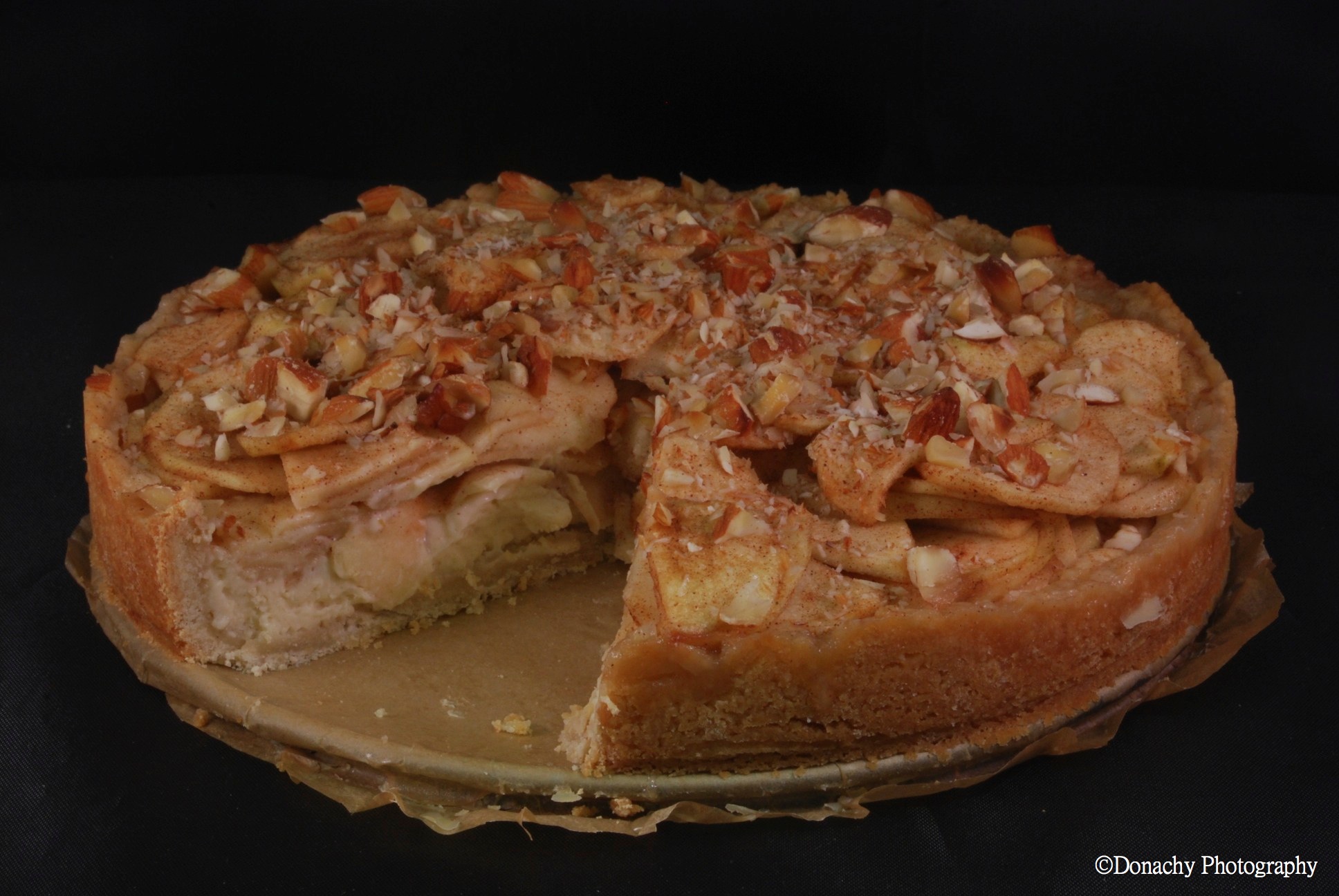
Bavarian Apple Torte

A big box of aging Granny Smith apples showed up at school. They were bumped and bruised but still firm and perfect for baking. With no one else showing interest in them, I took half-a-dozen home.

The grocery store reduces the price of overstocked items and expired items. We are always on the lookout for deals at the store because prices are through the roof up here. Remember the $8 red bell pepper?

A few Granny Smith apples and a package of just-expired but still perfectly good cream cheese were the inspiration for last weekend’s baking wonder. I searched allrecipes.com, which has a cool feature where the user can enter ingredients and matching recipes will be generated. A Bavarian Apple Torte recipe sounded great. The torte is built on a layer of shortbread cookie followed by vanilla cheesecake. This in turn is topped with baked apple slices tossed with cinnamon and sprinkled with sliced almonds.

Jack and I had a slice with our dinner that evening. It was incredible! The next morning, I took the rest of the torte to the school office where it disappeared in minutes (or seconds). The verdict was unanimous: this dessert is phenomenal. Hands down the best dessert I’ve ever made — and I’ve made lots! The other point in its favor? It’s incredibly easy to make. You will impress anyone you serve this to.

So, what are you waiting for?

Bavarian Apple Torte

12 servings

Ingredients

  • 1/2 cup butter, softened
  • 1 cup sugar, divided into thirds
  • 1 cup flour
  • 1 (250 g/8 oz.) brick of cream cheese, softened
  • 1 egg
  • 1/2 tsp vanilla
  • 1/2 tsp ground cinnamon
  • 4 Granny Smith apples, peeled and thinly sliced
  • 1/4 cup sliced almonds

Directions

  1. Heat oven to 425 degrees F. Beat butter and 1/3 cup of the sugar in small bowl with electric mixer on medium speed until light and fluffy. Add flour; mix well. Spread onto bottom and 1 inch up side of 9-inch springform pan.
  2. Beat cream cheese and 1/3 cup of the remaining sugar in same bowl with electric mixer on medium speed until well blended. Add egg and vanilla; mix well. Spread evenly over crust. In a large bowl, combine remaining 1/3 cup sugar and the cinnamon. Add apples; toss to coat. Spoon over cream cheese layer; sprinkle with almonds.
  3. Bake 10 minutes. Reduce temperature to 375 degrees F; continue baking 25 minutes or until center is set. Cool on wire rack. Loosen torte from rim of pan. Cover and refrigerate 3 hours before serving. Store leftovers in refrigerator.

Recipe from http://allrecipes.com/recipe/philly-bavarian-apple-torte/detail.aspx.

Thai-Spiced Scallops

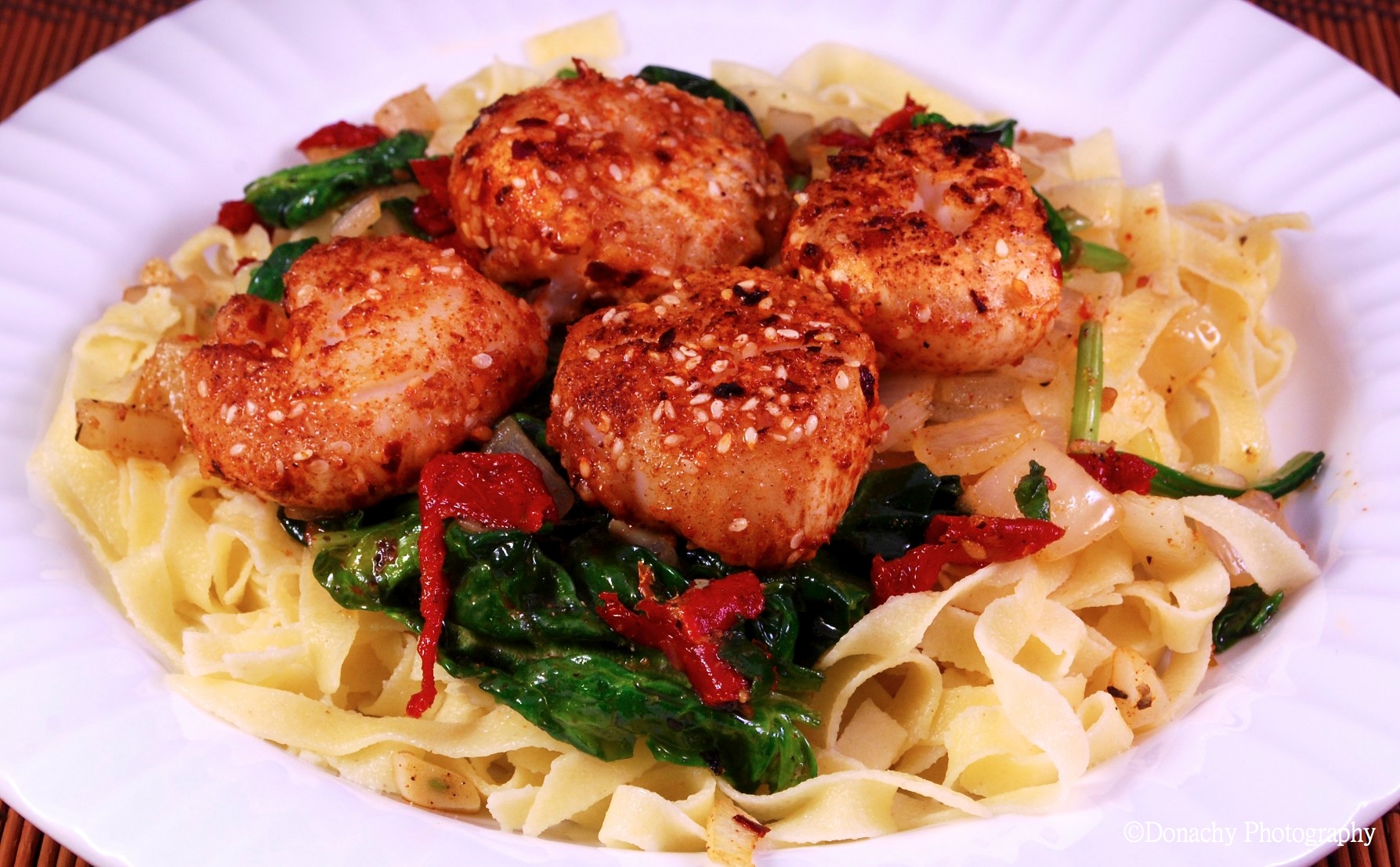
Large Alaskan scallops (from Kodiak) rolled in Thai Seasoning, pan-seared, and arranged on freshly made linguini topped with wilted spinach, sweet onion, garlic and sun-dried tomatoes. We brought five pounds of frozen scallops with us to the bush this year–and are happy to have done so!

I don’t use many pre-blended spices, but a good Thai seasoning blend has long been an exception. These days I’ve been using The Spice Hunter’s Thai Seasoning, but Spice Islands Thai Seasoning is (was?) very good as well. (I’ve been unable to find it in any Anchorage grocery store.) My guess is Penzeys Bangkok Blend is at least as tasty.

A little heat, a hint of sweet, Thai blends are great for spicing up squash or pumpkin soup, stir fry, or as a rub on chicken, pork, shellfish and fish.

The above scallops are a cinch. Roll the scallops (or shrimp, or pieces of fresh fish) in Thai seasoning and set aside. After that, you need bit of olive oil heated to medium high in a frying pan, a pair of tongs to move the scallops around to sear all sides, and about about one minute total cooking time for the scallops. (Don’t overcook them–even after removed from the pan, they’ll continue to cook, and they do not need to be hot when served.)

This dish is as good an excuse as I can think of to pop the cork on one of Oregon’s exquisite Pinot Gris.

84 Below

The afternoon winter sun, low on the horizon, backlights an ice-frosted double-paned window on the south side of Tikigaq School.

A few lights from the school and the town peel back the pre-dawn blackness as we begin our short morning walk to school. Steam oozes from nearby buildings–not just from furnace vents, but from every crack and seam, and every molecule of water freezes or vaporizes almost instantly. Brutally cold gusts of wind lift sheets of snow from the ground, at times creating blizzard-like conditions. Our faces begin hurting mere steps from our house. The cold gets in our lungs and makes us cough. Frostbite will nip any exposed skin within five minutes in these conditions.

This is a new cold, a cold we haven’t experienced before. Later in the day, Barbra and I take a cup of near-boiling water outside and slowly pour it out. Most of it turns to steam, vaporizing before it ever hits the ground.

We check NOAA on the computer: 84 below with the windchill.

Wild Alaska Sesame Seed Salmon

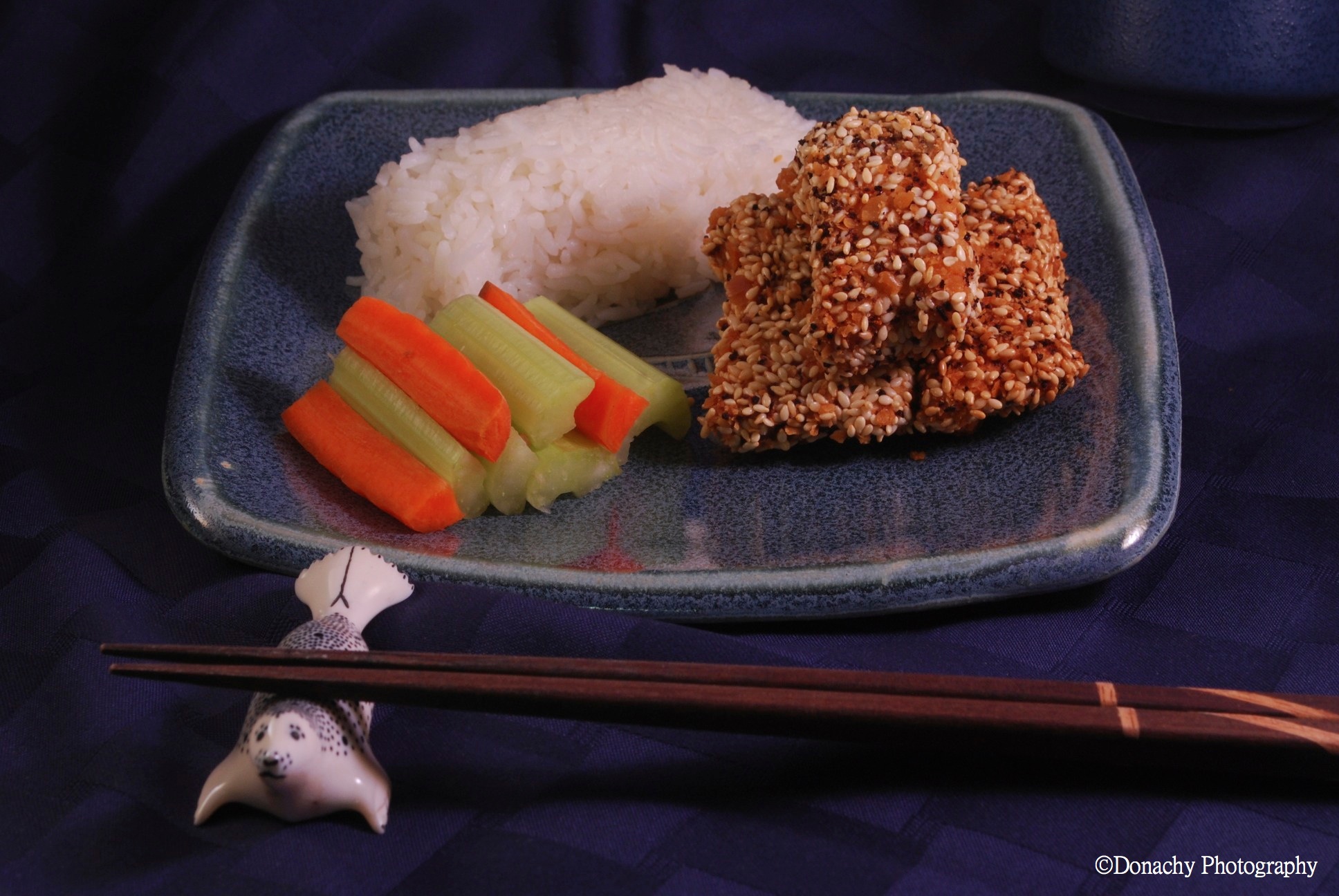
This is Recipe #3 of 9 in Barbra’s Salmon Challenge series. The spotted seal ohashi-oki (chopstick rest) was made by an artist in Shishmaref of walrus ivory and baleen.

I’m not sure why I mailed as many containers of sesame seeds to the bush as I did this year, but we have them in abundance. And we have lots of salmon. So…

This dish is easy to whip up, invites seasoning substitutions and additions, is visually attractive and really tasty. The other nice thing about this dish is that the crunch and flavor combinations lend themselves to accompaniment by a wide variety of condiments, from Japanese and Chinese dipping sauces to tartar sauce to a simple squeeze of lemon. Whatever you serve them with, they’re bound to disappear quickly.

Ingredients

  • 3/4 pound salmon filet cut into 1 1/2 inch cubes – skin on or skin off, cook’s preference (I left the skin on)
  • 1/2 cup flour
  • 2 eggs, beaten
  • 1/2 cup Saltine crackers, crushed fine
  • 1 1/2 teaspoons powdered ginger
  • 5 tablespoons sesame seeds (light or dark or for an attractive presentation, both)
  • sea salt
  • black pepper
  • approx. 1 1/2 quarts oil for deep frying (I used light olive oil)

1. Season the salmon cubes with sea salt and pepper and set aside.

2. In a glass bowl, mix together the sesame seeds and the crushed crackers.

3. In a Ziplock bag, mix together the flour and the ginger.

4. In a pan on the stovetop or in a deep fat fryer, heat oil to about 350 – 375 degrees. (I heat oil on a stovetop and check for readiness by dropping in a pinch of damp cracker crumbs. The crumbs will bubble fairly vigorously when the oil is ready. Don’t let the oil overheat or smoke).

5. Set oven on low “warm” heat.

6. Place 2 – 3 salmon cubes in the Ziplock bag and shake till thoroughly dredged with flour. Using tongs or chopsticks, coat the dredged cubes in egg, then roll them in the sesame seed & cracker mixture. Set aside. Repeat till all salmon cubes are coated with sesame seed & cracker mixture.

7. Place salmon cubes in hot oil, a few at a time. Oil should roil fairly vigorously around the cubes. Fry for about 2 minutes. If cubes begin to rise to the surface, you may be cooking them too long. Place cooked cubes on a plate covered with a paper towel to drain oil and keep warm in oven set on low heat.

8. Serve with fresh lemon wedges, tarter sauce, or other dipping sauce.

Serves 2 – 3. I found myself craving a hefeweizen with these.

Pesto Bread

Another delicious bread machine recipe from 300 best Bread Machine recipes! Imagine your kitchen filling with the aromas of basil and parmesan cheese mixing with fresh baking bread. We were poised by the machine armed with butter knives and butter waiting eagerly for the machine to complete its cycle. We were not disappointed!

Pesto Bread

Makes a 1.5 loaf

  • 1 1/4 cups water
  • 1/4 cup nonfat dry milk
  • 1 1/2 tsp salt
  • 2 tbsp granulated sugar
  • 2 tbsp pesto sauce
  • 4 cups bread flour
  • 1/2 cup grated Parmesan cheese
  • 1 1/2 tsp bread machine or instant yeast
  1. Measure ingredients into baking pan in the order recommended by the manufacturer. Insert pan into the oven chamber.
  2. Select basic cycle.

Arctic Grayling Shioyaki with Roe – A Yellowstone Connection

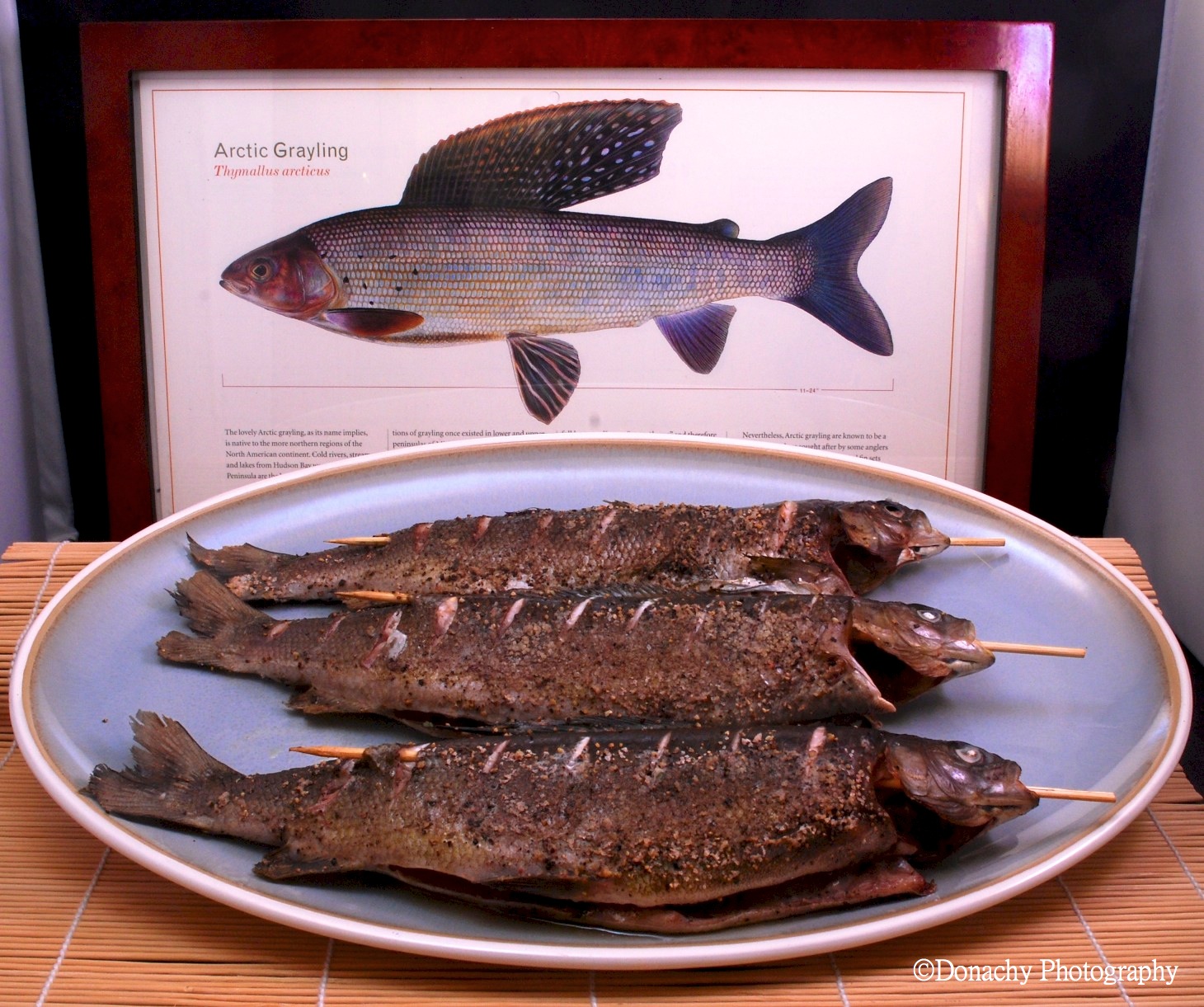
Arctic grayling are abundant throughout much of Alaska. I was happy to finally have an opportunity to taste them. I skewered these three, cut a few diagonal slashes in their skin, and salted and broiled them in the fashion that Japanese prepare charr, trout and small salmon. Two of the fish had nice sacs of roe with I cured as one would cure salmon roe in making ikura. The grayling themselves were unremarkable, but the roe was quite delicious.

One summer several years ago I tent camped alongside the Madison River in Yellowstone National Park. It was glorious. Recent fires had changed the ecosystem. Not destroyed it. Changed it. Along with Yellowstone’s iconic bison, elk were abundant, the big bulls absolutely magnificent with their velvet-covered racks. We encountered moose, sandhill cranes, several black bears and a grizzly, and listened in awe as a pack of wolves howling across a valley broke the quiet one evening. It was during this stay that Maia took her first-ever fly caught trout, beautifully marked  cutthroats from Cascade Creek. We still talk about how we had to cross that stream a couple of times to avoid basking bison.

One of the highlights of that visit to Yellowstone was a morning spent alone, fishing the Gibbon River from the lip above the 80-foot falls upstream a mile or so. Although I got a late start and the sun was already high in a cloudless sky, brown trout in the eight to 13 inch range were cooperative, most of them falling to a #14 pheasant tail nymph. Mountain flowers seemed to be in bloom everywhere, birds were out in force, and I had the river completely to myself.

And then I came to the hole. Rip-rap on one side, a rock wall on the other and a log jam at the tail pushed the water into a long pool I estimated to be eight to 10 feet deep–the deepest water I’d encountered. With brush growing along the edges and with the depths guarded by drowned snags, tell-tail strands of monofilament suggested this piece of water was fairly hard-fished. So I took a while to contemplate my approach. Wishing to get as deep as possible, the first thing I did was lengthen my leader and switch to a weighted pheasant tail. I then waded to the shallows at the tail of the pool, gauged the light breeze, and executed a cast upstream to allow for a long drift right down the heart of the pool. Stripping in bright green line as it drifted toward me, I imagined my little fly descending ever deeper. Just as the last of the green line floated above a forked log at the deepest part of the pool, it ever so slightly hesitated. I gave the line a quick strip as I lifted my rod and immediately felt the weight of a decent fish. From the manner in which it fought, I knew right away it wasn’t another brown, and it certainly wasn’t a rainbow. Whitefish? I had no idea. Somehow I managed to keep clear of the snags, and a few moments later my jaw dropped as an Arctic grayling coasted into view. I’d never caught one before, and had no idea they were a possibility in any of Yellowstone’s rivers. I led it to the gravelly shallows near my feet, gently cupped it in my hand and spread it’s amazing, sail-like dorsal fin. The dark fin, wet and flecked with iridescent blue, glistened in the sun and I was reminded that this is why one should always carry a camera. Mine, of course, was up in my car. I let the silvery-gray fish slip from my hand and sink back to the depths. Moments later, following the same pattern, a second grayling presented itself to me, this one a fraction of an inch smaller than the first.

Arctic grayling (Thymallus arcticus) are an ancient fish, their ancestors having preceded their charr, trout and salmon brethren in branching off from a common ancestor some 60 million years ago. As the earth has continued to warm since the last Ice Age, grayling have retreated to ever fewer waters in the lower-48. There aren’t many places where they can still be found, and most of these are high altitude lakes in the northern Rockies. Fluvial grayling–river grayling–are fairly rare in the lower-48. In holding those fish, in being in their presence, I felt a connection to a vanished epoch populated by mastodons and mammoths, sabertooth cats, dire wolves and other species long since vanished. Although those fish were only 11 or 12 inches in length, to me, they were trophies–as fined as any fish I’ve ever landed. I’ve long thought that if and when I settle down, I would like to have fiberglas replica mounts, or perhaps a painting, made of those two  grayling, loafing near the submerged snag where I found them in that deep pool on the Gibbon River.

Rosemary Tomato Bread

A friend here in Point Hope lent me a book called 300 best Bread Machine recipes. Of the 300, I picked out about a dozen to try. The first was a honey wheat oat bread, and it was absolutely terrific. The evening it came out of the bread machine, Jack and I put our other dinner plans on hold and instead stuffed ourselves with warm slices of this bread slathered in butter and honey. After a few days, some breads crumble or dry too much. Not this one.  It was dense and flavorful and help up nicely.

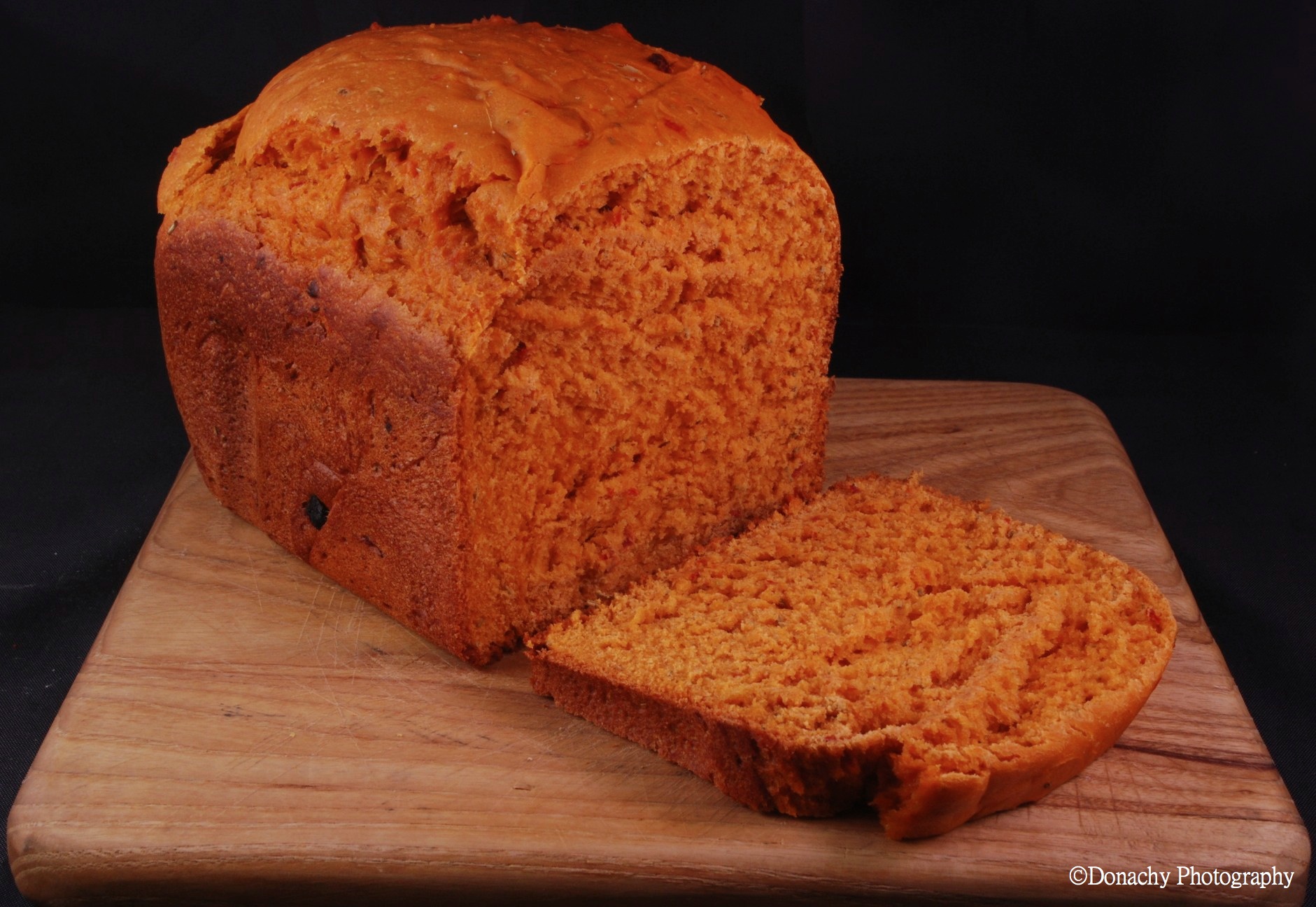
The oat bread recipe was a safe pick. I knew how it was supposed to taste and look. Next it was time for a leap to the recipe that made me borrow the book in the first place – Rosemary Caesar Bread featuring tomato-vegetable juice, sun-dried tomatoes, and rosemary. The beautiful color and aroma of this bread makes it a centerpiece loaf.  Following is my adaptation of the recipe, including a name change. “Caesar” makes me think of anchovies (Caesar dressing), so I think “Rosemary Tomato Bread” is more accurate.

Rosemary Tomato Bread

Ingredients

  • 1 1/4 cups tomato-vegetable juice
  • 1 tbsp granulated sugar
  • 2 tbsp extra virgin olive oil
  • 3 1/2 cups bread flour
  • 1/3 cup chopped sun-dried tomatoes
  • 1 tbsp dry rosemary
  • 1/4 tsp paprika
  • 1 tsp salt
  • 1 1/4 tsp bread machine yeast

Measure ingredients into the baking pan in the order recommended by the manufacturer. Select Basic cycle to bake.

Makes 1.5 lb loaf. This is an excellent bread to serve with breakfast eggs or for making egg salad sandwiches.

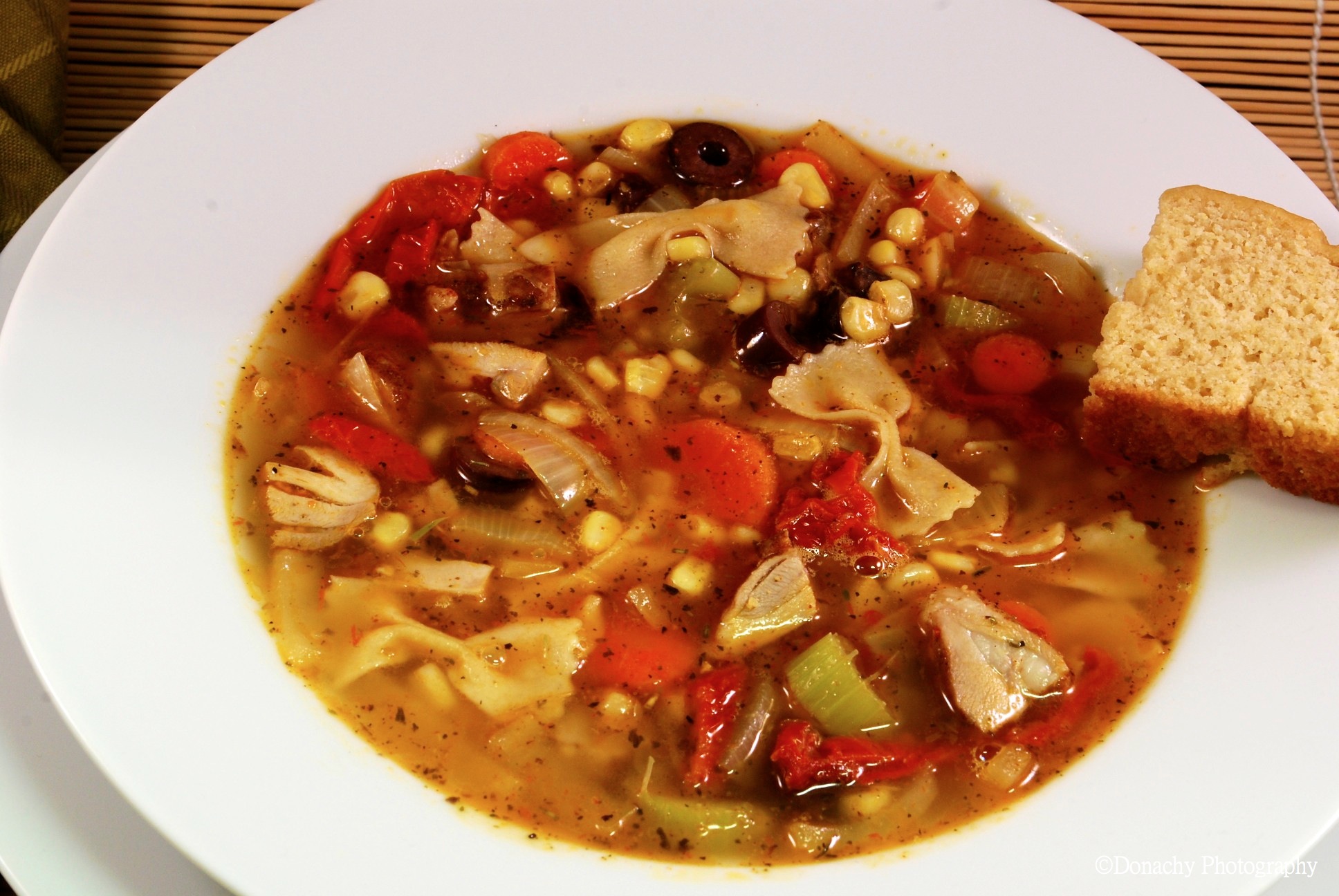
Spicy Chicken Farfalle Soup

A hot bowl of spicy chicken and bow tie soup is just the thing on a cold January day.

We’re both fans of Southwestern style rubs. Penzey Spices makes a good one, as does Dean & Deluca. I’m sure there are others. I whipped up this wonderfully spicy chicken noodle soup using leftover chicken thighs I’d rubbed and broiled for last night’s dinner. Vary your ingredients according to how much chicken you have on hand and what’s in your pantry. By the way, if you haven’t tried Better Than Bouillon brand, it really is–better than bouillon. Much better. In addition to plain chicken and beef, they make 42 other styles of soup base including a lobster base that is absolutely delicious.

Ingredients:

  • skinless, boneless chicken thighs rubbed with Southwestern-style seasoning and broiled
  • sweet onions, chopped coarse
  • carrots, chopped coarse
  • celery, chopped coarse
  • sweet corn
  • garlic, chopped coarse
  • Kalamata olives, chopped coarse
  • sun-dried tomatoes, chopped coarse
  • mushrooms, chopped coarse
  • fresh bow tie (or other) pasta
  • Cholula sauce
  • Better Than Bouillon, chicken flavor
  • olive oil
  • Italian herbs (fresh or dried)
  • smoked sea salt
  • freshly ground black pepper
  • (If I had fresh, hot red peppers, I would have used them)

1. Cut chicken into small pieces and set aside.

2. Place enough water in a pot to cover the ingredients. Add bouillon and bring to a boil.

3. Heat olive oil in a skillet. Add chopped vegetables, starting with the carrots and onions as they require more cooking time. Add Italian herbs and stir in well. After two or three minutes, add celery, olives, garlic and mushrooms. Cook until onions are just turning translucent and carrots and celery are just barely crunchy.

4. Add sautéed vegetables to boiling water. Add chicken, Cholula sauce to taste, a few grinds of pepper and the smoked sea salt.

5. Add fresh pasta and continue boiling till just done. (If using store-bought pasta, it is better to add it to the boiling water before adding the other ingredients to cook it to desired tenderness without overcooking the vegetables.)

6. Serve piping hot.