Tommy Woodpecker

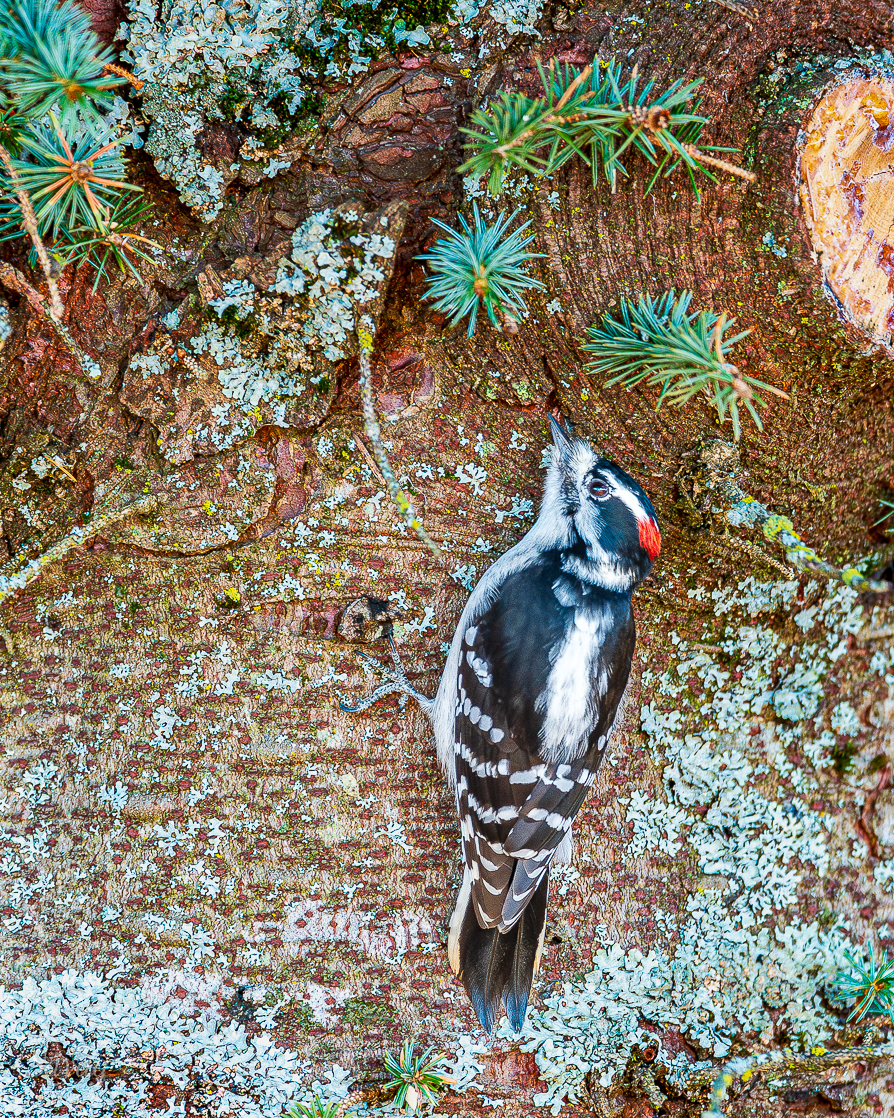
Down Woodpecker, Sitka Spruce Gove, Chignik Lake, AK, 12/30/16
The red crown distinguishes this specimen as a male. Note the blue tint on the tips of his tale, an iridescence not often so easily observed in Downies. Like other woodpeckers, Downies use their stiff tail feathers as a kind of third leg to provide leverage is they drum or search tree trunks for insects.

It is suggested in T. Gilbert Pearson’s Birds of America (1917) that the moniker Tommy Woodpecker would better suit North America’s smallest member of the woodpecker tribe “…for his boyish, buoyant disposition makes friends for him wherever he goes.” Perhaps for a moment we can set aside the sexism and celebrate an era and it ornithologists who took such a personal and personified approach to avian studies. I’d like to see any number of birds renamed, starting with discarding all those appellations that are essentially slave names applied by the person who “discovered” a given species – Wilson’s Warbler; Audubon’s Oriole; Steller’s Jay; etcetera. But Downy seems apt for this six-inch bird with its soft breast feathers.

No woodpeckers appear in David Narver’s study of the Chignik River Drainage conducted in the early 1960’s. Range maps have historically placed the Three-toed Woodpecker on the Alaska Peninsula – with no mention of Downies -, but this is surely in error as historically there was essentially no suitable habitat for spruce-and-pine-loving Three-toeds in that part of the world. My guess is that someone conducting an early biological survey got a glimpse of a woodpecker, made a guess, and that became the text for the peninsula. Very recently, I’ve noticed that the Cornell Lab of Ornithology and other authorities have begun to make corrections.

Though they are often common – the woodpecker one is most likely to encounter throughout much of North America – even in the most suitable habitat Downies are seldom abundant. And although the above photograph was recorded in the Sitka Spruce Grove at The Lake, Downies are equally likely to be found in the peninsula’s alder thickets and occasional cottonwoods. Though they are generally listed as uncommon or rare on the Alaska Peninsula, they are in fact regularly seen along the length of the Chignik River. It is probably a lack of nesting cavities rather than a shortage of food that limits Downy numbers on the peninsula, so as the land becomes more forested and trees mature and die and cavities are created their numbers will increase. Listen for their distinctive Peek! Peek! call and then for tell-tale light tapping.

Tiny Balloons

Wintertime close portrait photograph of a Great Horned Owl sleeping, tiny, colored balloon-like droplets of moisture at the tips of hairlike feathers above the owl's nares (nostrils).
Tiny BalloonsIt was a red letter day when I finally located where the village’s Great Horned Owls roosted and nested.Everyone knew about them, but no one knew where the spent their days and reared their young. One frosty late winter morning I made the above photograph of one of the owls sleeping, tiny frosty balloons at the tips of feathers above the nares (nostrils). Chignik Lake, March 12, 2017

Plant a Sitka Spruce, Get a Finch… or when is a new species an invasive species?

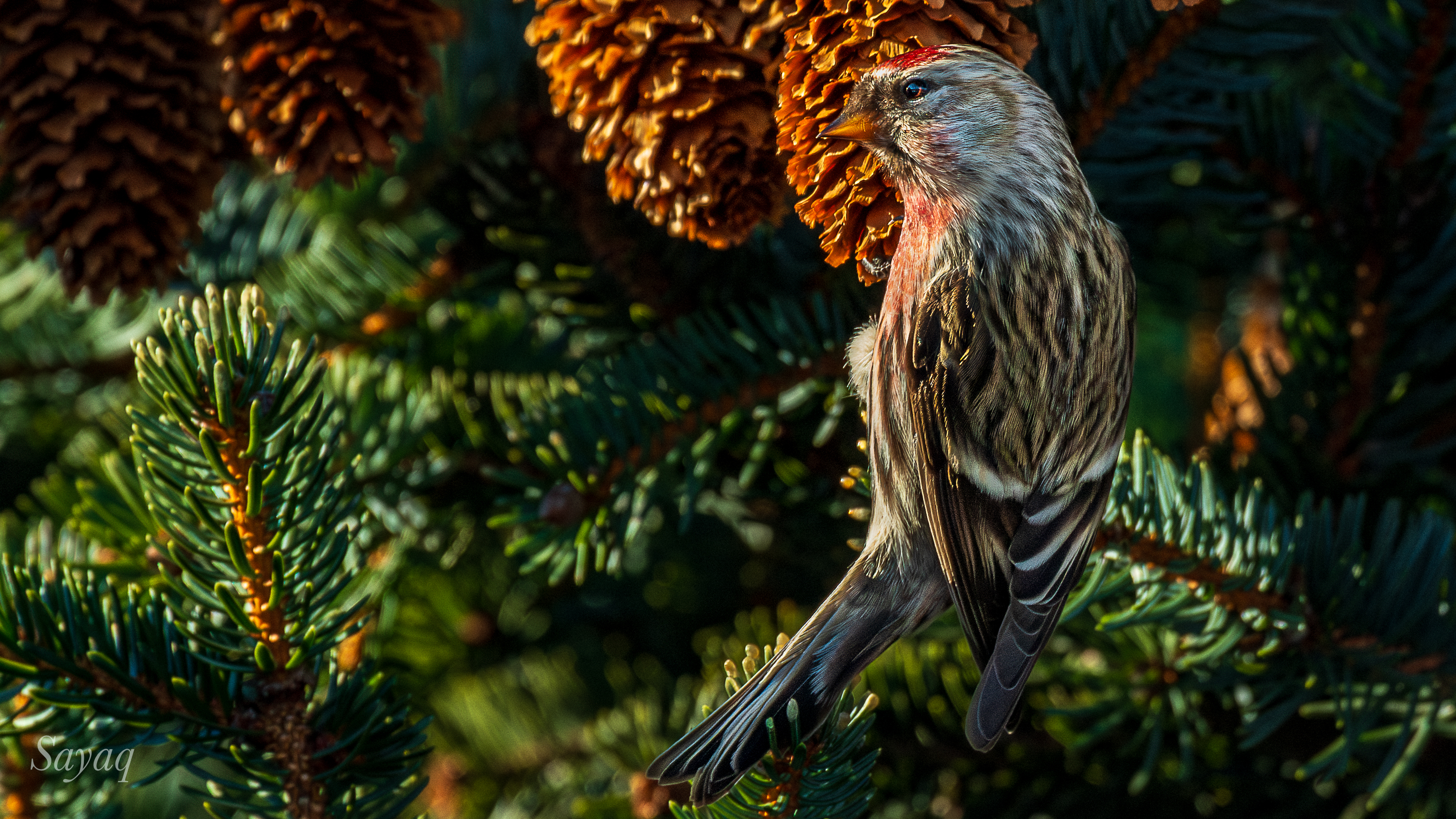
Common Redpoll, Sitka Spruce Grove
Chignik Lake, February 3, 2017

Up and down Southwest Alaska’s Alaska Peninsula, Redpolls, Siskins, Crossbills and Grosbeaks – all members of the finch tribe – have typically been marked as uncommon, rare or absent, breeding in small numbers here and there but generally not species one expects to encounter on the windswept peninsula. However, as trees – particularly alders -, have become increasingly abundant in that part of the world, so too have the finches. Seeds of the tiny alder cones are relished by Redpolls; the tender leaf buds by Pine Grosbeaks. But nowhere has the recent emergence of trees more dramatically impacted avian life than in the village of Chignik Lake where 70-some years ago Sitka Spruce trees were transplanted from seedlings gathered on Kodiak Island.

Some of the spruce trees at The Lake now tower over the landscape, producing both shelter and food for a wide variety of birds. The seeds of mature cones draw Pine Siskins, Hoary and Common Redpolls, White-winged and Red Crossbills, Black-capped Chickadees, Black-billed Magpies and several species of sparrow. While they’re still soft and reddish-purple, immature cones are feasted on by Pine Grosbeaks. Meanwhile, the variety of invertebrates that have moved into the little groves of spruce trees provide sustenance for Downy Woodpeckers, Pacific Wrens, Golden-crowned Kinglets and Yellow Warblers. Great Horned Owls roost and nest in the dark shadows of spruce bows and Northern Shrikes, Merlins and an occasional Sharp-shinned Hawk hunt the songbirds attracted to the trees. My guess is that it’s only a matter of time – and not too distant time – before the first Steller’s Jays are reported at The Lake. In fact, based on a description a now deceased resident reported to me, I’m not sure they haven’t already been there.

But here’s a question: Are these trees actually an invasive species… like the Orange Hawkweed that only very recently has begun showing up at The Lake? Or, for that matter, the dandelions which have taken over the school yard (and also, in some years, provide food for the finches as they go to seed)? And what about the above-mentioned alders that are steadily crowding out what remains of the peninsula’s tundra?

For decades, the transplanted Sitka Spruce trees did not propagate themselves in the Chignik Drainage. But about five years ago that began to change when seedlings suddenly began volunteering themselves throughout the village. One might argue that even without human intervention it was only a matter of time before Picea sitchensis made its way down the peninsula. But couldn’t the same be said of the Orange Hawkweed, dandelions and even the Kamchatka Rhododendron that has naturally, over time, found its way to The Lake from its native grounds in far eastern Russia?

Dumping a bucket of carp or pike into a lake where they never before existed is one thing…

On the other extreme are dandelions and hawkweed, which seem to to have devised strategies to show up wherever environmental conditions suit them.

Somewhere in between are a vast array of flora and fauna that – with or without humankind’s assistance – are finding their way into new niches.

So, what do you think? Where is the line between happily-received newcomer and dreaded invader?

Rare but Regular Visitor from Eurasia: Tufted Duck

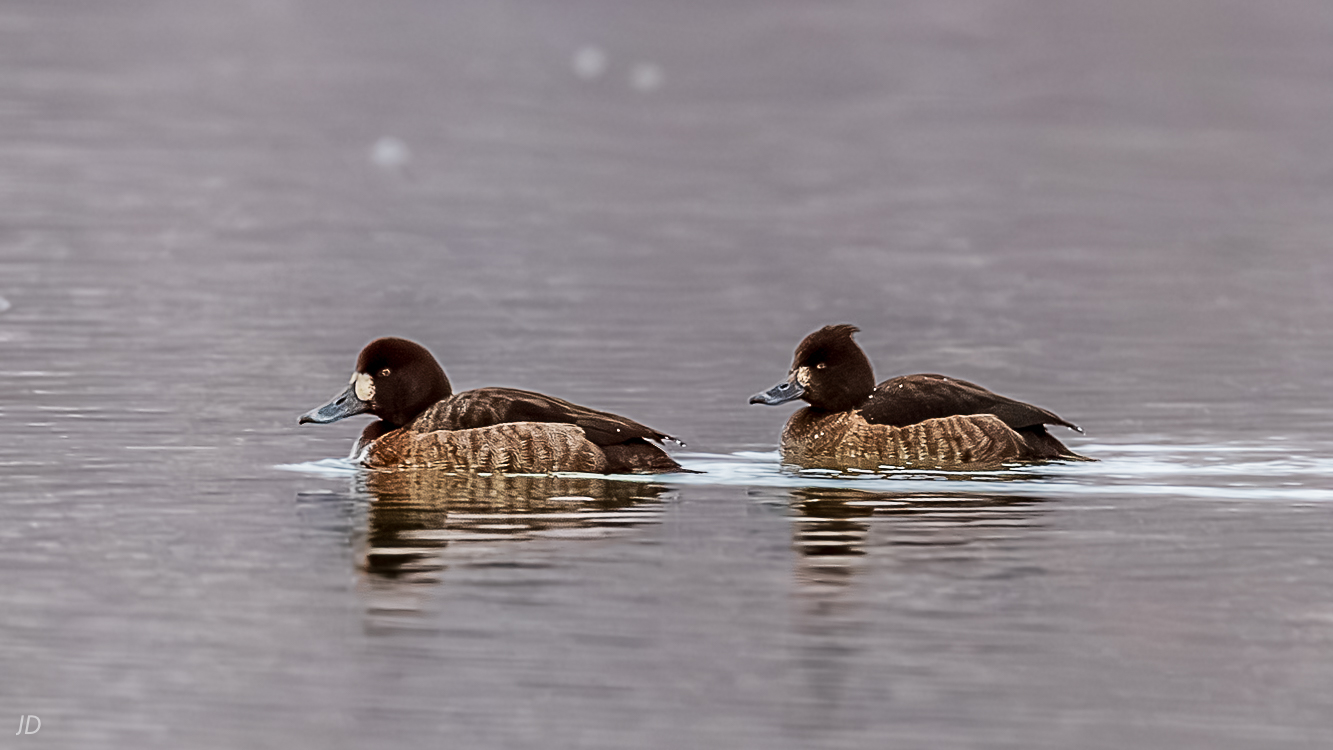
On the left, a female Greater Scaup. To her right, an Asian visitor, a female Tufted Duck. Male Tufteds look a lot like male Ring-necked ducks but with the eponymous tuft of head feathers. Although most frequently seen near North America’s coasts, you might encounter this wintertime Eurasian visitor almost anywhere among flocks of scaup and Ring-neckeds. Chignik Lake, 1/26/17

Golden-Crowned Kinglet Portrait

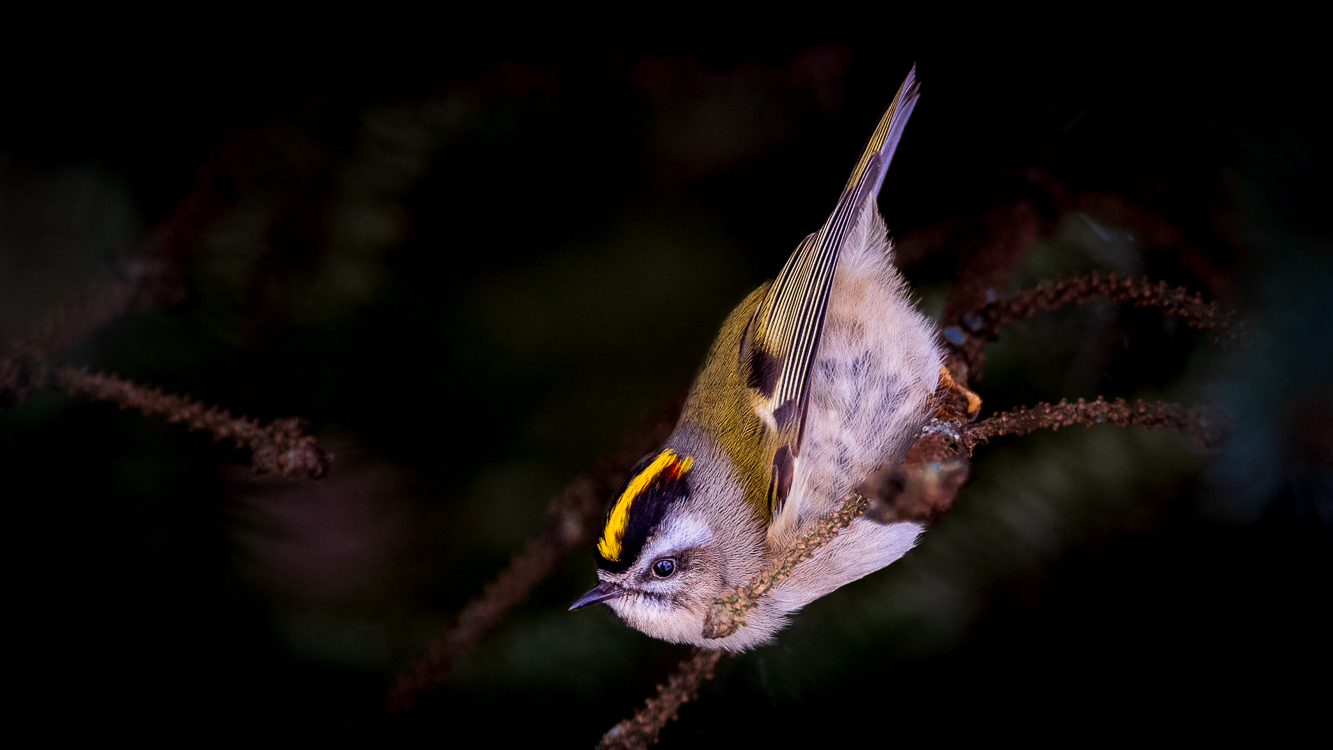
Portrait photograph of a male Golden-crowned Kinglet showing the telltale splash of crimson in his golden crown.
Chignik Lake Kinglet, January 2017. Weather’s coming our way here in Cordova. Maybe over a foot by Saturday. Snow shovels ready. Hope all is well wherever your neck of the woods is!

White-throated Sparrow: a First Documentation on the Alaska Peninsula

To the best of my knowledge, this was the first documented 𝐖𝐡𝐢𝐭𝐞-𝐭𝐡𝐫𝐨𝐚𝐭𝐞𝐝 𝐒𝐩𝐚𝐫𝐫𝐨𝐰 on the Alaska Peninsula. A lone specimen showed up at Chignik Lake every winter from 2016 through 2023, our last year there. As scattered reports filter in from throughout Alaska every year, it may be time to update range maps for this species. 1/17/17

The Tiny Kings of the Sitka Spruce Grove

The Tiny King of Sitka Spruce GroveAt only about three or four inches (8 – 11 cm) in length from tail-tip to beak, other than hummingbirds there probably isn’t a smaller bird in North America than the Golden-crowned Kinglet. But they’re sturdy little beings, able to survive temperatures as low as -40° F (-40° C). The splash of scarlet identifies this fellow as a male; the female’s crown is pure yellow-gold.

Every autumn coinciding with the peak of the Coho run on the Chignik River, we’d begin to hear a new voice as we pushed through thick stands of alders or walked by the village’s scattered spruce trees. By this time, there weren’t many other passerines around, and so there was no mistaking the high, almost cricket-like call of returning Golden-crowned Kinglets. They were a new species for for us, always in motion, difficult to locate in the dense alders and dark spruce boughs they prefer, and they are not indicated on the Alaska Peninsula on any of the range maps we checked – Cornell, Audubon, Sibley – so we were very happy when we finally got binoculars on them and could make positive identification. Kinglets tended to remain at The Lake throughout winter. At some point, they presumably had cleaned all the invertebrate eggs and dormant insects they could find and moved on to other grounds, but they were there every year in those fall and winter months and should be added to peninsular checklists and range maps.

The Tattler of Tattler Creek

Tattler Creek TattlerWandering Tattlers are an uncommon shorebird that can perhaps most reliable be encountered along Alaska’s upland creeks and where they nest. The nests themselves are difficult to locate, though on one occasion we came upon tiny, recently-hatched peeps scurrying along a stony river shoreline. One day while visiting Denali National Park, Barbra and I hike up Tattler Creek to look for tattlers. We lucked out and got this photograph. Later, we saw them on the Chignik, often in pairs in late summer after the nesting season was complete and they were leaving the area.

Salmon Hooks on Cobalt Blue

Bald Eagle in flight showing yellow beak and formidable talons against a cobalt blue sky.
Salmon Hooks on Cobalt Blue – Chignik Lake, Alaska, August 19, 2016

Red-breasted Merganser at Dawn with Char and Scaup – 2 versions: Which do you like better?

Red-breasted Merganser at Dawn with Char and Scaup: monochromeDecember 19, 2016
Red-breasted Merganser at Dawn with Char and Scaup: color

All summer and well into fall, we could often see salmon and char from our dining table window as they migrated along the lakeshore beach. The char could be there in any season, following the salmon to gorge on eggs and then making their own spawning run. At other times the char would cruise the lake shoreline chasing down the fry, parr and smolts of Sockeye and Coho Salmon. At that time they would readily come to streamers, and even in winter you could sometimes get a couple of fresh fish for the evening meal.

More interesting than fishing for the char was watching the mergansers and otters go after them. The diving ducks often worked cooperatively, cruising along the shoreline with purpose reminiscent of soldiers on patrol. When they found a school of Dollies they’d herd them against the shoreline or sometimes against ice sheets. The otters behaved in a similar manner, and when there were a lot of char around the otters and the mergansers would set aside some of their natural caution and you could find yourself pretty close to the action if you sat still and waited.

Although it was late in the morning when I took the above photograph, the sun was just barely beginning to emerge over the mountains south-east of the lake. At first it was too dark to shoot, so I positioned myself behind a natural blind of tall, winter-brown grass and waited. There were about half-a-dozen merganser hens, or a hen and her first-year offspring, patrolling the shoreline, catching fish. Then this one came up with the catch of the day just as a flock of Greater Scaup were passing behind her.

So, what do you think? Black and white, or color?