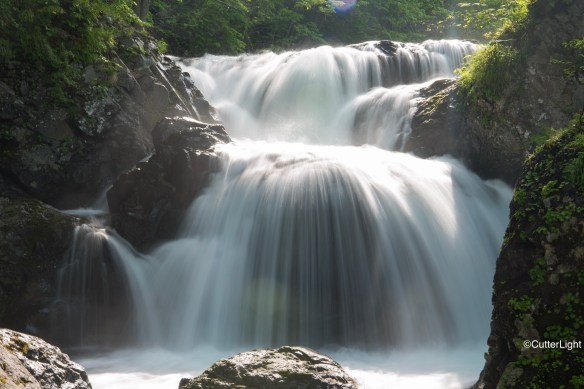
Hokkaido is rich in the world’s most valuable natural resource: clean, fresh water. This falls was one of many we’ve encountered so far this summer.

The most frequently visited of the six national parks in Hokkaido, Shikotsu-Toya as a fragmented network of lakes, mountains and geothermal features. Japan’s national parks represent a much looser management philosophy than those of the United States and Canada. Visitors’ centers are fairly minimalistic, featuring perhaps a few pamphlets in Japanese, Chinese, Korean, English and occasionally Russian. There are no entry fees. Tent camping may range from a high of about ¥1,000 per person (about $9 at current exchange rates) per night at privately run campgrounds to free. Although campgrounds generally lack picnic shelters, most have areas to wash dishes as well as clean restrooms. Some also offer showers for an additional fee of ¥300 – ¥500 ($3 – $5).

Several hundred brown bears roam Hokkaido’s forests, beaches and mountains. Although uncommon, attacks do occur – prompting these stylized, imaginative renditions of the bears.
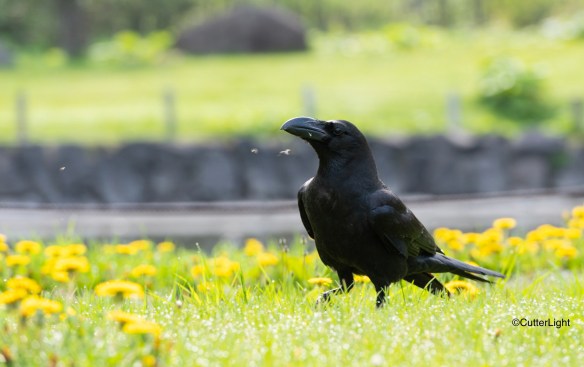
Two species of crows inhabit Hokkaido. This aptly named Large-billed Crow was gathering a morning meal of insects. Opportunistic and intelligent birds, we quickly learned that you can’t leave any food unattended.

Finding drinking water has been no problem; our favorite sources are the many natural springs we’ve come across.

With schools still in session and nights chilly, early June is still considered the off season in Hokkaido. Campgrounds are often empty on weekdays, and even on weekends it’s possible to find seclusion.
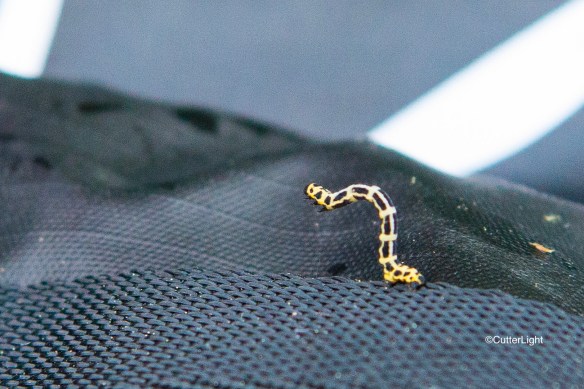
Caterpillars of every description seem to be everywhere. Butterfly season soon.
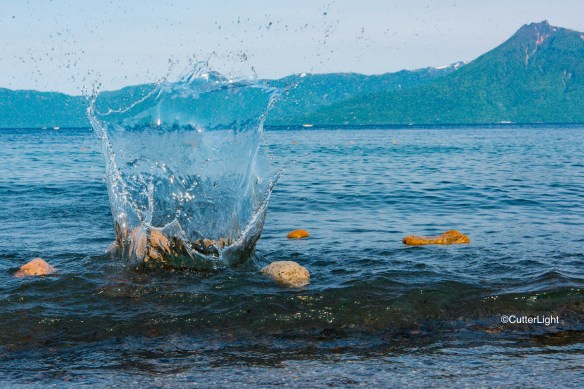
Conical mountains and hot springs belie Hokkaido’s volcanic origins. This beach on Shikotsu-ko (Shikotsu Lake) was covered with pumice – a good bit of which floated nicely!

The last evening light on Shikotsuko.
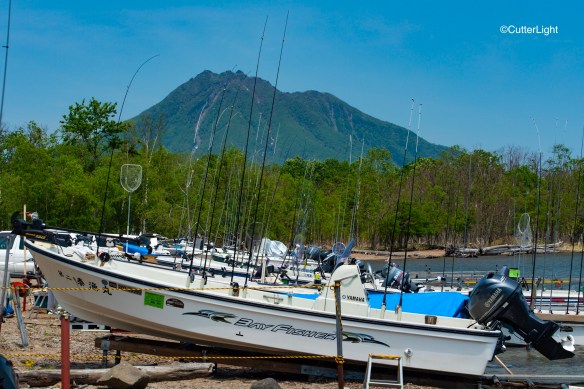
The following day, we rode our bikes along Shikotsuko’s shoreline and happened upon these fishing boats. Rigged for kokanee (land locked Sockeye Salmon), the fishermen hit the water at the first crack of light, take the afternoon off, and then hit it again in the evening.

Centerpin reels, long, limber rods, small flashers to attract the fish’s attention and hooks baited with fly larvae were the tackle and bait choices the experts preferred.

I struck up a conversation with one of the fisherman who then invited me aboard to see his catch – half-a-dozen blue-backed, silver-flanked kokanee in a live well. At 12 inches each, he told me they were running a little small this year, but they still make excellent sashimi.

June is the best season… and I’m guessing that had we had the time it wouldn’t have taken much to get an invite to join him for the evening bite.

Carrying as much gear as we’re carrying, we expected a fair amount of pushing our bikes up hills and mountains. We were less psychologically prepared for the many tunnels we’ve gone through. Marvels of engineering, they certainly are physically easier than slogging up steep slopes. But with some of them running two miles long and longer – dark, damp, no bike lanes, the slimmest of sidewalks (or none at all) and echoing with the roar of trucks and other traffic – they can wear on your nerves.

A roadside park where we stopped to check out a waterfall featured a number of totem poles presented to Hokkaido by First Nation’s people of Canada.

The colors and style of the carvings seemed to fit with Hokkaido’s indigenous Ainu culture.

Most of the tunnels weren’t as cool as this one. Nice shot, Bar!
 CutterLight