
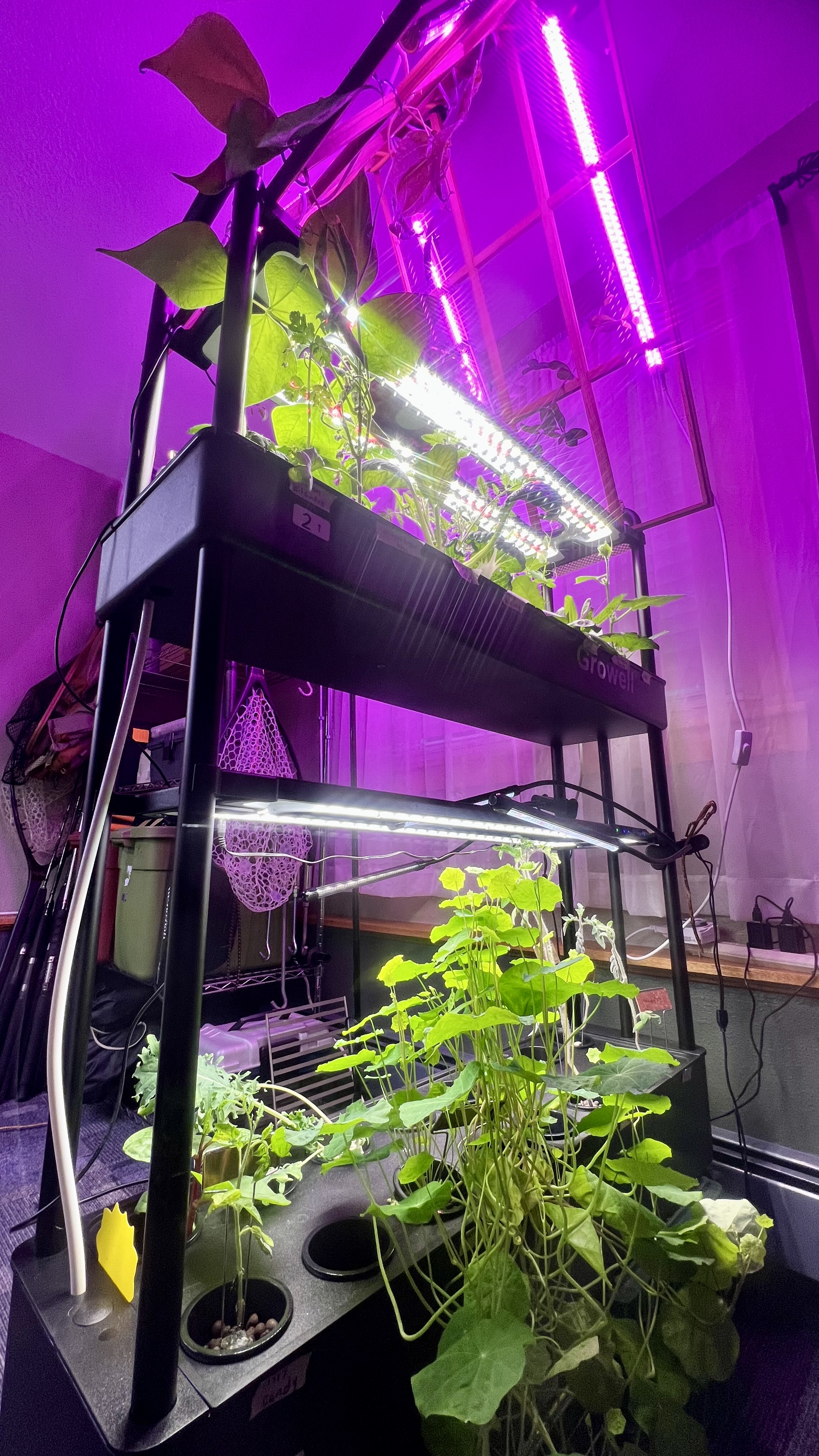
It happens like clockwork every year at this time. I don’t think it’s only me. The gardening commercials are evidence of that. The eager feeling to get planting has begun.
One of my favorite things about hydroponic gardening is that the calendar doesn’t matter. We’ve added another garden to our collection to accommodate larger plants. I created an A-frame trellis at the top of the new garden so sweet peas, dragon tongue beans, and edamame beans have somewhere to climb. The new garden also is growing nasturtium, cucumbers, tomatoes, kale and malabar vining spinach plants.
As the hydroponic experiment continues, I can report that generally lettuces grow really well. They are ready for harvest quickly – sometimes after only a week. Our grocery store sells each clamshell of spring greens for about $9 and by the time those containers get to us, from wherever, they are already starting to wilt. Our fresh greens are tender and crisp, beautiful and delicious. Those aspects of our home grown lettuce make that crop priceless.
How do you calm your itchy, eager fingers until it’s time to plant outside?
Leave a like and know that we appreciate comments! Join over 6,000 subscribers and thousands of regular readers from throughout the world as we continue to explore good food, adventures and Life Off The Beaten Path.

 CutterLight