AlmostTheRed Fox we called Skit chasing a Goldeneye Duck on Chignik Lake, Alaska, February 3, 2017
Slow work, going through the thousands of photographs we took in our years at Chignik Lake. But the late summer and fall of 2016 are “in the can,” and today I begin the February 2017 files. I honestly don’t know what I’ll find. So, we hope you’ll keep watching this space! Thanks!
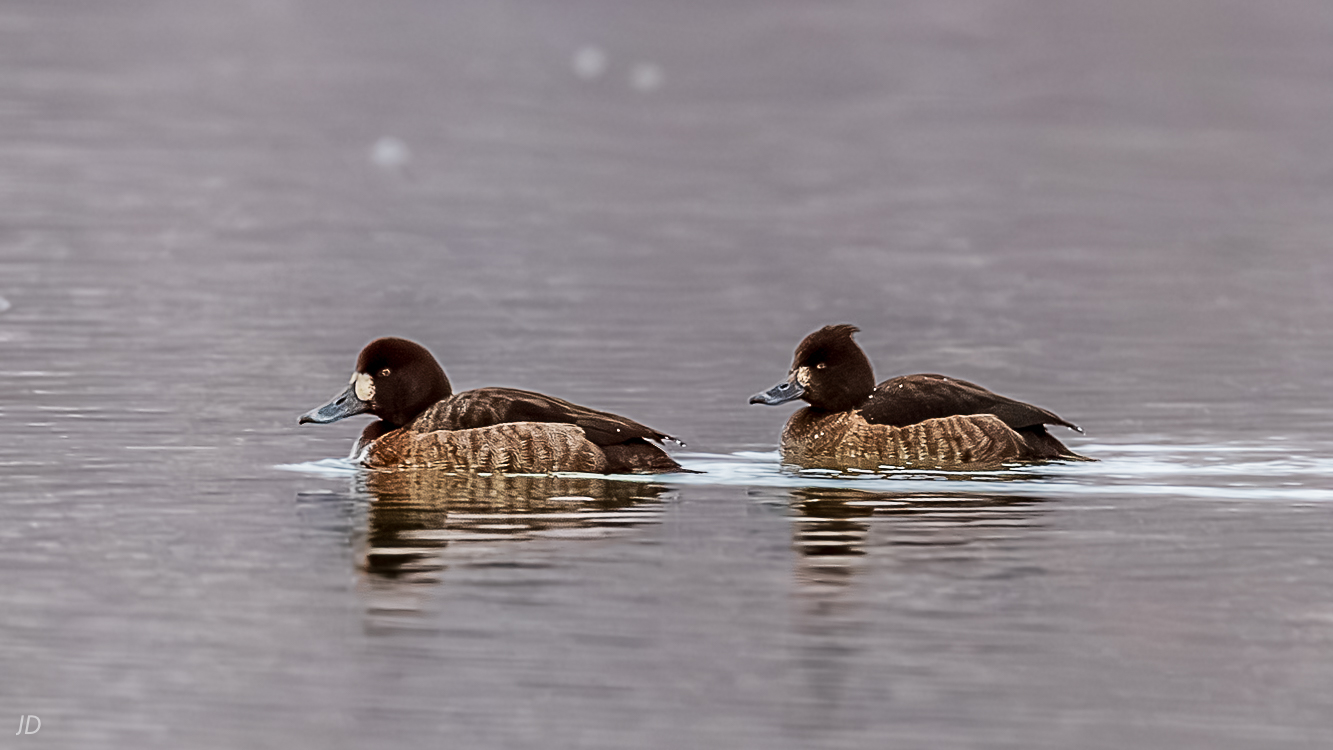
On the left, a female Greater Scaup. To her right, an Asian visitor, a female Tufted Duck. Male Tufteds look a lot like male Ring-necked ducks but with the eponymous tuft of head feathers. Although most frequently seen near North America’s coasts, you might encounter this wintertime Eurasianvisitor almost anywhere among flocks of scaup and Ring-neckeds. Chignik Lake, 1/26/17
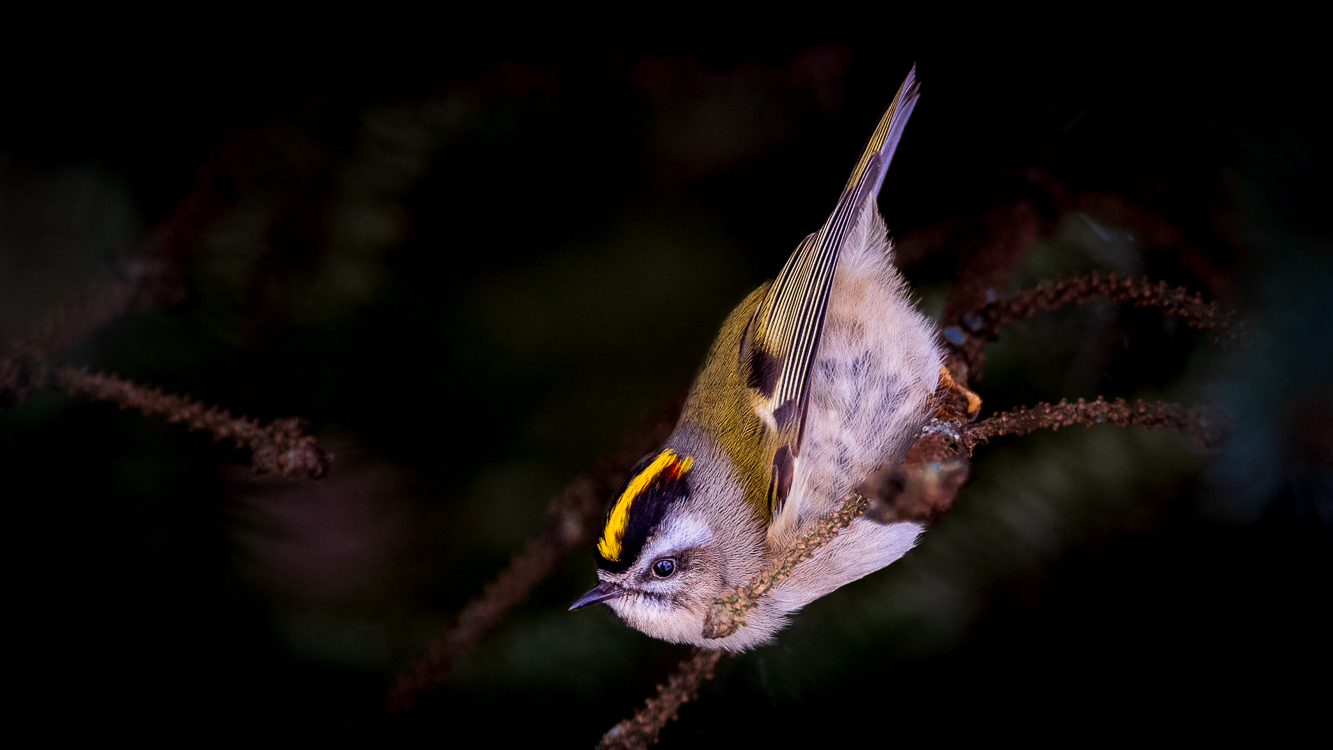
Chignik Lake Kinglet, January 2017. Weather’s coming our way here in Cordova. Maybe over a foot by Saturday. Snow shovels ready. Hope all is well wherever your neck of the woods is!
To the best of my knowledge, this was the first documented 𝐖𝐡𝐢𝐭𝐞-𝐭𝐡𝐫𝐨𝐚𝐭𝐞𝐝 𝐒𝐩𝐚𝐫𝐫𝐨𝐰 on the Alaska Peninsula. A lone specimen showed up at Chignik Lake every winter from 2016 through 2023, our last year there. As scattered reports filter in from throughout Alaska every year, it may be time to update range maps for this species. 1/17/17
The Tiny King of Sitka Spruce GroveAt only about three or four inches (8 – 11 cm) in length from tail-tip to beak, other than hummingbirds there probably isn’t a smaller bird in North America than the Golden-crowned Kinglet. But they’re sturdy little beings, able to survive temperatures as low as -40° F (-40° C). The splash of scarlet identifies this fellow as a male; the female’s crown is pure yellow-gold.
Every autumn coinciding with the peak of the Coho run on the Chignik River, we’d begin to hear a new voice as we pushed through thick stands of alders or walked by the village’s scattered spruce trees. By this time, there weren’t many other passerines around, and so there was no mistaking the high, almost cricket-like call of returning Golden-crowned Kinglets. They were a new species for for us, always in motion, difficult to locate in the dense alders and dark spruce boughs they prefer, and they are not indicated on the Alaska Peninsula on any of the range maps we checked – Cornell, Audubon, Sibley – so we were very happy when we finally got binoculars on them and could make positive identification. Kinglets tended to remain at The Lake throughout winter. At some point, they presumably had cleaned all the invertebrate eggs and dormant insects they could find and moved on to other grounds, but they were there every year in those fall and winter months and should be added to peninsular checklists and range maps.
Red Foxes tussle, nip and bark at each other. A Brown Bear might literally rip the face off a rival in a dispute over fishing and mating rights. Even cute little Black-capped Chickadees and Redpolls sometimes aggressively gape at each other and might engage in a quick peck to establish pecking order.
I suppose there are times when River Otters squabble, but in years of observing them at the lake, we never saw anything more than a look of envy cast from one otter toward another. (The coveting occurred over an exceptionally toothsome flounder one lucky fellow came up with.) Mostly, otters are the social goofballs of the four-legged world – rolling in snow, piling atop each other, sliding over ice and snow on sleek bellies, crowding together four-heads-at-a-time popping up from a hole in the ice, chasing each other in jaunty little parades as they scoot up and down the waterway. Maybe it was the Chignik’s abundant supply of fish that allowed for such conviviality. Whatever the reason, it was our observation that these inquisitive, cheerful beings simply like each other. And we think there’s a lesson in that for the rest of us.
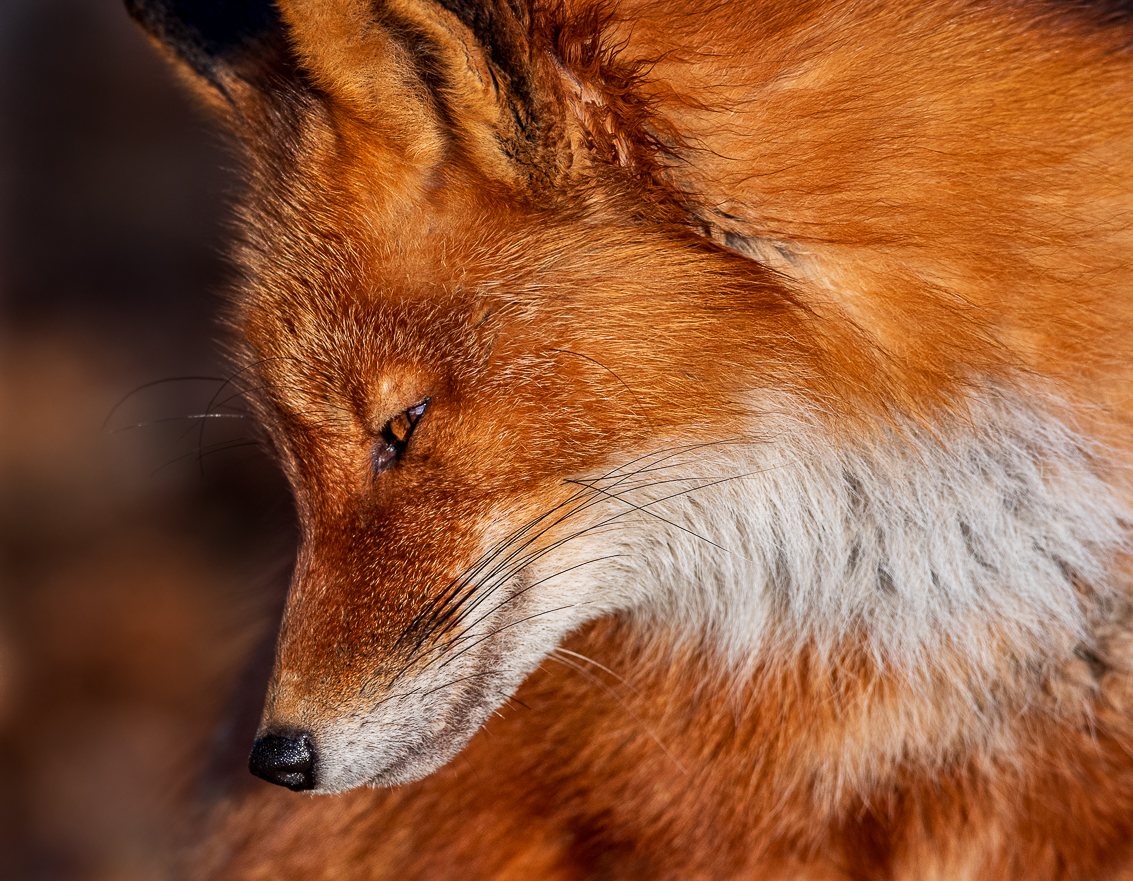
The Fox We Called SkitFoxes were attracted to the Spruce Grove where we had hung several bird feeders. The birds attracted them, no doubt, but they also ate seeds from the ground and probably caught a vole now and then. Skit was skittish and his right eye was bad. I was fortunate to get his left side in good light. Chignik Lake, 1/2/17
Red-breasted Merganser at Dawn with Char and Scaup: monochromeDecember 19, 2016Red-breasted Merganser at Dawn with Char and Scaup: color
All summer and well into fall, we could often see salmon and char from our dining table window as they migrated along the lakeshore beach. The char could be there in any season, following the salmon to gorge on eggs and then making their own spawning run. At other times the char would cruise the lake shoreline chasing down the fry, parr and smolts of Sockeye and Coho Salmon. At that time they would readily come to streamers, and even in winter you could sometimes get a couple of fresh fish for the evening meal.
More interesting than fishing for the char was watching the mergansers and otters go after them. The diving ducks often worked cooperatively, cruising along the shoreline with purpose reminiscent of soldiers on patrol. When they found a school of Dollies they’d herd them against the shoreline or sometimes against ice sheets. The otters behaved in a similar manner, and when there were a lot of char around the otters and the mergansers would set aside some of their natural caution and you could find yourself pretty close to the action if you sat still and waited.
Although it was late in the morning when I took the above photograph, the sun was just barely beginning to emerge over the mountains south-east of the lake. At first it was too dark to shoot, so I positioned myself behind a natural blind of tall, winter-brown grass and waited. There were about half-a-dozen merganser hens, or a hen and her first-year offspring, patrolling the shoreline, catching fish. Then this one came up with the catch of the day just as a flock of Greater Scaup were passing behind her.







 CutterLight