Bowhead Whale Stew

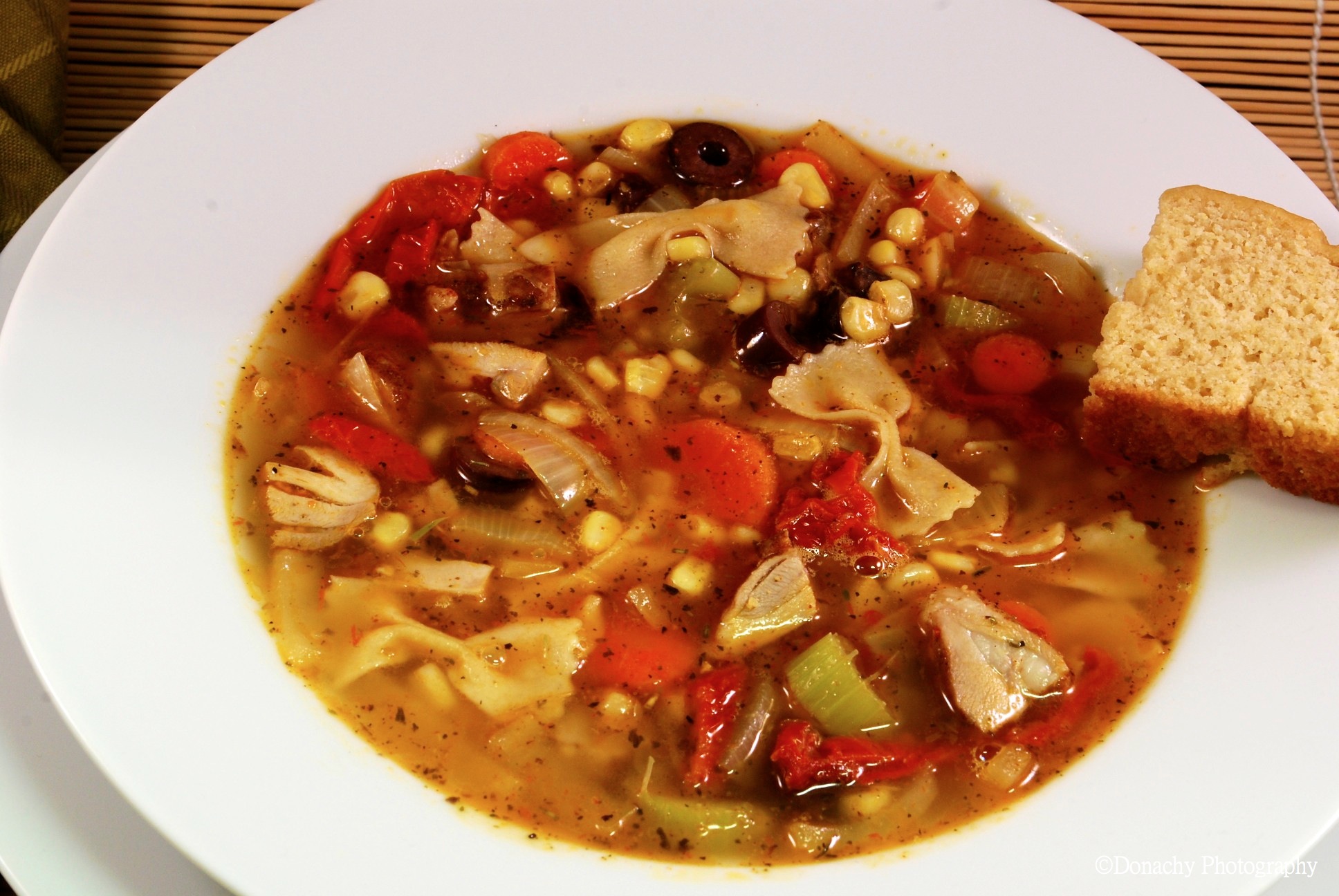
An original caribou antler and walrus ivory carving by Edwin Weyiouanna guards a bowl of bowhead whale stew.

Outside it was -11 degrees Fahrenheit. The steady 25 mile per hour wind brought the chill down to negative 40, making it a good day to stay inside and cook a big pot of comfort food.

I could feel the frigid north wind seeping in around the edges of the window over the kitchen sink as I stared apprehensively at the three, one-pound cubes of thawed whale meat draining in the stainless steel basin. The odor of the dark red meat was decidedly un-beef-like, but it was mild and agreeable nonetheless – not at all gamey or fishy. The texture was a bit like that of fresh halibut – soft and dense. The meat of the bowhead whale, the largest genus of right whale, might be compared to especially tender filet mignon. I had no idea what cooking would do to the texture, or what the meat would taste like. “Good beef,” I hoped as I rinsed the meat and considered my next move.

For the past 27 years, Craig Claiborne’s The New York Times Cookbook has been a faithful companion – my go-to reference when I’m not sure what to do next in the kitchen. I turned to Claiborne’s basic recipe for beef stew, made a few modifications to take into account what we have on hand and our own tastes, and proceeded from there. The end product was probably the best meat stew we’ve ever had (allowing for the fact that our creation would have been improved with the addition of three cups of good red wine, which is, of course, unavailable up here.) The meat was wonderfully tender and no more strongly flavored than, say, strip steak, and complimented the seasonings and other textures in the stew beautifully. I served three piping hot bowls of stew with freshly baked cornbread muffins while daughter Maia cued up the film The Triplets of Belleville on our big movie screen – the perfect recipe for staying warm north of the Arctic Circle.

A Point Hope Thanksgiving or Do You Have Turkeys North of the Arctic Circle?

Translucent pink Muktuk (whale skin and blubber), whale meat, and whole Arctic grayling were passed out to guests at the Point Hope Thanksgiving feast.

Like Shishmaref, the residence of Point Hope generally don’t have big family Thanksgiving celebrations at home. It is a community event. Turkeys and hams flood into the village in preparation for the big feast. (Yes, we do get turkeys north of the Arctic Circle.) Anyone who volunteered an oven received either a turkey or a ham to prepare. We received a 22 pound ham which we cooked and delivered to the school gym. Large quantities of traditional dishes such as stuffing, candied yams, corn and cranberry sauce were brought in to the school pot-luck style. By 4 p.m., volunteers had carved turkeys and hams and all the side dishes were readied to be served.

After key community members gave speeches expressing thanks, the village was ready to share the meal. The first course? Muktuk (the layer of whale skin attached to the pink blubber shown in the above photo) and chunks of frozen whale meat. Many people brought out sharp knives and small containers of seasoned salt and immediately carved into their frozen chunks of whale. Others, like us, had brought Ziplock bags in order to save the pieces to eat later at home. Both muktuk and whale meat are traditionally eaten raw, boiled, or fried. We talked to the owner of the local restaurant who suggested slow cooking the whale meat in a stew. Sounds like a good idea. Tune in later for that culinary feat. The community also shared whole frozen grayling, dolly varden, and big chunks of salmon. Of course, the elders were served first, but there was plenty to go around to everyone.

The next course featured platefuls of traditional Thanksgiving fare. Seated around the perimeter of the school gym on the floor and in chairs brought from home families and friends engaged in conversations. There were probably 500 people altogether. At one end of the gym, tables covered with huge sheet cakes were waiting to be cut and served for dessert.

Obviously, Thanksgiving is not a traditional Inupiat celebration. In our readings of Alaska history and in conversations with history buffs, we’ve learned that the Inupiat people had celebrations and traditions similar to many of the traditions that the missionaries introduced several decades ago. The similarities made it easy for the Inupiat to adopt new holidays. For example, the divvying up of whale meat was already a fall tradition. Folding Thanksgiving into this tradition was logical.

C-Dory 22 Angler: A Boat for Alaska

The Gillie: Our 2008 C-Dory 22 Angler taking a cruise on the Sacramento River

“Gillie” is a Scottish term that refers to a fishing or hunting attendant, much like a guide. As such, armed with an excellent electronic fish-finding unit, a dependable 90 hp Honda engine (and an 8 hp kicker), and enough open deck to comfortably fish two or three anglers (four in a pinch), this boat has proved to be a reliable gillie. Barbra and I have spent many nights both on the water and on land snuggly tucked away in the cuddy cabin, and the dinette table in the pilot house is just big enough for the two of us to enjoy a meal. These boats are capable of storing an amazing amount of gear, the hull is tough, and on flat water loaded down with fishing gear and four medium-sized adults, it tops out around 25 knots (about 29 mph). Inside the pilot house with the Alaskan bulkhead door closed, making long runs is both warm and quiet. The 90 hp Honda trolls beautifully when we’re running rigs for salmon, and the shallow draft (well under two feet) allows us to get in the rocks in pursuit of species close to shore.

Ask a typical boat owner what the best boat is, and they’re likely to tell you, “The one I own right now.” That’s how we feel about our C-Dory. With a beam of only 7’9″, it’s a breeze to tow, yet it’s enough boat to feel safe on fairly big water–from the California coast to the ocean bays of Alaska. You’ve probably heard the quip that goes, “The two happiest days in a boater’s life are the day he buys the boat and the day he sells it.” Not with a C-Dory. The happiest days are the ones we have it on the water.

Arctic Ocean

We put our fingers into the icy cold water during our walk along the beach. It reminded me of the cold waters of Lake Tahoe in the Sierras. I remember swimming in those waters as a child until my body went numb. Jack remembered taking a dip in the Merced River in Yosemite…the shortest dip of his life.

There is a woman in Barrow who will issue a Polar Dip certificate, officially proving that the bearer has fully immersed herself in the Arctic Ocean. No gracias.

Walk for Life

Yesterday, we participated in a walk for life, which was a community event to remember those who have passed and to celebrate life. We walked from a community building out to the cemetery and back. When we returned, we had an opportunity to share with others the people we were remembering. This annual event happens in many communities all around Alaska. One of the themes is the celebration of life in order to help prevent suicide.

It made me think not only about those people who have passed in my life, but also the people who are gone from my life. I also reflected on the many people who have died in recent tragedies and the many lives which have been touched by the loss of those people.

The thoughts turned from melancholy to appreciative as one person in particular came to mind. Olga died several years ago. Since my childhood, I remember her as an older but vibrant lady. She had adventures her whole life. She told me stories of been stationed on Hawaii before it was a state, and other stories of adventures with her friends. Although well along in years, she always took care of her home herself and was fiercely independent. She is my image of what growing older will be about.

These days, the world has become smaller; there aren’t many places people haven’t been or things that people haven’t done. I won’t be the first to do anything. But I am having many adventures that are firsts for me, and Jack and I have many more planned for the future. When I measure my life up to Olga’s, I feel like I am living a life she would be proud of.

It was a good experience to walk around a cemetery and watch the children place flowers made of brightly colored tissue paper on the graves of the ones they have loved and lost. It felt good to have a connection from sadness of loss to happiness of life and living.

Donachys on Ice

We did it!

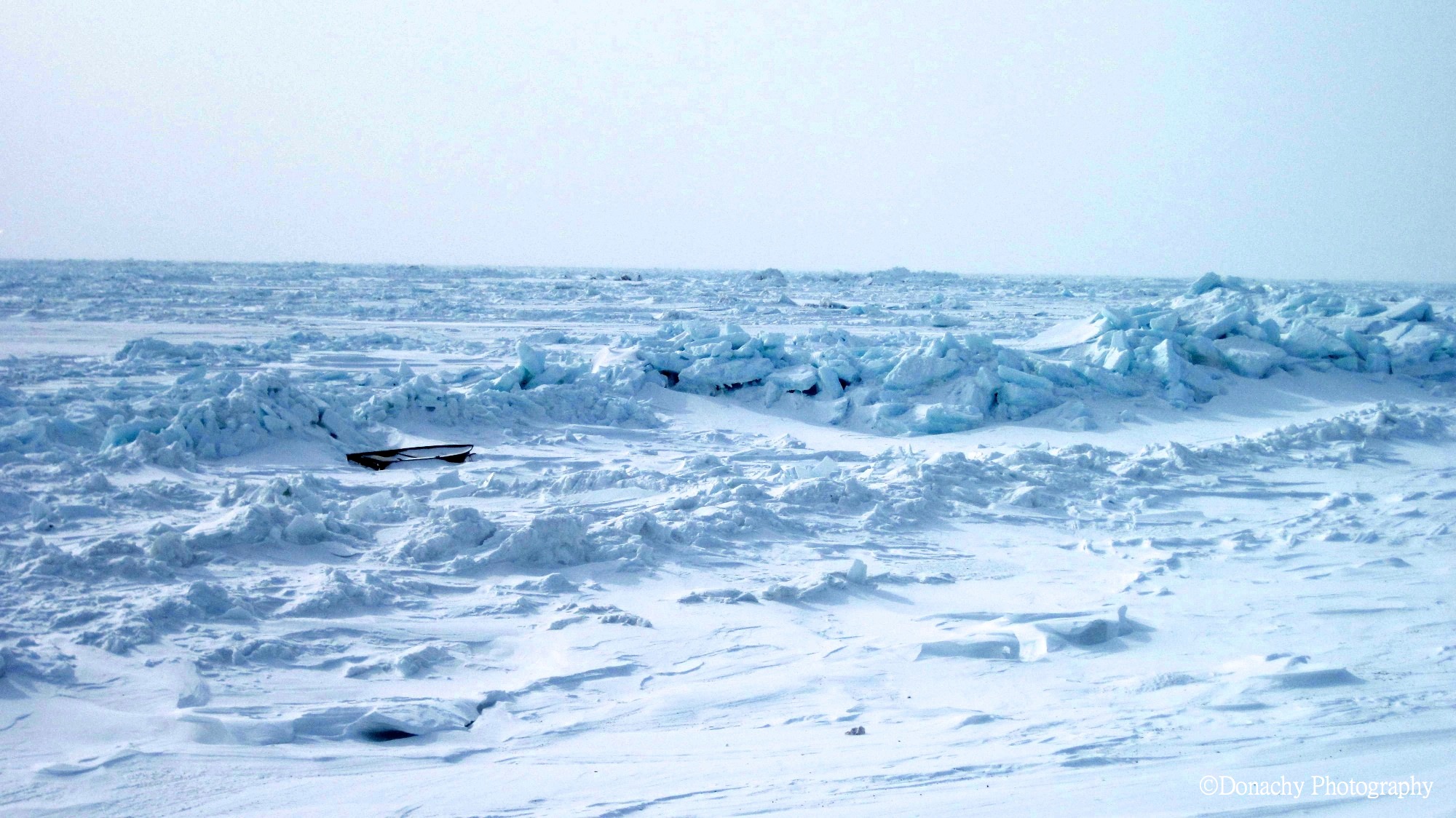
Last year, I told my students in Sacramento that I would post a picture of myself standing on the frozen sea. When the ice first covered the Chukchi, I was tempted. It looked safe enough, but there was no evidence that anyone else had ventured out. Shortly thereafter, the ice broke open, providing evidence of how unreliable early ice is. But that was months ago. Now there are snowmachine tracks on the ice parallelling the coast, and seal hunters talk about going all the way out to the edge in search of their quarry.

For the past few months, each time I’ve looked at the frozen sheet ice stretching beyond the horizon, I’ve been tempted. It’s starting to warm up and I know my chances are diminishing. I half kiddingly asked Jack to walk out with me today and take my picture. One of our students was hanging around with us. We saw fresh snow machine tracks and decided today was the day. Part way out, we came upon a crack, which we stepped over! Ok, that was far enough. Our young friend took our photo to prove our kept promise. We did it!

Muktuk

One of the privileges of living in Shishmaref this past year has been the opportunity to sample various Eskimo foods. Last night a friend came by and asked if we would like to try muktuk. Shishmaref is not a whaling community; her family had come into the whale skin and blubber delicacy by trading caribou meat with another village. We eagerly accepted her offer, which she advised us to slice thin and eat with seasoned salt.

Jack sliced the raw muktuk sashimi-style and served it with soy sauce and wasabi. The contrast of the almost translucent, light pink fat with the dark, marbled skin was beautiful.  With his razor sharp sashimi knife,  Jack first removed the outer layer of skin and then cut out the tough, dark strip next to the blubber. Dipped in the soy sauce and wasabi combination, the blubber melted away as we chewed it. Jack relishes anything that is fresh from the sea and loved it. My favorite part was the skin. Like the blubber, it was  slightly sweet, delicately flavored and pleasantly chewy.

Incidentally, raw muktuk is high in vitamin C, which, along with other raw meat and fish that traditionally make up the Inupiat diet, explains how people in this extreme environment historically were able to avoid scurvy.

Land of the midnight sun

The sun is up before us (morning twilight was 5:33 a.m. today) and sets way after we’ve gone to bed (evening twilight ended at 12:32 a.m.). Some, we’ve heard, can’t stand it. Us? We love it!

We’ve heard the term “Eskimo time.” It seems to be an age-old term that has to do with the sun. When the days become long and light-filled, there are many more hours in which to do things. So, one might get up and go hunting or gather eggs, then take a nap, and later go back out and do something else.

The sunshine allows for many hours in which to get things done and allows for many different paces.

During the school year, when the school dictates what time teachers and students arrive and depart, there is definitely an energy disconnect. The students play out until they are ready to go home, with no concern for the clock. I think some teachers do the same. As for us, we’ve barricaded the light from our bedroom and try to go to bed with a book, a crossword, or an old TV show in order to trick ourselves into winding down into the night. So far, it’s working.

This trickery only need continue for a few more weeks till the end of school. After that, we, too, can join others around us and live in Eskimo time.

Polar Bear!

With big bright eyes, one of my students announced that his dad had gotten a polar bear. He insisted that I call his dad so I could go see it. So, right after school, Jack and I headed out to talk to the hunter. The previous day he had been out seal hunting a few miles south of Shishmaref and had seen lots of polar bear tracks. He found one of the bears and proudly came home with the fourth polar bear in his lifetime. Telling the story, he concluded with a smile, “My daughters have already put in orders for ruffs!”

The skin was laid out, its mylar-like hair glistening in the sun by his home. It was easy to see why polar bear hair was once a highly valued material for fly-tying. But for how silky the fur looked, it felt surprisingly coarse to touch.  The paws, of course, were huge, and the foot pads were thick and tough and leathery. Stroking the fur and foot pads with our bare hands, we felt a connection to the vast miles of ice this bear had traveled, the arctic cold and wildness, the remoteness of this place.

Little Diomede

This last weekend, we had a beautiful, clear flight home from Anchorage. Our leg from Nome went through two villages before the plane landed in Shishmaref. We’ve learned to go with the flow as far as air travel goes. Weather may cause a delay and also may cause an earlier flight. We may have a direct flight, or wind up on a multi-stop trip. Last Sunday was beautiful. It reminded me of taking a long Sunday drive just for the sake of driving and looking around. We saw peaks, and valleys. We saw snow and ice crusted rivers. We even saw some musk ox from the air!

When we landed in Wales, we noticed land surging up through frozen sea and asked the pilot what the land mass was. He told us it was Little Diomede. I was surprised to see that the island is so close to the mainland. In my mind’s eye, I thought it was way out there. If you look on a map, you will see Little Diomede (U.S. land) is next to Big Diomede (Russia). Now, we can say we have seen Russia!