Watchful Dad

Watchful Dad
Great Horned Owl adult and offspring in Sitka Spruce, Chignik Lake, Alaska Peninsula, June 20, 2020

I’d always wanted to live where owls were my neighbors.

It was widely known that the village had owls. In fact, the village had always had owls. David Narver reported their presence in his study of the Chignik River Drainage in the early 1960’s. But no one knew, precisely, where the owls nested and roosted. I managed to unravel the mystery once and for all during our first winter at The Lake. After that, Barbra and I could fairly reliably locate at least one of our two resident owls on any given day.

But that didn’t make photographing them much easier. During daylight hours, the owls typically secreted themselves in the very thickest parts of an exceptionally healthy and dense copse of Sitka Spruce trees. Many times, only a hint of the large birds was visible – a patch of breast feathers, a vigilant eye, an alert ear tuft. In addition to the challenges presented by the dense spruce boughs, the copse of trees was situated in a hollow where the light was almost never what a photographer might call “good.” Not only did the owls bury themselves in the boughs of those trees, their favored roosts were fairly high up. And although I am fairly certain that I knew more or less exactly where the nest was, I was never able to put my eyes on it.

For awhile, I contemplated a variety of strategies to facilitate photographing the owls, but all of them involved bothering them in one fashion or another. I didn’t think I’d permanently spook them out of the grove, but I didn’t want to press them. Making a living in the wilderness by talon, hooked bill, eye and wit is tough enough without some human invading one’s personal space. Biologists (generally) no longer shoot specimens in order to “study” them, but I have to wonder about the merit of constant nest-watching and other practices involving invasive viewing of wildlife that are now in vogue.

And so although I regularly checked on our owls (they were along the way to one of our favorite fishing spots), I did my best not to disturb them. Every once in a while, they presented themselves, and when those times coincided with my having my camera along, I did my best to record an image.

Mosquito Falcon

Male Tree Swallow
Chignik Lake, Alaska Peninsula, May 23, 2020

I was surprised this morning when I checked the Cornell Lab of Ornithology’s All About Birds site to note the absence of Tree Swallows on the Alaska Peninsula on Cornell’s range map. In fact these birds are common at least as far Southwest on the peninsula as the Chignik River drainage, particularly near settlements where nesting boxes have been established. Further down the peninsula they are listed as “uncommon,” their presence probably limited due to the lack of suitable hollow trees for nesting.

In villages throughout the peninsula the return of swallows each spring is widely anticipated as a true sign of spring. It is reported that one swallow consumes roughly 2,000 small insects (such as mosquitoes and midges) every day. Thus, a nesting box or two installed around one’s home can have a measurable impact on the population of bothersome bugs.

It’s Spring! Everybody’s an Insectivore

Male Golden-crowned Sparrow on his way to his mate and their babies
Chignik Lake, Alaska Peninsula, June 19, 2019

Golf Courses laced with poisons, mosquito traps, bug zappers, Rotenone and other toxins used to remove undesired fish species (and incidentally aquatic insects) from streams, the biological desserts called lawns, industrial agriculture and that “little bit” of whatever “cide” sprayed on the family garden – and all the additional instances in which invertebrate populations are suppressed with toxins and by other means…

…also suppress bird populations.

Even among avian species that typically consume mostly seeds, nuts or nectar, in order for the mother to create viable eggs and for the babies to develop into healthy adults, the rich supply of nutrients insects provide are critical.

JD

Of Hens Teeth and Finch Bills… With apologies to Ms. Stein, it is not true that a rose is a rose is a rose

Male Red Crossbill foraging on Sitka Spruce Cones, Chignik Lake, Alaska. These birds can only live where forests are allowed to mature and produce healthy cones. Forest management that focuses only on replanting trees destined to be turned into pulp before they mature provide little to no benefit to most species.

Anyone who has much studied biology in general, birds in particular, or evolution specifically has undoubtedly encountered “Darwin’s Finches” and the remarkable diversity in bill shape that evolved among a species related to tanagers (not true finches) that became geologically isolated on the Galapagos Islands. Darwin visited the islands, which straddle the equator approximately 560 miles west of Ecuador, in 1835. There he collected (his servant shot) an array of birds featuring 18 different bill shapes. The variation correlated with the different foods each type of food the birds had adapted to take advantage of on the islands. As all of the species Darwin identified originated from a single type in genus Geospiza, Darwin’s Galapagos finches have long been held up as an example of how evolution works. It’s a complex process that occurs over time and I don’t want to oversimplify it. However, for the purpose in this article, it is useful to think of 1) an underutilized food source and 2) genetic isolation. The original tanager-like specimens of a single type in genus Geospiza became isolated on the Galapagos islands. Given an absence of competition from other species of birds and an abundance of various foods – insects & invertebrates, berries, seeds of different size -, various forms of the original type of Geospiza evolved different bill shapes and sizes (and even different body types) as they keyed in on a given kind of food.

Somehow, I think, (speculate), vocalizations must have played a key role in the genetic isolation that concurred with the move toward food specialization among these Galapagos finches. Most species of birds have a variety of calls and songs, each of which conveys a specific meaning. Black-capped Chickadees, for example, communicate with at least 15 different sounds (let us think of them as words) differentiating everything from the approach of different kinds of predators (one vocalization for ground predators, another for aerial predators) to vocalizations used during breeding, to identify food sources, and so forth.

Bird vocalizations play an important role in differentiating similar species. For example, although certain thrushes to the untrained eye appear quite similar, their songs are different enough to easily distinguish. Similarly, the Pacific Wren found in west coast states from California to Alaska is nearly identical in appearance to the Winter Wren which is found in the east and midwest. But the songs of the two species are different. Thus, they are genetically isolated from each other as much by their vocalizations as by geography. After all, they have wings. They are thus able to transcend geographical boundaries. Their songs – agreeable to members of their own tribe, a foreign language to others – helps keep the two populations separate.

Apparently a good bit of the above applies to Red Crossbills. I have photographs of Red Crossbills from Montana that show a recognizable difference from the Red Crossbills we encountered at Chignik Lake. The Montana birds have larger bills. What causes the difference? Probably diet. The Montana birds we saw were feeding on the seeds of Ponderosa Pine cones. My guess is that it takes a more substantial bill to get into the harder, tighter pine cones than it takes to pry apart the looser scales of the softer Sitka Spruce cones found at Chignik Lake and other locales in Alaska.

But, again, crossbills have wings. So, no doubt playing an important part in genetic fidelity among different types of crossbills are their various vocalizations. According to Audubon, there are as many as eight different types of Red Crossbills in North America, and these varying types are most reliable distinguished by their different calls. At least eight. I’ve read elsewhere that there are as many as 11 different types. This is relatively recent insight. In T. Gilbert Pearson’s Birds of America (© 1917), the Red Crossbills of North America are called American Crossbills; there is no mention of diversity among what was then a sparsely-studied species.

So, just as ichthyologists have come to understand the significant genetic variation that can exist among a given species of fish – such as Steelhead or Coho Salmon – as each kind of Steelhead or Coho has adapted to thrive in a given river system – ornithologists are coming to understand that there can be a great deal of intra-species variation among birds as each type within the species has evolved features allowing it to thrive in a specific habitat.

To me, the take-away lesson here is that we should not merely be focusing on the preservation of life forms on the species level, but that instead we should be dedicated to the preservation of each unique biome and ecosystem.

Little Spruce King… and something more productive than yelling at the evening news

Male Pine Siskin
Thousands and thousands of photos either culled and discarded or key-worded, retouched and placed year by year, month by month into digital folders. Still lots to go. Now into late October and early November of 2017, I hadn’t remembered that I got some nice captures of Red Crossbills and Pine Siskins that fall – finch species that generally do not appear on range maps for the Alaska Peninsula and which David Narver did not observe in his Chignik River Drainage study conducted in the early 1960’s.
With the exception of Pine Grosbeaks, Alaska’s finches – which also include White-winged and Red Crossbills, Hoary and Common Redpolls and Pine Siskins – depend heavily on cone seeds. The siskin in this photo would probably not be at The Lake were it nor for the Sitka Spruce trees transplanted as seedlings from Kodiak Island back in the 1950’s. Now mature and beginning to reproduce on their own, these spruces provide shelter and seeds for chickadees, sparrows, finches and magpies as well as a diverse array of invertebrates for all the above along with woodpeckers, wrens, kinglets and warblers. These passerines in turn provide a source of food for owls, falcons and shrikes. Want to change the world? Well, you could try yelling at the evening news on TV… or you could plant a few trees.

A Little Can Go a Long Way: A Testament to Mentorship

Paradise Sunrise – Salmon water on the Chignik River

It wasn’t so long ago that I was at the stage in life where a number of iconic figures in the art and entertainment world had begun to pass out of this life. I am far from being a celebrity hound, but as I scanned the news headlines each morning, it was always a sad and somewhat mildly shocking thing to see that an actor, singer or other icon I’d long admired had been admitted to a hospital for the kinds of illnesses that portend the end, or that indeed the end had come. The mild shock in such moments stems no doubt from the reminder that in fact we are all, all of us, “in the queue.”

More recently, feathered in among these iconic entertainment artists, the mentor-friends of my boyhood have been departing. The deaths that have hit closest have been among the men with whom I had the honor of hunting and fishing, men who I studied closely and learned from. The lessons included the proper handling of firearms, where to look in a pool for trout, various forms of woodcraft and the like, of course, but more importantly my association with these men provided vital guideposts along my own path toward – and into – adulthood.

Bill Kodrich 1933-2024

I doubt that there was anyone who had a greater influence on my young life than did Bill Kodrich. The winter when I was 12, he taught me to tie flies, the very first of which was a white-winged Coachman… I can still remember my clumsy fingers fumbling to tie in matched sections of Mallard wing. That spring at the small pond on his property, Bill let me borrow one of his fly rods as he showed me how to cast a fly line. Later, he brought me into the fold of Trout Unlimited, an organization in which my wife and I are proud to be life-time members. (Bill, who was a biology professor at Clarion State College/University, served as Pennsylvania’s TU President and in 1991 received TU’s Distinguished Service Award.

As important as those early lessons were, it has been Bill’s example that has had the greater impact. Were one to glance at my various tools, fly boxes, cookware and so forth, one might notice every drill bit accounted for and in its proper place, flies arranged in tidy rows, cookware stored thoughtfully, clean and cared for. “This is the way Bill would do it,” I’ve said to Barbra or thought to myself countless times – and will continue to do so, a fly rod wiped clean and returned to its proper place on wall pegs after a day’s fishing bringing back fond memories of Clarion and of hunting and fishing with Bill and studying his example. In fact, I find that as I pass by vegetable gardens here and there, compared with the impeccably well-ordered rows Bill attended to, all are somewhat wanting. And it’s seldom that I have a really good piece of pie and he doesn’t come to mind. “We’ve got to fuel up if we’re going to be spending the day…” hunting or fishing.

The testament of Bill’s life – of the lives of all of these mentors from my youth – is that even a little attention cast to a young person can have an impact that lasts a lifetime. It is a legacy grander and more meaningful than the largest mansion, a pile of money to the sky, or fame in any measure.

JD, Cordova, Alaska

Things are changing. Fast. Get out and shoot.

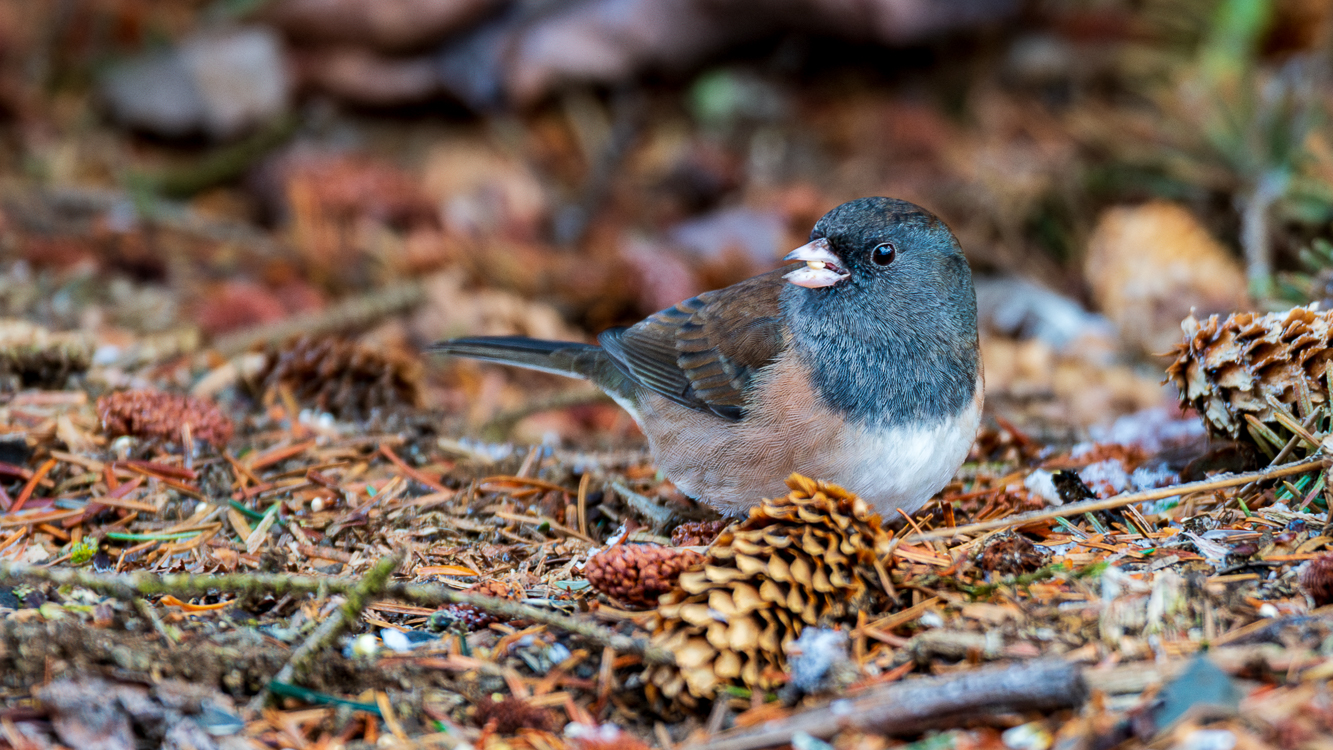
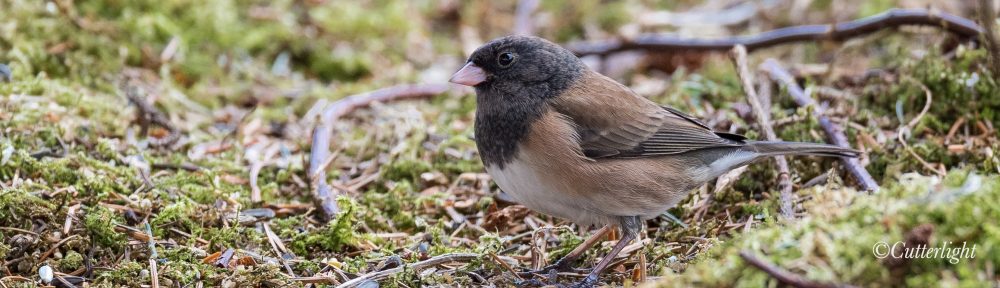
Oregon Race Dark-eyed Junco, Sitka Spruce Grove, Chignik Lake. As far as I’ve been able to determine, the Oregon Race specimens of Junco hyemalis we observed and photographed our first year at The Lake represent the first ever records of this bird on the Alaska Peninsula. We saw both Slate-colored and Oregon Race specimens of Junco hyemalis every year at The Lake from 2016 through 2023. It’s time for various authors and institutions to update their range maps. November 29, 2016.

“I’ve been hoping to see you!” Sam came out to intercept me as I was walking along the dirt road past his house on my way to Sitka Spruce Grove. It was an overcast, cold November morning, the tinny smell of snow in the air. “I’ve been seeing a bird I’ve never seen out here. Batman birds. They have a dark head, like Batman’s hood. Nick’s been seeing them too. We’ve been calling them Batman birds.”

“Yeah. I’ve been seeing them too. Just in the last few days, right?”

“Yeah. I’ve never seen them before. What are they?”

“Oregon Juncos. They’re not supposed to be here. I’ve checked my books and range maps on the internet. This might be the first time they’ve ever been out here.”

Sam, in his early 70’s and not more than five-six looked up at me as he rolled the burning cigarette he was holding between his thumb and his first two fingers. For a moment nothing was said. He lifted his arm to take a drag and looked out over the landscape as he let the smoke out. Winter-brown salmonberry breaks and willows, scrub alders an even more drab shade of brown covered the country all the way to the treeline on nearby snow-capped mountains, country that in Sam’s youth had mostly been tundra.

“Things sure are changing here,” he said.

There are still people in denial, people who not so very long ago dismissed Climate Warming as some sort of hoax, who refused to believe any scientists except those who work for the fossil fuel industry. Most of those hardcore deniers have given up the tack of total denial. But they haven’t gone away, and they certainly haven’t conceded their error. Instead, the refrain now is initial agreement, “Yes, it appears the earth is getting warmer,” followed by a deflating return to denialism with, “but the world has always been changing.”

Not with this rapidity it hasn’t – the occasional meteor strike notwithstanding.

The result is that almost anywhere one lives, change can be observed in real time. This might be manifested in new species of flowers and other plants, new birds, other vertebrates, insects… or the rather sudden absence of formerly familiar species. Anyone with a camera has a chance to contribute to real-time, meaningful documentation of the change that is occurring right now all around us.

It’s not just the natural world that is undergoing rapid change. As expanding urbanization follows an overpopulated species across the globe, historic buildings are being torn down, forests leveled, rivers rerouted, lakes and aquifers emptied. Things that had remained much the same for decades, for generations even, are suddenly in a state of upheaval.

Photography is used for many things: to capture holiday moments; family portraits; events of all kinds; and increasingly, to make fine art. But some of the most compelling photographic images have always been and continue to be well-composed, straightforward documentation.

Anyone with a camera can make a meaningful contribution. Get out and shoot.

The Connections between Bears and Us: BEARTREK

“When we try to pick out anything by itself, we find it hitched to everything else in the Universe.” John Muir

Follow bear biologist extraordinaire Chris Morgan from the wild’s of the far north to the mountain deserts of Peru to the jungles of Borneo in this superbly filmed and narrated full-length wildlife documentary. Deeply passionate in his vision to positively affect the world, Chris’s premise is that if people understand and appreciate bears in all their amazing diversity, they will take action to help these fascinating animals, which will in turn help to safeguard our shared environment.We watched the film for free on Amazon Prime.

I (Barbra) have had the opportunity to interview Chris Morgan with students on two different occasions, a testament to how generous Chris is with his time and how dedicated he is to bringing his message to young people.

Have a wildlife documentary you’d like to let others know about? Leave a comment below!

Wisconsin Wildlife Services Removes 100’s of Beaver Dams Each Year, Many by Explosives

beaver dam blown up

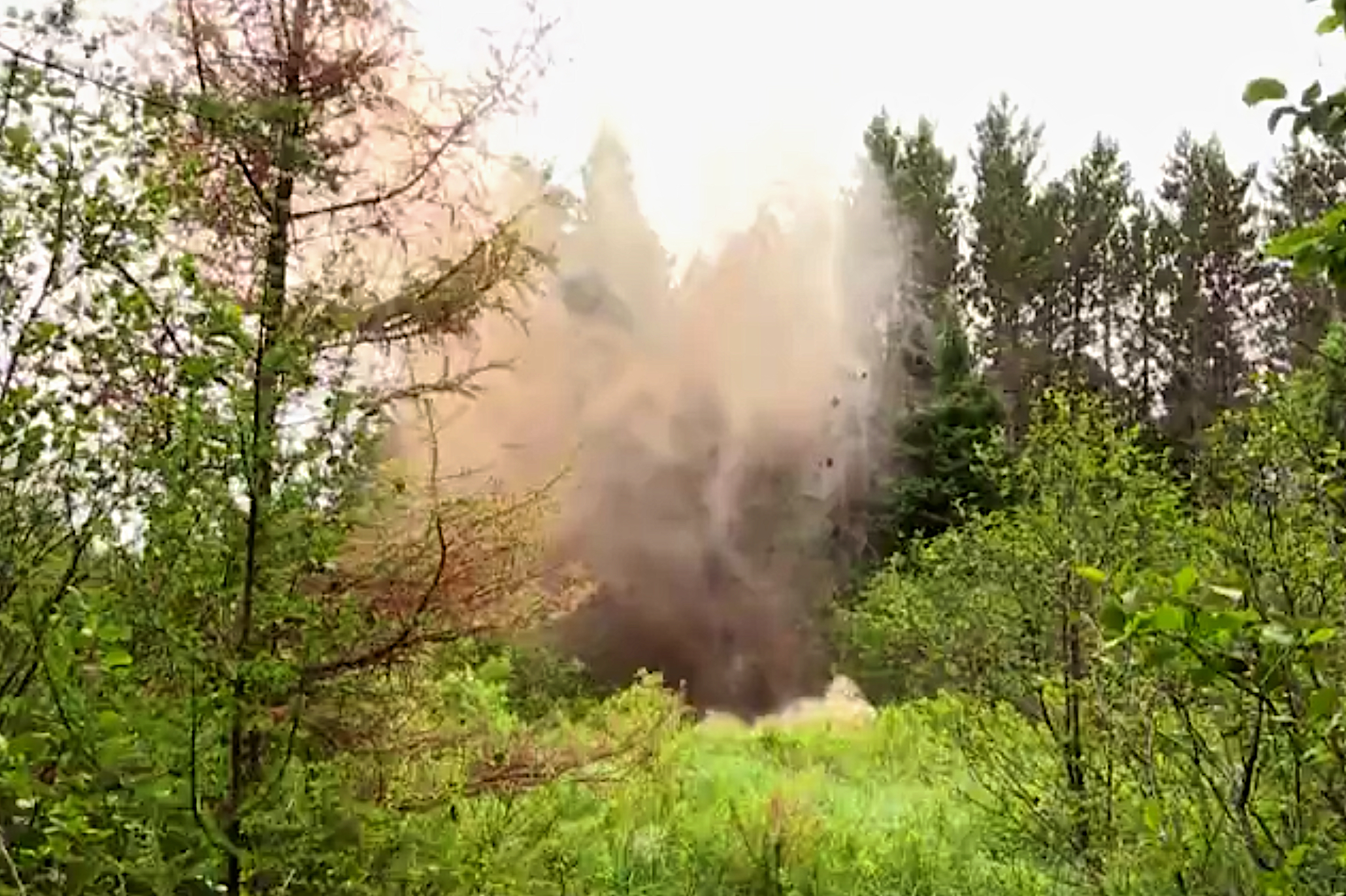
This video (see link below) showing a beaver dam being blasted sky high by Wisconsin Wildlife Services in the name of “improving habitat for trout” left us speechless. This particular detonation took place on the upper reaches of Wisconsin’s Wolf River, a National Scenic River. We’re interested to know what readers think of this strategy for managing wildlife and natural resources.

Beaver ponds such as this one in British Columbia represent biologically rich, exceptionally diverse, constantly changing micro-habitats within the larger forest.The many snags (dead trees) in this pond represent feeding opportunities for woodpeckers as well as potential cavity nesting sites for a variety pf species of birds and mammals. Eventually, this pond will become silted in, the beavers will leave, and a beaver meadow will replace the pond. These meadows, free from the shade of the forest canopy and with a bed of thick, fertile soil create places where unique species of flowers and other plants thrive. Black bears are among the many animals that visit these meadows to graze on the grasses and berries that may not exist elsewhere in the forest. The meadow itself will eventually be replaced by mature hardwood forest. So it has been in North America for thousands and thousands of years, with trout, beavers, bears and berries co-evolving.

The setting is a small stream in a Wisconsin forest. The water has been dammed by beavers. Because the pool of water created by the beavers may become too warm for healthy brook trout populations and because beaver dams can block the migration of these native trout, fishermen complained. Enter the Wisconsin Department of Natural Resources, the United States Forest Service, the Wisconsin Wildlife Services and several pounds of explosives. Although government officials occasionally remove beaver dams in order to prevent flooding of roads, make no mistake, most of these dam removals in Wisconsin are for one reason and one reason only: “The purpose of our work is to create a free-flowing stream for the benefit of the trout to be able to migrate up and down.”

See video at: http://www.nbcnews.com/video/government-blasts-away-beaver-dams-475081283719

In a recent three-year period, Wisconsin Wildlife Services removed over 2,000 beaver dams. According to the NBC News report cited above, government officials in Wisconsin use explosives on about 150 dams annually. The beavers are trapped and the dams are destroyed in order to …”(maintain)… one of the natural resources we’ve got for the public to enjoy, trout fishing…”

Barbra and I watched this video and listened to these comments with our jaws hanging open. Speechless. After about two minutes, the video came to an end.

“Wow,” was all we could manage to articulate at first. And then again, “Wow.”

For the past day, we’ve been researching this issue as thoroughly as we’re able to, reaching out to Trout Unlimited groups in Wisconsin and kicking our own thoughts around between each other. We haven’t reached any conclusions. But we do have a few observations.

If… if… the chief or only goal of environmental stewardship were to improve brook trout habitat, Wisconsin’s beaver management strategy might deserve a round of applause. Brook trout thrive in cold, free-flowing streams that feature clean, silt-free rock and gravel bottoms. Temperatures in beaver ponds can hit 70 degrees or more under the summer sun, near the upper limits of what these native char can tolerate and well above their preferred temperature range of 55 – 65 degrees Fahrenheit (12 – 18 degrees C). And because brook trout have very specific requirements for successful spawning – small, clean gravel where upwelling from springs occurs – it’s critical that they be able to access these areas during the fall spawning season.

So just blow up the beaver dams, right?

Not so fast.
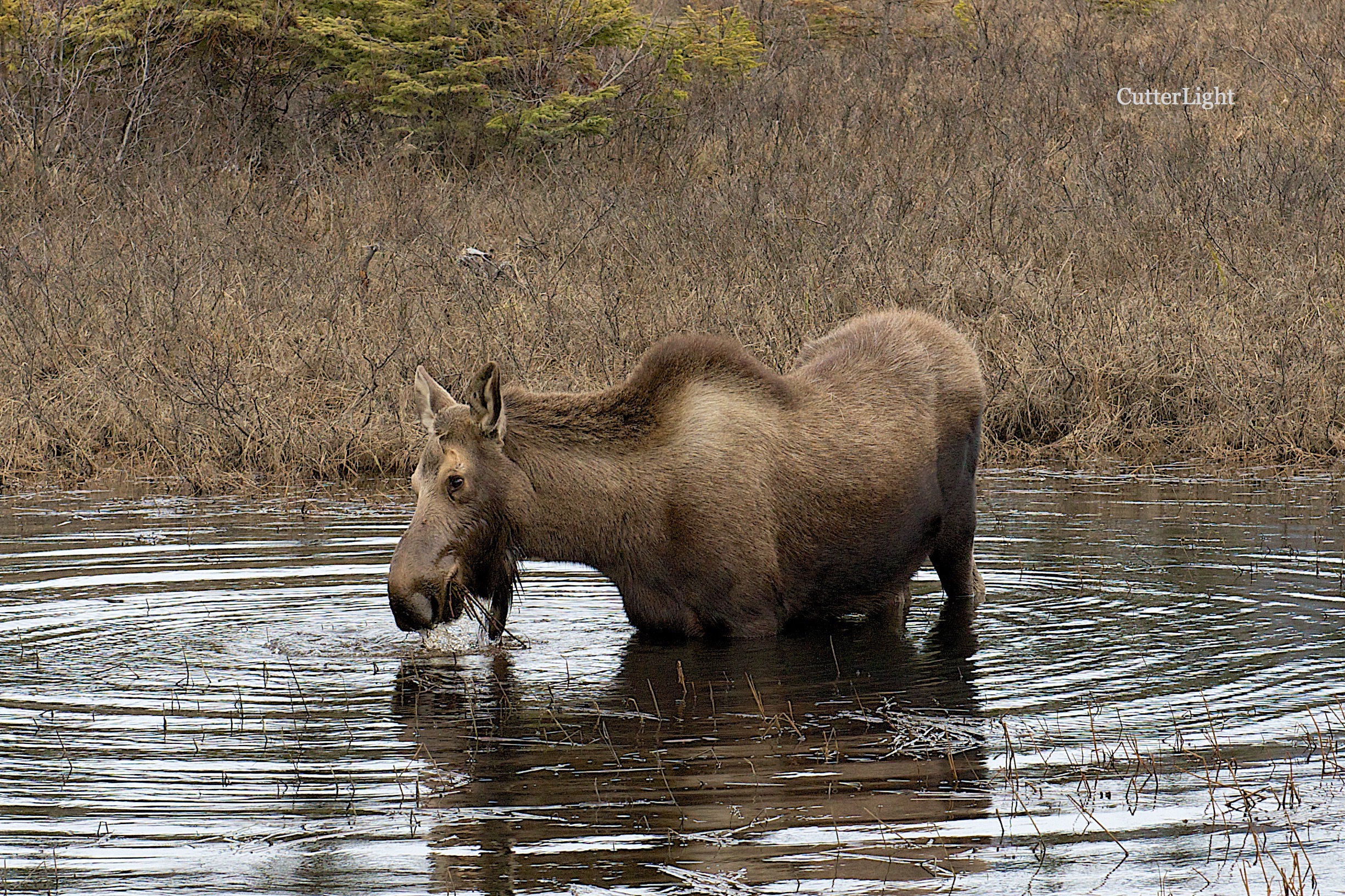
moose in beaver pond n

After a long winter in Alaska, this young moose finds a meal in the upper reaches of a north country beaver pond.

Beaver ponds represent dynamic, ever-changing micro-habitats that foster some of the greatest species diversity in the forests where they are found. We’re for biodiversity. As much as we enjoy trout fishing, we would never wish that our desire to catch a particular species of fish be placed above the overall health of an ecosystem.

During the life of the beaver pond, it can provide vital habitat for all kinds of animals. As trees are drowned, they become snags. (One Wisconsin DNR report stated simply that “beaver dams kill trees” – an example of how a statement can be both completely true and completely misleading. Dead trees are part of every healthy forest.) Pileated woodpeckers and other woodpeckers utilize these snags as forage bases and nesting sites. The cavities woodpeckers create in turn become nesting sites for flying squirrels, owls, wood ducks, and host of other mammals and birds. Meanwhile, these ponds become important stop-over or seasonal habitat for a variety of waterfowl and often attract shore nesting species. Tree swallows, flycatchers and similar passerines thrive in the edge habitat created by the beavers’ activity. Again, the snags provide nesting sites, and the cleared airspace above the insect-rich pond creates excellent feeding opportunities for insect eating birds as well as for bats.

The pond itself becomes one the most biologically rich systems in the forest – perhaps the most biologically rich. Everything from burrowing mayflies to dragonflies and damselflies to a variety of aquatic beetles inhabit these waters. Amphibians such as newts, salamanders, toads and frogs depend on these these ponds as well, which provide vital nurseries for their young. Aquatic and semi-aquatic snakes take advantage of the smorgasbord, and in turn may provide a meal for a hawk. Deer, moose, turkeys and grouse are among the frequent visitors to the edge habitat found along the shores of beaver ponds.

Silt prevented by the dam from moving downstream eventually creates a rich bed of mud which in turn fosters the growth of aquatic vegetation. This vegetation may provide a meal for a moose or a migrating duck, a nursery for the young of certain fish species, a place for a tiger salamander to attach its eggs, or an ambush post for a predacious diving beetle. What’s best for trout is not necessarily best for the countless other species that depend on the habitat created by beaver ponds. Healthy stream and forest systems feature a variety of habitats.

One of several stunning flowers we photographed last summer along the shores of a beaver pond.

Moreover, because these dams cause water to pool, some of that water percolates down into subterranean aquifers. This should be an important consideration in a state that is rapidly pumping its aquifers dry. The particular stream in question, the upper reaches of the Wolf River, becomes vital lake sturgeon spawning habitat further down river. As the underground aquifers beaver dams contribute to resurface in the form of springs further downstream, these springs cool the main river, which helps ensure that lake sturgeon spawn successfully. Take away the beaver dams upstream, and you take away a piece of a complex system which countless species have evolved to thrive in.

Eventually these ponds become overly silted, increasingly shallow and the beavers move on. Over time, the dams break up, the stream cuts a familiar channel, often finds a rock bed again. What’s left behind is a beaver meadow – a place with thick, rich soil capable of supporting an incredible variety of trees, flowers and grasses. For the overall health of the forest, it’s a good thing that these dams retain forest soil. Butterflies take advantage of the abundance of flowers, deer and bears come for the grass, and the snags – the trees that died when they became flooded – continue to provide nesting sites for a variety of animals till the day they fall to the earth and become nursery logs.

It’s important to keep one other fact in mind. Salvalinus fontinalis, the native char most fishermen refer to as the brook trout, has been co-evolving with beavers and beaver dams for longer than humans have been on the North American continent. This sudden need to “manage” wildlife is an outcome of an ongoing series of humankind’s mismanagement of this planet.

All this being said, it may appear that we’ve made up our minds on this issue.

We haven’t.

Between the absence of sufficient natural predation and insufficient economic incentive for more beavers to be trapped for their pelts, we understand that it is entirely possible that Wisconsin’s beaver population is out of balance. This would seem to present three options:

  1. Reintroduce predators and foster the growth of their numbers. Predators? That would be wolves. The problem with that strategy is that wolves historically have been more interested in ungulates such as deer and moose (and even in voles and mice) than in beavers. Prior to European settlement, the population of beavers in North America is estimated to have been between 60 and 400 million. There were lots of wolves back then, too. They apparently weren’t eating many beavers.
  2. Continue the present strategy. Where beaver dams appear to be negatively impacting brook trout habitat, kill the animals and tear out their dams. If the dams can’t be broken up by hand, employ explosives.
  3. Do nothing. Let it go. Enjoy the biodiversity beaver ponds foster. If the natural activity of beavers temporarily (or permanently) makes a stream unsuitable for brook trout, rest assured that the habitat is probably becoming just right for other species. Find another stream to fish, or tie up some Clousers and go bass fishing.
  4. And if anyone is really concerned about rising temperatures in streams, maybe consider getting rid of your air conditioner, installing double-paned windows in your house, and locating in a place where you can leave your car at home and walk to work, to the grocery store, and to your friends’ homes.

We’re sure there’s more to the beaver situation in Wisconsin than we currently realize. We’d love to hear what others think. Thanks for reading.

Sincerely,

Jack & Barbra
Plastic Seas: From Water Bottles to Cigarette Butts, It All Becomes Tiny Particles, and It’s the Tiny Particles that are Most Deadly

jellyfish micro purple n

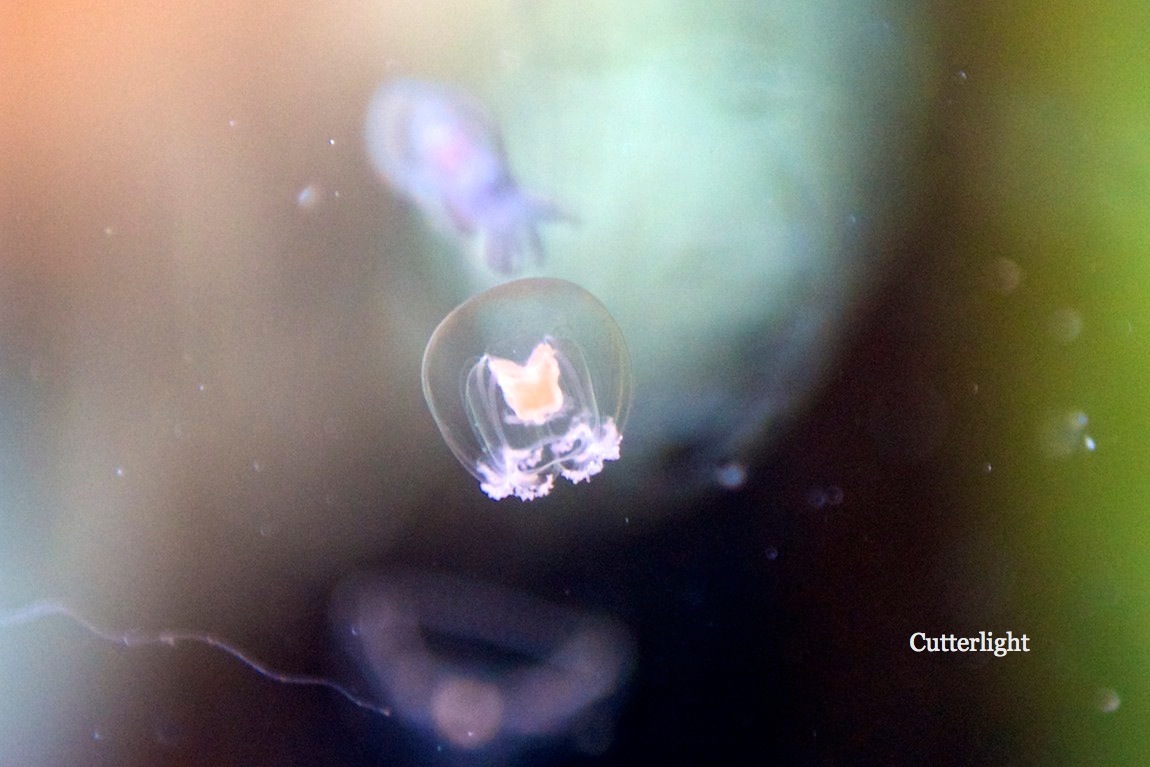
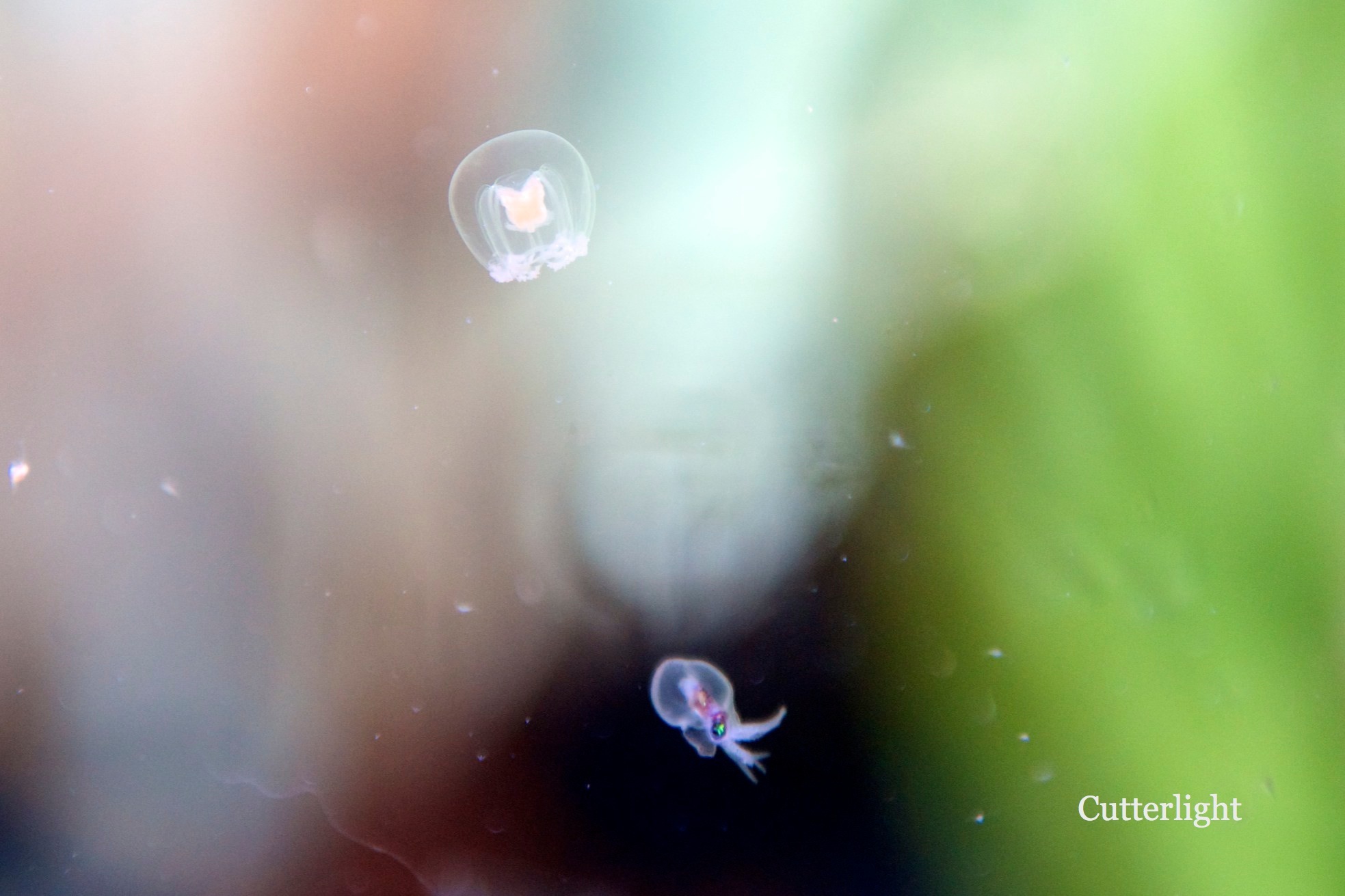
This tiny jellyfish and the octopus behind it are about the size of a pencil led, translucent, and barely visible to the naked eye. Key species near the base of the food web such as herring, sardines, menhaden and mullet routinely ingest plastic fragments as they filter the water for the nutritious plankton they feed on. 

herring pacific sealife center n

Pacific herring feed by facing into the current, hanging their jaws open, and sifting out tiny plants and animals. As plastics break down into fragments – as all plastics from discarded shopping bags to cigarette butts eventually do – the fragments mix in with the rest of the planktonic drift and are consumed by small fish… which are in turn consumed by larger fish, whales, sea lions and us.

squid micro eye n

The tethered balloon that slipped from a child’s hand

The monofilament net the fisherman left hanging on a reef

The cigarette butt that doesn’t matter

jellyfish micro blue orange n

and shopping bags,

and Christmas ribbons,

and cups used only once

and the plastic packaging

inside the shopping bags,

the throw-away toys

inside the Christmas package

the straws and the lids on the used-once cups

are smothering our oceans

and everything in our oceans

and us.

These photos were taken at the Seward Sea Life Center in Seward, Alaska. Visit an aquarium today to learn more about what you can do to help keep our oceans clean and healthy.

jelly fish n squid micro a n