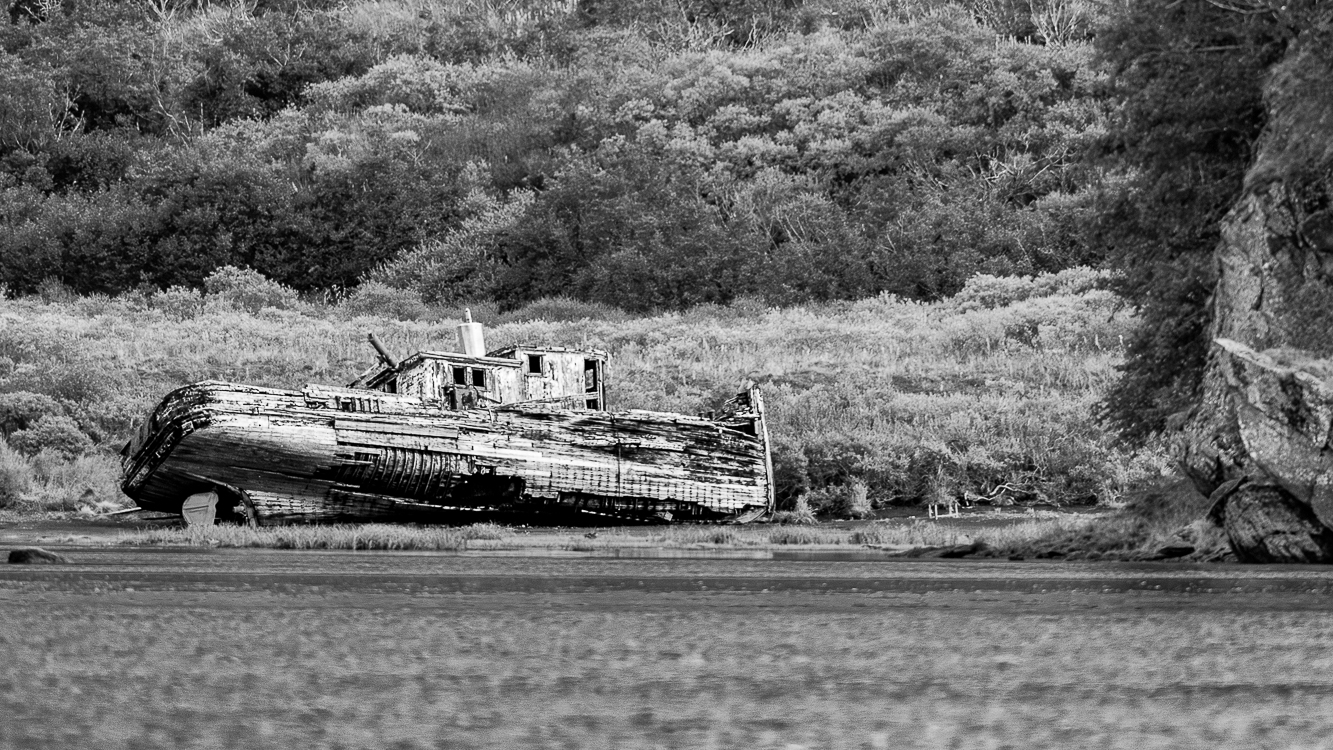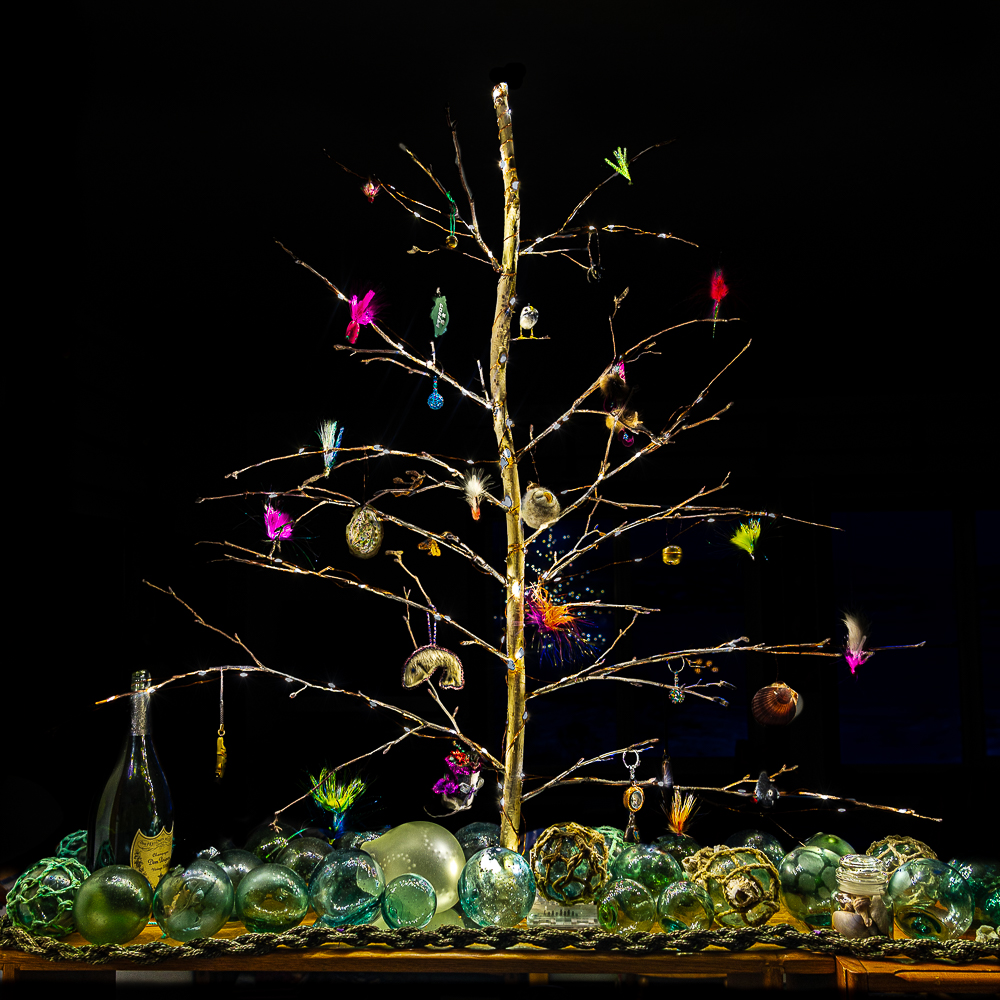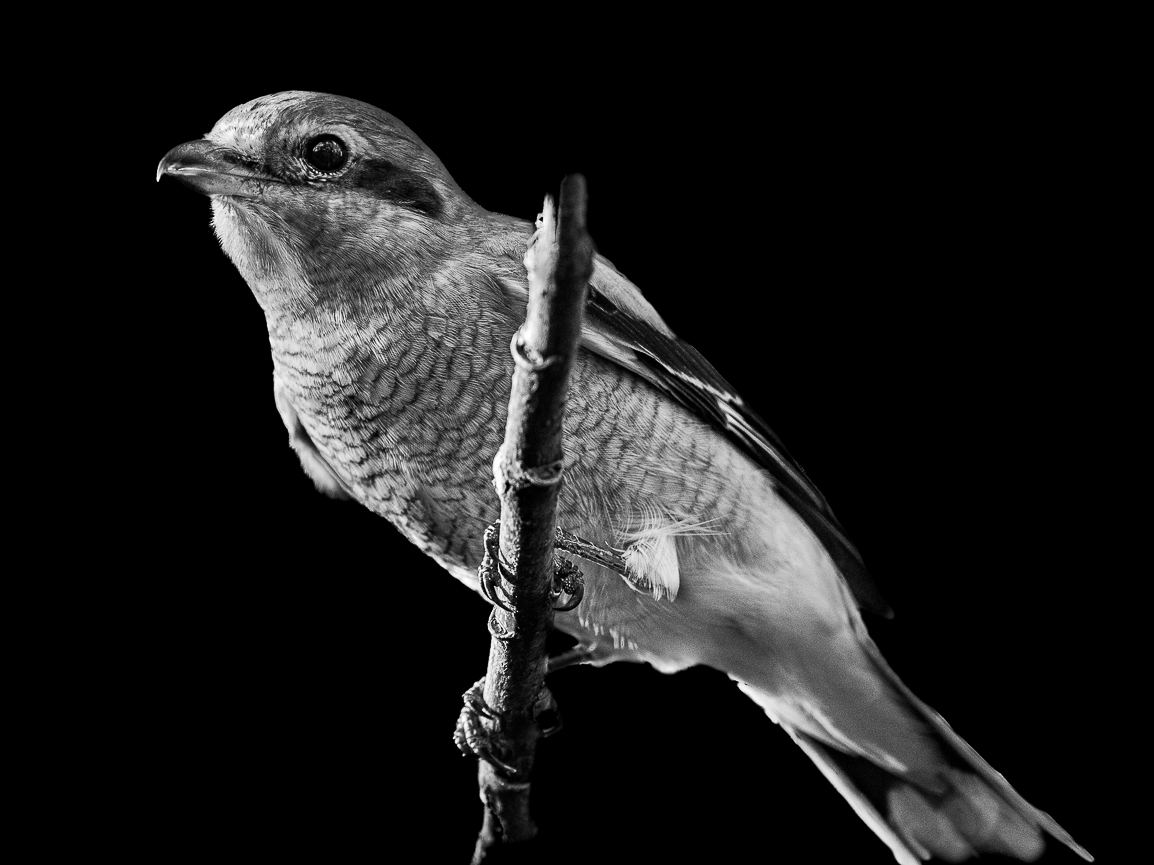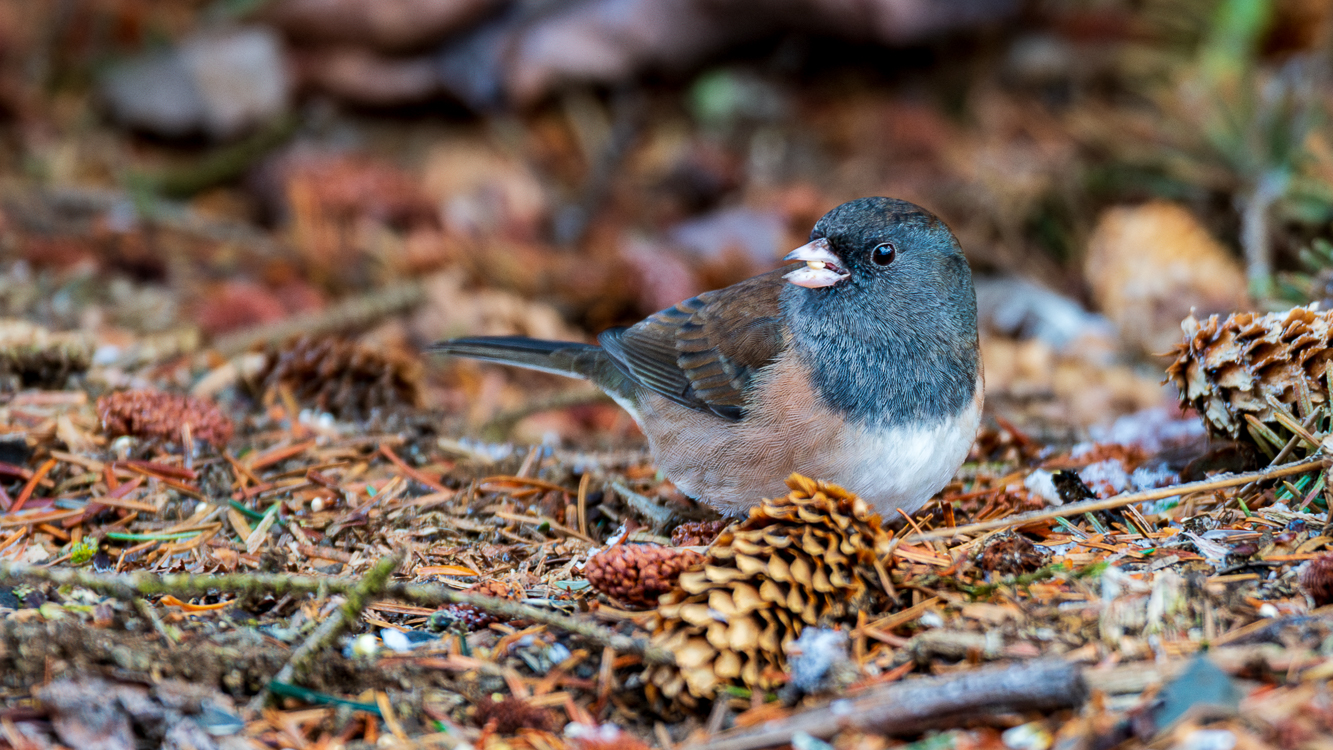
Van Gogh and company at Cutterlight wish our readers a Happy New Year and all the Best in 2024!
If you’re reading this, you are among more than six thousands subscribers and countless additional readers who have popped in at one time or another over the years from virtually every country on the planet. We truly appreciate it! Thanks! Barbra and I wish you and yours all the best in 2024. Van Gogh? An old friend from Chignik Lake. - Jack & Barbra Donachy, Cordova, Alaska
Our Town – Christmas Night, 2023. We went out last night, after the snowfall, before the breeze knocked the snow off of things, to make a few photographs of our town at night. This picture was made from about the middle of Main Street looking south. My objective was to make a photograph that evokes nostalgia for small-town America. I captured and created several images including some abstracts. I’ll show some of those in future posts.
My love of fire and firelight goes back as far as I can remember. At a young age, I was shown the trick of how to safely pass my fingers through the white of candle light. Later, I learned how to squeeze orange oil from peels onto candle flames to make sparkling sprays of orange-scented light. Learning how to build and tend a fire in our home fireplace followed naturally from those early lessons.
On a December night that could scarcely have been more perfect, I was reminded of these and other happy fire-connected memories as I tended our celebratory solstice spiral fire. Just as we finished setting up the spiral, full darkness descended beneath a cloud-filled sky. As we huddled near the center fire, our breath came out in thick clouds and distant Christmas lights illuminated the far shore of Eyak Lake. A street light flicked on and large snowflakes began to fall in dense, fluffy flurries. The street lamp created magical beams of light that cut through the tall spruce and hemlock forest surrounding the luminaria spiral. I found myself encircled in magic while performing what is probably my favorite job – tending a fire.
I spent many of my growing-up years in California. In sort of a funny irony, the house I lived in had a big fireplace. Of course, as a Californian, once the temperature hit 50° F, it was time to warm up the “chilly” house with a cozy fire. As most of the heat was drawn up the chimney, maybe a fireplace was a perfect adornment to a California home. I spent many winter days and nights close to that fireplace – basking in the warmth and staring into the coals as they assumed ever-changing shapes and fueled fiery imaginary scenes. I had been taught how to build and tend the fire, and so was allowed to stoke and feed it without supervision. There was always something so magical in this activity that I never tired of it.
This pyrofascination continued into my adulthood. I think my prowess in fire tending might have been a selling point to Jack. One of our first adventures together was a camping trip up the West Coast. Looking back, I now believe that the trip was a test. We set up camp the first night. Like a well-choreographed dance, we seamlessly set up the tent together, after which we divided the camp tasks. Jack set up the camp kitchen while I went about making a fire inside a rock-lined circle. I quickly created a small kindling pile topped with a teepee of larger wood. In no time, I had a roaring fire going. Jack was pleasantly surprised. Test passed with flying colors!
It’s been almost fourteen years in Alaska now. Life here has given me an appreciation of the loss and gain of sunlight as the months come and go that I never had in California. When we lived above the Arctic Circle in Point Hope, after Winter Solstice, once the sun again showed above the horizon in early January, we gained an incredible six minutes of sunlight every day. It was as though the sun was racing toward us. By mid-March, we had gone from the total dark of early January to nearly 12 hours of daylight; by late June, the sun never left the sky. In the different places of Alaska we’ve lived, of course, the increase of daylight hours came at different paces. But it is universally true that summer days are long and winters are dark. Regardless of the pace at which the sun returns after solstice, just knowing that daylight is now increasing adds an extra spark of happiness to each day.
We wish you, our readers, many sparks of happiness as we are coming back into long light-filled days. Happy winter solstice!
Spirit Bird– The day we arrived at The Lake, I heard the cry of a bird unlike I had ever heard. I’m not sure how I knew, but I knew. Shrike. I looked up to where it was perched on a utility wire. “Uncommon to rare,” according to Sibley. At the time I didn’t know much about photography or birds, but in that moment I understood that I was in a special place and that there was work before me. And so I ordered a new field guide and a copy of the Cornell Lab of Ornithology Handbook of Bird Biology (716 pages, more a tome than a handbook), acquired a long lens, and began.8/27/16
Fireweed, Our Summer Calendar. (Autumn Soon). We arrived at The Lake for the first time on August 1, 2016. The next few days were devoted to unpacking. Most of the Fireweed blossoms had become the thin reddish-green seed pods you see below the last of the flowers clinging to the tops of stalks. August 5 when I made this, our first photograph at The Lake. Autumn soon.
Fuchsia-colored Fireweed blossoms near the very tops of their stalks, leaves coloring with autumn, mark the calendar at mid to late August at The Lake. Initially, we attempted to save a little money by cramming ourselves into a one-bedroom apartment but soon found we were spilling out of that and moved into a larger two-bedroom place. But this was the view from that first place, looking down the lake toward the beginning of Chignik River. Maybe 60 people living in the village at the time, Sockeyes still running strong, the first Silvers beginning to trickle in. Bears on the beach nearly every day. Still, in mid-August, 15 hours of daylight. It was glorious. Our back yard. Home. 8/15/16
Sawbill: Red-breasted Merganser with salmon parr catch, Chignik Lake, Alaska, 12/31/16. One of my first photos of this species. Note the formidable serrations on the bill, hence the colloquial “Sawbill” sobriquet. The image, as it pertains to The Lake, is somewhat misleading as a piece of documentation. In my observation, our diving ducks were far more likely to make a meal of sticklebacks than of salmon parr.
It has been a daunting task, going through not merely thousands, but tens of thousands of photographs Barbra and I have taken during the 16 years of our marriage. In the early days, I did not shoot. It took Barbra’s coaching to instill in me the confidence to pursue a photography dreams I had set aside long before I met her.
Recollections grow blurry with time. Add to that the fact that we often didn’t see what we may think we saw; that frequently we didn’t experience what we thought we experienced. Anyone who has ever faithfully kept a journal and then gone back later to reread events recorded there will invariably think to themself, “Huh… that’s not the way I remember it,” a firmly held memory tripped up by one’s own written record. No one can accurately write about their own life and pretend that it is some sort of self-biography.
All memoir is fiction, and rightly belongs in that section of the bookshop or library next to other novels. It is folly to call memoir “autobiography” and tuck up next to the truer stuff of biography. With that understanding, we proceed.
Four months into my 12th year, the fall of 1971, I discovered on my father’s bookshelves A. J. McClane’s McClane’s Standard Fishing Encyclopedia and International Angling Guide a 1,057-page tome that changed my life and in retrospect provided a vital stepping stone along a path that led to The Chignik. Filled with angling lore, photographs, fish recipes, fly patterns, fly-rod theory, and species by species, state by state, country by country descriptive synopses it was, from the time it was published in 1965 on through the 1970’s, the one volume virtually every serious student of angling had on their shelves. The color plates featuring dozens of flies, accompanied by recipes for their patterns, made the book a must all by themselves. It was from that book, at the age of 11, that I learned to tie an Alaska Mary Ann, a fly of no meaningful application on the Brook Trout and stocked Rainbows and Browns of my Pennsylvania youth, but which I kept in my fly box as a kind of talisman holding within its wisp of white calf tail wing, jungle cock eye and silver tinsel ribbing a life I dreamed of.
I wasn’t permitted to be in the small library where McClane’s was shelved, but arriving home from school each day well before my parents returned from their teaching jobs at the local state college gave me an hour or so of privacy with this wonderful book before the sound of the kitchen door opening signaled me to spring up from the oriental carpet where I’d been kneeling over the book, return it to its place, quietly ease the den door shut, slip out of the room and sprint up the stairs to my bedroom. Minutes later, I would come back down the stairs and find my parents in the kitchen. All the while my younger sisters would have been in the downstair TV room, glued to and hypnotized by reruns of Gilligan’s Island and similar fare.
Anyway, at some point it came to me that 1) angling connected the world as did virtually no other pastime, far more widely and passionately practiced than anything else I could think of and that 2) A. J. McClane, editor-author of this massive compendium of angling expertise, angling editor of Field and Stream magazine, regarded as the foremost angling journalist of his time, would not live forever. Someone would become the next A. J. McClane.
Why not me?
My first mistake in attempting to embark on this journey was to share this dream with my parents. She put a needle in the balloon of my hopes with a single syllable laugh. He dismissed my aspirations with the same two-word opinion he voiced anytime I expressed a hope or goal. You’re delusional.
Nonetheless, when I mentioned to him the book I’d found and asked to borrow it, he allowed me to take it to my room. I doubt he had ever read more than a few pages out of it and probably hadn’t touched it in years. So the book became mine, and I pored over it. That Christmas, I once again engaged in the annual futility of asking for a for Christmas present. I wasn’t allowed to cook in her kitchen, so for the immediate future I had no means of beginning to acquire McClane’s culinary skills, but a friend of my father’s had recently taught me to tie flies and to cast a fly line and I was getting the hang of all that. I needed a camera. The little bit of money I’d made painting my godfather’s garage that summer had already been spent on clothing for school. So I asked my college educated, college teaching parents for a camera. “That’s all I want,” I told them. “I need a good camera. Don’t get me anything else. Just a good camera.” I supplied them with a specific model that was popular at the time. I suppose the term for what I was hoping for would be an “enthusiast’s” camera – something of sufficient quality to learn with.
I should have know better, having been through this charade with them every Christmas of my sentient life. That year, in addition to the usual packages of underwear (for Christmas… sigh… I should have given her a dusting cloth and a can of Pledge), there was the usual assortment of stuff I had no use for – enough of it that, added together, it would easily have paid for the camera I had pleaded for along with many rolls of film.
There was a camera… a Kodak Hawkeye Instamatic II… a ridiculous “all plastic” model from which it was impossible to coax a decent image. The camera was a promotional gimmick available for free at department stores. Purchase a couple rolls of film and a couple more of “magic cubes” flashcubes, and Kodak made money off of it. I have an image in my head of showing the camera to an uncle who was a skilled amateur photographer and the way he silently turned it over in his hand as though trying to make sense of it while searching for something positive to say, finally concluding that there was nothing to say before simply saying “Here you go,” as he handed it back to me and turning a quizzical look toward his sister. That spring, on a trip to Washington, D.C., I saw seven and eight year olds with the camera. It was of no use to me.
Lacking the means to pursue McClane-esque dreams on my own and with no support to be had from my parents, I honed my expertise in one of the great gifts I learned living with them: the art of turning my attention elsewhere. Along any path, on any journey, one is likely to encounter obstacles. The ability to find a path around those obstacles, to continue moving forward in life, cannot be overestimated in its value. Resilience. Head up, looking for an open window when a door is closed. My parents did not mean to teach me this art; I’ll never know exactly what their intent was. But the art of moving forward is the finest thing I learned while negotiating my way through life with them.
Years passed. Decades. I never completely got the idea of photography out of my head… but it seemed that the older I got, the more trepidation I had about picking up a camera and beginning to learn. When a friend invited me to attend a photography exhibit during a visit to L.A., the art I was looking at seemed so far beyond anything I might be capable of that, then in my 40’s, I concluded I would never by a photographer.
Enter Barbra.
When I began seeing her, she was shooting with digital bodies matched with an assortment of lenses. She’d taken classes at the college level, and in the pre-digital era had converted a closet into her own darkroom. It was all way beyond me, but I couldn’t conceal my curiosity. Cueing off my obvious interest, she repeatedly encouraged me to give it a go. With feelings tugging me in contradictory directions, initially I demurred. Months passed before I worked up the courage to finally ask her to show me how her D90 worked.
That seems like a lifetime ago. Year by year, new skills, new knowledge and growing enthusiasm have led to acquiring ever more sophisticated gear – and, in this digital age – an ever growing body of images. Using Lightroom (think of it as a digital darkroom with a searchable database and library) to retouch and catalog these images, I’d been doing a steady job of keeping up with our pictures till a disaster of the most fortuitous kind struck.
While transferring Lightroom files to a new computer, we wiped out all the key-working and all the edits. Countless hours of work vanished.
Turns out, that was a good thing.
Because my original key-wording was a mess. I didn’t initially understand that “key word” is best thought of as a, single, word. So I had photos tagged with long phrases, and hence a long list of keyword phrases which resulted in a headache of cluster and a difficult to search data base.
The photo retouching I had done in those days was subpar as well. Practice makes better. The more retouching I performed, the better I became at it. Not only that, my eye developed. Even before we lost all those edits, looking back on my files I was beginning to see that my early edits needed work – that in many cases, I would be better off resetting the photo to its original state and starting over.
So…
At this point, I’ve gone through our scanned photos, wedding photos, Sacramento Days, Alaska-Canada Highway, Seward Summers, Shishmaref, Point Hope, Mongolia, San Francisco. Along the way, I eliminated thousands of pictures, key-worded and retouched the keepers… and continued learning.
At last, I have reached the tens of thousands of images we created at The Lake. My view is that if a picture is worth keeping, it’s worth cataloging so that it can readily be located, and it’s worth retouching (cropping, adjusting exposure, hue, vibrance, contrast, sharpness) to bring out its best qualities. I have a friend whose father left behind, at death, thousands of photographic slides. “What am I supposed to do with this?” he said, mild exasperation in his voice as he motioned towards cabinet drawers jammed full of uncatalogued slides.
Either hire someone to go through and curate them or make a bonfire, I suggested.
I can’t bring myself to add up how many photos are yet to be finished. When climbing a mountain, a glance at the summit should be enough; after that, it is best to keep one’s eyes on the path just ahead.
Seven year’s of images from the Alaska peninsula, plus our bicycle trek in Hokkaido and other summertime adventures during those years. But it’s good work, the kind that puts a smile on my face as I revisit happy memories. I confess that I teared up when I opened the first image from our Lake years – an aerial landscape of endless, jagged, snow-capped peaks as we flew down the Alaska Peninsula for the first time to live among Alutiiq Native Americans in a tiny wilderness village along one of the world’s last, great, seldom-touched salmon rivers. The extraordinary fly-fishing that followed; the bird project; the flowers and wildlife and landscapes and people.
I’ll continue to post a photo each day or so from this massive library – a sample of those that I really like. My hope is to finish sometime this spring, at which point I’ll be ready to move forward with the next project.
Check for Stone Sheep in mountainous areas along Alaska-Canada highway in Northern BC and Yukon Territory. The big rams sport impressive curling horns, but the young males, females and lambs are cool, too. Those eyes. July 12, 2012