Unknown's avatar

About Jack & Barbra Donachy

Writers, photographers, food lovers, anglers, travelers and students of poetry

Rothko Sunrise, Point Hope

Sunrise, Sunset – Point Hope, Alaska November 19, 2011

One hundred twenty-five miles north of the Arctic Circle, on this date there still remained four hours and three minutes of daylight in Point Hope’s sky. This late in the year the Chukchi Sea was blanketed in ice, the sun barely ascending above the horizon. From November 18 to 19, nine minutes and 52 seconds of daylight were lost. The following day, ten minutes were lost – an additional eight seconds. The next day, 10 more seconds of light disappeared. And so it continued, darkness gathering momentum toward December 6 when the sun vanished, leaving only a glow on the horizon. The sun remained down for 30 days until January 6 when it peeked above the frozen sea at 2:03 PM and remained barely visible for 19 minutes and 20 seconds.

I first encountered art in the style of Mark Rothko’s colorfield paintings (a painting by an art student at the local college) in my teens. Like many others, I was fascinated by the juxtaposition of colors. I would shoot this scene differently now… but will most likely never get the opportunity. Happy to have been there, seen it, and come away with this photograph despite its imperfections.
The Swans at Broad Pool

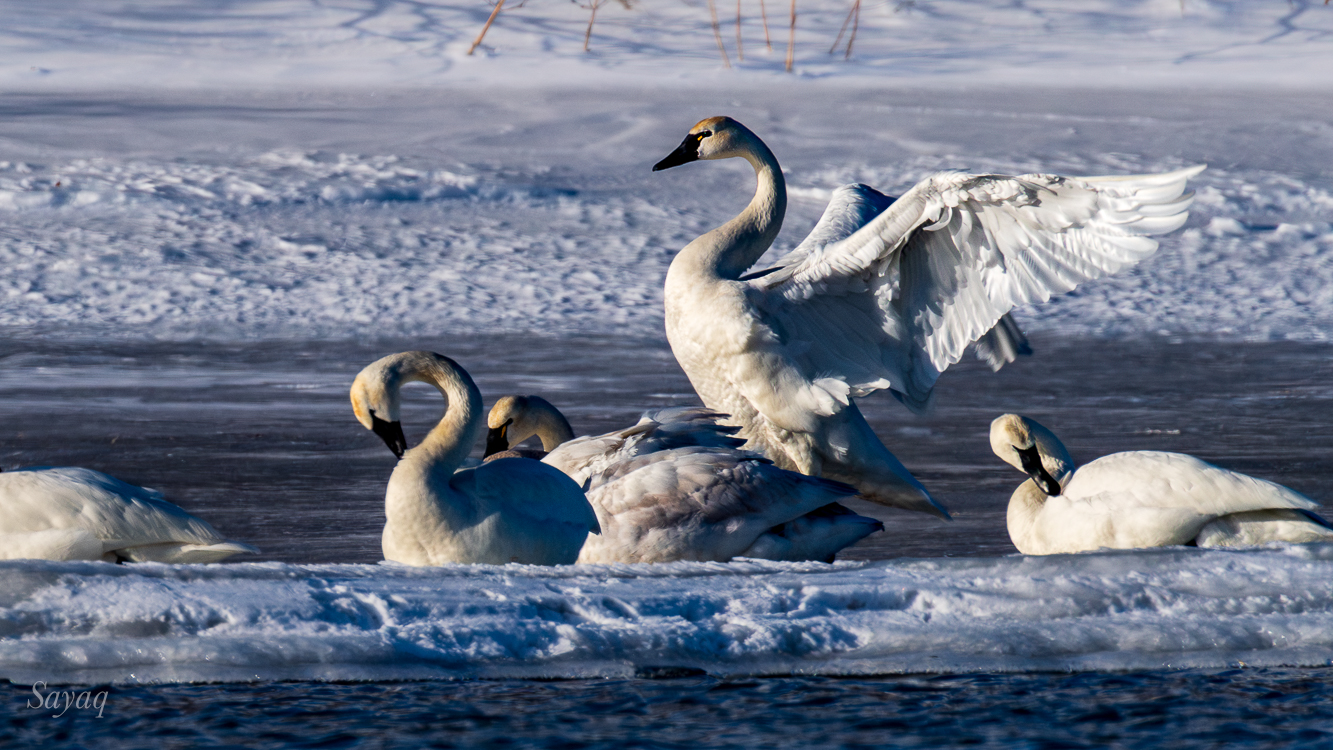
The Swans at Broad Pool Chignik River, 3/16/17
Each March, residents of Chignik Lake begin checking Broad Pool for early signs of spring – arriving flocks of Tundra Swans. The best swan viewing occurs in years when the river is partially iced over and therefore closed to boat traffic. This expansive pool has abundant Water Crowfoot, an aquatic vegetation preferred by swans and dabbling ducks. The swans, which mate for life and can live to be over 20 years old, will rest here and in other quiet water in the Chignik Drainage for up to a few weeks before breaking off in pairs and heading to tundra nesting sites on the Bristol Bay (northwest) side of the Alaska Peninsula. As human activity continues to cause the planet to warm and years of ice become fewer on the Chignik, Broad Pool may no longer provide a suitable resting place for returning waterfowl. Things are changing… fast. Get out and observe, photograph, document.

At First Sight…

Portrait of a mated pair of Sandhill Cranes facing each other in a field of flowers somewhere along the Alaska-Canada Highway... a Valentine's Card, #love.
At First Sight… We came upon this pair of Sandhill Cranes somewhere along the Al-Can – the Alaska-Canada Highway – on a drive north to Alaska. I’m always reminded of my first date with Barbra… the pink jeans she wore. I like the way the male crane’s beak is hanging open… a proper response.
Happy Valentine’s Day – for all you love
July 20, 2012

Spring Green

Spring Green Female in the lead and the trailing drake’s head lit up in the iridescent green that has earned the species the vernacular sobriquet “greenhead,” a pair of Mallards coast in for a landing on the Chignik’s Broad Pool. About a mile downriver from the village of Chignik Lake, the pool covers over 16 acres – approximately the size of 13 football fields including the end zones. Shallow and weedy, it is gathering place for returning springtime migrants such as Tundra Swans and genus Anus ducks (Mallards, Green-winged Teal, American Wigeons and Pintails). Slowly going through The Chignik Files, if and when I come across a good picture of Broad Pool, I’ll be sure to publish it. Since I’m in a March file right now, I am certain there will be photos of Tundra Swans, so look for a photo or two of these regal harbingers of spring in the near future. (March 14, 2017)

Knighted by a Finch

Male Pine Grosbeak, Chignik Lake, Alaska, February 3, 2017
Actually not grosbeaks at all but a member of the finch family, their large beaks are useful for feeding on leaf buds, much as ptarmigan which have similarly robust beaks.

I had only recently acquired the kind of camera equipment necessary for serious avifauna documentation when one fall morning as I was walking through the village, 20 pounds of camera, lens and tripod slung over my shoulder, a flock of Pine Grosbeaks descended all around me in the willows, scrub alders and salmonberry brakes along the dirt road. I knew the species from books but had never encountered them. Keen to get photographs, I set up to shoot. No sooner was I in position than one of their tribe flew over, rested for a moment on the long lens of my camera, and then hopped onto on my head. A passage from Walden came immediately to mind:

  “I once had a sparrow alight upon my shoulder for a moment while I was hoeing in a village
  garden, and I felt that I was more distinguished by that circumstance than I should have been by any epaulette I could have worn.” (Thoreau, Walden, “Winter Animals”)

I quickly made photographs documenting the species’ presence in that part of the world (David Narver did not observe them in the Chignik Drainage during his field work in the early 1960’s, and they are listed as “rare” or “uncommon” on peninsular checklists), but the species proved to be common in the years we were at The Lake and year by year I improved on those first pictures. As I continue sorting through the many thousands of photographs comprising “The Chignik Files,” I will show other photos of these beautiful finches… the Cardinal of the Far North.

Superb Owl Sunday!

Boreal OwlDenali National Park, June 6, 2017

I’ve gone around knocking on hollow trees most of my adult life, hoping a flying squirrel or owl would pop it’s head out. And then one day, it happened!

Down the Hatch!

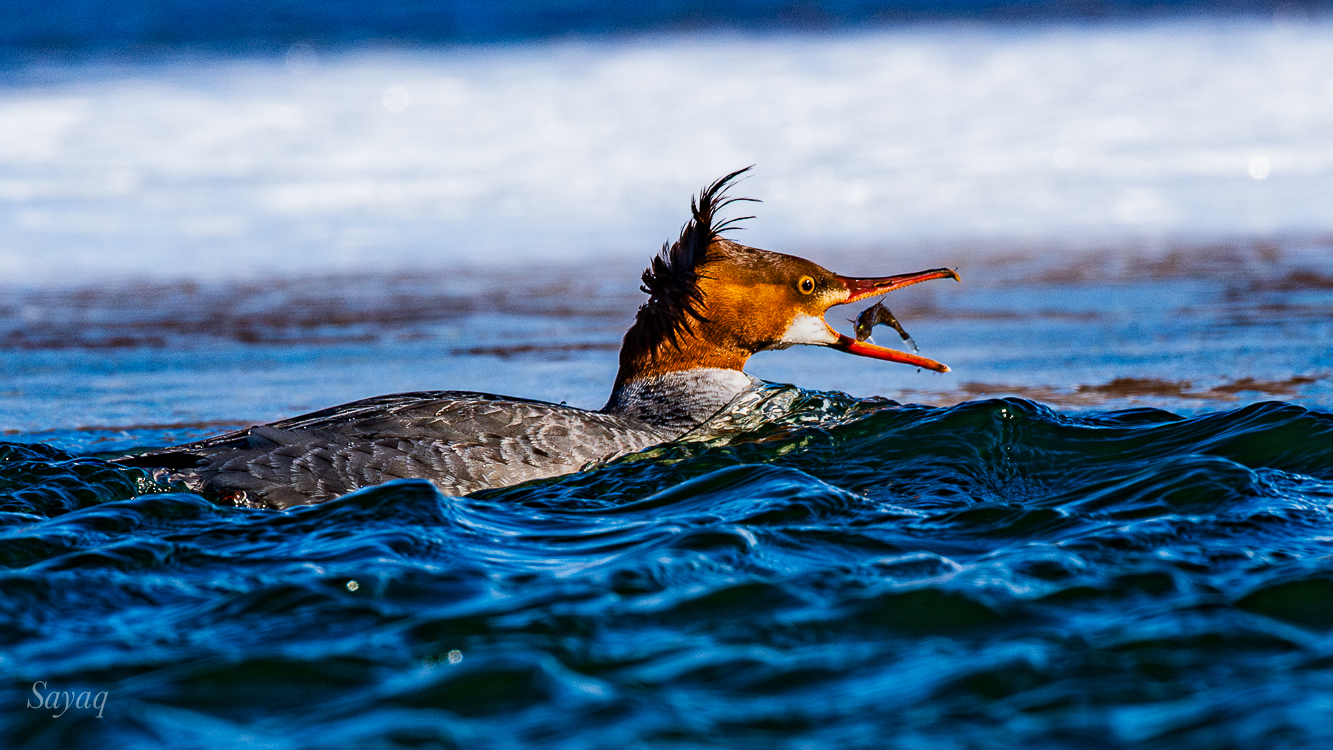
Down the Hatch!Female Common Merganser flipping and turning a Three-spined Stickleback to gulp it down head first. Chignik Lake, March 14, 2017

Tommy Woodpecker

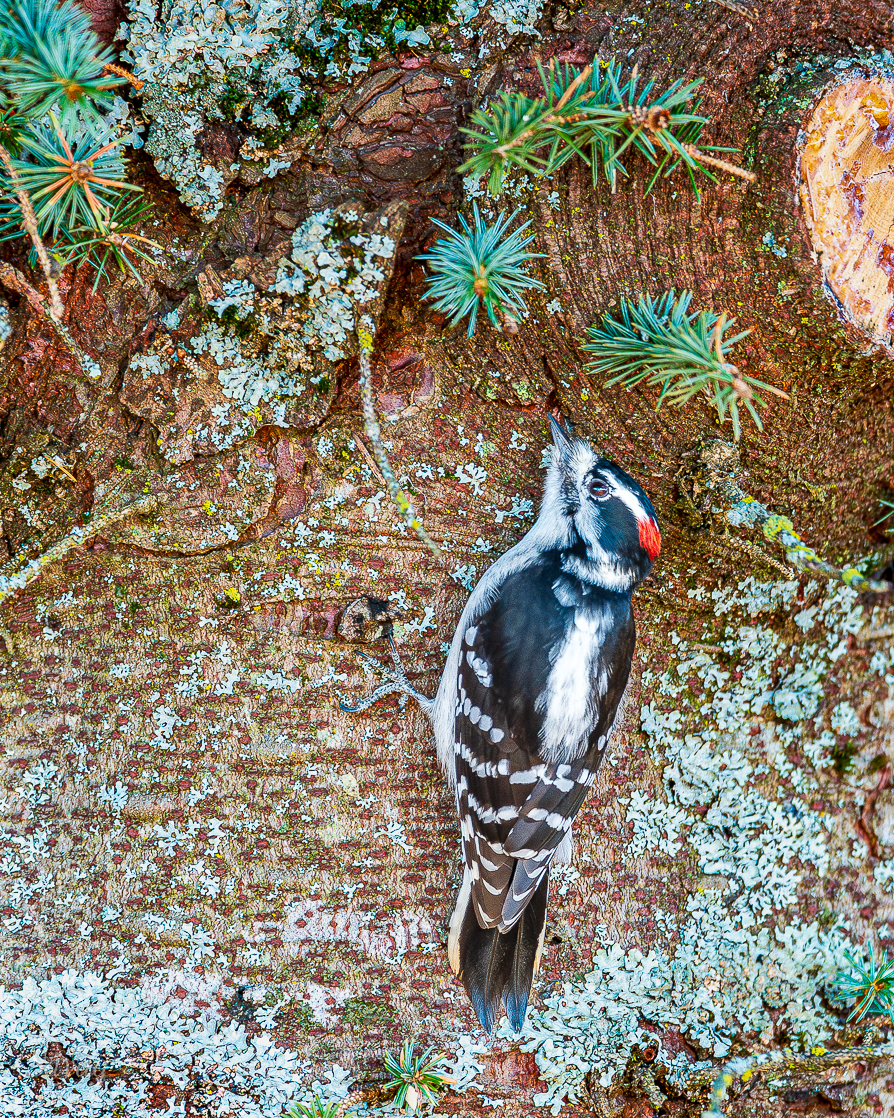
Down Woodpecker, Sitka Spruce Gove, Chignik Lake, AK, 12/30/16
The red crown distinguishes this specimen as a male. Note the blue tint on the tips of his tale, an iridescence not often so easily observed in Downies. Like other woodpeckers, Downies use their stiff tail feathers as a kind of third leg to provide leverage is they drum or search tree trunks for insects.

It is suggested in T. Gilbert Pearson’s Birds of America (1917) that the moniker Tommy Woodpecker would better suit North America’s smallest member of the woodpecker tribe “…for his boyish, buoyant disposition makes friends for him wherever he goes.” Perhaps for a moment we can set aside the sexism and celebrate an era and it ornithologists who took such a personal and personified approach to avian studies. I’d like to see any number of birds renamed, starting with discarding all those appellations that are essentially slave names applied by the person who “discovered” a given species – Wilson’s Warbler; Audubon’s Oriole; Steller’s Jay; etcetera. But Downy seems apt for this six-inch bird with its soft breast feathers.

No woodpeckers appear in David Narver’s study of the Chignik River Drainage conducted in the early 1960’s. Range maps have historically placed the Three-toed Woodpecker on the Alaska Peninsula – with no mention of Downies -, but this is surely in error as historically there was essentially no suitable habitat for spruce-and-pine-loving Three-toeds in that part of the world. My guess is that someone conducting an early biological survey got a glimpse of a woodpecker, made a guess, and that became the text for the peninsula. Very recently, I’ve noticed that the Cornell Lab of Ornithology and other authorities have begun to make corrections.

Though they are often common – the woodpecker one is most likely to encounter throughout much of North America – even in the most suitable habitat Downies are seldom abundant. And although the above photograph was recorded in the Sitka Spruce Grove at The Lake, Downies are equally likely to be found in the peninsula’s alder thickets and occasional cottonwoods. Though they are generally listed as uncommon or rare on the Alaska Peninsula, they are in fact regularly seen along the length of the Chignik River. It is probably a lack of nesting cavities rather than a shortage of food that limits Downy numbers on the peninsula, so as the land becomes more forested and trees mature and die and cavities are created their numbers will increase. Listen for their distinctive Peek! Peek! call and then for tell-tale light tapping.

Harbor Seals on Lake Ice

Harbor Seals on Lake Ice
Chignik Lake, Alaska, February 3, 2017

Various sources report that in the Northern Hemisphere, there are only five populations of strictly freshwater seals. These rarities are found in Lake Baikal and Lake Lagoda in Russia, Lake Saimaa in Finland, and Lac de Loups in Canada. Alaska’s Lake Iliamna also has a population of purely lacustrine seals.

Although the Harbor Seals of Chignik Lake have access to the ocean and travel into the salt water environment of the Alaska Gulf, they are commonly encountered in any month in the freshwater portions of the Chignik Drainage. Occasionally hunted for their oil by locals, harassed for their habit of poaching salmon from fishing nets and, particularly when hauled out like this ever wary of dogs and wolves, the Chignik’s seals tend to be rather shy. However, I’ve counted as many as a dozen hauled out on lake ice, and throughout the open water season on any given day you’re likely to see a seal or three cautiously pop their heads above water for a look around. In another photo in this series, there were nine seals. The light was a better in this shot, where eight are present. That’s a Common Goldeneye duck swimming in open water just in front of the arabesquing seal.

Tiny Balloons

Wintertime close portrait photograph of a Great Horned Owl sleeping, tiny, colored balloon-like droplets of moisture at the tips of hairlike feathers above the owl's nares (nostrils).
Tiny BalloonsIt was a red letter day when I finally located where the village’s Great Horned Owls roosted and nested.Everyone knew about them, but no one knew where the spent their days and reared their young. One frosty late winter morning I made the above photograph of one of the owls sleeping, tiny frosty balloons at the tips of feathers above the nares (nostrils). Chignik Lake, March 12, 2017