Takhi: The Last Wild Horses

I want that One Early morning light splashes a trio of bachelor Takhi in Khustai National Park, Mongolia. December 19, 2024

Although colloquially called “wild” it is a misnomer, technically speaking, to refer to the free-roaming mustangs of North Carolina’s Outer Banks and the American West as such. In both cases, the horses in question are escapees from from domestic stocks and therefore, biologically speaking, are feral, not wild. But neither a 10-year-old boy nor a 64-year-old man is as likely to eagerly crane his neck from a car window to look at merely “feral” horses as for a glimpse of wild horses, and so in most cases the colloquial “wild” stands. In any regard, the distinction matters to some, less so to others.

The word “takhi” translates to spirit or spiritual in English, a fitting appellation for these noble beings – far more so than the alternative, Przewalki’s horse, applied as though the person who “discovered” them for Western Europe has the right to enslave them with his clunky name in perpetuity in an illusory pursuit of his own immortality. Just as all humans have a right to a name of their own choosing, should not all beings be distinguished with their own, unique, noble title.

The above having been accounted for, there is in fact one truly wild species of Equus still remaining in our world – the Takhi of Mongolia. The species was on the very brink of extinction by the 20th century and in fact became extinct in the wild by mid-century, having been hunted for meat. The few remaining Takhi were scattered in zoos in Europe and the United States, their outlook bleak. But in 1990, at the same time Mongolia became a Democracy, a breeding program was established and a few horses were reintroduced to Mongolia’s steppelands – perhaps the world’s greatest remaining uninterrupted grasslands.

And so now, in the year 2023, one can travel to Mongolia’s Khustai National Park and to a few other places and see for themselves these beautiful animals.
Takhi – A Success Story in the Land of Chinggis Khan

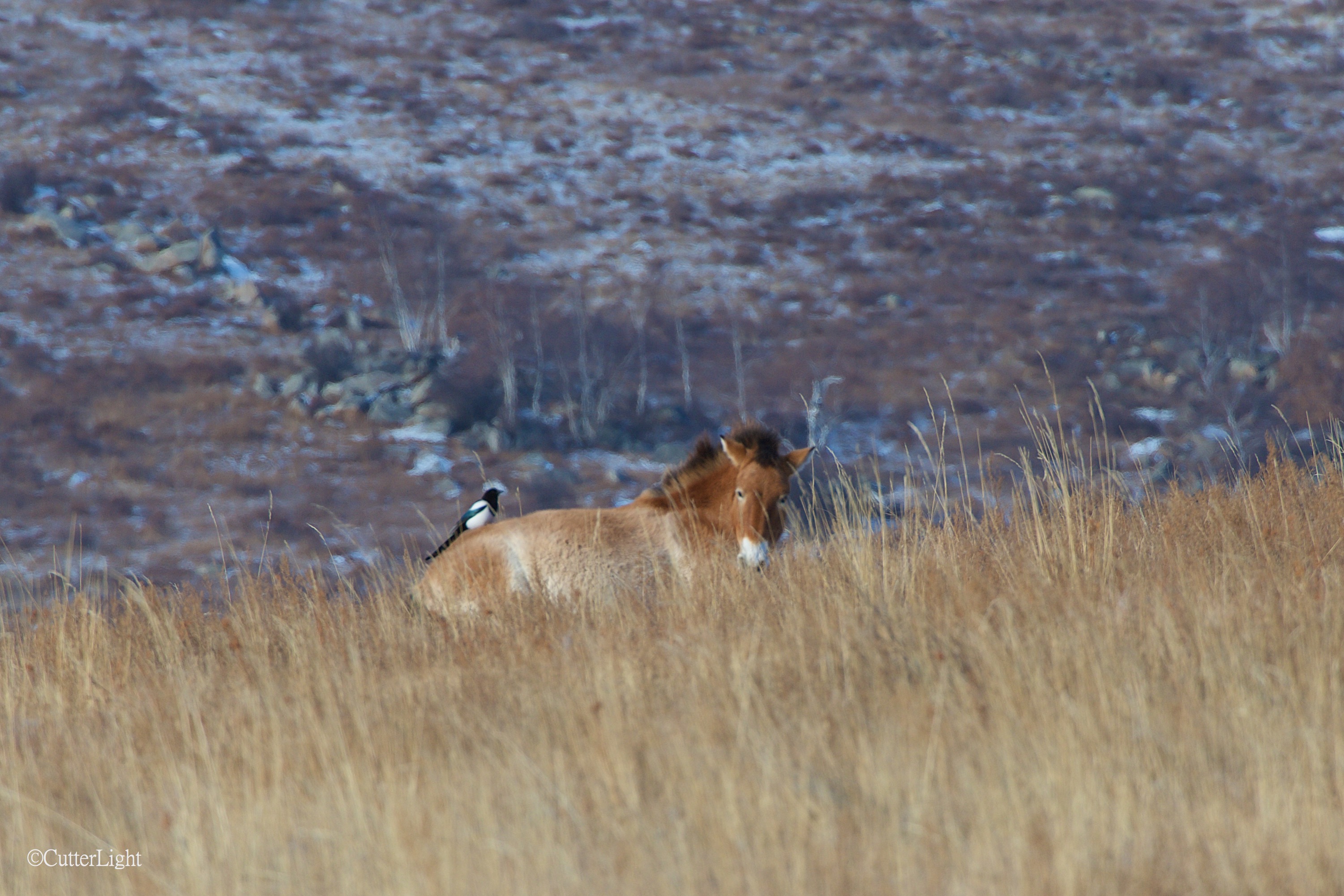
Takhi w magpie full n

Magpie and takhi (Przewalski’s horse) – old friends reacquainted in a scene that has played out for many thousands of years but that was sadly interrupted in those decades during which the takhi were extinct in the wild. 

In 1967, somewhere on the arid steppe of Mongolia’s Western Gobi Dessert, the last small herd of wild takhi was seen. Two years later, only one horse remained. And then Equus przewalskii vanished completely from the wild. Although closely related to modern domestic horses, takhi were never tamed. This differentiates their status as “truly wild” from the ferrel mustangs of America which are descendants of domestic horses.

In their natural environment, wolves were their main predators, and the dry, harsh, cold conditions of the steppe would invariably claim victims each winter. But the main cause of the demise of the takhi was probably due to its being hunted for meat.

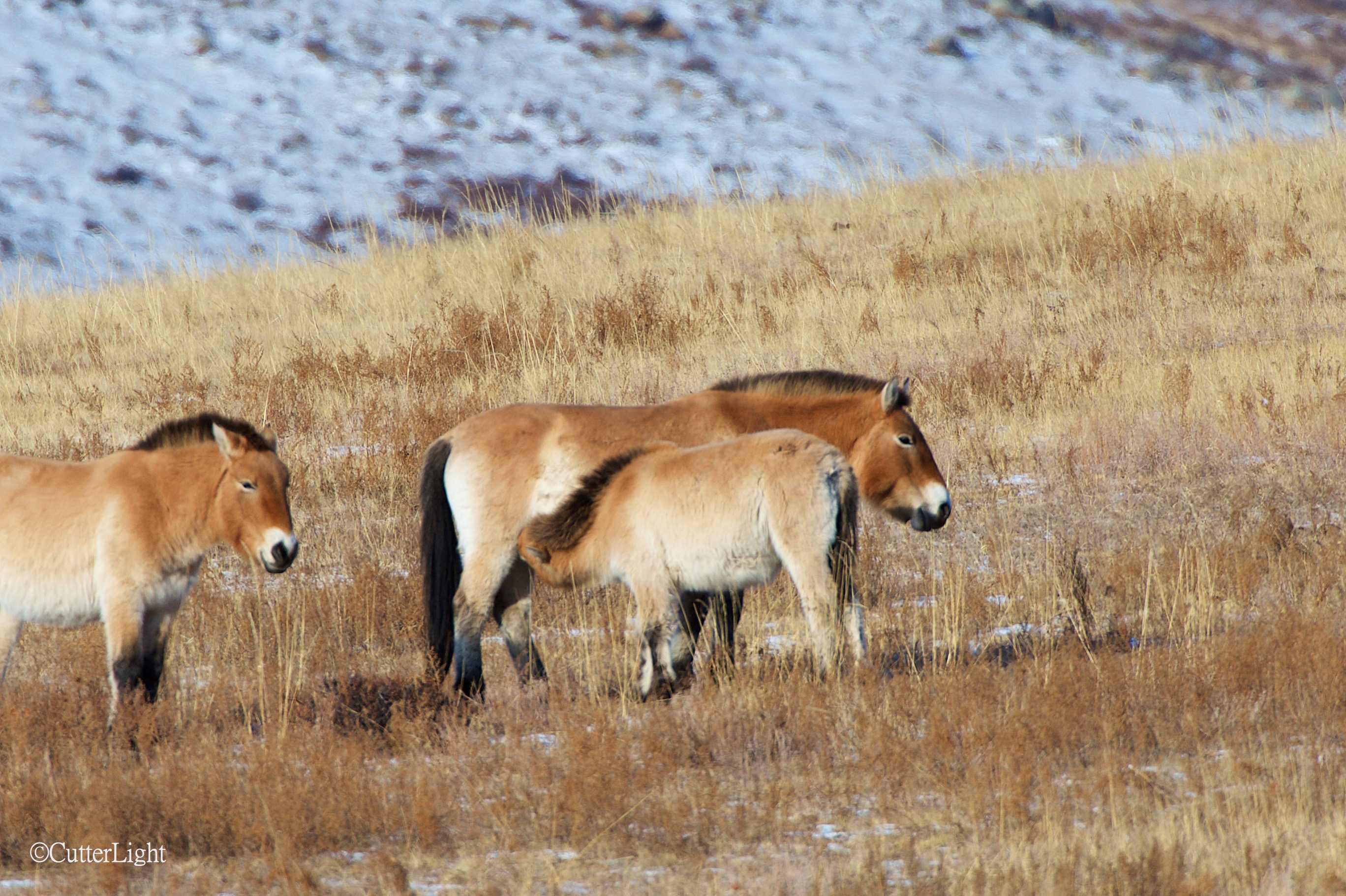
Takhi nursing winter n

Takhi form small family groups comprised of a lead stallion, two or three mares, and their offspring. These family groups loosely intermingle with other families as well as with bachelor stallions which often travel in pairs or groups of three. Stocky and with zebra-like manes, takhi are comparatively small, standing only about 48 – 56 inches tall at the shoulders. They have 66 chromosomes, two more than any other species of horse. 

By 1970, the only living specimens existed in a few zoos and private ranches. Extinct in the wild, it seemed only a matter of time till their official extinction from the planet would be announced.

Then something truly remarkable occurred. In a cooperative venture between the Zoological Society of London and Mongolian biologists, the horses were reintroduced to Mongolia’s Khustai (Hustai) National Park where they’ve been thriving even since.

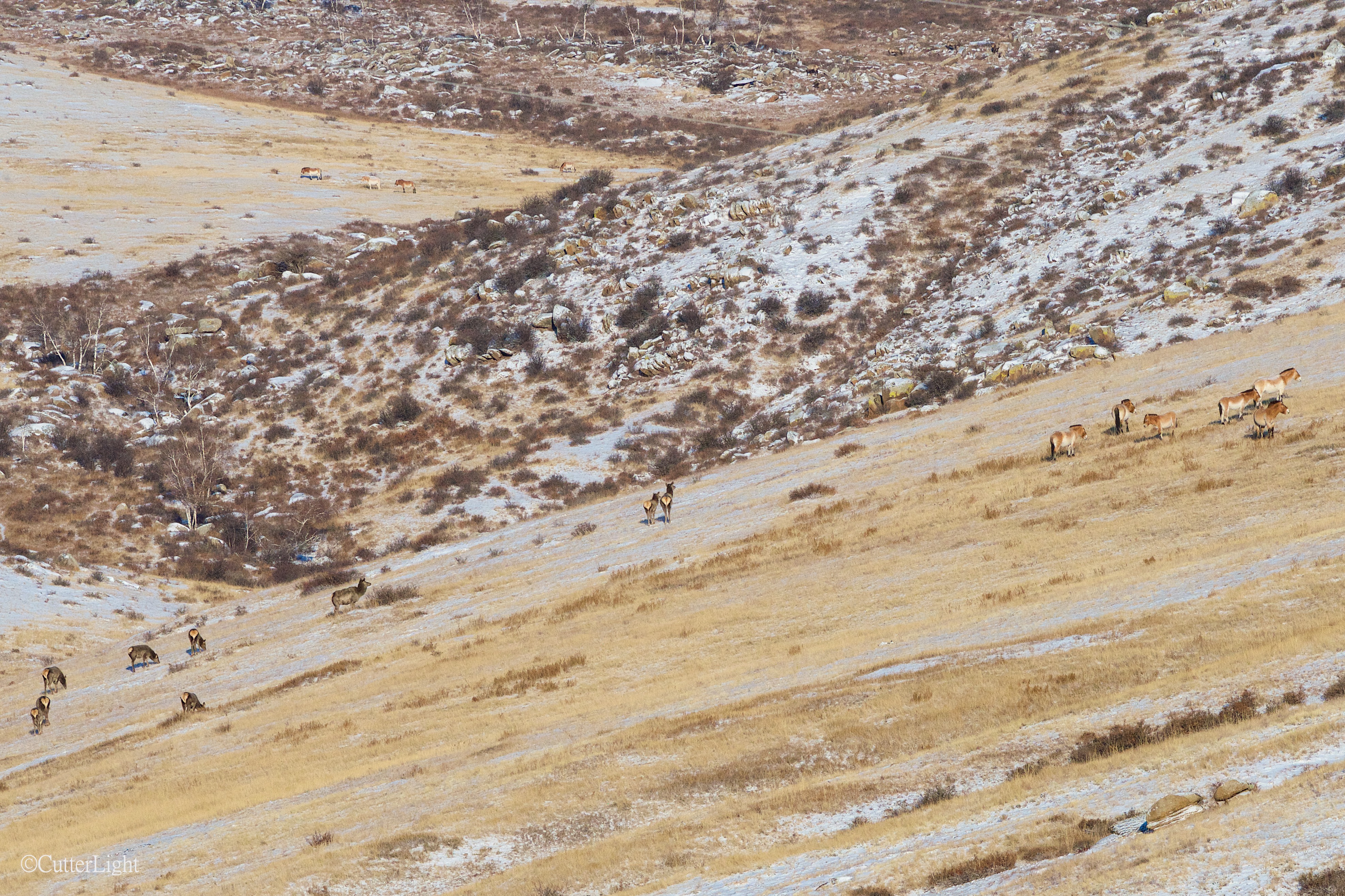
takhi with red deer n

On a morning bright with ice needles in the air and a fresh dusting of snow on the ground, takhi and female red deer (Cervus elaphus) share a piece of rugged terrain in Mongolia’s Khustai National Park. 

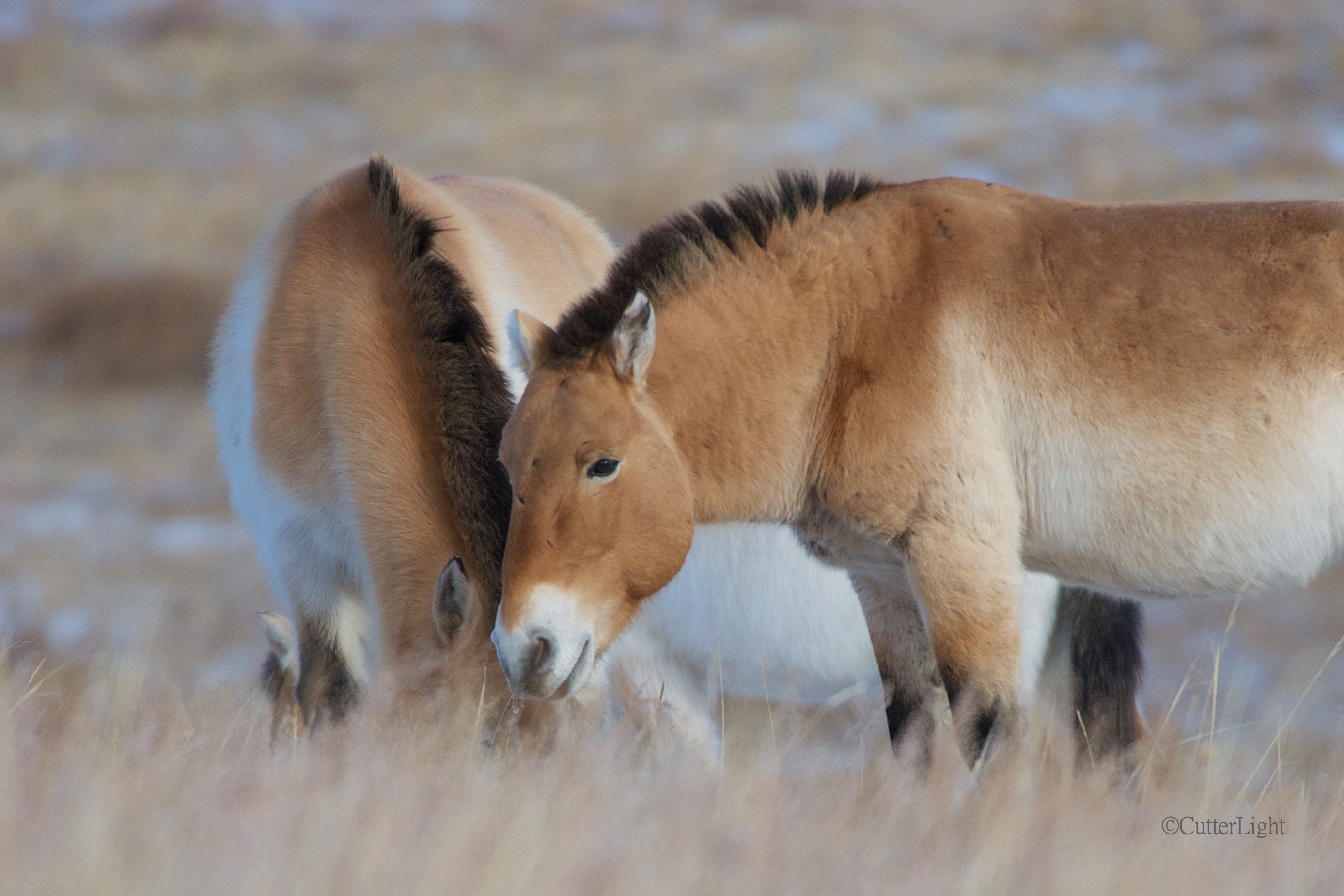
takhi stallion pair n

In full winter coats, these wild takhi are as beautiful as they are tough.

We counted ourselves as lucky to have spent a few days in Khustai during some of the coldest stretches of winter. The deeply rutted dirt roads were quiet, wildlife was abundant, and the horses seemed only mildly curious regarding our presence.

takhi in summer field

Takhi can readily be viewed in summertime as well. We can’t say which season is more beautiful. There are wild horses in this world still. That is beautiful.