Red-breasted Merganser at Dawn with Char and Scaup – 2 versions: Which do you like better?

Red-breasted Merganser at Dawn with Char and Scaup: monochromeDecember 19, 2016
Red-breasted Merganser at Dawn with Char and Scaup: color

All summer and well into fall, we could often see salmon and char from our dining table window as they migrated along the lakeshore beach. The char could be there in any season, following the salmon to gorge on eggs and then making their own spawning run. At other times the char would cruise the lake shoreline chasing down the fry, parr and smolts of Sockeye and Coho Salmon. At that time they would readily come to streamers, and even in winter you could sometimes get a couple of fresh fish for the evening meal.

More interesting than fishing for the char was watching the mergansers and otters go after them. The diving ducks often worked cooperatively, cruising along the shoreline with purpose reminiscent of soldiers on patrol. When they found a school of Dollies they’d herd them against the shoreline or sometimes against ice sheets. The otters behaved in a similar manner, and when there were a lot of char around the otters and the mergansers would set aside some of their natural caution and you could find yourself pretty close to the action if you sat still and waited.

Although it was late in the morning when I took the above photograph, the sun was just barely beginning to emerge over the mountains south-east of the lake. At first it was too dark to shoot, so I positioned myself behind a natural blind of tall, winter-brown grass and waited. There were about half-a-dozen merganser hens, or a hen and her first-year offspring, patrolling the shoreline, catching fish. Then this one came up with the catch of the day just as a flock of Greater Scaup were passing behind her.

So, what do you think? Black and white, or color?
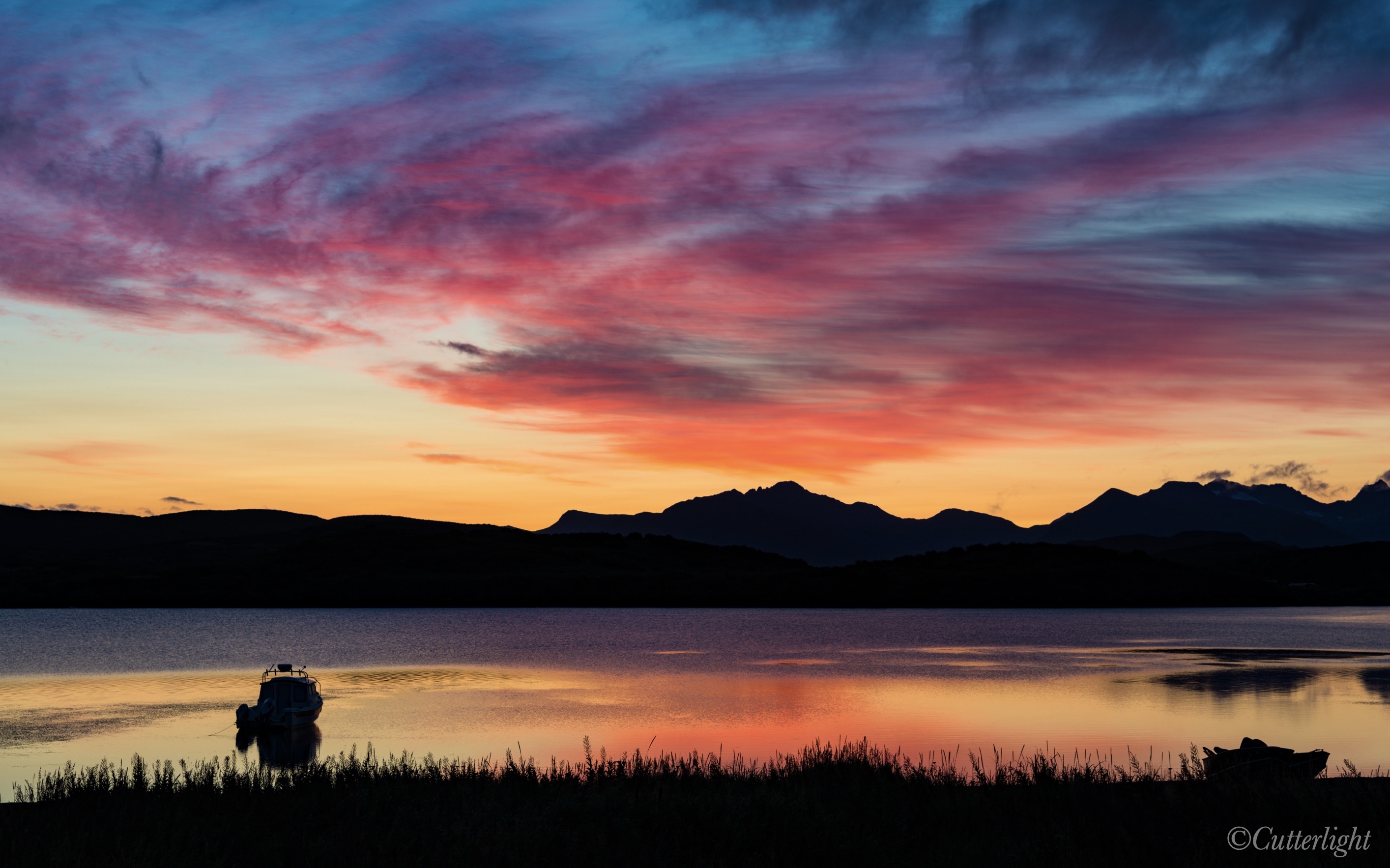
Chignik Lake in 29 Photos: Melon-colored Dawn

sunrise chignik Lake alaska
Melon-colored Dawn

September is very much a transitional month at The Lake. There can be days of summer-like sunshine and warmth followed by days of cold, wind-driven rain. The Coho run is at its peak as each day hundreds and even thousands of fresh salmon enter the river. Almost all of the Chignik’s Sockeyes have come home, and by now they can be found throughout the upper river, including every major tributary and both lakes. Pinks may still be abundant (depending on the year), but the fish that remain are drab, nearly spawned out husks of their former selves. There are even a few ragged Kings still clinging to life, the females doggedly expending the last of their life energy protecting their redds. Day by day this effort becomes greater as they struggle against the current, are pushed downriver, find the strength to swim back upriver and regain their nest… only to be pushed downriver again until eventually they’ve given all they have to give. The Chignik gathers these great fish in her flow and carries them back toward the sea from where they came.

September is a time of promises realized on the Chignik, the entire valley burgeoning with life. It is a good month to look for bears on the river. Maybe the best. By now they’ve grown fat on salmon and are feeding regularly on an abundance of nearly spent Pinks, spawning Reds and an occasional fresh Silver. Cubs that survived the lean spring months have become roly-poly balls of fur and are beginning to occasionally find their own fish.

As the days begin to grow discernibly shorter, late summer and early fall sunrises linger a bit longer above the mountains surrounding the lake. I made this picture on September 4, 2020 at 7:26 AM, Gillie in the lower left foreground. (Nikon D850, 24-70mm f/2.8, 1/10 @ f/8.0, 55mm, ISO 100)