
In the summer of 2009, we drove over 3200 miles to arrive in Valdez. We were hoping to make it in time for a half-marathon in Cordova, Alaska. It took us six days to drive from Sacramento, through Oregon, Washington, British Columbia, and Yukon Territory and finally through Alaska to Valdez. We drove hundreds of miles per day fueled by eagerness and the energy we absorbed from the incredibly beautiful drive and the daylight that lasted till late at night. The last leg of our journey was the 90 boat trip from Valdez to Cordova.
That sounds pretty doable, right? Never mind that we had just towed our boat behind our truck for all these miles. Never mind that our boat had only about 10 hours on the engine. 10 hours? Yes, Jack and I had taken the boat out of Bodega Bay into the great Pacific a sum total of two times.
We spent the night in the long term boat and trailer parking lot in Valdez. We had prepared the boat, the Gillie, for her journey. We filled her tanks. We scrubbed her down. We loaded her with all that we thought we would need to camp on her for a few days in Cordova. We woke early. She was launched pretty smoothly about 7 a.m. The water was flat. The weather calm and overcast. The further we were from Valdez, the more relaxed we became.
Being very new to boating with the Gillie, we constantly checked guages and our electronics to ensure that all was running smoothly. The main outboard engine was monitored to ensure that it was staying cool.
Ten miles away from Valdez, Jack noticed that the cooling stream from the outboard motor was slowing. It was not “pissing” as it should. Uh oh. We knew we had to shut off the engine and let it cool. Fortunately, we still had cell phone reception. I called the harbor master in Valdez to find out who could work on an outboard motor. Hmmm… no one. Yikes! Now what?
We have an 8 horsepower kicker that runs separately from the main outboard. We started that motor and limped back to Valdez to regroup.
Jack thought to call the motor shop in Sacramento to see if they had any advice. The guy who answered the phone suggested running something long and skinny up the exhaust to see if we could clear it. We found a long zip tie that fit perfectly. After a few pokes and a hard blow on the other end, small stones and dead bugs that had collected on the road spilled out. And then came the clear, strong flow of the cooling water. Thank you to Buck’s Outboard!
It was about noon at this time. The water was no longer flat. The wind had increased a few knots. Should we stay and miss the deadline? Should we go for it?
We went for it.
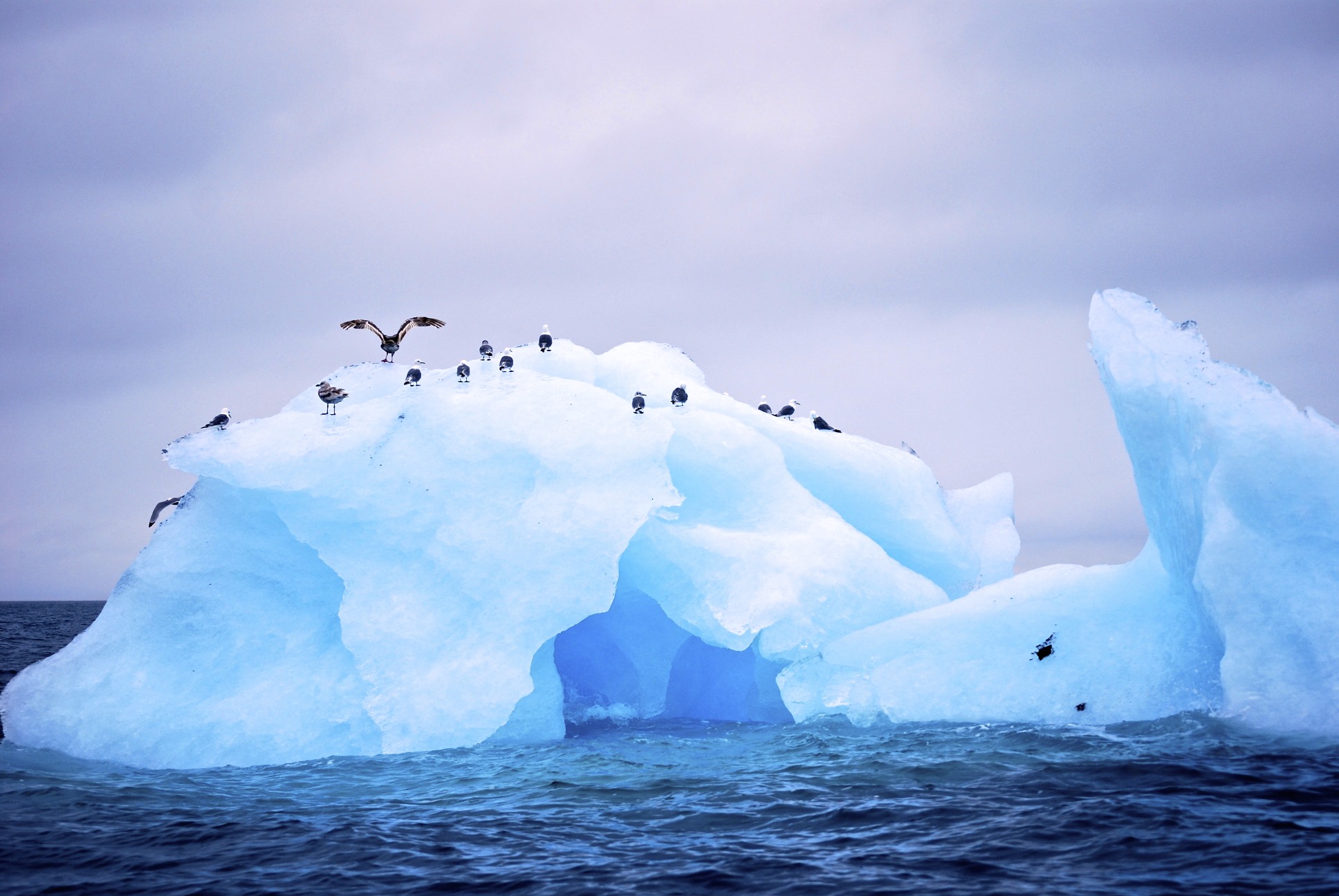
After we passed the place where we had turned back the first time out, we came to a finger of Prince William Sound which ran up as far as the Columbia Glacier. Someday I hope to see this glacier up close. Floating down from this finger where these beautiful sculptures of ice. The blues in the icebergs were amazing. They calmly floated away from the glacier carrying gulls and kittiwakes. The icebergs have these organic shapes that are captivating. The safe arrival in Cordova that evening should have been reward enough. The icebergs were the real reward.


 CutterLight