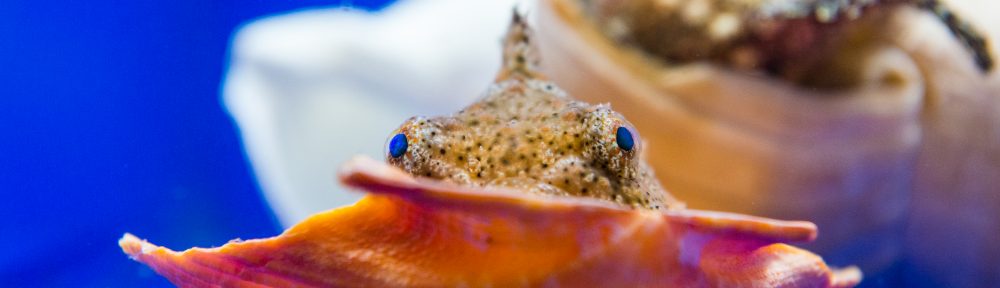

This was a challenging image for me to create. The scene occurred in a poorly lighted, poorly staged school auditorium. And at the time, my understanding of how camera’s work was still quite imperfect. A fundamental misapprehension I was laboring under was regarding ISO. No need here to lumber through all the incomplete and inaccurate information I subjected myself to. Instead, let’s take a quick dive into the subject.
First this: ISO is both an acronym and a word. In that way, it is akin to the word-acronym ASAP. I-S-O stands for International Organization for Standardization. According to this organization, the correct pronunciation of ISO is eye-soh, not eye-ess-oh. On that authority, (there is no higher), Barbra and I treat ISO as a word, pronounce it eye-soh, and since despite its capitalization it isn’t a proper noun, we play it in Scrabble. Similarly, during my entire enlistment in the United States Navy, I don’t think I ever heard anyone pronounce ASAP spelled out as A-S-A-P. Instead, ASAP was treated as a word, pronounced A-sap, and was used to mean something like “five minutes ago.” As in, “Petty Officer Donachy! Where is the report I asked you to type up? I need it A-sap!” Thus eye-so and A-sap it is, at least in our house.
Second, allow me to suggest this: It is a wise policy to take with a grain of salt manufacturers’ and marketers’ claims regarding the high ISO levels their cameras and “handle.” I suppose it comes down to what is meant by the word “handle,” but a general truth is that the higher the ISO value, the greater the risk for noise in your images. Noise… graininess, strange lines, aberrant coloration.
If you take a picture in fairly decent light, and you get the exposure right, and you don’t do much retouching, you might get away with a fairly high ISO setting. Since ISO sensitivity varies from camera to camera, I won’t provide an exact number here. “High” means whatever “high” means for each camera. Don’t think too much about specific numbers. It’s the concept here that matters.
Problems associated with high ISO settings will begin to manifest themselves when you a) significantly retouch an image, or; b) attempt to make a large print. Noise will appear as you attempt to darken an overly bright sky, lighten shadows, or sharpen subjects. As a serious photographer, once you begin to notice noise you will start looking for it. You won’t be able to help yourself. That’s good. Because magazine editors, gallerists, clients and others you hope to build relationships with will be looking for it too.
Not advice, but an observation: If you strive to keep ISO settings low, you will find that you have more flexibility in retouching and enlarging images. These days, shooting primarily with a D850, I find myself carefully considering making any image where I have to push the ISO past about 400. If I could make all my images at ISO values of 100 or less, I would. In most cases, I will sacrifice depth of field and shutter speed rather than push the ISO past 800.
Of course, there are times when there isn’t much choice in the matter. I have images of bears and owls that were captured in very low light. In order to maintain shutter speed and avoid motion blur, I had to go with a fairly high ISO. No real choice.
The above photograph? No flash, shutter speed 1250, aperture 2.8, ISO 4000. Were I making this image now, I’d reduce the shutter speed which in turn would allow me to reduce the ISO. Reduced shutter speed might also have given me room to increase the depth of field by closing the aperture a bit. The picture probably looks pretty good on a phone, a tablet or a small computer… but beyond that, I’m limited in what I can do with it.
As always, comments and questions are welcome.
 CutterLight
As an amateur too lazy to do anything butt point and shoot, I appreciate your dedication to your craft. Perhaps that’s why I love the photo you took, and wish I could do as well.
Wow, thanks for the encouraging words. I had Really wanted to shoot when I was young. It didn’t work out… and so decades past by during which I was intimidated by the idea of photography and rarely shot. I owe a lot to Barbra for helping me find the courage to explore this path.