
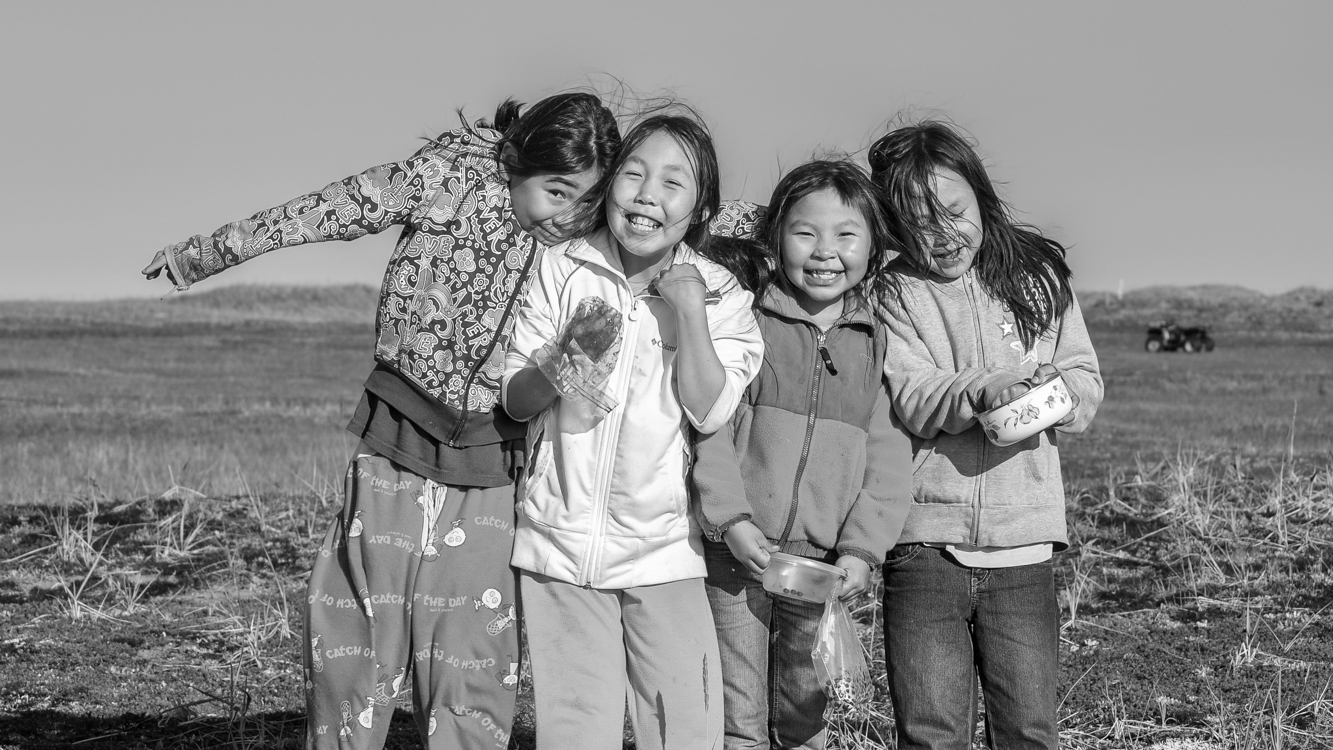
As is the case anywhere one might go, there are multiple realities in Shishmaref – or in any bush village. Some of these realities fit together neatly in a positive and even happy manner, like smiling faces after berry picking on a pleasantly crisp fall morning. Some realities exist more as collective memories, and you’d have to dig and observe closely to find their vestiges. Other realities contradict and clash and it can be difficult to understand how they are connected to the broader cultural, and still other realities go mostly undiscussed – pretended away – as they seep into village fabric like a sludgy toxin.
A reality in the “sludgy toxin” category in most bush communities we are familiar with are the schools. For anyone who was fortunate enough to be educated in a fairly decent k-12 system, or who has taught in such schools, the level of professional misfeasance and malfeasance – the combination of indifference, incompetence and outright corruption in Alaska’s bush schools – would probably defy belief. Before coming to Alaska, Barbra and I taught in good schools in the lower 48. So we know what that looks like. Nothing in that experience prepared us for what we encountered in the Alaskan Bush. The blame, when one talks to many teachers and administrators in bush Alaska, is placed on the children themselves and their parents. These educators and administrators spin their tales to state legislators, the governor’s office, department of education officials, university education departments and anyone else who asks, and Alaska’s state legislators, the governor’s office, department of education officials and university personnel nod along, agreeing that little can be done to improve matters.
But the reality is that any of the schools we taught in, visited or heard about from others could have easily… and I emphasize easily… been improved with a bit of competent administration. The acquiescence to self-serving fictions among Alaska’s leadership – the phony wistful sighs followed by reassurances among themselves that the problems can’t be fixed, so therefore they aren’t obliged to try – continues year after year.
Because it is easy to dismiss these bush schools and the Native communities they serve. After all, these are other people’s children.
Thank you for allowing me to finally get that off my chest. Comments, as always, are welcome. JD
 CutterLight
Morning Jack,
Just got done reading your comments. I’m sure there are many educators that receive “Cutter Light”. Will be interesting to see what responses you get……….. Rick Luthi
Hi Rick. I greatly appreciate your readership… particularly on this matter. I don’t intend to turn Cutterlight into a political zine, but as I go through these photos and this particular memory of these students, I felt it was time to say something. As with so many things in life, the solutions are right there in front of us, obvious, but unless leadership on the state level gets on board…
Something that has puzzled me which your comments rekindled is I foolishly assumed that teachers who wanted to go to remote villages were an exceptional group willing to go above and beyond to educate native peoples.The last thing I thought was it would attract an incompetent cadre of intellectual lazies.Why is this?
We, too, made this assumption when we left our positions teaching in statewide and nationally recognized Blue Ribbon schools in the lower 48 to serve in the Alaska Bush. Not only did we envision joining a group of dedicated professionals drawn north by something akin to a Peace Corps zeal – a true desire to serve where it’s needed most – but we also imagined that this service would be alongside fellow compatriots who admire Native culture and who were eager to dive into the incredible Alaska experience. What we found instead were a certain amount of educators and administrators who, at the time, were probably more or less not hirable in the lower 48 or in Alaska’s metropolitan communities. The second part of what we ran into in the bush is a bit more complicated. Alaska’s legislators and governors ended defined retirement benefits for educators. However, this, by itself, wasn’t the root of the problem. The real problem came when, for all the old guard – the Tier One group of educators who were grandfathered into the good retirement system – legislators linked retirement benefits to the last three years of service. What this did, in effect, was encourage the old guard to “head north” into the bush – where pay tends to be higher than the state average. This old guard (mostly administrators) simply closed their doors, sat behind their desks, and for the final three years of employment did little more than watch the clock, count calendar days, and run their schools and districts like small fiefdoms – each day waking with one thought: “How little can I get away with doing today.” Neither the Department of Education, the State Legislature nor the Governor’s Office provides any discernible meaningful oversight regarding any of this.
Thank you for explaining this and more impotantly thank you for caring about the Alaskan peoples so often ignored.
Yes. And to you, thanks for reading and caring about this.
It must have been incredibly frustrating to work in this system while being aware that the children suffered from neglect, indifference, and incompetence. There is only so much one lone teacher can do.
Yes, it often was. Alaskan politicians and department of education officials have driven more teachers out of the profession by refusing to address these issues than all other factors combined – as has been indicated on surveys of departing teachers. But not only do they drive teachers out of Alaska… these teachers take with them horror stories about administrative malfeasance, thus negatively impacting the recruitment of new teachers. It’s like watching someone hit themselves on the head repeatedly with a hammer while complaining that their head hurts.
Oh dear. That sounds very bad. Let’s hope someone will address these problems and do right by all those children and teachers who have the children’s interest at heart.